Nice to Meet You

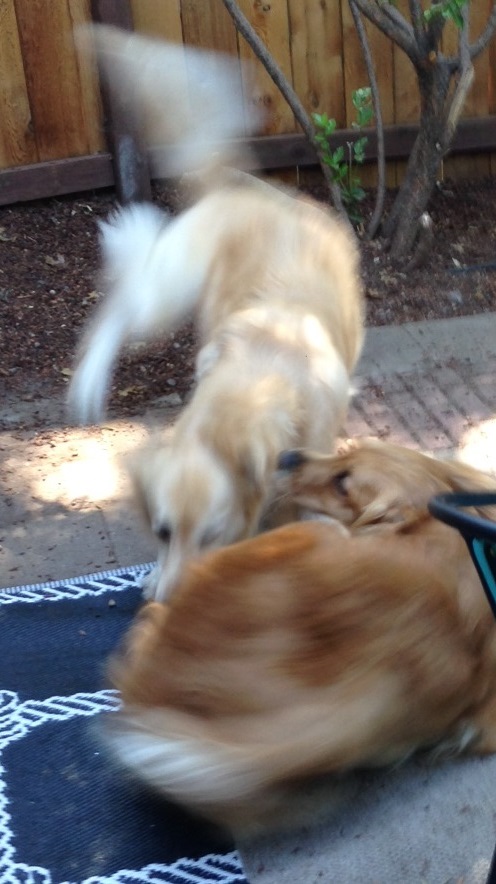
Wanna play?
Wanna play?

Dogs are as individual as people; therefore, getting to know them takes time and happens on different levels. There’s a big difference in “knowing” someone you’ve met at a party or been introduced to over coffee by a mutual friend, and “knowing” a friend who’s been part of your life for years, right? The same is true with dogs.
It takes time to get to know a dog and identify his or her personality and behavior patterns, just as it would with a person. But what about when you meet a dog briefly, say, walking down the street or hanging out at a coffee shop?
When you meet a person with a dog, greeting the dog probably won’t get much more intimate than saying hello and maybe giving the dog a pat or a hug. You might note the breed or notice whether the dog seems friendly — but even at this level, you can look for cues from the dog about his or her personality.
Cali and Jana perfectly illustrate the polar opposites in terms of their reaction to new people.
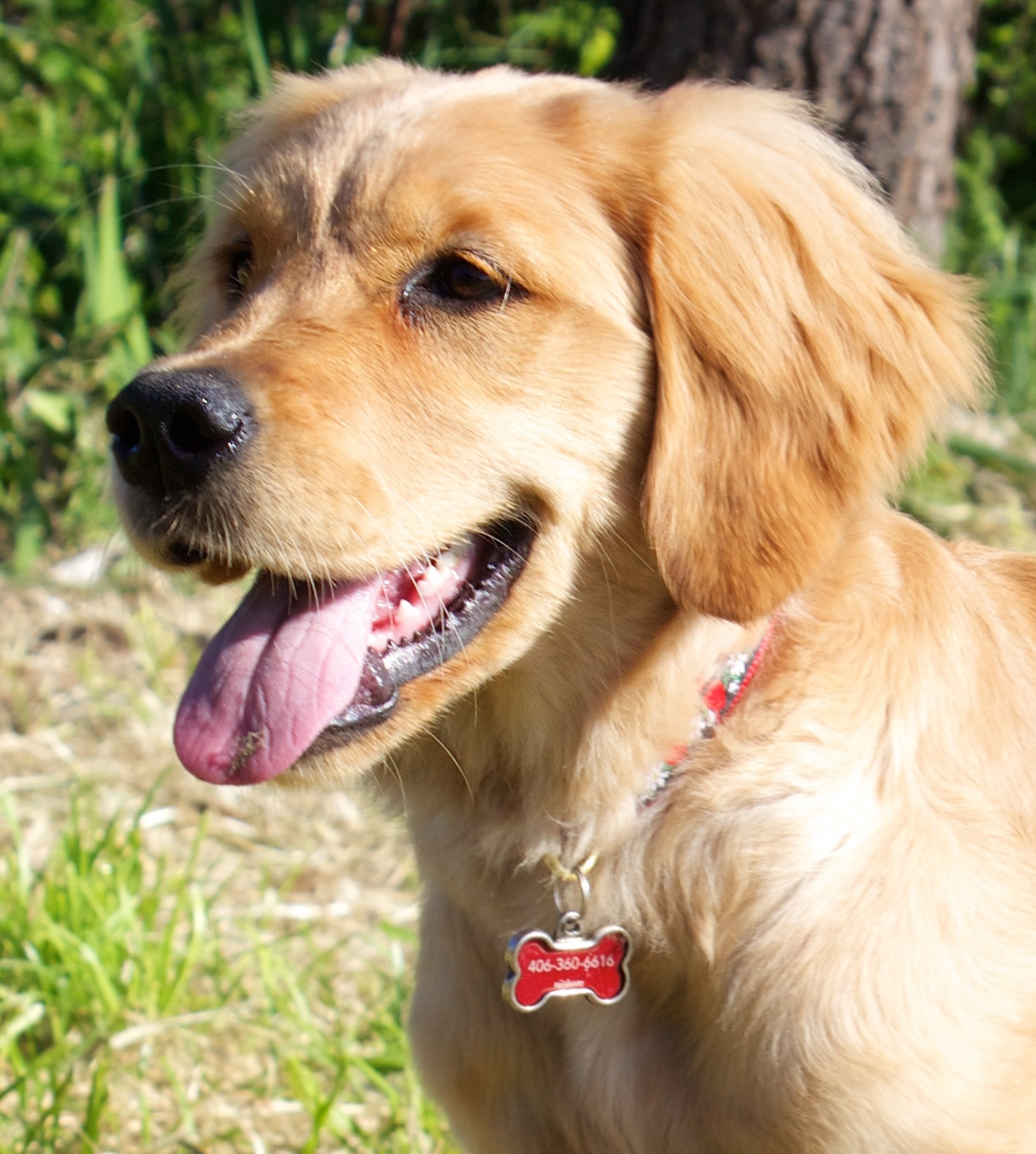
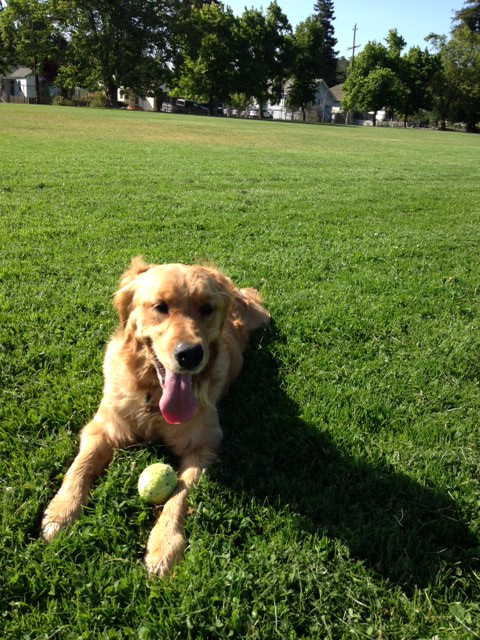
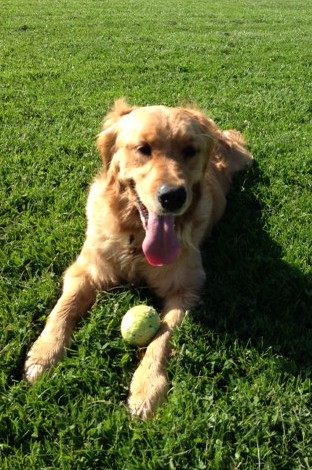
Cali was put on this planet to greet every single human being and become his or her new best friend. She rushes toward strangers with her whole rear half wagging and a huge smile on her face. If we’re on the way back from the park, she’s also got a slobbery tennis ball in her mouth, ropes of drool dangling, a wet “bib” (from the drool), muddy paws and legs, and she feels sweaty to the touch. On really energetic play days, she’s also given herself a good all-over shake and has, in the process, managed to drool on top of her own head. Never mind. She doesn’t notice any of that, and neither should you. She greets each and every person we meet with enthusiastic joy, secure in the certainty that every single human will love her back. Of course you can pet this girl, hug her, take her home and play ball with her. She’s your new best friend, after all.
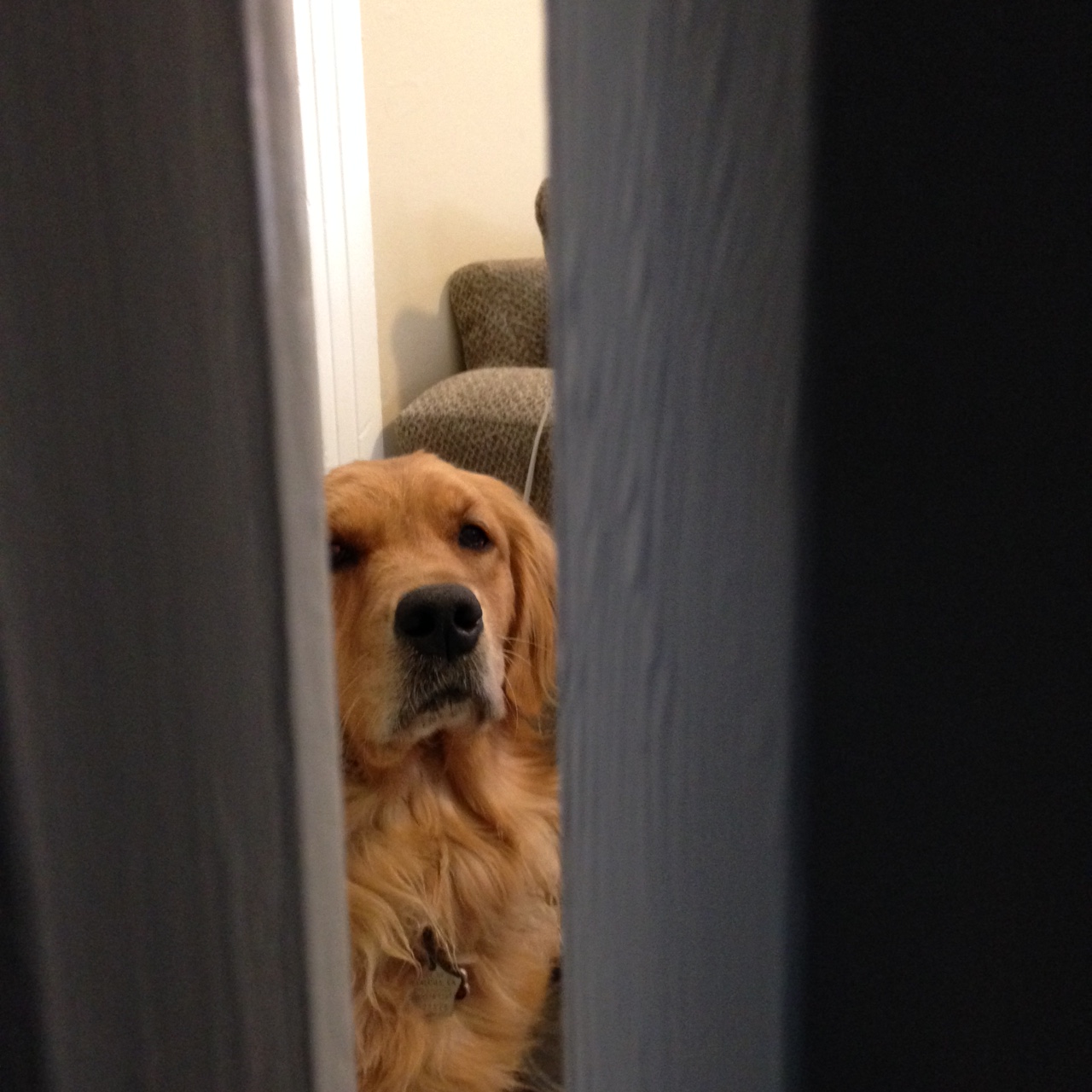
Jana stands back and watches this all with horrified disapproval. Sometimes she barks. Usually she stands behind me, ensuring that there is a large, solid barrier between the stranger and the nut-job puppy greeting the stranger — and herself. This is not a dog who is inviting or would welcome a getting-to-know-you pat. This is the dog who invented “no-touch cuddling”: when she’s feeling affectionate, she will agree to lie upon a corner of my bed, so long as we’re not touching. After a few minutes, never more than five, she, with great dignity, descends from the bed and gets on with her life. This is what counts as “cuddling” in Jana’s world.
OK, so when you’re encountering a new dog, the first thing to notice is whether the dog is approaching you or standing back? That’s easy. But most dogs just kind of stand or sit next to their owners. They are not as clear about where they are on the Jana‒Cali continuum as, well, Jana and Cali are. What then?
Most dogs, even the friendly ones, dislike being patted on the head and being hugged. Sadly for them, most humans do one or both of those things when meeting a dog. According to Turid Rugaas, a dog communication expert who has identified what she calls “calming signals” — subtle body language cues dogs use with each other — the best way to introduce yourself to a dog is to approach slowly and from the side.
If the dog is sitting next to the person, you can just pet the dog on the side — stroke his shoulder, say — or reach around (not over the head) to scratch his ears. Making direct eye contact, leaning over a dog’s head, or reaching for the top of his head can be perceived as threatening by a dog, so it’s better to use the sideways approach. You can always crouch down to be more at the dog’s level; you’ll be less threatening and the dog will probably see it as a friendly gesture. If you are face to face, rather than reach for the top of the dog’s head, it’s better to scratch his chest. In any case, a slow approach lets the dog get your scent before you actually touch him.
Most people aren’t very observant around dogs, and dogs’ body language cues can be very subtle. A dog that is constantly looking back and forth, between the owner and you, for example, is showing nervousness, as is a dog who constantly licks her lips. A nervous dog might yawn or show a “stress smile.” (See “Communication Goes Two Ways” for examples.) These dogs will be happier if you don’t try to pat them when you first meet them.
If your dog is particularly sensitive or will meet a lot of people, it’s a good idea to play a pat-the-puppy game — pat the dog on the head, then immediately praise him and offer a treat. This can revise his thinking about this unpleasant encounter and may even turn it into something he likes. It’s also a good idea to teach your dog to look at you when people approach. You can reward this focus with a treat. The dog may develop better associations with meeting people. The dog will also be learning to look to you when she is stressed, which is a good “default” behavior. Because the bottom line is, whether your dog is Cali-style friendly, Jana-style reserved, or somewhere in between, your job is to keep him safe — and that means running interference with strangers, whether human or canine.
Let Your Dog Choose


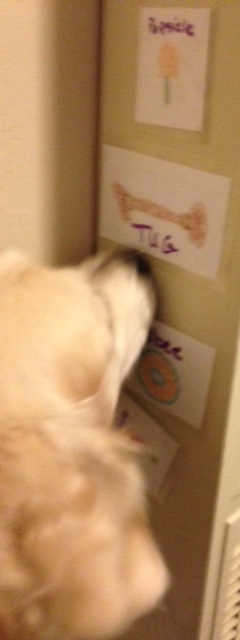
Jana choosesIn “Communication Goes Two Ways,” I wrote about learning to read your dog’s body language, especially to recognize when she’s stressed or afraid. You can take your communication to the next level by teaching your dog new ways to communicate with you. Some ideas?

    • Hang a bell on the door your dog uses to go out in the yard for potty breaks. Encourage the dog to nudge the bell each time you let her out. She will soon connect the bell with getting you to open the door, and ring it when she needs to go out. A word of caution: Some smarty-pants dogs will use this system to train you, demanding to be let out every time you sit down or stop paying attention to them.
      One clever dog of Deni’s used this system to get rid of a pesky young puppy sibling. She’d ring the bell; puppy (and Deni) would come running; Deni would open the door; puppy would run out — and clever older dog would not. She’d stay inside to enjoy the calm, now puppyless, house.

IMG_1258

  • Offer your dog choices: Do you want to play with the tennis ball or the Frisbee? Which treat do you want? Do you want a walk or should I toss the ball? This can be as simple as offering two items for the dog to choose. But you can, with training, teach the dog to answer simple (two-option) questions. A student in my canine-human communication class taught her dog to choose between two options (sometimes yes and no) by nosing one hand or the other. A researcher in Florida taught dogs to choose a reward for a task they had completed by nosing a card with a picture of the desired reward — a ball, a food treat, a tug game, etc. She found that each dog had definite preferences!
  • Let your dog decide which direction you head on your afternoon walk. Jana and I have an informal agreement. The morning walk, which always includes Cali, is to the park where Cali plays ball. Afternoon walks, which are often just the two of us, are Jana’s choice. She likes to head toward the river and walk past her beloved dog training school, stopping along the way to visit her friend in the office on the corner (a very kind woman who always offers Jana a cookie).
  • Many people use hand signals to communicate with their dogs. These can substitute for (or work in tandem with) verbal cues — a raised hand for stay, for example, is widely used. Some trainers have made the leap to teaching dogs signals that they can use to communicate back to us, similar to the Baby Sign Language some parents use with pre-verbal babies. This takes more planning and teaching than some of the other ideas.


There are many more options, requiring various amounts of preparation and teaching, but you get the idea. Encouraging your dog to express her preferences and communicate her needs will increase her independence. It is empowering for her, and it shows that you respect her as an individual, which will enrich your relationship by making it a tiny bit more reciprocal.

Communication Goes Two Ways

An entire industry, dog training, is dedicated to teaching dogs to understand what we want. Even dog owners who don’t go to training classes or hire private trainers spend a lot of time trying to communicate to their dogs (and often being frustrated at their apparent failures). Literally hundreds of books offer tips for teaching dogs to understand what we tell them.
What about helping us understand what our dogs are saying?
Our dogs are excellent communicators. Even the ones who don’t seem all that smart because they never do what their moms and dads ask probably are reading Mom, Dad, and all other humans better than any human ever could. Those dogs are also, most likely, using their whole bodies, putting heart and soul into trying to tell those very humans what they need, want, and feel.
We’re just very poor listeners.
Dogs use their tails, their ears, their hackles, their voices to communicate. A slight lift of a lip tells a story, as do exposed teeth, a lowered head, a low, slow tail wag. Each bark, yip, and growl has a different meaning. All dog owners should strive for a general understanding of what dogs in general say with their bodies.
The most important place to start, I think, is recognizing when a dog is uncomfortable, stressed, or afraid. Since some of the body language can look similar to friendly or happy dog body language, many people miss important signs.
For example, that wagging tail. It means a happy dog, right? Not always. Dogs’ tail wags are very nuanced. A tail held high and wagged fast generally means an excited or happy dog, but a lower, slower wag can be a sign of apprehension or discomfort. If the tail is stiff, or the tail is moving slowly and the rest of the dog’s body is stiff, you are not looking at a happy dog.

Cali relaxed

“Smiling dogs” are another area of confusion. If the dog’s lips are pulled back in what looks like a smile, and her eyes are soft and her tail is wagging loosely, she’s happy. But if the eyes are hard or are darting between you and someone or something else or the hackles are up, you are more likely looking at a stress smile. That dog is scared or stressed.
Take a look at these photos of Cali (when she was a much younger puppy). The right-hand photo shows her with soft eyes, and her mouth is relaxed. She looks soft. Happy. But the photo on the left (below) shows stress. Her eyes are hard and scared. Her mouth is more rigid.

Cali stress

Other signs of stress? Sweaty paws, furrowed brow, ears plastered back against the head, repeated lip licking or yawning, tail low or tucked, stiff posture, and panting. Many dogs will refuse treats in a stressful situation. Watch for avoidance behaviors: Some will sniff the ground when faced with a strange dog or even try to walk away.
A general understanding of what dogs’ body language means is important for anyone who spends time around dogs. But it’s even more valuable to invest some effort in learning your own dog’s body language and vocal vocabulary. What are her stress signs? How does she show you affection, share joy, express empathy? Learning her cues will strengthen your relationship.
Then, you can take the next step and start giving your dog ways to ask for what she needs!

Hide and (Don’t) Seek

Albee sleeps_small
Alberta sleeps — or pretends to?

My last post, Hide and Seek, talked about how Cali hides when she is avoiding something, such as having her teeth brushed. This week, I encountered an example of hiding that has a different purpose — and shows some high-level, and rather devious, thinking.
We were visiting at a home where there is a resident cat. Early one morning, the cat’s mom got up, gave the cat his breakfast in a plastic bowl, placed on the floor. Cat and mom then wandered away. Alberta, who had been sleeping on blankets next to the bed, noticed the cat and mom as they passed by into another room and closed the door. Very quietly, which took some effort, as she had several jangly tags on her collar, Alberta slipped out of the bedroom. Minutes later, without waking Deni, she slipped back in and either went back to sleep or did a stellar job of faking it. None of the three people in the house had any idea that she had slipped out of the bedroom or back in.
Later that morning, cat-mom asked us whether we’d seen the cat’s food bowl, which she had last seen at 5:30 a.m., still filled with kibble. Nope. We looked high and low. We looked in closets, cupboards, even the refrigerator, the bathrooms, and the garage. Nope, nope, and nope. Cat-mom wondered whether she really had fed the cat. Was she losing her marbles? Regardless, the bowl itself had disappeared.
Several hours later, walking through the bedroom, I noticed the edge of a plastic bowl under the bed, right near Alberta’s dog bed. Hmmm. Bending over, I reached waaayyy under the bed … and pulled out the cat’s (now empty) bowl.
Our best guess is that Alberta snuck out to eat the cat’s food and then, as is her habit, picked up the bowl and headed toward Deni to hand it over for an after-meal treat. Somewhere along the way, she must have remembered that she wasn’t supposed to let anyone know that she’d stolen the cat’s breakfast. Was she deliberately hiding the bowl? Had that been her plan all along? Or did she only think of it once she got back and saw Deni sleeping? At what point did she realize her error?
Her extreme stealth tells us that she knew she was doing something wrong; the distance the bowl was shoved under the bed indicates the same. If Alberta needs to go outside or decides that breakfast is long overdue before Deni wakes up, she noses Deni and whines until Deni responds. When Alberta picks up her bowl after a legitimate meal, she usually dances around, makes noise, doing whatever it takes to get Deni’s attention — because she is eager to collect her dessert (a cookie for returning the bowl). That she did not do this, and did not leave the bowl where anyone could see it, indicates deliberate hiding.
There’s a whole lot of higher-level thinking going on in her mind — all put to work for devious purposes. Alberta is showing multilayered understanding of a situation: knowledge that she can work a situation to her advantage (steal the food while cat and humans are sleeping or otherwise occupied) and hide the evidence where humans can’t see it.
Despite her impeccable breeding and fancy education, and regardless of her usual angelic behavior, what we learn here is that Alberta is also still a true Labrador — primarily a food-seeking missile. We also see that, whatever we teach our dogs and however we nurture their intelligence and try to shape it in ways that we want, each dog is still an individual who can put that intelligence to work in the ways that best serve her own interests.

Hide and Seek

hiding

Every evening, as we get ready for bed, I call the dogs to brush their teeth. Jana runs right over, ever the good dog (and ever the dog who can sense a cookie opportunity). Cali used to run over. In fact, as a small puppy, she would often ask to have her teeth brushed, going over to the shelf where the dog toothbrush was kept and nosing it, touching my hand and then walking back over to it.
Those days are gone.
Now, her ritual is to hide. First, she heads into the bedroom. When I finish Jana’s teeth and call Cali, she walks toward me, but then she hides behind the bathroom door. She’s less than a foot away from me, and when I call her again, she comes over. But she always goes through this hiding routine. She does it when I need to clean her ears or trim her nails, too.
She could really hide. She could squeeze under the bed or hide in the closet. She doesn’t. She knows (I think) that I can see her. She’s not trying very hard to avoid the inevitable. She’s not refusing to cooperate. She’s simply registering her discontent. I don’t want to do this, she’s telling me, but I will, if I have to. And I will eagerly accept a cookie afterward.
What does all of this mean? I think it shows a pretty high level of communication. Cali is sure of what she wants, and does not want, to do. She knows, too, that we follow a routine and that she has to undergo some grooming, like it or not. She has figured out that hiding lets me know how she feels.
But it also shows her cognitive development in another way. Hiding, and understanding that she and I both know to look for something hidden (rather than assume it is gone forever) is part of understanding object permanence. It’s part of developing consciousness of the world around you and your place in it and in relation to others.
I have seen very young puppies show a grasp of object permanence: I once watched 8-week-old puppies playing with an agility tunnel. One ran in, and another ran to the other end of the tunnel to wait for her sister. That showed that the puppy knew that the “missing” puppy was simply temporarily out of sight and would reappear. She even knew where the puppy would reappear.
By the way, babies begin to grasp this concept at about 8 months, and, at about a year, can retrieve an item if they see it being hidden. Those 8-week-old puppies are leap years ahead of the typical baby.
So it’s no surprise that Cali understands object permanence. What I find fascinating, though, is how she uses it to communicate with me.

If Cali Were Brian Hare’s Dog …

photo 4If Cali were Brian Hare’s dog, or rather, if she had been his dog years ago when he first started studying human-animal communication and animal cognition, there would likely be no Duke Canine Cognition Center, no Dognition …
I am not saying that Cali is not intelligent (far from it!). Before I get into that, though, some background:
In Brian Hare’s (wonderful) book The Genius of Dogs, he tells the story of how his interest in canine cognition came to be. Hare, now a leading researcher and innovator in canine cognition, was studying primates. As a college student, Hare participated in a study that investigated whether bonobos and chimpanzees understand the intention behind gestural communication. The chimps flunked the test. But, while conducting this research, Hare commented to his professor that his dog could do that. And history was made.
Hare and his professor found that dogs, even very young puppies, understand the communication intended by gestures such as pointing. Chimps must be taught, and, even then, rarely generalize. Wolves don’t do as well as dogs, even if they’ve been raised by humans.
In the first test that Hare did with his dog, Oreo, Hare threw three balls into a pond. After Oreo had found the first one, Hare pointed to the second, then the third. Oreo effortlessly located the balls by following the pointing.
Simple, right? Your dog can do that, I bet. Most dogs can. Jana can. Alberta can. Cali? Not so much.
Cali loves to play ball. She gets very excited when we’re playing, and often starts running out in anticipation of my next throw. She gets so excited that she neglects to keep her eye on the ball … and often ends up with no idea where the ball landed.
So, comfortable in the knowledge that dogs can do this, I point. And she invariably runs off … in a completely different direction. We play the “hot, cold” game. I pretend to throw the ball again, waving the Chuckit in the correct direction. To her credit — and showing considerable intelligence — Cali is never fooled by this gesture. I point some more. I walk in the right direction. I do everything except point a neon arrow at the ball.
Meanwhile, Cali continues running huge loops in completely wrong directions. Eventually, she ends up in the right section of the field and, using her excellent nose, locates the ball. She hardly ever loses her ball. But she just doesn’t get the pointing thing.
According to the studies I’ve read, Cali performs about as well as an unsocialized wolf. So what does this mean?
Aside from the obvious — that if Hare’s dog had performed as dismally as Cali, the science of canine cognition would have never been born — it means that Cali lacks this particular type of social intelligence.
She brims over with other types of social intelligence, though: She is extremely empathetic and affectionate; she is overwhelmingly friendly and nonjudgmental; and she is playful and happy. She also has a great memory and can use her nose to find hidden items in seconds flat (unless the item is a tennis ball nestled in the grass, of course).
The point is that dogs, like people, have different types of intelligence. Each individual excels at some things while faring more poorly at other skills. And that’s just fine.

I Mean It!

Cali looking2_side
Are you talking to me?

In my last blog post, Are You Talking to Me?, I said that dogs can tell when we are talking to them and when we really expect their response. They can tell when they can safely ignore us, even when they know that we are talking to them. They read our tone of voice, body language, and many other cues, most of which we are oblivious to.
So, how can we get those smart, calculating dogs to listen?
First, practice an “I mean it” tone. This can be a stern tone practiced in training class or at home; it can simply be a way of addressing your dog where you make it clear that you are completely focused on him — facing him, looking straight at him.
Fortunately, it can also be that note of fear or panic that creeps into your voice when your dog wanders too close to the street or shows too much curiosity about the ray hovering in the water just beyond her nose. In these instances, thankfully, even dogs with relatively poor recall skills will usually respond, coming to you and away from the danger.
Then, add an “emergency cue.” Practicing an “emergency recall” cue, as explained by a very dog-savvy friend, is a great way to build and maintain good listening skills in your dog: Choose a phrase, such as “right now,” and practice it with your recall cue (usually “come” or “come here”) and really, really excellent treats. Remember — your dog gets to decide what counts as a truly excellent treat.
Practice often. Use different tones of voice when you call. Surprise the dog, calling her when you are in some remote corner of the house or yard.
Soon, whenever your dog hears that cue — “Come here right now!” — regardless of tone of voice, she will know that top-quality treats are being dispensed, but only to the quickly responding dog! If you choose the right reward, you’ll see a blur of racing fur when you issue the cue. To get an even faster response, reward only the dog who arrives first, or, if you have only one dog, count to three (or five, or ten, if you have an old or slow dog), and only reward arrivals that beat the countdown clock.
I admit that I have been lazy about practicing this cue lately. Even so, when I add “right now” to a cue, any cue, I get a much-improved response. The association between “right now” and good treats is indelibly inked on Jana’s and Cali’s minds.
That’s partly due to lots of practice when Cali was little. It’s partly due to the fact that I have some really good treats hidden away. But it’s also due to the strength of our relationship — I spend a lot of time with Cali and Jana, and they can read me really well. They definitely know when they have to listen — and when they can push the boundaries a bit.

Are You Talking to Me?

Mom's not paying attention!
Mom’s not paying attention!

How does your dog know that you are talking to him rather than about him? At a friend’s recent presentation on service dogs, she was asked a great question by a member of the audience: How does your dog know when you are talking to him instead of using “command words” in a different context? For example, as both the speaker and I learned service dog training at the same University, our cue for urging a dog to toilet is “better hurry.” But this phrase, along with sit, stand, look, get it, and myriad others, are used while chatting with our friends, as well as being directives for our dogs.
My friend’s response is that not only do dogs know when we are talking directly to them. They also know when we really mean what we say. Several research teams have studied dogs’ ability to know when we are paying attention to them and whether they recognize when verbal communication is intended for them. Other studies have tested dogs’ ability to recognize non-verbal communication, such as pointing to something, or simply looking at something, that is intended for them. The results of many studies show that dogs do, indeed, know when we are talking to them.
None of this is news to a dog owner who has experienced the instant transformation of a peacefully napping dog into the canine equivalent of a hyperactive toddler who has consumed too much sugar — the instant that the owner picks up the phone.
How do our dogs know that we are talking to them rather than about them? Dogs pay attention to everything we do (I suspect that they pay attention even when we are sound asleep). They read our body language, watch our eyes, and recognize the difference between our use of “sit” as an instruction and our use of “sit” in conversation. They train every sense in our direction to see if we are seeking connection. They read our moods, anticipate our actions, and, yes, know whether we are paying attention to them or are distracted.
What does this mean for your relationship with your thinking dog? Well, think about a conversation you’ve had with someone about your latest personal crisis or sought a trusted friend’s advice, only to have her answer her cell phone while you are mid-sentence. Or you’re on the phone with your friend and you keep overhearing her conversation with someone else (or her dogs). You probably feel ignored or frustrated.
Our dogs, too, want connection. They deserve our attention and focus sometimes: Truly look at your dog, watch his body language. Try to understand what he is telling you. Our dogs spend much of their time giving us that kind of attention; they deserve a chunk of our time in return.
How? Make their walks or playtime all about them. No phones. No turning them loose at the dog park and turning your back to chat with another owner. Figure out how your dog likes to be petted, and give him the kind of attention he wants, not distracted stroking while you are focused on a book you are reading or a TV show.

Alberta’s Marshmallow Test

This slideshow requires JavaScript.

In the 1970s, a psychologist tested the self-restraint of preschool children. Each child was offered a marshmallow. The children were told that they would get two marshmallows if they could delay eating the treat, and then left alone in a room for fifteen minutes. The researcher recorded what happened. The efforts of some children to stare down the treat or to distract themselves from it are both comical and painful to watch. Of course, some children inhaled the treat as soon as the researcher left the room. A recent book (The Marshmallow Test) describes this experiment and the follow-up studies of those children. The marshmallow test and other research on the ability to delay gratification shows that those who can exercise self-control in the face of temptation have better “life outcomes,” as measured by a variety of criteria, including SAT scores, social and cognitive functioning, long-term health, and retirement planning.

What does all of this have to do with thinking dogs?
Alberta experienced her own version of the marshmallow test recently. To say that Alberta loves treats is a bit like saying that I love chocolate. Alberta not only loves treats, she is not terribly fussy about which treats she gets. For sure, there are better treats, for example this bison and beef jerky concoction that I get at Costco and that, for some reason, Jana, Cali, and Alberta will do anything for. But ordinary, boring biscuits are fine too, and they are happily accepted as rewards for a job well done.

In her guide dog work, Alberta comes across many items that fit this dog’s definition of “treat,” and she works very hard to resist bits of food that just happen to be lying on the floor.
Alberta is justifiably proud of her hard-earned restraint, but more importantly, she wants Deni to know. So, in the course of a day’s work, if Alberta sees food on the floor and gives it a wide berth, she also nudges Deni to make sure that Deni knows just how good she is being. She pushes Deni hard with her nose, hoping that Deni will notice the ignored object. She often nudges Deni right near the pocket where Deni keeps the dog treats, just in case Deni might want to reward this extraordinary show of restraint. A girl can hope, can’t she?

Alberta knows the rule that she can’t grab food off the ground when she’s working. She wants to believe that that rule does not apply when she’s off-duty (her harness is off). She also knows that, even while working, she’s allowed to take treats that Deni hands her for particularly notable service. But she recently encountered a situation that blurred these lines a bit, a marshmallow test for dogs. Her reaction was remarkable.
Guiding Deni down a street in Saugatuck, Michigan, Alberta (along with her entourage of two other human family members) passed by a store that not only had a full doggy water bowl sitting by the sidewalk, but also a full bowl of doggy cookies. Just sitting there for the taking. An open invitation. Irresistible.
Or not.
Alberta headed for the water, took a drink, noticed the cookie bowl and … stopped dead. Confused. She looked at the biscuits. Looked at Deni. Furrowed her brow. Looked longingly at the treats. But she did not touch the treats.
We’d all stopped to watch the unfolding marshmallow-like drama. Alberta really wanted to gobble up as many of those dog cookies as she could. But she did not take one. She did, however, look at every one of us to make sure that we all knew how good she was being. Deni rewarded her by picking up a few biscuits from the bowl and handing them to Alberta.
Watching the interaction, I got to thinking. Most dogs who walk by this shop are not trained service dogs. Though many, like Jana and Cali, have had some training and certainly know that they are not supposed to just devour everything in sight, they don’t always have the restraint to follow through. Having more than once found myself alone with a new box of Trader Joe’s dark chocolate peanut butter cups, I can relate.
I wondered how often a doggy passerby just digs in and eats all the cookies in the bowl. How many battles between hungry hounds and their hapless handlers has the shop owner witnessed? Does the handler ever win? And really, what was that shop owner thinking?

But back to Alberta. In need of photos for this blog post, I asked Deni to re-create Alberta’s marshmallow test. The photo gallery (presented in order) at the top of this blog post shows that, like the successful children in the original marshmallow test, Alberta devised a series of ways to distract herself. Some of the children looked away, as Alberta did. Some sang songs or recited the alphabet. Alberta did neither of these. Some children closed their eyes. Upon realizing that, even after she had turned away, the bowl of biscuits was still there, Alberta closed her eyes.

Alberta has not only learned to resist random bits of food on cafeteria floors, sidewalks, and the like, but there she was, on that Michigan sidewalk and again in Deni’s office, passing up food that was obviously meant for dogs, placed there for her enjoyment. This shows us that dogs are able to do some high-level thinking and processing.

If Alberta were purely instinct-driven, that bowl would have been emptied in seconds flat. If she were operating only out of fear of punishment or hope of reward, she might have surreptitiously sneaked a mouthful of biscuits before Deni noticed, just to see if she could get away with it — and been rewarded by the treat, even if she got scolded after. But she went beyond a gut-instinct response and even beyond the basic (low) level of moral development that governs much of human and animal behavior. She paused, checked in with Deni, and did the right thing — even though she really wanted those cookies. We’re eagerly looking forward to seeing Alberta’s SAT scores and are consulting her for retirement advice. But in my next post, I will describe more practical ways we can apply the doggy marshmallow test to our relationships with our dogs.

The Rosetta Bone

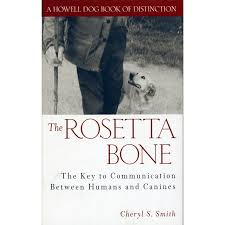
rosetta boneThe Rosetta Bone is a book I have been looking for for ages — a good book about how dogs communicate. The first several chapters address different types of communication: body language, verbal, touch, etc. Later chapters apply this information to interactions with dogs. How to solve common problems (and why they occur in the first place), teaching kids to interact appropriately with dogs, and more are addressed in a common-sense way. The author, Cheryl S. Smith, offers sound, dog-friendly advice in an easy-to-understand, clear style.