Catching Sight: Thinking Dog Alberta’s New Biography

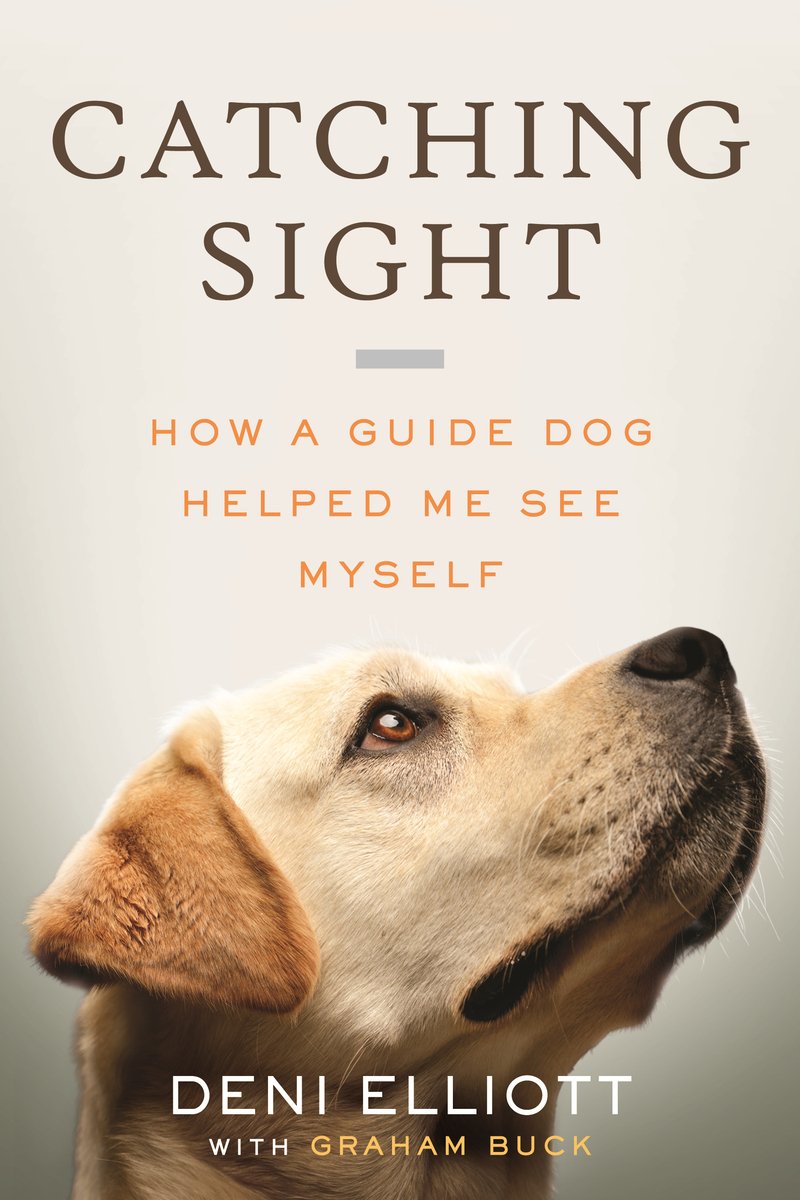
Catching Sight book cover shows guide dog Alberta, a yellow Lab looking up and to the right“I met a dog I could trust with my life,” author Deni Elliott says about her motivation to write Catching Sight: How a Guide Dog Helped Me See Myself. “Once I got past how amazing that was, I wanted to know how a dog gets to be that way.”
Catching Sight presents a three-pronged narrative that describes the extraordinary training and inter-species communication that goes into transforming a puppy into a competent, confident guide dog.

While researching Guiding Eyes Alberta’s early-puppyhood experience—and indeed, the pre-puppy experience at Guiding Eyes, which conducts deep research into genetics and past results—Deni explored every aspect of what makes it possible for a human with a disability to have a collaborative relationship with a dog who helps to mitigate that disability.

Anyone who wonders how guide dogs work, how they know what to do, and what makes them extraordinary will get answers in Catching Sight. They’ll also learn about how and why a person might hide their disability and Deni’s struggle come to terms with being publicly, obviously identifiable as a blind person.

But Catching Sight is about more than the guide dog-human partnership. It is relevant to anyone who wants to raise their puppy to become what Deni describes as “a true collaborative companion.”

Combining serious, fascinating information about Guiding Eyes Alberta’s education with humorous stories, it’s also a great read. I should know; I have read it at least a dozen times in various drafts over the past couple of years—and I will happily read it again, once I have the ‘real’ book in my hands.

Pre-order your copy at Bookshop.org, where you can support your local independent bookstore from the comfort of your living room—and get the book delivered still hot off the digital press. It will be in bookstores on June 16.


Smell Walks 3.0: Introducing Explorer Walks

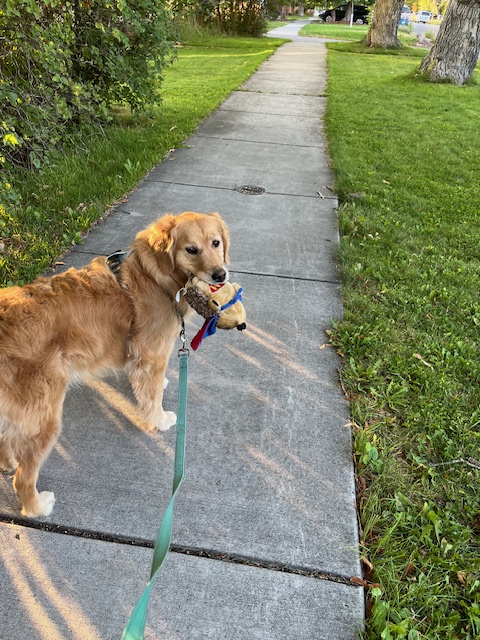
Orly, a golden retriever, holds the hedgehog toy and looks back at me. We're connected with a light blue leash.The Thinking Dog’s first iteration of Smell Walks (also called “Sniffaris”) was released in 2016, while I was reading Being a Dog by Alexandra Horowitz. When Koala, Cali, and I walked in my current neighborhood, the Walks got their first serious update.

Orly, who is very much her own dog, has spurred a third release with a new name: Explorer Walks. Huh, she sniffed virtually to Koala (who retired a couple of years ago). “I’ll take your sniff budget and raise it … exponentially.”

Orly enjoys deep, long sniffs of anything I will let her investigate. And she loves our usual morning walking route, which takes us through a couple of neighborhoods, past three schools, and through the alley behind a restaurant and a mini-market. That was Orly’s choice; she does not like going past those businesses on the front sidewalk.

This route connected her with Super Hedgie, whom she carried all the way home.

She definitely has her favorite stop-and-sniff spots, but she is more novelty-seeking than Cali or Koala.

At least once a week, she chooses a different route. We start off the same way, and at some point she turns left or right where we’d usually go straight, or continues down a street, breezing past our usual left turn.

We’ve explored the Rose Park, many side streets, and a significant chunk of the neighborhoods around the university and a high school. We’ve walked the wrong way on one-way streets, explored small parks, met new dogs and, presumably, different neighborhood deer. We pass a couple of friends’ houses, countless interesting gardens, and a couple of fences with windows at dog-height, but no dogs.

Orly’s other enhancement to the Smell Walks is the pursuit of yards with barky dogs.

Orly has expertly engineered our morning walks to maximize:

  • New and interesting sniff spots
  • Old, reliable news sites
  • Treats extracted for provoking but not responding to barky dogs
  • Number of times we pass by the Big Dipper each week, just in case it has decided to open before 8 am

All this, and we (almost) always get home in time for me make some coffee before I start work at 8:30. Not surprisingly, I nearly always need more coffee…


Keeping Dogs with Their People

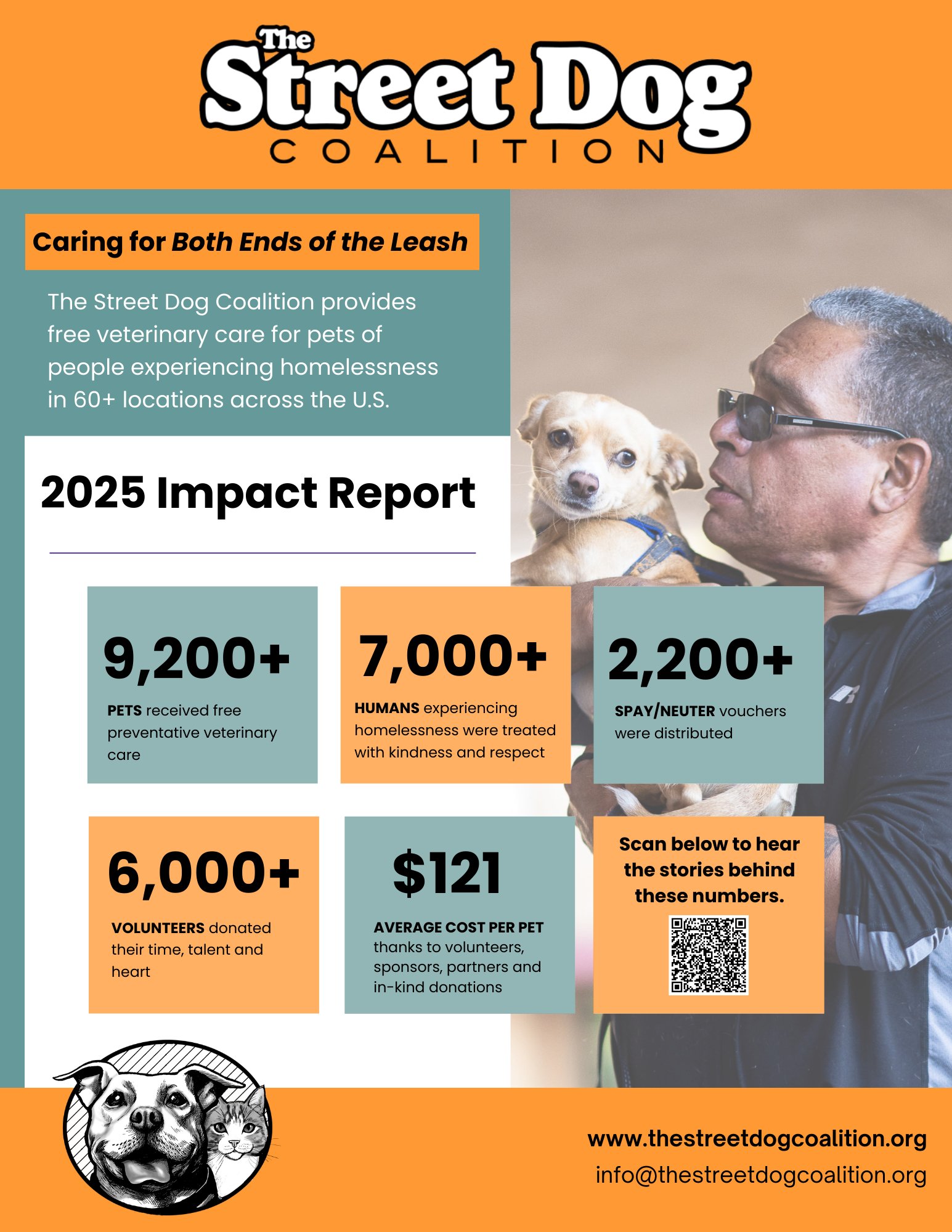
Graphic showing the impact of the Street Dog Coalition, with 9,200 pets and more than 7,000 humans served in 2025.

I recently joined the volunteer team for the Missoula chapter of the Street Dog Coalition. This Colorado-based organization provides “pop-up” vet clinics for people experiencing homelessness or housing insecurity. Its 60+ chapters served more than 9,000 pets and their humans in 2025.

In Missoula, the vet clinics occur once a month and are advertised at shelters, food pantries, and other places people who might need them might be. The vets and vet techs, along with a dozen or so pet-loving volunteers, serve a seemingly unending stream of people of all ages with dogs and cats of all sizes over a few very busy hours.

The vets provide vaccines, check-ups, advice, and vouchers for to get the pets spayed or neutered. The vet techs clean ears, trim nails, and more. The volunteers weigh the pets, dispense food, donated leashes, collars, and toys, fill in paperwork, hold squirming pets for nail trims, clean messes, and hand out treats. Lots of treats.

Assigned to assist one of the vets, I got to hold dogs ranging from a 9-week-old puppy to an older dog who had been through a lot before finding her current human, a warm and loving woman who was working every angle to try to get the dog some care she urgently needed.

The chaos of vets, techs, and volunteers, along with a crowd of waiting patients, didn’t help reassure the already nervous dogs. (The cats were in a separate, quieter space.) Many of the dogs were too stressed to even take treats. Those dogs generally skipped the nail trim.

It’s still pretty chilly in Missoula, and many of the pets come in wearing sweaters, jackets, and onesies of all types and colors. Donated dog- and cat-clothing is popular and disappears quickly from the giveaway table.

Next to the giveaway table is a second table, piled high with bags of dog and cat food, separated into adult and puppy or kitten foods, most of it donated by area pet stores. At this clinic, the vets were also giving out flea & tick preventive and heartworm preventive, also donated by clinics that were clearing out stock that is close to expiring.

Chatting with one of the vets, I heard about a continuing ed seminar she’d been to recently about mosquito-borne illnesses, including heartworm. Since we barely  had winter this year, she said that we should be giving the preventive tablets year-round, since we can’t count on having enough days of weather cold enough to kill the mosquitos. That’s probably as surprising to most Montanans as it was to me!


Drive-Through? Think Again…

I made an unforgivable mistake recently.

I invited Orly to ride along on my weekend errands. Quick trip to the grocery store; Lowe’s (dog-friendly; treat-bearing staff), a gas station, and the credit union.

Which was closed.

The fatal error was using the drive-up ATM.

You see, drive-throughs, at least in Missoula, are generally very dog-friendly. Orly has an elaborate rating system; I wouldn’t be surprised to find a doggy social media platform that ranks the drive-throughs and offers tips on steering your chauffeur to the right ones.

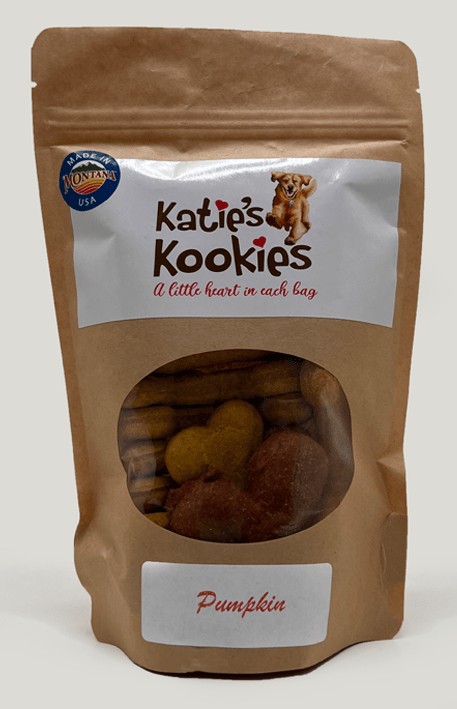
My credit union is in the top two: They give out the “good” biscuits, Katie’s Kookies. It’s a toss-up between them and Bridge Pizza for the top spot (Bridge gives out slices of pepperoni, a delicacy that Orly has never seen at home).

But, obviously, the drive-up ATM does not dispense biscuits.

Actually, that’s not obvious! I can choose the assortment of bills I get with my withdrawal. How hard would it be to add a “biscuit” option?! Two 50’s, five 20’s, and a dog cookie. Why not?

Orly has a point. She patiently rode around with me all morning. She sat politely for her treats at Lowe’s. I didn’t let her drive at all, not even in the Lowe’s parking lot. Didn’t she deserve a Katie’s Kookie?

We’ve been through the credit union and Bridge drive-throughs since, and she’s happily collected her due. We visit the Loose Caboose (jerky treats) most Sundays with Orly’s friend Maisy and Maisy’s mom, after our weekly walk.

Despite the frequent drive-through successes, I think she’s still holding a grudge.

And I definitely think twice about heading to the credit union unless there will be cookie-dispensing humans on duty!

The Thinking Cow? Tool Use Is Pretty Common!

Golden retriever Orly uses a white-painted door frame to hold her red Kong toy in place so she can easily lick out the peanut butter and kibble filling.An Austrian cow (a pampered pet named Veronika) has become world famous for her ability to use tools.

A New York Times discussion of Veronika and the study comments that “perhaps one reason cows have been underestimated is because very few of them get the opportunity to develop or demonstrate their cognitive abilities…” Longtime readers will recognize that I have made this argument regarding dogs.

Thinking dogs across the years have demonstrated their tool-using abilities, notably Koala using a toy to hold still another toy, Cali simply employing the backyard, and Orly (briefly!) summoning her doorperson with a bell.

As the accompanying photos show, Orly continues the tradition; she recently used a door frame to hold her Kong still. That a dog like Orly would apply her intelligence and any handy object (a tool) to help her obtain food seems obvious; she is a golden retriever, after all.

And none of this is surprising when you consider that dogs’ ancestors, wolves, use tools. Why wouldn’t that intelligence and ability be found in wolves clever descendants?

But back to Veronika: I am happy to add her — and and cows — to the long list of non-humans that use tools, which ranges from primates to elephants, parrots to crows, even octopuses and fish!


All Good Things Come to an End …

Several months ago, I wrote about Orly’s delight in the freedom her dog door gave her. Though I would revoke her privileges if she abused them by barking at our neighbors, she spent most of the summer free to come and go and come and go and come and go, in and out all day and until late in the evening.

She would frequently check the digging pit to see whether the Sand Fairy had returned (she usually hadn’t) to hide new treats; verify that she had, indeed, eaten all of the ripe raspberries and cherry tomatoes within reach (she had); and roll happily in the too-long grass.

But as summers do, the summer turned more and more autumnal. This happens more quickly in Montana than in many places, with very chilly evenings and mornings starting in August.

Orly’s dog door is in our screen door, and with the colder weather, the dog door was less and less available until it disappeared completely, with the back door remaining firmly closed and her door person permanently, though not terribly reliably, back on the job.

4-month-old golden puppy Orly, wearing a gray coat, touches a bell next to a wooden door

Though she loves fall and is eager for the snow, she is not pleased about losing her free access to the back yard. She’s still unwilling to consider the compromise I have offered — the doggy doorbell. Maybe she thinks that’s just for puppies.

In any case, she has taken to nudging me to ask to go out, which is fine. She’ll even come upstairs to my office to ask for door person service.

Coming back in is where we disagree. Her latest approach is a loud thwack! on the window. I have a pattern of muddy paw prints on my recently washed windows as a result, and I worry that she could hit the window hard enough to break it.

My current challenge: Figuring out how to convince her that sophisticated grown-up dogs can use bells to summon their servants and gain access to the outside. Or inside. Without beating up on the windows.

It’s Raining … Humans?

Person in a dark snowsuit with a red paraglider descends to land on a snowy field
Stock image of a para-glider landing on snow

One of the highlights of winter in Missoula for me, and for many other families that include dogs, is running free on the golf course. This is a tradition that starts as soon as the golf course closes for the season, usually by Thanksgiving.

The golf course is part of the University of Montana campus. When there is enough snow, a local organization grooms Nordic Skiing trails, but even then, there’s room for dogs. On half the area, dog-hating skiers get a dog-free zone. On the other, people ski with their dogs or walk with their dogs.

On an early season visit (not much snow yet), we were wandering around, when suddenly, Orly spotted something very strange. She started chasing it and barking.

Only problem was, it was in the sky: Two para-gliders, coming in for a landing. Oh, yeah, forgot to mention that the athletic practice fields next to the golf course are a popular landing spot for people who para-glide from the top of Mt. Sentinel in Missoula.

Orly had never seen humans falling from the sky before!

To be honest, I’d never been that close to anyone landing, either.

I called her, but in the excitement, and with another — equally excited — dog chasing her, Orly was unable to understand what I meant by “Come HERE. NOW!”

So she didn’t.

The first glider landed and Orly ran over to greet her. Fortunately, she was a  normal Missoulian and loved dogs.

I managed to corral Orly about the time the second glider landed. Orly wanted to go say hi, but I dragged my wagging, barking, pulling, very excited girl off the field. Unfortunately, I had my hands full and did not manage to snap a photo of the gliders, so the image above is not from our adventure.


Taxes Keep Going Up…

Hi and happy new year! This was supposed to be the first 2026 post, but it got away from me early. I got it back under control and scheduled it but … at least 3 of you (thanks for being such loyal readers!) mentioned enjoying it. I then remembered the email that goes out when a post publishes so I decided to release this one early. Enjoy!

Golden retriever Orly licks yellow ice cream from a blue and white cup

The egg tax was bad enough.

At some point in her puppyhood, Jana (the original Thinking Dog) had an upset stomach and I made her some scrambled eggs.

In my defense, she was the first golden retriever puppy I raised; I did not realize what a slippery slope I was stepping onto.

She then decided that she liked eggs. Really liked eggs. And that if the human was cooking eggs, there was no reason not to add an extra egg and share with the golden.

Thus the egg tax came into being.

From that moment forward, whenever anyone in my household has cooked eggs, the dog or dogs have assessed the tax and gotten their share. Jana taught Cali about the egg tax. And Oriel. And Wylie. Cali taught Orly. Orly taught Dotty. And so it will continue, passing from generation to generation forever.

Having expanded my horizons a bit — I’ve raised several golden retrievers and have many friends who have also raised golden retrievers and other egg-loving dogs — I realize that the egg tax is a bit like dog “domestication.”

As in: Just as dogs’ wild ancestors realized, independently, in different locations, and at different points in our parallel evolutions, that ancient humans would make great cooks-butlers-doormen-housekeepers and decided to turn us into their devoted companions, the egg tax was not a unique invention.

Other goldens — and even non-golden dogs — have come up with the egg tax. And with additional, similar taxes.

  • The peanut butter tax was next; why else do humans even buy peanut butter if not to share with the dog?
  • The banana tax … That one might have predated even Jana. Timo, Jana’s older brother, would run from the yard to the kitchen if I broke a banana off the bunch; that unique sound was enough to trigger a demand for payment.
  • The carrot tax, where dogs get the bottom half-inch of every carrot, plus the middle part when I am shredding a carrot into a salad and it gets too thin to keep scraping.
  • On a visit, a friend inadvertently(??) invented a waffle tax, which Orly has eagerly embraced.
  • One of Orly’s sisters taught the entire litter about the apple tax, via the  humans’ convenient family chat.
  • A longstanding family tradition is to give the dog the tip of the ice-cream cone when we’re nearly done with it. Orly and Cali parlayed that into, yep, an ice-cream tax, levied on both cones (the end of the cone) and bowls (licking them clean). This happens after they have already wolfed down their own dog cones, without sharing.
  • I have heard discussion of a cheese tax among other dog-owned humans, but I don’t think that Orly knows about it (yet).

This has gone far enough!

Orly is currently trying to institute a yogurt tax. And a banana bread tax! I am fighting back. Instead of giving her some every time I scoop out some yogurt for myself, I make her wait. She only gets to lick out the container when I am done with it.

I’m really showing her who is in charge!


Did Tool-Using Dogs Learn from Their Ancestors?

Koala, a black Labrador, uses a ring toy to hold an antler steady for chewing.
Photo by Deni Elliott

I have written about the ways various family dogs have learned to use tools: Orly ringing a bell, not only to prod me to let her in and out, but as a way to help her sister. (Never mind that as an adult, she refuses to use the bell…). Going even farther back in history, Koala devised a tool to hold her antler still for chewing, while Cali used the backyard to hold her antler.

I was excited about these examples of dogs’ creativity, smarts, and problem-solving skill. And I wondered whether all dogs — and their ancestors, wolves — could use tools.

I now have an answer!

A study published in November shows wolves using tools: They have been captured on camera intentionally and repeatedly tugging a rope to pull up a crab trap, then breaking into the traps to steal and eat the bait. So far, two different wolves have been captured (on camera) raiding the traps.

Cali pokes the antler into the soft ground

Since Jane Goodall first wrote about Chimpanzees using tools in 1960, other non-humans have been found to use tools, including elephants, crows, dolphins, octopuses, and even ants!

So far, the animals’ tool use tends to be self-serving, but I am hoping to convince Orly to pitch in around the house at some point. She thinks the vacuum is scary, but maybe she’s willing to try her paw at shoveling snow?

Social Butterfly

Golden retriever Orly holds a blue stuffed octopus toy and wags her tail

Driving home from my synagogue on an early fall holiday, I debated driving right to the riverside park where members of the community were meeting. I decided to stop at home first, though, to see whether Orly was home and wanted to come along.

As I am sure you know, Orly is a dog. If she wasn’t with me, why wouldn’t she be home?

But she wasn’t; Orly was still out hiking with her friends.

Orly has a more active social life than I do, yet she’s always looking for new friends. Like many goldens, she has no concept of a ‘stranger.’ All new humans, dogs, cats, deer, and birds are unmet friends.

That’s why I wasn’t worried about her recent ‘orientation’ at a nearby dog boarding, training, and daycare facility where she might need to spend a few nights soon. Part of the mandatory half-day session is spent introducing her to different potential playmates to see how well she interacts with other dogs.

Orly, it turns out, plays very nicely with others. She also excelled at using the dog door, taking treats (do dogs really flunk that?), walking on a leash (THAT was a nice surprise), and not fence-fighting or barking.

My little social butterfly, transformed from a fuzzy golden ball of fur into a dripping ball of mud, seemed to have enjoyed her morning at camp. She was less happy about the bath that followed … but returned home a tired dog indeed.

By the next morning, she was wide awake and ready for her next adventure.