When I was first learning to train service dogs, my instructor taught me that, once you put something on “cue control,” that is, teach the dog to do it when asked, the dog will no longer do it unasked.
Those of you with dogs and a little training experience, stop laughing.
This is one rationale behind teaching dogs to “speak” — bark on command.
Problem is, no one told the dogs about this bit of learning theory.
There is a key caveat to this piece of wisdom: The dog will no longer do it unasked unless he really, really wants to.
Bonnie Bergin (my teacher) discovered this one morning, when a particularly rambunctious group of adolescent Labrador service-dog trainees learned about tugging open a refrigerator door. One day, the ringleader of the litter, Xavier, let himself and some buddies into the training room (opening the door from the outside yard), tugged open the fridge, and helped himself to a large hambone.
The ensuing melee was quite dramatic. None of those Labs became service dogs.
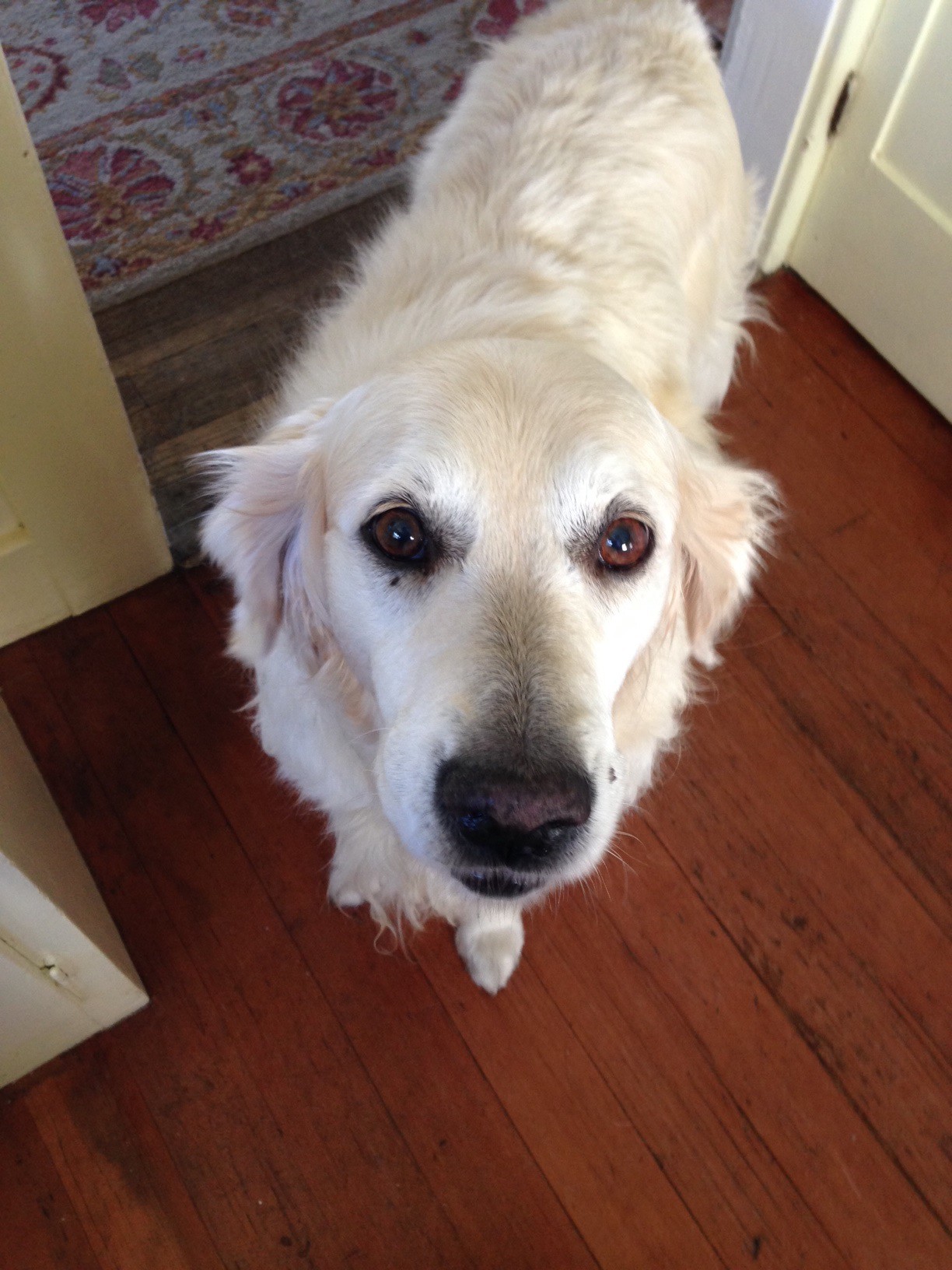
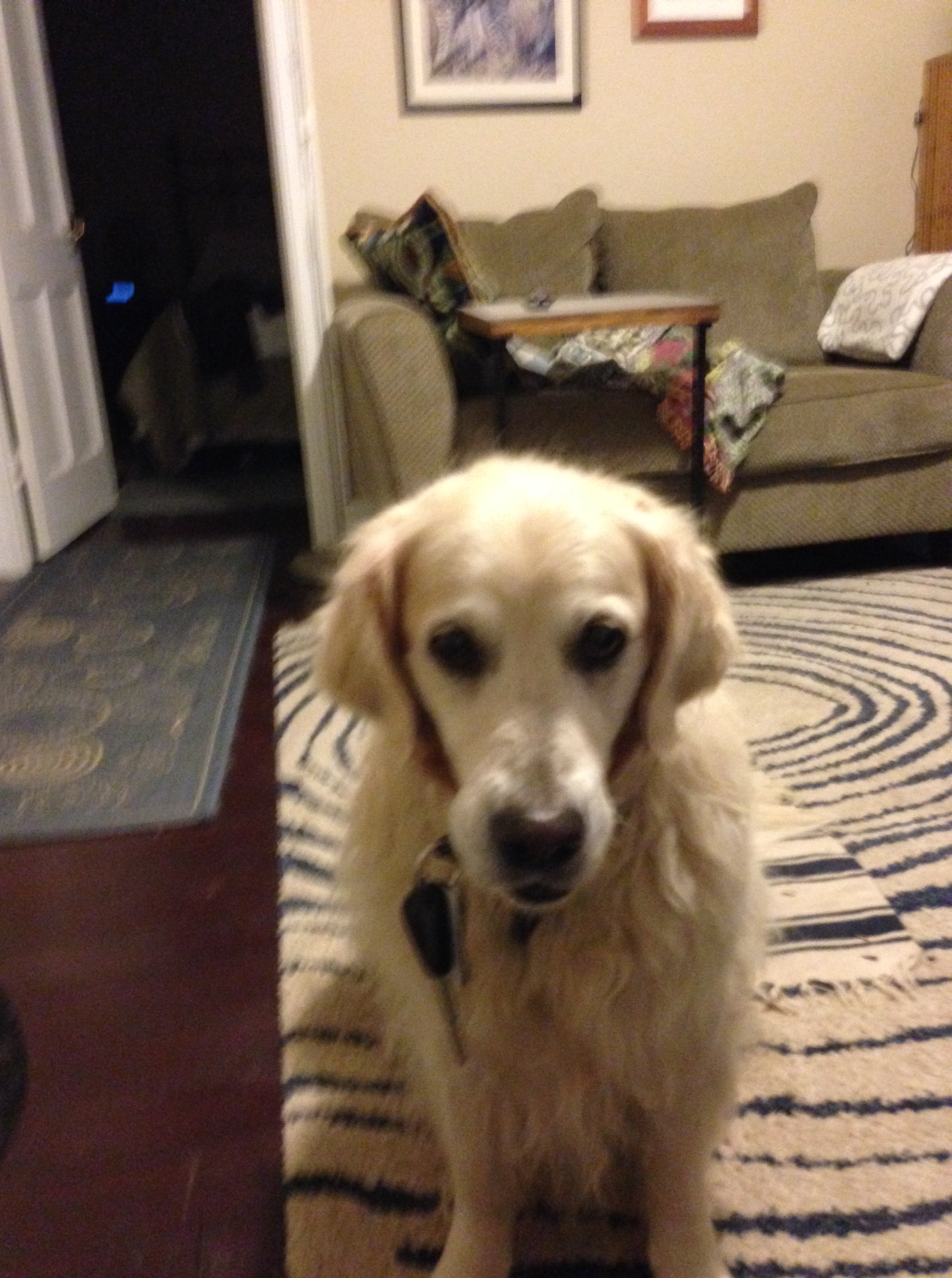
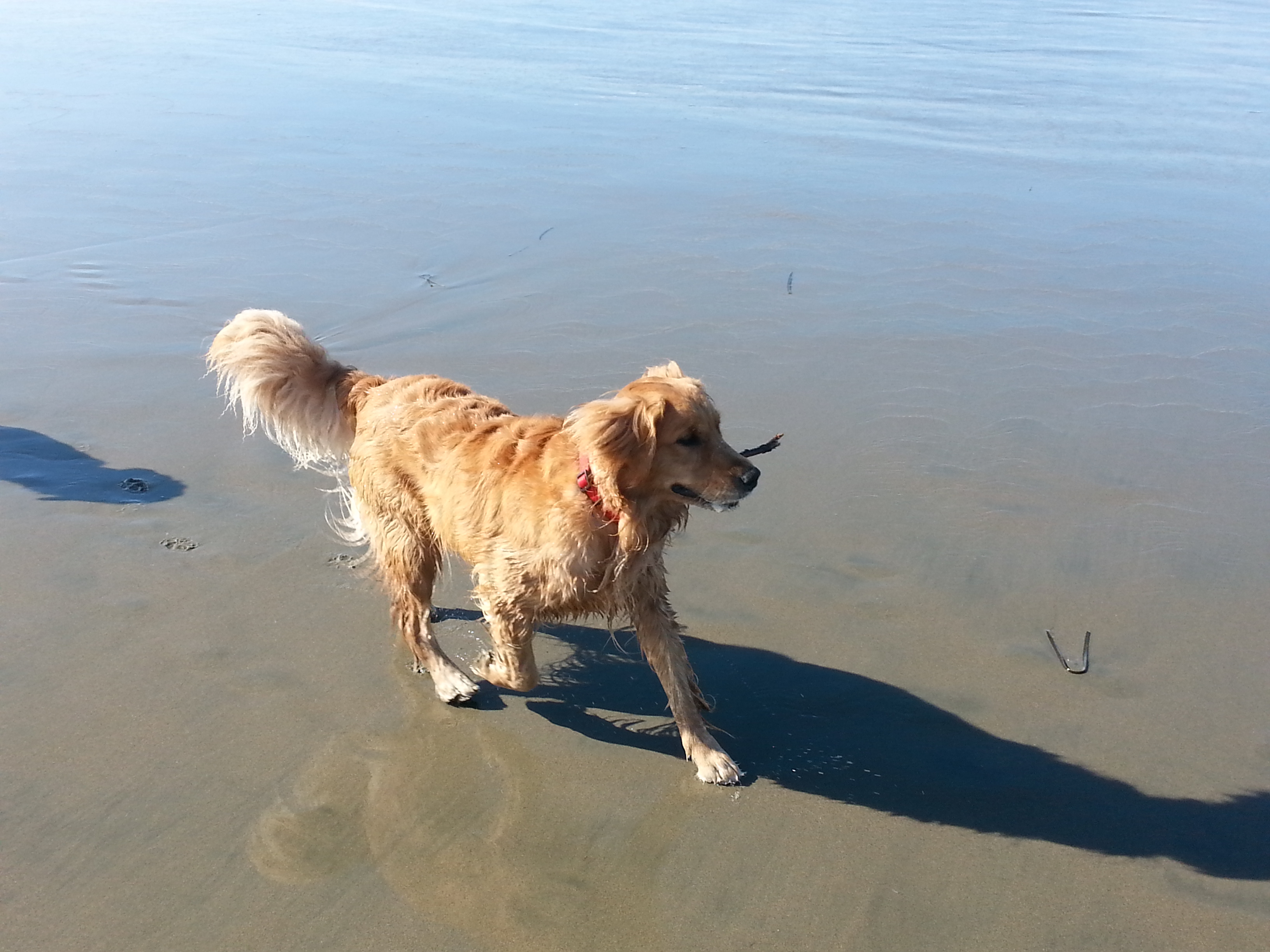
I learned about the “unless they really want to” caveat to the lesson about dogs not volunteering named behaviors too late: I had already taught Jana to speak on cue. She uses her words. A lot. She’s quite opinionated, in fact.
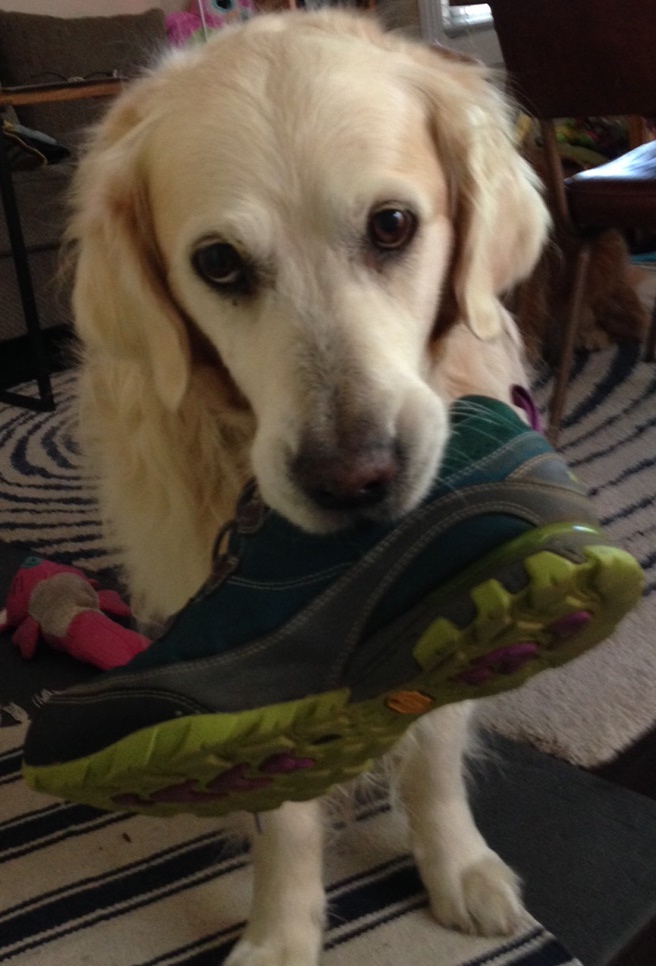
But I digress. The latest example of dogs doing unbidden that for which they have been amply rewarded in the past involves my shoes. I recently wrote about how eagerly Cali and Jana bring my shoes or sandals when it’s time for our morning walk.
Well, now they bring my shoes and my sandals. And a pair of slippers or flip-flops too. I reward the correct two shoes and wordlessly return the others to their proper place, hoping to extinguish this behavior. Not only is the flood of shoes not diminishing, it’s extending beyond walk time.
I occasionally turn around to find Jana, hopeful look on her face, shoe in mouth, standing behind me … at any hour of the day or evening. When I ask for anything — bowl, leash, collar, toy — Cali will often dash off enthusiastically … and return with a shoe.
On the bright side, they are both really good at “getting the other one,” so I never need to worry about being barefoot or mismatched.
So, be careful what you teach your dog; she might be smart enough to turn it into a game you never anticipated.
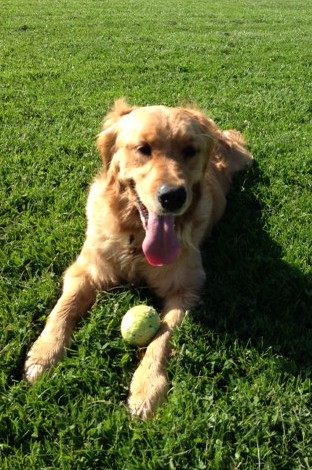

 I sometimes describe Jana as “anxious” because, many evenings, she seems unsettled, distracted, and uncomfortable. She whines or paces, but I can usually settle her down in a few minutes. The technique I learned from Lori, using a body wrap, seems to help a little. Jana also shows what I call anxiety on walks if a vehicle (mostly loud, big trucks, though she seems to harbor a deep-seated hatred of minivans, too) approaches from behind us and startles us. I attribute some of this “anxiety” to the possibility that she’s not hearing things as well as she used to and she gets surprised more often — perhaps she’s also losing some vision. Whatever the cause, things seem to come out of nowhere and startle her more often. Fine, so, she’s a bit anxious and I deal with it.