Bit by Bit

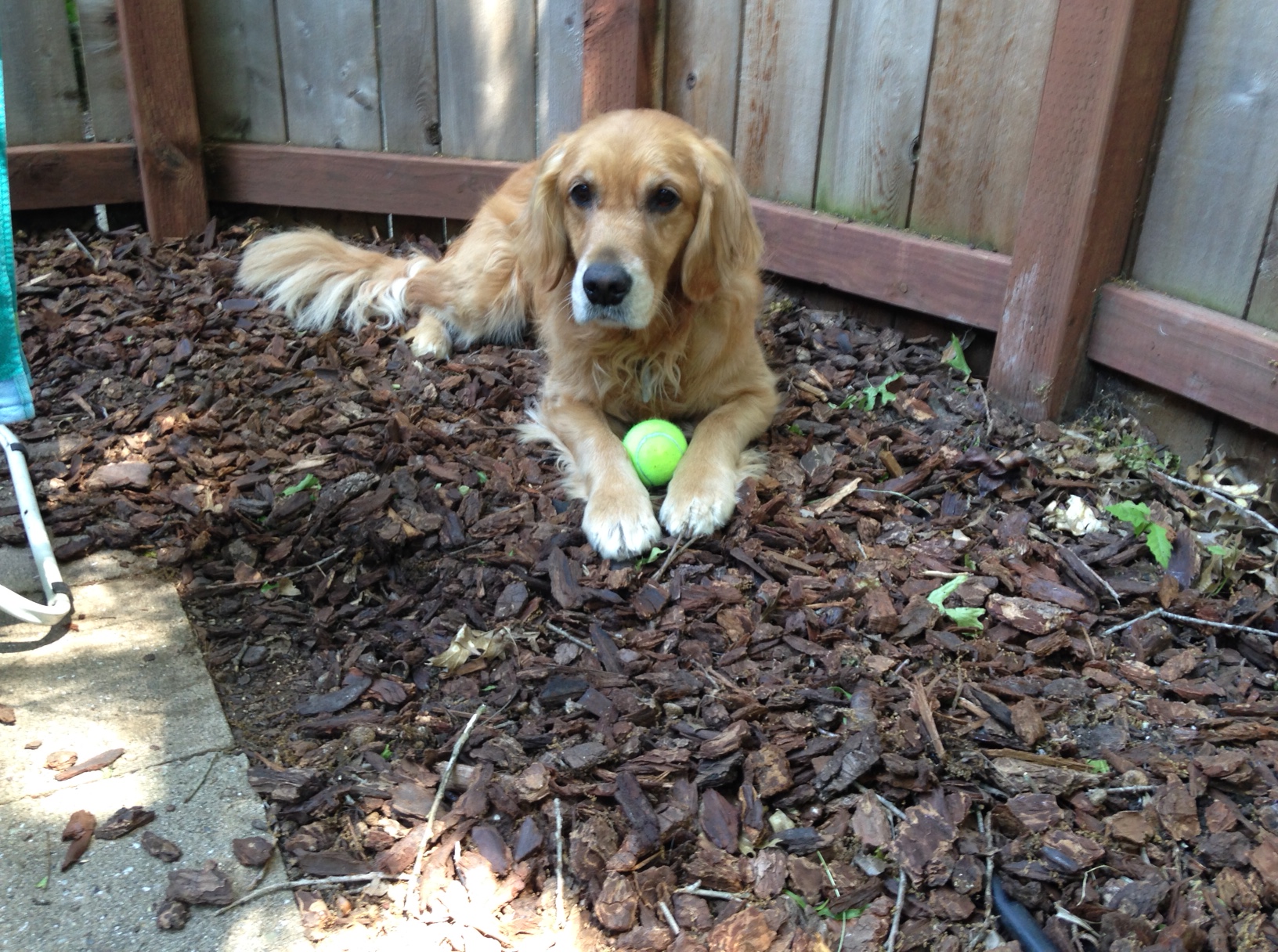
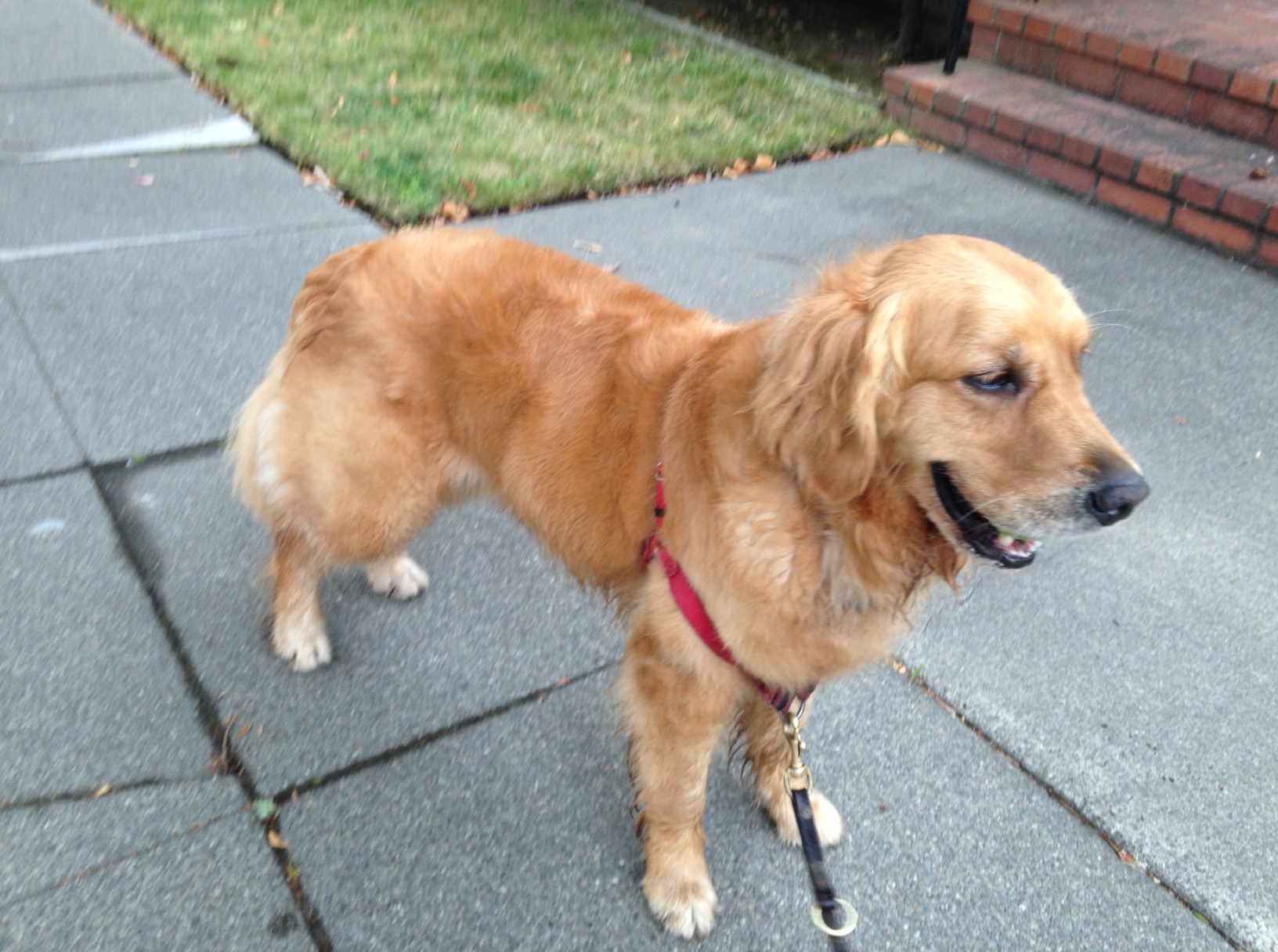
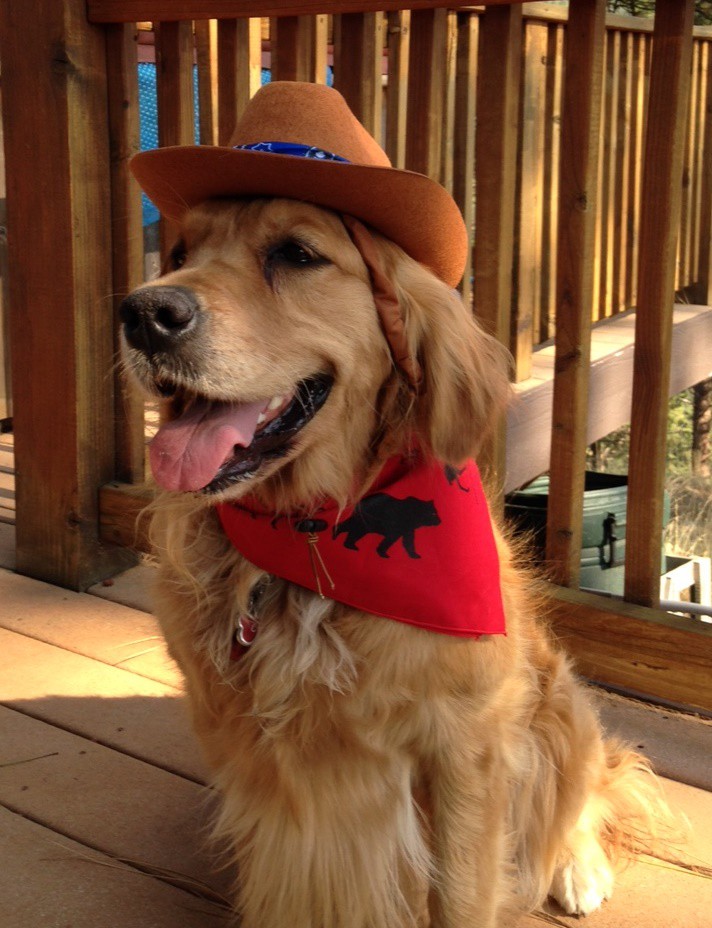
Her motto is “don’t fence me in”; she needs a reliable recall!

For a little over a year, I have been writing for an online “magazine” that covers online learning. Some of my articles touch on various learning theories and how these might be applied in “eLearning” or online training and performance support. Every so often, a source talks about “spaced learning” or “spaced repetition.” It’s funny to me that many of them think they’ve stumbled on a new secret weapon.

Spaced practice is simply practicing a skill or recalling information, maybe by taking a quiz or using flash cards, at short intervals over a period of time. It’s long been known to be effective both in the education of children (and adults) and in the education of dogs.

I first learned about spaced repetition in my first dog training classes. Particularly when working with very young puppies, we paired very short training sessions with spaced practice on the same set of skills. Hmmm, did we also discover microlearning, another current hot topic in eLearning? Maybe so.

Microlearning — very short lessons — certainly worked with our 4-week-old puppies. Two five-minute sessions a day (even one, if we got busy) were enough to teach one puppy I worked with about 15 cues by the time she was 10 weeks old. I’ve used the approach, with great success, with dozens of other puppies and adolescent dogs, but my training skills are becoming rusty from disuse.

I’ve been thinking about both microlearning and spaced learning for two different reasons this week.

One is a conversation I had about a friend of hers who wants to train her dog to help her with some aspects of her MS. The dog already has some foundational skills. The friend, due to her MS, has limited stamina and would only likely have enough energy to work with her dog for a few minutes a day. I found myself telling my friend that that was not an insurmountable obstacle. If she were able to spend a few minutes a day practicing a skill, the dog could learn it very well.

The second reason is my own lapse in spaced practice. When Cali was a puppy, I was very diligent about practicing her recall and working on her willingness to accept grooming, especially handling of her feet and nails. I did everything by the book, practiced almost every day, sometimes two or three short sessions. Cali was a great student. Then life got in the way and I stopped practicing. She now has a mediocre recall and hates having her feet handled. Great.

I know that I can find five minutes a day to work with Cali, and I know that, with the right treats, her recall could again become speedy and eager. That matters here in Montana, where there are many places that Cali could run off-leash.

I’m less sure about the feet, but I could probably get her to be a little less skittish and a little more cooperative. It’s certainly worth a few minutes a day to try. I have a new bag of very desirable treats; maybe I will use them for some remedial training. Wish us luck!


Where’s Cali?

Cali hides in tall grass

Cali has started a new game. When she doesn’t want to leave someplace (Jacob’s Island Bark Park in Missoula, for example), she hides. She’s really good at hiding, too. See if you can spot her in the photos.

I could get angry with her, say she’s misbehaving, that she’s a willful adolescent. I could also admire her intelligence, strategizing, and ability to read my intentions.

It takes a lot of thought and awareness to hide. Her ability to do so shows that she can think about what I can see and figure out where she can go that I won’t be able to see her. She can anticipate going home, decide that that’s not what she wants, and come up with a way to foil my intentions. She can plan and decide not to respond when I call her, and she understands that she has to be very still so I don’t see or hear her moving.

Cali hides deep in some thick bushes

She has to get the timing right, too. She wants to avoid going home, but it would be self-defeating to hide while I was still willing to play ball with her. So she has to read my body language carefully, in addition to parsing the verbal cues I give her. Finally, she also has to know when to resurface so as not to be abandoned (this would not happen, but how can she be sure of that?) or really get me angry.

A few days ago, she hid at the dog park. I might’ve very foolishly muttered something like “we need to get going” before throwing her ball. She took the ball, ducked under a branch, and disappeared. I called her. Nothing. I waited for about 10 minutes, then called some more. Nothing. I was pissed off. I had seen where she entered the bushes, and I went in after her. She was happy as can be, under some bushes with her ball. I grabbed the ball. That got her attention. We walked back to the car with me giving her an earful about what a terrible dog she was, bad to the bone. She laughed.

Then, the next day, she hid in a friend’s garden. I left her there (with the friend) and figured she’d have a nice afternoon in the grass, playing with dog and human friends. She did, but my friend reported that Cali cried when she realized that I had left. She recovered pretty quickly, though, and had fun; my friend also reported that Cali had a fence-fight with the next-door-neighbor-dog — which Cali instigated. But that’s a problem for another blog post.

I’m not really sure what to do about this new trick. I could just not take her to the dog park, but that’s a terrible solution. I don’t think that telling her to “come out right now or we won’t come back tomorrow” would work. She’s smart, but that is probably too abstract and verbose for her. I could punish her when I find her, but that would only motivate her to do a better job of hiding. I could keep her on a long leash, and risk getting it tangled in trees, picnic tables, other dogs …

She hides with her beloved tennis ball, and when she has her ball, she’s not interested in treats, so stooping to bribery is out. I could just wait her out, but I am not sure that my laptop battery would outlast her, and I do need to work.

Deni suggested letting Cali keep her tennis ball with her when we leave the park so that she’s not worried about losing it. In the apartment, all the time. Ick. Cali loves her tennis ball so much. She is happiest when it is really dirty, so she gets is all drooly and wet, then rolls it in dirt. Sometimes she digs a special pit just to make sure it gets totally covered in really fresh, dirty dirt. I’ve generally not allowed her to have the ball inside. If I get desperate enough, maybe …

Anyone have a better idea?

Two Rude Jerks Go Out For a Walk

As Cali and I were walking to the park, we saw a woman with a small terrier-looking dog. I said hello and she did too. Cali was taking a long sniff of the grass near some trash bins, so I moved aside to let them pass.

As we walked behind them, I noticed that the little dog kept picking up his rear right paw. He had impeccable leash manners, which means that the woman wouldn’t be able to see his back paws, since he was walking right next to her (paying attention, Cali?). Also, despite a lot of rain this winter, dry season has arrived. Stiff grass stubble is everywhere, as are foxtails. Cali comes home from walks full of tiny burrs. In other words, prickly things that could easily get embedded in a paw are everywhere.

So I said to the woman, “Your dog is picking up his paw; he might have something stuck in it.”

Her reply: “I’m a good pet owner.”

Is it me or was that an oddly hostile and/or defensive response? Quashing the impulse to say something defensive in return, I said, “I thought he might have a thorn or something in it. That happens to my dog a lot around here.”

She softened a little, I think, and told me that her dog has a congenital knee problem and that’s why he does that.

But, really, is the assumption that I am criticizing your parenting the go-to response for most people? That’s a sad comment on society.

Or maybe it is me. Because, a few blocks later, we encountered another dog walker. As I tend to, I detoured into the street to avoid passing close to an unfamiliar dog on a narrow stretch of the sidewalk. The other walker said, two or three times, “He’s friendly.”

When we were closer, I said, “My dog is nervous around unfamiliar dogs.”

All perfectly normal … except the implication that I was assuming negative things about her dog. Do I radiate an air of disapproval and judgment? (Please do not answer that question.)

The last encounter in this bizarrely social morning was at the park. This time, Cali was the jerk, running off an overly friendly poodle who showed too much interest in her ball. The joke was on Cali, though, because, while she was running him off and then I was reprimanding her, Maui, a dog Cali used to consider a friend, actually stole her ball. We beat an embarrassed retreat before she could challenge Maui to a duel.

I am going back to 7 a.m. walks; the park is empty and the other dog walkers are also trying to avoid dog encounters. That all makes it easier to avoid offending the entire dog and dog-owning population of Petaluma.

It’s All About Strategy

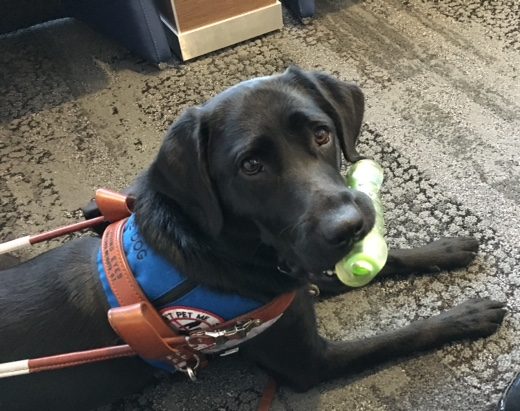
I recently wrote about how Koala uses tools, using a round chew toy as a base and holder to position a more desirable chew (an antler) for better chewing. But there’s more to her entertainment strategy than tool use.

Although she is a two-and-a-half-year-old working adult, Koala still gets puppy lunch. This is a point of contention in the family, because Jana thought she should get puppy lunch forever (but I did not agree), and Cali thinks, not unreasonably, that if Koala gets puppy lunch, she, too, should get puppy lunch.

What is puppy lunch, you ask. Large-breed puppies, because they are growing quickly, get three meals a day. Adult dogs, who only grow wider, get two (and in some cases, one!) meal a day. Puppy lunch is the mid-day meal that goes away when a dog is about a year old. Unless she’s Koala.

The first puppy-lunchless day is a day of infamy and trauma in the lives of goldens and Labs everywhere. Jana never really recovered.

Koala’s puppy lunch is a portion of kibble, served in a treat ball. The ball gets rolled and batted around, dribbling bits of food for Koala to munch. It’s fun. I have several treat balls, and sometimes give Cali food in one. She gets bored with it far more quickly than Koala, partly because she’s less food-focused. But Koala really enjoys her mid-day snack-and-play breaks.

All of that background offers the context for Koala’s strategic play approach. I was watching her eat her puppy lunch not long ago and I saw her using a fairly sophisticated tactic. We were at a hotel (at the Guiding Eyes weekend, actually) and the room had a dresser, sofa, bench, bed, etc. Lots of places a ball could roll out of reach. Koala is an exuberant dog, never more so than when playing, so the ball was getting batted around at a good clip. But it was not uncontrolled ball batting. She’d pounce, roll the ball, whap it with a paw … but always, always keeping track of the many sand-trap equivalents. Never once did she let the ball roll under or behind something. She’d pounce on it or bat it just in time, sending it in a different direction. She almost seemed to be gauging how close it could get to the edge of the bed, say, before she’d lose the ability to steer it out of danger. She’d watch, position herself, and, bam, send it careening away toward the next potential obstacle. It only takes her about 10 minutes to empty the treat ball, so this high-stakes bowling / golf game took place at an impressive level of intensity and speed. She’s really good at this entirely made-up game.

This is certainly not the first time that I’ve seen a dog play a game that she has created. What held me spellbound was both the intensity and the advanced strategy. She had an intuitive understanding of a fluid situation. Much as dogs do when they catch a Frisbee or dive into a river at the precise moment needed to grab the ball or stick as it floats by, she showed a far better grasp of physics than I ever could.

The geneticist at Guiding Eyes says that each generation of their dogs is “better” — smarter, more suited to guide work, healthier — than earlier generations. If the dogs get any smarter than Koala, we won’t need to worry about robots taking over our jobs; the dogs will beat them to it.


Breaking News: Researchers Discover That Dogs Can Remember Stuff!

Science has once again confirmed the obvious: Dogs can remember things.

Specifically, a new study shows that dogs might have something that resembles episodic memory in humans — the ability to remember and learn from events and experiences. It’s a different kind of memory than “semantic memory,” which is memory of facts, meanings, and concepts. While these are learned, they are not experiential or shared with others; they are general knowledge.

Note that I am not at all unsure about this; all the conditional language is how science tends to express “discoveries” about nonhumans doing things that some humans think only humans can do. Like remember or use language. I am sure that dogs can do both, often better than many humans do.

Much of what we formally teach dogs — to sit on cue, to play with their toys rather than chew our shoes, to eat their own food rather than graze the pickings on the kitchen counters — falls into the categories of learning facts and concepts.

But anyone who’s ever taken a puppy to a puppy class has been exposed to a kind of teaching that aims to create positive episodic memories. The goal of “socializing” a puppy — teaching him to love children or not fear loud noises or car horns or skateboards or to feel confident and comfortable when experiencing a loud, busy place — all of that builds on the ability to form and learn from experiences. Episodic memory, in other words.

If your puppy has very positive experiences at her vet’s clinic — Cali’s puppy vet gave out the best cookies — then your dog is less likely to be among those who tremble and shake when the car pulls into the clinic parking lot. Or, worse, those who associate every car ride with an unpleasant experience and don’t even want to get into the car.

If dogs didn’t have the ability to form episodic memories, why would Cali bounce around like a very excited pinball (well, she would if she weren’t securely attached to her doggy seatbelt) when we cross the bridge that takes us to Berkeley and sister Dora’s house?

So, yeah, the scientists have, once again, proven something really obvious about dogs.

What’s cool about this study, though, is that the researchers used “imitation” or “do as I do” training. This sort of training shows that dogs have great flexibility and creativity in their ability to learn and extrapolate. The training works a little like Simon Says. The person tells the dog to “watch me,” then does something unusual. In the study, it was touching an open umbrella. The person then tells the dog to “do it,” and the dog is supposed to imitate the human. It’s pretty cool that dogs can look at our very differently shaped bodies and imitate what we’re doing. That they can and eagerly do join in this silly and fun human game is just one of the, oh, trillions of wonderful things about dogs.

And, I think that the training itself requires that the dogs have episodic memory. It’s not like teaching a cue that means a specific action: You say sit, the dog’s butt hits the floor. Imitation training requires that the dog say to herself, in doggy language, hmmm, I shouldn’t do what I did last time we played this and she said “do it”; instead, I have to watch what she’s doing now and do that.

That is more similar to remembering what you experienced in a place (beach or vet clinic) and deciding whether you are happy to return to that place than it is to remembering that hearing this word means do that action. It’s a different kind of learning, and it is based on experience, not association or remembering a fact.

So. That the researchers could even do this study shows that dogs have episodic memory. Now, isn’t that obvious?

Scary Dog

Cali, puffed up and trying to be fierce
Cali tries to look fierce

A few weeks ago, while Jana was recovering from a vestibular incident and not joining Cali and me on the morning trek to the park, Cali found herself in a scary situation. On the way to the park, we pass a big, old corner house with two doggy residents. We see the younger one at the park pretty regularly. He’s a young husky mix, big and boyish. Cali doesn’t play with him; he’s too high-energy for her. But she’s not afraid of him, and he’s sweet. If he’s in the yard when we walk by, he doesn’t even bark.

His big sister, Diva, is a different story. She’s about Jana’s age, and she aggressively defends her territory. OK, that’s not fair; she barks aggressively, but doesn’t do anything more than bark. When Jana’s passing by, she anticipates Diva’s barking and tenses up. First of all, she just knows that she should be called Diva. Secondly, she envies Diva her large yard. But even beyond all my anthropomorphic projection, there is a bit of a grudge match between these two. Jana wants to preempt Diva’s barking by barking. They hurl insults at each other as I hustle Jana past the yard. Cali feels safely protected by her big sister.

That’s all fine when Jana is there. But on this morning: No Jana.

We were on our way home from the park, which means that Cali was carrying her tennis ball in her mouth. So, we were walking along, and I saw Diva a split second before Diva saw us and started barking. With no big sister there to protect her, and with mom woefully inept at the barking needed to address this dire threat, Cali stepped admirably up to the plate. She puffed up her hackles, making herself as fluffy … I mean, as big and scary … as she could. She barked her fiercest bark. However, that bark, filtered through the tennis ball in her mouth, sounded like a Chihuahua. A laughing, decidedly non-fierce Chihuahua.

Need I even say it: Diva was not impressed.

Not frightened at all by this fierce version of Cali. I wouldn’t have been frightened either; I just wanted to hug her since she was being so cute. I resisted; the humiliation might have done in poor Cali.

I feel for Cali. It must be terribly frustrating when you are trying your darndest to be strong and courageous and scary … and the people and dogs you’re trying to impress just want to hug you. Or laugh. A human teenager might respond by taking up weightlifting or trying out for the football team, but Cali seems OK. Maybe she’s emotionally healthy enough to shake it off. Or maybe she’s just really relieved that Jana’s recovered and back with us on morning walks.

Mind Your Manners

Wylie, a polite dog?Wylie hates peanut butter. It literally makes him gag. That’s why this story, from several years ago, is still one of my favorites: It tells me something really cool about dogs.

When Wylie was about to retire as a guide dog, his best friend t work brought him cookies. Very special gourmet dog cookies. One problem: They were peanut-butter cookies. Deni graciously thanked her colleague and said gently that she wasn’t sure Wylie would like them; he was fussy. The friend said, let’s see. He offered Wylie a cookie. Wylie accepted the cookie with appropriate doggy gratitude and ate it. The friend went happily on his way, feeling good that his gift had been accepted and enjoyed.

Surprised, Deni offered Wylie another cookie. He gave her what she can only describe as a disgusted “Are you nuts? I don’t eat that garbage” look, turned, and walked away. He never ate another one of those cookies.

Was Wylie “just being polite,” telling one of those little “white” lies we all tell when we want to avoid hurting someone’s feelings? Can a dog do that?

Here’s a different way to think about it, though, really, we’ll arrive at the same conclusion: Dogs are very empathetic. They excel at reading and responding to our emotions. Many dog people have stories of dogs offering comfort when they were sad; getting excited when were excited; responding in a way that many people regard as “guilty” when we are angry. In truth, the dogs are more likely to be trying to appease a person they perceive as angry, but they are accurately reading the person’s emotion.

If Wylie got excited about the cookies, he could be said to be mirroring the friend’s emotion: The guy was presenting a gift that he had selected with Wylie in mind, and he was happy to see Wylie get the gift and enjoy it. Or the friend was sad to be saying good-bye. But Wylie didn’t get excited or offer comfort. He offered a gracious and appropriate, but not overly happy, response. (I don’t think Wylie is capable of phoniness.) And he clearly rejected the gift as soon as his buddy left the room.

My explanation is that Wylie was reading the situation clearly and accurately. He’d been around lots of people in lots of social situations, and he knew these two people really well. He behaved as he’d learned was appropriate. He wasn’t, I don’t think, consciously deciding to lie — any more than we consciously decide to lie each and every time we say something that will make someone feel good — or, to more clearly match this situation, every time we say or do something that is nice and socially expected rather than blurt out our first or most honest thought.

Jana, who really has no use for children of any species, is perfectly gracious and polite when being “enthusiastically petted” (she’d say “mauled”) by a child, but she gives me that look that says loud and clear: “Get me out of here, now, please.” And Alberta would dutifully “say hello” to people she and Deni met, but she really didn’t want to; and she expected a cookie as a reward afterward.

So, I would argue, that dogs read social situations and respond appropriately. What is “appropriate” in a given situation varies widely, and it is learned, not instinctive. Some dogs, and some humans, learn better than others. Some dogs do this well with dogs and poorly with humans, or the reverse. Wylie’s social instincts with other dogs were often less astute than his social instincts in this particular human instance.

So, while I’m not arguing that dogs adopt human social manners, I would say that they learn, over time with the same people, what those people think is acceptable. Much about dog-human relationships entails dogs trying to do what they think their human wants; it’s not surprising that this can get nuanced or that Wylie and Jana are good at it.

That Soulful (and Loving) Gaze

Oxytocin is a hormone that plays a role in social bonding, as implied by some of its nicknames: the love hormone, cuddle chemical, or bliss hormone. It’s also something that dogs and humans share.

Studies published in 2009 found that, when dogs gazed at their owners — you know, that adoring gaze that says, “feed me; I’m yours,” owners had more oxytocin in their urine. This correlates with feeling affection and social connection.

You can see where this is going, right? They gaze at us, we interpret it as adoration, we respond by feeling loved and happy. This works well for the dog. For us, too; real or not, we have that great “someone loves me” feeling.

But there’s more to this story. A later study looked at more variables. For example, the oxytocin in dogs’ urine. Did they get the same emotional lift out of the exchange of adoring gazes? Also whether interaction with the humans affected oxytocin in either humans or dogs.

This is where things get interesting.

A note: In both studies, dogs and wolves were used, as a way to determine whether this was just a canine thing, or whether it really has to do with the dog-human relationship.

First, the study looked at the effects if the person and dog exchanged gazes only, versus when the person also interacted with the dog, talking to her or petting her. No one was given oxytocin in this study; dogs’ and humans’ levels were measured before and after. The dogs and owners who spent the longest time gazing and interacting with each other had significant increases in their oxytocin levels — the dogs’ levels as well as the people’s. The dogs like the attention — even you, Jana! The gaze-only dogs and the shorter-gazing couples had small or no increases. Neither did the wolves.

A variation of the study had researchers administer oxytocin to some of the dogs to see whether the amount of oxytocin in their bodies made a difference. Then, the dogs and humans were allowed to gaze at each other, but the humans were not allowed to intentionally interact. If the dogs touched the humans, it was noted, but the humans were not allowed to respond by petting or talking to the dog.

So, was there a change in the dogs’ behavior if they had higher (administered) oxytocin? There was — but only for female dogs. With more oxytocin, they gazed at their humans for a significantly longer time; the length of their gaze at a stranger wasn’t affected. Male dogs actually gazed at their owners longer if they had not received oxytocin. The wolves didn’t really gaze at the people.

Not to knock boy dogs, but … maybe they’re just not that into you.

Seriously, what this all means — according to the researchers, anyhow — is that a mutually reinforcing loop occurs (particularly with girl dogs). They gaze at us, we look back, babble nonsense at them, rub their bellies … Hmmm, how do they gaze at us while we’re rubbing their bellies? OK, we stroke their long, soft ears and gaze back into their eyes. And everyone feels all warm and mushy and loved, so the girls keep staring at us, to keep this good thing going. More gazing, more oxytocin, so more and longer gazing, and the cycle continues.

Gazing is important in human social bonding and communication, starting when babies nurse. Lots of research shows that dogs use humans’ gaze as communication — and use their own gaze to communicate with us. And, as I wrote a couple of weeks ago, dogs choose to hang out with us. All that, to me, adds up to a mutual bond that is very rewarding to all of us, including the dogs. That, and they need someone with working thumbs around to get access to their dinner.

Racial Profiling

A new dog shows up at our park play group. Is Cali interested in meeting or playing with this newcomer? Is she curious? Is she hesitant, cautious? Or does she simply head for the other side of the park and ignore the new pup? And what about Jana?

That depends on several things.

When the newcomer is a puppy, I can be absolutely certain that Jana wants nothing to do with him or her. Cali might, but she tends to watch new pup interact with some other dogs first.

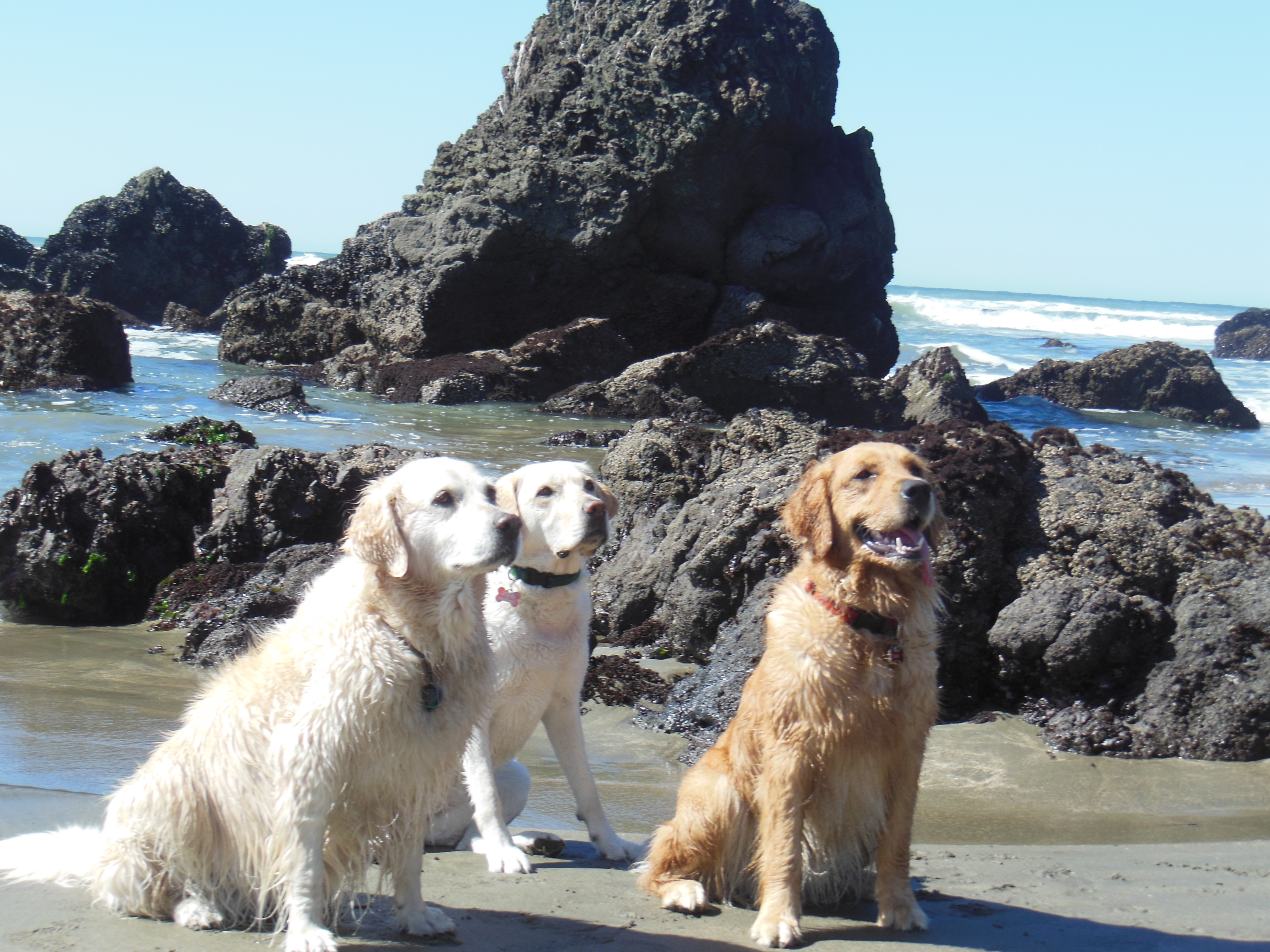
What about adolescent and adult dogs? Large dogs get a wide berth. Small dogs get more interest. But the one time I can be certain that Cali will go right over and say hello to a new dog is when that dog is a golden retriever.

Cali’s very wary of shepherds and huskies. She’s open to small poodles and terriers. A little nervous around very high-energy dogs. Very leery of big dogs, though once she gets to know them, she’s fine. She finds boy Labradors overwhelming, but has had a few Labby girlfriends. Cali’s the most relaxed with her sister Dora and a couple of other dogs she knows well, all Labs or goldens. Anyone who shows any interest in her ball is definitely off the potential friends list. Unless it’s a golden; then they can talk.

Cali is racially profiling dogs. Jana does it too. When Jana was a puppy, if we saw another dog up ahead on a walk (we didn’t have a great neighborhood park with a play group), she’d react completely differently, depending on the breed. Jana is a little broader-minded than Cali; she loved Labradors and goldens equally from early puppyhood. A Lab or golden up ahead would mean eager dancing at the end of the leash and maybe even pulling toward the potential pal. Any other dog, big or small, and Jana would slow down and walk very close to me, a bit nervous and unsure. She’d be fine once she met and got to know a dog of any breed, as long as the dog had good manners. But retrievers, dogs who looked like her — they were OK from the get-go.

It’s not just based on experience. One of the first nonfamily goldens Cali met at the park was an unusually bad-tempered young man who snarled and lunged at her. That did not make her wary the next time she saw an unfamiliar golden.

It’s not only a golden thing, either. A smooth-coated collie puppy I was working with, the lone collie in a sea of Lab puppies at a service dog training school, literally danced with joy the first time a staffer brought her smooth collie service dog to visit. I’d never seen him so happy, and he was generally a pretty cheerful guy. Then there are the German shepherds at the park. The young girl likes to play with Cali. Cali has, on a couple of occasions, accepted the play invitations. Sometimes, while she’s thinking about it, another shepherd, either a young male or an older, long-haired shepherd, will show up. Young girl is immediately off to play with the other shepherd. During breaks in that play, though, she tries again and again to invite Cali to play. She strongly prefers shepherds, but young golden girls are second.

We can’t really hold it against them; people racially profile dogs all the time. What else would you call legal restrictions on owning dogs of certain breeds or apartment rental policies or insurance policies that exclude specific breeds, without any attention to an individual dog’s personality and behavior? But I don’t think dogs learned it from us; I think they are hardwired to recognize — and feel more comfortable with — dogs of their own breed.

Bubba for President

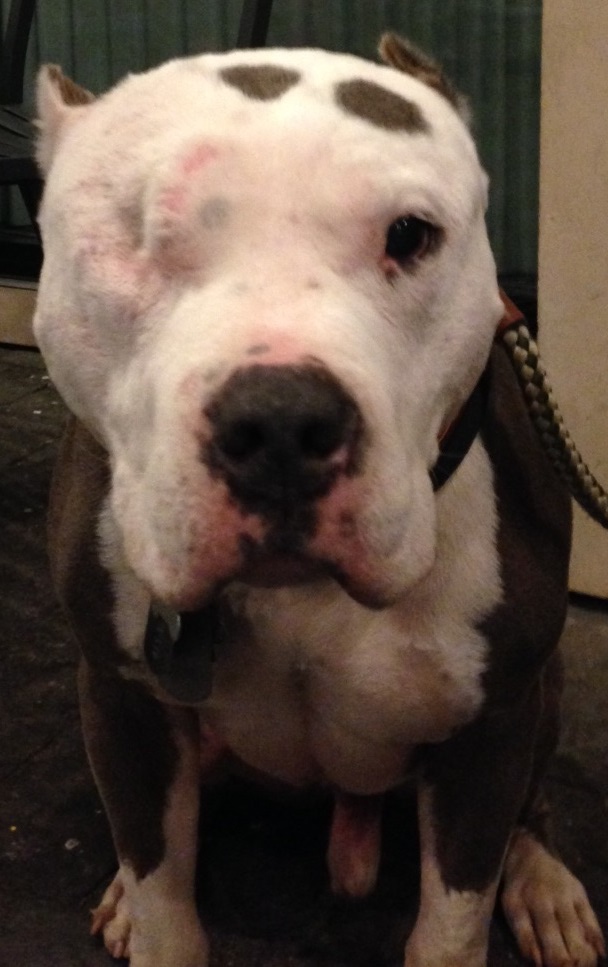
My name is Bubba, and I approved this message.

I spent some time recently with a wonderful dog, Bubba. The first time we got to hang out was right after a particularly vulgar Republican presidential debate, and the contrast got me thinking about how this dog (and many, many other dogs) embody traits I’d like to see in a presidential candidate but that are sadly lacking in the current Republican contenders.

Some background: Bubba is the spokesdog for a local rescue organization, the Petaluma branch of Marley’s Mutts. He experienced some of the worst abuse that anyone can imagine. Actually, it’s worse than I could have imagined before reading his case file. The amazing Sacramento DA who put Bubba’s tormentor in prison, will be Skyping in to my dog law class, so I had to read the entire file.

I generally don’t give my students “trigger warnings,” but before posting these documents, I not only warned them, I put little Adobe sticky notes in the PDF to flag particularly graphic sections. It was that bad. I won’t go into details here, except to point out that Bubba’s missing eye is the result of repeated injuries caused by the monster who abused him.

So why does Bubba trump any current candidate in the Republican field?

He’s not angry or vindictive. He’s suffered real injury, unlike many Tea Partiers or angry primary voters. Rather than seek a scapegoat or, say, hold all white men responsible, he has forgiven all humans. He loves everyone. He eagerly approached every new person who entered the fundraiser where I was visiting with him. His tail was always wagging, his face openly welcoming and friendly. He was gentle with small children. He appropriately introduced himself to and played with a 4-month-old Rottie puppy who stopped by, and he was equally friendly with the several other dogs there.

He’s goal-oriented, too. When he detected a whiff of potential treats emanating, say, from my pocket, he focused on me like a laser, using the mind meld that Jana has perfected over the years. “Feed me a Charlee Bear. Feed me a Charlee Bear.” It worked. He also mind-melded the server, who brought him at least six cookies, and that was just what I saw. Nothing gets past this dog; he carefully checked all newcomers for the scent of treats. He just might be a Labrador wearing  a very convincing disguise.

Bubba doesn’t back down in the face of an army. When he met my class of 20 students a week later, he sized up the challenge, then gave each one a warm greeting — and the sniff test. He very quickly figured out that the little black pouches many students had contained treats, and he went to work. The students never stood a chance. Bubba probably didn’t need dinner that night.

What else does candidate Bubba have to offer? I’m not sure what his health care plan includes beyond “kisses to make it better,” but the price sure beats my current insurance, and it is a treatment with a long track record of success. His education platform emphasizes motivation and rewards. And, though we didn’t discuss specific issues, his domestic and foreign relations approach heavily focuses on interspecies cooperation, collaboration, and peacemaking; he disdains the threats, calls for attacks, and shunning of those who are different that are so much a part of the current campaign.

In all, he’s an admirable candidate. He’s overcome a difficult past, shows intelligence and integrity, and has a demonstrated ability to cross the (species) aisle and negotiate favorable deals. Bubba has my vote!