What’s Missing from the Conversation

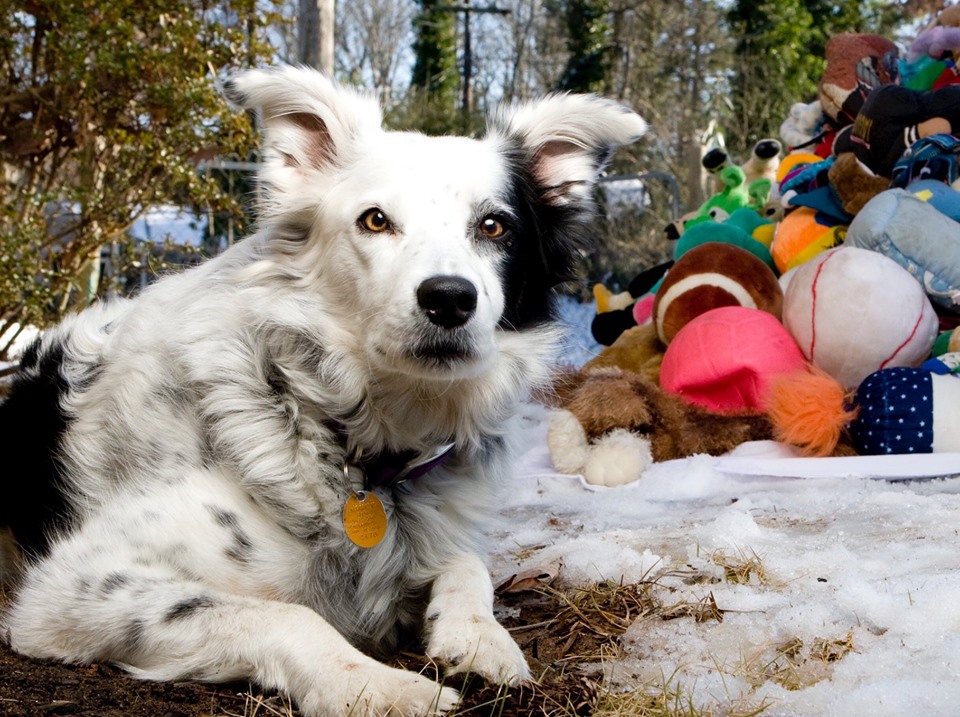
Alberta, a now-retierd yellow Labrador guide dog, leads DeniI wrote a post a few weeks ago about proposed new rules for flying with service and support animals. Lucky for me, most Thinking Dog readers are kind and thoughtful individuals.

Deni wasn’t so lucky. That could be because she had more than 2,000x as many readers as I generally do … in just the first 3 days (and no, that’s not a typo).

The comments on her article, and on the proposed rules at the DoT site, reveal much about our society. And why the concept of ESAs has been so badly abused. They follow several general themes:

  • People who hate animals, kids, anyone who writes about animals, and pretty much the whole world. (These are best ignored.)
  • People who think all animals should be banned from airplanes, including guide and service dogs, due to their own (or others’) allergies. (Not gonna happen.)
  • People who say they cannot or will not fly if they cannot bring their ESA.
  • People who use service animals and oppose any sort of behavior or health check or documentation.

What is missing from this conversation, as well as from the laws and proposed new rules, is attention to the animals’ welfare and needs.

Some of the people who can’t or won’t fly without an ESA could well be able to meet the legal threshold for a service dog. Others have generalized and severe anxiety or anxiety specifically about flying, so the presence of an animal is of comfort and helps them cope.

I am sincerely empathetic. At the same time, I think that’s a lot of responsibility to place on an animal, especially one that has not been trained to work under stressful circumstances. Public access is stressful for any animal, but especially one that essentially lives in a familiar home, rarely leaving except, in the case of some dogs and cats, for walks around the neighborhood. Airports and airplanes are about as stressful a situation as I can imagine.

I also worry that someone with severe anxiety would be stretched to the limit taking care of their own needs and would be unable to safely handle an animal, intuit and meet its needs, and keep themselves, the animal, and other passengers safe.

The untrained pets used as ESA are often terrified by the commotion, cramped quarters, noise, smells, and general awfulness of airports and airplanes. And that is exactly the problem: No one is evaluating the animals or training them to get used to public access. People with ESAs do not have the right to take them in public (the ADA gives that privilege only to people with both a disability and a trained service animal) and no training is required, so even if the people wanted to prepare their animals, they cannot legally do so.

Like other pets, most ESAs spend the majority of their time at home. Then, suddenly, they are taken to the most stressful place possible, by a person who is extremely anxious. As a living being with needs and fears, the ESA needs and deserves the protection of its person — a person who at that time is very unlikely to be able to provide that protection.

The law currently allows anyone whose mental-health professional (or internet store) supplies them with a letter attesting to their own need for the animal. Nothing addresses the suitability of the animal or its welfare, and nothing safeguards the public from terrified animals (mostly dogs) behaving like terrified animals: Growling, yowling, snarling, lunging, biting, peeing, etc. It’s a testament to how resilient and generally amazing dogs are that there have not been far more bites.

I am a former service dog trainer and am adamantly opposed to creating barriers to access for people with disabilities. At the same time, I do not think it is possible to protect public safety — including the safety of service dog teams — without limitations, such as a public access test and health requirements.

Public access with a service dog in a no-pets area is a privilege that does not include the right to endanger others or trample their rights. The ADA builds that in; a service animal that is dangerous or behaving inappropriately can legally be excluded even if the person has a disability and the animal is fully trained to mitigate that disability. The current ACAA rules on ESAs do not. And it is not reasonable or realistic to expect TSA officers or airline gate agents to be able to assess which animals are safe and which are not — and to be effective at barring those passengers and their animals.

There are ways to make health checks and public access tests easy, certainly no more complicated than getting a disabled parking placard in most states.

Thousands of dog trainers are capable of administering a CGC test, for example. A public access test could be similar, and it could be conducted by any certified dog trainer in a place the team goes anyhow, like Walmart or the supermarket.

Keeping your dog healthy and being able to show that the dog is vaccinated are minimal standards when taking your dog anywhere, even the dog park.

I don’t see these as huge obstacles or burdens. One comment I saw talked about the nearest Walmart being over an hour’s drive and said having to go to a testing site would be an enormous burden. If that person never, ever goes to that distant Walmart, or anywhere else in public with their service dog, they wouldn’t need to do the test. If they do go there, even rarely, doing a test there once every year or so is not a huge ask.

Airlines could help out by keeping paperwork on file, though, as they keep seating preferences and contact details for mileage club members. Asking people to jump through the same hoops every time they fly is absurd, especially for anyone who flies multiple times a year. Linking the health certificate and other info on the team to a flyer’s frequent flyer profile, with a flag for annual updates, is very easy in our digital age.

Allowing only trained, professionally evaluated animals to fly in the cabins of airplanes, and asking that other animals either remain in carriers that fit under a seat or that their owners make other arrangements is common sense. It respects the rights and safety of people with disabilities who have trained their (mostly) dogs and rely on those dogs’ assistance. It also respects the rights and safety of everyone else.

My comments are, of course, my opinions; reasonable people may well disagree. I think that Deni wrote a solidly researched article that presents a real problem and suggests viable solutions. I encourage you to read it, read the proposed rules, and comment. The 60-day comment period opened Feb. 5 and ends in early April.
Maisy’s Emotional Support Dog

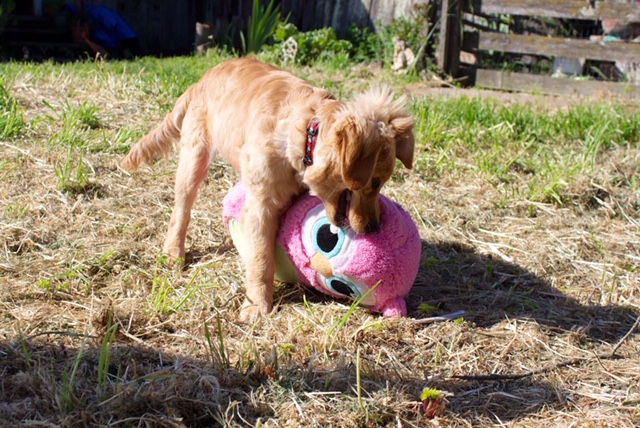
Cali is thickly covered in sand
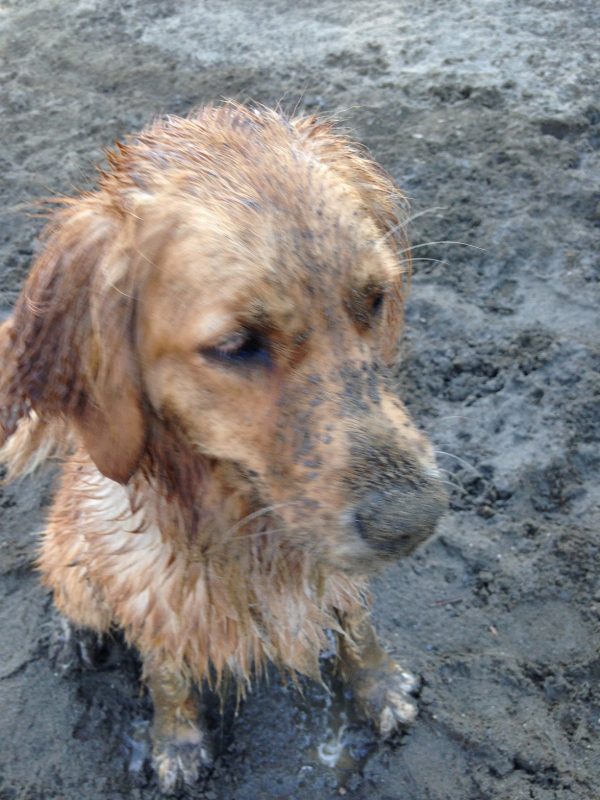
Cali learned from Jana how to completely cover herself in sand

Cali’s best friend, Maisy, a young poodle, is a bit shy. When she sees strangers, she gets nervous — especially if the people have a dog with them. Sometimes she can’t help herself: She barks at them.

Cali is the complete opposite. When she sees strangers, she thinks it’s the best thing ever. She wriggles with joy and drags her mom over so she can say hi.

Recently, I had the two of them on a walk. We encountered several other people.

  • The first time, Cali was busy looking for peanuts under a tree where our neighbor feeds the squirrels and, quite uncharacteristically, she ignored the person. Maisy looked nervously at him, then at Cali, and she, too, started sniffing around in the snow.
  • Next up, a friendly 20-something guy. Cali saw him from a block away and started getting excited. He reached out a hand to pet her and stopped to say hello. Maisy stuck close to me, watching carefully. She started a “woo…” but when she realized that Cali wasn’t scared, she stopped mid-woof. She stretched her nose out to sniff the guy but ducked back when he reached to pet her.
  • Finally, we met a third person. Cali again said hello, all wags and wiggles. This time, Maisy watched for a moment, then very cautiously poked her nose in to sniff — and say hello.

On the way home, we passed a couple of people who were shoveling snow, and, again, Maisy thought about barking. “Woo…” — and reconsidered. She held her head up and walked past, looking pleased with herself (while checking to make sure Cali was close by and still thought things were okay).

Maisy’s still nervous on walks when Cali isn’t there. But watching her watch Cali and think about how to respond was interesting. She showed me that dogs do learn from one another — I mean, learn something other than where the muddiest digging spot is in the back yard, how to deconstruct a toy, and the best strategy for rolling in sand to ensure maximum fur coverage.

And perhaps Cali has a great future as an emotional support dog — for other dogs.


HUD Also Tightening Rules for Emotional Support Animals

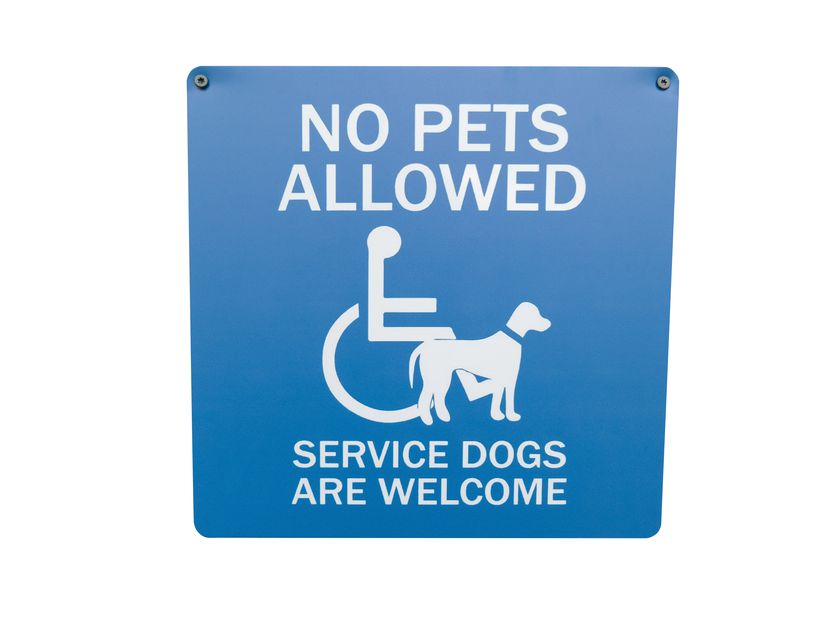
sign reads "no pets allowed. service dogs welcome."

The DoT is not the only government agency that is tightening its rules around service and emotional support animals. On January 28, HUD, the Department of Housing and Urban Development, released a notice of its updated rules.

A quick review:

  • The ADA, the Americans with Disabilities Act, allows people who use service dogs to take their service dogs with them to most public places.
  • Air travel is not covered by the ADA. The Air Carrier Access Act (ACAA) covers air travel. The Department of Transportation (DoT) announced proposed changes to the rules around travel with service and emotional support animals. Public comments will be accepted until mid-March.
  • HUD governs housing laws. The new rules have been announced without a public comment period.
  • The ADA public access laws apply only to service dogs (and some miniature horses); a person who has gotten an accommodation for an assistance animal that is not a service dog does not have the right to take that animal to public places that are not open to pets (for example, restaurants, stores, etc.).

HUD’s goal is to help housing providers understand their rights and obligations — and to help housing providers determine whether a request for an accommodation is legitimate.

Both the HUD and the DoT are reacting to dramatic increases in the number of requests for accommodation of emotional support dogs, including requests to allow a huge variety of animals, not always animals that are commonly owned as pets. They are also getting large numbers of requests with no or minimal documentation, including letters provided by online providers.

HUD’s new rules:

  • Adopt the ADA definition of a service dog
  • Treat service dogs and other assistance animals differently
  • Require that individuals ask for an accommodation for an assistance animal
  • Require that individuals provide “information that reasonably supports that the person seeking the accommodation has a disability” — and make the truth and accuracy of this information a requirement of the lease (that is, if the person is later found to have lied about having a disability, the housing provider could evict them)
  • Require that individuals provide “information which reasonably supports that the animal does work, performs tasks, provides assistance, and/or provides therapeutic emotional support with respect to the individual’s disability” with a similar provision about the accuracy of the information

Finally, with rare exceptions, housing providers do not have to accommodate animals that are not commonly kept in households as pets.

The document includes guidelines on what constitutes a “reasonable” accommodation and on how to document a need for an assistance animal that is not a service dog.


Daniel Was Robbed

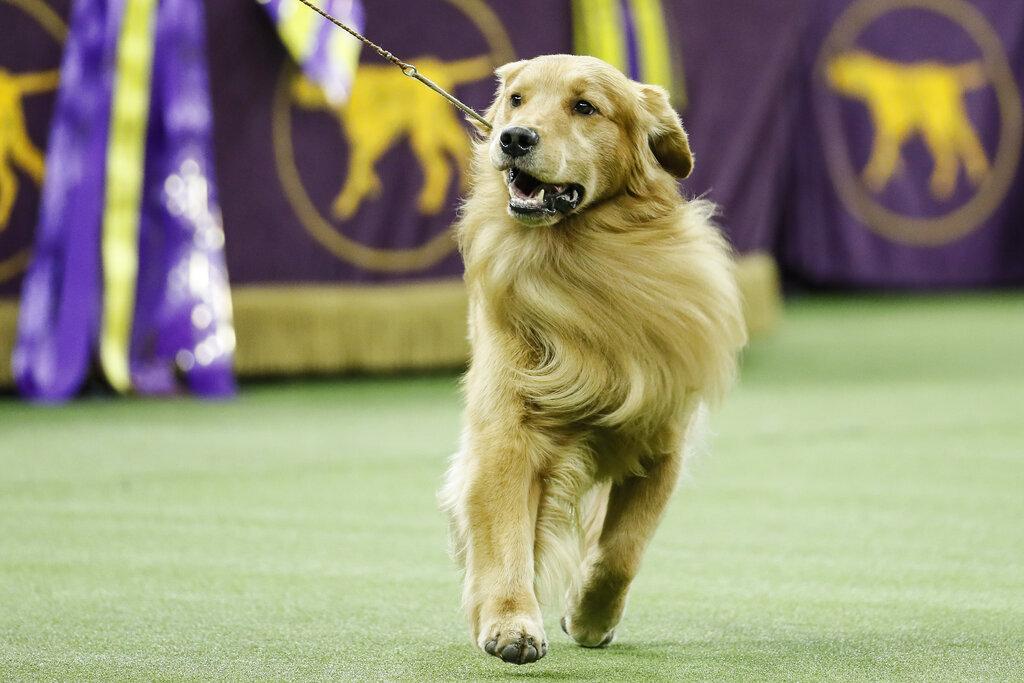
A gorgeous golden retriever runs in the show ringI speak for Cali and for golden retriever fans everywhere when I echo the shouts on Twitter: Daniel was robbed!

Daniel is, of course, a golden retriever. Not just any golden retriever. He won Best of Breed and then won the Sporting Group at this year’s Westminster Kennel Club Dog Show. He lost Best in Show to a poodle.

Some of my best friends (and Cali’s) are poodles, but really. That haircut. And did the poodle hug her handler when they won? Or even smile? Did the poodle carry her own ribbon?

Of course not. That’s all so golden-ey.

According to the Washington Post, Daniel’s not bitter. When he got home, he did what goldens everywhere do to relax: He dug a hole in the back yard and lay down in the mud. Cali’s kind of guy for sure.

We’ll be rooting for you next year, Daniel.

Your Dog May Be a Math Genius

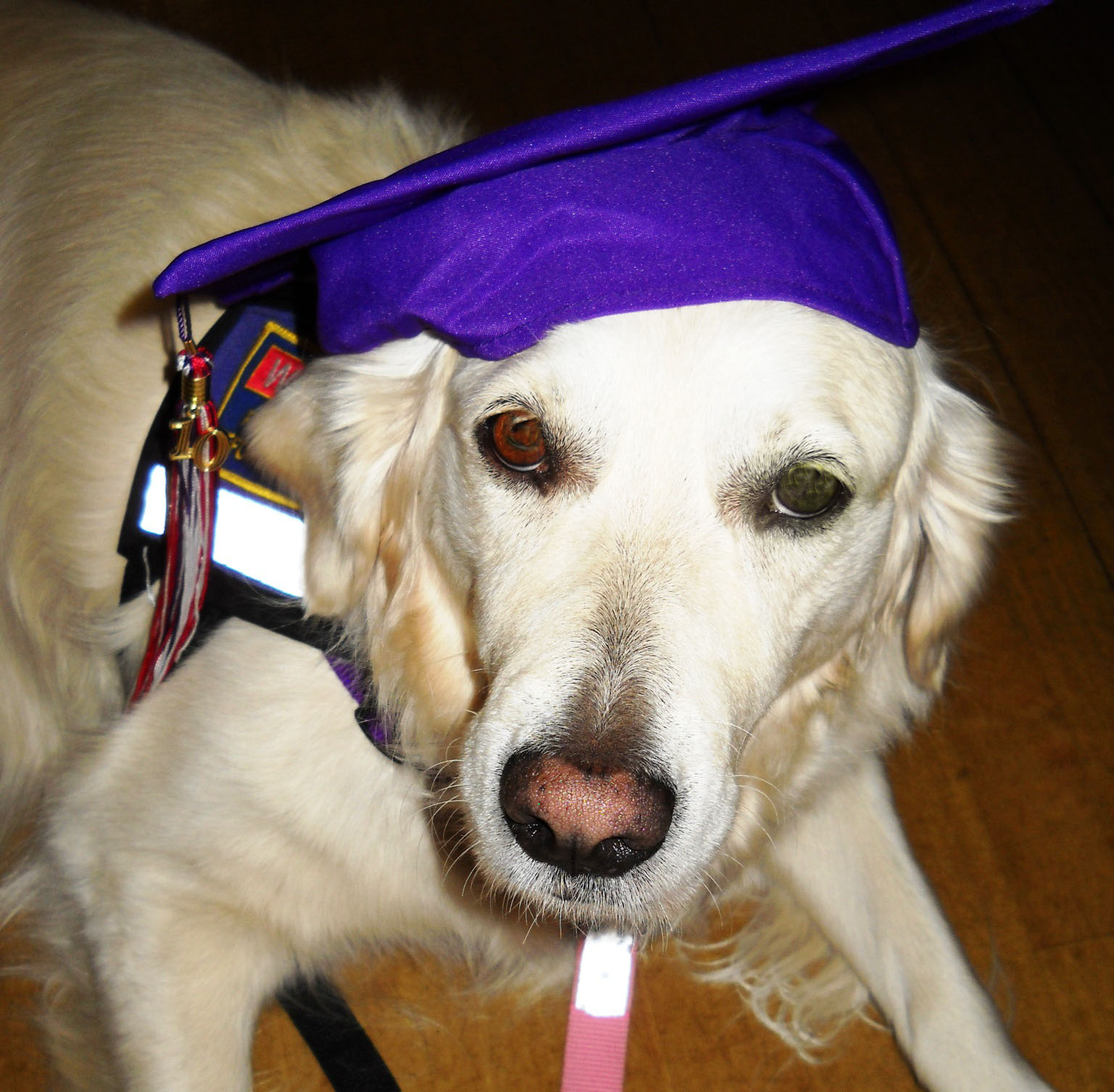
Jana, a golden retriever, wears a graduation mortorboardAnyone who has ever out two treats in her pocket and then given her dog only one knows that dogs can count.

Well, it’s more nuanced than that.

Despite many hoaxes and dubious claims, dogs can’t actually count, at least not without extensive training — but dogs are aware of quantities and relative sizes, without any training at all. And, it turns out, they use the same part of their brains that humans do to assess the approximate number of items in an array or group of items.

About those treats — they definitely know when they are being shorted, or the other dog is getting a bigger piece. And they always know when there is (or recently was) a treat in your pocket. They have excellent noses, you know.

Researchers at Emory University (including my favorite dog researcher, Dr. Gregory Berns) put their well-trained dogs back into the MRI and showed them various groupings of black dots on gray backgrounds. This study doesn’t sound like it was as much fun for the dogs as the ones where they got ordinary treats and good treats so the researchers could see how the pleasure centers in their brains lit up … but I bet the dogs were paid well in treats after all the dots.

The published paper talks a lot about the different parts of the brain, but the upshot is that humans and dogs (and lots of other mammals, apparently) react differently when seeing a small quantity of something (fewer than 4) vs. a larger quantity. This useful skill, called numerosity, benefits both predator and prey animals in their search for food or attempts to avoid becoming food.

The dogs in the study had no math training prior to their MRI experience. The advanced mathematical skills that (some) humans possess use the same area of the brain. I wonder how far the above-average dog could get in math with the right teacher.


Doggy generalists and doggy specialists (part two)

Cali eyes a bowl of ice cream
Is that for me?

Add New

A couple of weeks ago, I wrote about dogs learning to generalize — to apply a cue in different environments. Dogs can also learn to specialize.

What I mean by that is that they can learn that a cue or rule applies only in very specific situations. For example, I have a TV-watching sofa in the basement that is dog-friendly. I have a living room sofa that is not dog-friendly. The dogs know that they are allowed on the downstairs sofa but not the living-room sofa. (Though, when’s she’s feeling grumpy, Cali has been known to sneak onto the living room sofa, quickly jumping off when I approach and faking nonchalance as she heads to the bedroom …)

Even more specific — the dogs know that they are allowed on the bed only when a particular blanket, the “dog-proof cover,” is on the bed. When that cover is being laundered, Cali will poke her head into the bedroom, scowl (yes, she scowls), and stalk off.

Koala knows to check with her mom about getting on beds and furniture in new places when they travel; she recognizes when a “dog-proof cover” has been deployed and it’s safe to jump on. She’s also much better than Cali about following the rules.

Wylie, Deni’s German Shepherd guide dog several years ago, learned an interesting lesson: Puppy Wylie was chasing wild turkeys in the front yard of Deni’s Montana home when the turkeys played a little prank on him. They led him on a wild chase … right into a wasps’ nest. Wylie never chased turkeys again. Unfortunately, he failed to generalize the “don’t chase wildlife” rule and continued chasing deer until he had some firm training.

Dogs generalize and specialize about all kinds of things. They learn which things are their toys and which things they are not allowed to chew on — even when they share a home with small children whose toys look a lot like dog toys. They learn what they are and are not allowed to eat. They might know to bark at some noises and not at others or that they can get on the bed only when invited.

Dogs’ ability to specialize and generalize can get humans into trouble.

What if, for example, you have been strict about not feeding the dog from the table, teaching your dog to lie quietly while you eat. But … your spouse sneaks her treats on the sly.

You’ve begun to notice that, although the dog behaves while you are eating alone, if your spouse is there, she begs. Even worse, whenever anyone else is over, she hovers hopefully, testing each new person to see whether he’s a stickler for your rules — or is a softie, like your partner.

This points to a universal human failing: Inconsistency.

The dog has learned not to beg from you at the table. She has not generalized the rule to “no begging at the table.”

Instead, she has taken what you intended as a general rule and figured out that not all the humans know or care about this rule. Indeed, she has exploited the begging loophole (along with her long blond eyelashes and her talent at manipulating your humans…) to establish two different rules: She has determined that the specific rule is “do not beg from mom” and the general rule about begging is “it depends.”

Then, she has decided that she needs to figure out which rule each new human uses. Some will be sticklers; some will be softies.

Unfortunately, the more people in a household, the more likely it is that they will enforce rules inconsistently. Even in a household of one, alas, it is possible (likely!) to enforce rules inconsistently, leading the dog to learn rules that are quite different from what was intended.


Flying Dogs, Redux — Comment Now on Proposed Rule Change

Department of Transportation logoWell, it’s the topic that never dies. In a post just over a year ago, I shared the “final” rules that the Department of Transportation issued on traveling service and emotional support animals. My skepticism of the “final” part was well-placed. The DoT is proposing a new set of “final” rules.

These changes would bring the rules for air travel more in line with ADA laws governing public access, including recognizing psychiatric service animals.

The new rule would define a service animal as “a dog that is individually trained to do work or perform tasks for the benefit of a person with a disability,” echoing language from the ADA.

The most dramatic changes are limiting travel access to service animals — specifically, service dogs — and no longer requiring airlines to accept emotional support animals in the cabin or treat them differently from pets.

The proposed rules would also allow the DoT to create forms “attesting to a service animal’s good behavior, certifying the service animal’s good health, and if taking a long flight attesting that the service animal has the ability to either not relieve itself, or can relieve itself in a sanitary manner” — and allow airlines to require that passengers traveling with service animals complete these forms.

Other provisions include allowing airlines to:

  • Require that passengers traveling with service animals check in earlier than other passengers
  • Limit the number of service animals to two per passenger
  • Require that the service dog(s) fit within the passenger’s foot space in the cabin
  • Deny travel to animals showing aggression

Notably, airlines could not, as Delta has tried to do, deny access to dogs based on their breed.

The 60-day public comment period opened on February 5, 2020. To comment, go to the docket page, where you can also read the full proposal and other comments.

Doggy generalists and doggy specialists (part one)

Cali, a golden retriever, sits in the kitchen doorway

I’ve recently heard not one but two experienced trainers, trainers I admire greatly, say that dogs don’t generalize.

What?!

The most recent incident was in a training class. The trainer was talking about practicing at home and said that dogs don’t generalize as a way to explain why the dog’s reaction to a cue or a piece of training equipment might be different at home than at the training center.

Generalization, in a dog-training context, means that the dog can recognize a cue in different environments. Some examples:

  • Your dog has been to your  neighborhood dog park a bazillion times. She’s been to the dog park near your parents’ house a half-bazillion times. When you take a road trip and stop at a dog park you find near your hotel, she immediately recognizes it as a dog park and runs off happily to play.
  • Your dog has a toy box. Your sister’s dog has a toy box. Your parents’ dog has a toy box. Your dog happily helps herself to toys from the toy box at each home. You visit a dog-owning friend for the first time. Your dog homes in on the toy box, grabs a toy, and the dogs start playing.
  • Your dog knows to sit quietly and wait while you prepare her dinner, waiting until you say, “OK” before gobbling her food. She does this whether you’re at home, in a hotel, at your mom’s, or anywhere else.
  • You’ve taught your dog not to jump on visitors. A new visitor comes into the house. Your dog has never met this person before, yet she knows not to jump on him.

I could go on, but I am guessing that you get the picture.

Of course dogs generalize. They could not possibly learn otherwise. No one could. There is simply no way to create and practice every single scenario where the dog will be asked to sit or lie down or wait for food or not jump —  or do / not do anything you might imagine.

Dogs learn to generalize as they learn to learn — with repeated practice. With a new puppy (or newly adopted dog of any age), you start teaching the dog house rules. You also (one hopes) teach basic manners, things like not jumping on people, not mouthing people, not barking every time the next-door neighbor walks past the window. Then, other members of your family ask the dog for the same things. And visitors do. You ask for them when you are in the kitchen, the living room, the basement, and the back yard. And on a walk or a road trip.

Your dog learns, after experiencing this phenomenon a few times, that the cue applies everywhere. The dog then generalizes that knowledge to other cues. Verbal cues: “Sit,” or “Quiet.” Visual cues: the toy box or dog park. Routine cues: you putting on the shoes you always wear for walks or closing down your laptop at 5 pm. These cues, and similar cues, take on meaning that applies even if you are not in the same room or you’re visiting someone else’s house or the toy box looks and smells different.

By the time you’ve taught your dog a few cues, she’s figured out generalization.

You can also teach your dog to specialize, which I will talk about in next week’s post.


The saddest sounds

10-week old Cali, a golden retriever, lies on a brown dog bed
Don’t leave me …

A recent Bark column muses on humans’ susceptibility to manipulation by dogs. Specifically, by the sounds they make in sadness. Sadness that occurs only because we humans are not meeting their expectations.

Boy do I know how that works.

When Cali was a tiny pup and Jana a beleaguered 8-year-old with a new baby sister, I made a point of taking Jana for a (very short) solo walk each day. This was partly to get Cali used to being alone briefly. The first time we did this, within seconds, the saddest, most mournful howl I have ever heard wafted out through an open window. I was probably a whole 10 feet from Cali but, you know, there was a wall in between.

Cali has deployed this mournful howl a few additional times over the years. (She’s 7 now.) She’s added to her repertoire, too. She has a range of sounds, including sighs, snorts, scowls (ok, those are silent), exasperated exhalations, grumbles and mutters under her breath, and more. And, yes, a whine. It’s a tiny whine, very soft and short. It’s also very, very sad. Heartbreakingly sad. This whine is used only when Cali is outside and wants to come inside, and no one is there to make the door magically open.

This, naturally, happens only when Cali has refused to come inside despite being offered several opportunities, and I have given up(!) and gone upstairs to work. Within oh, about 3 minutes, there’s that tiny whine. I could easily miss it but somehow it penetrates whatever fog of concentration I am in. When I go back downstairs to let her in, Cali is always happy, relieved, and reproachful, all at once.

I’m not the only one to be expertly and repeatedly manipulated by a sad dog.

My doggy cousin, Jaxson, has created a magical combo, a unique whining sound plus guilt-inducing look, that gets him the most coveted seat in the house: Literally in between his mom and dad. The one space on the sofa he’s theoretically (very, very theoretically) not allowed. There’s nothing unique about dog whines, of course. Whole orchestras could be woven out of different dog whine. Jaxson’s whine is unique in that this specific note is deployed only when he’s on the sofa but not between them. That is, only one pair of hands can reach him to pet him and only one person’s attention is focused on him. The unique sound effectively terminates this intolerable condition.

The Bark column mentions research that found that humans with pets are more susceptible to animal distress vocalizations than other people and that “dog whines sounded saddest of all, and sadder than cat meows.” Other research has found huge changes in canine vocalizations as a result of their domestication. Sure. They’ve got our number. They’re pulling out all the stops in their quest for the upper hand … er, paw … in the household.


When your little girl no longer needs you …

Hangin’ out with the humans
Cali and Dora, golden retriever sisters
Cali and Dora wait to be served at their favorite microbrewery

Cali is so grown up. She has an entirely separate life that I know little about.

For example, the Morris Foundation Golden Retriever study’s latest newsletter featured a poem that I am sure that Cali wrote. It starts:

Well, the weather outside is frightful
But the snow is so delightful!
And even if mom (or dad) says no…
I will roll, I will roll, I will roll!

I had no idea that she was a writer!

Cali and Dora supervise breakfast prep

Even more poignant, she just took her first solo vacation. We dropped her off at her sister’s house in Berkeley. All she took was her leash and some food. (I could learn a lot about packing light from Cali.) She never looked back.

Cali and Dora had a wonderful time hiking, snacking, supervising, and hanging out with Dora’s humans. They even visited their favorite neighborhood microbrewery.Cali and Dora sit by the Christmas tree

She probably posted a bunch of selfies on her Instagram, too, but … I wouldn’t know where to begin to look for that.

I’m torn. I miss having her here, but I am glad that she’s independent and able to get out and enjoy herself — even if she does always seem to need a ride to wherever she’s headed. Next thing you know, she’ll want a credit card so she can have her own Lyft account. Oh, and she’ll need a GizmoWatch, of course.

(All photos by Cathy Condon)