Cali’s Magic Mushrooms

Cali is fighting her hemangiosarcoma with magical mushrooms. No, not that kind of mushroom! At least, I don’t think that turkey tail mushrooms are hallucinogenic …

They reportedly do have properties that both boost the immune system and slow the growth of tumors, though, and have been used in Eastern medicine for centuries.

A small study on dogs with hemangiosarcoma found that turkey tail mushrooms could extend their survival by significantly lengthening the time until tumors grew large enough to be seen on a scan. (The study has a terrible title but the text is very user-friendly and fascinating!)

So Cali is taking a large dose of turkey tail mushroom powder daily. She and Orly are both getting a blend of mushrooms that also might slow or prevent tumor growth while also boosting their overall immune responses.

We’ll probably never know whether the mushrooms actually helped. But … as my vets agree, taking the mushrooms won’t hurt anything. And could help.

The dogs in the study had all been diagnosed with hemangiosarcoma following a splenectomy, like Cali. None of them was doing chemotherapy, though that is an option.

Cali's face with hanging bag of orange chemo behind herCali has had a single dose of chemo, and we’re waiting for her post-surgery scan to decide whether to continue. It is administered in a 2-hour infusion; we spent the time working and hanging out in the vet’s office. She didn’t have a bad reaction to it at all (she didn’t have any reaction that I noticed). It, too, can slow the tumor growth — unless there are already visible tumors.

If she continues, she’ll have up to three additional treatments, three weeks apart. Her friends at my workplace sent her flowers the first time she had chemo. She’d never gotten flowers before and was very excited when the delivery person came!

arrangement of colorful flowers

Cali’s Bucket List

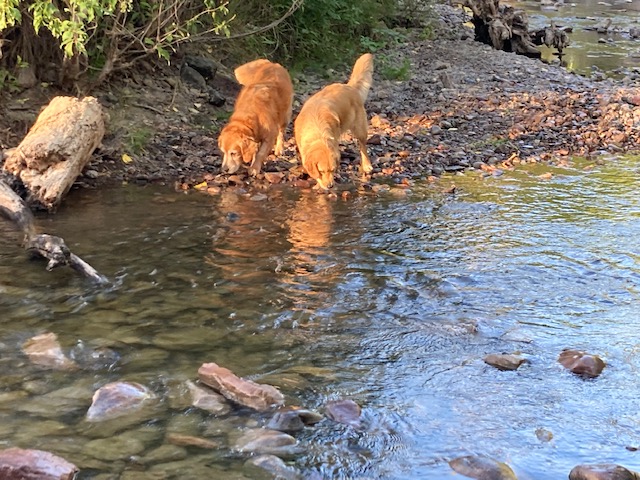
Golden retrievers Cali and Orly play in a shallow river near our house.As we wait for Cali’s next ultrasound, we’re filling in the time doing things on Cali’s bucket list.

For example, we head to the river to play in water almost every day. Deeper water for actual swimming is a little more tricky. I’m trying to take Cali to a little spot nearby a couple of times a week, but I can only manage it when Orly is busy elsewhere.

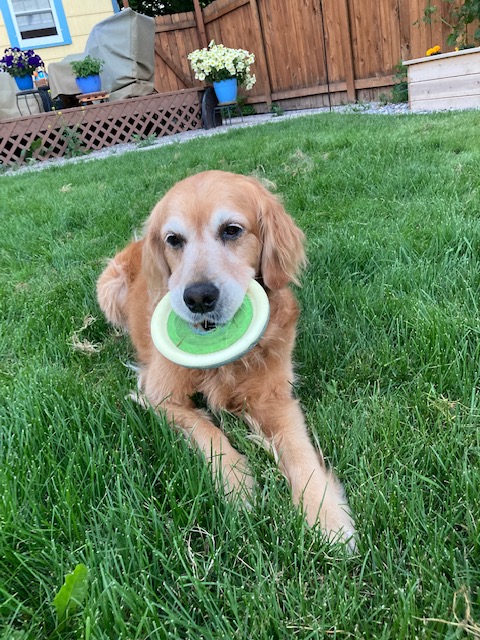
Cali sits on grass holding a green disc toyAside from swimming, much of Cali’s bucket list involves eating ice cream and playing with her beloved flying disc and tennis balls. Those are pretty easy.

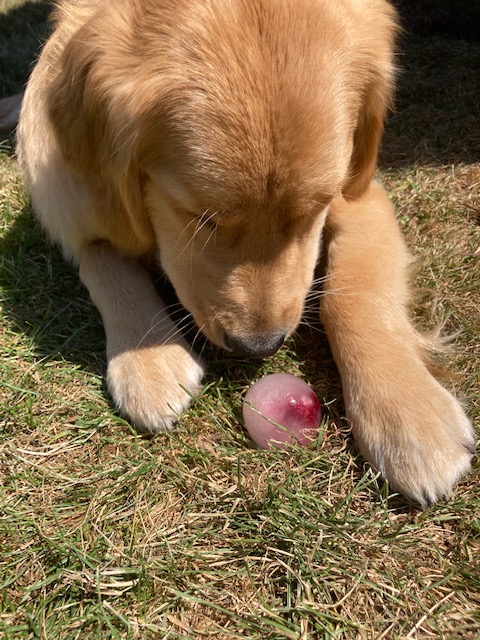
9-month-old Orly, a golden retriever, licks a frozen treatShe’s visited Dairy Queen and Big Dipper. I’m also making frozen treats at home with Greek yogurt, fruit, and peanut butter. And pupsicles with coconut water and berries. Since the weather has remained absurdly hot (for Montana) for weeks, the frozen treats are popular. Honestly, though, I think that Cali would be just as excited about them in February.

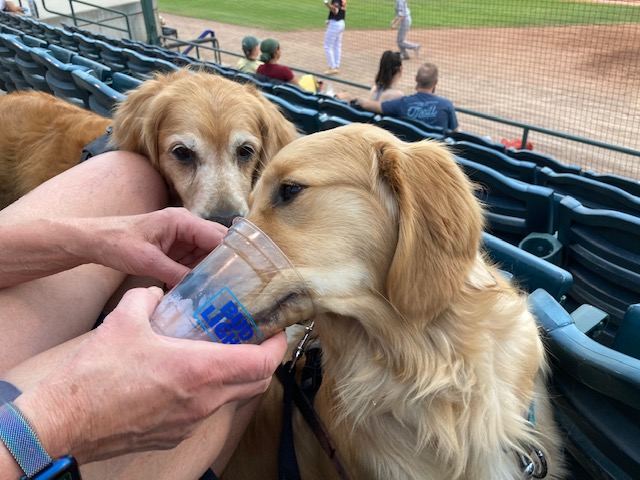
When Deni was in town, we even took the girls to a baseball game, where everyone shared popcorn and had fun … for a few innings. They enjoyed drinking from a cup (water!) and people-watching.

Goldens Cali and Orly enjoy a drink at the ball game

Cali’s Village

It takes a village … to care for an aging dog.

One of the things I like best about living in Missoula is the wonderful community I have here. I tell myself that it extends to Cali (and now Orly) as well; in truth, it’s their community, and the kind members are welcoming to me as well …

Cali recently had some unfortunate medical news. She had had an ultrasound where the vet saw suspicious lesions on her spleen. The spleen had to come out.

It’s a serious surgery, and Cali’s community rallied. Friends visited her the weekend before; I took her swimming; a friend and I took Orly and Cali to Dairy Queen.

Two friends stopped by post surgery to comfort Cali. Still groggy, she was reclining on her bed and unable to get up without help.

When I mentioned that to another friend, she very kindly offered to come over and help me carry Cali out and back in, a wonderful offer. Cali weighs 56 pounds and is pretty awkward to carry. Even so, I had gotten her in from the car, as well as out and back in that afternoon and evening.

Golden retriever Cali holds a tennis ball
One day post-op, Cali asks to play ball

The next morning, I got Cali outside and set up a bed for her on the grass. She had a water bowl, shade — everything she needed. A little while later, I saw that she’d gotten up and made it up onto the deck. I put her bed on the deck and she happily spent the day outside, mostly sleeping on her bed, but occasionally napping on the grass.

Though Cali’s recovery went quickly after that first morning, her friends continue to rally ’round, checking in on her, stopping by to visit, and offering walks. Within a couple of days, though, the biggest headaches were trying to keep Cali from playing too roughly with Orly and resisting her pleas to play ball.

More bad news

Then we got the biopsy results. Cali’s going to need her village.

Cali has a very aggressive type of cancer called hemangiosarcoma. It spreads through the blood and generally, by the time it’s found, there are small (or large) hemangiosarcomas throughout the dog’s body.

We’re “luckier” than many who get this diagnosis, though. For most dogs, the cancer is found only after one of the tumors ruptures, causing internal bleeding. that didn’t happen.

We’re figuring out treatment, and we will know more after Cali’s next ultrasound, which will take place a month post-surgery.

The “good” thing about hemangiosarcoma is that the dog doesn’t have any symptoms or pain unless/until a tumor bursts. Cali’s definitely not feeling sick, and she’s enjoying the extra attention she’s getting from her community of friends.


Cherry Season

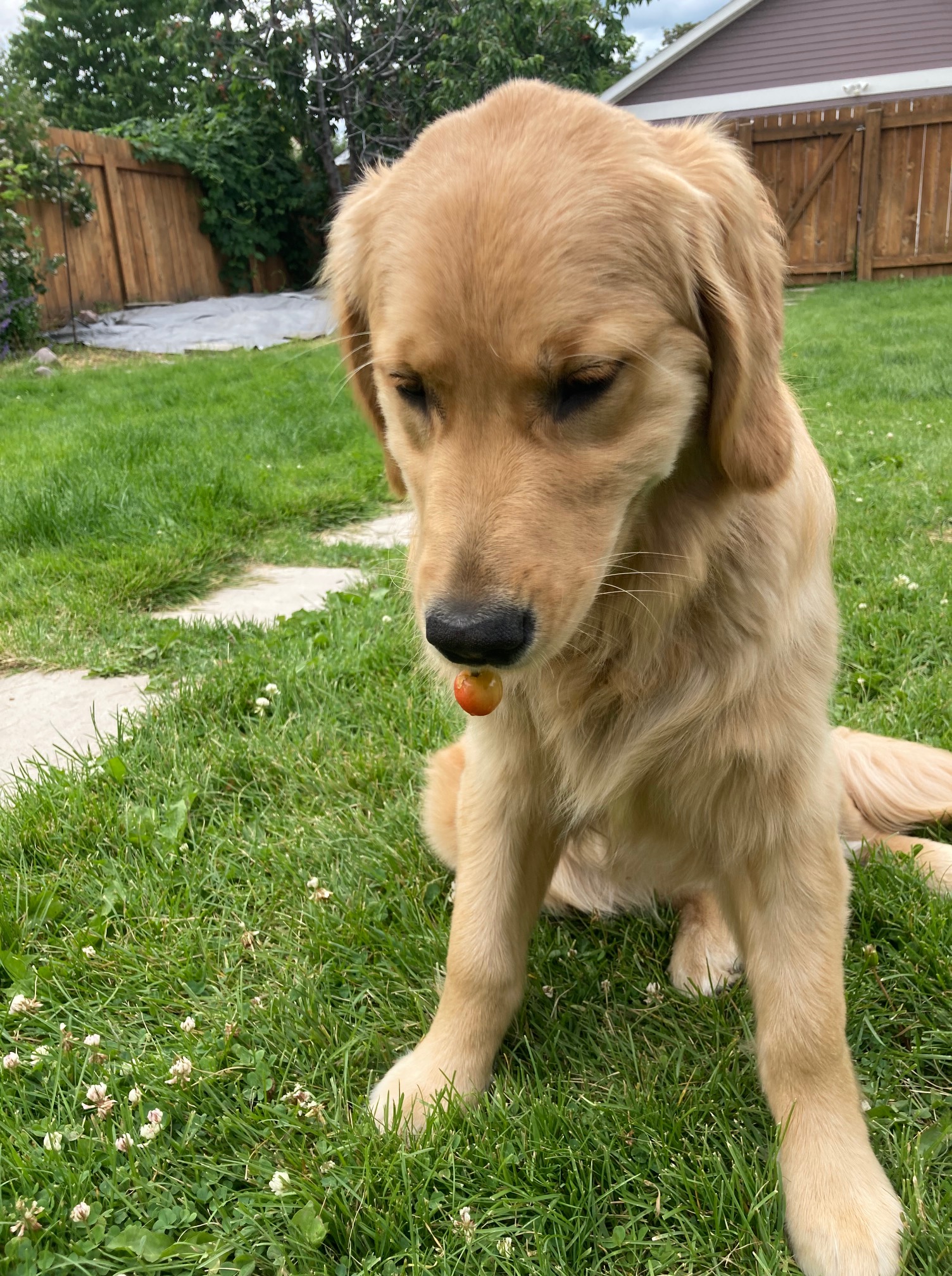
Golden retriever pup Orly has a cherry dangling from her mouth
Orly tries to figure out how to eat a cherry

It’s the tail end of cherry season in my yard. I’m providing this hyper-local report because cherry season in this part of Montana is just getting going, but the cherry tree in my yard is done for the year. And I did not get a single cherry.

The birds and squirrels got most of them, but Orly and Cali had their share too.

Cherries are not great for dogs, so for a couple of weeks, I battled the dogs over this. I lost.

I spent a lot of time cleaning up fallen cherries and dropped partially eaten cherries from the ground. This is indeed as much fun as it sounds like it would be.

Nevertheless, those cherries get into every corner, under every leaf and vine, and into the far reaches of the yard. I even saw one hiding under the deck stairs.

Cali is pretty laid back and eats the ones she finds. She’s fully adopted the Koala approach to gobbling them whole, and that is what she taught to Orly.

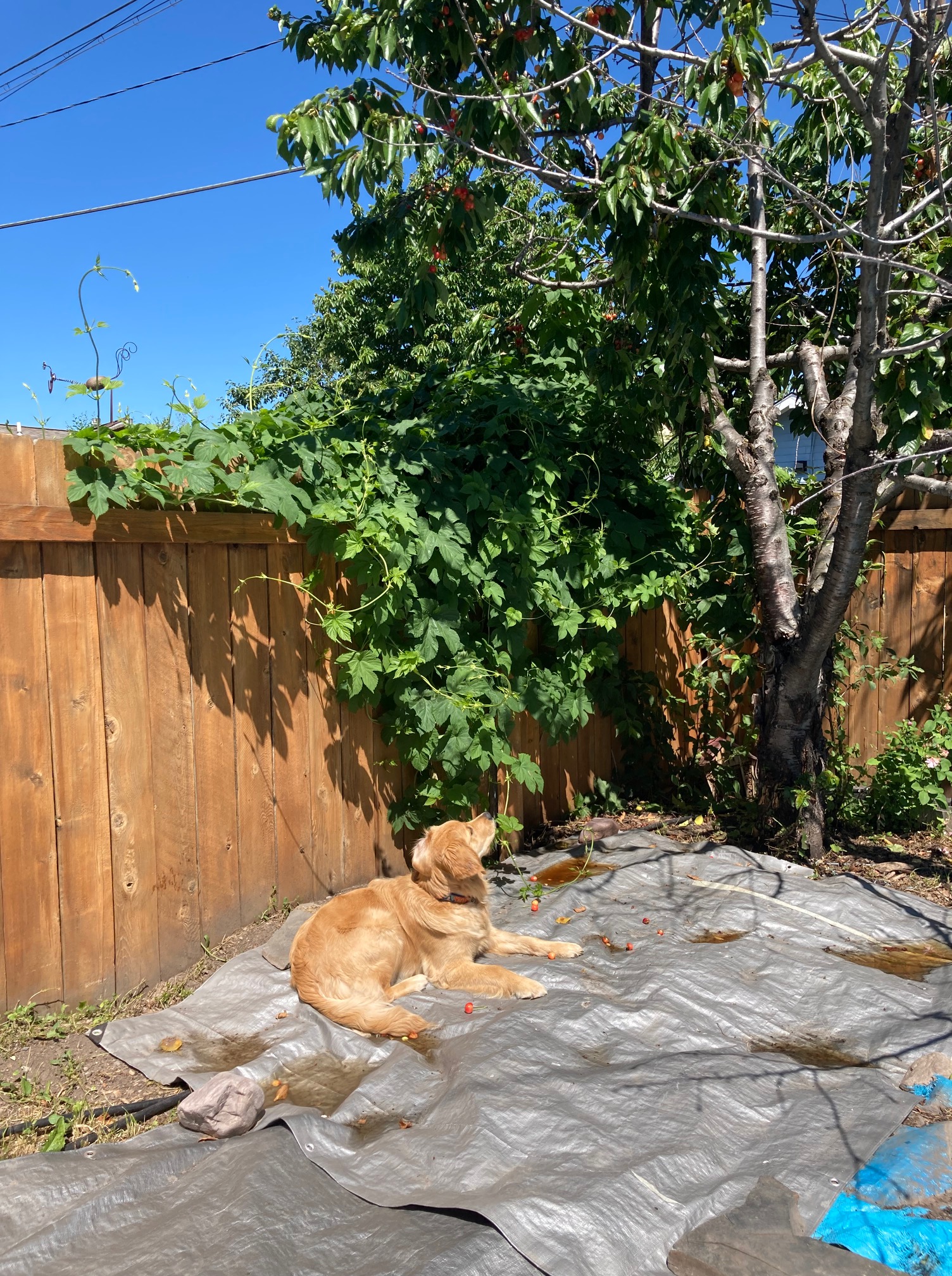
Orly gazes up at the cherry treeOrly is a whole different animal. Orly became especially adept at finding cherries; she has an admirable tenacity that I wish she’d apply to more beneficial ends. She spent long stretches of time nosing around the weed-filled, overgrown patch around the cherry tree, apparently with much success — and much effort. Then one day, a cherry fell at just the right moment.

And Orly discovered gravity.

Or she discovered that if she waited long enough, the cherries came to her. The end result is the same: She’d sit, rapt, watching for falling cherries to land in her mouth. Or on her head …

The cherries weren’t even fully ripe at this point, and there were a lot of them. I was looking forward to picking a few pounds; this was the first year the tree has had any fruit at all in a while.

One day, I looked up and saw the perfect shade of red. I called on some friends and we planned to pick the cherries.

But … that afternoon, the squirrels, the birds, and Orly were all very busy.

The next morning, I got out the ladder and looked into the branches. Not a single flash of red. That’s right; the tree had been picked clean!

And, like clockwork, the first few ripe raspberries appeared that very afternoon.

The girls aren’t getting too many of those, unfortunately, because they destroyed most of the raspberry bushes in the yard. I’m getting a nice amount from the surviving canes in the back alley, though, safely out of dog reach.

Up next will be a bumper crop of blackberries, many of which are in dog reach. I’m training to prepare for the competition …

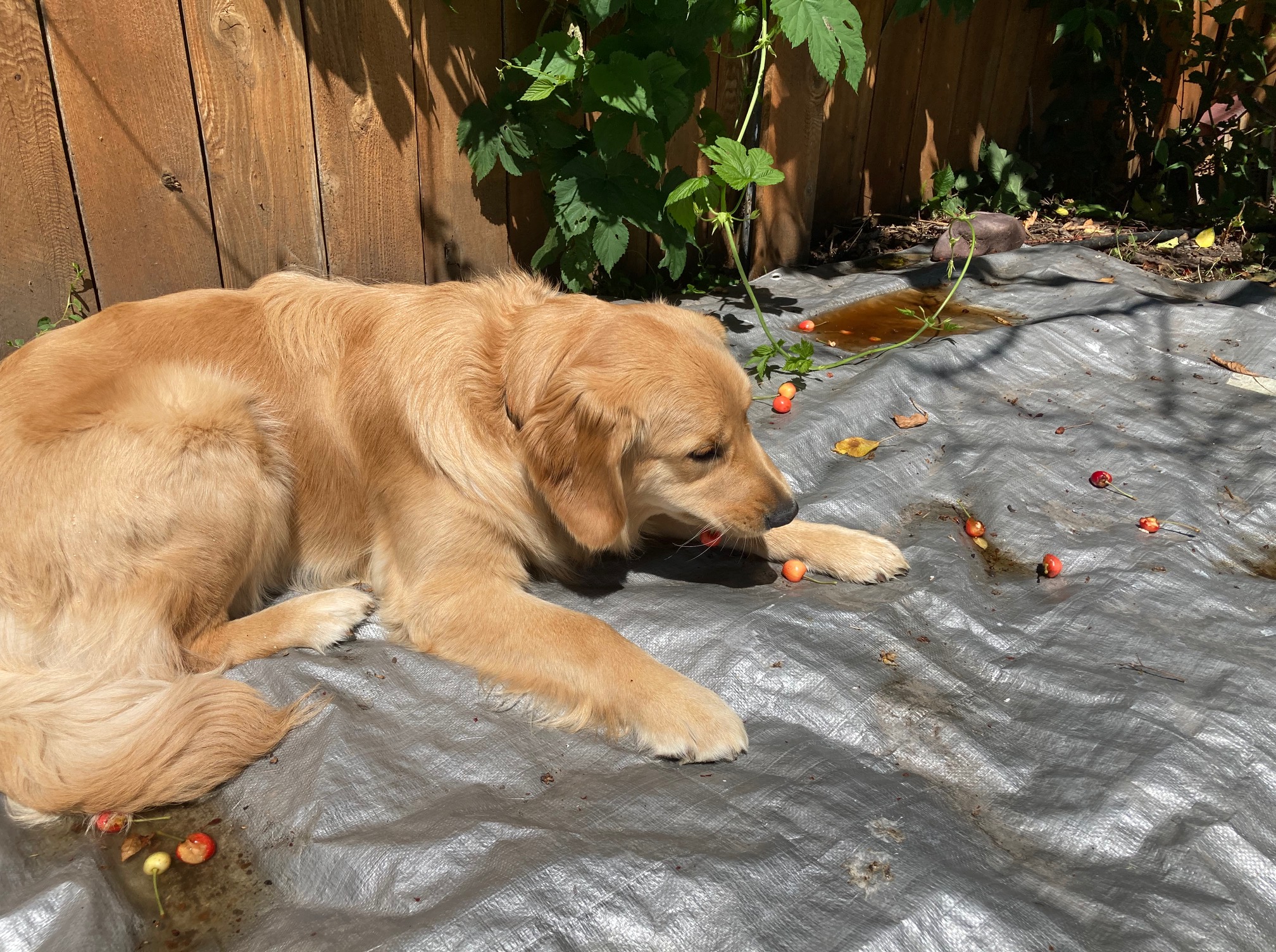
Orly eats cherries that have fallen onto a silver tarp near the tree

Ball Dogs for Tennis Matches? What Could Go Wrong …?

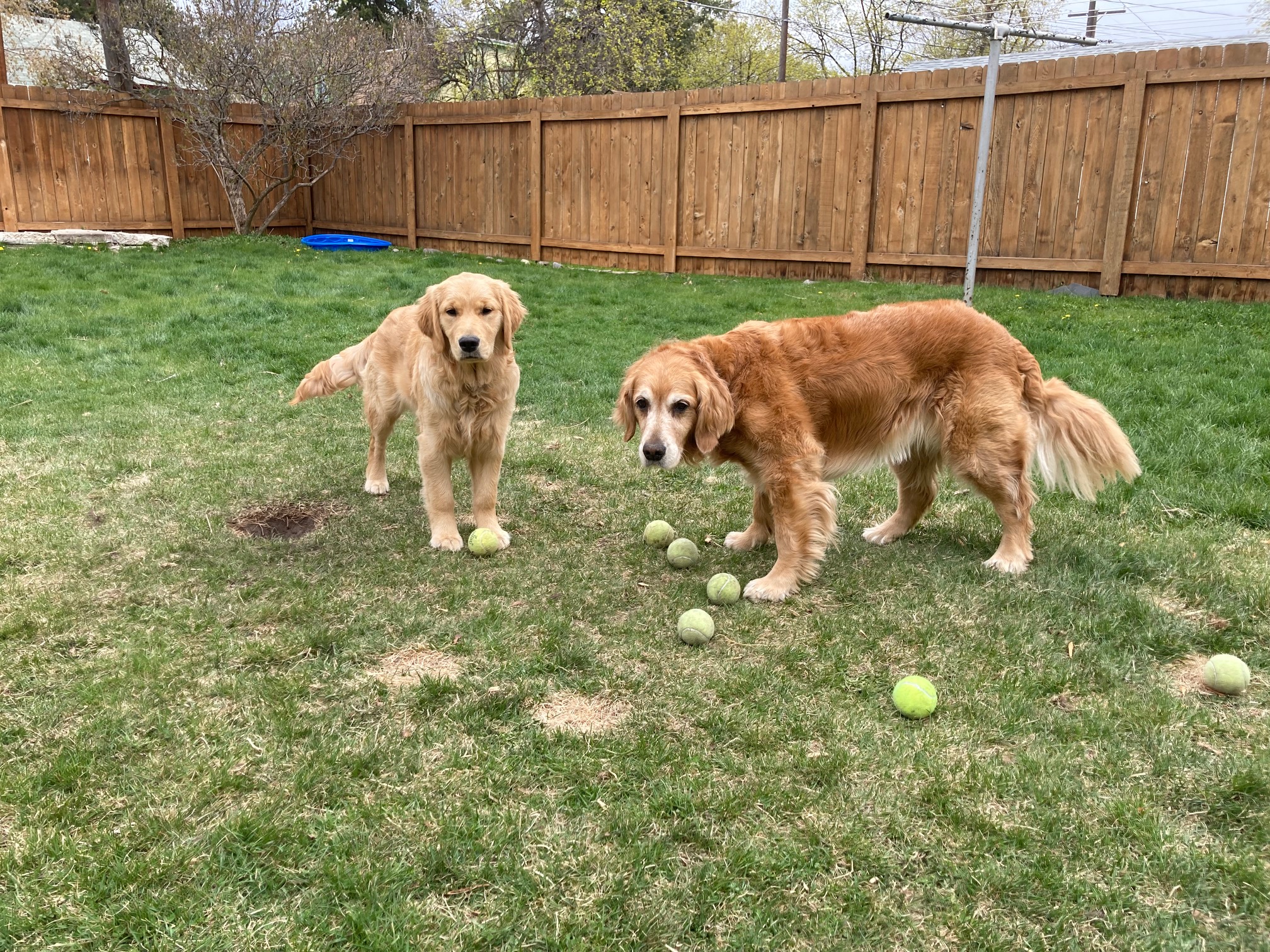
Golden retrievers Cali and Orly stand on grass, surrounded by tennis balls
Wait, we have to give them back?

This is at the top of my “What were they thinking?!” list.

A pet insurance company in the UK had a great idea to highlight Britons’ love for dogs, dogs’ love for balls, and a general love for Wimbledon tennis: Ball dogs.

Their thought was to replace ball boys and girls with “ball dogs,” who would be trained to retrieve tennis balls during matches at Wimbledon. What could possibly go wrong?

Plenty, as the linked video illustrates.

The first thing that I thought of was what Cali and Orly would do: Hoard the balls. Plenty of retrievers … don’t. Not to mention other breeds. The Dalmatian in the video seems to be wondering what, exactly, she is expected to do with that round yellow thing.

The flip side, of course is the overachievers. We’ve all known one — a Lab or maybe a German shepherd — who would retrieve until she dropped from exhaustion. Between the slobbery balls and the risk of the dog racing out to meet and catch the ball before it even sailed over the net … well.

Spectators might love the lively antics, but I don’t think the human tennis players would enjoy the experience quite as much.

I am sure that some dogs — Koala comes to mind — would excel at this job. The spokesperson for the ManyPets insurance company calls it a “work in progress,” and admitted to some chaos in the training.. Let’s hope they find the right dogs for the job!


Hiking? Don’t Forget the Doggy Trail Mix!

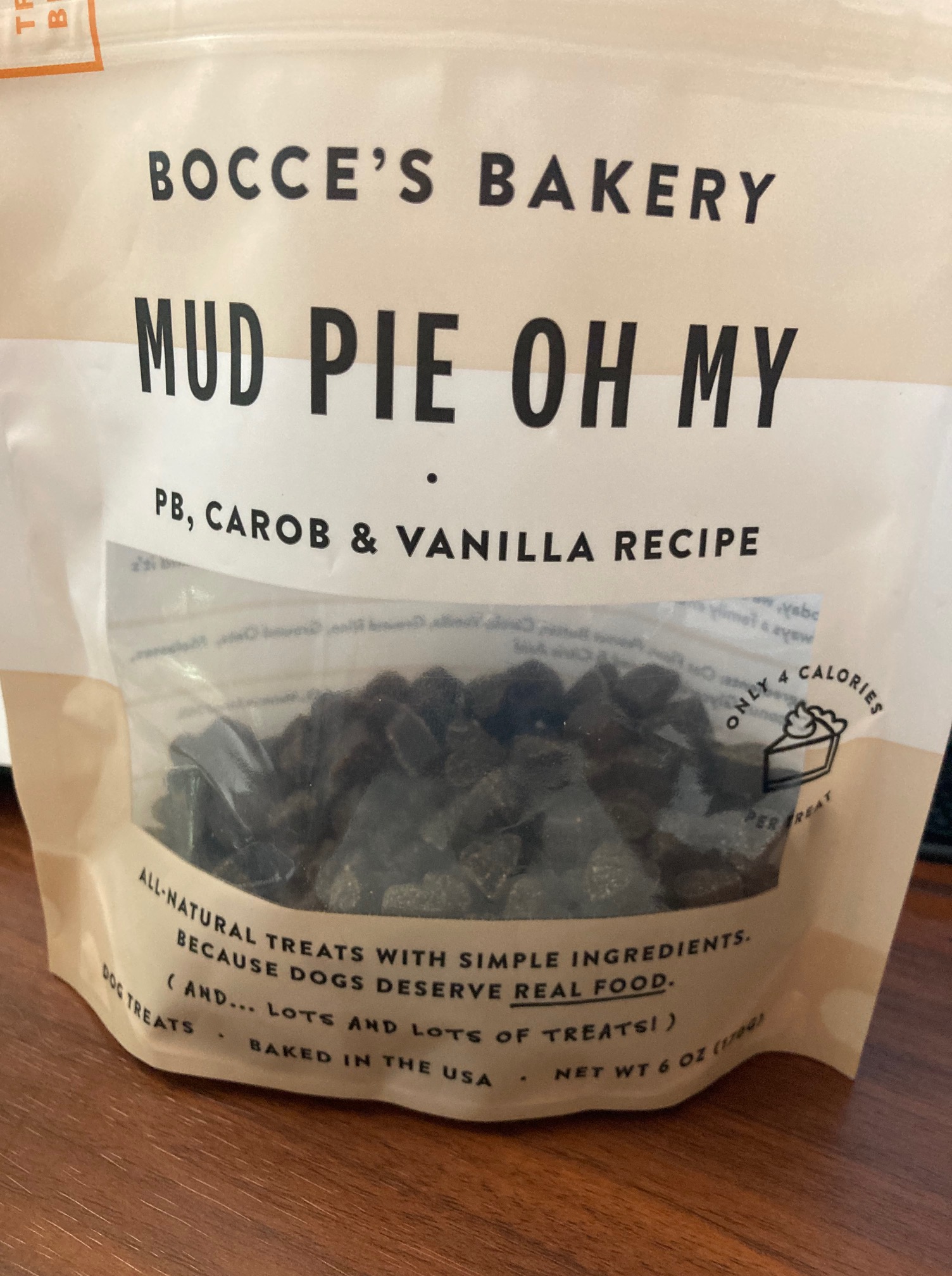
Bag of Mud Pie Oh My dog treats from Bocce's BakeryI have a Dog Hiking Backpack that is always ready for our next adventure. Problem is, it weighs more than Orly does!

So I select essential items for each hike. Number one on that list is doggy trail mix.

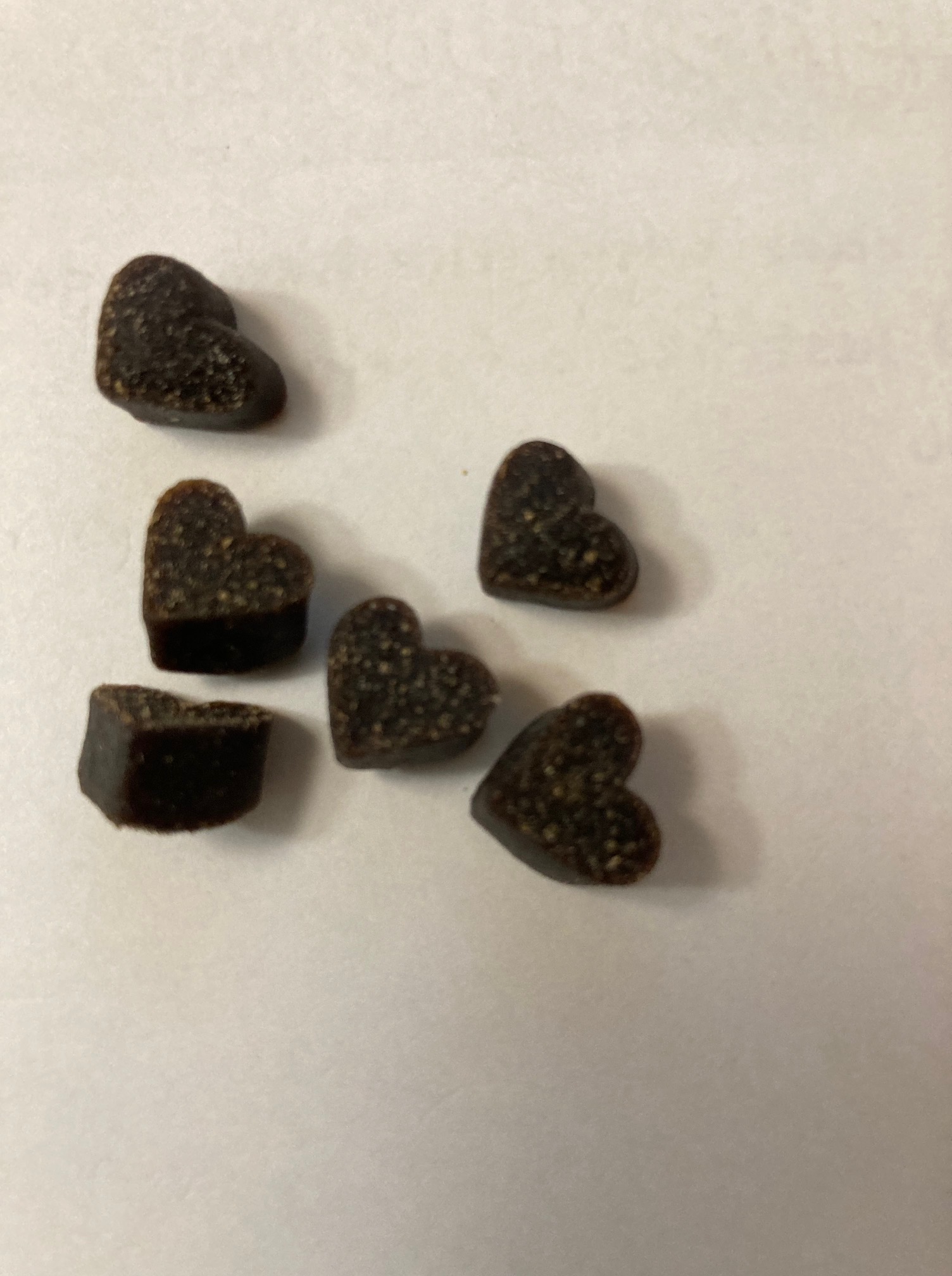
6 small heart-shaped dog treats
The heart shape is a nice bonus

This homemade delight was invented by Deni. And, dare I say, perfected by me, with copious input from Cali. Perfected for our hikes, that is. Your recipe needs to be created and tweaked by your dog(s), of course.

Doggy trail mix is simply a mix of treats. The base, as in any trail mix, is some basic and relatively inexpensive ingredients. I don’t use peanuts (choking hazard) or raisins (dogs can’t eat them); instead, the base mix is about two parts Cheerios (generic are fine) to one part Charlee Bears — any flavor that doesn’t include chicken, for my girls.

To that I add generous amounts of medium-value treats. This mix changes every time. I am partial to the tiny treats from Bocce’s Bakery that my local dog grocer stocks. Cali and Orly love the Mud Pie and Duck flavors. Again, your dogs’ preferences may vary. I have also used many other kinds of dry and semi-soft treats. The key is to use small pieces or treats that are very small.

Topping off the mixture is a few handfuls of high-value treats. I often use freeze-dried liver.

The trick is to have enough good and great treats to

  • Keep the dogs interested and hopeful
  • Provide some variety in their rewards
  • Lend scent and flavor to the other treats as everything jumbles around together

That last point might seem a little deceitful. But come on, who doesn’t eat the bits of chocolate in their trail mix with a bunch of the peanuts or raisins to make it all taste better? If it works for us, why not for the dogs?

Leave out the BEST treats

Our highest-value treat is currently a duck jerky treat that I get in big bags from Costco. It’s soft enough to break into small pieces. But I don’t put it into the trail mix because I save it for the most important use. That’s right: When we’re hiking off leash, I always carry a lot of duck jerky. This ensures that whenever I call the girls, they come running at top speed, screech to a halt, and sit right in front of me, eager for their reward. Duck jerky is truly magic. (Orly’s hiking guide uses the same stuff).

Hiking trail mix, like many human-oriented snack mixes, has crept into daily use. I mix up enormous batches and keep treat jars filled with it on every floor. It’s the default reward for training, cooperation during grooming, and recall practice outside. Each batch is a little different, and no one has complained about (or turned up her nose at) the Cheerios yet.

What else is in the backpack?

The backpack has:

  • A first aid kit
  • Binoculars
  • Dog water bowl
  • Long leashes for swimming, recall practice, or hikes in places I don’t want to let them off leash
  • Insect-repelling dog bandanas
  • Bug spray
  • Sunscreen
  • Wet wipes & sanitizer
  • Strong wire cutters in case we run into traps or snares (I hope NEVER to use them)
  • Bear spray (ditto)
  • Flashlight
  • Extra poop bags
  • Extra leashes
  • Extra sunhat

Often, the pack stays in the car while we hike so the heavier stuff is nearby if needed. But a treat bag stuffed with trail mix and/or duck jerky is always with me. Happy hiking!

When a Bite Is not a BITE

8 month old golden retriever Orly smiles for the camera
Orly loves giving puppy kisses …

Orly loves to connect with people. One way she does this is by holding their hand.

Orly doesn’t have hands, and it’s awkward for her to stand on three legs to hold paws with someone. So she has a more expedient method: She takes the person’s hand in her mouth.

Now, unfortunately, many people see this as a bite. But Orly is not biting them. She’s very, very gently holding their hand.

But, I hear people objecting: Her teeth are touching someone’s skin. And holding on!

True. They have a point …

But it’s not biting. She is using no force. She has not an iota of aggressive intent. She’s simply holding hands.

It’s still not a great idea. Some people — in my friend group, there are many dog-savvy people (go figure!) — get it, even think it’s sweet. Orly really likes those people.

Others freak out a little: “She’s biting me!” Understandable, if inaccurate.

On their account, I am strongly discouraging this method of connecting with new friends. Although I am not sure the non-dog-loving contingent will like what she’s trying instead any better — up close and personal doggy kisses. What’s an aggressively friendly puppy to do?

Wisdom … and Resignation

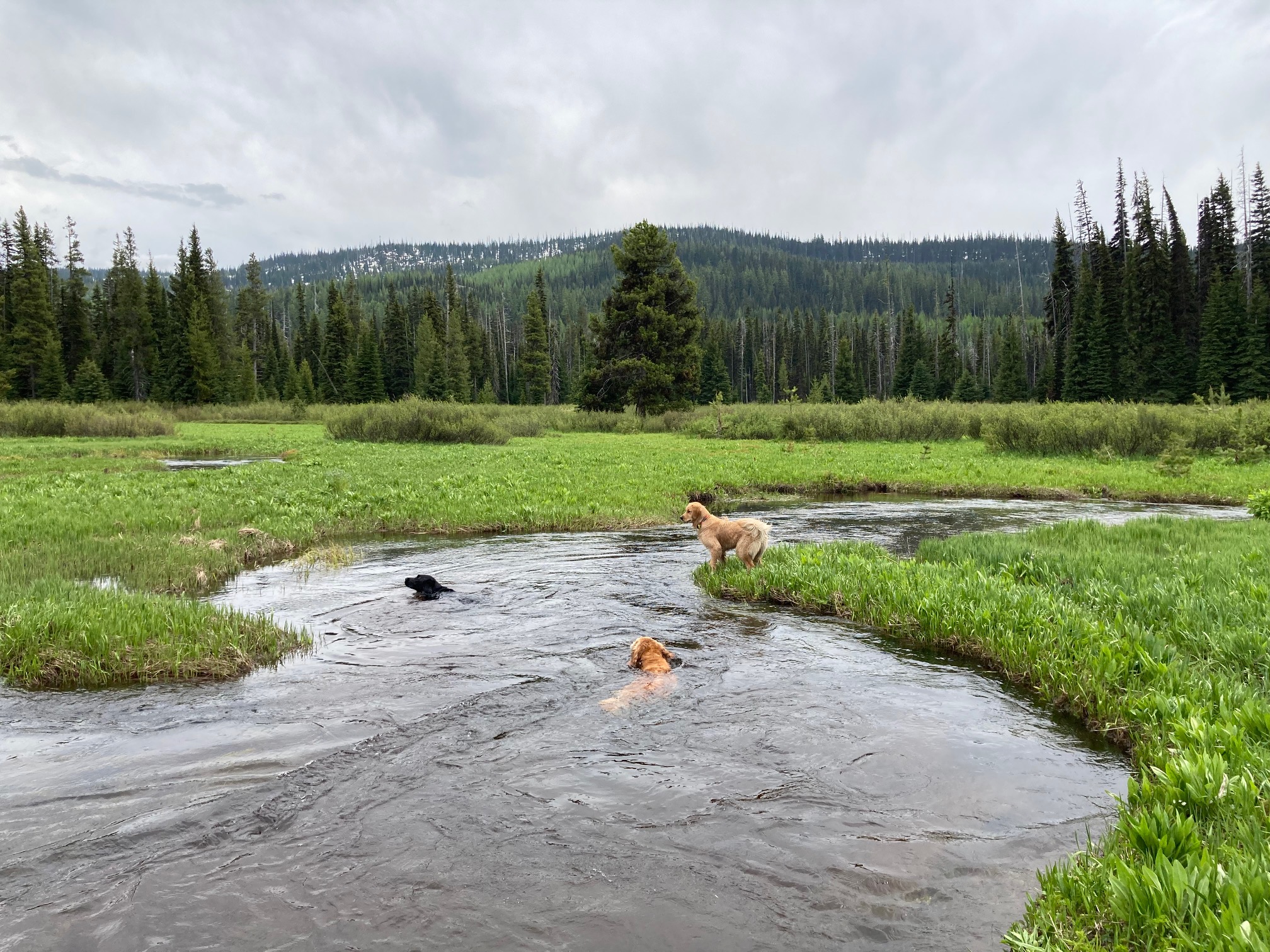
2 golden retrievers and a black Lab swim in a mountain stream
Cali’s Morris study exam is always around the time of our first visit to Packer Meadow and the very cold stream there!

It’s that time of year. Cali always knows. She saw me setting out a small paper plate, ziplock baggie, and a poop bag one evening, and she knew. No breakfast in the morning, and a visit to her pals at the vet clinic who would steadfastly refuse to give her cookies, no matter how good she was.

It was time for her annual Morris Golden Retriever Lifetime Study physical exam. She’s usually pretty resistant to the sample collection, particularly the urine sample.

I think that, with Cali’s advancing age and important new role as the teacher of all good things to Orly (you know, how to thoroughly coat yourself with mud, which plants to chew in the garden while avoiding all the weeds, and the most strategic spots to dig holes in the lawn), she has also learned wisdom and patience. She knows how this day will unfold and, for the first time, she (mostly) cooperated.

I took her out, on leash, first thing. She gave me a disgusted look when I grabbed the plate and baggie, but went willingly. She did not stop peeing when I shoved the plate into place and she did not kick it. Progress! She provided her other sample during our walk.

At the vet’s she briefly objected to going into the back area without a cookie … she was hungry, after all. Once all the samples had been collected and she’d been examined from nose to tail, Cali showed me how well she had trained our vet. As the doc and I talked, all Cali had to do was shift her glance slightly and Dr. Z handed over a cookie or a squeeze of cheese whiz. Cali’s consistent, clear communications were quite impressive!

Best of all, we were out of the vet’s office in well under an hour, and Cali’s breakfast was duly served. Late of course.

As a Golden Ager, Cali — along with other study participants — has been invited to be part of an additional study about aging. Cali doesn’t have to do anything; her mom gets more questionnaires to fill out. With her white face, she increasingly looks like a senior dog, but Cali is aging well. She’s fit and energetic; she loves playing with Orly and going hiking. Let’s hope she has many more annual study exams ahead!

A Wolf Called Romeo

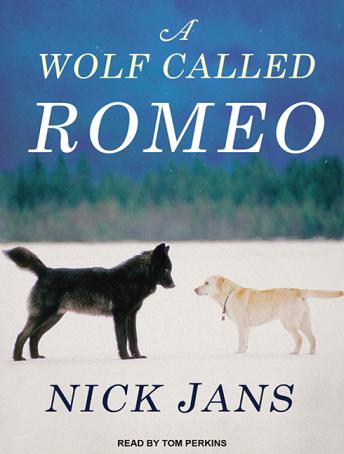
Book cover showing large black wolf nose to nose with a yellow LabradorIn preparation for a recent trip to Alaska, I read A Wolf Called Romeo by Nick Jans. I’ll warn you straight up: It ends predictably. That means that it’s wonderful until about two-thirds of the way through. The last sections are devoted to the inevitable end, a detailed description of the thug who killed Romeo, the many other laws that vile person broke, and the utterly predictable lack of any kind of justice.

However, up to that point … it’s a magical story.

Romeo, a solitary black wolf, appeared one day on a frozen lake near the Mendenhall glacier outside of Juneau, Alaska. The wolf did not flee the humans out walking and skiing. Even more surprising, he seemed interested in meeting those humans’ dogs.

The dogs were equally intrigued, and the first up-close meetings occurred between dogs who slipped their leashes or pulled away from their humans’ to go meet this large new playmate.

Over the next several months and years, Romeo made friends with several dogs and a few humans. He’d watch for them to arrive, follow them, hang out, play with the dogs, and otherwise conduct himself as any walking partner and friend would.

Jans and a few other humans who spent considerable time with the wolf share their stories as the book unfolds — as well as their fears of the wolf becoming too comfortable around humans. An even greater fear: Naive or clueless humans doing something stupid that resulted in a dog or child being harmed.

Despite many somethings stupid, such as parents pushing their toddlers into the wolf’s company to get a photo, the wolf never harmed a human. On a couple of occasions, he did respond to small dogs as he would to prey, grabbing them and running off … and then he released the dogs unharmed.

As the wolf’s fan club grew, so too did the band of wolf haters. One such individual claimed that the wolf ran off with his dog. The dog never did reappear, but there was also no evidence of the wolf’s involvement. Over several years and hundreds or thousands of human and dog encounters, that was the worst harm reported.

I recommend this book with the caveat that it ends badly. If you can take that (or stop reading in time), you’ll enjoy a beautiful story that shows how a wolf in the prime of his life seeks friendship from close relatives and enjoys playing and hanging out with both dogs and humans. It’s a unique perspective on wolf behavior and cross-species friendships.

Orly’s Pedicures

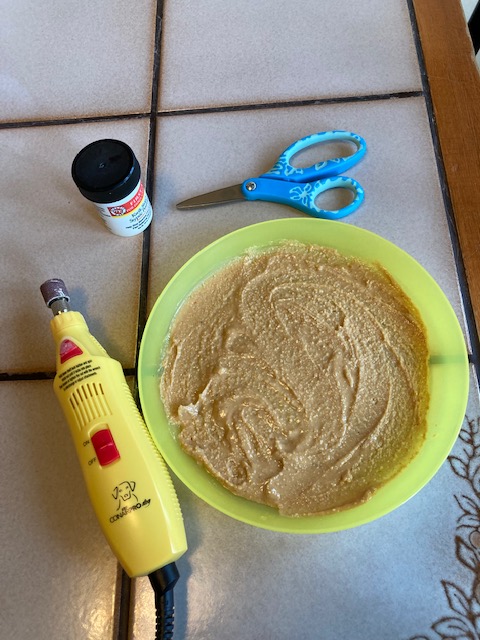
a yellow nail grinder, a plastic plate smeared with peanut butter, blunt scissors and styptic powder are gathered for the pedicure
Prepare your tools before you start the dog pedicure

What’s the best way to trim a dog’s nails? That’s a common question, since most dogs have experienced painful or unpleasant nail trims and loathe the entire process. I have had to find an answer; the secret is peanut butter.

Orly’s nails grow so fast! Cali’s need attention occasionally, but if I let Orly’s go for a couple of weeks, they get unbelievably long. So, it has been important to get her cooperation for frequent pedicures.

I’ve never liked using dog nail clippers. First of all, they all seem to be designed for right-handed people, and I don’t feel like I can get a good grip on the nail and clip it. Second, all of my dogs have either had entirely or mostly black nails.

With black nails, it is really hard to tell where the “quick” is. This is the tip of the blood vessels that feed the nail. In dogs with white nails, you can see the quick (it’s pink). If you cut it, the dog bleeds. A lot. And squeals in pain. It’s horrible.

That leaves a dremel-type tool to file down the nails. It’s pretty easy to do … if the dog cooperates.

With Jana, Cali, and, most recently, Orly, I started dremel training early. Turn it on, let them hear it while getting great treats. Let them sniff it thoroughly when it’s off. If possible, let them watch other dogs get pedicures (and treats, always lots of treats). Things like that.

Jana spoiled me. She loved pedicures. She loved anything that made her feel like a pampered princess. She’d sit still, hold up her paw, and accept my attention (and treats!), looking bored by the whole thing.

Cali is good, but she doesn’t like the nail trims. She cooperates, but pulls her paw away if I spend too much time on it. I rarely do hers, so it hasn’t been an issue.

Orly … needs her nails done nearly every week.

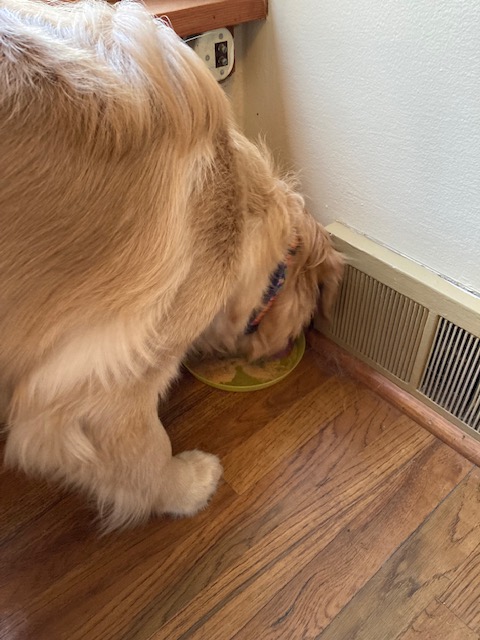
Fortunately, she’s very cooperative. Even better, she loves peanut butter. I mean really loves peanut butter. So I have come up with the perfect pedicure process:

  1. Get dremel, styptic powder (in case of bleeding), and scissors from the grooming kit.Golden puppy Orly licks peanut butter off of a plate
  2. Smear a small plate liberally with peanut butter.
  3. Find a comfortable corner where the plate can be pushed up against a wall and not escape.
  4. Put the plate down and let Orly start licking the peanut butter.
  5. Push Cali’s nose out of the peanut-butter dish.
  6. Turn on the dremel and pick up first paw. File each nail.
  7. Put down the paw.
  8. Turn off the dremel, and push Cali’s head out of the peanut-butter dish.
  9. Move the plate back into place.
  10. Turn demel back on and pick up the next paw.
  11. Repeat steps 7, 8, 9, and 10.
  12. If 4th paw is finished before the peanut butter is gone, use scissors to trim the fur between Orly’s paws.
  13. Give Cali some peanut butter as a reward for being (relatively) patient while Orly had her pedicure.

She doesn’t seem to mind this at all. I’ve never had any accidents (no blood and no pain), and she seems happy to participate in this activity every time I get the dremel (and the peanut-butter plate) out. It actually only takes about 10-15 minutes.

The trick is figuring out how much peanut butter is needed to keep Orly busy long enough to do all four paws. As she gets bigger, her peanut-butter-licking skills are improving rapidly, so the layer of peanut butter gets thicker and thicker. I might need a bigger plate soon. She’s pretty active, so I don’t worry (yet) about the large amount of peanut butter she’s eating. If we get up to half a jar at a time … well, let’s hope that doesn’t happen!

Golden retrievers Orly and Cali lick the last bits of peanut butter off of a yellow plastic plate
Cali is happy to help with post-pedicure cleanup