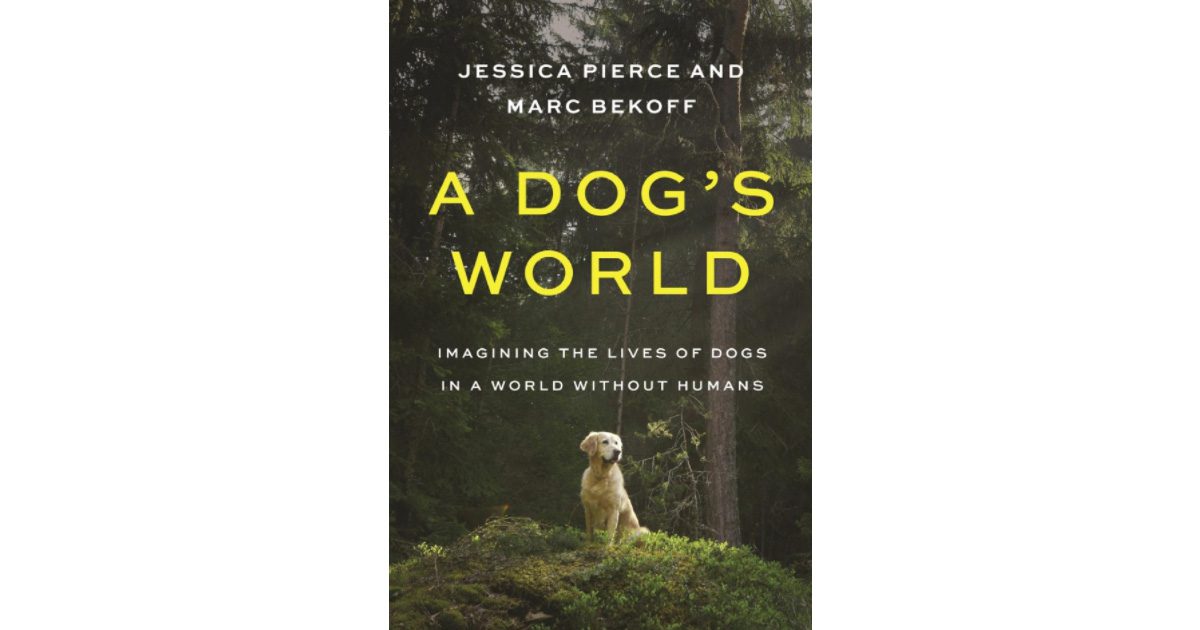
 The subtitle of this book is what really caught my attention: Imagining the Lives of Dogs in a World Without Humans.
The premise, that all humans vanish one day and dogs have to quickly pivot to self-sufficiency, is an interesting idea to ponder. And the book felt more like a collection of notes on conversations between the coauthors, Jessica Pierce and Marc Bekoff. But… it never really addressed the topic.
The book is full of speculation about how dogs’ body shape and size would impact their survival and ability to thrive, for example, with far too much commentary on breeding practices. And dozens of comments on how dogs are so dependent upon human food and waste (mostly trash/thrown-out food but they used the word ‘waste’ so often that I wondered whether they meant biowaste as well) that they would struggle to identify potential food sources.
But I kept waiting for the conversation on how a human-less world would look and feel from a more nature-focused perspective. It never came. Other species, both plant and animal, would change dramatically without humans in the picture, often for the better. I had hoped for some attention to how that might look — and, of course, how that might benefit or harm dogs.
An even bigger miss, in my opinion, was a lack of attention to dogs’ mental abilities. Would dogs bred for work, whether agricultural, military, or assistance, perform better at solving the new challenges of life without their servants-with-handy-thumbs?
Finally, the chapter on “doomsday prepping.” Prepping your dog. For the day that all humans instantly, simultaneously, mysteriously vanish, leaving everything else in the world intact. First, prepping for that is not necessary. Second, the suggestions are absurd. Maybe that chapter is intended as comic relief (I hope so) but … I even more fervently hope that no one takes seriously suggestions to let dogs:
- “forage for themselves while out on walks (goose poop,a half-eaten hamburger or tofu hot dog that has fallen out of a trash can…”
- “dig holes in the yard”
- “snatch food from the counter or even from our hands”
- “stop trying to ‘un-teach’ or constrain natural behaviors (marking outside the home, sniffing butts or crotches… digging, and roaming.)”
Don’t do any of these.
Their other suggestions, though, are great (and also: are basic dog parenting):
- Give dogs choices
- Socialize them properly to both humans and dogs (and other creatures)
- Provide opportunities for nose work, agility, flyball, frisbee, and other dog sports
Conveniently, these activities provide dogs and their humans with relationship-building opportunities and a lot of fun!
I like both authors, so I wish I could recommend this book but … I can’t.
Discover more from The Thinking Dog
Subscribe to get the latest posts sent to your email.
