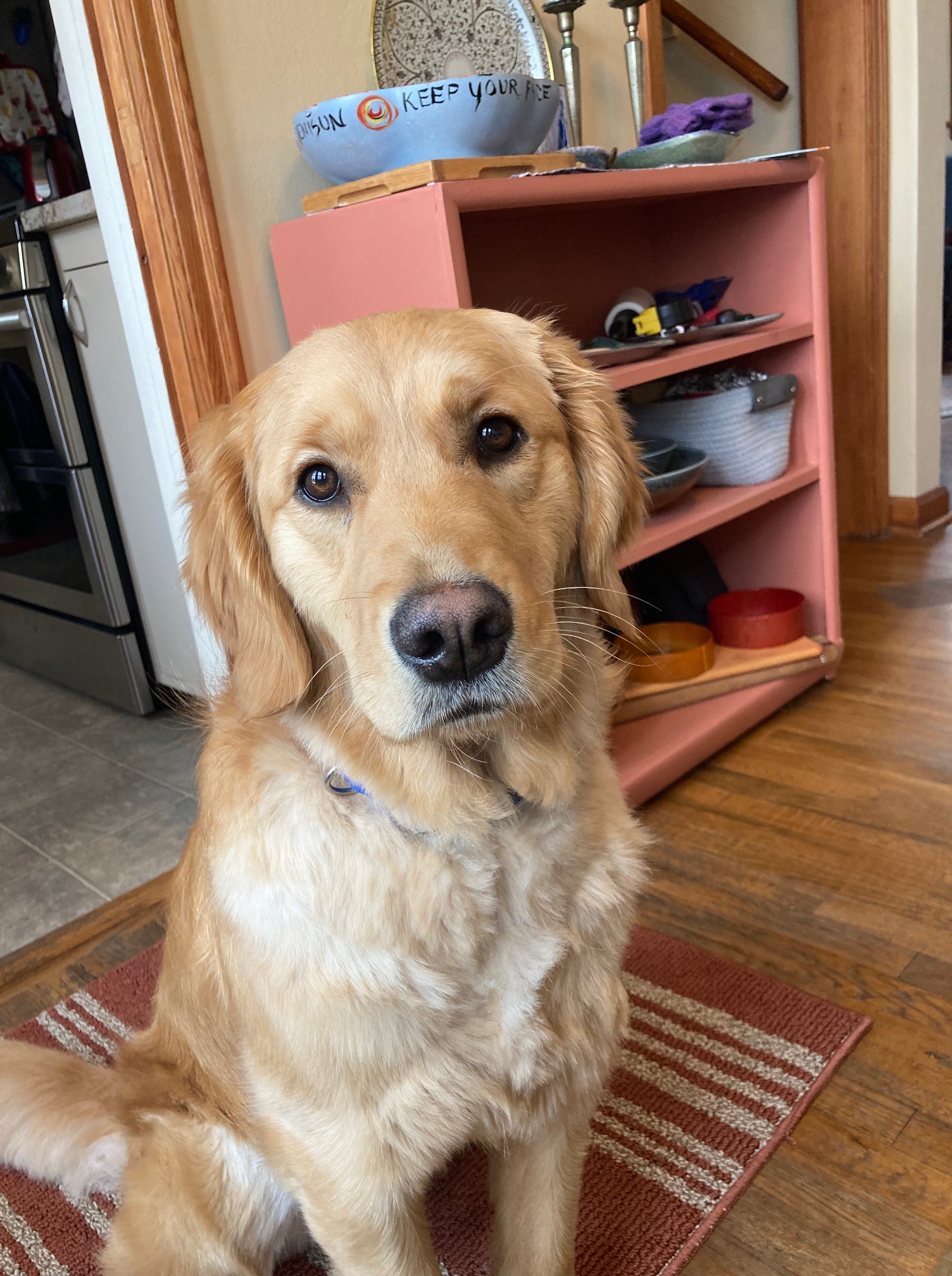
 It seemed like a good idea at the time. And, to be fair, it was, for a while (and with a different dog).
The idea was to teach Cali not to react to fence-fighting, barking, or just plain rude dogs when we passed them on walks. We started with dogs in yards, but eventually were able to walk past reactive dogs on leashes. Cali remained calm and collected. And as soon as we were past, she’d pause and look at me expectantly. Because the reason she refrained from responding to the rude dogs was that she got a treat and a lot of praise.
Cali and I had several routes we’d choose from for our morning and afternoon walks, many of which included yards with rude dogs. I noticed that she started eagerly looking for the dogs as we approached. So far so good.
Then we got Orly. Cali and I taught Orly the drill. I made sure to have plenty of treats when we left for walks, though they were willing to wait until we got home to be paid, if I made it worth their while (better treats and more of them).
Orly takes over
We lost Cali to hemangiosarcoma when Orly was just over a year old. In the two-plus years since, Orly has matured into a smart, silly, thoughtful, and very resourceful dog. And, she’s engineered our walks, slowly, over time, to to the point where I am not sure who’s leading whom on these walks and other adventures (although I always drive).
I often let the dog choose which route we walk, primarily because walks are their time and their opportunity to experience new smells and catch up on neighborhood news.
A while ago, I noticed that Orly consistently chose the routes with the largest number of rude dogs. She’d peer ahead to see whether Milo and his brothers were out in the yard before deciding whether to go left or right at one corner, for example.
Gradually, I noticed that she liked taking detours from our usual routes. And that these detours always took us past yards with dogs in them.
She started to prefer turning into the alley after we said hi to George (a friendly, not at all rude, golden who is something of a neighborhood mascot. Or prince.) rather than continuing down the hill into the park. It only slowly dawned on me that there were not one but two rude-dog opportunities on the alley route that were not on the park route.
Then one day, I noticed her pulling toward the fence each time we passed one particular yard. It’s a typical 6-foot privacy fence, solid boards, maybe 4 inches of ground clearance under which we often see the nose and/or feet of a little terrier. A terrier who generally ignores us… unless Orly’s nose or feet are visible. Then, the dog would bark, Orly would not, and …
The terrier was no slouch, and soon learned to ignore Orly, so Orly upped the ante, bumping the fence or whining a bit. I was a little slow to catch on, assuming she was just excited — the terrier lives next door to the house with the treat hydrant. (Yes, more proof, for anyone who still needs it, that dogs are smarter than their humans.)
But no (duh!) Orly was doing her best to cause the other dog to react so that she could get a treat. Someone must have taught Orly about back-chaining, a technique to teach dogs (and humans) to perform a series of actions to earn a reward.
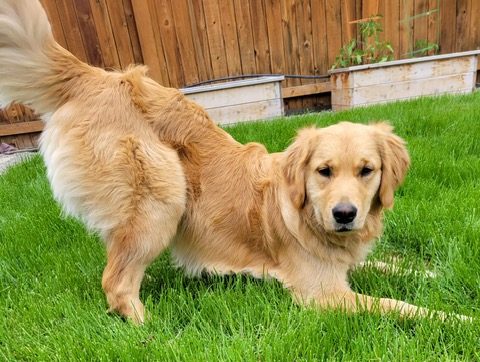 I did finally figure out her game.
Mostly I am impressed with the creativity and thought behind Orly’s conniving.
But when we merely pass a dog on a walk with her human, or a calm, relaxed dog in his yard, and she turns expectantly to demand payment, I find myself annoyed. I feel used. Is she a doggy mafia don demanding her due? Is our entire relationship transactional?
But then we get home and she cuddles up to me with a contented sigh … and no, I don’t want your thoughts on how she’s manipulating me in those moments, too. Just go cuddle your dog.
Discover more from The Thinking Dog
Subscribe to get the latest posts sent to your email.

Yep… we need to be careful what we hope for. Tricky business. Your pup is smart.
LikeLike