HUD Also Tightening Rules for Emotional Support Animals

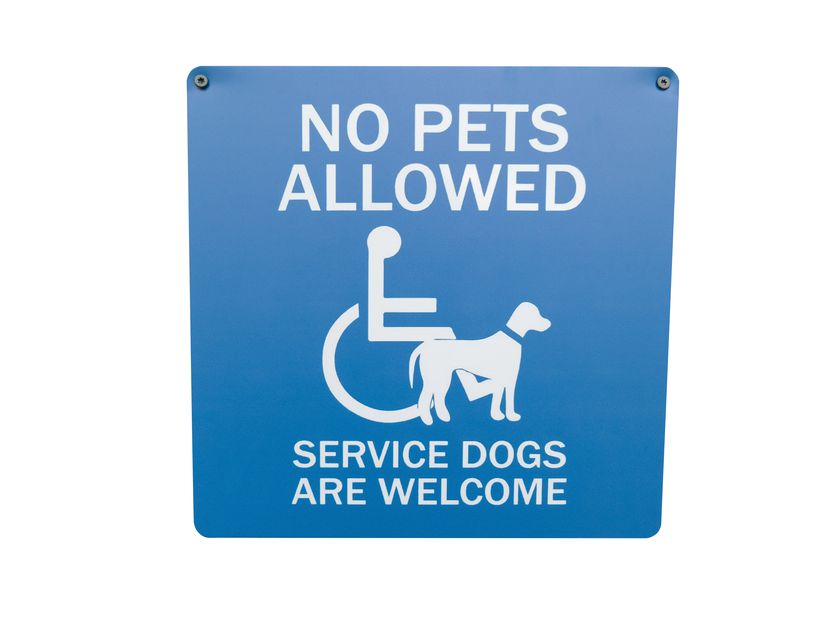
sign reads "no pets allowed. service dogs welcome."

The DoT is not the only government agency that is tightening its rules around service and emotional support animals. On January 28, HUD, the Department of Housing and Urban Development, released a notice of its updated rules.

A quick review:

  • The ADA, the Americans with Disabilities Act, allows people who use service dogs to take their service dogs with them to most public places.
  • Air travel is not covered by the ADA. The Air Carrier Access Act (ACAA) covers air travel. The Department of Transportation (DoT) announced proposed changes to the rules around travel with service and emotional support animals. Public comments will be accepted until mid-March.
  • HUD governs housing laws. The new rules have been announced without a public comment period.
  • The ADA public access laws apply only to service dogs (and some miniature horses); a person who has gotten an accommodation for an assistance animal that is not a service dog does not have the right to take that animal to public places that are not open to pets (for example, restaurants, stores, etc.).

HUD’s goal is to help housing providers understand their rights and obligations — and to help housing providers determine whether a request for an accommodation is legitimate.

Both the HUD and the DoT are reacting to dramatic increases in the number of requests for accommodation of emotional support dogs, including requests to allow a huge variety of animals, not always animals that are commonly owned as pets. They are also getting large numbers of requests with no or minimal documentation, including letters provided by online providers.

HUD’s new rules:

  • Adopt the ADA definition of a service dog
  • Treat service dogs and other assistance animals differently
  • Require that individuals ask for an accommodation for an assistance animal
  • Require that individuals provide “information that reasonably supports that the person seeking the accommodation has a disability” — and make the truth and accuracy of this information a requirement of the lease (that is, if the person is later found to have lied about having a disability, the housing provider could evict them)
  • Require that individuals provide “information which reasonably supports that the animal does work, performs tasks, provides assistance, and/or provides therapeutic emotional support with respect to the individual’s disability” with a similar provision about the accuracy of the information

Finally, with rare exceptions, housing providers do not have to accommodate animals that are not commonly kept in households as pets.

The document includes guidelines on what constitutes a “reasonable” accommodation and on how to document a need for an assistance animal that is not a service dog.


Daniel Was Robbed

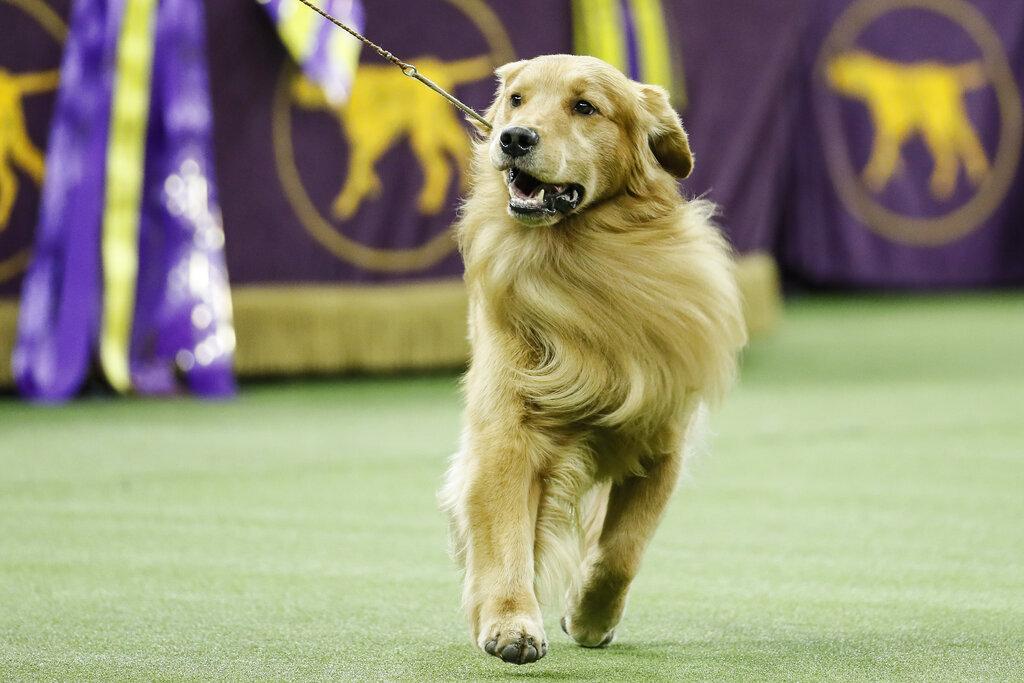
A gorgeous golden retriever runs in the show ringI speak for Cali and for golden retriever fans everywhere when I echo the shouts on Twitter: Daniel was robbed!

Daniel is, of course, a golden retriever. Not just any golden retriever. He won Best of Breed and then won the Sporting Group at this year’s Westminster Kennel Club Dog Show. He lost Best in Show to a poodle.

Some of my best friends (and Cali’s) are poodles, but really. That haircut. And did the poodle hug her handler when they won? Or even smile? Did the poodle carry her own ribbon?

Of course not. That’s all so golden-ey.

According to the Washington Post, Daniel’s not bitter. When he got home, he did what goldens everywhere do to relax: He dug a hole in the back yard and lay down in the mud. Cali’s kind of guy for sure.

We’ll be rooting for you next year, Daniel.

Your Dog May Be a Math Genius

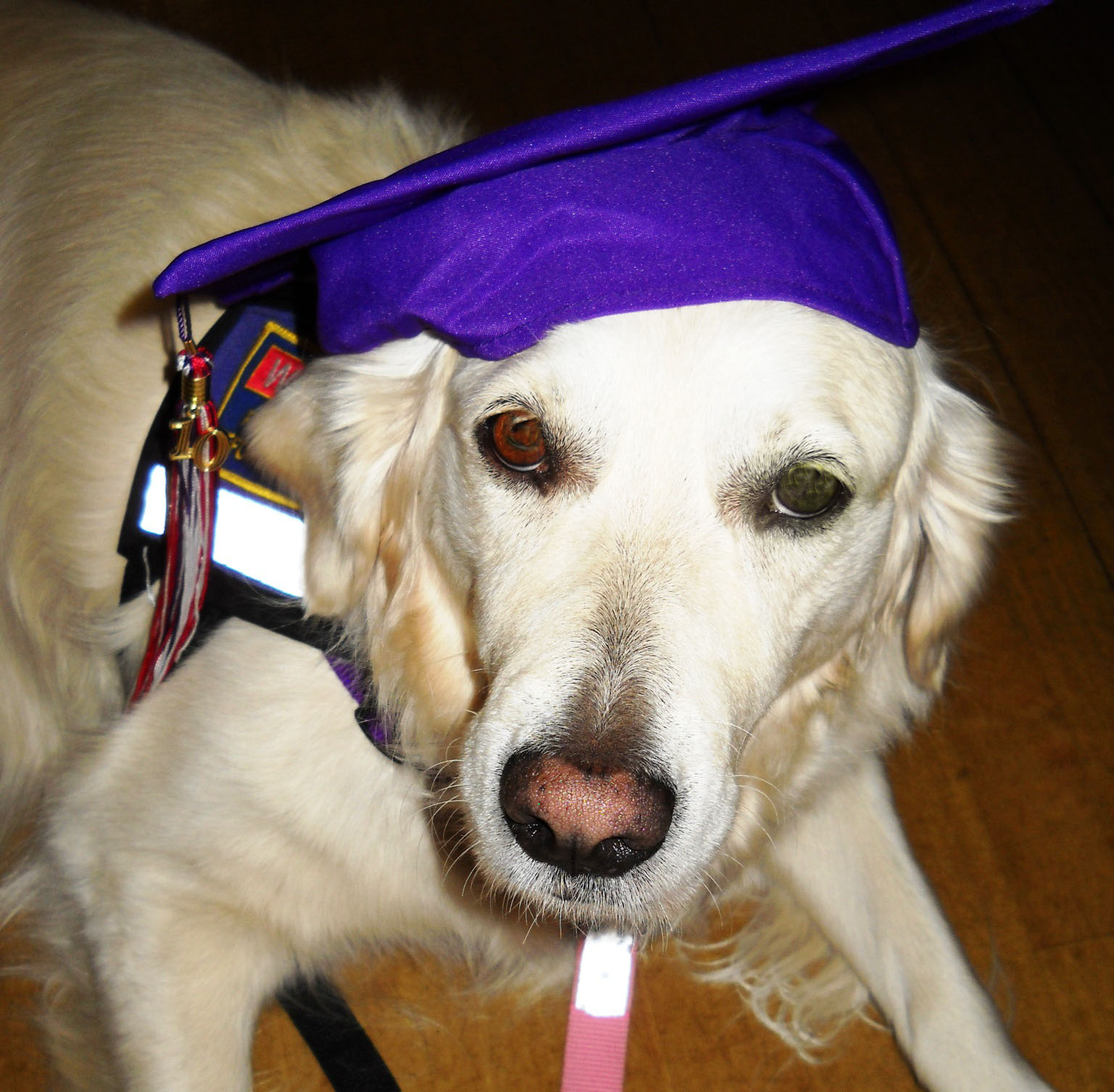
Jana, a golden retriever, wears a graduation mortorboardAnyone who has ever out two treats in her pocket and then given her dog only one knows that dogs can count.

Well, it’s more nuanced than that.

Despite many hoaxes and dubious claims, dogs can’t actually count, at least not without extensive training — but dogs are aware of quantities and relative sizes, without any training at all. And, it turns out, they use the same part of their brains that humans do to assess the approximate number of items in an array or group of items.

About those treats — they definitely know when they are being shorted, or the other dog is getting a bigger piece. And they always know when there is (or recently was) a treat in your pocket. They have excellent noses, you know.

Researchers at Emory University (including my favorite dog researcher, Dr. Gregory Berns) put their well-trained dogs back into the MRI and showed them various groupings of black dots on gray backgrounds. This study doesn’t sound like it was as much fun for the dogs as the ones where they got ordinary treats and good treats so the researchers could see how the pleasure centers in their brains lit up … but I bet the dogs were paid well in treats after all the dots.

The published paper talks a lot about the different parts of the brain, but the upshot is that humans and dogs (and lots of other mammals, apparently) react differently when seeing a small quantity of something (fewer than 4) vs. a larger quantity. This useful skill, called numerosity, benefits both predator and prey animals in their search for food or attempts to avoid becoming food.

The dogs in the study had no math training prior to their MRI experience. The advanced mathematical skills that (some) humans possess use the same area of the brain. I wonder how far the above-average dog could get in math with the right teacher.


Doggy generalists and doggy specialists (part two)

Cali eyes a bowl of ice cream
Is that for me?

Add New

A couple of weeks ago, I wrote about dogs learning to generalize — to apply a cue in different environments. Dogs can also learn to specialize.

What I mean by that is that they can learn that a cue or rule applies only in very specific situations. For example, I have a TV-watching sofa in the basement that is dog-friendly. I have a living room sofa that is not dog-friendly. The dogs know that they are allowed on the downstairs sofa but not the living-room sofa. (Though, when’s she’s feeling grumpy, Cali has been known to sneak onto the living room sofa, quickly jumping off when I approach and faking nonchalance as she heads to the bedroom …)

Even more specific — the dogs know that they are allowed on the bed only when a particular blanket, the “dog-proof cover,” is on the bed. When that cover is being laundered, Cali will poke her head into the bedroom, scowl (yes, she scowls), and stalk off.

Koala knows to check with her mom about getting on beds and furniture in new places when they travel; she recognizes when a “dog-proof cover” has been deployed and it’s safe to jump on. She’s also much better than Cali about following the rules.

Wylie, Deni’s German Shepherd guide dog several years ago, learned an interesting lesson: Puppy Wylie was chasing wild turkeys in the front yard of Deni’s Montana home when the turkeys played a little prank on him. They led him on a wild chase … right into a wasps’ nest. Wylie never chased turkeys again. Unfortunately, he failed to generalize the “don’t chase wildlife” rule and continued chasing deer until he had some firm training.

Dogs generalize and specialize about all kinds of things. They learn which things are their toys and which things they are not allowed to chew on — even when they share a home with small children whose toys look a lot like dog toys. They learn what they are and are not allowed to eat. They might know to bark at some noises and not at others or that they can get on the bed only when invited.

Dogs’ ability to specialize and generalize can get humans into trouble.

What if, for example, you have been strict about not feeding the dog from the table, teaching your dog to lie quietly while you eat. But … your spouse sneaks her treats on the sly.

You’ve begun to notice that, although the dog behaves while you are eating alone, if your spouse is there, she begs. Even worse, whenever anyone else is over, she hovers hopefully, testing each new person to see whether he’s a stickler for your rules — or is a softie, like your partner.

This points to a universal human failing: Inconsistency.

The dog has learned not to beg from you at the table. She has not generalized the rule to “no begging at the table.”

Instead, she has taken what you intended as a general rule and figured out that not all the humans know or care about this rule. Indeed, she has exploited the begging loophole (along with her long blond eyelashes and her talent at manipulating your humans…) to establish two different rules: She has determined that the specific rule is “do not beg from mom” and the general rule about begging is “it depends.”

Then, she has decided that she needs to figure out which rule each new human uses. Some will be sticklers; some will be softies.

Unfortunately, the more people in a household, the more likely it is that they will enforce rules inconsistently. Even in a household of one, alas, it is possible (likely!) to enforce rules inconsistently, leading the dog to learn rules that are quite different from what was intended.