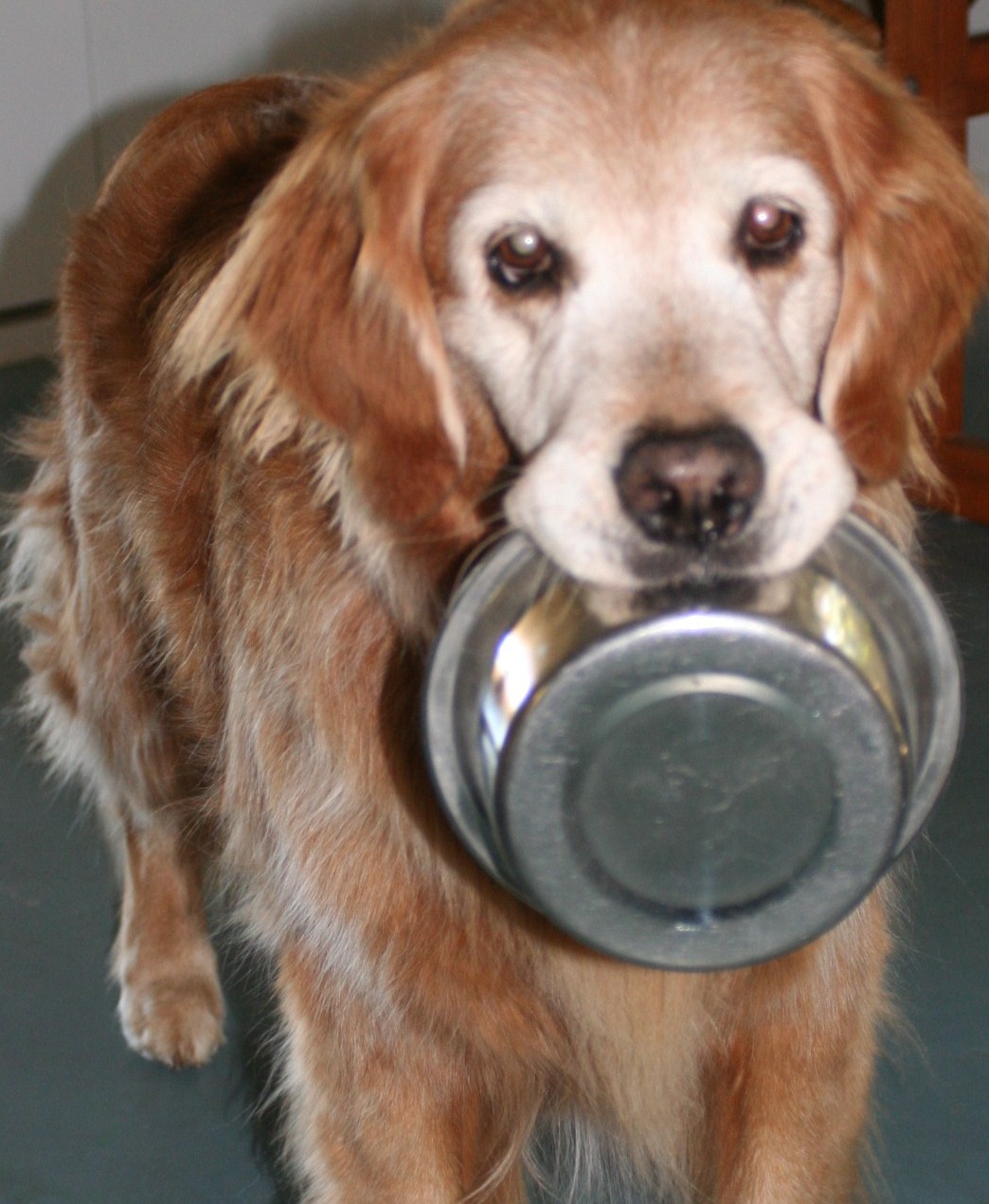
The Happiest Dog on Earth

Calis signatiure Feb3 2015
Cali Was Here (Photo by Christina Phelps)

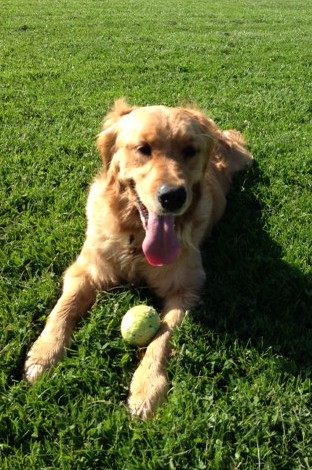
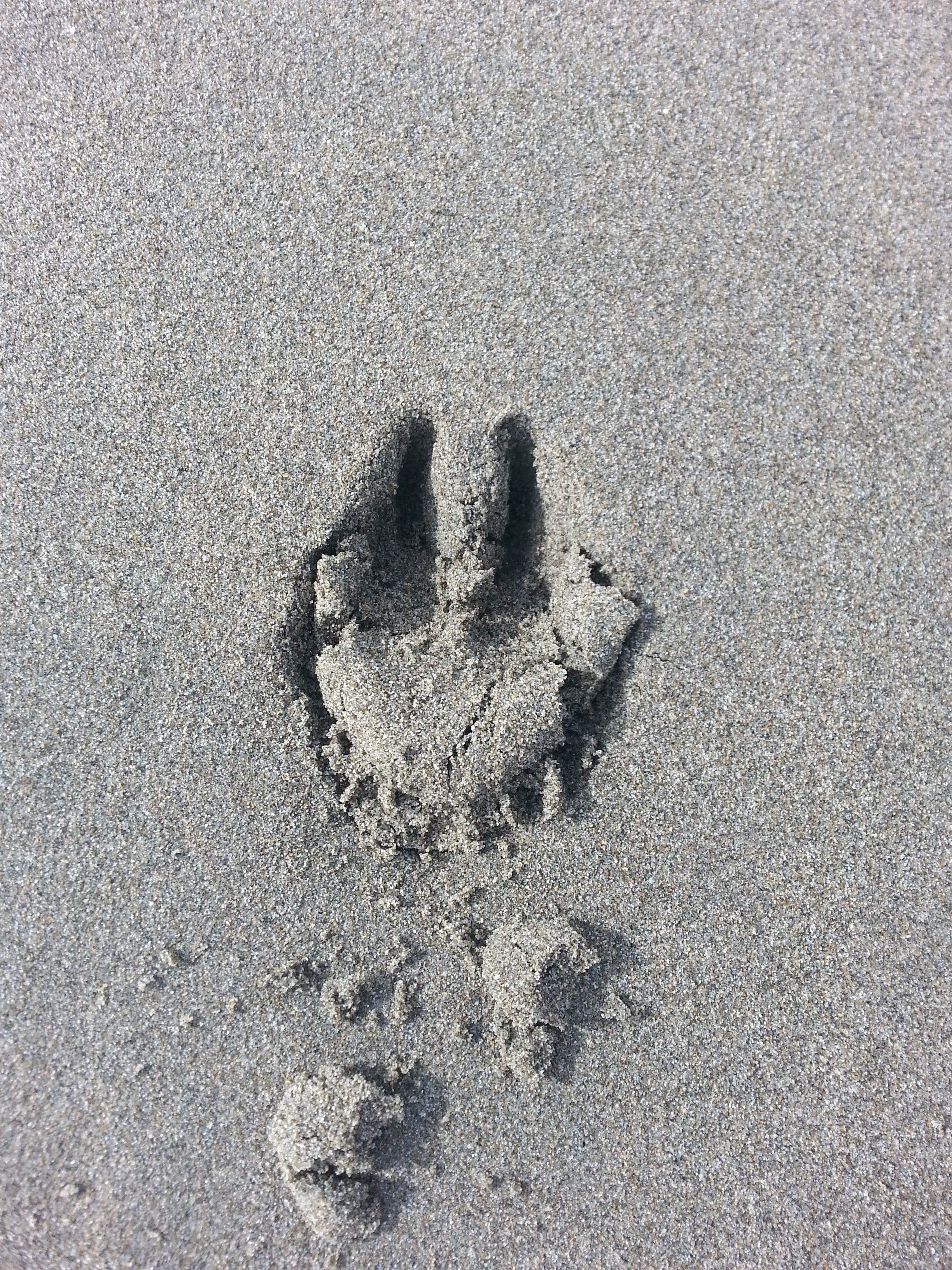
Cali’s pawprint from a recent beach day. It’s so fitting that her pawprint looks like a smiley face. Cali really is the happiest dog I have even known. She greets each morning (actually, since she gets up well before the sun, I could say that she anticipates each morning) with pure joy. She grabs a toy and waves it in my face or jumps on the bed to give me kisses or just wags her whole rear half — whatever works to get me out of bed. Lazy Mom.

She then grabs a favorite toy and runs outside where she runs around, wagging and smiling. (Yes, I can tell she’s smiling, even if she has a large toy in her mouth.) A few hugs and cuddles, more wags, and she’s off to take care of morning business.
Sometimes, in the afternoon, when she’s bored and I am working too much, she loses the smile and gives me the bored teenager sigh. But she perks up immediately when I say a magic word (“park” or “play” or “walk”).
Anticipation kicks in again sometimes. I apparently have a habit of saying, “OK,” when I am about to get up from the computer. It triggers a wild frenzy of dancing and tail wagging. Same thing happens — this is a bit embarrassing — when the end music to my latest Netflix TV series comes on each night. Cali might be comfortably napping on the huge memory foam dog bed (having kicked Jana off, no doubt), but at the first bars of music, she’s up and dancing toward the door.
Am I really that predictable (yes). More to the point, what does this tell us about dogs?
The ability to remember experiences, learn from them, and anticipate new ones based partly on those memories is a huge element of what makes humans conscious and engaged in society. Same thing is true for dogs. While I doubt that Cali lies around wondering what we’re doing next weekend or worrying about how we’ll pay for her next bag of SoJo’s (she leaves that to me), she often appears to anticipate good things happening in her future.
She seems to expect that, at 4 p.m., I will stop working and Play With the Dogs. At 5 p.m., dinner had better be in the bowl. While following a routine does not, in itself, mean that dogs are thinking, planning, or anticipating, it’s clear to me that she anticipates these events. And that her clock runs a bit fast.
Even more interesting is her certainty, whenever we get on 101 South, that fun things are in store for dogs. Not all car trips end up being fun for the dogs. She’s been on car trips that started with getting on 101 South … and ended in Florida, many long, dull days later. Sometimes, I just run errands. Mostly, though, we are heading to Berkeley, to visit Cali’s sister Dora or hang out with her friend Virgil. Sometimes we end up in San Francisco with Jana’s longtime pal Christine at the beach. So the odds of fun are strongly in Cali’s favor.
That’s enough for her. Cali’s sunny personality reflects her natural optimism. And what is optimism if not a belief that good things are bound to happen in the future?

Finding the Right Sitter

Will you take care of us?
As I planned travel for the holidays and again in the spring, I faced a familiar problem. Whom do I trust to take care of my girls?
I am fortunate to have many dog-loving friends who often help out. But recently, I left my dogs in the care of a dog-sitter who stayed at my apartment. Searching for a dog-sitter and then leaving the girls in her hands was an interesting (and nerve-wracking) experience.
Kennels are out for many reasons. The environment is stressful, especially at Christmas, when kennels are packed to capacity. I truly believe that very few dogs really do well in a kennel environment. Cali is overwhelmed by so many dogs and is usually intimidated by large dogs. Jana simply cannot abide being treated like a dog. So kennels would not work for my girls. Besides, kennels in my area cost as much as (or more than) a dog-sitter who will provide much more individualized attention.
I checked into some dog-sitters who take dogs into their homes, but I worried that the stress of being in a strange home and surrounded by unfamiliar dogs would be too much for Jana. She gets anxious easily, and can be, let’s say, defensive of her food when she’s stressed. Since many sitters care for multiple dogs over the holidays, visions of Jana biting another dog were too vivid to ignore.
In the end, I interviewed about a half-dozen potential sitters. There are many wonderful people out there who really love dogs, and it’s possible to find a variety of environments and approaches to dog care. While selecting the right person and environment can take a while, I was encouraged to see that, even for dogs who need extra attention or care, there seem to be sitters who can provide what is needed.
I was happy to find a capable, dog-savvy sitter who would stay with the girls. They’d be in their own home, and no unfamiliar dogs would be in the picture. They’d (supposedly) have company much of the time and get to follow their usual routines. Seemed like a great solution.
When I got home, Jana and Cali were excited and affectionate, but also happy, well-fed, and perfectly cared-for. I would do this again.
But I wasn’t entirely thrilled with the experience. I’ve never thought of myself as a helicopter parent, but, while I was gone, I wanted to know what my girls were up to. I don’t have any way to know how much time the sitter spent here and how much time the dogs were home alone. I don’t know whether she took them to the park where we usually play ball every morning, or even if they went for walks. I wanted pictures occasionally, and I wanted updates by email or text. If I contacted the sitter, she responded, but I didn’t get a single photo the entire time. I realized how important and reassuring this type of contact is. I have found a wonderful dog walker and — even when she takes the dogs for a half-hour walk — she sends pictures.
So, to all of you dedicated (and tech-savvy, communicative) dog-sitters — thank you for the work you do (and keep those photos coming!). And to dog parents — it’s worth doing your homework and finding the best person to care for your dogs. It might take some experimentation to figure out what works best. Next time, I will know to ask for photos and updates!

Nice to Meet You

Wanna play?
Wanna play?

Dogs are as individual as people; therefore, getting to know them takes time and happens on different levels. There’s a big difference in “knowing” someone you’ve met at a party or been introduced to over coffee by a mutual friend, and “knowing” a friend who’s been part of your life for years, right? The same is true with dogs.
It takes time to get to know a dog and identify his or her personality and behavior patterns, just as it would with a person. But what about when you meet a dog briefly, say, walking down the street or hanging out at a coffee shop?
When you meet a person with a dog, greeting the dog probably won’t get much more intimate than saying hello and maybe giving the dog a pat or a hug. You might note the breed or notice whether the dog seems friendly — but even at this level, you can look for cues from the dog about his or her personality.
Cali and Jana perfectly illustrate the polar opposites in terms of their reaction to new people.
Cali was put on this planet to greet every single human being and become his or her new best friend. She rushes toward strangers with her whole rear half wagging and a huge smile on her face. If we’re on the way back from the park, she’s also got a slobbery tennis ball in her mouth, ropes of drool dangling, a wet “bib” (from the drool), muddy paws and legs, and she feels sweaty to the touch. On really energetic play days, she’s also given herself a good all-over shake and has, in the process, managed to drool on top of her own head. Never mind. She doesn’t notice any of that, and neither should you. She greets each and every person we meet with enthusiastic joy, secure in the certainty that every single human will love her back. Of course you can pet this girl, hug her, take her home and play ball with her. She’s your new best friend, after all.
Jana stands back and watches this all with horrified disapproval. Sometimes she barks. Usually she stands behind me, ensuring that there is a large, solid barrier between the stranger and the nut-job puppy greeting the stranger — and herself. This is not a dog who is inviting or would welcome a getting-to-know-you pat. This is the dog who invented “no-touch cuddling”: when she’s feeling affectionate, she will agree to lie upon a corner of my bed, so long as we’re not touching. After a few minutes, never more than five, she, with great dignity, descends from the bed and gets on with her life. This is what counts as “cuddling” in Jana’s world.
OK, so when you’re encountering a new dog, the first thing to notice is whether the dog is approaching you or standing back? That’s easy. But most dogs just kind of stand or sit next to their owners. They are not as clear about where they are on the Jana‒Cali continuum as, well, Jana and Cali are. What then?
Most dogs, even the friendly ones, dislike being patted on the head and being hugged. Sadly for them, most humans do one or both of those things when meeting a dog. According to Turid Rugaas, a dog communication expert who has identified what she calls “calming signals” — subtle body language cues dogs use with each other — the best way to introduce yourself to a dog is to approach slowly and from the side.
If the dog is sitting next to the person, you can just pet the dog on the side — stroke his shoulder, say — or reach around (not over the head) to scratch his ears. Making direct eye contact, leaning over a dog’s head, or reaching for the top of his head can be perceived as threatening by a dog, so it’s better to use the sideways approach. You can always crouch down to be more at the dog’s level; you’ll be less threatening and the dog will probably see it as a friendly gesture. If you are face to face, rather than reach for the top of the dog’s head, it’s better to scratch his chest. In any case, a slow approach lets the dog get your scent before you actually touch him.
Most people aren’t very observant around dogs, and dogs’ body language cues can be very subtle. A dog that is constantly looking back and forth, between the owner and you, for example, is showing nervousness, as is a dog who constantly licks her lips. A nervous dog might yawn or show a “stress smile.” (See “Communication Goes Two Ways” for examples.) These dogs will be happier if you don’t try to pat them when you first meet them.
If your dog is particularly sensitive or will meet a lot of people, it’s a good idea to play a pat-the-puppy game — pat the dog on the head, then immediately praise him and offer a treat. This can revise his thinking about this unpleasant encounter and may even turn it into something he likes. It’s also a good idea to teach your dog to look at you when people approach. You can reward this focus with a treat. The dog may develop better associations with meeting people. The dog will also be learning to look to you when she is stressed, which is a good “default” behavior. Because the bottom line is, whether your dog is Cali-style friendly, Jana-style reserved, or somewhere in between, your job is to keep him safe — and that means running interference with strangers, whether human or canine.

Hide and (Don’t) Seek

Albee sleeps_small
Alberta sleeps — or pretends to?

My last post, Hide and Seek, talked about how Cali hides when she is avoiding something, such as having her teeth brushed. This week, I encountered an example of hiding that has a different purpose — and shows some high-level, and rather devious, thinking.
We were visiting at a home where there is a resident cat. Early one morning, the cat’s mom got up, gave the cat his breakfast in a plastic bowl, placed on the floor. Cat and mom then wandered away. Alberta, who had been sleeping on blankets next to the bed, noticed the cat and mom as they passed by into another room and closed the door. Very quietly, which took some effort, as she had several jangly tags on her collar, Alberta slipped out of the bedroom. Minutes later, without waking Deni, she slipped back in and either went back to sleep or did a stellar job of faking it. None of the three people in the house had any idea that she had slipped out of the bedroom or back in.
Later that morning, cat-mom asked us whether we’d seen the cat’s food bowl, which she had last seen at 5:30 a.m., still filled with kibble. Nope. We looked high and low. We looked in closets, cupboards, even the refrigerator, the bathrooms, and the garage. Nope, nope, and nope. Cat-mom wondered whether she really had fed the cat. Was she losing her marbles? Regardless, the bowl itself had disappeared.
Several hours later, walking through the bedroom, I noticed the edge of a plastic bowl under the bed, right near Alberta’s dog bed. Hmmm. Bending over, I reached waaayyy under the bed … and pulled out the cat’s (now empty) bowl.
Our best guess is that Alberta snuck out to eat the cat’s food and then, as is her habit, picked up the bowl and headed toward Deni to hand it over for an after-meal treat. Somewhere along the way, she must have remembered that she wasn’t supposed to let anyone know that she’d stolen the cat’s breakfast. Was she deliberately hiding the bowl? Had that been her plan all along? Or did she only think of it once she got back and saw Deni sleeping? At what point did she realize her error?
Her extreme stealth tells us that she knew she was doing something wrong; the distance the bowl was shoved under the bed indicates the same. If Alberta needs to go outside or decides that breakfast is long overdue before Deni wakes up, she noses Deni and whines until Deni responds. When Alberta picks up her bowl after a legitimate meal, she usually dances around, makes noise, doing whatever it takes to get Deni’s attention — because she is eager to collect her dessert (a cookie for returning the bowl). That she did not do this, and did not leave the bowl where anyone could see it, indicates deliberate hiding.
There’s a whole lot of higher-level thinking going on in her mind — all put to work for devious purposes. Alberta is showing multilayered understanding of a situation: knowledge that she can work a situation to her advantage (steal the food while cat and humans are sleeping or otherwise occupied) and hide the evidence where humans can’t see it.
Despite her impeccable breeding and fancy education, and regardless of her usual angelic behavior, what we learn here is that Alberta is also still a true Labrador — primarily a food-seeking missile. We also see that, whatever we teach our dogs and however we nurture their intelligence and try to shape it in ways that we want, each dog is still an individual who can put that intelligence to work in the ways that best serve her own interests.

Amazing Restraint

In Alberta’s Marshmallow Test, I described Alberta’s admirable ability to resist temptation in the form of a bowl of dog biscuits sitting alongside a water bowl outside a Michigan store. While I know personally of the hard work Alberta (and Deni) have invested in honing Alberta’s ability to resist food temptations, I also know that all dogs (with the possible exception of Cali) really are capable of learning self-restraint.
This ability is, I believe, evidence of their ability to understand what is the “right” thing to do in particular circumstances. It is certainly evidence that not all dog behavior is hard-wired or instinctive.
Some examples include dogs who learn not to take food from counters, tabletops, and plates, even when those are tantalizingly within reach. I could leave a steak dinner on the coffee table (at Jana’s nose level) and go out for an hour. If she knew that was not her food, it would all still be sitting there when I got back. Leaving it alone with impulsive youngster Cali would be a different matter, however.
An even more important example, and something anyone who lives near a road with traffic or who takes the dog for car rides should work on, is waiting at doorways. When we drive to the dog beach or park, the dogs are very excited. But even Cali, who is probably wriggling with excitement, has learned not to exit the car without explicit permission. And Jana and Cali have both learned never to bolt out the front door, not matter how seductively the park across the street beckons, no matter how many cats, UPS delivery people and mail carriers are passing by … no matter what.
I argue that these are examples of dogs “doing the right thing” because I know that they are not afraid of being punished and that these efforts are rarely rewarded. Well, at the dog beach, they do get to go play — but even when someone slips up, the worst consequence is that she’s sternly instructed to get back in the car and wait, and then released a minute later to play. The girls are not following the rules because they think they will be horribly punished if they do not. They are not expecting any significant reward, especially for resisting the impulse to run out the front door. They are doing what they know is expected of them in these common situations for no reason other than they know that it is the rule.
In fact, we ask dogs to resist behavior that comes naturally to them all the time. We ask them not to chew and lick at their itchy spots. We ask them to resist humping other dogs. We ask them not to bark at the neighbors or the mail carrier, even when he is invading their turf. We ask them to ignore food (and things they consider food) on the ground, to not chase cats and squirrels encountered on walks, and to walk nicely on a leash.
We do ask a lot of them, don’t we? And most dogs, most of the time, live up to our very high expectations. Especially if we practice with them and do reward them sometimes.
I think that we humans take it for granted that dogs should follow our very human-centered rules. I am suggesting that we look at things from their point of view once in a while, recognize how truly counter-intuitive it is for a dog to resist food that is just sitting there or to abstain from chasing that cat out of the yard. We need to recognize that our dogs pass their own marshmallow tests, every day, many times a day — and reward their efforts with praise and pats and, at least occasionally, yummy treats to reward their restraint.

Alberta’s Marshmallow Test

This slideshow requires JavaScript.

In the 1970s, a psychologist tested the self-restraint of preschool children. Each child was offered a marshmallow. The children were told that they would get two marshmallows if they could delay eating the treat, and then left alone in a room for fifteen minutes. The researcher recorded what happened. The efforts of some children to stare down the treat or to distract themselves from it are both comical and painful to watch. Of course, some children inhaled the treat as soon as the researcher left the room. A recent book (The Marshmallow Test) describes this experiment and the follow-up studies of those children. The marshmallow test and other research on the ability to delay gratification shows that those who can exercise self-control in the face of temptation have better “life outcomes,” as measured by a variety of criteria, including SAT scores, social and cognitive functioning, long-term health, and retirement planning.

What does all of this have to do with thinking dogs?
Alberta experienced her own version of the marshmallow test recently. To say that Alberta loves treats is a bit like saying that I love chocolate. Alberta not only loves treats, she is not terribly fussy about which treats she gets. For sure, there are better treats, for example this bison and beef jerky concoction that I get at Costco and that, for some reason, Jana, Cali, and Alberta will do anything for. But ordinary, boring biscuits are fine too, and they are happily accepted as rewards for a job well done.

In her guide dog work, Alberta comes across many items that fit this dog’s definition of “treat,” and she works very hard to resist bits of food that just happen to be lying on the floor.
Alberta is justifiably proud of her hard-earned restraint, but more importantly, she wants Deni to know. So, in the course of a day’s work, if Alberta sees food on the floor and gives it a wide berth, she also nudges Deni to make sure that Deni knows just how good she is being. She pushes Deni hard with her nose, hoping that Deni will notice the ignored object. She often nudges Deni right near the pocket where Deni keeps the dog treats, just in case Deni might want to reward this extraordinary show of restraint. A girl can hope, can’t she?

Alberta knows the rule that she can’t grab food off the ground when she’s working. She wants to believe that that rule does not apply when she’s off-duty (her harness is off). She also knows that, even while working, she’s allowed to take treats that Deni hands her for particularly notable service. But she recently encountered a situation that blurred these lines a bit, a marshmallow test for dogs. Her reaction was remarkable.
Guiding Deni down a street in Saugatuck, Michigan, Alberta (along with her entourage of two other human family members) passed by a store that not only had a full doggy water bowl sitting by the sidewalk, but also a full bowl of doggy cookies. Just sitting there for the taking. An open invitation. Irresistible.
Or not.
Alberta headed for the water, took a drink, noticed the cookie bowl and … stopped dead. Confused. She looked at the biscuits. Looked at Deni. Furrowed her brow. Looked longingly at the treats. But she did not touch the treats.
We’d all stopped to watch the unfolding marshmallow-like drama. Alberta really wanted to gobble up as many of those dog cookies as she could. But she did not take one. She did, however, look at every one of us to make sure that we all knew how good she was being. Deni rewarded her by picking up a few biscuits from the bowl and handing them to Alberta.
Watching the interaction, I got to thinking. Most dogs who walk by this shop are not trained service dogs. Though many, like Jana and Cali, have had some training and certainly know that they are not supposed to just devour everything in sight, they don’t always have the restraint to follow through. Having more than once found myself alone with a new box of Trader Joe’s dark chocolate peanut butter cups, I can relate.
I wondered how often a doggy passerby just digs in and eats all the cookies in the bowl. How many battles between hungry hounds and their hapless handlers has the shop owner witnessed? Does the handler ever win? And really, what was that shop owner thinking?

But back to Alberta. In need of photos for this blog post, I asked Deni to re-create Alberta’s marshmallow test. The photo gallery (presented in order) at the top of this blog post shows that, like the successful children in the original marshmallow test, Alberta devised a series of ways to distract herself. Some of the children looked away, as Alberta did. Some sang songs or recited the alphabet. Alberta did neither of these. Some children closed their eyes. Upon realizing that, even after she had turned away, the bowl of biscuits was still there, Alberta closed her eyes.

Alberta has not only learned to resist random bits of food on cafeteria floors, sidewalks, and the like, but there she was, on that Michigan sidewalk and again in Deni’s office, passing up food that was obviously meant for dogs, placed there for her enjoyment. This shows us that dogs are able to do some high-level thinking and processing.

If Alberta were purely instinct-driven, that bowl would have been emptied in seconds flat. If she were operating only out of fear of punishment or hope of reward, she might have surreptitiously sneaked a mouthful of biscuits before Deni noticed, just to see if she could get away with it — and been rewarded by the treat, even if she got scolded after. But she went beyond a gut-instinct response and even beyond the basic (low) level of moral development that governs much of human and animal behavior. She paused, checked in with Deni, and did the right thing — even though she really wanted those cookies. We’re eagerly looking forward to seeing Alberta’s SAT scores and are consulting her for retirement advice. But in my next post, I will describe more practical ways we can apply the doggy marshmallow test to our relationships with our dogs.

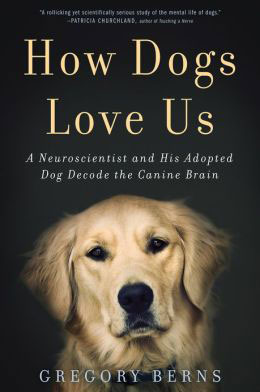
How Dogs Love Us

howdogsloveus_260Gregory Berns got the crazy idea of training his dog to lie still in an MRI machine, in the hope it would provide some insight into dogs’ thinking. What he found brings scientific proof to something every dog person knows — that dogs read us, anticipate our behavior, and act on that knowledge. Dogs, in short, have theory of mind. Berns rightly argues that this scientific evidence must change the way we think of and treat dogs.

What’s especially wonderful about this story is that, at least at the beginning, Berns is not an especially savvy dog person. He loves his dogs, treats them extremely well, but hasn’t spent a lot of time trying to communicate effectively with them or train them. By the end of the book — or maybe by a few months into the research — he’s become convinced that dogs communicate and function on a very high level and that “the key to improving dog-human relationships is through social cognition, not behaviorism.” Quite a journey … in fact, it’s the same journey that I hope to push my students along in Bergin U classes on dog training, canine-human communication and understanding the dog’s perspective. (Any current Bergin U students reading this might as well order their copies now … this book is destined to become required reading in all my classes.)

The book is filled with fairly complex scientific concepts, but it is written beautifully and clearly. It is very easy to understand and, like a good adventure novel, pulls readers along with foreshadowing and suspense. I especially love the long discussion of the ethical issues Berns and his team faced in setting up the research and the insistence of all the human researchers that the dogs would always be free to opt out, at any time. I also love the dog-centric approach the research takes (read the book to find out what I mean!). This book — this whole research study —is a testament to the amazing possibilities that exist when humans acknowledge their dogs’ abilities, treat them as partners (rather than as property or as slaves), and engage with them in a respectful, positive manner.

Because I am nut for precise language, I do have to quibble with the title. Berns does not actually show HOW dogs love us. He does show, I believe, that they DO love their human family members. While he can’t really show us what dogs are thinking, though, he has shown a way to understand their likes and dislikes — and perhaps opened the door to a better ability to read in dogs other emotions that humans and dogs share.

Dogs Are Not Merchandise

Too small to travel alone

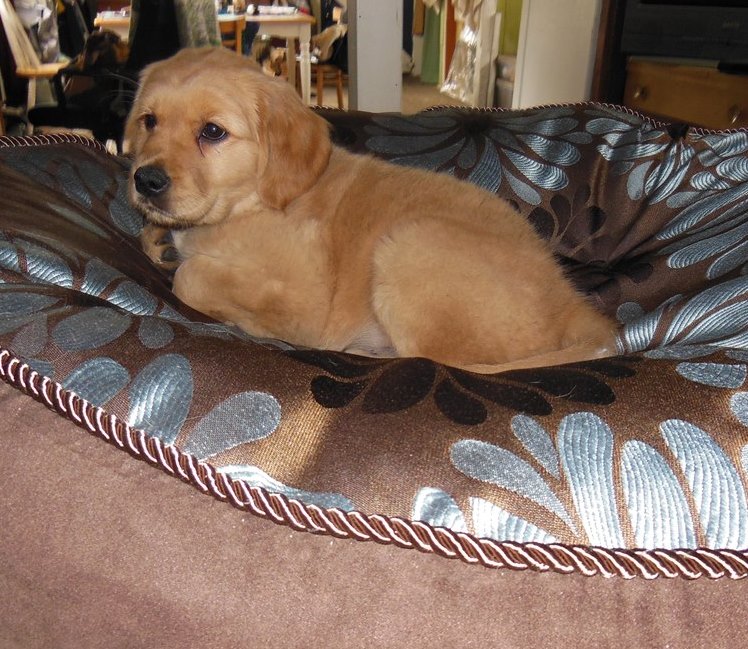
Cali at 9 weeks: Too small to travel alone

The USDA recently revised its definition of a “pet store” to target breeders, primarily puppy mills, that sell dogs online. In a nutshell, people who sell large numbers of pets must now sell them in a place (retail store, home, public space) where the buyers can see the animals before purchase. (Read the new rules and find out more here and here.) Previously, anyone who sold pets directly to pet owners could identify his or her business as a “retail pet store” and be exempt from licensing and inspection requirements that apply to commercial animal breeders but not to pet stores. This loophole was exploited by large-scale breeders, who called themselves retail pet stores because they sold pets directly to customers online. Thus puppy mills could escape any kind of oversight or regulation. (Large-scale breeders who sell only to pet stores are a whole different category and, unfortunately, are not affected by these regulations.) There is a list of exceptions, notably most shelters and rescue groups, working dog breeders, and people with fewer than five breeding animals. 

A Facebook group of service dog trainers that I participate in has been discussing these changes. Many participants in this Facebook discussion are furious about the new rules, claiming they are an attack on small breeders. I’ve read the regulations, though, and from my reading, it’s clear that the regulations don’t apply to anyone with fewer than five breeding females or to service dog breeders.

It seems to me that requiring people to meet the buyer / seller of a dog makes sense. I also think that having some oversight of people breeding large numbers of dogs is a good thing — though I do not for a moment believe that government regulation will solve all problems and make puppy mills disappear. I think that consumers have to make that happen simply by not buying from irresponsible breeders or pet stores. The worst fallout that I can see is that some medium-sized breeders might have to get licensed under these new rules, but if they treat their animals well and run a clean, safe operation, they should have nothing to worry about.

If you see something in these rules that I am missing, please post your comments here. The more people who care and who talk about issues of responsible dog breeding and sales, the better. But, right now, the new rules seem like a good start to me.

In the discussion, someone pointed out that the AKC opposes the rule change. I commented that that was not surprising; purebred puppy mill puppies are the AKC’s largest revenue source. One poster called this statement inflammatory and the farthest thing from the truth.

While I cannot pinpoint how many AKC-registered dogs and puppies come from puppy mills, certainly anyone who’s ever been active in dog rescue knows that there are an awful lot of them, compared with relatively small numbers of dogs from quality breeders. And puppy and dog registrations are by far the largest source of AKC revenue, earning the AKC more than $25 million in 2012.

I did not mean my statement to be inflammatory, either. I merely meant to point out that an organization with a huge financial stake in the sale of puppies naturally opposes any restriction of those sales. Therefore, the AKC might not be the best judge of whether the rules are desirable.

Critical thinking is needed when we think about how dogs are bred, bought and sold. While I don’t think that the AKC is evil, I certainly don’t think that it always places dogs’ best interests above its own financial interests. It is a business. A business that makes a lot of money from registering puppies.

The AKC has a long and sordid (and well-documented) history of willingness to register any purebred puppy, regardless of health. (Read some of Donald McCaig’s work if you’re interested in finding out more — for example, “The Dog Wars,” chronicling the opposition of many border collie breeders and breed enthusiasts to having the breed become an AKC breed.)

Some breed clubs, mostly in Europe, will register an animal for breeding only if the dog passes certain health clearances. The AKC does not take this logical step. The AKC is a large, influential organization. It could do a lot to improve the health and welfare of purebred dogs. In many instances, it chooses not to.

While many breeders are ethical people who truly love their dogs, for others, dog breeding is just a business. Hence puppy mills. And unscrupulous breeders who will breed from a champion dog that has known genetic issues — issues that could easily be eradicated simply by not breeding dogs who carry the genes. All of this, apparently, is fine with the AKC, which registers these puppies and collects its fees. This alone is enough to thoroughly discredit the AKC in my mind.

Despite what many dog owners believe, the mere fact that a dog is purebred does not mean that the dog is healthy or well-bred. It does not mean that the dog has a good temperament. It does not mean that the puppy did not start life in horrible, cruel circumstances. All it means is that the dog’s parents were registered (by the AKC, for a fee) as purebred. And their parents were, and so on.

While many things about purebred dog breeding make me somewhat uneasy, I do understand the allure of purebred dogs. I have done a lot of work with service dogs. Being able to (somewhat) predict a dog’s temperament and aptitudes based on the dog’s breed and pedigree is definitely helpful. I do understand the need for some breeding of purebred dogs and for a registry of those dogs.

But I don’t think that requiring breeders to follow minimal rules to ensure that their dogs are bred humanely, kept healthy and treated well is unreasonable. I don’t think that forbidding most sales of dogs via the Internet, between strangers, is unreasonable. And I don’t think that the AKC should get to write or influence the rules.

A dog is not merchandise, like books or a pair of shoes, that can reasonably be bought and sold online and shipped to buyers. Acquiring a dog is acquiring a family member. Ordering an unseen dog from strangers (who could be lying about any and every detail of their operation) is a terrible idea. Sending small puppies on long plane flights in crates, terrified and alone, is a terrible idea. (Pet stores are horrific places to buy or sell puppies too, and, unfortunately, this law does not tackle that issue.) But there are hundreds, maybe thousands of breeders who breed and sell puppies simply to make money. They do not think about the dogs as living, thinking, feeling beings. They do not care whether the buyer will treat the puppy well or whether the plane flight will traumatize the puppy. They think of the puppies — and treat them — as merchandise. Like a pair of shoes or a book. I find that reprehensible.

A responsible breeder would not sell a puppy to a total stranger. A responsible breeder would not pack a puppy into a crate and drive him to the airport and send the crate as cargo for a stranger to pick up at the other end. A responsible breeder makes sure that the adopters are the right people for that puppy and they will take proper care of the puppy — starting with picking up the puppy in person or sending a trustworthy emissary. A responsible breeder will take back any puppy that is not a good match for the adopting family. These breeders are not the target of this law. Even if they have more than four breeding dogs and now need a license, they should have nothing to fear, since a responsible breeder no doubt keeps her dogs in humane, clean conditions.

This new regulations are not ideal. They are not without problems. They certainly don’t solve the problem of puppy mills. But, to me, they seem like a good start. If we dog people want to make life better for dogs, we should save our anger for the many worthy targets. And use our passion and our energy to educate dog owners about where to — and not to — buy puppies.
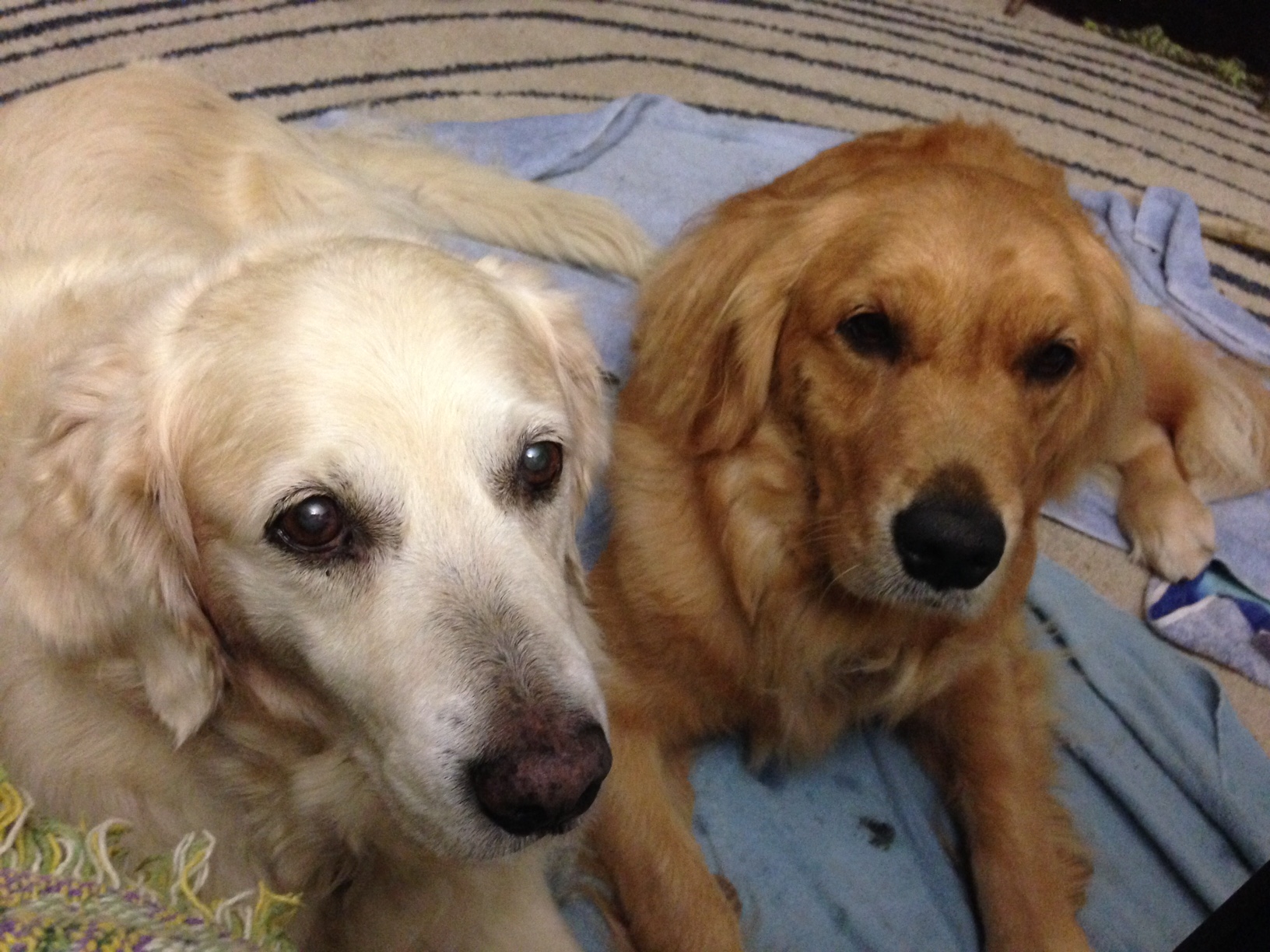
10 Years Young — Laser Treatments Reduce Jana’s Arthritis Pain

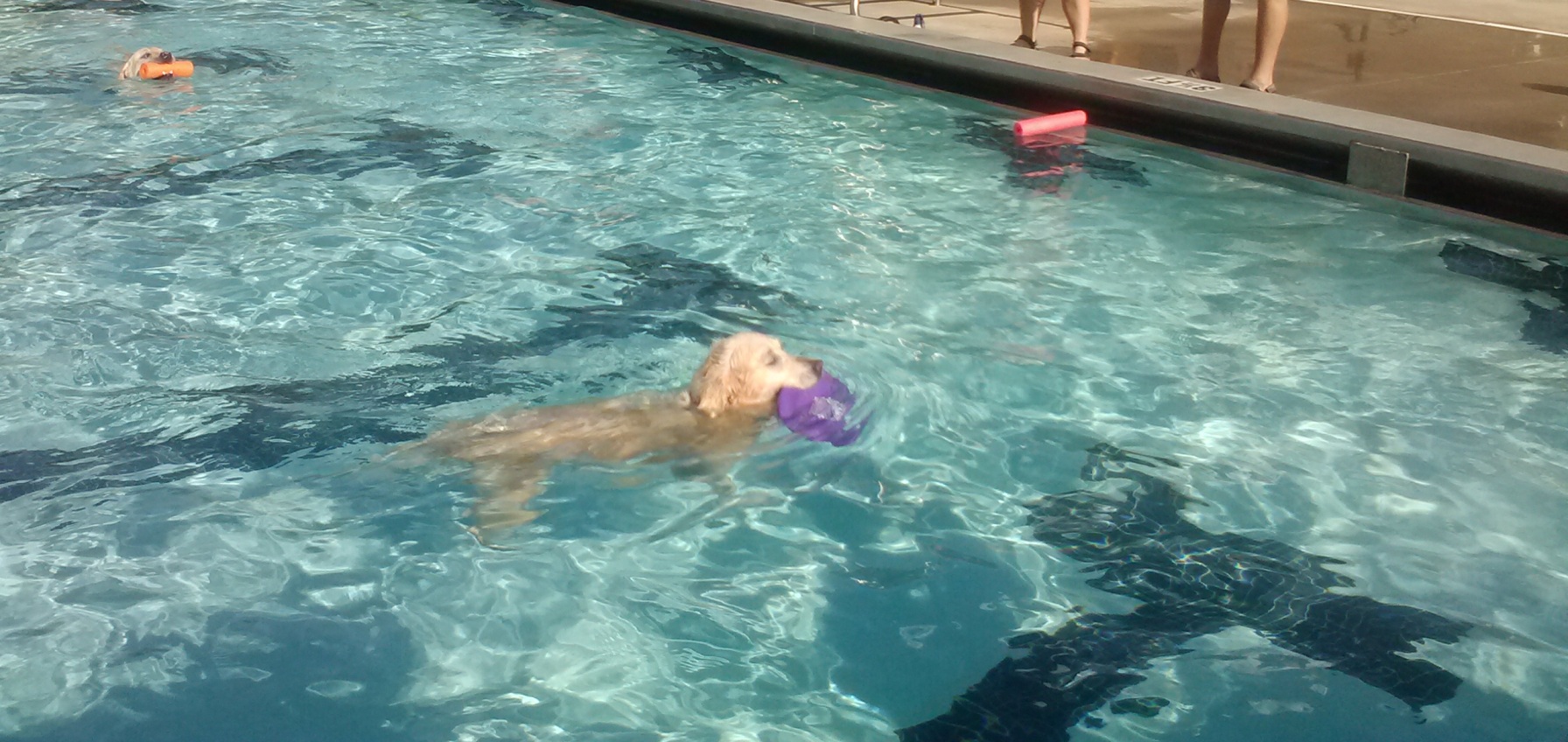
Jana enjoys Dog Swim Day in St. Petersburg, Fla.

Jana has just finished a course of cold laser therapy. With the zeal of the newly converted, I am here to sing the praises of this treatment for arthritis.

Let’s back up a little. Jana has had arthritic elbows and back and, unknown to me, hips, for a while. In the last several months, she has been noticeably more stiff and sore more often. She’s had regular chiropractic adjustments for years, and these have been very helpful. But it was no longer enough.

Very reluctant to put her on medication for the rest of her life, I started checking into other therapies. A vet in California mentioned cold laser therapy. It sounded promising; it is not invasive, has no side effects, and has helped many dogs with painful injuries or arthritis. But, I was about to drive back to Florida, so I decided to wait until we got back to Florida to start.

Fast forward to now. Our vet here in St. Petersburg does laser therapy in his office, so we scheduled some X-rays to see where Jana needed attention and took the plunge.

The X-rays showed a lot more damage than I expected and explained Jana’s morning stiffness, reluctance to walk or play, and general grumpiness of late. That was about 3 weeks ago. Six laser sessions later, Jana is actively soliciting play, swimming, and catching balls, and she is happier than she has been in months. She’s less stiff and more cuddly. She is clearly in less pain.

Each treatment takes about a half-hour. The vet tech programs the machine for hip, elbow or back, and waves the wand over the targeted body part. Jana got lasered in both elbows, both hips, and much of her spine. The vet techs have treated wounds, post-surgical sutures, muscle sprains, and a variety of other ailments with the cold lasers.

The laser stimulates blood flow, which helps injured tissue to heal. The idea is that it will improve blood flow around the arthritic joints, reducing inflammation and therefore reducing pain. It seems to be working on Jana.

I am giving her small amounts of Rimadyl, as well as other anti-inflammatory supplements, but I am hoping to be able to reduce the pharmaceuticals further. She’ll now go to a maintenance schedule of treatments about once a month. I am sure that each dog reacts differently to treatments, but I have to say this one is worth trying if your senior dog is stiff or painful.

Food Before Thought

IMG_1725

As Deni and Albee prepared to head off to a Rally Obedience class the other night, we discussed when to feed the dogs their dinner. Many trainers over the years have advised their human students not to feed dogs before training class. The dogs work better when they are hungry, is the claim. Deni and I pondered this, wondering whether it was good advice, anthropomorphism gone amok, or just plain silliness.

If it is an attempt to look at dogs through human eyes (the anthropomorphism gone amok theory), I guess it can be argued that really wanting something might make a being focus harder on what he or she has to do to get it. Therefore, if the dog really, really wants food, wouldn’t the dog focus harder on figuring out how to get it? Might sound plausible … except for a few problems. One is that the tiny tidbits of food a dog gets as rewards in training hardly take the place of a meal. And, this theory demands that you ignore stacks and stacks of research about learning or concentration and hunger.

Kids do not learn well when they are hungry. A really hungry child, and, probably, a really hungry dog, simply does not focus well. Research showing this has led public schools in low-income areas to offer not only free lunches, but breakfast as well, in attempts to boost concentration and improve kids’ learning.

Adults’ performance also suffers if we don’t eat a healthful breakfast. We know this, yet somehow think that our dogs will focus and learn if they are hungry? Doubtful.

Some trainers make a comparison with human athletes and point out that athletes are unlikely to eat a large meal just before a workout. Sure, but if training class is at 7 p.m., that is not a valid argument against feeding the dog at 5. Anyhow, a Rally class, an obedience class, even an agility class has a lot more in common with a grade-school classroom or a desk job than a triathalon. The dogs are not asked to perform athletic feats for hours, or even minutes on end. They are asked to pay attention to their handlers, to ignore distractions, to figure out what is needed, whether it is touching the contact at the end of the dog walk, sitting and staying for three minutes, or walking on a loose leash. The demands are primarily mental.

But there’s another, more important element. When trainers talk about training, it’s hard to avoid mention of the four quadrants of operant conditioning / behaviorism. The positive reinforcement quadrant is the one we are most familiar with — rewarding behavior we like. Ostensibly, the advice to train hungry dogs ties in with this: The dogs will get food rewards for their performance, and better performance will lead to more rewards. It’s all good, right?

Let’s look at it more honestly. Depriving a being of something it needs in order to get it to do what you want is called … torture. Withholding meals, then providing minute rewards for compliance falls into the “negative reinforcement” quadrant — removing a negative when the dog performs the requested behavior is supposed to increase the likelihood of the dog performing the behavior. Late dinner is about as negative as it gets for some dogs!

I know that comparing delaying a meal with common negative reinforcement techniques like ear pinch is an exaggeration. But comparing dog training class to an athletic workout isn’t? The dog will (eventually) get a meal, so feeding after training is not really abusive. But it is unfair. And it exploits the complete control we humans have over every aspect of our dogs’ lives.

The advice to delay meals might have been conceived by trainers who worked with dogs that are less food-obsessed than golden and Labrador retrievers. I still think it is wrong. A meal and tiny little training rewards are not the same thing. If your dog is unwilling to work for the training rewards you are offering, it is not because you have fed him; it is because the rewards you are offering are not, in that dog’s mind, motivators.

The cardinal rule of any kind of motivational training is that the trainee — the dog — determines what a motivator is and therefore what the reward should be.

If your training treats only motivate your dog when he is ravenous, skipping dinner is not the answer. Try using better treats. Try using a tennis ball, a tug toy — anything that your dog loves — as a reward. I might be willing to work for several hours to earn a paycheck that will arrive next week, but Cali, Jana, and Albee will always choose the freeze-dried liver over the cash — and they want it now, please. In fact, they will choose liver over and over again, at every opportunity, regardless of whether they’ve had dinner.