It’s a Dog’s Life

A recent op-ed in The New York Times considered the question of whether it is ethical to have pets. For most non-domesticated animals, whose lives as pets means being confined to cages or tanks, the writer was quickly able to establish that, no, it is not: the best we can do is a life of “controlled deprivation.” She — and I — have a harder time answering that question with regard to dogs and cats. I know little about life with cats, so I’m really only considering dogs here.

BORED

Dogs have evolved as domesticated companions to humans, so in their case, it’s not at all unnatural to include them in our homes and families as pets and family members — if we do it right.

Most pet dogs live a pampered, but far less than ideal, life. I honestly don’t think that most dogs enjoy long days spent home alone, even if they get to spend that time on a $100 memory foam bed (or on your $1,000 plush, memory foam dial-a-number luxury bed). Even dogs who have canine company spend much of their “home alone” time sleeping, staring out the window … or worse. Many dogs experience severe anxiety when left home. At best, their lives are boring, revolving around a few minutes of dining once or twice a day and, if they are lucky, one short walk. Many pet dogs don’t even get that. The really lucky ones get a daily walk with a person who is focused on them, not simultaneously on the phone and/or dealing with a child or two.
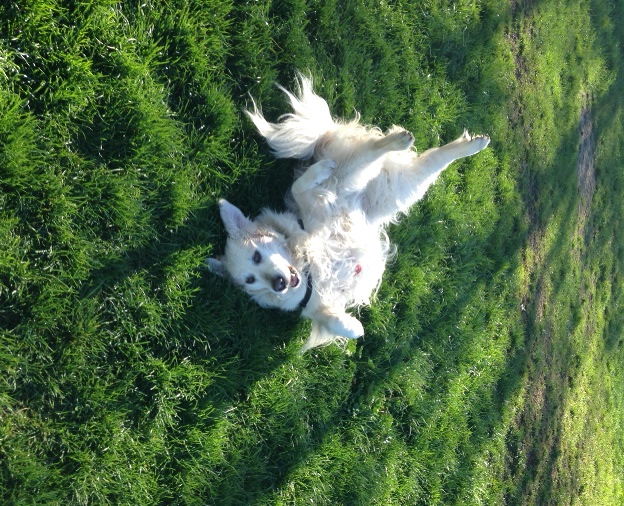
Jana enjoys springSome dogs — most of the dogs I know well — are luckier than that. My friends with dogs tend to be more engaged than the average dog-owned person. These dogs get regular walks, usually more than one a day. On these walks, they actually get to stop and sniff things. Some of them get to go to parks and play with their friends (yes, dogs have friends!), they go to the beach sometimes, on car trips, to dog-friendly cafes, to laser therapy appointments (hi, Jana!), acupuncture, agility or Rally classes … any number of enriching, fun activities. They get excellent health care, they eat carefully selected, healthful diets and treats, and they own baskets full of toys. For these dogs, life is pretty good.

Considering the broad range of doggie experience, it is hard to answer the question of whether sharing life with dogs is ethical. The dogs I described in the previous paragraph are a minority of American dogs, though, and only a tiny, tiny minority of the world’s dogs live like that. Put that reality together with my absolute inability to imagine a life without dogs and, well, it’s a dilemma.

As a person who loves dogs and has the means to offer my own dogs a good life, and who teaches future dog professionals, I’ve pretty much dispensed with the question of whether to have dogs. Instead, I think about this question: How is it possible to ensure that our lives with dogs are ethical? By ethical, here, I mean that in deciding to bring dogs into our homes, we commit to making the dogs’ lives interesting and fulfilling, to allowing the dog(s) to develop their full range of doggy abilities and enjoy a high quality of life.

This would include, of course, providing everything on ALDF’s Animal Bill of Rights — for pets, that is shelter, food, and medical care. But I think our obligation goes beyond that. The Bill of Rights also mentions “an environment that satisfies their basic physical and psychological needs” — and what that means is different for every dog.

As I consider returning to a more structured work life — you know, the kind of job where you actually have to show up at an office several days a week, rather than working at home, wearing yoga pants and taking frequent toss-the-ball breaks — I think about how Jana’s and Cali’s lives will change, and how so many dogs’ lives consist of long, lonely, boring hours punctuated by brief interactions with their tired, busy humans.

This question became urgent for Deni as she agonized over how and where Alberta should spend her retirement. No ordinary dog, Alberta has a college education; she’s been a local celebrity, a model, a career dog. Her retirement, forced by health issues, leaves her young, energetic, educated, and accustomed to days filled with new experiences, travel, encounters with dozens of people a day, and constant stimulation. On my best days, I can’t provide all of that for my dogs — most people cannot, even though we all do the best we can.

Would Alberta be best off with her family, even if that meant watching Deni head off to a work day with a different dog? Or would she be better off with a different family, most likely consisting of people and dogs she knows and loves, living as a more ordinary pet? Was retirement to Montana, as part of Deni’s extended family, the best choice? Alberta is fortunate in that all of her options were good ones, with people who love her and who understand that a dog needs more than a comfy sofa and a basket of toys to lead a fulfilling life.

Improving can be simple. Make a commitment to your dogs to take them for more walks, or to go to the dog beach once in a while. Spend a few minutes a couple times a week interacting with a puzzle toy or even just throwing the ball more often. (Cali suggests at least 10 minutes every hour as a starting point.) Leave the phone at home next time you go for a walk, and let the dog stop and sniff whatever she wants (that one’s from Jana). The funny thing is, once you build this new interaction into your relationship with your dog, you’ll feel better, too!

Kudos to Jessica Pierce, who wrote the NYT op-ed and is the author of a new book on the ethics of keeping pets, for raising these questions. Thanks to her, maybe more of us will think about — and improve — our pets’ quality of life.


She’s Very Patient; or Is She Stubborn?

A few weeks ago, Cali showed protective behavior when another dog at the park seemed to be interested in her ball. I wrote about it in a post that was published on Dec. 14, No More Toys.

I did stop taking the ball. We’d walk to the park, and Cali would get more and more excited as we got closer. I’d turn her loose and tell her to go play. And she’d sit and stare at me.

Stubborn CaliDay one. Fixed stare. Day two. Fixed stare. Days three, four, five … this went on for more than a week.
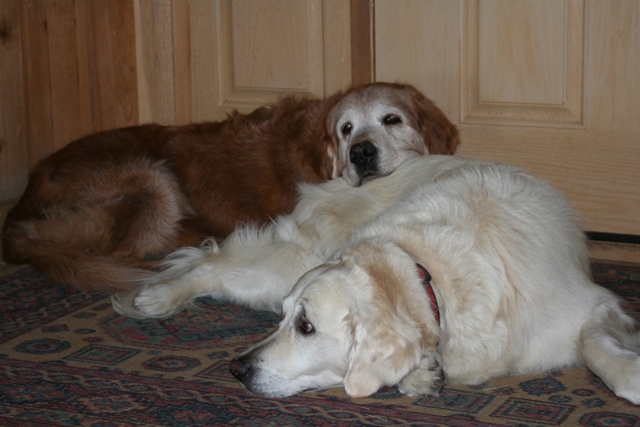
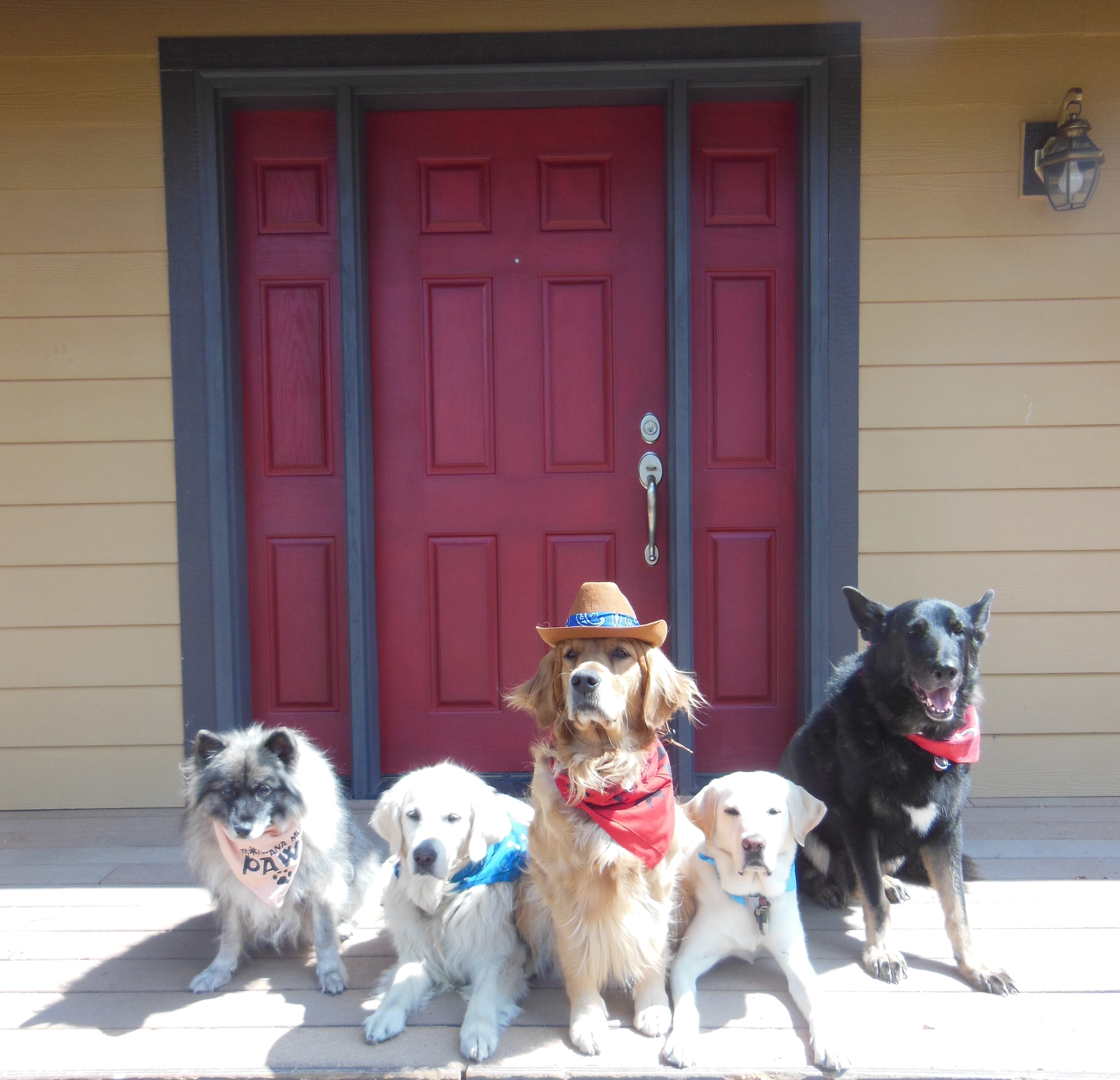
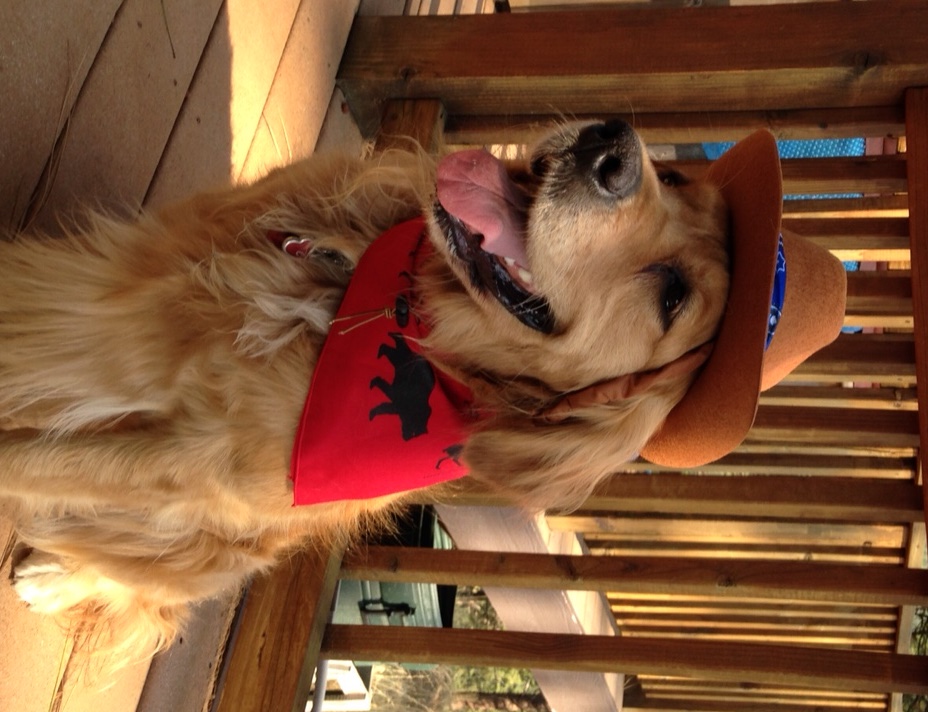
Cali did not play with another dog. She did walk around the park, following me, stopping every few feet to sit in front of me and stare.

Deni suggested that I bring a non-ball toy and try to get Cali to play with Ronen, Alberta’s Labrador friend. Cali watched Ronen run off with the tug toy. Then Cali sat. And stared at me.

A couple of times, there were no other dogs at the park when we got there. Cali sat and stared at me. Just the two of us, alone in a huge meadow, perfect for ball playing. I decided to bring a ball and only let Cali play with it if no other dogs were around.

Who was I kidding?

Now, Cali’s sit-and-stare-at-mes were punctuated by brief pop-ups. Up onto her hind feet, quick poke with her nose to my backpack (or pocket), where the ball was. Then pop back into her sit. And stare at me.

I was trying to out-stubborn Cali? I was delusional. Cali is very stubborn. Or, from her perspective, extremely patient.

My firm resolution softened. I decided to let her play ball if there were only a couple of other dogs there. Well, maybe if there were only four or five dogs. Or more, but not big ones. Or if they were far down the field … You can see where this is going.

So, once again, we play ball at the park.

I do stay far from the other dogs, and I put the ball away if the more rambunctious ball stealers are there. For her part, Cali is (a little) better about bringing the ball back to me. Sometimes. And she hasn’t so much as given another dog a dirty look.

I’m calling it a compromise.

Missing You?

Does Jana still miss her best friend, Oriel?

Do dogs miss us when we’re away? Do they miss places they’ve been or items they’ve loved?

It’s clear that dogs remember people and places — and often, the landmarks or scents on the way to places that they either love or hate. Dogs can recognize a person whom they haven’t seen in years. Or a place that they haven’t visited in years: Oriel, our late and much-missed golden retriever once ran joyfully to the site of a small pond that had been dry for about a decade. The former pond was a short walk from her former home in Montana, and she hadn’t been there for at least 3 years. She became very excited as we approached the road to the house, too. And of course all of our dogs know the way to fun places and begin to show excitement ridiculously early in any journey in the general direction of the dog beach, Cali’s sister Dora’s house, the park where we play ball …

It’s also clear that dogs use these memories to anticipate, with pleasure or dread, future experiences. Dogs generalize and can become fearful of people or situations that remind them of unpleasant experiences in the past. A dog who fears going to the vet, for example, can recognize a vet’s office, any vet’s office, from several blocks away. Happy experiences have the same effect. Thus a dog who loves to run and play will decide that any open green space you happen to drive past would be a really fun place to stop and play ball. He might helpfully point out all the nice play opportunities say, between Northern California and Missoula, Montana, as you are driving. Believe me, there are hundreds of open green spaces in the American Northwest.

But do they miss us? Do they miss places?

This question becomes more relevant each day, as our departure from Montana gets closer and closer. Does Cali miss her play park and friends in Petaluma? More to the point: Will she miss her private play yard in Montana? Will she ever forgive me for taking her away from this idyllic place where she is so happy?

It’s also a question that many dog owners ponder if / when they leave their dogs with a dog sitter or boarding kennel when they travel. Does the dog pine for them? Wonder where they are? Or, as dogs do so well, does the dog simply live in the present moment, enjoying the attention of the dog sitter?

I’ve heard enough stories about how dogs behave after the death of a loved human or canine playmate or family member to believe that dogs grieve. Isn’t that an indication that dogs miss people or dogs who aren’t present?

I don’t have a definitive answer to any of these questions. I suspect that some individual dogs form closer ties to people, dogs, places, and other beings or objects and do, indeed, miss them. Other dogs appear to be — and may truly be — happy in the present moment, loving the ones they’re with.

So the answer might be similar to my answer to so many questions about dogs: It depends. Dogs are individuals. Your individual dog might miss you very much when you are gone. Or she might happily hang out with whomever is nearby. Cali might miss Montana. But Cali’s such a sunny optimist that I am betting she’ll be happy to be back in Petaluma and enjoy picking up our old routine and reconnecting with her playmates there.

At least, I hope that’s the case!

Better and Better

Montana just gets better and better.

Cali and Jana’s cousins came to visit recently. Ziggy and Hannah live in Kansas, where summer is full of scary thunderstorms and terrifying lawnmowers. Up here on the hilltop in Montana, there are no lawnmowers at all. Thunderstorms are rare. There’s a huge play yard and lot of places to go hiking. Ziggy was excited.

Cali, Jana, and their cousins went to Missoula to visit Scarlett and her sister, Gracie. Then they went for a walk by the river, saw a huge carousel, met some really friendly Montana kids, and then, best of all, they got to go out for ice cream. The nice lady at the Big Dipper gave each dog her own cone! Ziggy and Jana and Cali ate theirs really fast, but Hannah showed her good breeding and manners, licking her cone delicately and not dripping it anywhere.

Hannah and Ziggy quickly learned to use the automatic dog door, and they each got their own key. Hannah thinks that it opens when she barks at it. She likes to bark, so that suits her just fine. Jana’s friend Molly came for a visit, and she remembered how to use the dog door right away, even though she hadn’t been over to visit in a really long time! She’s super-smart because she’s a poodle. She knows that barking is not what makes the door open.

Molly likes to bark too, but with all the girls barking, Jana and Cali’s mom couldn’t get any work done, so she told everyone to be quiet. Meanie!

The cousins and Molly loved playing out in Cali’s big play yard. They chased the ball, chased Cali or Alberta chasing the ball, ate grass, barked at deer, chased each other some more … when they got tired, they went back inside and piled onto the dog beds or stretched out on a rug. Hannah and Ziggy thought that Montana was pretty awesome. Molly, a native Montanan, couldn’t agree more.

After Hannah and Ziggy and Molly went home, Cali, Alberta, and Jana finally made plans to go to Packer Meadow. Jana loves this place and told Cali and Alberta all about it, but Cali and Alberta had never been there. It’s huge and very green. Jana remembers being there when it was so full of purple flowers that it looked like water. Speaking of water, there’s this really great stream that runs through the meadow. Brrrr. The water is very cold. But a dog can jump in and climb out and jump in and climb out and jump in and … all day (or until her mom makes her leave. Meanie.).

Unfortunately, the day they went, Packer Meadow was closed because it was too close to some huge forest fires. Good thing that Mom always has a backup plan; the girls had a great afternoon at Jana’s second-favorite place, Fort Fizzle. Jana found the first of her heart-shaped rocks there. She loves splashing in the river, finding rocks, rolling on the bank, and chasing sticks. Cali chased tennis balls; one almost got lost way out on the rocks, and Alberta wouldn’t bring it back, but Cali finally agreed to go and get it. She got a bunch of cookies for that. Maybe Mom is not such a meanie after all.

And guess what! They still get to go to Packer Meadow in a couple of weeks. Montana sure is a great place to be a dog.


Montana Girl

We’re back in Lolo, Montana for a couple of months after three years’ absence. I knew that Jana would be happy to be back. She loves splashing in the river at Fort Fizzle, where she found her first heart-shaped rock several years ago, and barking at the abundant wildlife.

But it is Cali’s first trip to Montana, so I was really looking forward to her reactions. Turns out Cali is even more of a Montana girl than Jana! She loves the huge play yard outside Deni’s house — her own private dog park! — where she races over the ground, feet pounding the dry dirt, after her beloved tennis ball. The dry, stiff grass and stubble don’t seem to affect her at all, though poor Alberta winces with every step.

Cali is enthralled with the bunnies, chipmunks, and squirrels and fascinated by the deer. So far, we haven’t spotted anything bigger than a doe with twin fawns, but for Cali, that was a major life event. Every car ride is a source of great excitement and even greater smells, as sits up, looking out the window, not wanting to miss a thing. And if, oh joy!, the window is open, she glues her nose to the window and whuffs deeply, taking in the rich mix of scents.

The house has the most perfect windows, which are very tall and reach way down to golden-retriever-nose level, so Cali can watch the birds soaring as she looks out over the valley — or bark at the deer and squirrels who wander into the front yard.

Best of all is her new friend Scarlett’s house. Scarlett, aged six months, has a huge yard with the greenest, softest grass Cali has ever seen! And a play pool. And so many flower beds to dig in when Mom isn’t looking … If only she could get into that fenced veggie garden, she could help herself to more of those delicious peas and squashes. Cali thinks that Mom’s being awfully stingy with them. What kind of mom refuses to give her kid veggies?

For the first time ever, Cali has tried out Jana’s routine of stretching out on her back and exercising her abs. Sure feels great in that cool, soft grass. Jana’s enjoying the grass, too. Her new spa routine is a soak in the doggy pool, a luxuriant roll in the grass, then an abs workout. A short nap in the sun, then repeat. All day long.

When Cali is not working out, she’s happy to join a chase game that she, Alberta, and Scarlett have invented. They race in big circles around that garden (the one full of forbidden peas). Then one stops and the other two keep running. They switch out a few times, changing direction occasionally. Finally, they stop running, always ending up with Alberta in the middle as tug toy; Cali and Scarlett each attached to one ear. So far, the ears haven’t come off, but I watch nervously every day …

Cali hasn’t even experienced some of the best Montana treats, like dog cones at the Big Dipper ice cream store or the very cold stream at Packer Meadows or hiking… everywhere. Even so, she’s already sure that she was born to be a Montana girl!

Play By the Rules

Dogs just seem to know how to play by the rules. Ethologist Marc Bekoff makes this argument based on years of observing dogs and their wild relatives — at play. In a 2010 article in Scientific American, “The Ethical Dog,” Bekoff describes four rules that dogs use to govern their social relations: Communicate clearly; mind your manners; admit when you are wrong; be honest.

Social play helps dogs (and humans and other social beings) manage and maintain social connections. Individuals who do not play well with others often suffer in other areas of their lives. Coyotes who don’t play fairly and are ostracized when young tend to leave their family packs more than better-socialized coyotes — and they have a significantly shorter life span.

While the stakes for domestic dogs are lower — they can survive nicely in one-dog homes — there are still consequences, as anyone who has lived with a poorly socialized dog knows well. Some people cannot board their dogs or must avoid any outing where another dog is likely to appear. Some walk their dogs very early in the morning to avoid other dog-walkers.

Some people, unaware or uncaring that their dogs lack social skills, go to the park anyhow. Fortunately for Cali and Alberta, they have a big sister who’s willing to enforce the rules.

Not long ago, Alberta was happily playing with another Lab at our neighborhood park. The Lab was excited and got overly rough. Alberta, in her sweet, polite way, told him that he was being too rough. That didn’t work. She tried to avoid him, but he still didn’t get the hint. Jana had had enough. She got up and, with all of her senior-dog-dignity, approached the other dog — and gave him an earful.

After being told off by his elder, the Lab finally got the message. He apologized, and play continued at a more appropriate energy level. All was immediately forgiven.

A dog I lived with many years ago even applied the principles of fair play to human-human interactions. We were on a walk once when we came upon a group of young boys, around 8 or 9 years old. Two or three of the boys were hassling a smaller boy. Timo, all 12 pounds of him, was incensed. Though leashed, he lunged, barked, and snarled at them. Startled, the bullies ran away. Timo shook himself off and strutted home.

Most dogs learn the “rules” from their littermates, which is one key reason that puppies should stay with their siblings until they are eight weeks old. Good puppy classes are another place for puppies to acquire these all-important social skills.

Wherever your pup learns, make sure to play, and play often with him. As I’ve written, it is the best way to maintain a close bond.

Thunderboy!


Poor Ziggy. Summer in Kansas is a never-ending cycle of thunderstorms and frenetic lawn-mowing. To make matters worse, his neighbors seem to tag-team each other. No sooner does one mower stop its terrifying buzz than another starts up. When all the lawns are neatly groomed … the thunder clouds roll in.

Ziggy cannot click his heels together, murmur “there’s no place like home,” and wind up back in thundercloud-free Southern California, where he grew up. He wouldn’t even need to worry about lawnmowers there; lawns are practically illegal in California these days. There’s no place like home indeed.

So what’s a poor thunder- and mower-phobic dog to do?

Rescue Remedy did not live up to its name; hiding under the sofa failed to quell his fears, and even the trusty closet let him down, seeing as it has an external wall. His mom’s planning to turn his kennel into a man-cave in the hall, the only place without windows or outside walls, but meanwhile, well, it’s raining. Again. And rain means thunder. When the rain stops, the neighbors fire up their mowers. Again. The cycle continues.

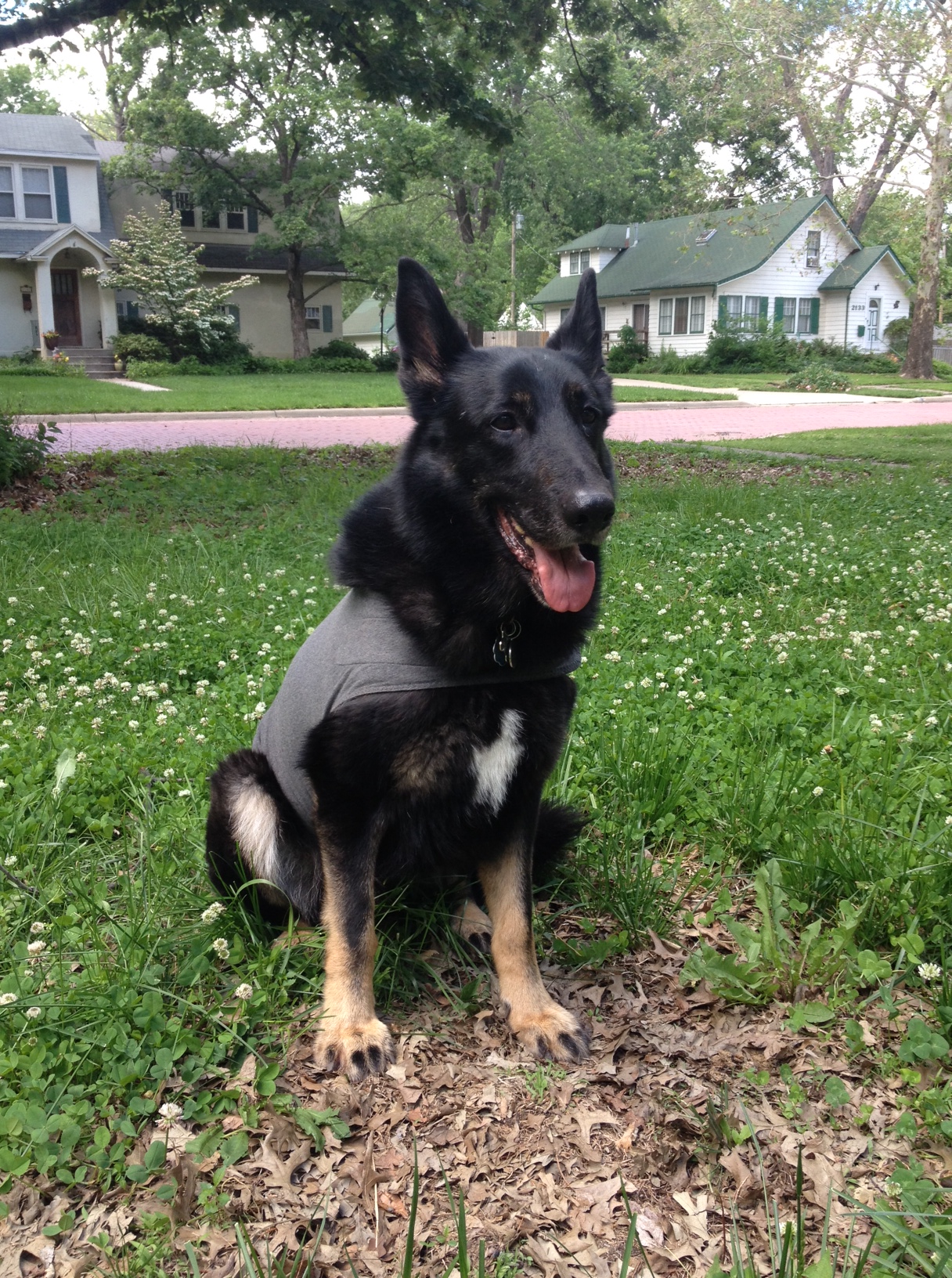
In Ziggy’s case, the ThunderShirt™ does the trick. Donning his trusty gray garment, Ziggy, a.k.a. Thunderboy®, acquires the superpower he needs to survive the back-to-back threats of local lawnmowers and ubiquitous thunderstorms.

Ziggy’s hardly alone in his quandary. And thunder and lawnmowers are not the only anxiety triggers of summer. The suggestions here can help dogs deal with Fourth of July fireworks as well.

WrapNot all dogs are lucky enough to gain superpowers by putting on a ThunderShirt. Other forms of wraps work for some anxious dogs — Jana favors hot pink elastic bandages, for example, when her nerves are on edge. Some dogs opt for a ThunderCap™, but Ziggy prefers to confront his fears with eyes wide open.

Some dogs just need a cuddle. Or a lot of cuddles. In the bed with you. Or on top of you. Others dogs are happier in their own secure fortresses — under or behind furniture or in a secure crate. Closed-sided crates or wire crates draped with towels or blankets work best. Pheromone sprays, collars, and plug-in diffusers work for some anxious dogs, while others can be distracted by music (or TV, for the couch potatoes) or games. A food toy (who doesn’t feel better with a nosh at hand — er, paw?), such as a stuffed Kong, inside the crate could work wonders for your pup’s nerves, if not his waistline.

A warning — dogs with extreme noise phobias might bolt during especially loud thunderstorms or fireworks. Make sure your dog is secured inside your home; a dog who escapes could cover a large distance trying to outrun his fear.

For many dogs, the issues is not the noise, it’s the air pressure and other changes they can feel when a thunderstorm is approaching. Some dogs’ anxiety can kick into high gear well before the first raindrops fall or thunder rumbles. If there’s no escape and no distracting him, medication might be necessary. In extreme cases, a Valium can pacify your perturbed pooch.

If even that fails? Dip into his Valium yourself … one little tablet (or a nice glass of Cabernet) and those anxieties will soon slide into the background.

Canine Couch Potatoes

TV dogA recent post on the Whole Dog Journal blog about dogs who watch TV got me thinking about this topic. When the DogTV channel launched, I thought it was a silly gimmick that would appeal to indulgent pet parents but leave the dogs indifferent. I tried out the sample videos on Jana, who had never shown any interest in TV, and felt vindicated when she barely glanced at the screen.
But …
I remembered one evening when I came home to find my dog Timo and my mom’s dogs Buddy and Daisy all sitting on the sofa watching Animal Planet. We had not left the TV on. Hmmm…
And then there was Oriel, who perked up and watched any time a TV show featured a dog. And, of course, Cali. Cali, who is Oriel’s great niece, loves to watch TV. She got hooked, I am a bit embarrassed to admit, a year or so ago when PBS had a short series about different animals’ uh, love lives. Cali was only a year and a half old, and maybe I should have been more careful about monitoring her viewing. She seemed to like the kangaroos the most.
In any case, she’s a real fan of animal shows on TV. Recently, I was flipping through channels and paused on a PBS show about cats. Cali was riveted. I had to stay up just so she could keep watching. And she likes ads. Hulu has one that shows lots of inter-species animal friendships — she loves that one.
I read in a Popular Science article that newer TVs have a higher refresh rate for the images, so they will appear more lifelike to dogs; images on older TVs have a noticeable flicker for dogs since their eyes are sharper than ours. So maybe the TV-watching dogs of old simply had poorer eyesight than the dogs who ignored TVs, and more dogs are paying attention now that TV technology has caught up with their visual ability.
Regardless of why dogs are more interested in TV, the pertinent question is, if we ask the dog to bring us the remote, will we have to negotiate for it? Will the dog demand an equal say in choosing what we watch? I’m all for the occasional PBS nature show, but I’m not about to let Cali nix my “Grey’s Anatomy” fix.

Who’s a [Good, Bad, Anxious, Happy, Aggressive, Calm] Dog?

I recently attended a two-day workshop with TTouch practitioner Lori Stevens. Of the many tips and techniques that stuck with me, this stands out: We tend to label dogs’ behavior rather than describe it.

What is an anxious dog? What is an aggressive dog? A well-behaved dog? Turns out that each dog owner — and dog professional — means something different when she uses those terms.

WrapI sometimes describe Jana as “anxious” because, many evenings, she seems unsettled, distracted, and uncomfortable. She whines or paces, but I can usually settle her down in a few minutes. The technique I learned from Lori, using a body wrap, seems to help a little. Jana also shows what I call anxiety on walks if a vehicle (mostly loud, big trucks, though she seems to harbor a deep-seated hatred of minivans, too) approaches from behind us and startles us. I attribute some of this “anxiety” to the possibility that she’s not hearing things as well as she used to and she gets surprised more often — perhaps she’s also losing some vision. Whatever the cause, things seem to come out of nowhere and startle her more often. Fine, so, she’s a bit anxious and I deal with it.
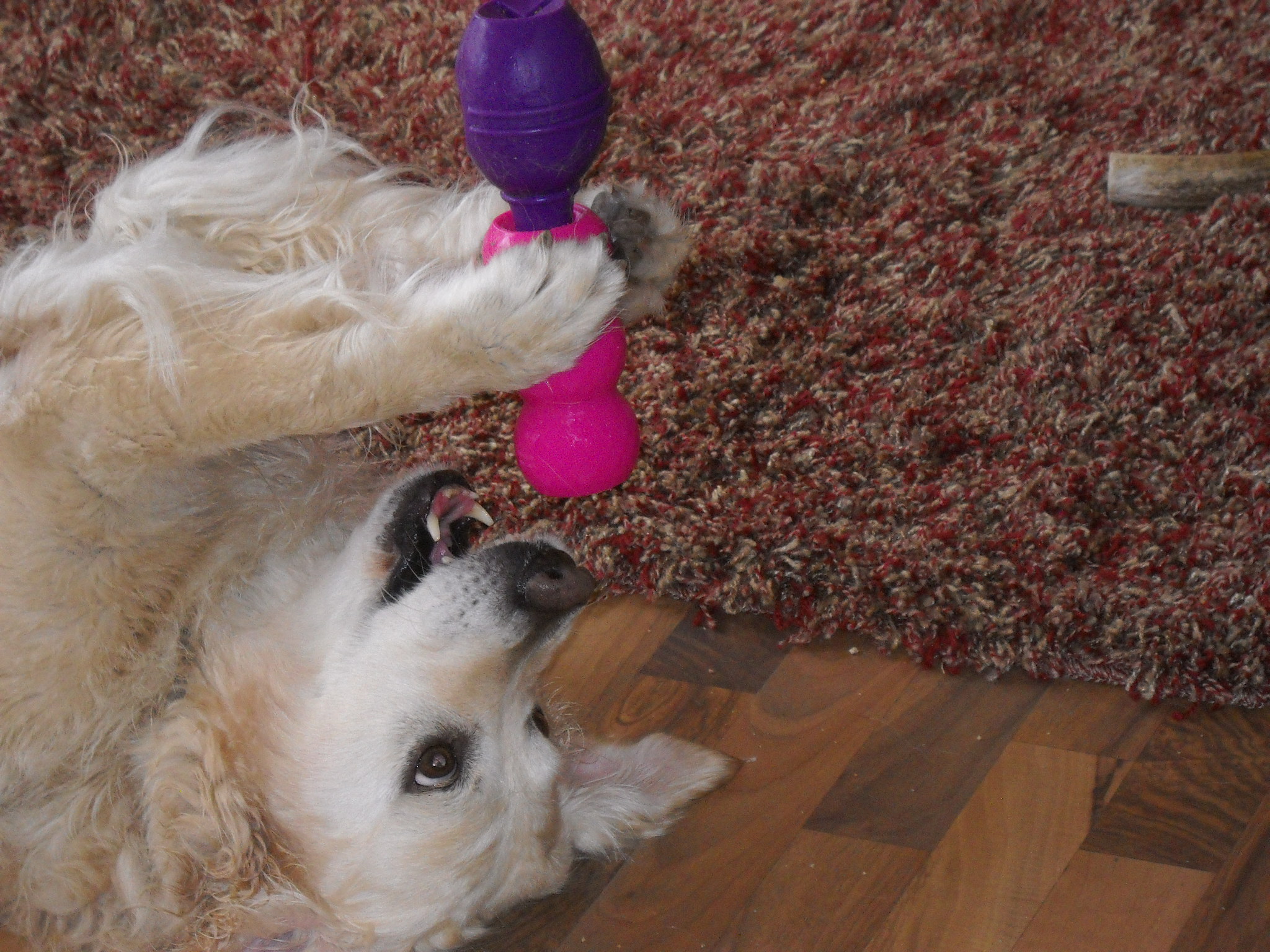
But I have friends whose “anxious” dogs have done hundreds of dollars in damage to their possessions, their floors and walls, their furniture … other “anxious” dogs bark nonstop or are unable to sleep through the night (pacing, whining or barking, and ensuring that no one in the household gets any sleep. Ever.). Compared with that, Jana is calm and placid, well-adjusted even.

Then there’s the “aggressive” dog. I’ve seen dogs who have been labeled as aggressive who are the sweetest, friendliest dogs … but who really dislike cats and want to chase them (or worse). Or who have maybe bitten a person, once, under what turns out (if I get the whole story) to be extreme provocation. Or who are simply terrified, stressed by being put in a situation that they cannot handle. Not all of these dogs are aggressive; they are scared and overwhelmed.

Scared and overwhelmed can be fixed; prey drive can be managed. But some dyed-in-the-wool, born-with-it aggression is not fixable and can be very hard to manage. It is important to know the difference.
Being able to describe our dogs’ behavior accurately and in detail is important for so many reasons. We can do a better job of figuring out how to manage or change that behavior if we know what it is and why it’s happening. As dog professionals, or as dog owners who want to call in a professional, a clear, detailed description of behavior is an essential starting point — does this dog need training? Medication? Treatment for some underlying, painful condition that is causing her to snap at people? Sometimes the cause is simple, even if it’s not immediately obvious.

A couple of summers ago, one evening, Jana snapped at Cali for playing roughly near her. Jana is usually amazingly patient with Cali. I reprimanded Jana for her “aggressive” act. Fortunately, within a few days, Jana was scheduled to have her annual physical. At her vet exam, the doctor found that Jana had a very painful cracked molar. A long surgery and several hundred dollars later, Jana was no longer in pain. She has never snapped at Cali again.

So, trash the catch-all labels. Instead, look at the behavior. When does it happen? Is there a trigger? Did it just start? Has behavior changed recently? Has the dog’s environment changed? Is the dog getting enough exercise, a balanced diet, regular medical checkups? If you can’t figure out the cause, call in help: doggy friends, the vet, a trainer. Post a question on the Thinking Dog Blog!

It’s usually possible to figure out what’s going on — and lots of expert help is available!

Thinking Dogs

A young Jana thinks about how to get the peanut butter out of her Kong
Do dogs think?

Many of you are thinking, Of course they do!

So, why am I even asking that question?

I recently taught a class on dog intelligence where we tried to decide what and how dogs think and how to define dog intelligence. I had just seen the movie The Imitation Game, and I mentioned the scene where the police investigator asks Alan Turing whether machines think. Turing’s response (paraphrased considerably) is that, if someone we know has different taste than we do — likes a book we hated or loves a food we don’t care for — we wouldn’t say that the person is not thinking, but that his or her thinking is different from ours. In the same vein, machines do not think as humans do, but they can follow a process that approximates human thinking, according to Turing.

Human thinking is conscious and active — that is, we are aware that we are doing it and do it intentionally. It is an attempt to understand something, solve a problem, answer a question, create connections or meaning. Human thinking is mostly done in words, though, as Temple Grandin points out in many of her books, people with autism do not always think in words but often in pictures or even video.

Dogs don’t necessarily think in the same ways as humans — or agree on everything or reach the same conclusions — but I would argue that dogs’ thinking is more similar to humans’ thinking than a computer’s is, if only because dogs are conscious and machines are not.

So, the simple answer is: Dogs do think, but they do it differently from the way humans think. They probably do not spend a lot of time planning for retirement or worrying about the bills or speculating about which stocks to invest in, for example. They do not appear to worry about things that they cannot control (unless it seems that dinner might be late …). They might think about their next meal or the dog beach or the cute shepherd down the block — not so different from some of what people think about.

All grown up and still thinking about how to get food out of her toys ...
All grown up and still thinking about how to get food out of her toys …
But even where their thoughts might meander to some of the same topics we’d think about, I bet that dogs do it very differently. While dogs are often taught to understand many, many words, I doubt that dogs actually think in words. Alexandra Horowitz, in Inside of a Dog, suggests that dogs think in smells and maybe in pictures. That makes sense when you consider how powerful their experience of scent is.

Another wonderful dog book, How Dogs Love Us by Gregory Berns opens the door a little bit toward understanding how thinking in smells might work. Berns trained his own dog, and then several other dogs, to lie still in an MRI so that he could get images of their brains — while they were awake. He did several experiments, including one where he mapped dogs’ reactions to the scent of a human from their own family and the scent of a different person. He also mapped their responses to a familiar and an unfamiliar dog. These tests, and others that measured response to cues indicating a desirable reward (bits of hot dog, I think) and cues indicating no reward, showed that dogs brains look very much like human brains. Dogs scenting their own humans showed similar responses to humans viewing photos of their loved ones, for example.

Regardless of how they do it, evidence that dogs think is all around us. When they bring a toy and ask us to play, beg for a bite of our sandwich, or stand by the door asking to go out, they are thinking and planning. The dog who creates a diversion so he can steal a coveted bone from his sibling dog is thinking and planning. The ability to anticipate where the Frisbee will come down and then to jump in a graceful arc to meet it reflects thinking (and a far better grasp of physics than I ever had). Service dogs show their thinking skills constantly in their ability to intuit what their partners need and offer it. The examples are endless; share yours in the comments!