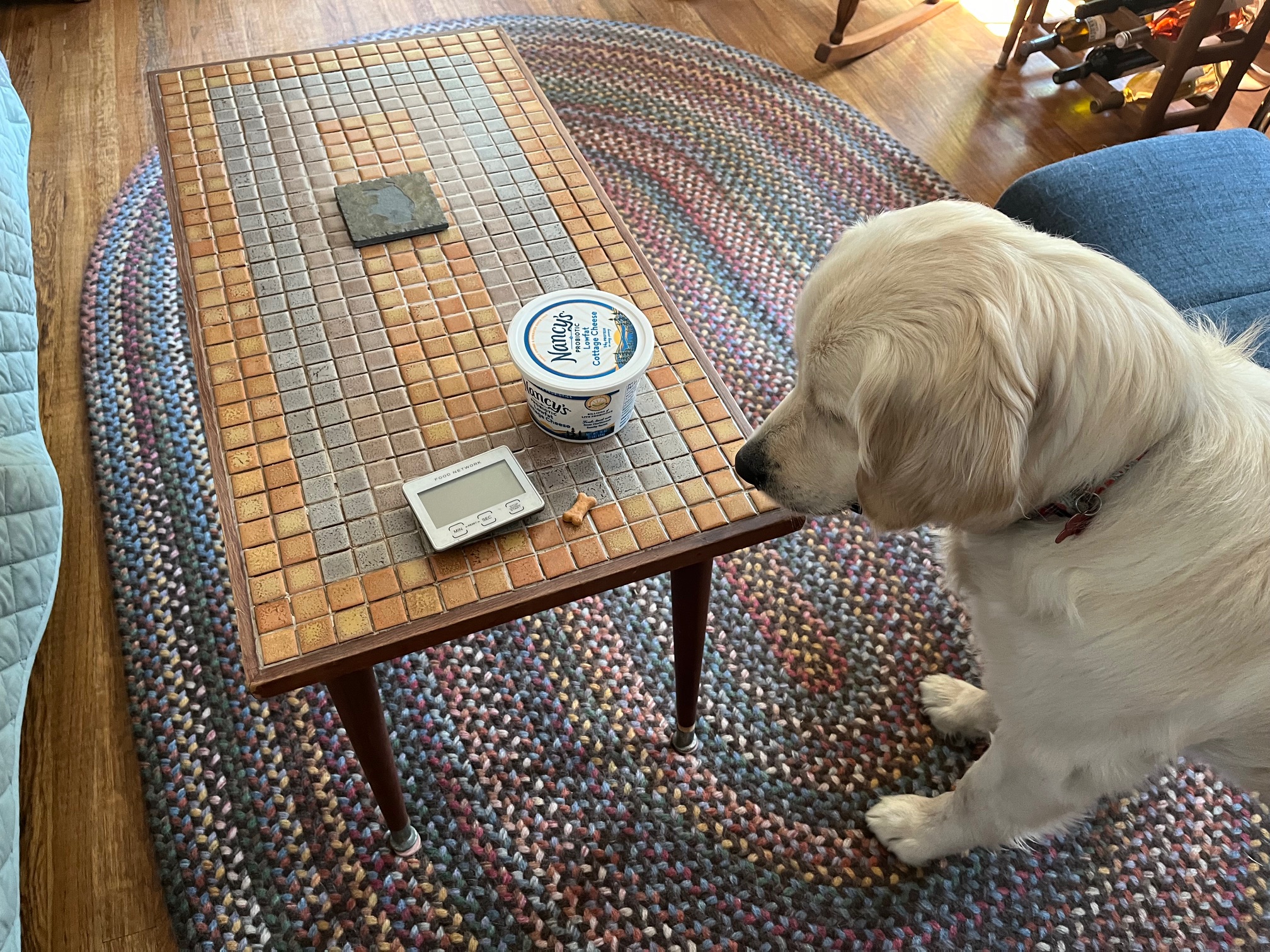
Dotty is getting ready for her future career: She’s going to be a hearing assistance dog. Hearing dogs assist people with hearing loss by alerting them to key sounds, such as a timer, a smoke alarm, a doorbell — even someone calling their name.
During her last weeks with us, Dotty is practicing the first steps in hearing-dog training. We set a timer. I place a cookie near the timer and guide Dotty away. Initially just a few feet, but we’ve expanded the distance a bit.
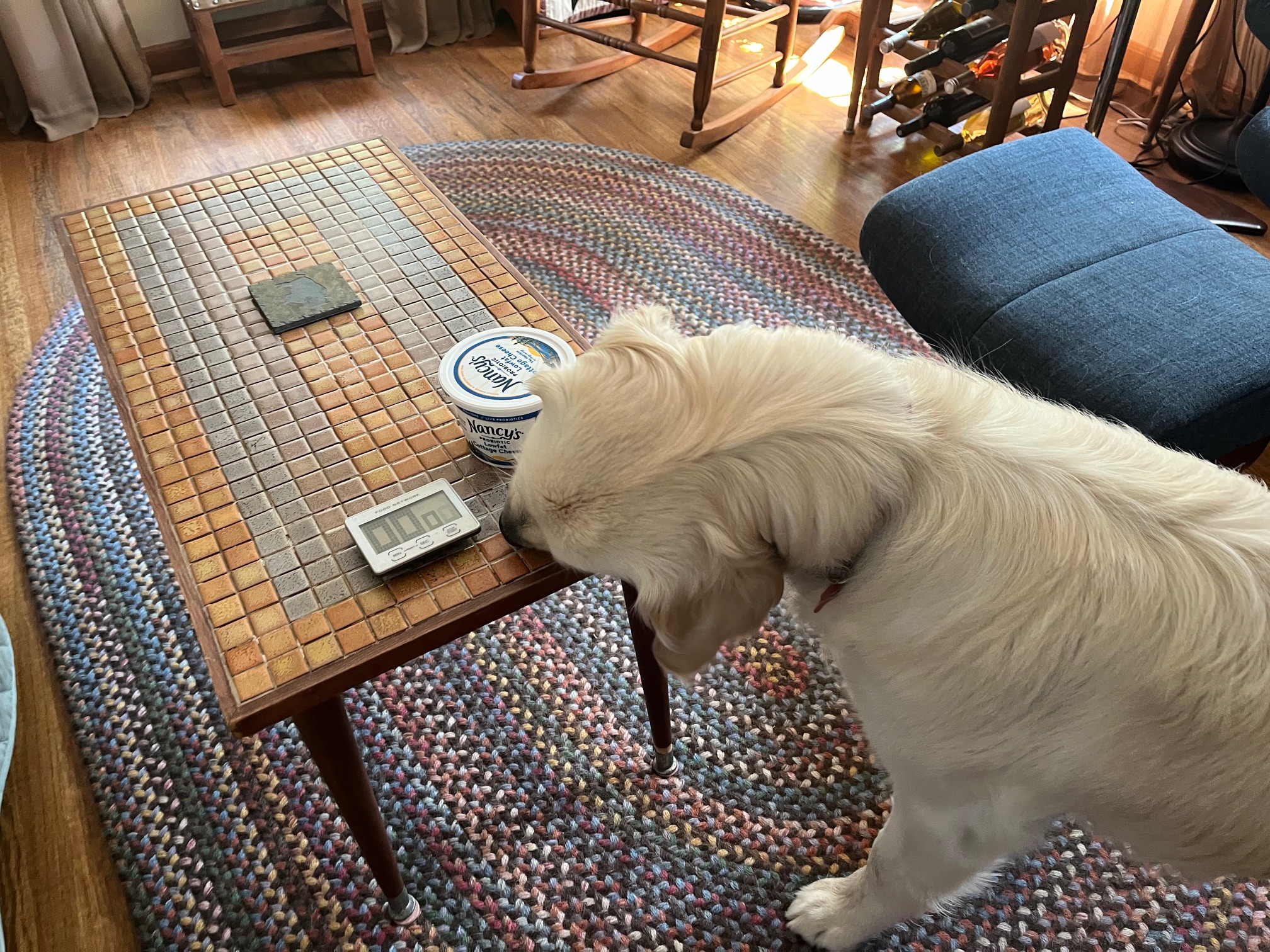
When the timer rings, Dotty goes to it and eats the cookie. That’s the easy part. Then, she is supposed to come and alert me. We introduce this with another cookie (are you beginning to see why Dotty loves practice sessions?). She nudges my leg and gets the cookie. I then ask her “What?” She is supposed to lead me to the sound and, you guessed it, get another cookie. (The cookies are very small.)
When Orly is home, she sometimes tries to steal the first cookie. If she refrains and heads back at the end of the alert, she gets a ‘good helper’ cookie.
As Dotty gets better at this, we can make things tougher. The first thing we’re doing is adding more time between when Dotty sees me set things up and the timer rings.
We’ll als0 add more distance, with me waiting in a different room or even hiding from her. Eventually, we’ll start working with a second sound. We’ll go back to the basics, with her watching me set it up and the sound alerting only a few seconds later.
As she progresses, her professional trainer will continue to make things more difficult — adding new sounds, increasing distance and time, and moving to unpredictable alerts, where Dotty would not see the setup happening. That’s all pretty far away for her.
In her more advanced trainer, she might also learn different responses to some sounds. For example, if she’s alerting to a smoke alarm, she might lead me to the door — not to the alarm.
We’re only at the early stage of her training, and Dotty is an enthusiastic learner who learns quickly.
