A Guest Blog by Deni Elliott
 Sometimes things just don’t work out. He is intensely athletic; I’m a stroll-on-the-beach kind of gal. He always wants to be in charge; I think that responsibility should be shared. He likes hanging out with the guys, and he unabashedly flirts with the girls; I crave a less-social life and want him to have eyes only for me. But when we are alone, I need some private time; he dogs my every move.
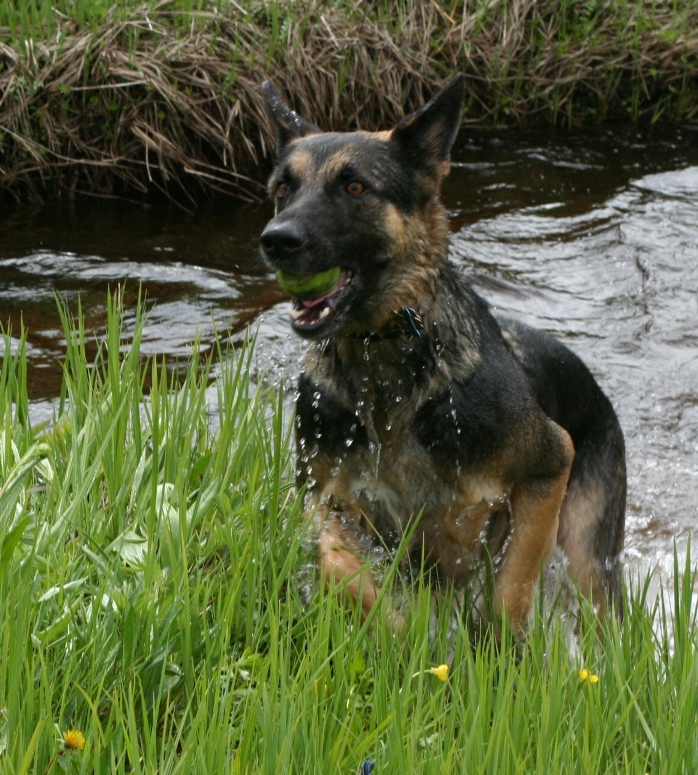
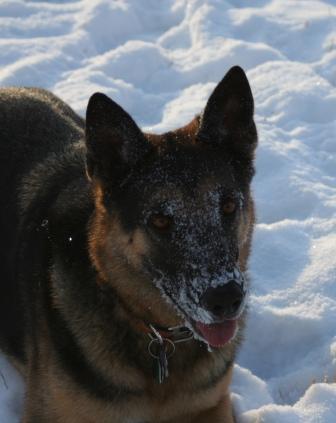
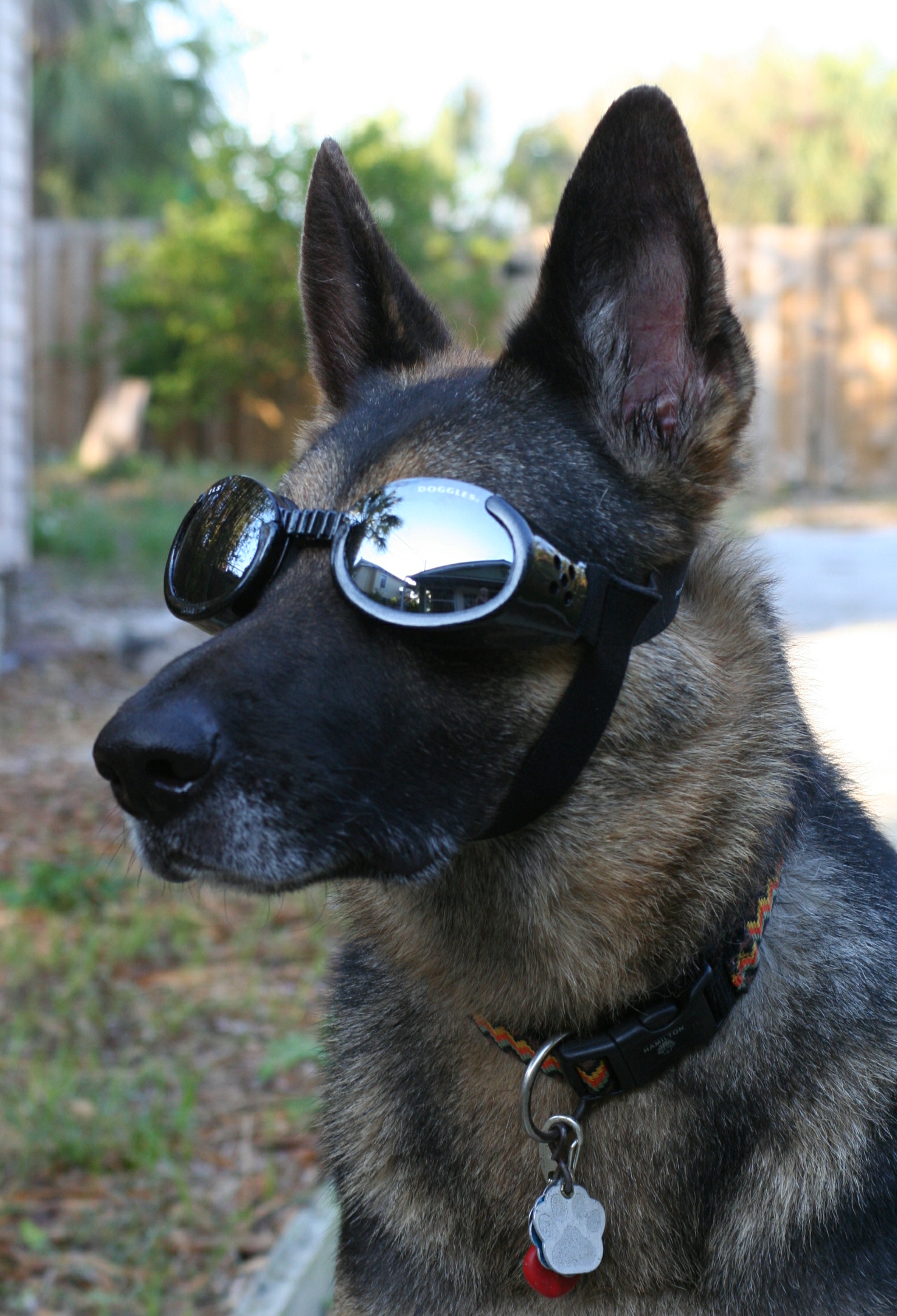
After four years of trying to make our partnership work and then carefully planning for our separation, I’m ready to announce this to the world: I love Wylie more than I can say. He’s smarter than I am, good-hearted, and generally well-intentioned. But Wylie and I are breaking up.
My guide dog’s career change feels a lot like ending a human relationship. As with intimacy between humans, the partnership of human and guide dog is a dance of inter-dependency and cooperation. Compatibility is required.
Wylie counts on me to give him everything that he needs to be a well-adjusted German shepherd, and he is not shy about communicating his demands to me.
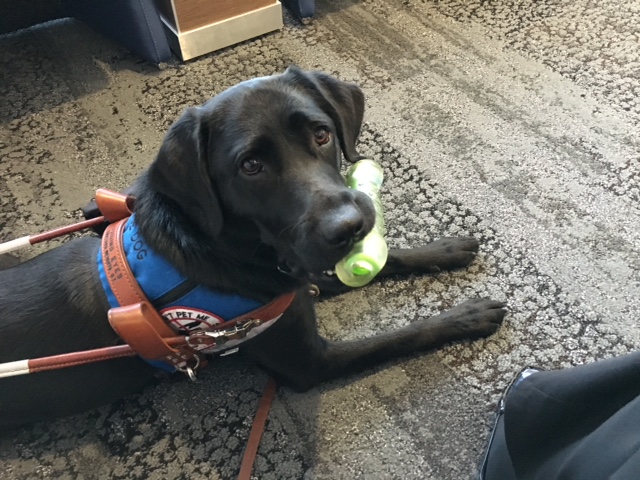
I put my life in his paws every time that I slide the harness over his shoulders and say, “Forward.” I trust Wylie to choose the path as he guides me under low-hanging branches, steers me around obstacles, and takes us across streets, avoiding the traffic that I can hear but cannot see.
We communicate moods and expectations up and down the harness as we let each other know what is next in our progression from Point A to Point B. If we’re out of sync with one another, we both get frustrated. And while our ability to read one another has astounded others observing us, the frustration has become more than either of us can handle.
 Wylie is the second guide dog that I have raised from young puppyhood, enlisting the expertise of professionals to accomplish training that I couldn’t do on my own. I’ve owned and trained dogs since I was a child. My visual loss was progressive, but slow. I thought that I was better able than a guide dog school to prepare a dog to meet my special needs.
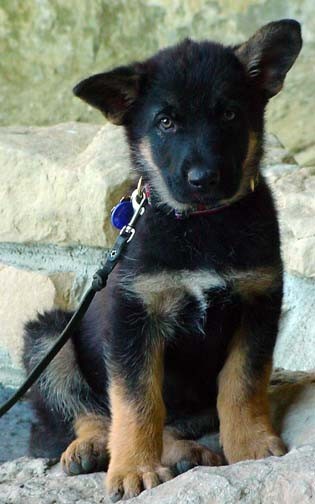
As a puppy, Wylie showed strong potential to become a guide. My successful partnership with my first guide dog, a golden retriever named Oriel, made me unrealistically confident. Oriel was, in the words of many who knew her, “the perfect dog.” When she retired, I assumed that I could make the guide relationship with young Wylie work just as well. I struggled through the first year and thought that he would mature and grow into his job. I was wrong. Wylie’s basic personality did not change; nor did mine. When I finally realized that I couldn’t make things better, I knew that I owed Wylie the chance for a better life.
On January 23, Wylie will start training to be a service dog for a veteran with Post-Traumatic Stress Disorder (PTSD). For the first time in more than 12 years, I will depend solely on my white cane to pick my way through my travels. Wylie and I will both be in transition and will grieve the loss of one another.
But not for long.
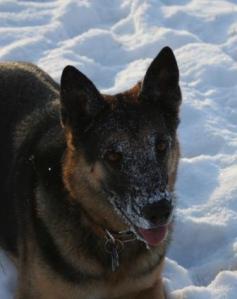 Wylie will have new challenges from the start. He will live first with Jennifer Rogers, director of PAALS, a service-dog training school that is affiliated with Fort Jackson, the U.S. Army base in Columbia, South Carolina. Wylie and other dogs-in-training will spend one evening each week on the base with active-duty service members and veterans who are coping with combat-related anxiety. Under Jennifer’s supervision, the dogs will learn to help people with PTSD; the soldiers and veterans will teach the dogs how to assist others like themselves. Dogs and humans will learn to support one another.
When the time and match is right, Wylie will become an “intensive companion” dog for a veteran who is not yet ready for the challenge of working with a service dog out in the community. Dog and veteran will be encircled by a team of mental health and service dog professionals who will support their journey together.
I will be supported in a new journey as well. On March 4, I will join a training class at Guiding Eyes for the Blind in Yorktown Heights, New York. After intensive training there, I expect to return home with a 2-year-old mellow yellow Labrador retriever at my side. I’ll have a guide dog bred and trained by experts who create and maintain ethical working dog relationships. After many hours of application to, evaluation by, and conversation with Guiding Eyes personnel, I trust that they know better than I how to find me the best guide dog match.
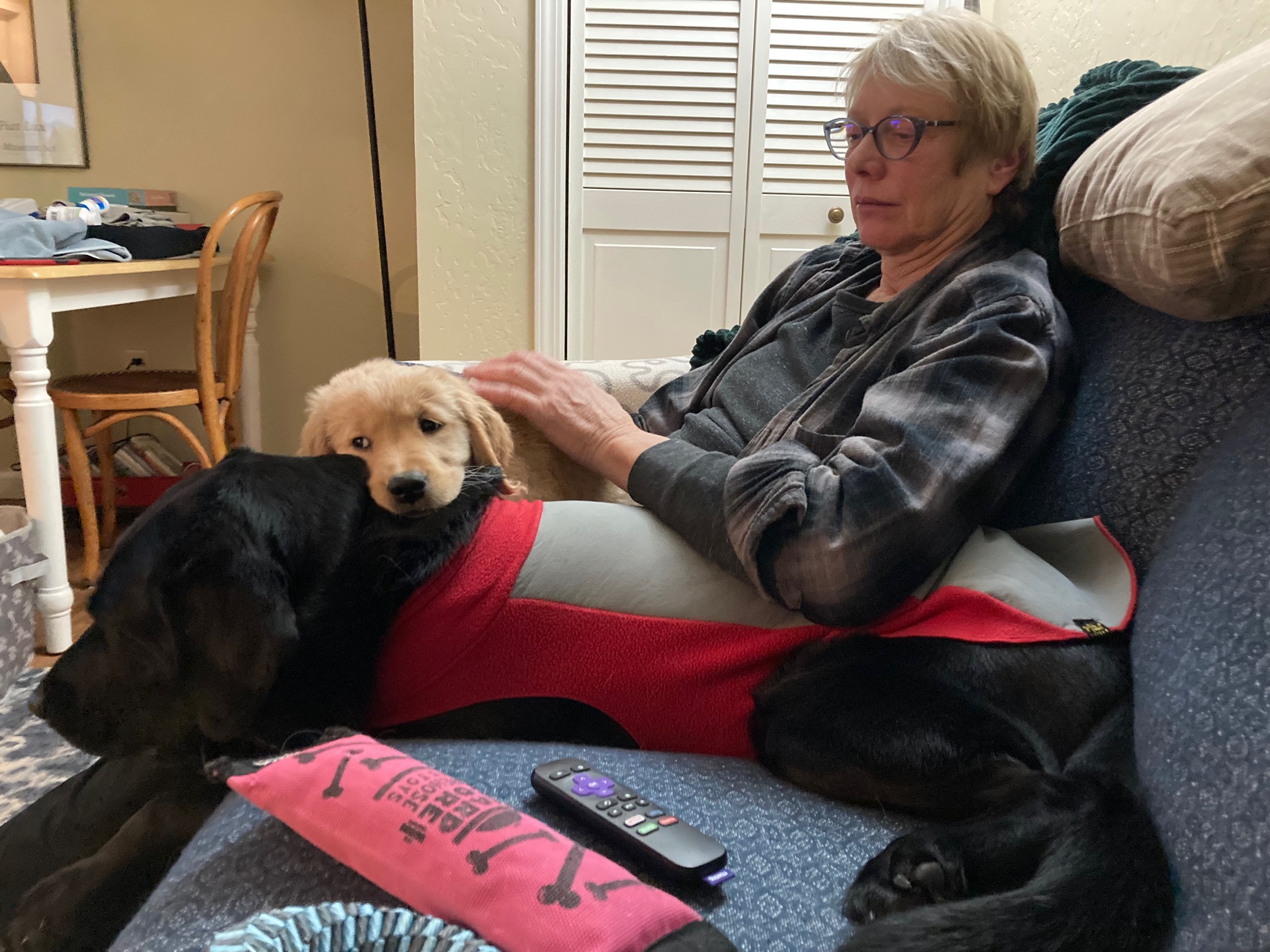
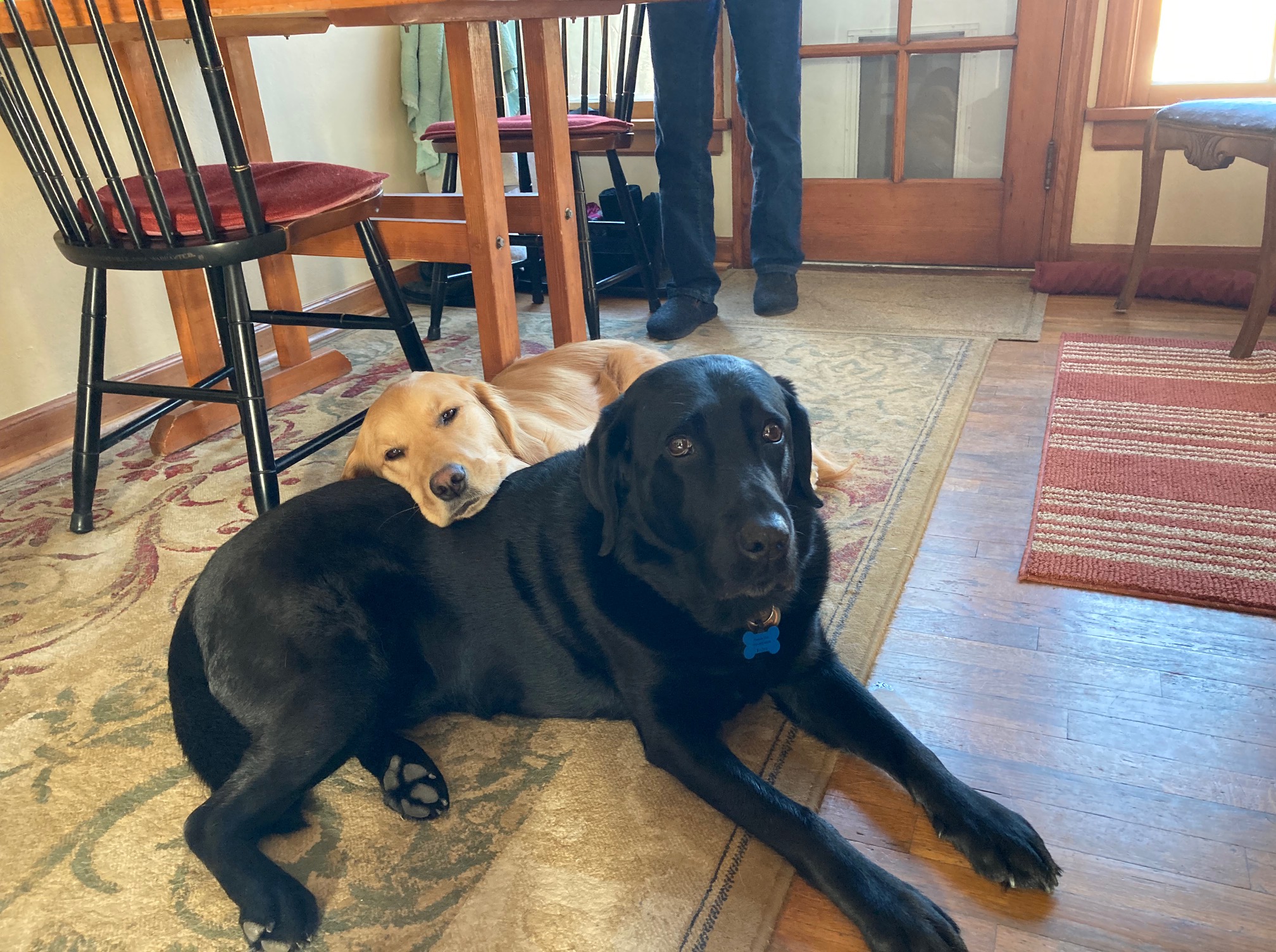
Wylie’s new life will be very different from guiding me around obstacles that I cannot see. Crucially, it will be a life that is more in tune with his nature. The behaviors that he will be trained to do on cue include leaning against his partner, resting his head on his partner’s knee, lying on his partner’s feet, and providing a friendly-but-safe barrier between his partner and others. With me, Wylie got to connect like this only after his harness came off and he was done guiding for the day. Providing a partner such physical support 24/7 is Wylie’s dream job.
Wylie has always wanted more physical connection than I could handle. When I was done working for the day, I wanted some time free of my canine umbilical cord; Wylie wanted the intense physical contact that he lacked when he was walking two steps ahead of me, in harness.
The behaviors that have been problematic for me will be just what Wylie’s new partner needs. Wylie will bond with a veteran who needs a canine companion to guide him out of a darker place than I have ever experienced. It is likely that Wylie’s new partner — a veteran with deployments in Iraq, Afghanistan or both — will be no more than 30 years old. Wylie will finally have a young partner who is able to provide the daily intensive exercise that he craves.
Wylie will no longer endure long hours lying under a desk while I work in the office or teach my classes. He will no longer sigh and resign himself to STILL being on duty when I sternly command him to turn left to guide me to the Dean’s office when he wants to turn right to walk home and be done for the day. And, most importantly, Wylie will no longer have to pant and tremble as he struggles to guide me through airports and onto airplanes, a task that he finds increasingly stressful.
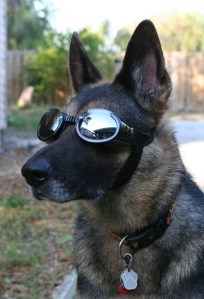 Some people will criticize me for not letting Wylie retire and spend the rest of his days lounging at home. But, all dogs need stimulation; a young, intelligent dog like Wylie, who is accustomed to life out in the world, needs it more than most. Long days spent alone and doing nothing would be unbearable for him. Others will say that it is cruel for me to give him away, suggesting that I don’t love my dog as they love theirs. But I know that Wylie would not be happy watching me leave home with another dog doing “his” job, even if it is a job that he sometimes hates. I love Wylie enough to recognize that he’ll be happier moving on.
I will get over losing the goofy frat-boy who has been part of my life for 6 years. I will have learned yet one more lesson in loving and letting go. I’ll get past the guilty feeling that I failed this dog. From this perspective, it seems to me that I’ve been helping Wylie get ready to be the helper dog that he was really meant to be. I appreciate his true nature enough to let him go forward and be that dog.