Do Dogs Have a Funny Bone?

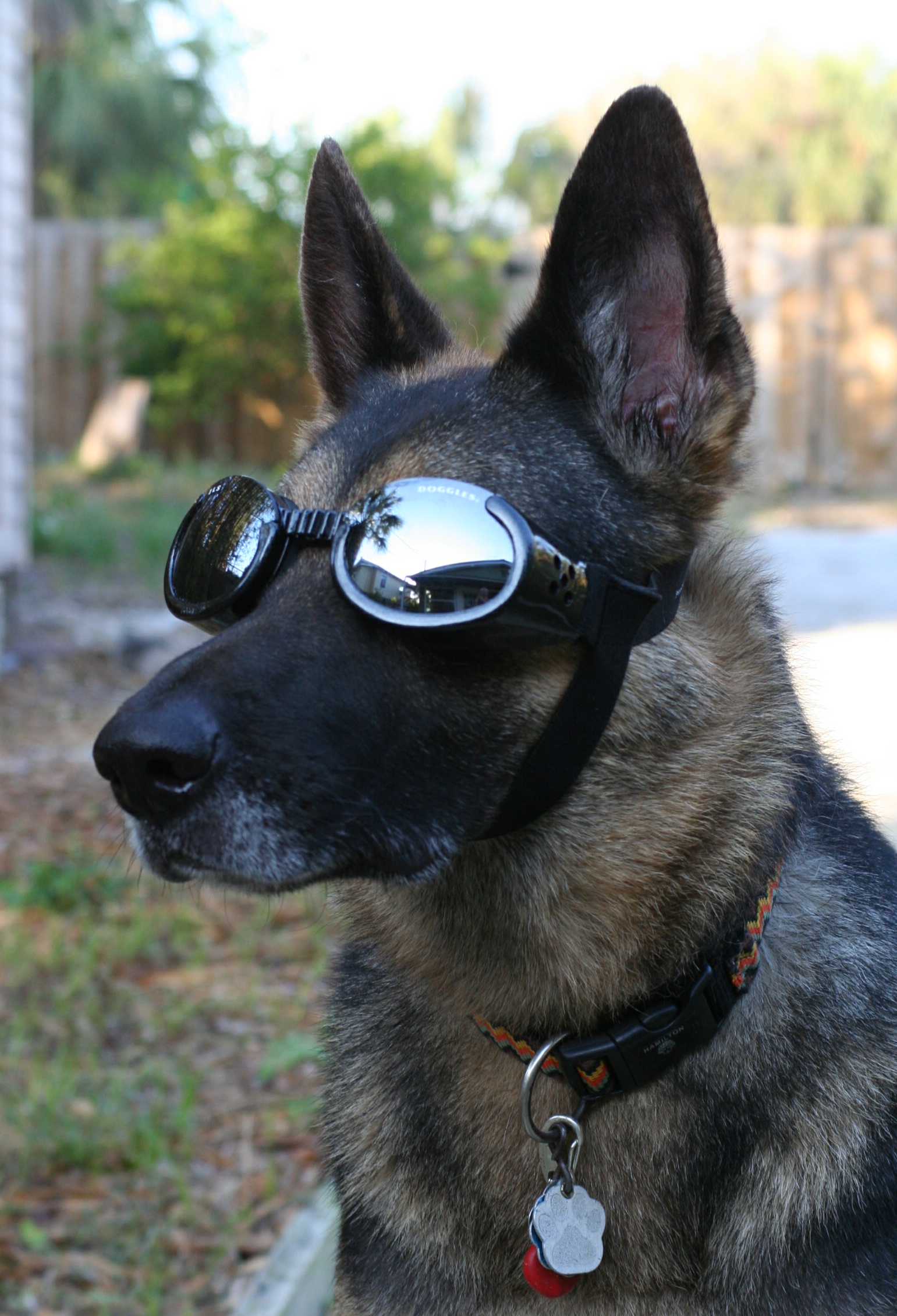
Dogs smile and even laugh. Dog magazines understand this — both The Bark and Modern Dog regularly reprint readers’ photos of their “smiling” dogs. But do these facial and vocal expressions prove that dogs have a sense of humor? This is debatable. I would argue that some dogs do, thought this varies by breed. Golden retrievers and Labradors definitely enjoy a good laugh with their people or at their people’s expense.

Jana enjoys a good joke!

On our recent drive from California to Montana, Jana (a golden retriever), Deni, and I stayed at a cute little guest cottage in Oregon. I took Jana for a walk around the grounds. The cottage had two small rooms, one with a patio. Jana and I left through the main door but returned to the cottage and entered through the “back” patio door. I told Jana to “find Deni.” She ran into the cottage, then into the main room, wagging and smiling, and greeted Deni. Deni reacted with happy surprise at Jana’s sudden appearance, since the main door, a few feet from where Deni sat, remained closed. Jana danced around wagging and smiling. Since she is a reserved dog, this was an unusual display.

Jana was pleased with herself. But more than that, she appeared to enjoy the joke she had played on Deni. Is this possible? Or am I reading too much into the situation, being too anthropomorphic?

What does it mean to have a sense of humor? Most living organisms — human, canine, or other — seek pleasure and avoid pain. This basic principle guides behavioral science (and dog training). Humor — laughing, and the ability to be amused — feels good and is good for us. So it is biologically sound to assume that other creatures have senses of humor. And, as creatures that have evolved, through heavy human influence, to be our best friends and companions, it would be far stranger if dogs did not understand and participate in intentionally humorous antics.

One of dogs’ most appealing characteristics is their love of play. But dog play often resembles dog aggression. Thus dogs have a detailed repertoire of communication that signals to other dogs — and dog-savvy humans — that “this is only play.” In other words, “I’m just kidding; I am not really going to bite/hunt/hurt you.” Another sign that dogs understand humor and “fun” is that they make up games. They also change the rules of games we, or other dogs, make up and self-handicap so that another, smaller, dog or puppy can also have fun.

Lots of dog owners and trainers have stories of things their dogs do that make them laugh. Like small children, some dogs intentionally repeat whatever action elicited the laughter. This is a sign that dogs get it. They understand that our laughter is a good thing. They love to play tricks on each other and on us. Does your dog have a sense of humor? Share your stories!
 

Is Your Pooch a Couch Potato?

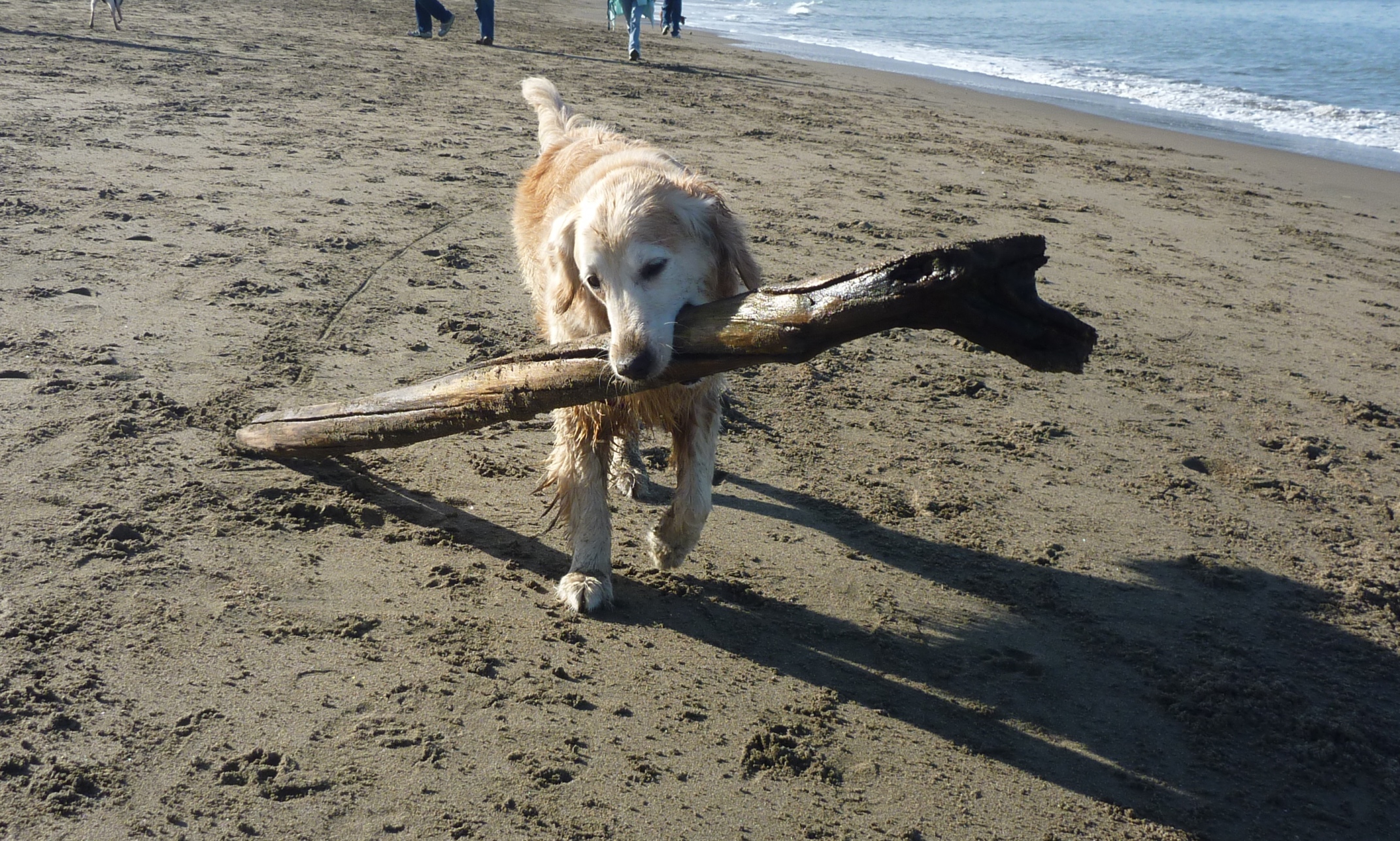
No couch potatoes here!

I remember coming home one evening long ago to find not only my dog, Timo, on the sofa watching TV but Buddy and Daisy, my mom’s two dogs, up there as well. Even better — whoever had pawed the remote to turn on the TV had somehow hit the right button to bring up Animal Planet — a favorite of the humans in the household as well.

The people at DogTV think those three were onto something. Developed in Israel (where the three dogs described above lived), this first cable channel directed at dogs, rather than just being about them, says it offers “the right company” for dogs who are home alone. Or, presumably, those having a dogs’ night in with their buddies.

DogTV’s website promises that, with its 24-hour-a-day programming, our furry friends “should never again feel alone.” According to the website, the content was developed to meet specific attributes of canine vision and it “supports their natural behavior patterns.”

Since most dogs who are left home all day while their humans are at work or school snooze the hours away on the sofa, I suppose it is not a huge leap to claim that providing TV for them does support that natural behavior pattern …

Setting my skepticism aside and remembering how Timo, Buddy, and Daisy enjoyed their Animal Planet viewing, I decided to test out the sample content on Jana. The results of my statistically insignificant survey (sample size of one) are not terribly promising. Jana does not appear to aspire to couch potato-hood; she watched the “Stimulation” sample for about 3 seconds before her eyes and attention wandered. She ignored the “Relaxation” sample completely.

And it’s not that she’s simply more of an intellectual. Jana’s most strident reaction — indignant, vocal rejection — came in response to the “Exposure” sample, essentially doggy PBS. Described by DogTV as “using the most advanced veterinary science, special sounds and visuals help comfort and habituate dogs by exposing them to different day-to-day stimuli,” the sample on the website features a person telling her dog to sit as she answers the door (this made-for-TV dog is not only willing to sit, he doesn’t even bark at the doorbell or the guy at the door), people and traffic on a busy street, a baby in a car with a siren audible outside the car, small children playing. Jana, of course, barked at all of these as she turned tail and flounced away.

Tuning in a dog-centered channel when you leave your furry friends at home might do little more than make you feel better. A young, healthy dog would  much prefer a game of Frisbee or a run in a park to watching some other dog on TV have all the fun. And even an older or less energetic dog would prefer to get out and sniff the grass herself. And any dog would rather spend quality time with her humans than sit around on the sofa — TV or no TV.

On the other hand, dogs have been shown to be more relaxed in kennels and shelters if there is background music playing. The only problem is getting them all to agree on a radio station!

How do I get all that fur off of my sofa?

I suppose that not letting the dog on the sofa is not an option at this point?

Since I, too, love to cuddle with my dog on the sofa (and she loves even more to curl up on the sofa without me), I will share a tip I read in The Bark magazine — rubber gloves. No kidding. Rub the sofa with your rubber-gloved hands. You’ll only feel silly for a few seconds. Once you see how much hair comes off, and how easily, you will either be appalled at the amount of hair on your furniture or delighted with your newly clean sofa. I just vacuum up the hair tufts as I produce them. Easy!

Play Dates for Your Dog

Does your dog have friends or do you just assume that all dogs like each other?

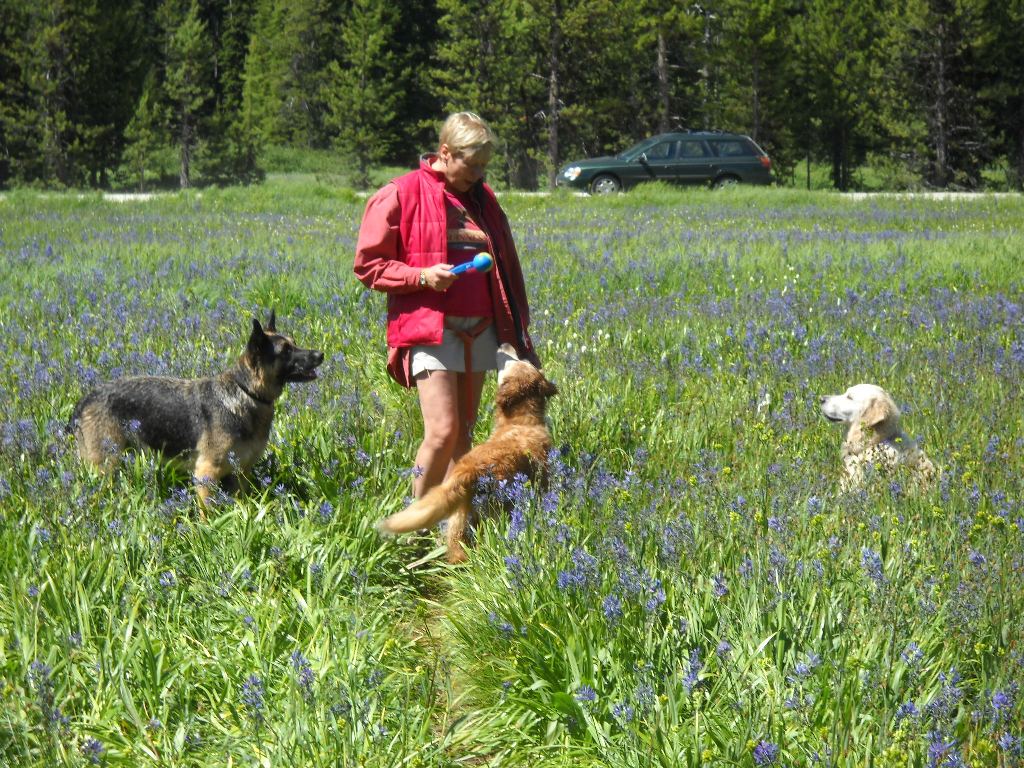
I met my (human) friend at the dog beach last week, and her cheerful, playful golden bounded over, wearing a huge smile as she ran up to say hi to Jana. They’ve played together many times at dog beaches around the Bay Area (tough life, I know) and they are clearly friends.

But, while 9-year-old Christina and 8-year-old Jana are BFFs, there are other dogs we see regularly with whom Jana is cordial, but distant. Remember being forced to play with your mom’s friends’ kids? It’s the same with canines — our dogs and our friends’ dogs don’t always hit it off.

It might seem obvious. Not all dogs like each other or enjoy hanging out together. We certainly don’t instantly bond with every human we meet. Some become friends. Many do not.

But when some people take their dogs to dog parks or dog beaches, they somehow assume that everyone there will play nicely together. Similarly, they get irked when their dog seems to take an instant dislike to another dog they meet on a walk or in a training class.

Just like our parents, we want our dogs to be polite and friendly all the time. Unfortunately, it doesn’t always work out that way. When some dogs take an instant dislike to another, they lunge, bark, or even attack the other dog, for no reason that we hapless humans can see.

I’ve spent a lot of time in dog parks lately doing observation research with my students. What we’ve noticed is that most of the dogs there don’t play with each other. They run, play with their humans, chase balls, roll in the grass, and sniff things. Often, they are sniffed or given a play bow from another, more social dog, and politely and appropriately decline the invitation to play. Sometimes, dogs chase each other a few times, and sometimes the “play” chase turns into something closer to bullying.

Those of us who take our dogs to dog parks for exercise need to be involved. It is no more acceptable to spend dog-park time involved in a long cellphone conversation than it would be for the mother of a 2-year-old human child to do that while her child ran unobserved at the playground. A dog park, fenced or not, is not an opportunity to take a break from your dog.

We can go to dog parks with friends whose dogs are really our dogs’ friends — or set up play dates at our homes. Or, we can go to the dog park with the plan of engaging with our dog while we’re there — to walk with the dog, or maybe toss a ball. What we need to avoid is just assuming that all the dogs will play together and get enough exercise while we ignore them. As many dog experts will tell you, the more engaged the humans are at the dog park, the fewer unpleasant incidents you’ll see.

The same goes for walks. Even on-leash dogs can hurt each other. If your dog is reactive to other dogs, consider working with a trainer to improve his socialization and help him learn to behave more calmly. If your dog seems to attract hostility from other dogs, ask their owners not to let their dogs approach. Meanwhile, work at building up your dog’s confidence and social skills with dogs you know are friendly.

But the bottom line is, we’re our dogs’ protectors and advocates. Don’t throw your dog to the (domesticated) wolves at dog parks or in the neighborhood, and don’t let your dog become the bully, either.

Check out these doggy buddies: Dog Guides Blind Dog

Clothes Make the Dog

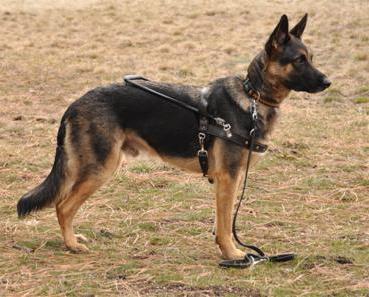
For as long as I have worked with service dogs in training, I have known that putting a service dog cape or harness on a dog sends a clear signal: “ Now, you are working!” With many dogs, the working dog and the off-duty dog behave so differently they could be two different dogs. Wylie is an extreme example — on harness, he will work past distractions. He still notices cats, for example, but his strong work ethic keeps him focused on the job at paw. But take off his harness and he is all-dog — party dog. We call him the frat boy. All he wants to do is play. And, maybe, if we’d let him, drink beer.

Wearing his harness, Wylie is all business

Last week, The New York Times gave me an explanation for this phenomenon: enclothed cognition. The study’s authors say that we think not only with our brains but also with our bodies. It’s long been known that our clothing affects other people’s perceptions of us; now researchers are learning that how people dress affects the way that they see themselves and the way that they think and behave.

The study cited by the NYT found that people who put on a “doctor’s” lab coat were better able to notice subtle incongruities or differences in images they saw. For example, they noticed that the word “red” was colored green, or they found more differences in very similar photos. Those wearing the “doctor’s” coat did better than test subjects who merely saw the coat, better than subjects who wore the coat but were told it belonged to an artist, and better than a control group who had no white coat presented in any way.

“Enclothed” cognition is an extension of embodied cognition. Just as washing hands has been shown to be associated with ideas of moral purity and people who carry large clipboards feel important, dressing in certain clothing awakens specific associations in our minds — and these associations affect our behavior.

It’s not much of a leap to recognize that dogs are affected in a similar way.

Off duty and ready to party

Putting on a cape signals to a Pet Partner dog that it’s time to go on a therapy dog visit, and putting a cape on a service dog says that playtime is over. Some dogs even have better leash manners with their capes on. When two working service dogs, who also happen to be pals, meet while on duty, they might greet each other warmly and with a wag of the tail, but they will quickly settle back into their calm, unobtrusive working roles. Take those same two dogs on a walk together, or watch them at one of their homes when neither is on duty, and you will see very different dogs and a much higher level of energy!

Just as some people quickly exchange work clothes — and professional persona — for comfy yoga pants and an informal attitude as soon as they get home, some dogs, like Wylie, demonstrate a wide gap between “all business” and “let’s get this party started.” And there are dogs (and people) who clearly know that something special is expected of them when they are dressed for work but who maintain a consistent personality, on duty or off. Each dog’s different degree of “enclothed” cognition helps us respect the truth that all who live with and love working dogs quickly learn: a service dog partner is not a robot, but an individual who makes voluntary choices to do her job. The study’s authors wonder whether the effects of a person’s daily work uniform eventually wear off — or become habit. Do the clothes, in the end, define the dog?

Through a Dog’s Eyes

Through a Dog’s Eyes is the title of both a book and a companion DVD, which features a documentary about the placement of service dogs, focusing on twin boys with cerebral palsy. The book is written by the founder and director of the service dog organization that placed the dogs; the book describes several closely bonded human-dog teams. The author, Jennifer Arnold, does a wonderful job of weaving delightful anecdotes into her book and drawing lessons about dogs from them. Though it is not a training manual, Arnold does describe some common dog behavior problems — from the dog’s perspective. She does so in a helpful and dog-friendly way that will help owners see why the traditional methods of “correcting” these behaviors don’t work.

Arnold’s view of dogs might be astounding to some readers, however: Arnold states, for example, that dogs demonstrate “theory of mind,” providing several examples. In this, she’s willing to go farther toward recognizing dogs as thinking decision makers than most dogs experts. Even so, I don’t think she goes far enough. She clings to a common but, I think, incorrect view of dogs that dismisses the idea that dogs can “know better,” that is, that a dog can make “the right” choice, even if it goes against his training, instinct, or even self-interest. She cites as one example dogs who take food from counter-tops, stating that “nothing that hunts for a living will leave available food untouched unless they are not hungry, and even then they may take what’s available.” This not only echoes the familiar, if incorrect and outdated, view of “dogs as wolves” (after all, how many domestic dogs hunt for a living?) — it’s simply not true.

Dogs can be taught not to take what’s not theirs; all of the dogs I have trained have learned that lesson in early puppyhood.

Another area where I hesitantly venture to disagree with Arnold is that I think she over-idealizes dogs, sometimes making them sound too much like the “good wives” described in 1950s marriage manuals: eager to please, living only to serve, selfless, and heroic. I do not mean to detract from dogs’ many good qualities — I find dogs to be the most interesting and pleasant companions around — but I have certainly encountered in all dogs individual preferences and agendas that don’t always mesh with the ideas of the humans around them. Their individuality and complexity is what makes them interesting to be with, and I think that painting them broadly as helpful and eager to do our bidding shortchanges them.

Arnold and her organization (Canine Assistants, a top service dog organization located in Georgia) are strongly opposed to the use of force in training and she presents her viewpoint articulately. Since she and I studied with the same mentor (Bonnie Bergin), we advocate nearly identical approaches to educating dogs. Arnold strongly emphasizes the bond between the human and the dog in her methods of raising and educating dogs, and this comes across strongly in her book.

Overall, the book is a fun and heartwarming read and will give readers not only a new appreciation for the wonderful abilities of dogs but a great insight into the ways service dogs transform people’s lives as well.

Dog Sense

Dog Sense begins with an excellent discussion on the evolution of the dog as a domestic companion to humans and a thorough description of canine and wolf social structure. Along the way, the author, John Bradshaw, thoroughly dissects  and discredits force-based and behavioral training approaches as well as effectively demolishing the myths that “dogs are cute wolves” and that humans must establish dominance over dogs. But many readers are likely to be turned off by the heavy, overly scientific tone.

Although the subtitle of Dog Sense is “How the new science of dog behavior can make you a better friend to your pet,” it is misleading. Dog Sense will teach you a lot about where dogs came from and about their social structure, but it really won’t teach you much about how to enhance your friendship with your dog. Despite the marketing copy (and the subtitle), there is little about the dog-human relationship other than a convincing (if obvious) statement that force-based training could damage that relationship.

While Bradshaw provides an excellent discussion of association, habituation, and sensitization and emphasizes the need for early, positive socialization, he fails to connect these ideas with how to best teach dogs. In fact, he denies that dogs can build associations from previous experiences or even remember those experiences (key elements of learning) — even though he provides several examples that show that they do display those skills.

Again contradicting the marketing copy, the book does not present a dog’s perspective. Instead, Bradshaw falls into the familiar anthropocentric habit of denying that dogs can feel complex emotions because they lack spoken language, going so far as to state that it is “unethical (his emphasis) to make” the assumption that dogs experience the same array of emotions that we do. His anthropocentric bias is humorously illustrated in Bradshaw’s comment that dogs never evolved the ability to see colors because it wasn’t necessary: the example he provides is that carnivorous wolves wouldn’t have needed the ability to choose the ripest berries. Wolves are opportunistic omnivores who do, indeed, eat berries. More to the point, though, neither dogs nor wolves need to rely on sight to choose ripe berries; they simply follow their far more sensitive noses to the choicest of fruits, as many a domestic dog has been known to do.

Despite a too-common reliance on old myths and a too-anthropocentric focus, there is much solid information in Dog Sense and it is a valuable addition to any dog professional’s library, especially for those who seek a detailed analysis of the science of the evolution, domestication, and social history of dogs.

Your Dog Is Your Mirror

The marketing and jacket copy for Your Dog Is Your Mirror, by Kevin Behan talk about the human-dog connection and tout the author’s rejection of the dominance-focused training model he learned from his father. They also swoon over the author’s amazing insights. Sadly, the book does not live up to its marketing.

While Behan says he has rejected a dominance-focused force training approach (except for Schutzhund training), he does not propose an alternate method of training or address training methodology much at all. The bulk of the book is given over to a novel and bizarre theory that Behan devised at the age of 23, having (according to him) read and rejected everything that biology and behavioral science — and his father, a leading dog trainer of the time — had to say about dog behavior and training. One morning, as he was letting the dogs his father boarded out of their kennels, he had the epiphany that “None of the dogs were entertaining any intention whatsoever, even though many looked as if they had the specific intent and goal of getting outside, and some appeared to understand what I expected of them … I now knew there was no intention in anything a dog might do.”

Instead, he posits, everything a dog does is a reflection of the owner’s emotions, both present and past, conscious and unconscious, and in fact, could be a reaction to any experience the owner has ever had. He even explains away the idea that a dog could ever feel aggression toward him (or anyone), stating instead that “when a dog went to bite me, I could see that the dog didn’t intend to hurt me, dominate me, or defend himself or his territory … there was something positive about me the dog was attracted to. The dog had no goal: he was simply attracted to me with a force of desire that for some reason was blocked, hence the aggression.” He does not, however, tell readers what he might have been feeling that could have triggered the dog’s behavior.

Behan rejects any notion that a dog can form intentions or even think. In fact, he utterly rejects the idea of dogs as individuals. Therefore, the canine perspective is completely absent from this book; Behan simply denies that it exists. A dog is “not an individuated consciousness, endowed with her own will that’s empowered by personal volition and informed by a self-contained sense of self or ego,” he writes. He adds that no animals can think, claiming instead that their entire consciousness is formed by something he calls a “networked intelligence,” defined as “a higher faculty of intelligence that in animal consciousness completely supersedes the brain.” Bizarrely, that would appear to rule out instinct, too, as a driver of canine behavior. Behan explains any dog’s behavior, no matter how complex, as a function of what its owner is feeling

Despite having worked with, in his own estimation, several thousand dogs, Behan provides few examples to illustrate his theories. The anecdotes he does give are “as told to him” by training clients, not behaviors he personally witnessed. Nonetheless, he feels confident enough in his theories to determine that one client’s dog reportedly habitually left a bit of food in his bowl because the dog’s owner always leaves some food on her plate; the dog is connecting with whatever emotional issue causes the owner to do so. Another client’s dog is aggressive toward children because, Behan discovers, the owner feels lasting pain and guilt over having “not been there” for her daughters when they were young, many years earlier.

Much of the book is a sort of memoir and retelling of his “discoveries” about dog consciousness; there is also considerable psycho-analysis of the humans who own the dogs he trains. The book does not address multiple-dog households where each dog has a very different personality and behaviors, nor does it explain how to apply Behan’s theory to dogs who live and interact with multiple humans. There is no index and no references, making it hard to find specific information.

While I agree with the author that emotion is a primary driver of dog (as well as human) behavior, I strongly disagree that it is the dog owner’s emotion that is solely responsible for the dog’s behavior. I also completely reject any notion of dogs that denies their considerable cognitive abilities, including thinking and planning and, yes, forming intentions. Dogs are separate beings from us, not merely empty vessels that reflect the worst of our emotional pasts back to us. They are brilliant and intuitive beings who deserve to be loved and valued for the individuals they are. Regarding them as our “mirrors” — as extensions of ourselves — is arrogant and egocentric and a terrible disservice to all dogs.

Inside of a Dog: What Dogs See, Smell, and Know

A longtime New York Times bestseller, Inside of a Dog by Alexandra Horowitz clearly has mainstream appeal; it is thoroughly enough referenced and indexed to appeal to canine professionals as well. The author, a psychologist and animal behaviorist, is no stranger to scientific research, and is a lifelong dog owner and dog lover.

The book is informative and entertaining, and it offers insights that will promote greater human understanding of dogs. It concludes with a strong chapter that suggests ways humans can relate better to the dogs in their households. The book also does an outstanding job of describing dogs’ sensory experience of the world, devoting nearly 100 pages to the subject.

But in its claim to present the canine perspective, the book gets a mixed review. Horowitz does decode some situations according to a canine point of view — her discussion of doggy raincoats and the way that their tight embrace might make dogs feel “subdued” rather than protected is an amusing example. But in other examples, a strong anthropomorphic bias comes through. For instance, after lengthy and well-done sections describing dogs’ vision and how it differs from humans’ and explaining that smell is dogs’ primary source of information, Horowitz attributes her dog’s hesitance to enter an elevator to age-related deterioration of her vision or difficulty adjusting to low light after being outside. These are both reasons a human might hesitate. Possible reasons that consider dogs’ experience of the world — that the crevice between the floor and the elevator harbors many strange smells or an unpleasant memory of the moving floor (though this is unlikely in the case of Horowitz’s apartment-dwelling dog) — are not mentioned.

Horowitz displays her scientist roots in her reliance on research studies to draw conclusions, even when the studies are poorly designed, and even when real-life experience points to different conclusions. A study of dogs’ reactions to “emergency” situations is a prime example. In this study, humans set up a highly contrived scenario, first having owners introduce their dogs to a “friendly stranger” and then having the owners feign an emergency — a heart attack, for example. None of the dogs who were tested did what the humans wanted them to do (seek help from the “stranger”). Calling this a “clever” experiment, Horowitz draws the conclusion that dogs “simply do not naturally recognize or react to an emergency situation.” A more obvious conclusion, and one that gives more credit to the dogs’ intelligence, is that the dogs could tell that the people were faking — none of the scents and signals that indicate true alarm or physical dysfunction would have been present in the “actors.” Some dogs do, in fact, react to emergency situations, even when they have not been specifically trained to do so.

Horowitz relies exclusively on some studies that dogs “failed,” such as the mirror test for self-awareness and a test of whether dogs felt “guilt” if they “stole” a treat, in arriving at her limited conclusions about doggy consciousness and self-awareness. She fails to acknowledge (or notice?) that the tests cited are anthropocentric in design — that is, they test things that are relevant to people but not to dogs — and were conducted in unfamiliar, highly controlled environments where the dogs’ behavior would be far from natural. Other research showing strong evidence of dog self-awareness is not mentioned. Finally, and despite a section at the beginning of the book chiding scientists’ tendency to see one animal as representative of a species, she makes many broad statements about dog behavior that seem to be based on her observations of her one dog.

Overall, the book provides an excellent description of dogs’ sensory perceptions of the world and a wonderful guide to improving our treatment of dogs, but I think that its conclusions about dog behavior, consciousness, and self-awareness are questionable.

How the Dog Became the Dog

I am torn about recommending this book. On the one hand, there is a lot of information in this book, much of it firmly backed up with the latest scientific research. On the other hand, it is poorly organized and the editors seem to have been asleep at the keyboard. The same facts, anecdotes, and theories appear over and over again, making the book hard to follow and repetitive. Having been a student of Mark Derr’s in a graduate-level class on the history of dog breeds, I know that he has a lot of knowledge but is often disorganized in presenting it. This book reflects all of that.

What I like most about Derr’s presentation of the history of the dog’s evolution is the way he juxtaposes the various theories and points out where they overlap, where they contradict, and where they must obviously be incorrect. He does say that the theories are only scientists’ best guesses based on the archaeological and anthropological evidence available at the time they were generated — and offers his own interpretations and conjectures as to what might have happened.

I also enjoy Derr’s attempts to look at domestication from the dog/wolf’s viewpoint. As humans, we tend to look at things in the way that is most beneficial or complimentary to humans, but anyone who’s spent time with dogs knows that dogs are just as good at (or better at) “training” humans to behave in ways that benefit them as humans are at training dogs. Derr points out that domestication was a choice made by both parties and that benefits both — a partnership view of the human-dog relationship that seems more fair and honest than looking only at what humans can and do gain from living and working with the dog.

Much of the information in this book can be found in other books, but this book pulls it together and critically analyzes it in a new and interesting way. I recommend it as a resource for anyone who is seriously interested in studying and understanding dogs.