Service Dog Appreciation Week!

service dog week

As National Service Dog Appreciation Week draws to a close, I want to draw your attention to an article I co-authored with Deni Elliott. It is a discussion of the current and growing problem of fake service dogs and “inappropriate” service dogs, that is, dogs who may be trained to assist a person with a disability but who are not trained for public access and/or have a temperament that makes them unsafe in public spaces. Unfortunately, Deni and other service dog partners are encountering more and more dog-reactive dogs, which makes it challenging and unsafe for their dogs to work.

Our proposal, which might be controversial, suggests a solution. We hope this article will be part of a larger debate in the service dog community as well as among policy makers and will ultimately help find a solution. You may download the article from Deni’s website or from the portfolio page of this website.

Big Girls Just Wanna Look Cute

Cali, at 8 months old, is dashing full speed ahead into adolescence. Having read the latest studies and talked to her breeder, I know that it is better for her health to wait to spay her until she is done growing — in about another year. That means that she will have a “season” (or three).

Before all the spay and neuter people howl, let me say this: I do not think that having an intact dog of either sex is easy or desirable. I agree that most pets should be spayed or neutered. I also want what is best for my dog, and I know that I can ensure that Cali is safe and does not inadvertently become a teen mom.

Back to Cali’s impending womanhood. We’ve had the talk about birds, bees, and handsome boy dogs. And I went online to search for some britches for my soon-to-be bitch in heat. That’s not the only reason a furry girl (or guy) might need to go shopping. Dogs need clothing for different reasons. As dogs age, some (like some humans) become a bit leaky. Then there are the ones who lose control when they get excited.

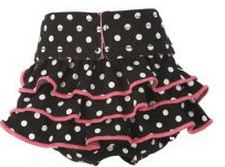
dotted skirtWhatever the reason, there are dozens and dozens of fashion options out there. Anything from princess skirts to rhinestone jeans to cargo pants. Camouflage and spangles. Cotton candy pink to red plaid flannel. Miniskirts, shorts, and overalls with little criss-cross straps — even thongs —  for the girls. Overalls, jeans, jock straps and cummerbunds for the boys. Unisex tracksuits, girlie ball gowns, Hawaiian-style board shorts, you name it.

If your dog fits into a purse, that is.

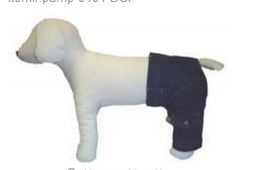
Unwilling to give up after a short search turned up … nothing, I kept digging. I optimistically clicked to a link for X-large Petego Hot Pants. They come in black or hot pink and feature a small ruffle bow. Sounded good (in conservative black, maybe), but … an extra-large measures 16 inches at the waist. Sixteen inches! Cali was 16 inches around the waist when she was 3 months old. Waaay before puberty.

Cargo pants for dogsShe’d look great in a pair of cargo pants, which were offered in sizes 00 to 6. Sounded promising. But a size 6 fits dogs only up to 25 lbs. That mark on the scale is in Cali’s very distant past. (The 00 is for dogs who weigh under 2 pounds. Are there really adult dogs that small?)

Maybe a ruffled miniskirt with polka dots would do? Adorable, age-appropriate, and available in extra-small to extra-large. But wait. The extra-large fits dogs up to 22 lbs. In what universe is a 22-pound dog “extra-large”?!

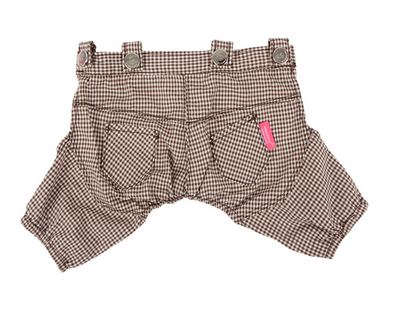
Checkered pantsCali could have ordered the urban ski pants for dogs from Baxterboo (up to a 26-inch waist) but they seemed a bit warm for a Florida summer. The cute checkered pants, in brown or pink, however, only go up to a waist of 11 inches. Baxterboo did have lavender bell bottoms in Cali’s size (on sale)! But Cali’s not really the hippy chick type. She wants to fit in with Florida’s sundress-and-flip-flops vibe.

Finally, I found what Cali needed at two retailers on Etsy.com. Thank goodness for creative, entrepreneurial people. Both Etsy retailers will customize for size and fabric, so dogs of all sizes, shapes, and tastes can dress stylishly during their time of the month.

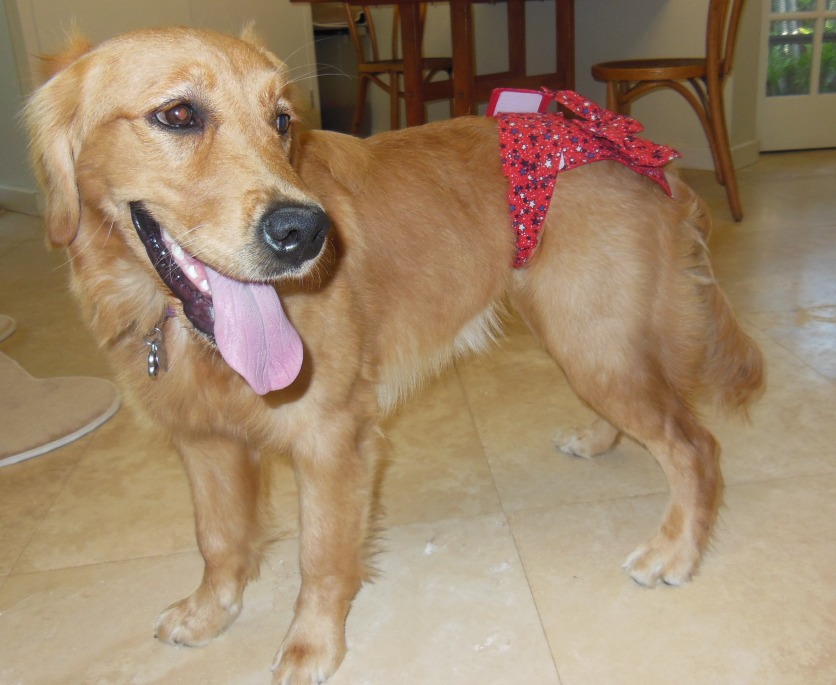
cali_red stars_cropThe first retailer, CodysHaven, proclaims that “Larger breed girls need to look good too.” Darn right they do. CodysHaven sent us a red, star-spangled pair of shorts for Cali that are adorable. There are dozens of fabrics to choose from, in case stars aren’t your style.

Cali’s second, dressier outfit is from The Purple Puppy. It is more of a miniskirt, with big, colorful daisies and a white ruffle.

Flowers and stars. Cali is, after all, still a little girl. Maybe it’s better that the hot pants didn’t come in her size.

Cali flowered skirt_crop

Cali, the Ghost, and the Dog Door

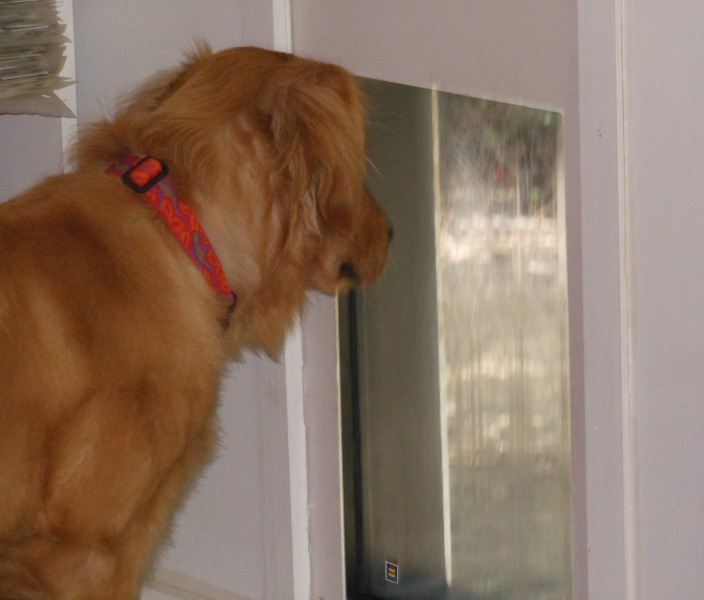
Cali ghost door3Our electronic dog door continues to be a wonderful window on the dogs’ personalities. The dog door is operated (ostensibly) by a magnet attached to each dog’s collar. The idea is that only animals with magnets can open the door, keeping out neighbor cats, possum, raccoons and the like.

Well, in one of Florida’s daily summer thunderstorms, the door suffered damage. The motor would hum but the door would not open. We summoned our electrician, ordered a part, summoned the electrician again, and, after a few dog-doorless weeks, were back in business. With a twist.

The door started opening and closing all on its own. We joked that not only had we acquired a resident ghost, but the ghost somehow had been given its own key and had learned to use the dog door. As I sit at my desk, not a dog in sight, the door will occasionally open and close. Then do it again a few minutes later. The ghost going out for a potty break and returning? Or the ghost entering for a brief reconnaissance and leaving? Hard to tell, since I can’t actually see the ghost.

Meanwhile, Cali, who learned to use the dog door in just seconds flat, has lost key privileges. She, it turns out, wants to spend all of her time outside chasing lizards. And occasionally catching them, with gruesome results for the lizard and anyone watching. She has recently taken up stalking those huge, bright yellow Florida grasshoppers that are apparently quite tasty. Her other hobby is digging small ditches all over the backyard. Some dogs, it seems, are too immature to handle the freedom a dog door brings. Unable to convince her to take up knitting, gnawing chew toys, or even sunbathing (with sunscreen!), I took her key away.

With no key, Cali has to ask permission to go out, and she now has supervised playtime. She hates that. She has figured out that she can sometimes follow her big sister Jana out. Occasionally, I think when Cali is being particularly, er, adolescent, I have seen Jana walk with her over to the door. Door opens; Cali runs out; big sis walks away with, I swear, a big smile on her face.

The next step was probably inevitable: Cali discovered the ghost. And decided to train it. She could get the ghost to let her out! Who needs a key when you have a trained ghost?

Now, when Cali wants to go out, she sits, patiently staring at the dog door. Eventually, usually within a couple of minutes, the ghost does, indeed, let her out.

Cali ghost door2Cali has had less success at training the ghost (or her big sisters) to let her back in, however. When she gives up on the ghost, she’ll sit, looking sadly at the back door and occasionally jumping on the glass, until I let her in. Twice I have come home from errands to find her outside, stretched out in the shade, waiting patiently.

I haven’t seen her sitting by the dog door on the outside, waiting for the ghost. But she has gotten back in without my help on occasion. So maybe the ghost training is going better than I think.

Sometimes, when Jana or Albee opens the door to go out, Cali seizes the moment and slips in very quickly. Jana isn’t quite as agile as she used to be, and the door only stays open for about 5 seconds. So when Cali does this, Jana is left inside. As Cali enters and the door closes, Jana gets a perplexed look. I am sure that, as she waits for the door to open again, she’s wondering why she wasn’t lucky enough to be an only dog.

The Inclusive Dog

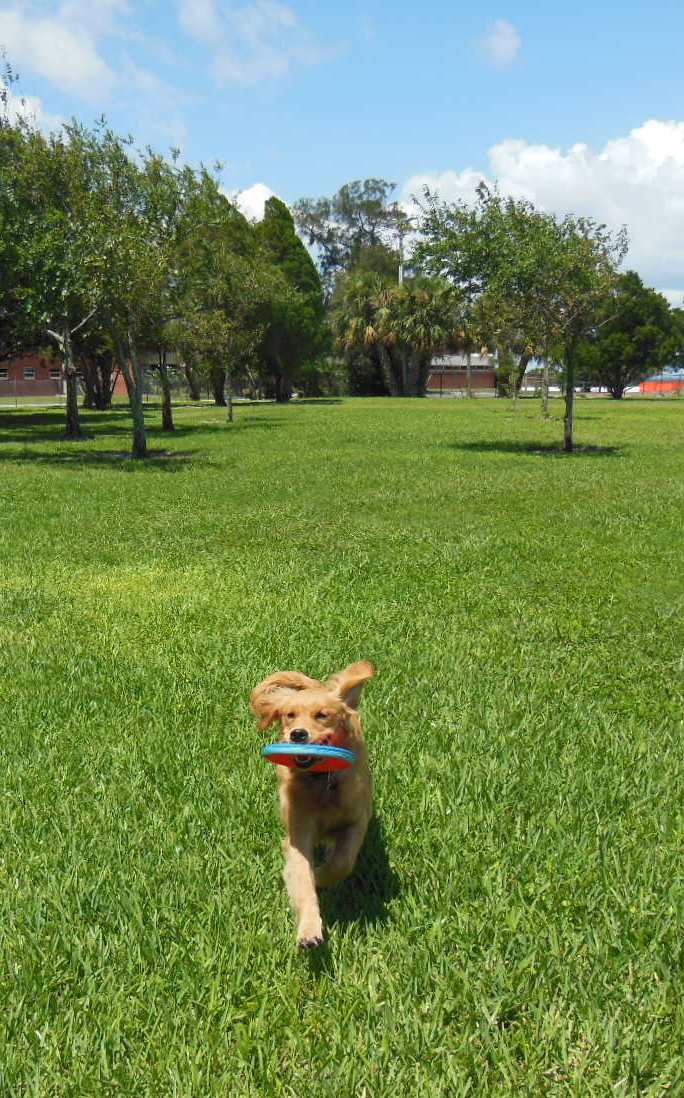
Cali zipflight2Cali, Albee, and Deni are playing fetch with a Zipflight (a Frisbee-like toy for dogs that Cali is crazy about). I wander over with Jana. Deni throws the disc. Cali catches it. Cali then brings it over and offers it to me for a throw.

If more than one person is in the area where Cali is playing fetch, she always does this. I find it charming. She takes the toy to one person, and then to the other, as if to include everyone in the game. She’ll include people she doesn’t know well, too, if they happen to be standing near and watching.

Oriel did this too. Cali and Oriel are closely related, but since Albee occasionally does it too, I don’t think genetics fully explains this behavior.

A professor I had in graduate school, ethologist Marc Bekoff, has hypothesized that play behavior forms the foundation of social ethics for a species. That is, youngsters learn how to get along in the group — what is “good” and “bad” behavior in their society, what the rules are for acceptable social interactions — at least partly through their games. They learn to play by the rules, not hurt each other, not to cheat or deceive, and to self-handicap when playing with younger or smaller friends. We observe all of this as our well-bred and well-socialized canines play with one another and with other dog friends. This might be a partial explanation, but Cali’s behavior seems to go a step farther.

I’ve seen dogs take turns in other situations — at the school where I teach, it’s not unusual to see three or four dogs lined up, waiting for a turn at the water bowl! And of course, when we play with our three dogs they must take turns chasing the ball when we throw it. Our dogs wait their turn to get their treats, to get brushed, even to get their dinners. Taking turns is nothing new in multi-dog homes. But dogs ensuring that all of the people and dogs get to join the game is unusual and shows an even higher level of social awareness. Cali’s not waiting for her own turn to do something fun or trying to get extra turns. She’s going out of her way, sometimes across a large lawn, to invite someone else to take a turn, to join the game.

Cali zipflightIt’s impossible to know exactly what motivates her to offer me a chance to throw the ball when she’s playing with Deni, but it does bring the family together. She even takes the ball over to Jana to offer her oldest sister the chance to chase the ball!  Cali’s desire to include everyone reflects something that matters to her. Empathy, or possibly inclusiveness.

An inclusive organization is defined as one that values the contributions of all people (human and canine!); one that incorporates different members’ needs, assets, and perspectives. That sounds like the kind of dog-human family I want. And, from her actions, it appears to be the kind of dog-human family that Cali wants too.


My Dog is a Research Subject

Cali 6 mos
Cali at 6 months. (Photo by Chaz)

Usually, when I hear about dogs being used as research subjects, I get very upset. I imagine rows of caged dogs, suffering and lonely. But not this time.

This time, we volunteered our new golden retriever puppy to be a research subject: We’ve signed Cali up to participate in the Morris Animal Foundation’s Golden Retriever Lifetime Study. This study is an effort to learn how to prevent cancer and other diseases in dogs.

Half of all golden retrievers die of cancer. According to the Morris Animal Foundation, cancer is the leading cause of death for all dogs over age 2.

This study will look at genetics, diet, lifestyle, and environment in an attempt to identify risk factors or causes of cancer. It could identify risk factors for other diseases as well. It could help researchers learn how to prevent or treat cancer in dogs. Ultimately, some of what is learned might even lead to better understanding of cancer prevention and treatment in humans.

Each participating golden must have a three-generation pedigree and be at least six months old but less than 2 years old at the time of the intake exam.

All of this comes at a cost, of course. And poor Cali is the one paying. Us, too. Anyone who would like to participate must complete a fairly rigorous application process. The annual questionnaire is long and comprehensive. The questionnaire asks for a detailed description of the dog’s diet — primary and secondary foods, treats, supplements. It asks about exercise habits, medications, illnesses or diseases. Temperament and behavior. Cleaning products and pesticides used in the home. Even whether a member of the household is a smoker.

Oh, yeah, then comes the intake exam. Cali, who turned 6 months old a few weeks ago, had her intake exam last week. We’d prepared her carefully to meet her new doctor. We’d brushed her, trimmed the fuzz on her feet — and filed her nails. Oops. Among myriad other samples, the veterinary nurse had to collect ten nail clippings! A hair sample, too. And large quantities of blood and other bodily fluids, etc. The vet took a detailed family medical history—of Cali’s canine family.

The exam took more than an hour. Poor Cali was poked, prodded, and drained. She was quite a trouper, though, not only bravely enduring the needles, but quite cheerfully allowing the veterinary nurses to handle, move, restrain, and otherwise manipulate her as needed.

Our best guess is that the hair and nail clippings will be analyzed for chemicals — anything Cali is exposed to, whether from her diet or her environment, is likely to show up in hair and nails. In fact, one of the nurses said it was like  doing a drug test.

Participating vets must also register with the Foundation. The annual visit generates quite a bit of work for them, but our vet team was eager to participate and learn more about the study.

Cali will submit to this thorough exam once a year, throughout her life. The Foundation sent us a sample collection kit ahead of the visit, and I expect that this, too will be an annual ritual. The owner questionnaire is to be filled out each year as well. This way, the researchers can collect volumes of data over the lifetime of each participant. Up to 3,000 goldens will be accepted into the study.

If you are fortunate enough to share your life with a golden who meets the criteria — under age 2 and with a three-generation pedigree — consider participating. The annual visit and questionnaire are comprehensive, but certainly doable. The Foundation will reimburse part of the cost of the visit and testing. As someone who has seen too many wonderful dogs die of cancer, I am happy that Cali is such a cheerful participant in a study that could make a huge difference for future dogs. Click here for more information.

Precious Precocious Puppy

grand canyon

Not every five-month-old-puppy can handle a 3,800 mile drive, so I was a bit nervous about driving from California to Florida with Cali and Jana. Fortunately, my mom came along to help. Cali, like big sister Jana, turned out to be an excellent traveler, though.

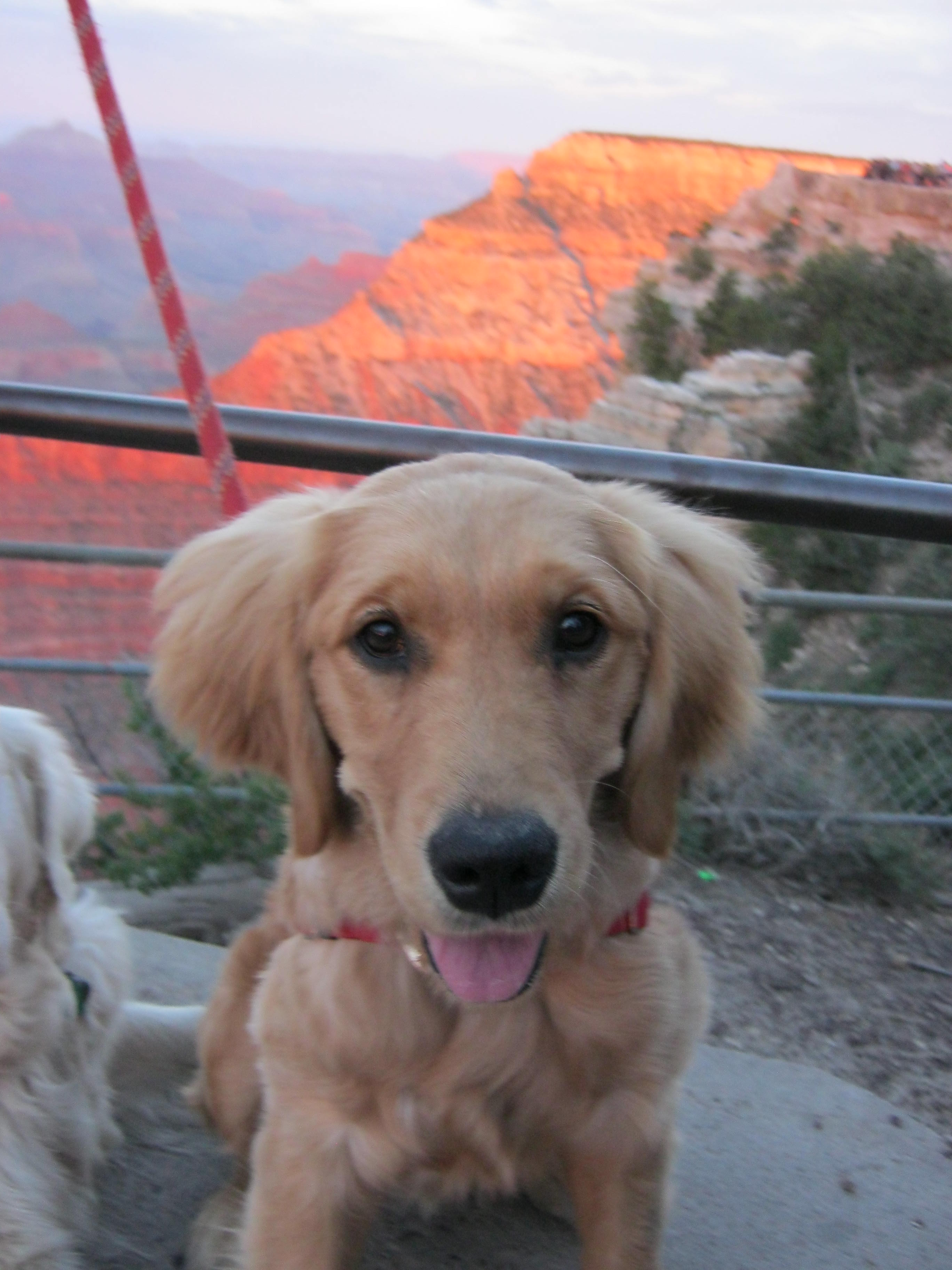
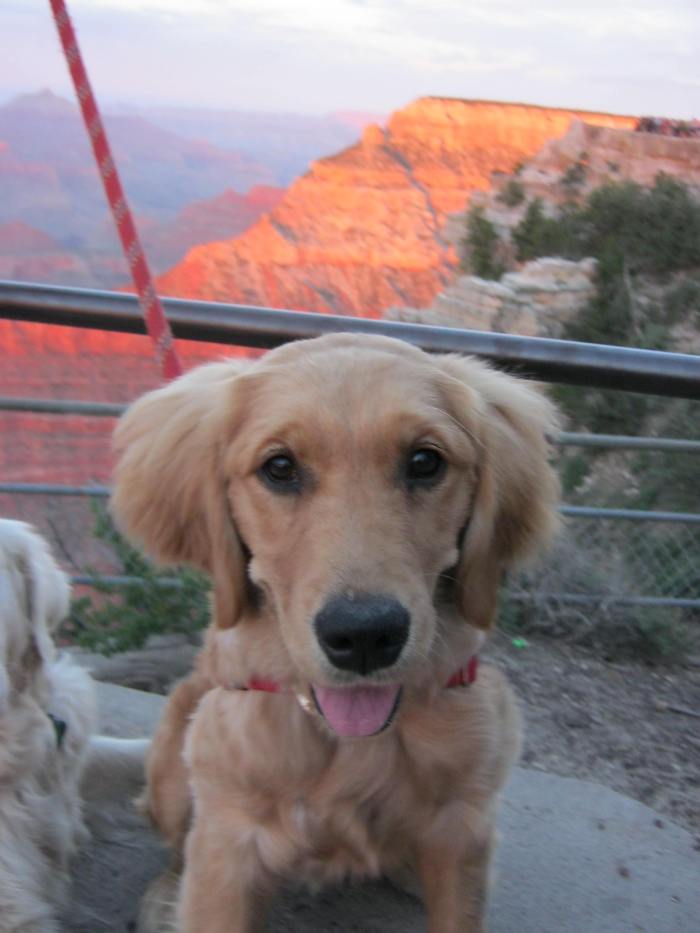
Cali took the Grand Canyon at sunset in stride. This was after a morning spent at The London Bridge in Lake Havasu City, AZ (a consolation trip, once we discovered that the Hoover Dam does not allow pet dogs on site at all, ever, no matter what). Near the river in Lake Havasu City, Cali and Jana also encountered a weird piece of sidewalk that spouted water. And had ducks. Very cool, they thought.
IMG_0317Cali liked the Painted Desert and Petrified Forest, too. Kansas City and a visit with cousins Hannah and Ziggy was a huge success. Cali then slept through a few more days in the car, and we were home. In Florida.

Scary, scary Florida.

We arrived home on a Wednesday. First thing, Mom and I opened the windows and turned on the ceiling fans. I turned around, wondering where my puppy had gone in this huge house, so different from our one-room studio in Valley Ford, CA. She was hiding under a table in the dressing room. Would not come out, even for food. Well, after some coaxing, Cali was able to dash into the kitchen for her dinner, but she kept casting nervous glances at the dining room ceiling. Ah. Ceiling fans. Terrifying. Who knew?

The truth is, it is pretty normal for a puppy to be afraid of a weird thing moving overhead and casting all sorts of weird shadows. I just hadn’t thought about it.

After dinner, it was time to visit the back yard. Which requires navigating a bead curtain. Again, very scary.

By bedtime, Cali had conquered her fear of the curtain. The fans took longer. But, by dinner time the next day, Cali was willing to hang out in the same room as the fans, though she still gave them a wary look from time to time.

That same Thursday afternoon, we took her (poor kid) to the beach across the street. Not surprisingly, calm, shallow, warm, waveless Tampa Bay is much more to her liking than the ferocious Pacific Ocean. She bounded right in. When the ball floated out to sea a bit, she bounded after it. Until, on landing from her leap, there was nothing under her paws.  A panicked look at me — then she quickly realized that her paws were paddling of their own accord. “I can swim!!” her happy expression said.

What else did Florida throw at this poor puppy? A dog door lesson. She’d been watching her all-powerful big sister Jana use her magic to open this amazing portal. Now it was Cali’s turn. She got her key (our dogs wear magnetic “keys” to open the dog door; this keeps out cats, opossum, and other local wildlife) and we headed to the back office.

With my helpful mom standing on one side and me on the other, both armed with treats, the lesson was quick. About 12 seconds, I think. I called her. Out she came. Treat. Mom called her. In she went. Treat. Four or five repetitions and Cali was a dog door pro. She loves going in and out, just because she can. (Her reaction is not so different from Wylie’s, when we first installed the dog door.)

Is anyone counting? Cali has conquered ceiling fans and bead curtains, mastered electronic dog doors, and found out that she could swim. All before she turned 6 months old. Actually, all in about a day. The resilience of youth!

While we were on the road, Cali was showing some hesitancy around things she’d seen before — statues, motorcycles — and I was worried that she’d hit a fear period. Puppies go through stages in their development where they suddenly become fearful of new things, or not-so-new things, and a fear period and a cross-country drive are not a good combination. But she seems to have passed through the fear period quickly and without a scratch.

Since arriving in Florida, Cali has also discovered things like neighbors and traffic. While our neighborhood is relatively quiet, it’s a far cry from our rural home in California. People come and deliver or remove things — mail, trash, dry cleaning — regularly. Cars pass by. Pedestrians, too — many with dogs. Cats wander through the yard. Other critters too, though we had our fair share of those in California. Lizards are everywhere here, and endlessly fascinating to a puppy. There are so many people to meet, so many things to bark at in Florida!

Cali’s next challenge is convincing her new sister Albee to play the way she wants. Albee invites Cali to play tug by whacking her on the head with a tug toy. Cali invites Albee to play by choosing a toy and playing keep away. Neither is getting what she wants — yet. Both love to play ball and Frisbee, though, so we’re confident that they will figure out how to communicate about other games.

Cali is lucky that she gets to experience so many new and exciting things. I am lucky that she is mostly confident and curious, and that, when she is fearful, she overcomes it fairly quickly. This combination is setting her up to be a confident and calm dog who won’t be easily overwhelmed by new sights and sounds — a dog who could, someday, be a service dog working comfortably out in public.

 

Dogs and the Paleo Diet

Time for a snack! (photo by Sae Hokoyama)

Figuring out what to feed a dog never used to be so complicated. For generations, dogs simply ate whatever the people in the family ate. Or, to be more precise, whatever they didn’t eat — dogs were often fed the leftovers from a family’s meals.

Then came commercial dog food. Kibble, canned, semi-moist — all were convenient and were touted as much more healthful for our canine companions. Over the past 10 years or so, dog food has gone gourmet, with organic foods, human-grade foods, foods that cost more than the average family spends on groceries for the humans … but is it better for the dogs?

The latest fads are raw food and no grain or low carb diets, all touted as closer to dogs’ “natural” diet. The “natural” diet is defined by looking at what wolves eat. Wolves eat a high-protein diet, with lots of bones mixed in. They are opportunistic omnivores and will eat fruit, greens, and vegetables if they find them or if meat is scarce, but they thrive on a high protein diet. Carbohydrates can lead to inflammation, some argue, and aggravate problems, such as arthritis, that feature painful inflammation. Raw diets are easier to digest. The less processing the better. Dogs may have evolved considerably since diverging from their wolfish ancestors, but their digestive system hasn’t changed. In short, the Paleo Diet for dogs. (The Paleo Diet encourages eating lean meats, seafood, vegetables and fruits and avoiding dairy, grains, legumes and processed foods.)

Or so one theory goes.

Yet another theory points to a recent study that shows that, in fact, dogs’ digestive systems have changed as they’ve become our housemates— they’ve evolved the ability to process and use (small amounts of) carbohydrates more efficiently than their ancestors. Their life sharing the sofa and the remote with their couch potato humans has made them more amenable to snacking on (and digesting) potato chips. This could be a boon for dog food manufacturers who pack their products with inexpensive and starchy fillers.

This theory is based on research by evolutionary geneticist Erik Axelsson. He was looking for genetic differences relating to dogs’ and wolves nervous systems. But he found something surprising: He found that the three key genes involved in digesting starch are different in dogs and wolves.

While several theories are debated concerning how dogs became domesticated, all involve wolves spending enough time around humans — and humans’ food and leftovers — to form a relationship. That the wolves hanging out with the humans evolved to eat the kind of food the humans ate makes sense. (And hey, if our early ancestors were eating starch, doesn’t that make the Paleo Diet irrelevant and wrong? Pass the popcorn!)

Which theory is right? What should we be feeding Fido?

First of all, dogs are not wolves. In dog training, myths based on idea “dogs are the same as wolves”  have done untold damage to dogs’ relationships with their humans. Is the same sort of damage now being done to their health through misguided nutritional guidelines?

Modern humans eat a wider variety of foods than our long-ago ancestors did, and our bodies work differently — though a diet high in unprocessed, whole foods and low in simple carbohydrates is still the healthiest option. The same is true, I believe, for our dogs.

In a discussion of Axelsson’s study, PetMD.com’s Daily Vet blog recommends a balanced approach. If your dog’s diet includes grains, whole grains are recommended. Less-processed food is preferable to highly processed. Starches should only form a small part of the dog’s diet.

What might matter more than whether your dog’s food includes brown rice and barley or is completely grain-free is the quality of the ingredients and the relative proportions. As I wrote in “Ask the Thinking Dog” last spring, choosing a safe, healthful dog food can be challenging. I look for U.S.-sourced, high-quality ingredients and avoid food processed in any of the large pet-food factories that are the source of the never-ending recalls. Our dogs eat Fromm Family kibble and Sojo’s, but each dog’s needs are different, so you’ll need to figure out how best to meet your dog’s needs.

A word of caution: While discussing your dog’s diet with your vet is a good place to start, I have found that many vets strongly recommend foods that they sell — but that might not be the best choice for your dog. For example, several vets over the years have recommended putting our dogs on prescription diet foods, available only (and at extremely high cost) through the vet. In most cases, a “prescription” food is not necessary, and a higher-quality food can be purchased less expensively elsewhere.

Do your research! Understanding what proteins and other ingredients work best for your dog can help you choose the correct (non-prescription) food. Talk to the people at a locally owned (not big-box) pet supply store that sells a variety of high-quality foods. Often, these folks are quite knowledgeable. Talk with other dog people, and pay attention to how your dog’s energy level, digestive system, and skin and coat health are affected by different foods.

A Doggy Sense of Fairness

doublebed

Do dogs have a sense of fairness? A sense of justice? Many people argue that only humans can grasp and use such higher-level concepts, but more and more research is showing that this simply isn’t true. And anyone who has lived in a multi-dog household knows that, if one dog is getting something good, the other dogs certainly notice if they are being left out or shortchanged — that is, they are being treated unfairly.

Ethologist and primatologist Frans deWaal states that reciprocity and empathy are the foundations of morality; these are also essential elements of fairness and justice. But fairness and justice are a little higher up on the cognition and morality concept scale. Fairness and justice go beyond the immediate exchange. An animal — or human — who does not recognize and practice reciprocity cannot truly have a concept of what is fair or just. Similarly, lacking empathy would make it difficult or impossible to understand the concepts of fairness and justice. De Waal has published research that shows evidence of reciprocity and empathy, and even fairness and justice, in chimpanzees and elephants. Dogs, with their long history of socialization with humans, surely are capable of these higher-level concepts as well.

We certainly know that some dogs have a strong sense of empathy. They feel the pain of other dogs or their people and offer cuddles or favorite toys in a gesture of comfort. And, we know that dogs illustrate reciprocity. They “take turns” winning at tug games with other dogs, even when the bigger, stronger of the two could easily win every match. I’ve even seen dogs line up for a turn at the water bowl.

Dogs are highly social animals. They learn and follow social rules. This starts when littermates temporarily refuse to play with a sibling who is playing too roughly. Dogs routinely shun playmates who are known to cheat — that is, dogs who give a play signal and then perform an action, such as biting, in a rough, non-playful manner. Doggy social skills matter — enough that many dog owners spend hundreds of dollars to teach their dogs proper social skills. The owners with dogs who don’t get it  — those whose dogs howl and lunge at the sight of another dog, for example — find themselves ostracized by other dogs and dog owners. I’ve heard enough stories of people who walk their dogs only in the wee hours of the morning or drive out to deserted paths to ensure they won’t meet other dogs to know how important proper canine social skills can be.

Social skills rest on rules about how we treat each other — which is a neat definition of a moral code. It is all about reciprocity, about not doing to others what you don’t want them to do to you. It is also about each member of the group getting his or her due. Fairness.

The next question is when and how this develops in dogs — and how far it goes. Cali wails in despair if I take Jana for a walk without her, so why doesn’t she object when she and I head to school — leaving Jana behind? Where’s the reciprocity? Is her sense of fairness focused only on herself?

Jana enjoys the solo walks — but she also accepts calmly the times that Cali and I leave her home alone. Then again, when young Cali gets puppy lunch, Jana demands her share — or an equivalent perk, like a treat toy with a really good cookie tucked inside. So, do dogs grow up and grow into a broader application of fairness, a greater willingness to reciprocate? Or does it all come down to protecting their self-interest?

In humans, we can trace the stages of moral development, from being very focused on one’s own needs and wants, through focusing on external approval, to an increasing ability to “do the right thing,” even if there is a personal cost. Stories of hero dogs hint that this moral growth is possible in dogs as well. Deni’s new guide dog, a highly food-motivated Labrador (hmm, isn’t that redundant?) passed a tough training exercise with flying colors: ignoring treats raining down around her as she guided Deni to a chair. This is a grad-school application of the “leave it” exercises I am practicing with Cali, and it demonstrates an ability to rein in impulses and refrain from gratifying a need or want — but why does she refrain? Because it’s the right thing to do? Because the human wants her to? Or because the dog knows that ignoring the treat will pay off in a reward?

The answer to that question, elusive though it may be, tells us where a dog is in the “moral development” process. In a class I teach, we’ll soon begin to examine a moral development theory that was developed to describe humans. It labels stages of development based on which reason is behind a person’s decisions. We’ll examine how these concepts apply to dogs and search for examples of dogs doing the right thing just because it is the right thing to do.

That does not mean never acting in their own interest: One fundamental of human moral development theory is that it is OK to take care of yourself, so long as you are also doing the right thing in regard to others. The canines I know would certainly agree with that. They might have learned not to take each other’s food, but they can (and do) certainly enjoy their own meals while being “good” to their canine sibs.

Puppy Tries to Downsize Older Dog, Steal Her Job

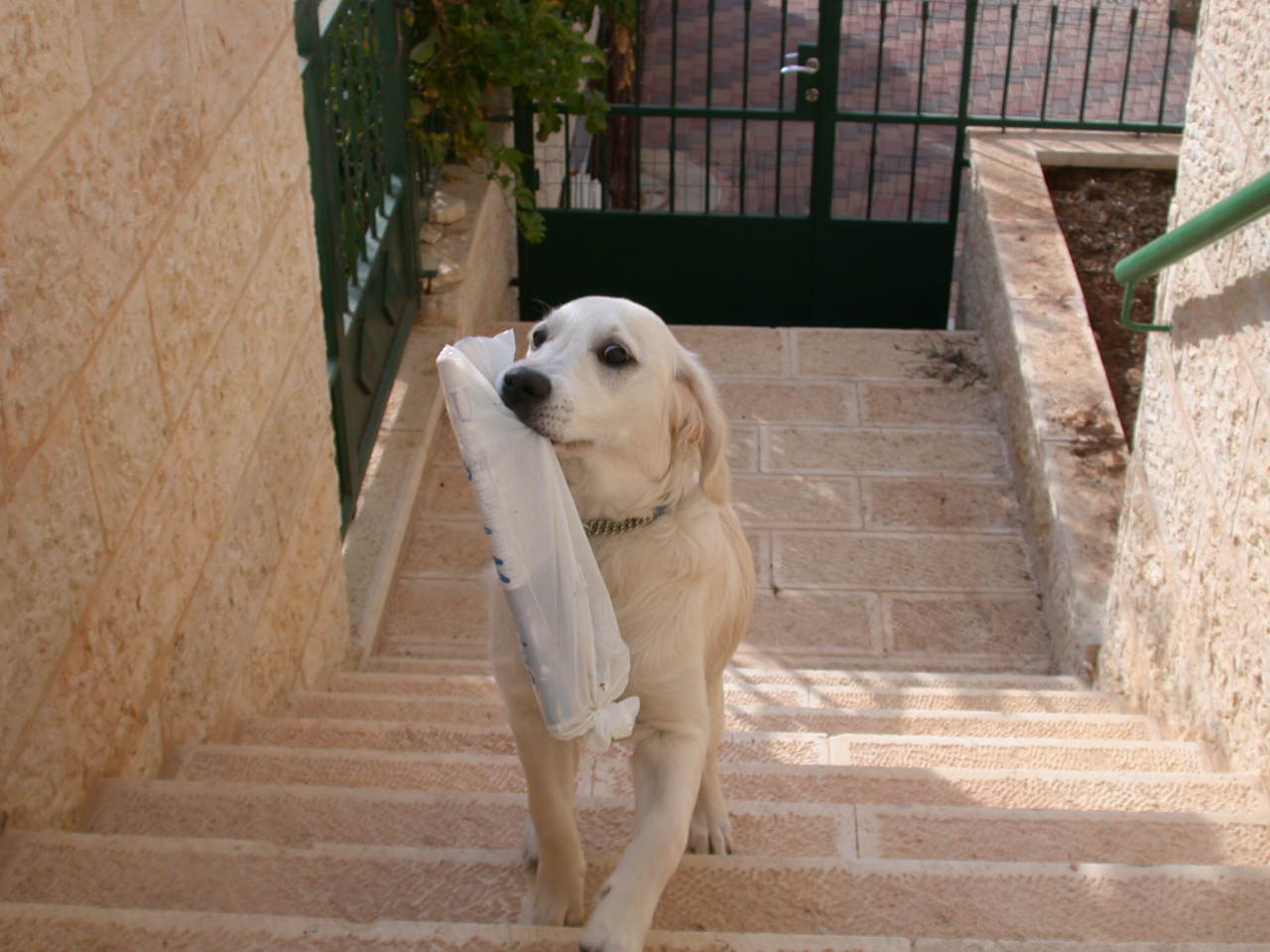
At the ripe old age of not-quite-three-months, Cali made her first play for Jana’s job. She liked the idea of a paycheck, in the form of some treats, delivered as soon as the work was complete.

The newspaper was still bigger than Cali the first time she grabbed it and dashed off ahead of Jana. Reined in by a too-short leash, Cali was soon overtaken by Jana. Jana looked at her in annoyance, then reached over and snatched “her” newspaper back.

Jana’s held this job since she was a tiny pup, and she is not ready to retire.

get the paper

Since that day, I try to get the girls to take turns, and I give each one a reward, but Cali still wants that job. And Jana is not giving up without a fight. Sometimes the paper bears the brunt of this literal tug-of-war.

Cali and the Sunday Paper

Dogs need jobs. Ever more, dogs need opportunities to earn rewards. But I think what is really at play here is that Cali looks up to — worships — Jana and wants to do everything that Jana does. Cali learns new skills very quickly and I am sure it is partly because she is watching what her adored big sister does and copying every move, albeit in her clumsy puppy way.

Still, I think the best solution might be a second newspaper subscription.

Introducing Cali!

on janas bed

Our family is growing! Meet Cali, the newest member of the Hogle and Elliott household. Except, of course, she’s in California with me and Jana now, not home in Florida with Deni.

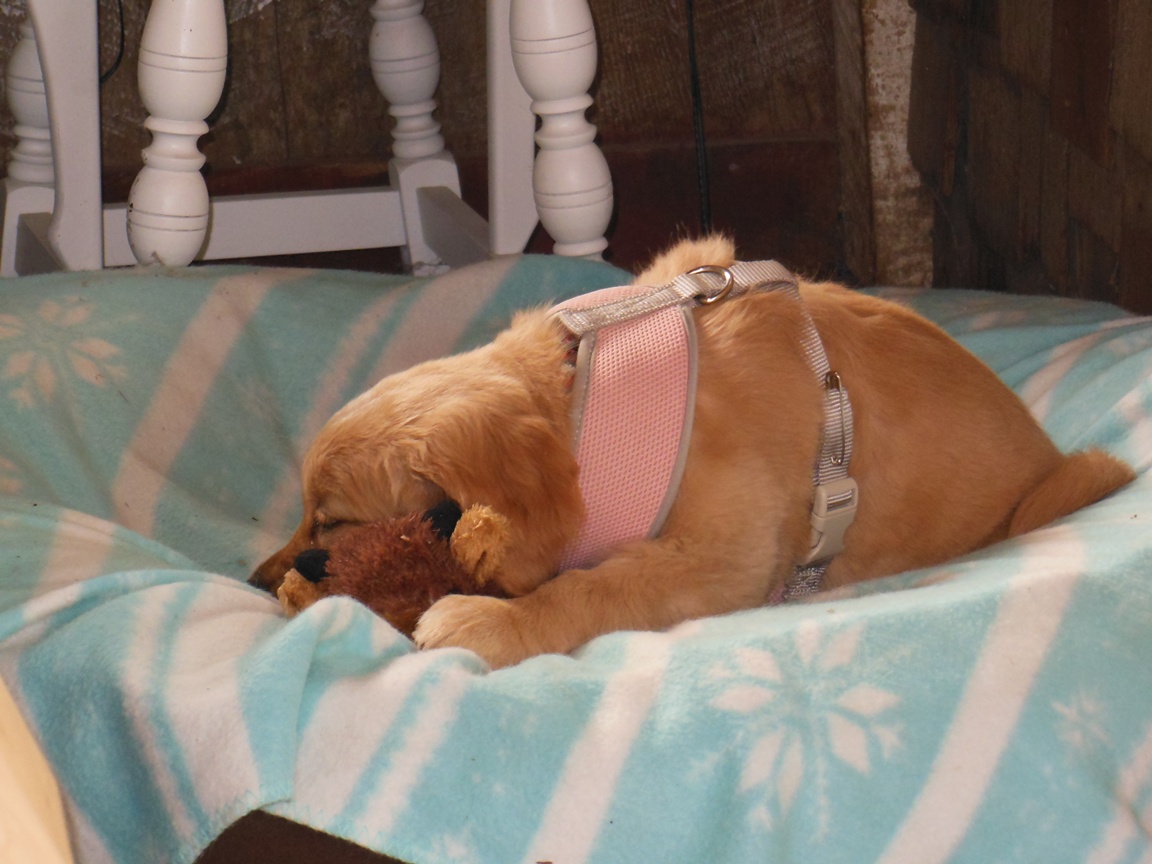
Single puppy parenthood is a challenge! Cali is wonderful about asking to go out when she needs to … but that means that I have to be quick to respond, whatever the time of day — or night. How do parents survive months of this? After just over a week, Cali is waking up pretty consistently around 1 a.m. and again between 4 and 5 a.m. The second time, I just let her cuddle with me until it is time to get up at 5:15 or 5:30.

Yes, mornings begin early with a puppy. She’s full of energy, happily greeting her toy box like a long-lost friend, bouncing from one end of the small studio to the other, trying to get Jana to play, turning somersaults, and generally being a puppy. All while I am trying to find the ON button for the coffee pot.

By the time dogs go out, dogs come in and wipe their feet, I build a fire in the wood stove and take a shower, dogs have breakfast, we all walk down to fetch the paper (Jana does all the work here), I have breakfast, we play, puppy goes out again … well, I am ready to go back to bed. And it is only about 7 a.m.

The good thing about puppies is, they take a lot of naps. But, many of these are power naps, which means that, after 20 short minutes, Cali is wide awake, full of energy, and eager to play. I, having tried to get 3 hours’ worth of work done during those 20 minutes as well as pay some attention to Jana, am less refreshed and eager to play. Sometimes, she’s lucky she’s so cute.

She uses her cuteness on others as well. At Bergin U, where I am teaching this semester, Cali has charmed the students, staff, and volunteers. She is easily the most popular girl on campus. The benefit for me is that, the more people who come play with her, the more naps she takes! In fact, she’s taking one now, having been thoroughly worn out by a dedicated volunteer who drove in from more than a half-hour away — to play with Cali!

I was a little worried about her the first few days she was home. She didn’t show much interest in eating and even left food in her bowl! She has adjusted quickly, though, learning the attraction of food-filled Kong toys, solving her Brainy Bone puzzle (to get at the hidden Charlee Bear), and begging for meals and training treats.

Speaking of training, this puppy is clearly a genius, well on her way to learning several cues and tricks. I think she’s a lefty; she shakes with her left paw about 3 times out of 4. She’s got a nice “sit” and is catching on to “down,” “turn,” and a few others. She’ll even pick up a wooden dumbbell, but is not quite reliable about giving it back to me yet.

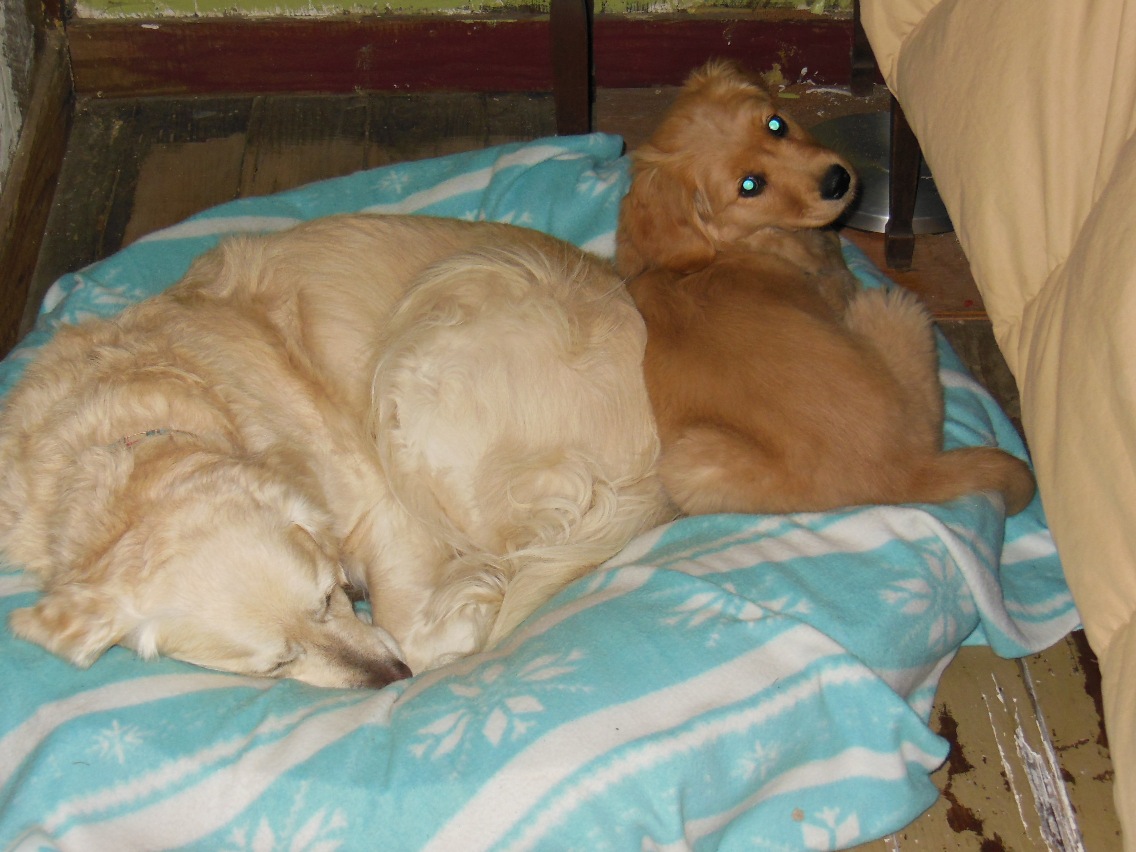
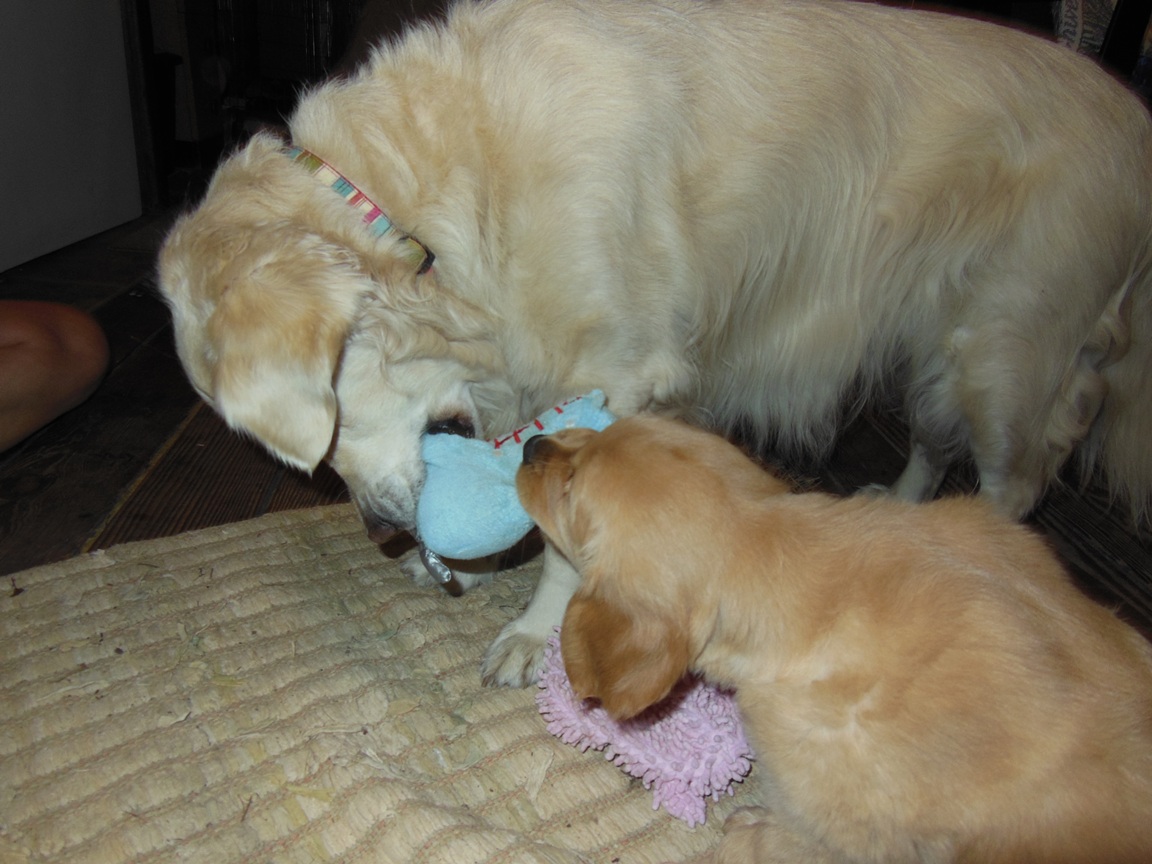
Most miraculous of all, Cali seems to be on her way to charming big sister Jana. She is definitely the annoying little sister sometimes — clamoring for attention, bugging Jana to play, appropriating Jana’s bed and toys. But, yesterday morning, something momentous occurred. Jana asked Cali to play. The two romped and tugged with her for a few minutes before Jana remembered her older-dog dignity and her opposition to puppies and went back to bed. The puppy tires her out too!

Tug