Jana and Wylie Go to College

Jana and Wylie got accepted to Eckerd College and, last week, attended their first class, a math class. They were students in the Dog Behavior Project, a cognition study run by the psychology department. Your dog can participate too, if you live in the Tampa Bay area! The application is simple.

The dogs were excited when we got there. A human class was just letting out, and some of the students said hello. The dogs got to explore the psych lab for a few minutes, and they could tell that other dogs had been there.

Then it was time for class. Jana got to go first, so we went into the testing room. There was a chair for me, two bowls on the floor at the other end of the room, with one student serving as tester and a student who recorded what Jana did.

The current study is hoping to determine whether dogs can count or judge quantities. The tester drops treats into bowls, and the dogs get to choose one of the bowls. For each trial, she drops a different number of treats into each of the two bowls, with the dog watching. Jana got Charlee Bears, which she loves.

We went in and sat down. I told Jana to wait and held her collar loosely. She sat facing the tester. Once the treats were in both bowls, Jana was allowed to choose which bowl she wanted, run to the bowl, and eat the treats. The researcher is supposed to grab the treats in the other bowl while the dog is eating. Some “control” trials have treats in only one bowl.
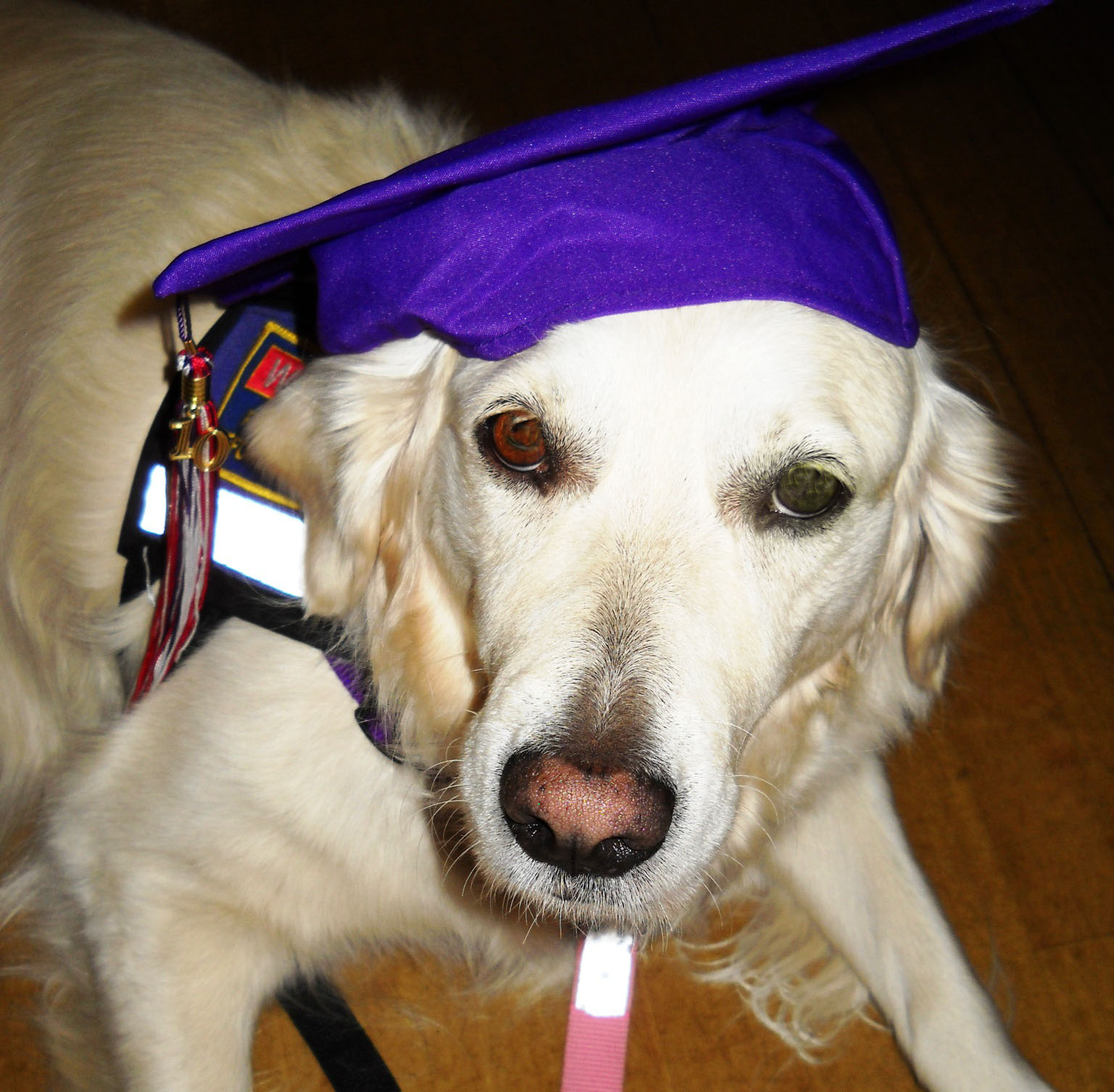
No one looks good in these graduation hats!

Jana watched intently each time treats were being dropped into the bowls. When I said OK and let go, she ran to a bowl. She chose the larger number of treats eight out of 10 times; I have no idea what happened those other two times. She was definitely paying attention. She also, not surprisingly, ran to the second bowl each time she finished eating her treats and barked at the researcher when she found it empty. What tells me that she was really paying attention is that, in the “control” trials, when the researcher had not placed treats in the second bowl, Jana did not bother going there.

When Jana finished the last trial, she brought me the empty bowl. I am sure Jana thought this was the best class ever! She would happily have done 20 or even 50 trials.

Then it was Wylie’s turn. Unfortunately,  in his first two trials, the researcher forgot to pick  up the treats from the second bowl, and he was able to get both sets of treats. From then on, he showed a clear “side bias,” always choosing the same bowl. He only got the larger number of treats six out of 10 times, but in his defense, I think he was misled about the nature of the task. My guess is that he figured that it didn’t matter which bowl he went to first. Also, he’s just not that excited about Charlee Bears. If she had put tennis balls in the bowls …

Both humans and dogs enjoyed participating in this study, and we’d do it again. Some of the studies are longer-term, with the same dogs coming back for several sessions. It’s a fun way to spend time with your dog and learn more about how her mind works.

It also shows how far dogs have come. Even as recently as 15 years ago, you’d be hard-pressed to find published academic research that focused on dogs. Now, researchers all over the world are exploring dogs’ thinking and problem solving abilities. Some of the best work is being done in Hungary, at the “Family Dog Project” at Eötvös Loránd University.

But it’s not necessary to go that far afield. Eckerd is just one of several U.S. colleges and universities where dog cognition labs recruit local canine “students.” Others are the University of Florida, Duke University, Barnard College, and the University of Kentucky. Researchers are looking at a variety of topics ranging from canine facial expressions, such as the “guilty” look to dogs’ responses to human gestures to how dogs form trusting relationships.

I get excited about anything that gives me a window into my dog’s mind. I often wonder what she’s thinking. These studies might help us better understand of our doggy best friends and improve our relationships with them. Then again, the researchers might confirm something that I have long suspected about Wylie — that he regards humans as bumbling, inept, and not very smart, and he knows that, if only dogs had opposable thumbs, the world would be a very different place.
Teach “Incompatible” Behaviors for a Well-Mannered Pup


New puppy parents are often advised to keep a supply of puppy chew toys handy in every room. If the puppy starts to chew on something inappropriate, such as the sofa leg or a shoe, the humans can easily reach for a puppy toy and offer a trade. This is good advice and a good introduction to teaching an “incompatible behavior” to replace an undesired behavior: If the puppy is chewing on her own teething bone, she’s not destroying the furniture.

In my last blog post, The Best Alarm Clocks Ever, I mentioned procedural memory in a description of how and why dogs remind us that it is time to get up, feed them, or even take our medication. Procedural memory is even more significant in the way it affects other routines and behaviors.

Some psychologists say that procedural memories form aspects of character or habits. That means that a behavioral or emotional response to a particular situation could become an automatic or ingrained response. This is a valuable piece of knowledge in educating dogs (or humans). Old habits are hard to break, but understanding where a behavior comes from might mean that you can work to change it — replacing the “bad”  habit with an incompatible good habit. An incompatible behavior is simply any different behavior that cannot be done at the same time as the undesired behavior. Learning the new “routine” will replace the old, undesired one.

A common example is doggy greetings. Jumping up to greet people (or adult dogs) is a very common puppy behavior. This probably hearkens back to dogs’ wolf ancestors. When young wolf pups jump up and lick adults’ muzzles, it stimulates regurgitation feeding. Ick. (It’s also a submissive behavior.) When our cute puppies jump on us to greet us, we might not feed them in the style of wolves, but we do tend to reach down and pet and cuddle them. We might laugh and tell them how wonderful they are. This is fun and rewarding for puppies, and it encourages puppies to continue to jump on returning human family members and guests. Many small puppies grow, though, and become large, gangly adolescents, then 60- or 100-pound adult dogs. Jumping is not cute anymore, but the puppy has never learned not to do it; in fact, the puppy has been rewarded for jumping.

Some old-fashioned trainers might suggest stepping on the dog’s toes or kneeing the dog in the chest to stop the jumping behavior. This is cruel and does not teach the dog anything other than that his human can’t be trusted. From the dog’s perspective, his human has suddenly started hurting him for no reason. After all, the human allowed and even encouraged the jumping when the puppy was small.

A more fair and humane approach is to teach an incompatible behavior, for example teaching the puppy or dog to sit to greet people. If the puppy is sitting, she can’t jump, right? (Another option for overly enthusiastic canine greeters is to teach the puppy to fetch a toy and bring it to the visitor.)

Not exactly cocktails, but it’s a start (photo by Sae Hokoyama)

When Jana was a puppy, I wanted to teach her to sit to greet visitors. I put the “incompatible behaviors” principle to work successfully — both on puppy Jana and on our guests. First, I taught Jana to sit when I crossed my arms over my chest. Then I asked entering guests to cross their arms. This action was “incompatible” with petting the jumping puppy. It also gave Jana the cue to sit (incompatible with jumping). Viola! Jana sat and was rewarded with praise, petting, and, often, treats; I could happily greet visitors without fretting that they were teaching Jana bad habits.

In The Best Alarm Clocks Ever, I also mentioned Jana’s propensity to remind me of mealtimes — well ahead of time. Doggy dinner is at 6 p.m., but Jana often starts hinting, nudging, trying to lead me to the kitchen, pointing out her empty bowl, etc. long before 5 p.m. Do you suppose that, if I taught Jana to make cocktails at 5 p.m., she would stop bugging me for her dinner? It’s worth a try …


The Best Alarm Clocks Ever

I’d always heard that dogs have no sense of time; that the concepts of present, past, and future were unique to human beings; and that our canine friends lived only in the present. I accepted that as “common knowledge” until I really began to pay attention to dogs.

When I was in service dog trainer school ten years ago at Bergin U (then called the Assistance Dog Institute), I learned that we could train dogs to remind their human partners to take medication at a particular time each day. That really got me thinking. Most dogs know when dinnertime arrives. In fact, punctual critters that they are, they tend to remind us humans of approaching mealtimes, well in advance, lest we delay. (Goldens and Labs tend to remind us hours and hours in advance …)

Dogs get to know what time the family wakes up, even adjusting to weekends. Our dogs are the best alarm clocks ever. I get good morning kisses from Wylie (whether I want them or not) at 5:30 each morning, well before my radio alarm comes on. Any visitor to our house can request a “wake-up dog,” similar to a wake-up call but warmer, fuzzier, and sometimes wetter. Wylie loves this job.

Jana even knows the concept of “weekends.” While Jana, like Wylie, stirs a little before the alarm clock on weekday mornings, she, like her humans, enjoys a couple of extra hours of sleep on Saturday and Sunday. She’s made that distinction for years. Never failed. Nothing fazes her, not power failures or holiday weekends (darn!).

Neither dog takes more than a day or so to adjust to Daylight Saving Time changes, and Wylie, who commuted cross-country on a regular basis, was quickly able to adjust his “internal” clock to local time and update his expectations for when meals and exercise might happen.

It’s not always perfect; Jana might suggest that it is dinnertime a little early, in reasonable golden retriever fashion, and Wylie is sure to remind us if we run late when he believes that it is time for afternoon exercise.

Wylie’s human, Deni, teaches college classes. Sometimes, she teaches a 3-hour evening class that includes a break after about an hour and a quarter. If Deni starts a new section or says something like, “Before we take our break, I just want to …” Wylie quickly lets her know that that is not acceptable by groaning, sighing, and moaning. That gets the students laughing, which quickly convinces Deni that, no, she won’t “just do” anything else before the break.

Our dogs are not unique in learning our routines and schedules. Dogs are attuned to when their people usually return home in the afternoon, pacing or looking out the window in anticipation. Research by Rupert Sheldrake and others hints that some dogs seem to be tuning in to something more than the clock as they anticipate a family member’s return even when unexpected, but that is more correctly termed “pack awareness” than time sense.

But, overall, dogs’ capabilities are far greater than what most traditional dog behaviorists and trainers claim. This is important because learning and remembering routines, time-bound or not, is a function of procedural memory — a type of long-term memory that is an essential component of learning motor skills and cognitive activities. It’s the reason you never forget how to ride a bike, for example.

People use procedural memory to teach dogs some tricks and service dog skills, such as turning on a light or getting something out of the refrigerator; dogs also use procedural memory to train us to do what they want and when. Humans and canines would not be so close if it weren’t for that shared training and learning ability.


What is your opinion of an E-collar?

I got this question from a friend who is dog-mommy to two wonderful, if highly energetic, girls.

My short answer was that in general, I believe that they are used too often by people who want a “quick solution,” and they are not used correctly — and that therefore they end up being used in a way that is unfair and abusive to the dog. I abhor punitive training and think that in nearly all cases it is not only unnecessary but counter-productive.

But.

I also hesitate to completely rule out the use of an e-collar (an electric shock collar). There are a very, very few cases where the use of an e-collar, with a skilled, ethical, experienced trainer, might be justified. Continue reading

Never Too Young to Learn

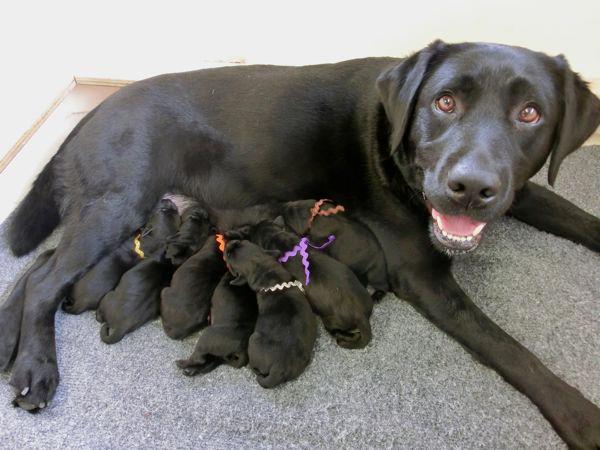
ImageBergin University has a litter of adorable black Lab puppies. (I know, puppies are all adorable, but I’ve always been a sucker for black Lab puppies.) The puppies started school last week. The puppies also turned four weeks old last week. That’s right. Four weeks. They’d had their eyes open for a full week before training started, so, honestly, I don’t know why the student trainers waited so long.

Sadly, there are still people who think that you can’t start formal training until a dog is a year old. Some more liberal people say that puppies can start training at six months. Then there are those smart puppy owners who get their pups into puppy kindergarten as soon as they can — usually once the pups are vaccinated. But even that is late. Puppies start learning the day they are born, if not before.

So why do people traditionally wait so long to begin teaching their puppies? In the history of dog training class that I am teaching this semester, the students have finally emerged from the cruel, punishment-focused training years of the early to mid-1900s. By the ’50s, people were starting to understand that so much emphasis on punishment actually got in the way of learning. A few trainers — Blanche Saunders, Winifred Strickland, and others — began incorporating praise and even rewards into their training! But the prevailing methods, up until the 1970s, were pretty harsh. Only older, stronger dogs could stand up to the punishment and the trainer’s lack of communication — and actually “learn” anything. Lots of dogs were deemed untrainable because they shut down or defended themselves by snarling or biting when treated harshly.

Learning "Sit" ...

Fortunately for puppies and people who love them, trainers like Milo Pearsall and Ian Dunbar began teaching that, like young children, puppies are eager and quick learners. Furthermore, the younger they start learning how to learn, the better they get at it. In a sense, your puppy will be “smarter” if you train her early. These trainers introduced a now-popular and ubiquitous concept:  puppy classes.

... and "Shake"

Human parents of a new puppy can reduce the number of bad habits and undesirable behaviors the puppy learns by enrolling the youngster in puppy kindergarten. Here puppies learn what to do — and what not to do — and develop good manners early on, all without harsh punishment. Good puppy classes emphasize socialization — ensuring that puppies are exposed to lots of different kinds of dogs, people, sounds, sights, smells, and experiences — all in a controlled, positive way. This helps puppies learn that new things are not always scary, that their human families will keep them safe, and that the world is an interesting and fun place to explore.

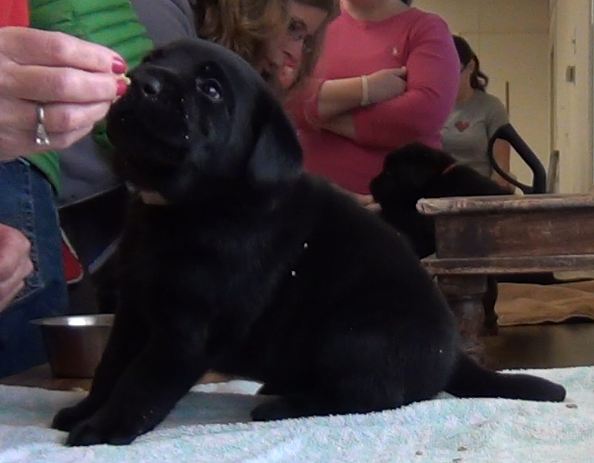
So, back to my students. These special Lab puppies are future service dogs. Thanks to Bonnie Bergin’s enlightened early training, fewer puppies need to be “released” from the program, and more will become grown-up dogs capable of doing the work needed by their owners, who have disabilities. What these puppies are learning now will pay off: The tiny bits of mushy puppy food offered as a reward for sitting or coming when called are helping the puppies build two-way communication with humans. The puppies are learning to think and problem solve, which will enable them to become full partners to the people who will rely on their assistance. Training sessions are short — only a few minutes at a time for the little pups  — and fun.

The good news is that, nowadays, training that is fun is not just for puppies. Family dogs of any age can benefit from modern training approaches that emphasize positive reinforcement, rewards, and keeping training fun. Breeders can start working with puppies at four weeks; those “adopting” a new puppy at the ripe old age of eight weeks — or an older dog — can start as soon as the dog comes home. Your dog can start today. What are you waiting for?

Special thanks to Dearing English for the puppy training photos captured from her video of the first day of training. Puppies were four weeks and one day old.

Give That Dog a Job!

This slideshow requires JavaScript.

Getting the paper each morning is the classic dog’s job. My friend Sally continued her newspaper subscription long after she’d lost interest in reading it — just because it gave Mav, her Lab, such pleasure to get the paper. Jana started fetching the Jerusalem Post each morning when she was just a few months old. She’s graduated to the New York Times, which is considerably weightier, especially on Sundays. Every so often, Wylie tries to nose in on her morning chore, but she’s not giving up easily.

Our dogs have also learned to pick up their bowls after they eat. Some people have expressed surprise at this, understanding why a dog might bring an empty bowl in hopes that we’ll fill it but not why a full dog would bring an empty bowl. We explain that we try to encourage our dogs to behave responsibly. The dogs give us their empty bowls rather than actually washing them, but it’s a start. Jana can be persuaded to put her toys in the toy basket as well.

Dogs like to have jobs. This is a frequent topic of discussion with my dog-training students. These students are training future service dogs, but they are also preparing to train pet dogs — and their owners. We’ve talked about the many roles and careers available to dogs these days, and the consensus among my students is that, even if the job is a dangerous one (think military and police dogs), most dogs seem happier when they have work to do.

Most pet dogs are bored most of the time. Giving underemployed dogs some small tasks to do throughout the day can relieve that boredom and challenge them a bit.

Most people’s lives are filled with tasks that dogs can learn to handle, if only given the chance. When we miss the recycle box when tossing balled-up paper from our desks, a dog (or two) is always ready to bring the trash back or put it in the box for us. Fetching slippers or shoes is a natural. Dogs who learn to fetch the leash or their owners’ walking shoes when it is time for an outing might take the initiative and bring the items when they figure that they’ve waited long enough. Our beloved Oriel decided on her own to bring the water dish to one of us for a refill when it was empty, and she often brought discarded papers from the recycle box in hopes of exchanging the trash for a cookie.

If you can’t think of tasks, challenge your dog’s mind with games or a treat toy; dogs don’t seem to differentiate between  thinking tasks that are just for fun and those that are dog jobs. Interactive dog games abound these days — these ask dogs to use their noses, paws, and sometimes teeth to open compartments, slide little doors, and nudge puzzle pieces aside to reveal hidden treats. Playing “tug” can lay the foundation for teaching dogs to open doors, cabinets, and drawers. Hiding a favorite toy or treat (or person) somewhere in the house encourages the dog to think, problem solve, and use her nose to find it. Some dogs’ desire to talk can be channeled into for alerting the humans to mail and package deliveries with just one bark. Other dogs, who like to carry things, can be taught to place plastic bottles in the recycle bin or clothes in the laundry basket.

The possibilities are endless. What are you waiting for? Give your dog a job!

Looking into the Future

Can dogs anticipate? Can they visualize a future event or state?

Certainly, our dogs learn our routines and recognize the signs that, say, we’re getting ready to take them for a walk or go to work. They might try to guess whether they get to come along on an outing. Wylie, our resident super-optimist, seems to anticipate doggy fun any time we get on a highway that has, once, led to a dog park. Then there’s mealtime. Jana gets agitated if we go out anywhere near (defined as “within a few hours”) a mealtime.

That’s all pretty typical stuff reported by many dog owners.

But Daisy, a very intelligent thinking dog who lives in Massachusetts with my friend Nancy, does something exceptional. She’s 13, and it’s possible that regular access to the “little dogs’ room” is more important to her than, say, to little brother Brandon (age 5). But she’s normally on a pretty regular going-out schedule, and is reputed to have enormous staying power. Nevertheless, she has recently started to pay close attention to Mom’s “leaving” cues. If Nancy is indicating that the outing is by car, Daisy will request an unscheduled pee break. Is she anticipating needing to go and not knowing when Mom will be home?

A similar question arises when I consider Jana’s habit of not drinking water when I am not home. I first noticed this when we lived in an apartment, and I was often gone for a few hours at a time. This was a new predicament for Jana, who has been an extremely lucky dog in mostly having a stay-at-home mom, or being able to accompany me to work, or having access to her yard via dog door. But things had changed.

I first noticed that the water bowl would be untouched while I was out. I also noticed that, the minute I came home, she’d say hello and then head straight for her bowl. The odd thing is, the not-drinking behavior persisted, even after we moved into a house with a dog door.

So, can dogs anticipate needing to go out when their human servants are not around to open the door? What else can they anticipate? How far ahead can they look forward? Is anticipation part of what dogs are doing when they warn people of impending seizures?

We’ll probably never know the answers to these questions (though I’d love to hear your thoughts!). But it seems yet another way that dogs constantly surprise and amaze us with their abilities.

What Are We Saying to Our Dogs?

How much of what we say to them do dogs understand? I find myself thinking about this a lot these days, as I teach both a canine language class and a class that looks at influential dog trainers in history (all of whom had definite ideas about what dogs do, or, mostly, do not understand).
Konrad Most, an early trainer whose teachings influenced the training of military and police dogs well into the mid-1900s, believed that dogs did not, could not comprehend words. Rather than describe the verbal cues given to dogs as “commands,” Most called them “utterances,” so as to avoid any chance of ascribing any comprehension abilities to the dog.

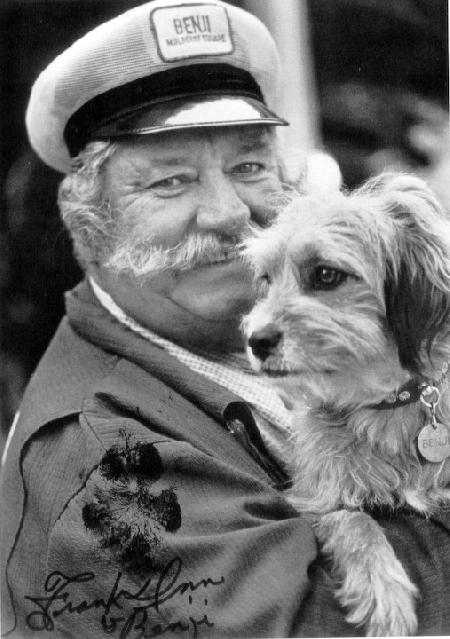
Frank Inn and Benji

At the other extreme was celebrity-animal trainer Frank Inn, who, in the 1970s, taught Benji using a conversational style consisting of full sentences.
Nearly everyone who has dogs talks to them. Some babble and speak in baby talk, others order their dogs around brusquely, but many of us chat to our dogs as if talking to a friend, despite their lack of verbal response. We often swear that they understand every word.

Do they?

Dogs are less focused on words than humans are, but they can certainly learn to associate certain actions with words and phrases and respond to verbal requests. They can learn the names of large numbers of items. However much they are understanding of our overall meaning, they appear to be good listeners, looking at us attentively and at least seeming interested.
Dogs are more visual than we are; they learn hand signals and understand other body language cues even more quickly than they build associations with our words. This can get us into trouble sometimes.
Konrad Most might have been the first trainer to write a description of creating unintended associations. His example was a handler who was teaching a dog a “down stay.” The handler would walk away from the dog (who was remaining, lying down, in place). On reaching the desired distance, the handler would turn to face the dog and immediately release the dog from the down stay. Well, very quickly, the cue to the dog would become — not the release word —the handler’s  turn. That is what Most meant by unintended associations. Nearly all novice trainers learn this lesson through personal experience, unconsciously repeating a movement when giving a particular verbal cue and creating a strong association in the dog’s mind.
Dogs are simply outstanding readers of human body language. They out-perform wolves and even other primates at following the direction of our gaze or interpreting a pointing finger. And dogs’ ability to read us goes beyond the signals we give them — intentionally or not — when we’re asking them to do something.
Very often, they will respond to things we don’t know that we’ve “said.” For example, if our body language tells them that we had a hard day or we’re feeling sad, lots of dogs will offer a cuddle, a lick, a favorite toy. Empathy. If our hand tenses up on the leash or some other cue tells them that we’re nervous or afraid of something — or someone — they might bark or growl at the scary person or thing. I’ve seen service dogs begin to intuit what their new human partners need or want after only a few days on the job.
Konrad Most, like many trainers of his day, didn’t credit dogs with the ability to think or learn concepts. He used training methods that today would be understood to be cruel to dogs. For all his faults, though, he understood dogs’ ability to read our body language. Now, if only we were as good at understanding what our dogs are saying to us!

Thinking Dog Blog now on Creative Loafing

Check out the new home of the Thinking Dog Blog — BellaDOG!

View previous posts at Creative Loafing Tampa Bay’s Daily Loaf:

http://blogs.creativeloafing.com/dailyloaf/author/pamhogle/