Do Dogs Have a Funny Bone?

Dogs smile and even laugh. Dog magazines understand this — both The Bark and Modern Dog regularly reprint readers’ photos of their “smiling” dogs. But do these facial and vocal expressions prove that dogs have a sense of humor? This is debatable. I would argue that some dogs do, thought this varies by breed. Golden retrievers and Labradors definitely enjoy a good laugh with their people or at their people’s expense.
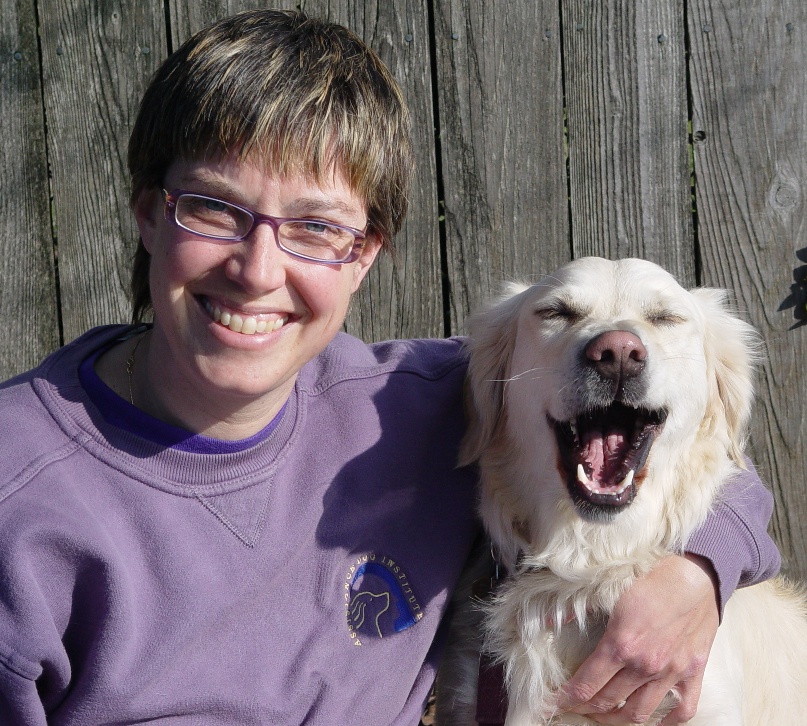
Jana enjoys a good joke!

On our recent drive from California to Montana, Jana (a golden retriever), Deni, and I stayed at a cute little guest cottage in Oregon. I took Jana for a walk around the grounds. The cottage had two small rooms, one with a patio. Jana and I left through the main door but returned to the cottage and entered through the “back” patio door. I told Jana to “find Deni.” She ran into the cottage, then into the main room, wagging and smiling, and greeted Deni. Deni reacted with happy surprise at Jana’s sudden appearance, since the main door, a few feet from where Deni sat, remained closed. Jana danced around wagging and smiling. Since she is a reserved dog, this was an unusual display.

Jana was pleased with herself. But more than that, she appeared to enjoy the joke she had played on Deni. Is this possible? Or am I reading too much into the situation, being too anthropomorphic?

What does it mean to have a sense of humor? Most living organisms — human, canine, or other — seek pleasure and avoid pain. This basic principle guides behavioral science (and dog training). Humor — laughing, and the ability to be amused — feels good and is good for us. So it is biologically sound to assume that other creatures have senses of humor. And, as creatures that have evolved, through heavy human influence, to be our best friends and companions, it would be far stranger if dogs did not understand and participate in intentionally humorous antics.

One of dogs’ most appealing characteristics is their love of play. But dog play often resembles dog aggression. Thus dogs have a detailed repertoire of communication that signals to other dogs — and dog-savvy humans — that “this is only play.” In other words, “I’m just kidding; I am not really going to bite/hunt/hurt you.” Another sign that dogs understand humor and “fun” is that they make up games. They also change the rules of games we, or other dogs, make up and self-handicap so that another, smaller, dog or puppy can also have fun.

Lots of dog owners and trainers have stories of things their dogs do that make them laugh. Like small children, some dogs intentionally repeat whatever action elicited the laughter. This is a sign that dogs get it. They understand that our laughter is a good thing. They love to play tricks on each other and on us. Does your dog have a sense of humor? Share your stories!
 

Play Dates for Your Dog

Does your dog have friends or do you just assume that all dogs like each other?

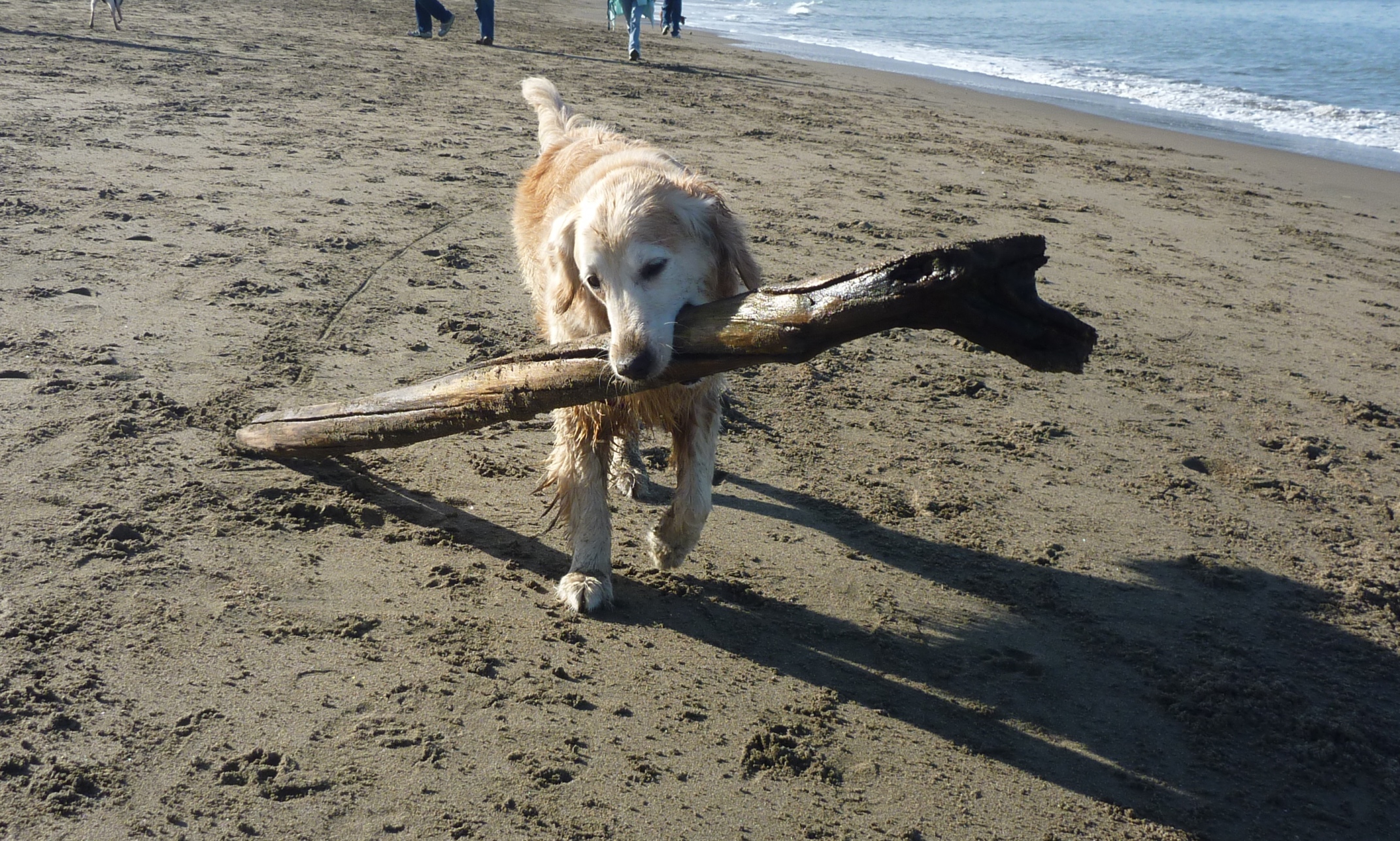
I met my (human) friend at the dog beach last week, and her cheerful, playful golden bounded over, wearing a huge smile as she ran up to say hi to Jana. They’ve played together many times at dog beaches around the Bay Area (tough life, I know) and they are clearly friends.

But, while 9-year-old Christina and 8-year-old Jana are BFFs, there are other dogs we see regularly with whom Jana is cordial, but distant. Remember being forced to play with your mom’s friends’ kids? It’s the same with canines — our dogs and our friends’ dogs don’t always hit it off.

It might seem obvious. Not all dogs like each other or enjoy hanging out together. We certainly don’t instantly bond with every human we meet. Some become friends. Many do not.

But when some people take their dogs to dog parks or dog beaches, they somehow assume that everyone there will play nicely together. Similarly, they get irked when their dog seems to take an instant dislike to another dog they meet on a walk or in a training class.

Just like our parents, we want our dogs to be polite and friendly all the time. Unfortunately, it doesn’t always work out that way. When some dogs take an instant dislike to another, they lunge, bark, or even attack the other dog, for no reason that we hapless humans can see.

I’ve spent a lot of time in dog parks lately doing observation research with my students. What we’ve noticed is that most of the dogs there don’t play with each other. They run, play with their humans, chase balls, roll in the grass, and sniff things. Often, they are sniffed or given a play bow from another, more social dog, and politely and appropriately decline the invitation to play. Sometimes, dogs chase each other a few times, and sometimes the “play” chase turns into something closer to bullying.

Those of us who take our dogs to dog parks for exercise need to be involved. It is no more acceptable to spend dog-park time involved in a long cellphone conversation than it would be for the mother of a 2-year-old human child to do that while her child ran unobserved at the playground. A dog park, fenced or not, is not an opportunity to take a break from your dog.

We can go to dog parks with friends whose dogs are really our dogs’ friends — or set up play dates at our homes. Or, we can go to the dog park with the plan of engaging with our dog while we’re there — to walk with the dog, or maybe toss a ball. What we need to avoid is just assuming that all the dogs will play together and get enough exercise while we ignore them. As many dog experts will tell you, the more engaged the humans are at the dog park, the fewer unpleasant incidents you’ll see.

The same goes for walks. Even on-leash dogs can hurt each other. If your dog is reactive to other dogs, consider working with a trainer to improve his socialization and help him learn to behave more calmly. If your dog seems to attract hostility from other dogs, ask their owners not to let their dogs approach. Meanwhile, work at building up your dog’s confidence and social skills with dogs you know are friendly.

But the bottom line is, we’re our dogs’ protectors and advocates. Don’t throw your dog to the (domesticated) wolves at dog parks or in the neighborhood, and don’t let your dog become the bully, either.

Check out these doggy buddies: Dog Guides Blind Dog