A Scary Incident (That Ended Well)

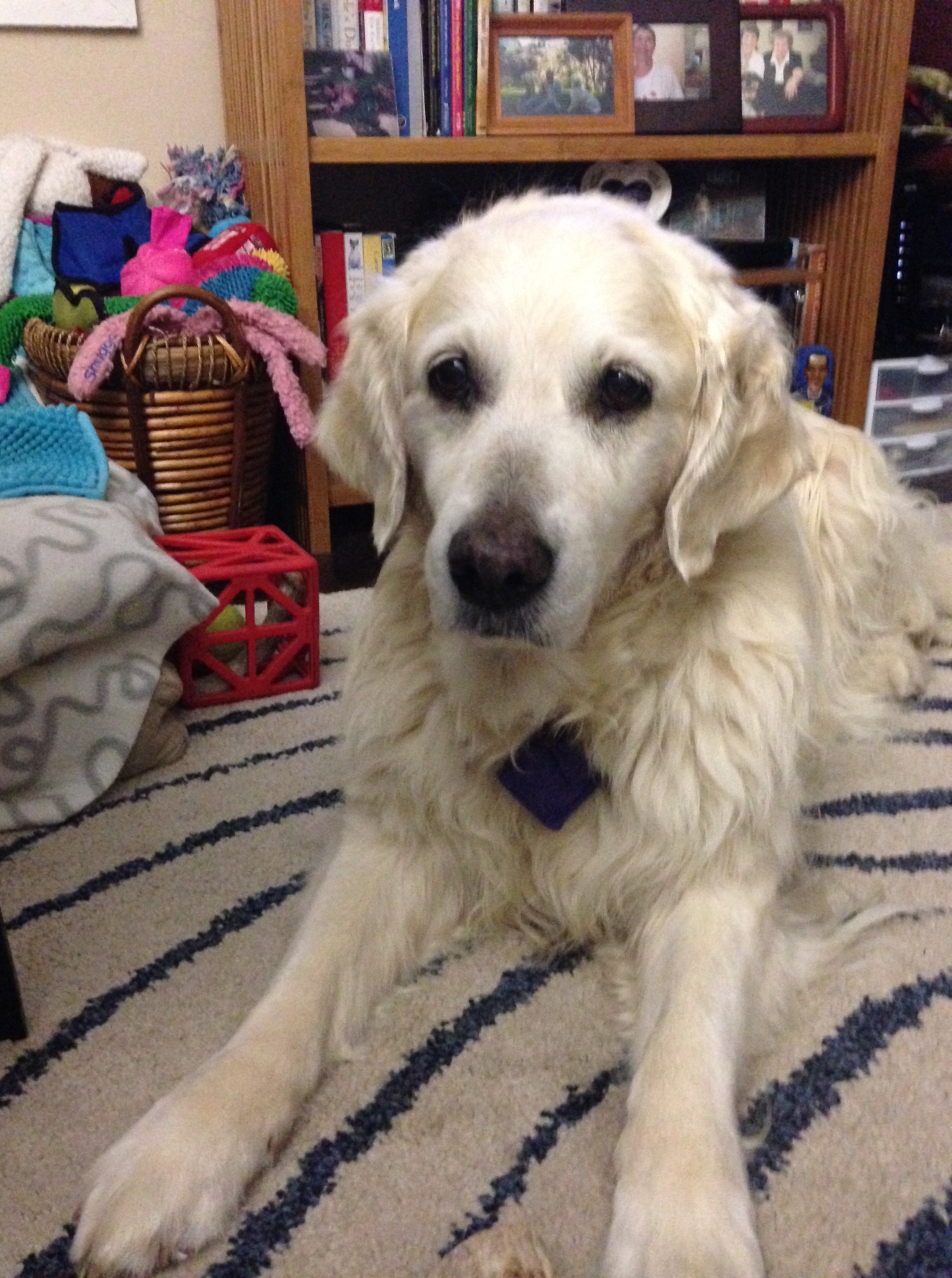
Jana and Cali_post vestibular_crop

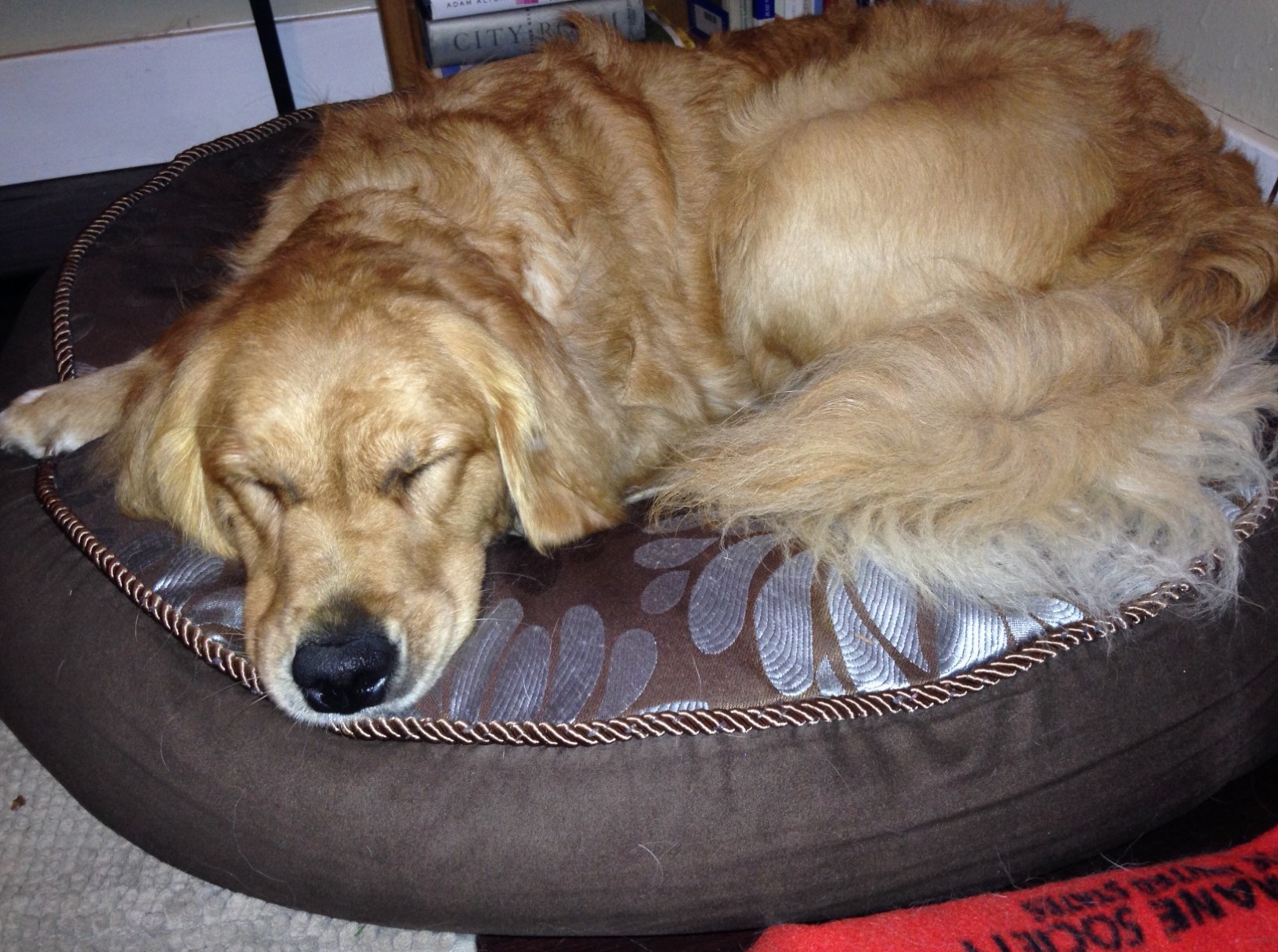
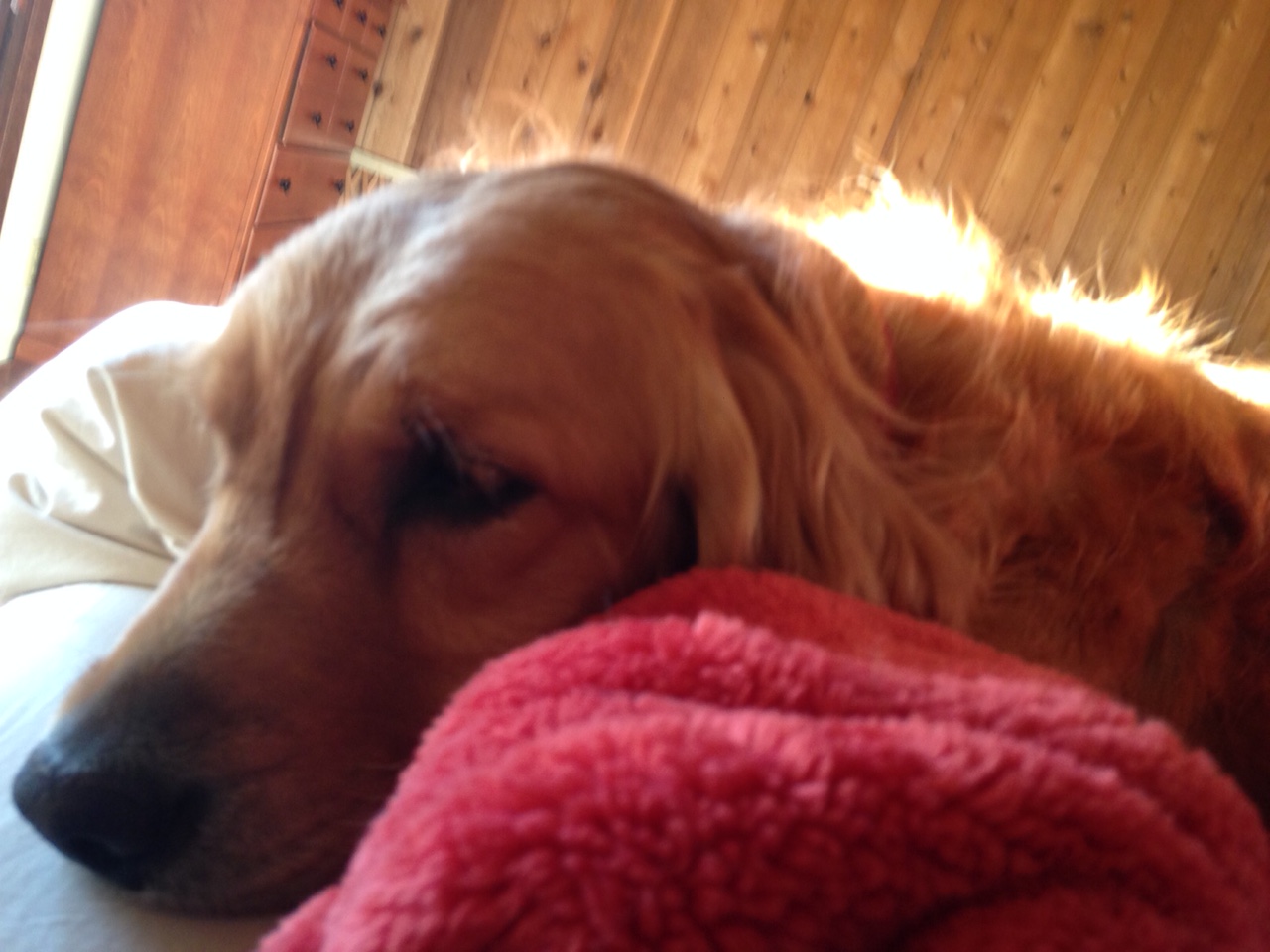
Jana’s had a rough week.

She’s dealing with something that is fairly common, but a lot of her friends and family weren’t familiar with it: vestibular disease. It’s also called “old dog vestibular disease,” since it is especially common among older dogs. But Jana regards herself as neither a dog nor old, so we’re just calling it vestibular disease.

It shows up suddenly and looks for all the world like your dog has had a stroke. She might have. She also might have an inner ear infection, a brain bleed, a brain tumor — or none of these. Most vestibular incidents are idiopathic. A fancy way of saying the vet has no idea why your dog cannot stand up or staggers around like she’s drunk. Very drunk.

In Jana’s case, she woke up in the middle of the night and struggled to stand up. I know this because what woke me up was the sound of her flailing and falling. I calmed her down and we went back to sleep. In the morning, she could not walk. I got her outside to toilet and then into the car. Her vet offered the suggestions of vestibular disease, inner ear infection, or tumor. The tumor idea arose primarily because Jana’s left eye looked much larger than her right and was bulging a little.

I got her home and settled her in the yard. She spent the weekend struggling to stand and unable to walk without a lot of help. But by Sunday afternoon, she was noticeably better. I made arrangements with two wonderful individuals, our longtime friend Sally and our new dog walker, Stephanie, to care for Jana on Monday and Tuesday, as I had work meetings that I could not miss.

By Monday afternoon, Jana was taking herself outside. She was very unsteady and fell a lot but did not want help.

Since she’s a golden retriever, it might be unnecessary to mention that her appetite did not suffer a bit during any of this, but she needed help eating.

The vestibular system is what helps you balance and orient your body. Hers was way out of whack. This was not paralysis or muscle weakness. It was extreme dizziness and disorientation. She got meds for the supposed nausea (though she never seemed nauseated) and for the possible inner ear infection. She slowly recovered, walking a bit better each day, all week, and we went for a neurological consult at the end of the week. The neurologist said that her excellent progress, along with the improvement in her eye, indicated that a tumor is not likely. The only way to know for sure whether she has (or does not have) a tumor and to figure out (maybe) why this happened is an MRI and spinal tap. I’m not doing that for a number of reasons.  If Jana stops improving or gets worse, I will have to figure out next steps. But right now, she’s doing well.

It’s important to know several things about vestibular disease.

One is that it’s not painful. It is probably scary and miserable, though. I had an inner ear infection once and was horrifically dizzy. If Jana was experiencing anything like that, she has my sympathy. She was also much more of a trouper than I was; I couldn’t even keep water down. She scarfed down cookies, water, meals … a true golden.

Another is that most dogs recover — and quickly. The most significant recovery happens in the first two or three days. Many dogs have a wobbly gait and maybe a head tilt for a week or two. The head tilt might never go away. Jana’s head tilts noticeably to the right when she’s standing up. When she’s lying down, I don’t see it. And it too is a little better every day.

Many dogs recover and continue living perfectly normal lives, though some have additional episodes. Some have permanent effects — a limp, unsteadiness, the head tilt.

Finally, it’s important to emphasize that Jana had no personality changes, no cognitive damage — she’s still very much herself. As soon as she could stand, she was asking to go out on her own, did not want help, and did not want me or anyone else hovering over her. She was back on the job, demanding that I let her out to get the paper, by Tuesday morning.

It’s scary to wake up to a dog who cannot stand up. It is also scary to have to figure out how to get a 60-lb. dog outside to pee or into the car when she cannot support her own weight. We really need 30-lb goldens. If she had not recovered quickly, I would have had to make some hard decisions. I was very relieved to see Jana trying to stand, and, slowly, getting her bearings back.

A vet tech who takes care of Jana said that lots of owners panic when they see their dogs’ initial symptoms, and many make the difficult choice to euthanize. So I want to emphasize again that dramatic improvement in the first two-three days is the norm. If that is not what happens, then the dog might have something other than vestibular disease.

Cali was concerned and attentive throughout all of this — to me and to Jana — but also worried about missing her ball time and park visits. She bumped into Jana a few times before understanding that she needed to be more gentle. She’s been remarkably patient overall, though, and very good company.

Jana is still unsteady, but she doesn’t fall every time she shakes off or turns a corner. She’s cautious on steps, but we only have a couple of small ones. She wants to go for walks and visit her friend in the neighborhood. She wants to sniff and check out the news and get to her favorite grassy patch. I’m looking forward to the day that she’s stable enough to head out to the coast for a beach day. We all deserve one.
That Soulful (and Loving) Gaze

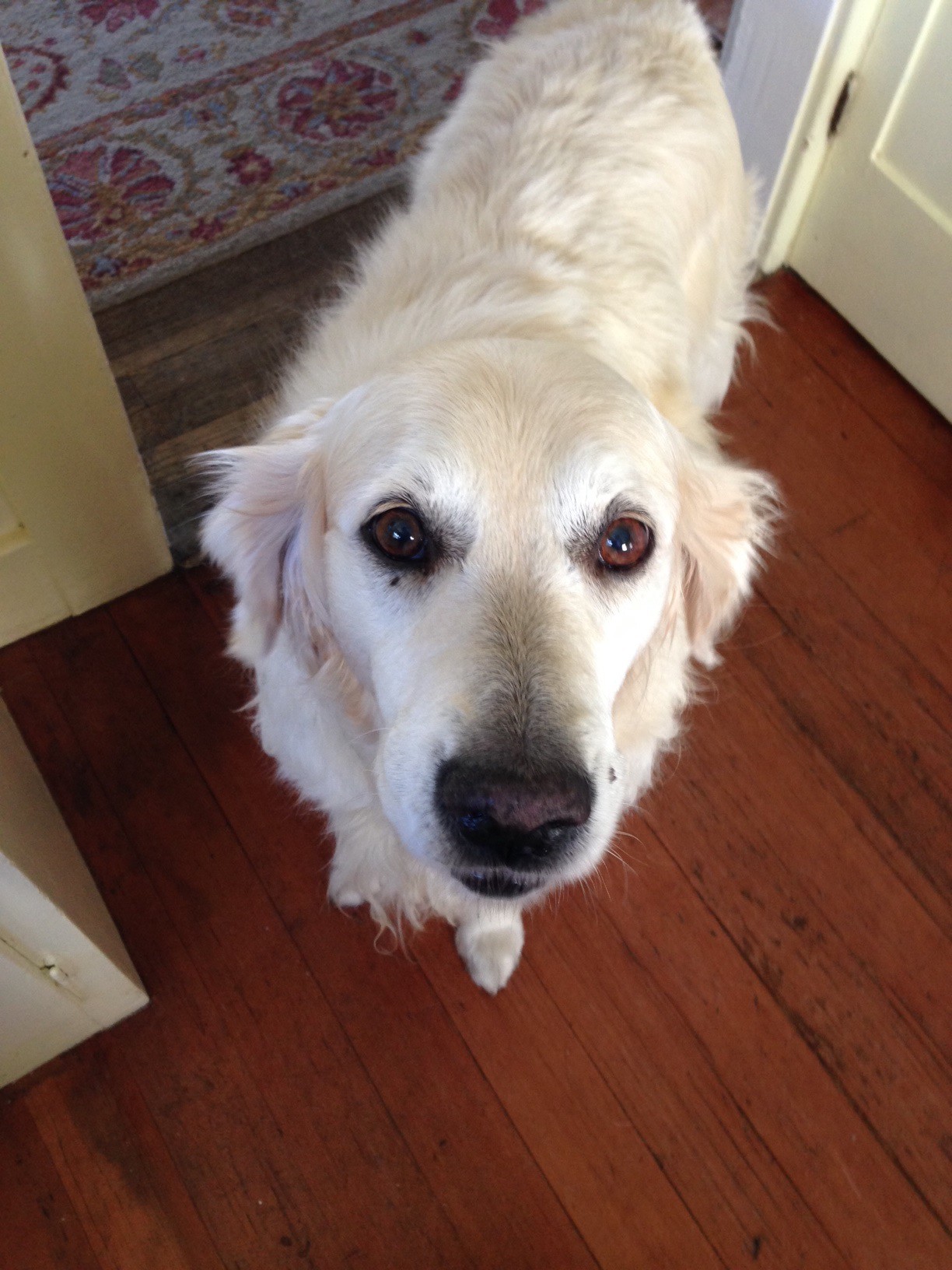
Oxytocin is a hormone that plays a role in social bonding, as implied by some of its nicknames: the love hormone, cuddle chemical, or bliss hormone. It’s also something that dogs and humans share.

Studies published in 2009 found that, when dogs gazed at their owners — you know, that adoring gaze that says, “feed me; I’m yours,” owners had more oxytocin in their urine. This correlates with feeling affection and social connection.

You can see where this is going, right? They gaze at us, we interpret it as adoration, we respond by feeling loved and happy. This works well for the dog. For us, too; real or not, we have that great “someone loves me” feeling.

But there’s more to this story. A later study looked at more variables. For example, the oxytocin in dogs’ urine. Did they get the same emotional lift out of the exchange of adoring gazes? Also whether interaction with the humans affected oxytocin in either humans or dogs.

This is where things get interesting.

A note: In both studies, dogs and wolves were used, as a way to determine whether this was just a canine thing, or whether it really has to do with the dog-human relationship.

First, the study looked at the effects if the person and dog exchanged gazes only, versus when the person also interacted with the dog, talking to her or petting her. No one was given oxytocin in this study; dogs’ and humans’ levels were measured before and after. The dogs and owners who spent the longest time gazing and interacting with each other had significant increases in their oxytocin levels — the dogs’ levels as well as the people’s. The dogs like the attention — even you, Jana! The gaze-only dogs and the shorter-gazing couples had small or no increases. Neither did the wolves.

A variation of the study had researchers administer oxytocin to some of the dogs to see whether the amount of oxytocin in their bodies made a difference. Then, the dogs and humans were allowed to gaze at each other, but the humans were not allowed to intentionally interact. If the dogs touched the humans, it was noted, but the humans were not allowed to respond by petting or talking to the dog.

So, was there a change in the dogs’ behavior if they had higher (administered) oxytocin? There was — but only for female dogs. With more oxytocin, they gazed at their humans for a significantly longer time; the length of their gaze at a stranger wasn’t affected. Male dogs actually gazed at their owners longer if they had not received oxytocin. The wolves didn’t really gaze at the people.

Not to knock boy dogs, but … maybe they’re just not that into you.

Seriously, what this all means — according to the researchers, anyhow — is that a mutually reinforcing loop occurs (particularly with girl dogs). They gaze at us, we look back, babble nonsense at them, rub their bellies … Hmmm, how do they gaze at us while we’re rubbing their bellies? OK, we stroke their long, soft ears and gaze back into their eyes. And everyone feels all warm and mushy and loved, so the girls keep staring at us, to keep this good thing going. More gazing, more oxytocin, so more and longer gazing, and the cycle continues.

Gazing is important in human social bonding and communication, starting when babies nurse. Lots of research shows that dogs use humans’ gaze as communication — and use their own gaze to communicate with us. And, as I wrote a couple of weeks ago, dogs choose to hang out with us. All that, to me, adds up to a mutual bond that is very rewarding to all of us, including the dogs. That, and they need someone with working thumbs around to get access to their dinner.

Just Hangin’ Out

Jana_aging

We all know that our dogs love us, right? It’s not enough to know that, though; researchers have to prove it. Fine. First we had the wonderful Dr. Gregory Berns and his MRI studies that showed that the pleasure center in dogs’ brains lights up when they catch a whiff of a familiar human. Then we had oxytocin studies that showed that a meaningful gaze is also therapeutic — for dogs (more about that in a future post). Now, my favorite: A study showing that dogs will actually learn and perform a task for what reward? A chance to spend a minute with their person.

The study was published in the fall issue of the Journal of Applied Behavior Analysis. Titled “Application of Functional Analysis Methods to Assess Human-Dog Interactions,” the study itself if a tough read. Do yourself a favor and read Dr. Stanley Coren’s “translation” in his column for Psychology Today.

The study only looked at three dogs, so it is not exactly definitive. But these dogs were tested on several different scenarios. First, they learned to perform a task that would open a door and allow them access to a room where their human was sitting. They actually figured out — taught themselves —a task, then performed it over and over again, just to get to be with their humans. They could hang out with (and be petted by) their person for one minute, then they were taken back to the room.

Initially the room was bare and boring. But then the researchers upped the ante. They gave the dogs some toys. Later, they added the dog’s favorite bed. In each case, performing the same task would let them out and give them access to their person. Yes, they chose to leave a relatively comfortable room and their toys to be with their humans. One dog had a harder time leaving the toys than the empty room, and one of the dogs chose not to leave the comfy bed.

The next level test put the people and dogs in the same room. Now, the dogs had no bed, no toys, and a human who was working on a computer. The door was open; the dogs were free to head to their toys, their beds, out. Yet, even though the person wasn’t paying paying any attention to them, the dogs showed a preference for being with their person. They stayed, rather than head to a more stimulating place.

Remember, this is a very small study. But it tracks with my experience of living with many dogs over many years, and spending time with dozens (hundreds?) of dogs whom I knew well but did not live with. It also lines up with our understanding of dogs as great therapy visitors, empathetic creatures, and just plain good friends.

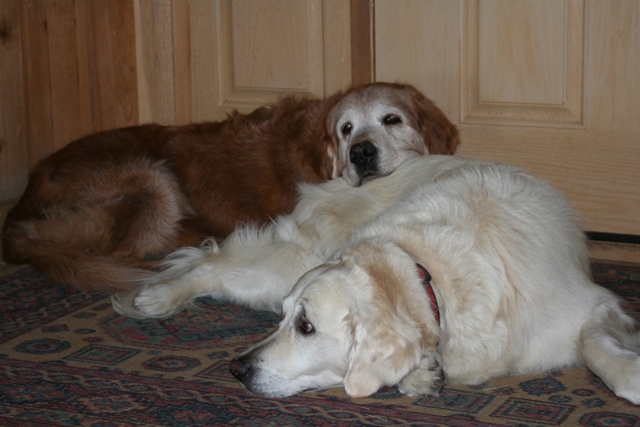
I live in a tiny apartment, but, in addition to the living room where I spend much of my time, the dogs have access to the yard most of the time, a bedroom (with very comfy dog beds), and the kitchen and bathroom,which offer a cool floor in hot weather. The vast majority of the time, Jana chooses to be in whatever room I am in. She gets up and moves if I do. Even if I tell her, “Don’t move; I am coming right back,” she goes with me. In fact, ages ago, tiny 7-week-old Jana attempted a huge flight of stairs when I ran upstairs to get something and she just didn’t want to be left alone for even a minute.Janas Bed age 2

Cali is less consistent. If I move, she always comes to see if something fun is about to happen. But she often likes to nap on my bed or hang out outside when I am working in the living room. Even then, though, she comes and checks in very frequently.

This study seems to say that dogs enjoy just hanging out with their people. I am happy to know that. The more time I spend with dogs, the more I appreciate the true friendship between us; it’s nice (though not necessary) to see research studies confirming that this bond is valued by dogs as well.


She’ll Have It HER Way

Who else is old enough to remember the Burger King jingle about having it your way?

I’m sure Jana’s never heard it, but she’s completely on board with the idea. Jana is very particular about how she wants things done.

The other day, we set out for our usual morning walk. Except that she did not want to walk a block up Petaluma Blvd. to the crosswalk. Or a block the other way to the light and crosswalk. Nope. She wanted to cross on the corner of our street and head right to the little park a block in on the other side of the street. I could not convince her to walk to the crosswalk.

When she digs her heels in, nothing I can do will budge her. And I am not about to drag 61 pounds of elderly golden retriever down the street.

So we did it her way. She got to the park, rolled in the grass, smiled broadly, sniffed and rolled some more. Happy Jana. Then we went on our usual route to the big park.

On a Saturday morning, early, there’s not much traffic on Petaluma Blvd. so it doesn’t matter if we cross at our corner or at a crosswalk. On a weekday morning, I wouldn’t chance it. Other than traffic, does it really matter which way we go? Of course not. But to Jana, being able to express a preference and make a choice, even a trivial one, matters.

To Cali, too. When we play ball, if I take the “wrong” ball from the basket, she won’t return it to me. She’ll run over, sniff it, then give me a  reproachful look. That’s not my ball. I’ve learned. I pick two balls from the basket, any two, and let her choose. Then she plays happily with her ball.

Some afternoons, if Jana seems tired, I let her choose between a walk (I offer the leash) and her favorite toy (I also offer Squirrel Dude). Contrary to my expectation, she does not always choose Squirrel Dude, who comes with a bellyful of Charlee Bear treats. She often wants a walk. She always appreciates having the choice.

The choices are not monumental. It’s probably similar to letting your two-year-old child choose between two T-shirts when getting dressed. I’m not letting the dogs take over (I keep telling myself that, but even I don’t really believe it …); I’m just letting them have some control over their environment. There’s so much that I can’t give them a choice about that I am always happy to find things that they can decide for themselves.


Bubba for President

My name is Bubba, and I approved this message.

I spent some time recently with a wonderful dog, Bubba. The first time we got to hang out was right after a particularly vulgar Republican presidential debate, and the contrast got me thinking about how this dog (and many, many other dogs) embody traits I’d like to see in a presidential candidate but that are sadly lacking in the current Republican contenders.

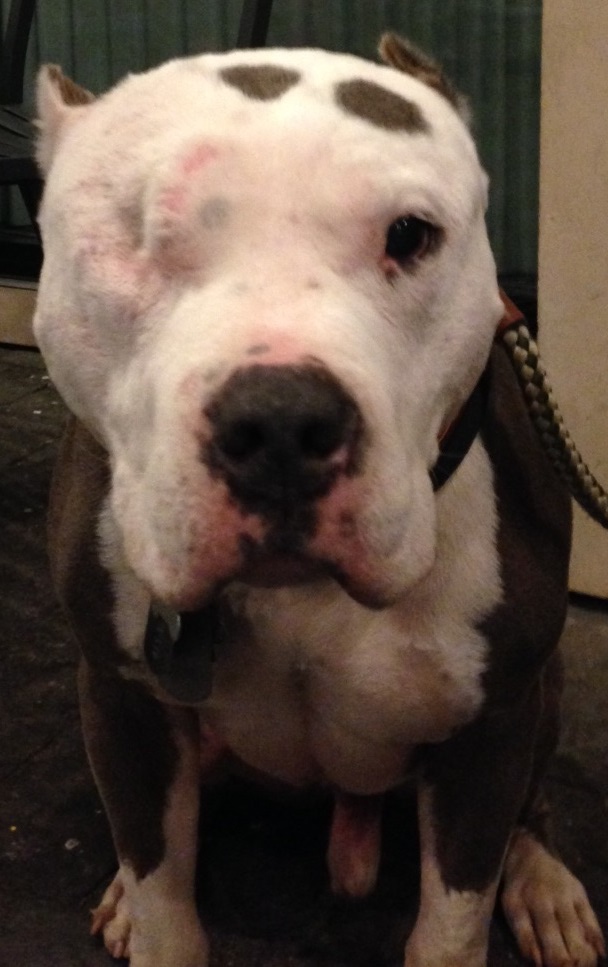
Some background: Bubba is the spokesdog for a local rescue organization, the Petaluma branch of Marley’s Mutts. He experienced some of the worst abuse that anyone can imagine. Actually, it’s worse than I could have imagined before reading his case file. The amazing Sacramento DA who put Bubba’s tormentor in prison, will be Skyping in to my dog law class, so I had to read the entire file.

I generally don’t give my students “trigger warnings,” but before posting these documents, I not only warned them, I put little Adobe sticky notes in the PDF to flag particularly graphic sections. It was that bad. I won’t go into details here, except to point out that Bubba’s missing eye is the result of repeated injuries caused by the monster who abused him.

So why does Bubba trump any current candidate in the Republican field?

He’s not angry or vindictive. He’s suffered real injury, unlike many Tea Partiers or angry primary voters. Rather than seek a scapegoat or, say, hold all white men responsible, he has forgiven all humans. He loves everyone. He eagerly approached every new person who entered the fundraiser where I was visiting with him. His tail was always wagging, his face openly welcoming and friendly. He was gentle with small children. He appropriately introduced himself to and played with a 4-month-old Rottie puppy who stopped by, and he was equally friendly with the several other dogs there.

He’s goal-oriented, too. When he detected a whiff of potential treats emanating, say, from my pocket, he focused on me like a laser, using the mind meld that Jana has perfected over the years. “Feed me a Charlee Bear. Feed me a Charlee Bear.” It worked. He also mind-melded the server, who brought him at least six cookies, and that was just what I saw. Nothing gets past this dog; he carefully checked all newcomers for the scent of treats. He just might be a Labrador wearing  a very convincing disguise.

Bubba doesn’t back down in the face of an army. When he met my class of 20 students a week later, he sized up the challenge, then gave each one a warm greeting — and the sniff test. He very quickly figured out that the little black pouches many students had contained treats, and he went to work. The students never stood a chance. Bubba probably didn’t need dinner that night.

What else does candidate Bubba have to offer? I’m not sure what his health care plan includes beyond “kisses to make it better,” but the price sure beats my current insurance, and it is a treatment with a long track record of success. His education platform emphasizes motivation and rewards. And, though we didn’t discuss specific issues, his domestic and foreign relations approach heavily focuses on interspecies cooperation, collaboration, and peacemaking; he disdains the threats, calls for attacks, and shunning of those who are different that are so much a part of the current campaign.

In all, he’s an admirable candidate. He’s overcome a difficult past, shows intelligence and integrity, and has a demonstrated ability to cross the (species) aisle and negotiate favorable deals. Bubba has my vote!

Jana Plays to Her Audience

Jana has been very playful lately. While she’s the park policedog, barking at any younger dogs who get too carried away having fun and being rambunctious, she’s more relaxed at home.

I don’t know if the cooler weather has anything to do with her increased playfulness or she’s just feeling good. She often picks up a rope toy and asks for a game of tug or just grabs a favorite toy and plays with it.

A long time ago, she had a “Gefilte Fish” toy that would sigh, “Oy Vey!” and then make a bubbling sound whenever she squeezed it. It never failed to elicit a laugh from me, and she got in the habit of getting the toy, standing near me, and Oy Vey-ing away. She’d squeeze, I’d laugh on cue, and she’d do a delighted little prance. After about 15 seconds, the fish would stop burbling, and she’d look at me and do it again. And again. Over and over some days, just to make me laugh.

She was only about 2, and I think that is when I discovered that Jana has a silly sense of humor.

That sense of humor is evident in her recent game with the glowing ball that Deni sent for Hanukkah. The ball flashes red for a few seconds if it is bounced on the floor.

When she’s not playing tug, Jana is likely to dig through the toy basket for the glowy ball, bounce it, then roll it around in her mouth. She looks like a fire-breathing golden retriever. Since she thinks she’s a princess, I laugh and call her a fire-breathing princess. And this antic always gets a laugh. She really does play to her audience.

Canine Con Artists?

I originally wrote this post for PPG Barks, the blog of a professional positive trainers networking organization. The post was rejected; I think the reason is that I am asserting that dogs deceive each other and humans. I am  very interested in this topic, and I plan to revise the post further (or write an entirely new post) about dogs and deception. Meanwhile, I’d love some feedback from you. Please comment on the post or to me privately if you feel inclined. I am interested in what other dog people think about the question of doggy honesty and deception.

How much is a dog willing to bend the truth or improvise in order to get a reward?

That’s not a crazy question. Dogs routinely exhibit all of the cognitive behaviors needed to form an idea, plan, and execute deceptive or manipulative behavior. Consider:

Cookie, please
Cookie, please
  • Dogs deceive each other or fake each other out to get what they want. One dog will pretend to hear someone at the door and bark the warning bark — anticipating that his doggy sibling will run to the door. The conniving canine then steals the dupe’s rawhide, toy, bed, choice spot by the TV, etc.
  • Dogs who have been taught to ring a bell or bark when they need to go out tend to go through at least a short period of ringing that bell constantly … or at least testing out how often they can get Mom and Dad to “hop to it” and let them out, even when all they want to do is roll in the grass or bark at the neighbor.
  • Is there any dog who hasn’t tried to convince her owners that they have “forgotten” to feed her?
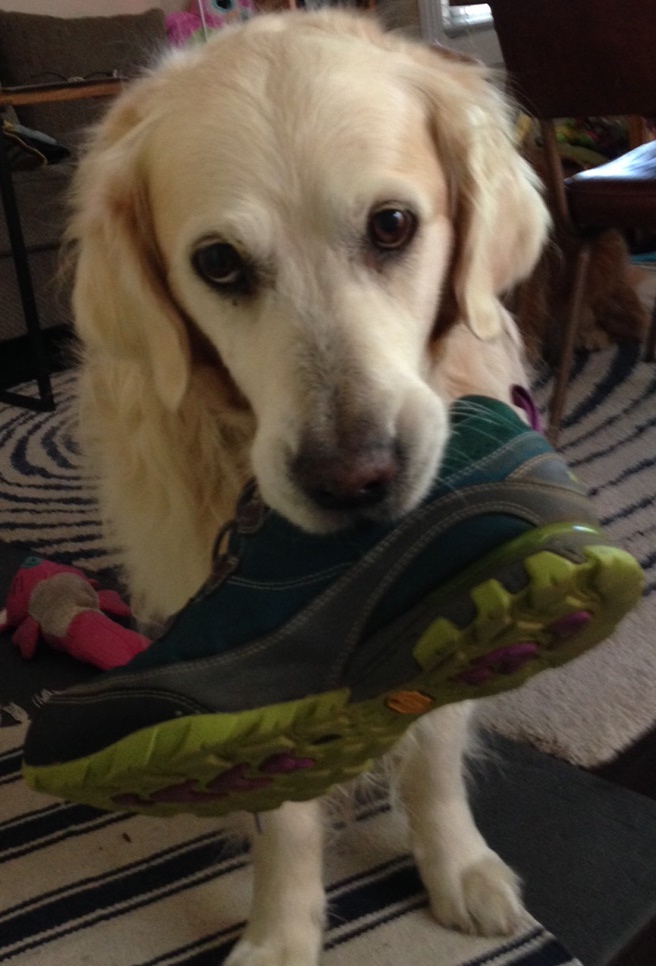
  • Many dogs will retrieve items that have not been requested in hopes of getting a reward. My dogs routinely bring me extra shoes in the morning, after they’ve been asked to bring my dog-walking shoes (and have been rewarded for doing so). This is probably optimism more than dishonesty, though. I routinely reward them for bringing me things that I have dropped, whether I was aware of dropping the item or not.

It gets even more sophisticated. For example, our German shepherd used to pretend not to know where the ball had landed when we threw it and he was busy sniffing something or chasing a squirrel. A request or two to get the ball would be completely ignored. Or, to humor the annoying humans, he’d search half-heartedly for a few seconds before doing the dog equivalent of shrugging and going back to something more interesting. “OK,” we’d say. “If we’ve lost the ball, it’s time to go home.” In under 10 seconds, he’d have found and delivered that “lost” ball.

Then there’s the golden who used the bells on the door to get Mom to open the door, knowing that her annoying puppy-sister would go charging out the door … while she stood there, smiling, as Mom closed the door with puppy outside and her inside.

So. While I will concede that not all of the above examples necessarily show deceptive behavior, some do, some might, and others at least indicate an ability to manipulate humans to obtain a desired end. I believe that dogs do lie and that they sometimes deceive each other and us. And they do it for a variety of reasons, including the possibility of getting a reward.

what the dog knowsI’ve been thinking about this since I read What the Dog Knows by Cat Warren. It’s a great book; I posted a short review here on the Thinking Dog Blog not long ago. It’s about scent-dog training, specifically, cadaver dogs. The author raises an interesting topic: False alerts. She’s brave to do this, partly because many dog people ran into what I think I am running into: Many people cling to decades-old and thoroughly debunked ideas about how limited dogs’ cognitive abilities are. But mostly she’s brave for another reason: Many handlers proclaim that their dogs are never wrong and become incensed if anyone suggests otherwise.

Some false alerts are the handler’s fault. Particularly when the handler is a beginner, and the team is at an early stage of training, the handler’s body language or other unintentional cuing might hint to the dog that “this is where” he should alert. In this case, the dog is not lying; he is trying to follow the cues he’s just learning, and thinks he’s doing what the handler wants.

Training and working in situations, like cadaver searches, where the handler is not always able to tell whether the alert is false further complicates the discussion. Some false alerts, as Warren explains, might not actually be false. She says that if they are training in a vehicle junkyard, for example, and her dog alerts on the seat of a smashed car with a shattered windshield, while that is not the target she’s searching for, she rewards the alert anyhow. The scents linger for a long time, and the dog probably did detect the scent of human decay (parts of the book do require a strong stomach!).

I’m not talking about those instances though. I wonder if — and at what stages of training — dogs intentionally, knowingly lie about detecting the target scent. There are certainly working situations where the handler might not know if the scent is present and therefore is likely to trust the dog and reward an alert. False alerts occasionally do cause problems in law enforcement.

She draws a distinction between false alerts that are outright lies and those that are more nuanced and, she says, even more insidious (though not always because of misbehavior from the dog). The dog is detecting something but is not entirely sure it’s the correct scent; or the dog has detected the scent but not found the precise location and alerts anyhow; whatever the case, in these instances, she explains, the dog isn’t consciously deciding to lie. As with human behavior, not all situations are easily explained, black or white.

Warren says she will never know whether her dog’s false alerts are inadvertent or are deliberate lies — but she does not rule out the possibility of a dog lying. She also says that her dog’s body language is so clear that she thinks she could tell if her were lying. Many humans betray their dishonesty through body language. Sometimes those “tells” are very subtle. A close study of our dogs’ body language might be our best chance at knowing when they are — and are not — trying to con us.

What do you think? Have you ever worked with a pathological doggy liar? An occasionally dishonest dog?


Secure in Her Dogness

Of our three girls, only Cali is truly secure and comfortable in her dogness. Alberta and Jana are quite sure that they are not dogs.

How do I know this?

  • Cali happily goes in and out the dog door, delighted with her independence and freedom to enjoy a large yard, from which she can survey the surrounding hills and valleys. Jana and Alberta go to the people door and bark. If their staff fails to appear in a timely fashion and let them in, they bark louder. They both will, if forced, use their keys to open the dog door and step disdainfully inside. But they really shouldn’t have to resort to that.
  • Cali is fine being left home, particularly if she can let herself out. She calmly accepts being banished to the porch with a visiting puppy to play. She’s perfectly content hanging out with other dogs, so long as she knows and likes these dogs. Alberta, rightly, assumes that Deni should take her along everywhere she goes. Jana just plain does not want to be left with the dogs. She does not want to be excluded from adult company, relegated to the puppies’ table (or porch), or treated like a dog. If left at a dog place — she has, on rare and very stressful occasions, been left at a groomer’s or a boarding facility — her facial expression, resistance, and loud protests all say: PLEASE don’t leave me with all these dogs!

I would say that Jana and Alberta are anomalies, shaped by our treatment of them to believe that they are somehow not quite dogs — but I have met so many other dogs who seem to be equally certain that they are not dogs. Molly, for example, whom I mentioned in a recent post. Of course, she’s a standard poodle, and I for one do not think that poodles are dogs. They are so close to being human. Molly clearly agrees.

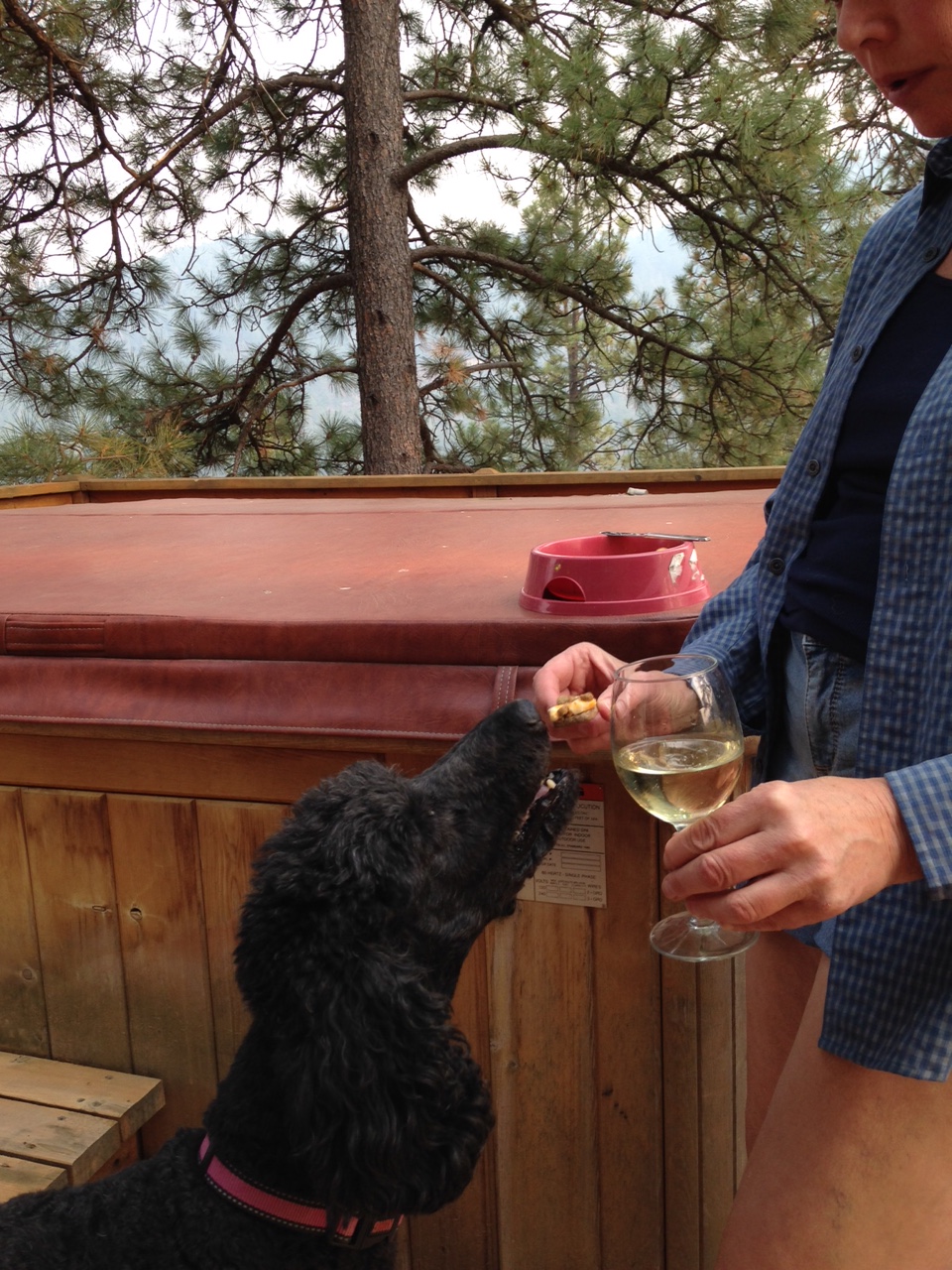
IMG_2095IMG_2090When Molly was visiting, she would not — could not — eat in the laundry room with the other dogs. Excuse me. With the dogs. She dined solo, al fresco, with a white-jacketed server in attendance. OK, so maybe Deni wasn’t wearing a white jacket, but the rest is true. Not only did she dine in solitary patio splendor, she had special meals. Chunks of cheese, biscuit crackers, slices of deli meat … the only way that Molly would eat kibble was on a cracker (biscuit) or in a turkey roll-up. She prefers white wine, not too dry and not bubbly. (OK, OK, she didn’t actually get any wine, either. But the rest is true. Really.)

But back to Cali. It is nice to have at least one dog who actually is comfortable being a dog and is happy to fulfill her role as the family dog. She’s very cuddly, for example, and loves to be petted. She’s always enthusiastic about going for a walk or out to play. She enjoys doggy things, like chasing after a tennis ball and refusing to bring it back, barking at deer, licking all the hand lotion off of my fingers, and begging for treats. She wants to be near me most of the time, even when I am doing boring (to her) things, like writing a blog post (she’s at my feet) or grading papers. Like her ancestor Oriel, Cali embodies everything people  love about dogs. She’s sweet, affectionate, playful and goofy sometimes. She’s great company and very friendly. And secure in her dogness.


Missing You?

Does Jana still miss her best friend, Oriel?

Do dogs miss us when we’re away? Do they miss places they’ve been or items they’ve loved?

It’s clear that dogs remember people and places — and often, the landmarks or scents on the way to places that they either love or hate. Dogs can recognize a person whom they haven’t seen in years. Or a place that they haven’t visited in years: Oriel, our late and much-missed golden retriever once ran joyfully to the site of a small pond that had been dry for about a decade. The former pond was a short walk from her former home in Montana, and she hadn’t been there for at least 3 years. She became very excited as we approached the road to the house, too. And of course all of our dogs know the way to fun places and begin to show excitement ridiculously early in any journey in the general direction of the dog beach, Cali’s sister Dora’s house, the park where we play ball …

It’s also clear that dogs use these memories to anticipate, with pleasure or dread, future experiences. Dogs generalize and can become fearful of people or situations that remind them of unpleasant experiences in the past. A dog who fears going to the vet, for example, can recognize a vet’s office, any vet’s office, from several blocks away. Happy experiences have the same effect. Thus a dog who loves to run and play will decide that any open green space you happen to drive past would be a really fun place to stop and play ball. He might helpfully point out all the nice play opportunities say, between Northern California and Missoula, Montana, as you are driving. Believe me, there are hundreds of open green spaces in the American Northwest.

But do they miss us? Do they miss places?

This question becomes more relevant each day, as our departure from Montana gets closer and closer. Does Cali miss her play park and friends in Petaluma? More to the point: Will she miss her private play yard in Montana? Will she ever forgive me for taking her away from this idyllic place where she is so happy?

It’s also a question that many dog owners ponder if / when they leave their dogs with a dog sitter or boarding kennel when they travel. Does the dog pine for them? Wonder where they are? Or, as dogs do so well, does the dog simply live in the present moment, enjoying the attention of the dog sitter?

I’ve heard enough stories about how dogs behave after the death of a loved human or canine playmate or family member to believe that dogs grieve. Isn’t that an indication that dogs miss people or dogs who aren’t present?

I don’t have a definitive answer to any of these questions. I suspect that some individual dogs form closer ties to people, dogs, places, and other beings or objects and do, indeed, miss them. Other dogs appear to be — and may truly be — happy in the present moment, loving the ones they’re with.

So the answer might be similar to my answer to so many questions about dogs: It depends. Dogs are individuals. Your individual dog might miss you very much when you are gone. Or she might happily hang out with whomever is nearby. Cali might miss Montana. But Cali’s such a sunny optimist that I am betting she’ll be happy to be back in Petaluma and enjoy picking up our old routine and reconnecting with her playmates there.

At least, I hope that’s the case!

Playing Around

This slideshow requires JavaScript.

Cali and Alberta both have great social skills, and their play together is cooperative and fun. They never fight and are good at reading each other’s signals. When one wants a break, the other complies.

Bringing a third dog into play always changes the dynamic, and when it’s a puppy or adolescent who’s still learning the rules of social interaction, everything changes. So, when Scarlett joins Cali and Alberta in play, the energy level goes up — and sometimes the tension level escalates as well.

Often, the three girls have a ball chasing each other around Scarlett’s huge yard, tugging on Alberta’s ears, sneaking veggies from the garden, and generally being silly together. Sometimes, though, one dog — most often Cali — seems to be trying to calm things down. When she’s not able to do this, I know that I have to get involved.

How do dog owners know when play is going well and when they need to intervene? This question is especially important at dog parks, where the playing dogs might not know each other well and where, unfortunately, many owners don’t pay enough attention to what their dogs are doing.

As our dogs’ protectors and advocates, it’s important that we are aware of what’s going on whenever our dogs are playing with other dogs (or with children). I suspect that, even among friends and family, most dogs don’t play much when their people aren’t around. I think that our presence helps them feel safe and confident that things won’t spiral out of control. It’s our job to understand that responsibility — and to step in when our dogs need our help.

So, back to Cali, Alberta, and Scarlett. The photos at the top of this blog post show healthy play. The dogs’ tails are held high. Their faces are animated, and their mouths are open in relaxed (not stressed) smiles. They are not holding their ears back tightly or tucking their tails.

The way they are playing is also important: There is not one dog who is always being chased — or doing all of the chasing. When they are wrestling, again, there is not one dog who always seems to be the target (or aggressor). They change roles, change games, go from chase to wrestle to tug to chase with a fluidity that comes from reading each other’s body language and paying attention to each other’s signals.

What does it look like when it goes wrong?

I step in if I see Cali’s tail go down or I see her trying to walk away. If she’s trying to leave the group and one of the others (usually Scarlett, an energetic eight-month-old) jumps on her or runs after her, I know that Cali needs a little help. Sometimes, she just stands there with her head and tail down, looking overwhelmed. Calling her to me or gently redirecting Scarlett to a toy works. Scarlett is a smart girl and wants to play — she’s not bullying Cali. She simply is not always ready to stop playing or quick enough to read the signal that Cali has had enough. I know these dogs and can read their body language pretty well. I can step in and ask everyone to calm down — and get them all to cooperate.

In more public spaces, like dog parks, owners might need to intervene more forcefully to help their dogs if play with unfamiliar dogs starts to deteriorate into something too wild or rough. Also, if there are a lot of dogs around, “dogs getting carried away playing” can turn into bullying or even a fight in seconds, with more dogs piling on.

Owners of relatively soft dogs (like Cali) who won’t stand up for themselves should be prepared to extricate their dogs if a situation becomes overwhelming — and this can happen any time a softer dog is playing with other dogs. Body language to watch for includes repeated looks to you, as if seeking help; lowered ears or head; a tucked tail; or any baring of teeth.

If you’re not sure of the other dogs, it’s best to avoid the situation. We’re fortunate to have a play area where we live that attracts a regular crowd of very nice dogs. Cali has become comfortable with most of these dogs. Even so, she usually prefers to play ball with me and rarely engages with another dog. It’s not that she doesn’t enjoy lively play; when she’s with her sisters or a good friend, she lets her guard down completely.

If you don’t have a “regular” play group, look for a few well-matched (size and energy level) dogs and try to set up regular play dates. Or find ways to exercise your dog without other dogs. Plenty of dogs would rather play with their humans anyhow!