This slideshow requires JavaScript.
Guest Blog by Deni Elliott
It seemed to happen overnight. One September day, 12-and-a-half year old retired guide dog Oriel was romping and eating and playing with toys at our mountain home in Montana. The next day, her skin seemed to hang loosely, her muscle all but gone. She trotted rather than pranced to fetch a ball.
The mass in her chest on the X-ray was clear to even a non-veterinarian’s eyes, as was the prognosis. Oriel was dying. Our job was to keep her happy and comfortable and know when she needed pain relief.
September gave way to October and October to November. It was time to rethink our plans. We were on our way to Berkeley for four months. The apartment wasn’t large enough to swing a cat, much less an extra golden retriever, but, if our 83-year-old landlady was willing, it was about to become home to the five of us: Wylie, the German Shepherd and Jana, the golden, and now Oriel too. The landlady was willing and celebrated Oriel’s stamina.
It seemed to happen overnight. One January day, Oriel ate her meals and special snacks, took two walks each day, and played ball in the park. The next day, she was suddenly ravenous, even by golden retriever standards, but unwilling to go for walks or play, planting all four feet in clear protest. She wanted only to eat and spend her time between meals flat on the floor, close to the kitchen.
A visit to an old vet friend brought the expected bad news. “She’s not a happy camper,” Dr. Anne said, stroking Oriel’s ears. Ory stood in front of Anne, smiling at the attention, but panting, panting, panting. “That’s the only way that this dog will tell you she’s uncomfortable,” Anne said. She drew blood and urine to look for something that we might address, but offered no hope.
A call to Dr. Joe, Ory’s Montana vet, a discussion of blood panel comparisons, the idea of repeating chest X-rays — finally he cut to the quick. “How sick do you want her to get before you let her go?” he asked.
“No sicker,” we decided. Both vets agreed that Oriel would only get worse. The list of how “getting worse” might be for Oriel was enough for us to decide that it was better that she drift off to sleep, to death, without sudden bleeds, seizures, or intense pain. Treatment might prolong her life but would not enhance it. We made an appointment for Dr. Anne to put her to sleep.
“Isn’t this playing god?” Pam asked. Yes, but it is the choice we make every time we bring puppies into the world and into our homes, when we integrate them into our families. We are always playing god. Making the heart-wrenching choice to plan their deaths is no exception.
“One last day at the beach,” Pam said. So, days before Oriel was scheduled to be euthanized, we loaded our three dogs into the car and drove across the Bay Bridge to give Oriel a last time to stand in the sand and smell the salt water. We were a block from the beach when Oriel sat up and sniffed the air. She found her second (or third or fourth) wind. She ran on the beach, swam in the surf, and chased the dog who had stolen her stick. She rolled on her back in the sand and wriggled, with sand on her nose, tail wagging, and a huge smile on her face. We canceled her euthanasia.
“Maybe we can help her nutritionally,” Pam said. We consulted with Heidi, who owns Holistic Hounds, conveniently located a block from our apartment (this is Berkeley) and emerged with food and supplements. Oriel’s new diet (of course, Wylie and Jana enjoyed most of these treats as well — how can you indulge one and deprive the other two?) included:
Breakfast: Natural Balance kibble, Grandma Lucy’s chicken formula, Glucosamine, fish oil, Pepcid, and a handful of frozen green beans;
Midday snack: cottage cheese or scrambled egg;
Dinner: Natural Balance, Grandma Lucy’s, 4Life Transfer Factor, Pepcid, a few more beans
Evening snack: cottage cheese
The added protein would help her feel less hungry. She got plenty of freeze-dried liver treats and occasional treats of Saul’s Deli chopped liver for her anemia. We compensated for her digestive enzyme imbalance with canned green tripe. And beach therapy at least once each week. With this regimen, there was no need for Oriel to die to think that she had gone to heaven.
Days flowed into weeks and weeks into a month, and we were able to forget that she was dying. Tuesday, February 21, Oriel had a typical day. She ate well, eliminated well, walked well, and retrieved her tennis ball a few times. She joined us for an evening cuddle. We rubbed her ears and stroked her back; she responded by petting each of us in return — the only dog in my experience to use her paws to pet her people.
It happened overnight. We began our usual morning routine. I took each dog out in turn. This morning, it was Wylie saying, “Me first.” Then Jana. But, Oriel was not standing in line at the front door. I walked back to the bedroom to find Oriel still lying in her bed. At my call, “Ory, Ory,” she lifted and turned her head toward me and then dropped it back on the floor. “Oh, honey,” I said, collapsing next to her, “What’s going on with you?” She put her head on my leg, but made no attempt to stand. I grabbed some liver treats and tried again. She sniffed and reached for the cookies, but made no effort to rise. I shuddered for both of us and held her while I waited for Pam to be done with her shower.
I left the two of them together. Pam had magic with dogs that I had seen before. I took my shower, hoping that the magic would work again. When I got out of the shower, Pam was on the phone with the emergency vet.
The other dogs sniffed Oriel nose to toes before we carried her to the car. We had seen only that Oriel could not stand or support her head for long. The vet noticed that her belly was filled with fluid and that her gums were paper white. Ory was bleeding internally. Her struggle was over. She was not in pain, not distressed, just very, very tired. Ory’s blood pressure was so low that the techs could not get an IV catheter into her back leg.
Pam and I sat on the floor and held Oriel close as we said good-bye, and I said thank you for all of the years that she had served as my guide. We told her to go play with Mav, Ideal, Hams, and Spirit — and all of the other good dogs we knew who had recently died. And, as the vet administered the drugs, our perfect dog peacefully slipped away.
Pam and I returned home, shocked to realize that less than two hours had passed since we’d recognized that Oriel couldn’t stand up. Jana and Wylie sniffed us thoroughly. We had no doubt that they knew that Oriel was dead.
It was hours before I could begin to feel grateful rather than stunned. I was grateful to Oriel for choosing this week, rather than next when I would be out of town. I was grateful that Oriel didn’t suffer a slow decline or put us in the position of trying to decide when it was time to let her go. I was also grateful that Oriel didn’t die in her sleep. I needed to say good-bye and thank you.
Oriel moved through the world with calm, cheerful anticipation of what might await her. She died as she lived. Her presence was profound; her absence is huge. But her message survives: Whatever the world brings, meet it with joy.
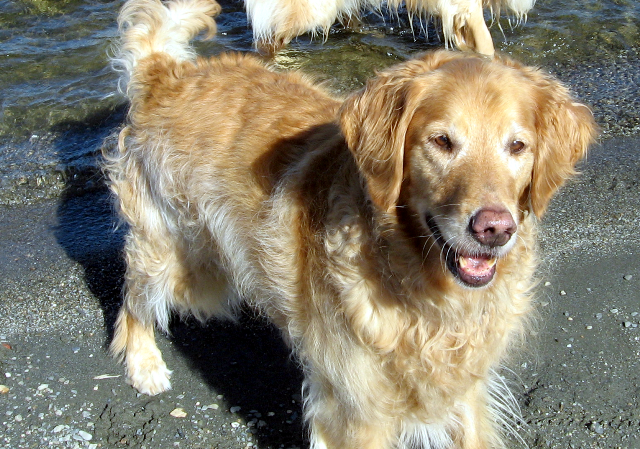 But Daisy, a very intelligent thinking dog who lives in Massachusetts with my friend Nancy, does something exceptional. She’s 13, and it’s possible that regular access to the “little dogs’ room” is more important to her than, say, to little brother Brandon (age 5). But she’s normally on a pretty regular going-out schedule, and is reputed to have enormous staying power. Nevertheless, she has recently started to pay close attention to Mom’s “leaving” cues. If Nancy is indicating that the outing is by car, Daisy will request an unscheduled pee break. Is she anticipating needing to go and not knowing when Mom will be home?