Teaching or Training?

A young Kong addict
A very young Jana figures out how to get food out of a Kong

Puppies, like babies, are born with the potential to learn and problem solve and think. They are innately curious and begin investigating their world even before they open their eyes.
Our job is to develop these skills in our puppies and dogs by providing opportunities for them to learn and develop their conceptual thinking abilities. We can expose them to lots of novel items and situations and provide encouragement and motivation. We can also be on the lookout — especially with puppies — for opportunities to turn potential problem behaviors into desirable, adorable, and even helpful skills!
Dogs who are taught, especially by handlers who use methods that encourage problem-solving, become better problem-solvers. A study called “Does training make you smarter?” compared dogs who had received training with dogs who had not. Dogs who had received training solved a problem — opening a box that had a pad that could be pressed by the dog’s paw — spent more time trying to open the box (and were less likely to seek help from their owners) than dogs who had no formal education. The study’s authors speculate that trained dogs have “learned to learn” in a way that unschooled dogs have not.
But, and this is a big but — not all education is equal. There are many approaches to teaching or training, and the methods you choose will affect more than just how fast your dog learns — it can affect the bond between you and your dog, and it can shape or reflect your attitudes toward dogs. And it’s not just the method. The words matter, too.
I make a distinction between training dogs and teaching them because I think the word choice reflects a difference in attitude and goals.
Training dogs is what I call educational approaches that are narrowly focused on eliciting specific reactions to cues or commands. The trainer has a clear end result in mind for each command. The trainer says, “sit;” the dog sits. Practice emphasizes precision of the dog’s response, speed of the response, and the dog’s ability to respond quickly and precisely even when distractions are present.
When I refer to teaching, on the other hand, I am referring to a process that develops the dog’s thinking and problem-solving abilities. The teacher’s goal is to give his or her students the tools and the confidence to figure out what to do in a variety of situations. Sometimes, a teacher might seek a precise response, like the sit; other times, the teacher makes a request that requires the dog to figure out what to do. “Find a pen” gives the dog a goal but no precise instructions for reaching that goal.
Teaching brings the dog to a level of independent thought and problem solving that enables him to respond to a command or cue that is as vaguely defined as “find a pen;” training does not.
Any approach to training or teaching is based on an underlying mindset or set of assumptions: assumptions about what dogs are capable of learning; assumptions about how dogs learn and how much of what we say and do they actually understand; and assumptions about what the dog-person relationship should be.
Trainers who do not believe that dogs are capable or reasoning or problem-solving are unlikely to put any effort into developing these skills in the dogs they train. Trainers or handlers who believe the dog’s “job” is to be obedient and submissive are unlikely to tolerate a free-thinking dog. Some trainers talk about “getting dominance” or “being the alpha” as ways to ensure that dogs remain obedient and submissive.
Methods of dog “training” or education can be placed on a continuum that ranges from those that do not encourage the dog to think at all to those that practically make the dog do all of the thinking. The Thinking Dog blog will teach you to recognize various approaches and their goals — and encourage and equip you to explore methods that help your dog become the best thinking dog he or she can be.

How Dogs Love Us

howdogsloveus_260Gregory Berns got the crazy idea of training his dog to lie still in an MRI machine, in the hope it would provide some insight into dogs’ thinking. What he found brings scientific proof to something every dog person knows — that dogs read us, anticipate our behavior, and act on that knowledge. Dogs, in short, have theory of mind. Berns rightly argues that this scientific evidence must change the way we think of and treat dogs.

What’s especially wonderful about this story is that, at least at the beginning, Berns is not an especially savvy dog person. He loves his dogs, treats them extremely well, but hasn’t spent a lot of time trying to communicate effectively with them or train them. By the end of the book — or maybe by a few months into the research — he’s become convinced that dogs communicate and function on a very high level and that “the key to improving dog-human relationships is through social cognition, not behaviorism.” Quite a journey … in fact, it’s the same journey that I hope to push my students along in Bergin U classes on dog training, canine-human communication and understanding the dog’s perspective. (Any current Bergin U students reading this might as well order their copies now … this book is destined to become required reading in all my classes.)

The book is filled with fairly complex scientific concepts, but it is written beautifully and clearly. It is very easy to understand and, like a good adventure novel, pulls readers along with foreshadowing and suspense. I especially love the long discussion of the ethical issues Berns and his team faced in setting up the research and the insistence of all the human researchers that the dogs would always be free to opt out, at any time. I also love the dog-centric approach the research takes (read the book to find out what I mean!). This book — this whole research study —is a testament to the amazing possibilities that exist when humans acknowledge their dogs’ abilities, treat them as partners (rather than as property or as slaves), and engage with them in a respectful, positive manner.

Because I am nut for precise language, I do have to quibble with the title. Berns does not actually show HOW dogs love us. He does show, I believe, that they DO love their human family members. While he can’t really show us what dogs are thinking, though, he has shown a way to understand their likes and dislikes — and perhaps opened the door to a better ability to read in dogs other emotions that humans and dogs share.

The Inclusive Dog

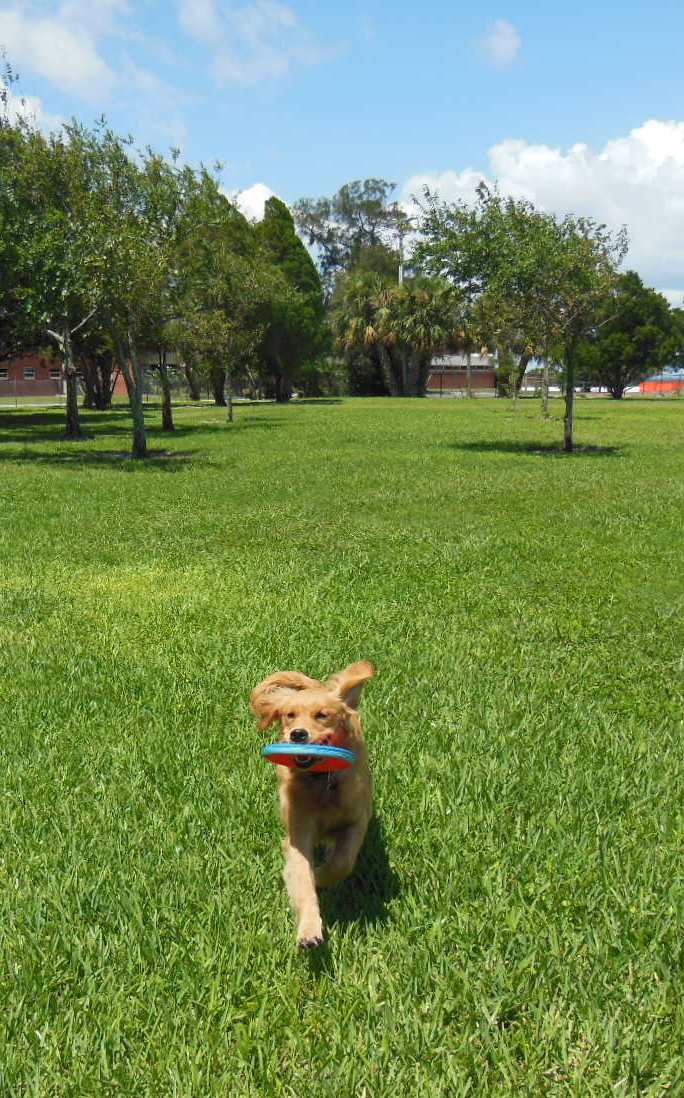
Cali zipflight2Cali, Albee, and Deni are playing fetch with a Zipflight (a Frisbee-like toy for dogs that Cali is crazy about). I wander over with Jana. Deni throws the disc. Cali catches it. Cali then brings it over and offers it to me for a throw.

If more than one person is in the area where Cali is playing fetch, she always does this. I find it charming. She takes the toy to one person, and then to the other, as if to include everyone in the game. She’ll include people she doesn’t know well, too, if they happen to be standing near and watching.

Oriel did this too. Cali and Oriel are closely related, but since Albee occasionally does it too, I don’t think genetics fully explains this behavior.

A professor I had in graduate school, ethologist Marc Bekoff, has hypothesized that play behavior forms the foundation of social ethics for a species. That is, youngsters learn how to get along in the group — what is “good” and “bad” behavior in their society, what the rules are for acceptable social interactions — at least partly through their games. They learn to play by the rules, not hurt each other, not to cheat or deceive, and to self-handicap when playing with younger or smaller friends. We observe all of this as our well-bred and well-socialized canines play with one another and with other dog friends. This might be a partial explanation, but Cali’s behavior seems to go a step farther.

I’ve seen dogs take turns in other situations — at the school where I teach, it’s not unusual to see three or four dogs lined up, waiting for a turn at the water bowl! And of course, when we play with our three dogs they must take turns chasing the ball when we throw it. Our dogs wait their turn to get their treats, to get brushed, even to get their dinners. Taking turns is nothing new in multi-dog homes. But dogs ensuring that all of the people and dogs get to join the game is unusual and shows an even higher level of social awareness. Cali’s not waiting for her own turn to do something fun or trying to get extra turns. She’s going out of her way, sometimes across a large lawn, to invite someone else to take a turn, to join the game.

Cali zipflightIt’s impossible to know exactly what motivates her to offer me a chance to throw the ball when she’s playing with Deni, but it does bring the family together. She even takes the ball over to Jana to offer her oldest sister the chance to chase the ball!  Cali’s desire to include everyone reflects something that matters to her. Empathy, or possibly inclusiveness.

An inclusive organization is defined as one that values the contributions of all people (human and canine!); one that incorporates different members’ needs, assets, and perspectives. That sounds like the kind of dog-human family I want. And, from her actions, it appears to be the kind of dog-human family that Cali wants too.


Bidding Farewell to Wylie

Cool

Wylie is heading off to learn his new career this week. Deni’s difficult decision to let him go and to seek a professionally trained guide dog, whom we hope will be a better fit for both her personality and her needs, is described in Loving and Letting Go, an earlier post on the Thinking Dog Blog. But Wylie was part of my pack, family, life too — and saying good-bye brings up some tough issues.

I think of dogs as family members. Taking a dog into your life, I believe, is a lifetime commitment — you take it upon yourself to care for the dog for the rest of his life (or the rest of yours). Yet I believe that letting Wylie move on to a new life is the best choice for him as well as for the rest of his pack/family. I’ve been struggling to reconcile these conflicting views.

Wylie wasn’t a pet; he was a guide dog. But he wasn’t a good fit for the job Deni had assigned to him. We’re both confident that his new job, working with a veteran, will be a better match for Wylie’s personality and needs. He’ll revel in the intense companionship and enjoy his new responsibilities. He might be matched with a young, athletic guy who can give him the exercise he craves, too.

None of that makes it easy to say good-bye. What makes it hard, I think, is that for all that I try to study human-dog communication and improve my ability to communicate with dogs, I am still human — with that human tendency to be overly reliant on words. For all his intelligence and perceptiveness, Wylie is a dog who doesn’t use language the way we do. That gap is sometimes tough to bridge.

So we can’t prepare Wylie for what is happening, can’t help him understand that we love him and want him to be happy, can’t call him on the phone to find out how his training is going. He’ll be confused and sad when Deni leaves him with Jennifer, his new trainer. There’s no way to explain to him that, after some training, he’ll get to go live with a guy who will be his best friend and constant companion. While he senses that something is up, Deni says, he doesn’t understand what.

I also know that dogs are more “now” focused than most people are, which means that Wylie will quickly adapt to his new routines. He makes new friends easily. I am sure that he’ll be the star of the training class before long. Even knowing all of that, and feeling sure that it’s the best choice for him, it still feels strange and sad to say good-bye.


Loving and Letting Go

A Guest Blog by Deni Elliott

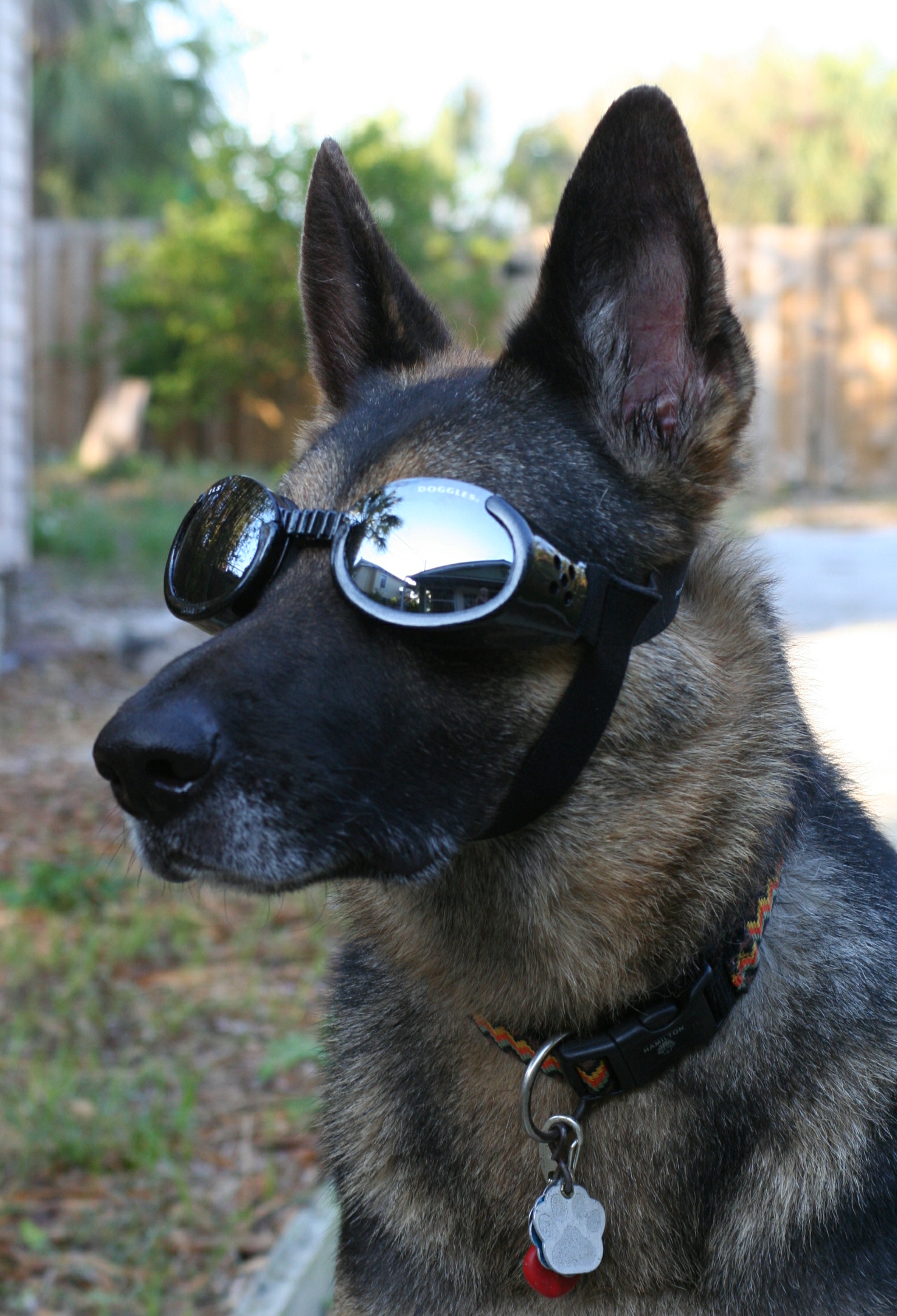
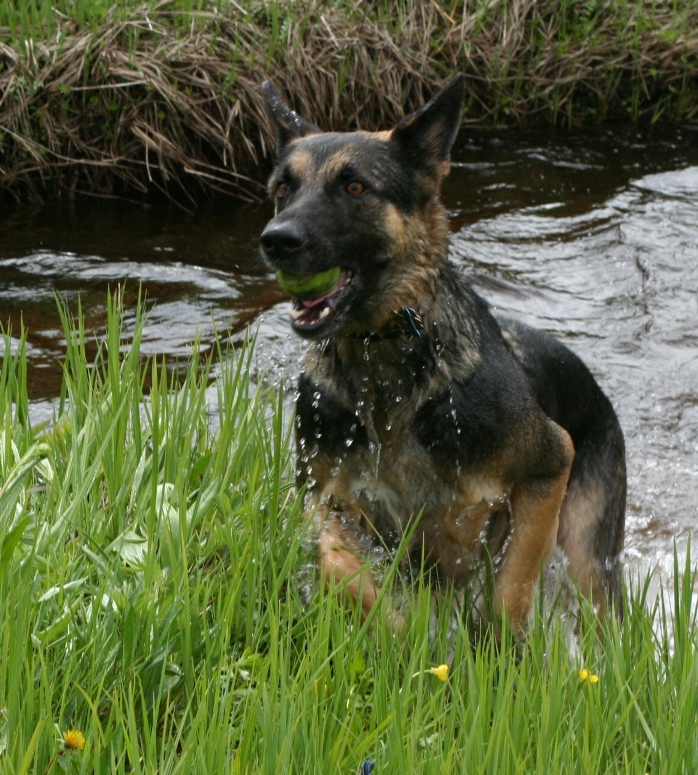
wylie ballSometimes things just don’t work out. He is intensely athletic; I’m a stroll-on-the-beach kind of gal. He always wants to be in charge; I think that responsibility should be shared. He likes hanging out with the guys, and he unabashedly flirts with the girls; I crave a less-social life and want him to have eyes only for me. But when we are alone, I need some private time; he dogs my every move.

After four years of trying to make our partnership work and then carefully planning for our separation, I’m ready to announce this to the world: I love Wylie more than I can say. He’s smarter than I am, good-hearted, and generally well-intentioned. But Wylie and I are breaking up.

My guide dog’s career change feels a lot like ending a human relationship. As with intimacy between humans, the partnership of human and guide dog is a dance of inter-dependency and cooperation. Compatibility is required.

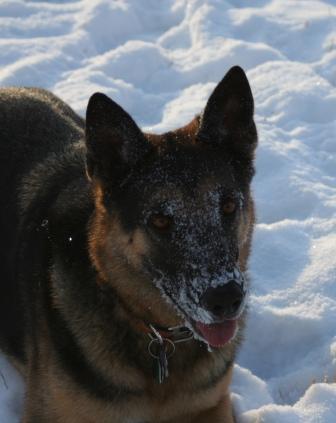
Wylie counts on me to give him everything that he needs to be a well-adjusted German shepherd, and he is not shy about communicating his demands to me.

I put my life in his paws every time that I slide the harness over his shoulders and say, “Forward.” I trust Wylie to choose the path as he guides me under low-hanging branches, steers me around obstacles, and takes us across streets, avoiding the traffic that I can hear but cannot see.

We communicate moods and expectations up and down the harness as we let each other know what is next in our progression from Point A to Point B. If we’re out of sync with one another, we both get frustrated. And while our ability to read one another has astounded others observing us, the frustration has become more than either of us can handle.

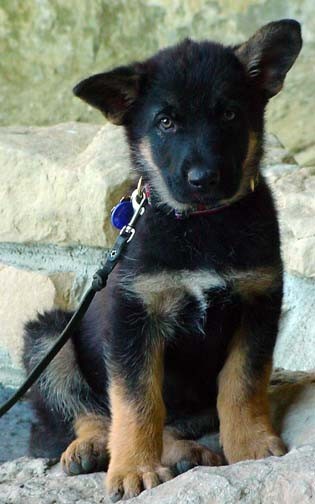
8 wks Wylie (2)Wylie is the second guide dog that I have raised from young puppyhood, enlisting the expertise of professionals to accomplish training that I couldn’t do on my own. I’ve owned and trained dogs since I was a child. My visual loss was progressive, but slow. I thought that I was better able than a guide dog school to prepare a dog to meet my special needs.

As a puppy, Wylie showed strong potential to become a guide. My successful partnership with my first guide dog, a golden retriever named Oriel, made me unrealistically confident. Oriel was, in the words of many who knew her, “the perfect dog.” When she retired, I assumed that I could make the guide relationship with young Wylie work just as well. I struggled through the first year and thought that he would mature and grow into his job. I was wrong. Wylie’s basic personality did not change; nor did mine. When I finally realized that I couldn’t make things better, I knew that I owed Wylie the chance for a better life.

On January 23, Wylie will start training to be a service dog for a veteran with Post-Traumatic Stress Disorder (PTSD). For the first time in more than 12 years, I will depend solely on my white cane to pick my way through my travels. Wylie and I will both be in transition and will grieve the loss of one another.

But not for long.

Wylie (2)Wylie will have new challenges from the start. He will live first with Jennifer Rogers, director of PAALS, a service-dog training school that is affiliated with Fort Jackson, the U.S. Army base in Columbia, South Carolina. Wylie and other dogs-in-training will spend one evening each week on the base with active-duty service members and veterans who are coping with combat-related anxiety. Under Jennifer’s supervision, the dogs will learn to help people with PTSD; the soldiers and veterans will teach the dogs how to assist others like themselves. Dogs and humans will learn to support one another.

When the time and match is right, Wylie will become an “intensive companion” dog for a veteran who is not yet ready for the challenge of working with a service dog out in the community. Dog and veteran will be encircled by a team of mental health and service dog professionals who will support their journey together.

I will be supported in a new journey as well. On March 4, I will join a training class at Guiding Eyes for the Blind in Yorktown Heights, New York. After intensive training there, I expect to return home with a 2-year-old mellow yellow Labrador retriever at my side. I’ll have a guide dog bred and trained by experts who create and maintain ethical working dog relationships. After many hours of application to, evaluation by, and conversation with Guiding Eyes personnel, I trust that they know better than I how to find me the best guide dog match.

Wylie’s new life will be very different from guiding me around obstacles that I cannot see. Crucially, it will be a life that is more in tune with his nature. The behaviors that he will be trained to do on cue include leaning against his partner, resting his head on his partner’s knee, lying on his partner’s feet, and providing a friendly-but-safe barrier between his partner and others. With me, Wylie got to connect like this only after his harness came off and he was done guiding for the day. Providing a partner such physical support 24/7 is Wylie’s dream job.

Wylie has always wanted more physical connection than I could handle. When I was done working for the day, I wanted some time free of my canine umbilical cord; Wylie wanted the intense physical contact that he lacked when he was walking two steps ahead of me, in harness.

The behaviors that have been problematic for me will be just what Wylie’s new partner needs. Wylie will bond with a veteran who needs a canine companion to guide him out of a darker place than I have ever experienced. It is likely that Wylie’s new partner — a veteran with deployments in Iraq, Afghanistan or both — will be no more than 30 years old. Wylie will finally have a young partner who is able to provide the daily intensive exercise that he craves.

Wylie will no longer endure long hours lying under a desk while I work in the office or teach my classes. He will no longer sigh and resign himself to STILL being on duty when I sternly command him to turn left to guide me to the Dean’s office when he wants to turn right to walk home and be done for the day. And, most importantly, Wylie will no longer have to pant and tremble as he struggles to guide me through airports and onto airplanes, a task that he finds increasingly stressful.

CoolSome people will criticize me for not letting Wylie retire and spend the rest of his days lounging at home. But, all dogs need stimulation; a young, intelligent dog like Wylie, who is accustomed to life out in the world, needs it more than most. Long days spent alone and doing nothing would be unbearable for him. Others will say that it is cruel for me to give him away, suggesting that I don’t love my dog as they love theirs. But I know that Wylie would not be happy watching me leave home with another dog doing “his” job, even if it is a job that he sometimes hates. I love Wylie enough to recognize that he’ll be happier moving on.

I will get over losing the goofy frat-boy who has been part of my life for 6 years. I will have learned yet one more lesson in loving and letting go. I’ll get past the guilty feeling that I failed this dog. From this perspective, it seems to me that I’ve been helping Wylie get ready to be the helper dog that he was really meant to be. I appreciate his true nature enough to let him go forward and be that dog.


Special Delivery

A story Deni told me about Jana has been going through my mind for several weeks now. I haven’t figured out the answer; maybe the students in my spring-semester class on the dog’s perspective will help me figure it out.

We have had a lot of work done on the house lately, and somehow, the gate to the backyard got left open. I was away.

Deni reports that the dogs woke up and took themselves out the electronic dog door as usual. Then, suddenly Wylie was back at the bed, barking at her, quite insistent that she get up. Not fully awake, Deni complied (Wylie rarely takes “no” for an answer). She noticed that Jana had not come back inside. Wylie was frantically urging Deni to the back of the house, where she noticed the open gate. And no Jana.

Now fully awake and worried, Deni quickly pulled on some clothes. Again, Wylie alerted her. This time, she followed him to the front of the house … where Jana was standing at the front door. Not only that, Jana was holding the morning newspaper (hmmm, too bad she didn’t nip out for fresh bagels while she was at it).

Relieved, Deni let Jana in and lavishly praised and rewarded her. But for what?

While Deni was delighted that Jana had stayed home, she and I both wonder how Jana understood the event.

Did Jana think she was being praised for simply doing her usual morning job of getting the paper? Or had she made a conscious decision to not seize the unexpected freedom and go for a swim or chase the cats next door? Did she understand that Deni was grateful for her restraint?

Maybe Jana finds too much freedom frightening and chose to return to safety.

Maybe she was afraid she’d get in trouble for being out and hoped that the paper would mollify Deni and mitigate punishment.

These are plausible explanations.

But Jana has had other opportunities to run through open gates, and she’s never passed one up. Just this week, when the roofers were packing up, I inadvertently let her out the back door before the back gate was closed behind the roofer’s truck. Within seconds, she was in the back alley. She did return immediately when I called her, though. And she’s often wandered off on her own during walks or hikes, farther than the front porch (but never so far that she could not see me or Deni).

She’s never gotten more than a scolding (and a leash) when she’s wandered too far afield in the past, so fear of punishment is unlikely.

She may have simply made the choice to stay close to home because she knew that that was the “right” thing to do. Could she have understood that Deni could not easily pursue her?

Which begs another question: Why did Wylie go to alert Deni rather than seize the moment, as it were, and go for a run? He has done so in the past. Was he worried about Jana or about keeping his pack intact? Was he delighted at the role reversal — that he got to be the good dog (and the tattletale) this time?

Though many people do not believe that dogs are capable of such deep, conceptual thinking, I do believe that Jana and Wylie are capable of making the judgment to do the “right” or the expected thing, even in the face of temptation. I have seen it many times in working dogs (including Wylie) — as well as in Jana and other pet dogs. I’ve also seen  both Jana and Wylie give in to temptation and follow their impulses or their instincts. Just as we humans sometimes “do the right thing” and sometimes do what’s fun or feels good, so do dogs.

All things considered, my best guess about that morning is that she didn’t want to miss breakfast. Your thoughts are welcome.

Teach “Incompatible” Behaviors for a Well-Mannered Pup


New puppy parents are often advised to keep a supply of puppy chew toys handy in every room. If the puppy starts to chew on something inappropriate, such as the sofa leg or a shoe, the humans can easily reach for a puppy toy and offer a trade. This is good advice and a good introduction to teaching an “incompatible behavior” to replace an undesired behavior: If the puppy is chewing on her own teething bone, she’s not destroying the furniture.

In my last blog post, The Best Alarm Clocks Ever, I mentioned procedural memory in a description of how and why dogs remind us that it is time to get up, feed them, or even take our medication. Procedural memory is even more significant in the way it affects other routines and behaviors.

Some psychologists say that procedural memories form aspects of character or habits. That means that a behavioral or emotional response to a particular situation could become an automatic or ingrained response. This is a valuable piece of knowledge in educating dogs (or humans). Old habits are hard to break, but understanding where a behavior comes from might mean that you can work to change it — replacing the “bad”  habit with an incompatible good habit. An incompatible behavior is simply any different behavior that cannot be done at the same time as the undesired behavior. Learning the new “routine” will replace the old, undesired one.

A common example is doggy greetings. Jumping up to greet people (or adult dogs) is a very common puppy behavior. This probably hearkens back to dogs’ wolf ancestors. When young wolf pups jump up and lick adults’ muzzles, it stimulates regurgitation feeding. Ick. (It’s also a submissive behavior.) When our cute puppies jump on us to greet us, we might not feed them in the style of wolves, but we do tend to reach down and pet and cuddle them. We might laugh and tell them how wonderful they are. This is fun and rewarding for puppies, and it encourages puppies to continue to jump on returning human family members and guests. Many small puppies grow, though, and become large, gangly adolescents, then 60- or 100-pound adult dogs. Jumping is not cute anymore, but the puppy has never learned not to do it; in fact, the puppy has been rewarded for jumping.

Some old-fashioned trainers might suggest stepping on the dog’s toes or kneeing the dog in the chest to stop the jumping behavior. This is cruel and does not teach the dog anything other than that his human can’t be trusted. From the dog’s perspective, his human has suddenly started hurting him for no reason. After all, the human allowed and even encouraged the jumping when the puppy was small.

A more fair and humane approach is to teach an incompatible behavior, for example teaching the puppy or dog to sit to greet people. If the puppy is sitting, she can’t jump, right? (Another option for overly enthusiastic canine greeters is to teach the puppy to fetch a toy and bring it to the visitor.)

Not exactly cocktails, but it’s a start (photo by Sae Hokoyama)

When Jana was a puppy, I wanted to teach her to sit to greet visitors. I put the “incompatible behaviors” principle to work successfully — both on puppy Jana and on our guests. First, I taught Jana to sit when I crossed my arms over my chest. Then I asked entering guests to cross their arms. This action was “incompatible” with petting the jumping puppy. It also gave Jana the cue to sit (incompatible with jumping). Viola! Jana sat and was rewarded with praise, petting, and, often, treats; I could happily greet visitors without fretting that they were teaching Jana bad habits.

In The Best Alarm Clocks Ever, I also mentioned Jana’s propensity to remind me of mealtimes — well ahead of time. Doggy dinner is at 6 p.m., but Jana often starts hinting, nudging, trying to lead me to the kitchen, pointing out her empty bowl, etc. long before 5 p.m. Do you suppose that, if I taught Jana to make cocktails at 5 p.m., she would stop bugging me for her dinner? It’s worth a try …


Jana Rocks

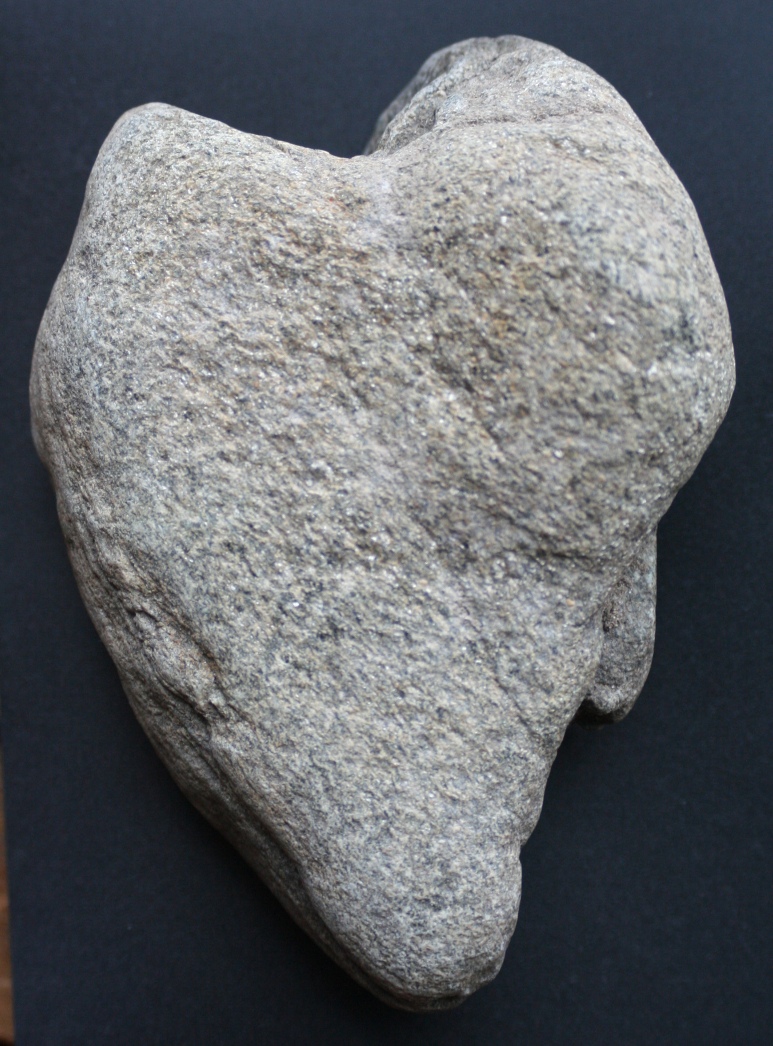
What’s the best present your dog ever brought you? Mine is the rock pictured here. Jana pulled it out of Lolo Creek at Fort Fizzle, one of our favorite spots to spend a hot summer afternoon. It joins this one:

Jana pulled it out of the same swimming hole last summer.

Does Jana know that hearts have a special meaning to humans? Do dogs use symbols to communicate the way humans do?

Those questions are not as farfetched as they might sound.

Jana loves hunting for rocks in the water, and she often pulls them out to collect onshore or to hand to me for safekeeping. She’s pretty selective about the ones she picks up.

She pokes her head under water, holding her breath as she looks for the perfect rock. Once she’s selected a rock, she lifts her head out and works the rock loose with her paws, then puts her head under water and grabs it. Some of them are huge for a 60-pound dog to carry, weighing a two  pounds or more. Sometimes, I throw one back. And she pulls it out again, often giving me a disgusted look in the process.

They are not all heart-shaped, of course. This stretch of river offers her a large selection of rocks in many sizes, shapes, and weights. Yet many of the rocks Jana chooses are triangular or have an elongated shape and rounded corners.

I can’t help wondering why Jana seems to prefer heart-shaped rocks. Is she sending an intentional message?

Dogs, like humans, regularly  use symbols to communicate with their human and canine friends. Many dogs, for example, bring a leash or guide their human to where the leash hangs to ask for a walk. A human donning a certain pair of shoes can trigger a wild dance of delight in other dogs. Play, aggression, and calming signals are part of universal canine-to-canine body language.

Dogs quickly learn to associate specific actions, such as sitting, coming, or lying down with humans’ spoken words, hand signals — and even printed words or pictures.

But dogs’ abilities go far beyond understanding simple concepts and associations. Studies in canine cognition labs around the world constantly expand our knowledge of how dogs understand high-level concepts.

Dogs have shown that they recognize people in photos and can differentiate between photos of dogs and other creatures. They even associate the sound of a growl with a photo of an  appropriate-sized dog who might make such a sound, looking at a photo of a large dog upon hearing a deep, big-dog growl, for example.

Dogs also learn to associate pictures with concepts. I’ve taught dogs to respond to flashcards printed with words or stick figure dogs showing specific behaviors  (sit, down, speak, etc.). And a researcher in Florida, Dr. Lauren Highfill, recently did a study where dogs learned to ask for their preferred reward by choosing the corresponding picture. They first learned to associate a food reward with one picture, a toy with another, etc. Dr. Highfill even had a “surprise” reward category that allowed dogs to ask for an unknown reward. Some dogs consistently chose to be surprised, while others always asked for their favorite.

So, back to the heart-shaped rocks. I haven’t intentionally taught Jana any specific association with hearts, but she has seen me collecting (much smaller) heart-shaped rocks on our walks together on many different beaches. Maybe she just knows that the symbol is, for whatever reason, meaningful to me.

Jana is very bright and perceptive. Even so, it’s a bit of a stretch to think that she has somehow picked up on the idea that, in human culture, the heart shape stands for an expression of love. It’s not as much of a stretch to think that a watchful dog knows what pleases her human partner and enjoys finding ways to do that. Whatever her reasons, the heart-shaped rocks are gifts from Jana that I will always treasure.

Do Dogs Have a Funny Bone?

Dogs smile and even laugh. Dog magazines understand this — both The Bark and Modern Dog regularly reprint readers’ photos of their “smiling” dogs. But do these facial and vocal expressions prove that dogs have a sense of humor? This is debatable. I would argue that some dogs do, thought this varies by breed. Golden retrievers and Labradors definitely enjoy a good laugh with their people or at their people’s expense.

Jana enjoys a good joke!

On our recent drive from California to Montana, Jana (a golden retriever), Deni, and I stayed at a cute little guest cottage in Oregon. I took Jana for a walk around the grounds. The cottage had two small rooms, one with a patio. Jana and I left through the main door but returned to the cottage and entered through the “back” patio door. I told Jana to “find Deni.” She ran into the cottage, then into the main room, wagging and smiling, and greeted Deni. Deni reacted with happy surprise at Jana’s sudden appearance, since the main door, a few feet from where Deni sat, remained closed. Jana danced around wagging and smiling. Since she is a reserved dog, this was an unusual display.

Jana was pleased with herself. But more than that, she appeared to enjoy the joke she had played on Deni. Is this possible? Or am I reading too much into the situation, being too anthropomorphic?

What does it mean to have a sense of humor? Most living organisms — human, canine, or other — seek pleasure and avoid pain. This basic principle guides behavioral science (and dog training). Humor — laughing, and the ability to be amused — feels good and is good for us. So it is biologically sound to assume that other creatures have senses of humor. And, as creatures that have evolved, through heavy human influence, to be our best friends and companions, it would be far stranger if dogs did not understand and participate in intentionally humorous antics.

One of dogs’ most appealing characteristics is their love of play. But dog play often resembles dog aggression. Thus dogs have a detailed repertoire of communication that signals to other dogs — and dog-savvy humans — that “this is only play.” In other words, “I’m just kidding; I am not really going to bite/hunt/hurt you.” Another sign that dogs understand humor and “fun” is that they make up games. They also change the rules of games we, or other dogs, make up and self-handicap so that another, smaller, dog or puppy can also have fun.

Lots of dog owners and trainers have stories of things their dogs do that make them laugh. Like small children, some dogs intentionally repeat whatever action elicited the laughter. This is a sign that dogs get it. They understand that our laughter is a good thing. They love to play tricks on each other and on us. Does your dog have a sense of humor? Share your stories!


Give That Dog a Job!

This slideshow requires JavaScript.

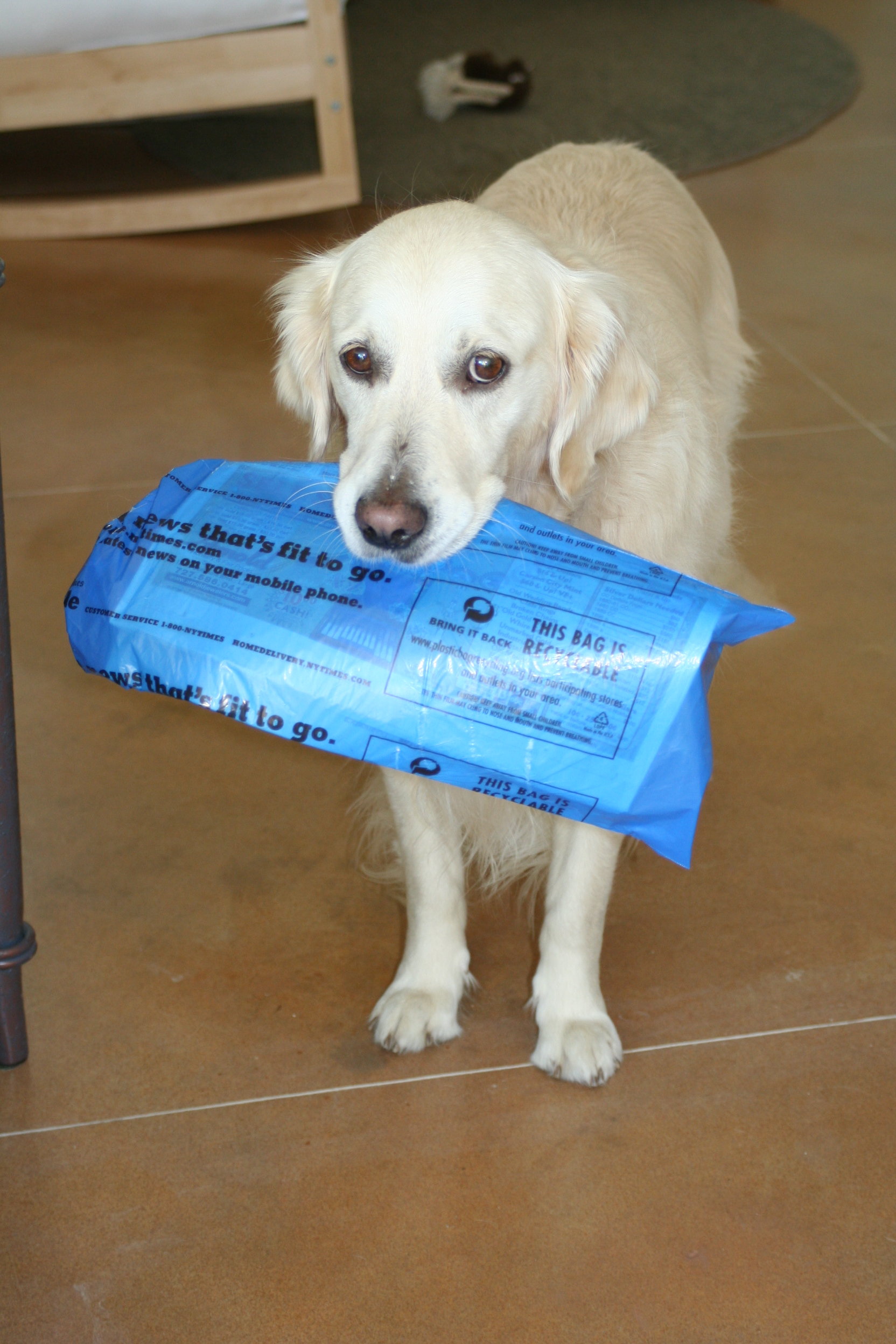
Getting the paper each morning is the classic dog’s job. My friend Sally continued her newspaper subscription long after she’d lost interest in reading it — just because it gave Mav, her Lab, such pleasure to get the paper. Jana started fetching the Jerusalem Post each morning when she was just a few months old. She’s graduated to the New York Times, which is considerably weightier, especially on Sundays. Every so often, Wylie tries to nose in on her morning chore, but she’s not giving up easily.

Our dogs have also learned to pick up their bowls after they eat. Some people have expressed surprise at this, understanding why a dog might bring an empty bowl in hopes that we’ll fill it but not why a full dog would bring an empty bowl. We explain that we try to encourage our dogs to behave responsibly. The dogs give us their empty bowls rather than actually washing them, but it’s a start. Jana can be persuaded to put her toys in the toy basket as well.

Dogs like to have jobs. This is a frequent topic of discussion with my dog-training students. These students are training future service dogs, but they are also preparing to train pet dogs — and their owners. We’ve talked about the many roles and careers available to dogs these days, and the consensus among my students is that, even if the job is a dangerous one (think military and police dogs), most dogs seem happier when they have work to do.

Most pet dogs are bored most of the time. Giving underemployed dogs some small tasks to do throughout the day can relieve that boredom and challenge them a bit.

Most people’s lives are filled with tasks that dogs can learn to handle, if only given the chance. When we miss the recycle box when tossing balled-up paper from our desks, a dog (or two) is always ready to bring the trash back or put it in the box for us. Fetching slippers or shoes is a natural. Dogs who learn to fetch the leash or their owners’ walking shoes when it is time for an outing might take the initiative and bring the items when they figure that they’ve waited long enough. Our beloved Oriel decided on her own to bring the water dish to one of us for a refill when it was empty, and she often brought discarded papers from the recycle box in hopes of exchanging the trash for a cookie.

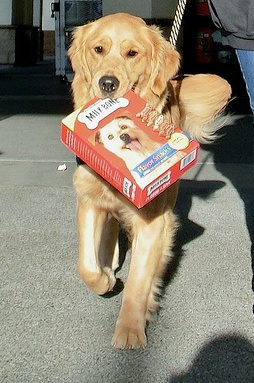
If you can’t think of tasks, challenge your dog’s mind with games or a treat toy; dogs don’t seem to differentiate between  thinking tasks that are just for fun and those that are dog jobs. Interactive dog games abound these days — these ask dogs to use their noses, paws, and sometimes teeth to open compartments, slide little doors, and nudge puzzle pieces aside to reveal hidden treats. Playing “tug” can lay the foundation for teaching dogs to open doors, cabinets, and drawers. Hiding a favorite toy or treat (or person) somewhere in the house encourages the dog to think, problem solve, and use her nose to find it. Some dogs’ desire to talk can be channeled into for alerting the humans to mail and package deliveries with just one bark. Other dogs, who like to carry things, can be taught to place plastic bottles in the recycle bin or clothes in the laundry basket.

The possibilities are endless. What are you waiting for? Give your dog a job!