Dogs Can Get the Flu, Too

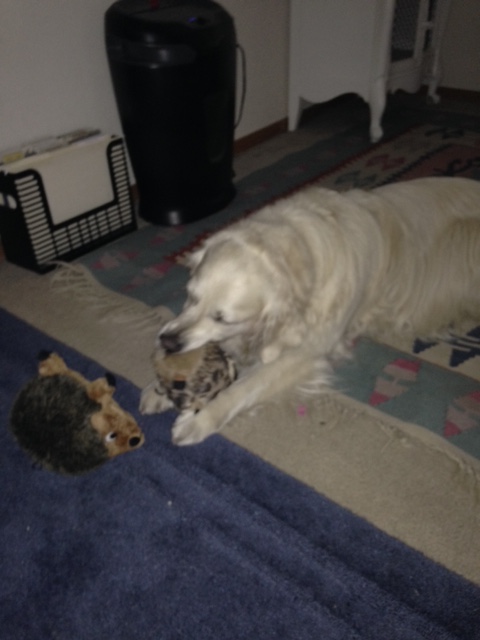
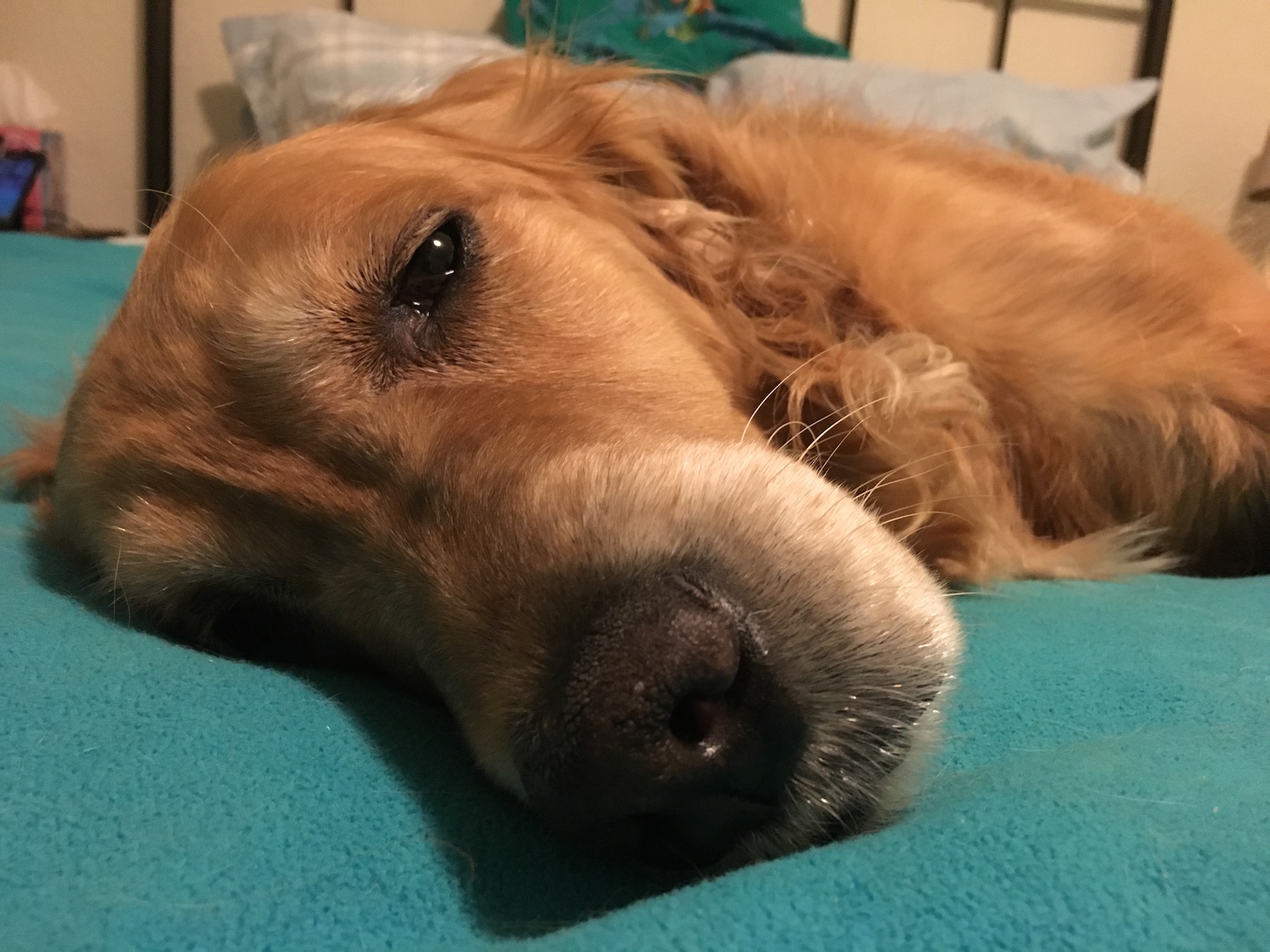
Cali’s not sick; she’s just bored.

Has your dog been coughing, sneezing, and acting lethargic?

If so, get her quickly to a vet; she could have the flu!

Canine flu does not infect humans, but it can spread easily among dogs who come into contact with a sick dog — or an infected toy, bowl, bedding or clothing item, or other object. Dogs can also catch the flu from sick dogs’ sneezing and coughing.

Flu viruses (among many species) change and adapt quickly and also “jump” to new species. One form of canine flu that exists in the U.S. was discovered in 2004 in greyhounds in Florida; it was found to have originated from a horse flu. A second strain of canine flu originated from a bird flu and was first detected in the U.S. in 2015.

Though one or both strains have been seen in most parts of the U.S., the number of cases is still small. If your dog is rarely around other dogs and seems healthy, there’s probably nothing to worry about.

Canine flu is not seasonal, and many dogs show no symptoms. Severely ill dogs can get pneumonia, but that is rare. Canine flu has not spread everywhere in the U.S. yet, but some areas have had outbreaks this winter, including California and Nevada.

Dogs who are frequently around other dogs, at boarding or day care facilities or dog parks, for example might be good candidates for a doggy flu shot (yes there is a vaccine!). Check with your vet. The vaccination requires two shots, several weeks apart.
Jana’s Fine … For Her Age

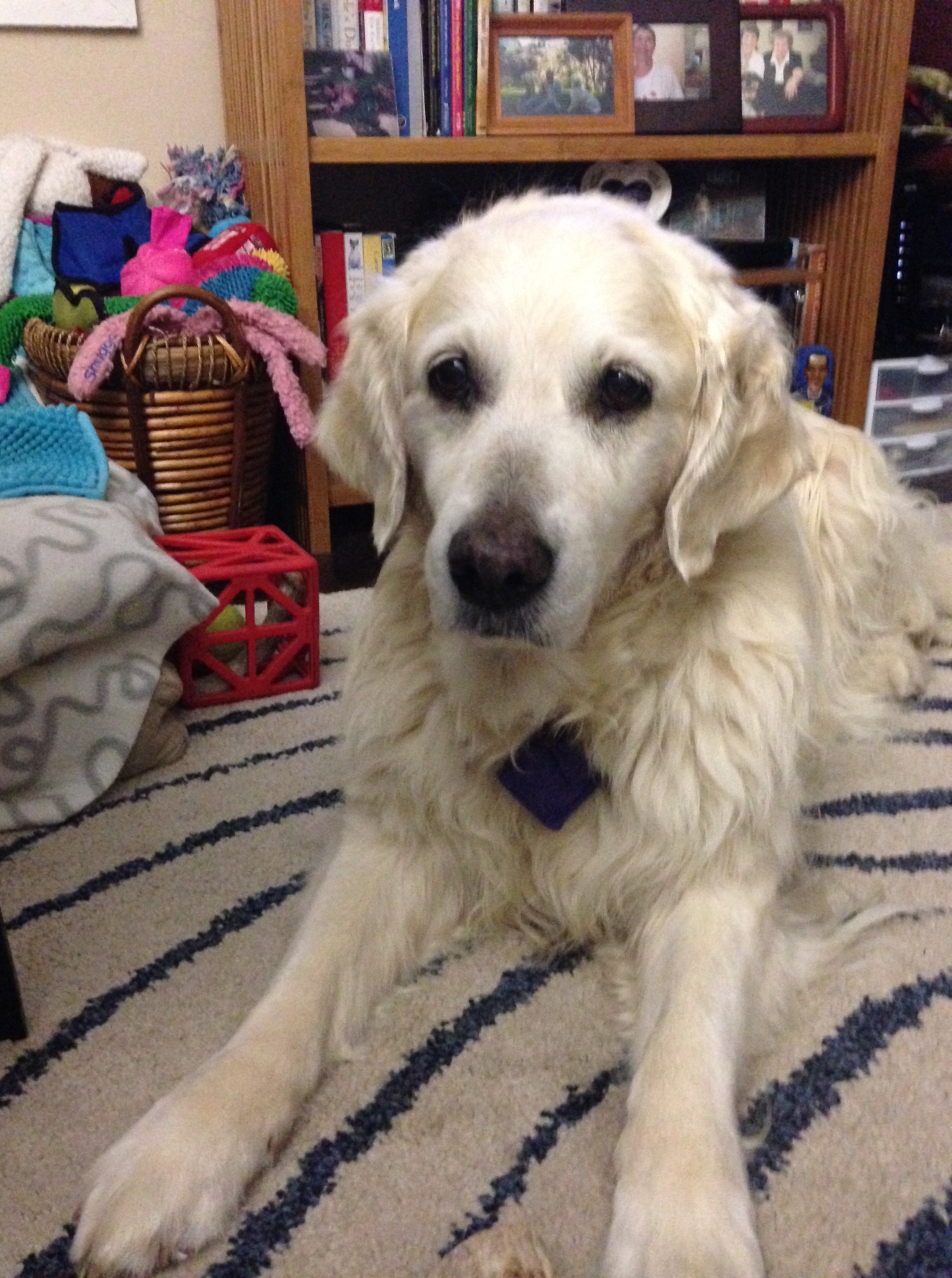
I recently had a health scare with Jana. She’s fine, but it was worrisome. Added to a number of recent losses among my friends whose dogs were Jana’s contemporaries and, well, it’s rough.

Jana was in for her semiannual check-up. She gets far better health care than I do, but then again, in human age, she’s nearly 90. I hope I am as healthy, energetic, and playful when I get there!

Anyhow, during a brief ultrasound, the vet saw what looked like a mass on Jana’s spleen. She recommended a more thorough ultrasound and exam. In the days between the checkup and the exam, I had time to Google, ask around, and worry.

I read up on spleen tumors and treatments. None of it sounded good. I thought through the various possible scenarios. I hugged Jana a lot. She hated that.

The exam, I am pleased to say, showed nothing more than some discolored patches on Jana’s spleen. Jana has the heart and lungs of a much younger dog, is at her perfect weight, and has nothing more wrong with her than some (severe) arthritis. Except for the arthritis, she’s in better shape than I am.

But I see signs that she’s more frail. She stumbles sometimes. Has senior moments. Has mornings when she chooses to go back to bed rather than trek to the park. But there are also days that she asks for extra walks and rolls happily in the grass or wants to play tug or catch.

Another sign of her age is anxiety. When she’s anxious, she barks at … well, I can’t figure out what. I think she’s not seeing as well as she used to, and she gets startled more easily. I’ve tried several remedies for her anxiety. Some of them help some of the time. Treatibles are her favorite; she’ll often go into the kitchen, stand in front of the cabinet where I keep them, and bark. Melatonin, a new addition to the lineup, also seems to help. Sometimes a Comfort Zone plug-in helps; sometimes a wrap. If our friend Christina lived closer, she could offer regular Reiki treatments; that would probably help a lot.

Sometimes, though, when she’s agitated, Jana just wants to play. Or even (those who know Jana will know just how rare this is) cuddle! Those are my favorite remedies.

Older, Wiser … and Far More Painful

Opening birthday presents helps keep Jana young and happy!

We celebrated Jana’s twelfth birthday recently. Her friend Leti (also a golden retriever) just turned 15.  These girls still walk to the park nearly every day and enjoy a vigorous roll in the grass. They make the rounds, saying hello to the other dogs’ people and trying to cadge a cookie or two from each human.

I do everything I can to see that Jana’s quality of life remains high. Despite their good health, both girls are showing signs of their age. Jana has severe arthritis and wakes up feeling stiff and painful many mornings. Though she’s usually very sharp mentally, I’ve noticed a few senior moments, when she seems to be a bit confused.

Hoping to deal with both those issues — without breaking the budget — I’ve put together a regime of supplements and exercises that help Jana a lot. If you have an aging dog, some of this might be helpful. I have no veterinary training, but I do check everything with my vet and vet techs before I try it on Jana, and I recommend that you do the same:

  • Even Cali, age 2, is taking a small amount of glucosamine each morning. It helps ease joint pain. Some people take it, too, particularly for knee pain.
  • New Zealand Green Lipped Mussel. Jana takes one green mussel capsule daily, emptied onto her breakfast. Like glucosamine, it can help people and dogs with joint pain. Jana behaves very differently when she’s talking it — asking to go on walks and soliciting tug games — so I am convinced that it helps.
  • Fish oil. Each girl gets two fish oil capsules a day. The omega-3 is as beneficial for them as it is for humans, and the dogs like the fishy taste. They get sardines once or twice a week as a treat for the same reason.
  • Coconut oil. A spoonful a day is great for their skin and coat. Coconut oil also might help with brain energy and metabolism (Thanks to Tom Morrare for sending me the link to this great article!), and it has anti-inflammatory properties (in lab rats, anyhow).
  • Turmeric, another anti-inflammatory. Jana likes spicy food; for some dogs, turmeric capsules or tablets might work better than the powder. Also, the bright orange powder stains everything it touches. If your dog is prone to tummy issues, you might want to use tablets.
  • Rimadyl or one of the generic equivalents. The active ingredient, carprofen, is an NSAID for dogs. It reduces inflammation and therefore pain. It also can cause liver damage if given in high dosages or for a very long time. Since I have started giving it to Jana regularly, I will make sure to get bloodwork done every six months.
  • Cold laser therapy. Jana goes about once a month. Some dogs get it more often; some less. Figuring out the frequency is a complex formula that factors in cost and distance and time. The treatment really seems to help keep Jana limber and, if not pain-free, certainly far less painful. It stimulates blood flow, healing the tissues and reducing inflammation, thereby reducing pain. I get Jana as many laser therapy sessions as I can so I can reduce the amount of Rimadyl she takes.
  • Jana does daily exercises on an inflated exercise disc, as recommended by her laser therapist. The idea is for Jana to strengthen the muscles that support her arthritic joints. She’s also working her core and having a great time. She’ll “dance” (prance, alternating paws) and turn around on the disc and balance with front or back feet. Cali usually joins in.
  • Treat toys. There are many. Jana’s favorites are Squirrel Dude and Nobbly Nubbly, both from PetSafe, and the Kyjen Cagey Cube. Other dogs will like different toys; these are the ones that hold Jana’s interest, even if I give them to her over and over again.

There are other options that we have not tried (or haven’t tried yet) or haven’t liked: Adequan injections, for example, which is used for arthritis pain; acupuncture, which Jana didn’t react well to; surgery; massages and body work; Chinese herbal treatments … the list is long. If you find something that works for you, let the Thinking Dog know at thinkingdogblog@gmail.com!

The important elements are to keep the dog moving and challenged — physically and mentally — and as pain-free as possible. Jana has jobs as well: She gets the morning paper, brings my shoes when we’re getting ready to go for a walk, and picks up the bowls after each (doggy) meal. She loves interactive toys where food or a tennis ball are hidden or trapped (her favorites are mentioned above); she’ll spend a long time trying to figure them out, whereas Cali gives up much more quickly.

It’s also important to make sure your older dog has a comfortable bed (in Jana’s case, so that she can sleep next to it) and is warm in cold and damp weather. I’ve put down rubber mats so she no longer slips on the bamboo and linoleum floors. I haven’t gotten her a ramp or stairs yet, but I do have to help her into the car.

My goals are to reduce Jana’s pain without heavy use of pharmaceuticals and maintain her quality of life. I started with the supplements and only added a small amount of Rimadyl when Jana was clearly painful. I want to accomplish all of this at what I consider a reasonable cost. Obviously, this means something different to everyone. And I understand that not everyone is willing to spend several minutes measuring out supplements at each meal or hours schlepping a dog to a laser appointment. Every individual dog and family needs to figure out what works best for them.


Why Is My Dog’s Eye Red?

A reader asks: My dog’s eye is red and bloodshot. I know that she has seasonal allergies; is that all it is? How do I know whether it is something serious?

While itchy, red, and irritated eyes can definitely be a symptom of seasonal allergies in our dogs (as well as in ourselves!), the key that something more is going on is that only one eye is affected. This is a good reason to get it checked out by a vet.

Eyes are delicate — and very important — so don’t take chances here. It can be allergies, a cold, or a minor irritation, but it could be something much more serious.

In this case, the dog, Hannah, had scratched her cornea badly. The vet put in some drops that showed the scratch in vivid green. Hannah went home with eye drops. She was an amazingly cooperative patient (I’ve had otherwise sweet-tempered, you-can-do-anything-to-them dogs threaten to rip my arm off if I came near them with that eyedropper again). Medication seemed to help at first, but ultimately, Hannah needed surgery, but she’s recovering. It’s a good thing she’s nice about the eye drops, though, because she needs several types of drops and ointments during her long, uncomfortable recovery.

A scratched cornea is not the only thing that can cause a single red eye. The most common cause is an irritant — a piece of dirt, dust, or plant matter or a spray, such as a skunk’s spray or a household aerosol. But bleeding in the eye or clear discomfort (the dog is pawing at her eyes) can signal a serious health problem like glaucoma or a tumor. These are rare, but the only way to be sure is to get the eye examined.