Canine Con Artists?

I originally wrote this post for PPG Barks, the blog of a professional positive trainers networking organization. The post was rejected; I think the reason is that I am asserting that dogs deceive each other and humans. I am  very interested in this topic, and I plan to revise the post further (or write an entirely new post) about dogs and deception. Meanwhile, I’d love some feedback from you. Please comment on the post or to me privately if you feel inclined. I am interested in what other dog people think about the question of doggy honesty and deception.

How much is a dog willing to bend the truth or improvise in order to get a reward?

That’s not a crazy question. Dogs routinely exhibit all of the cognitive behaviors needed to form an idea, plan, and execute deceptive or manipulative behavior. Consider:
Cookie, please
Cookie, please
  • Dogs deceive each other or fake each other out to get what they want. One dog will pretend to hear someone at the door and bark the warning bark — anticipating that his doggy sibling will run to the door. The conniving canine then steals the dupe’s rawhide, toy, bed, choice spot by the TV, etc.
  • Dogs who have been taught to ring a bell or bark when they need to go out tend to go through at least a short period of ringing that bell constantly … or at least testing out how often they can get Mom and Dad to “hop to it” and let them out, even when all they want to do is roll in the grass or bark at the neighbor.
  • Is there any dog who hasn’t tried to convince her owners that they have “forgotten” to feed her?
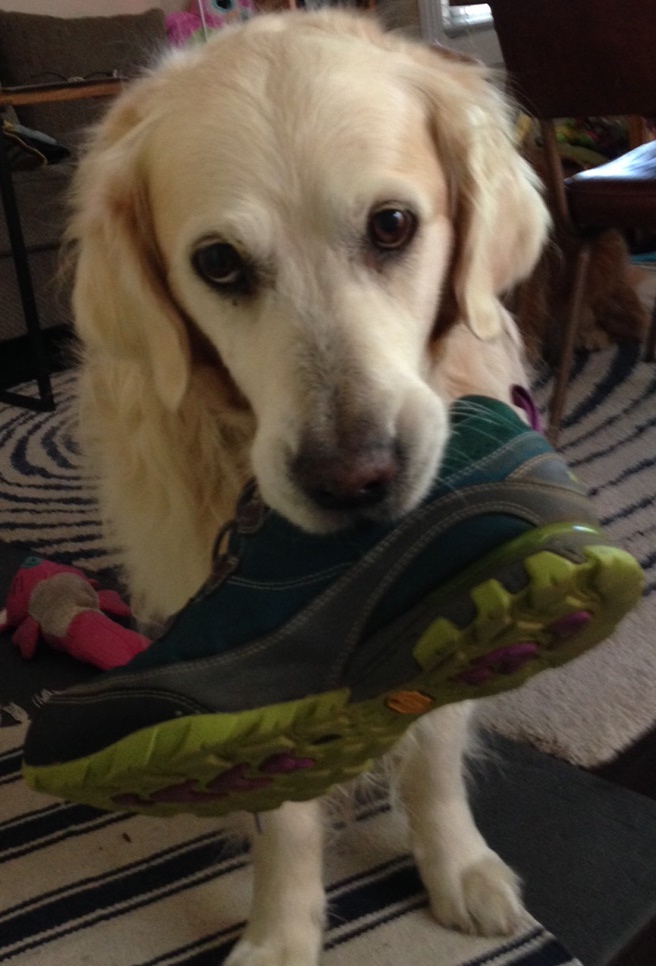
  • Many dogs will retrieve items that have not been requested in hopes of getting a reward. My dogs routinely bring me extra shoes in the morning, after they’ve been asked to bring my dog-walking shoes (and have been rewarded for doing so). This is probably optimism more than dishonesty, though. I routinely reward them for bringing me things that I have dropped, whether I was aware of dropping the item or not.

It gets even more sophisticated. For example, our German shepherd used to pretend not to know where the ball had landed when we threw it and he was busy sniffing something or chasing a squirrel. A request or two to get the ball would be completely ignored. Or, to humor the annoying humans, he’d search half-heartedly for a few seconds before doing the dog equivalent of shrugging and going back to something more interesting. “OK,” we’d say. “If we’ve lost the ball, it’s time to go home.” In under 10 seconds, he’d have found and delivered that “lost” ball.

Then there’s the golden who used the bells on the door to get Mom to open the door, knowing that her annoying puppy-sister would go charging out the door … while she stood there, smiling, as Mom closed the door with puppy outside and her inside.

So. While I will concede that not all of the above examples necessarily show deceptive behavior, some do, some might, and others at least indicate an ability to manipulate humans to obtain a desired end. I believe that dogs do lie and that they sometimes deceive each other and us. And they do it for a variety of reasons, including the possibility of getting a reward.

what the dog knowsI’ve been thinking about this since I read What the Dog Knows by Cat Warren. It’s a great book; I posted a short review here on the Thinking Dog Blog not long ago. It’s about scent-dog training, specifically, cadaver dogs. The author raises an interesting topic: False alerts. She’s brave to do this, partly because many dog people ran into what I think I am running into: Many people cling to decades-old and thoroughly debunked ideas about how limited dogs’ cognitive abilities are. But mostly she’s brave for another reason: Many handlers proclaim that their dogs are never wrong and become incensed if anyone suggests otherwise.

Some false alerts are the handler’s fault. Particularly when the handler is a beginner, and the team is at an early stage of training, the handler’s body language or other unintentional cuing might hint to the dog that “this is where” he should alert. In this case, the dog is not lying; he is trying to follow the cues he’s just learning, and thinks he’s doing what the handler wants.

Training and working in situations, like cadaver searches, where the handler is not always able to tell whether the alert is false further complicates the discussion. Some false alerts, as Warren explains, might not actually be false. She says that if they are training in a vehicle junkyard, for example, and her dog alerts on the seat of a smashed car with a shattered windshield, while that is not the target she’s searching for, she rewards the alert anyhow. The scents linger for a long time, and the dog probably did detect the scent of human decay (parts of the book do require a strong stomach!).

I’m not talking about those instances though. I wonder if — and at what stages of training — dogs intentionally, knowingly lie about detecting the target scent. There are certainly working situations where the handler might not know if the scent is present and therefore is likely to trust the dog and reward an alert. False alerts occasionally do cause problems in law enforcement.

She draws a distinction between false alerts that are outright lies and those that are more nuanced and, she says, even more insidious (though not always because of misbehavior from the dog). The dog is detecting something but is not entirely sure it’s the correct scent; or the dog has detected the scent but not found the precise location and alerts anyhow; whatever the case, in these instances, she explains, the dog isn’t consciously deciding to lie. As with human behavior, not all situations are easily explained, black or white.

Warren says she will never know whether her dog’s false alerts are inadvertent or are deliberate lies — but she does not rule out the possibility of a dog lying. She also says that her dog’s body language is so clear that she thinks she could tell if her were lying. Many humans betray their dishonesty through body language. Sometimes those “tells” are very subtle. A close study of our dogs’ body language might be our best chance at knowing when they are — and are not — trying to con us.

What do you think? Have you ever worked with a pathological doggy liar? An occasionally dishonest dog?

 

What the Dog Knows

what the dog knows

Cadaver dog training? Don’t make the same mistake I made — I was put off by the topic of this book and didn’t read it when it first came out (or even when I first got my copy). Once I started reading it, though, I was hooked. I breezed through it in a few days. Author Cat Warren does a wonderful job of weaving the history and technique of training scent dogs, and in particular cadaver dogs, into her story of training Solo, a German shepherd.

Like most of the books I love and recommend highly, this on puts heavy emphasis on the relationship between handler and dog. Warren is brave; she reveals her mistakes and failures as both the guardian of a high-energy puppy and as a novice trainer. She even admits to feeling overwhelmed by the intense, high-energy, demanding adolescent dog who shares her life, home, and hobby. We readers gain tremendously from her bravery, as these admissions both increase our understanding of how difficult cadaver training is and help us learn from someone else’s very understandable gaffes.

The book is rich with portraits of top cadaver dog trainers and handlers and with detailed descriptions of the training and the work. In her honesty and detail, Warren even mentions a great taboo among scent dog people: false alerts. They do happen. Her discussion of this raised a question in my mind about how deliberate the dogs are. I don’t know (yet) whether any formal studies have been done, but I am intrigued about whether the dogs are actually lying (intentionally alerting to get a reward) or whether they are simply unsure or scenting something that might be the target and responding because it seems to be what the handler wants or because they truly think they have identified the target scent. Look for more on this topic in an upcoming post .

Meanwhile, if you have any interest in scent dog training or cadaver dog training — or merely in a great dog-and-person story — read this book.


Animal Wise

Animal WiseI got a copy of Virginia Morell’s Animal Wise soon after it came out in paperback … then let it sit on my shelf for ages. I finally picked it up after hearing an NPR broadcast of a talk she gave in March 2015. She was wonderful! And so were her animal stories!

Animal Wise talks about many species of animals. She does save the best for last, though. The final chapter, on dogs and wolves, includes interviews with and visits to the labs of nearly all of my dog-cognition-research heroes (Adam Miklosi, Vilmos Csanyi, Jozsef TopolPeter Pongracz … she reveals why Hungary is the center of the dog cognition universe, too … but Juliane Kaminski, Julia Fischer and Brian Hare also get their due).

Morell does a fantastic job of grabbing readers’ interest with great storytelling. Who can resist reading about rats who laugh or ants who teach — and evaluate their students? I sure couldn’t.

She then describes the science behind these discoveries in laymen’s terms and explains why these discoveries matter. And best of all, her discussion of the research is not All About How Great It Is for Humans. In fact, her epilogue eloquently puts to rest (thank goodness) the idea that the only reason to study animal minds is to compare them unfavorably with humans’ minds and to keep on isolating the qualities that make humans superior. “Instead,” she writes, “given that we now know that we live in a world of sentient beings, not one of stimulus-response machines, we need to ask, how should we treat these other emotional, thinking creatures?”

While this is not light reading — heavy on the science — it’s well worth the effort and is, actually, a very friendly way to learn a lot about animal cognition science.

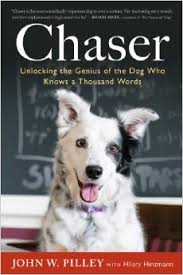
Chaser: Unlocking the Genius of the Dog Who Knows a Thousand Words

CHaserAmazing dog. Amazing and super-friendly author. I got in touch w/Dr. Pilley after reading the book (and his research papers) and he did a Skype conversation with a class I was teaching on dog-human communication. He is one in a million, as is Chaser. He is such a great example of positive training that respects a dog and her abilities… and he is a fantastic teacher as well.
No one is surprised to hear that a border collie is intelligent and learns easily. But Chaser has gone far beyond what any other dog has been documented to learn in terms of human language comprehension. Dr. Pilley set out to teach her as many words as he could — names of objects — after reading the dismissive comments that greeted publications describing the accomplishments of Rico, a border collie in Germany who learned several hundred words. Dr. Pilley analyzed the linguists’ and other academics’ critiques of the training and testing of Rico — and set out to train his dog in a way that addressed all of their objections. And he accomplished his goal. (An interesting chapter in the book describes the resistance he faced when attempting to publish his initial results.) The opposition to admitting that any creature but humans can use language is still deeply entrenched.
But it’s also dead wrong. Chaser truly does understand human language. She learned and retains the names of more than a thousand items. She has demonstrated her ability to categorize them, grouping round bouncy things into the “ball” category and flat flying things into the “Frisbee” category, for example. And, like most dogs, she clearly distinguishes the category of “my toys” from “things in the house that I’d like to chew but am not allowed to chew.”
But Dr. Pilley realized that he had not pushed the boundaries of Chaser’s abilities. So, they tackled grammar next. Chaser understands the concepts of subject, verb, object — and indirect object. As an editor and college instructor, I have to point out that many writers and college students do not reach Chaser’s level of grammatical knowledge.
Toward the end of the book, Dr. Pilley describes his initial attempts to teach Chaser to imitate long, complex strings of behaviors. His description inspired me to try simple imitation games with my dogs, which have been fun and very funny.
The best part about this book though, is its constant message: Keep training fun and rewarding for the dog; make it a game; play to your dog’s strengths and preferences and, most important, make sure she has time do play and engage in her favorite activities. For Chaser, that means regular opportunities to herd sheep at a near

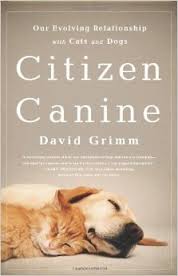
Citizen Canine

Citizen Canine
Should dogs have legal rights?
The question is not as crazy as it might sound. In Citizen Canine, author David Grimm explores this and many other questions about the rights, responsibilities, and roles of pets in contemporary life. He examines the history of pet life in American society as well as the legal status of dogs, cats, and other nonhumans. Along the way, he introduces readers to some interesting and influential people in the areas of animal welfare, animal law, animal rescue, and more.
Grimm is clearly an advocate for better treatment of dogs and cats and is very open to new possibilities — from laws that better protect pets and the people who love them to a radically new status for dogs and cats. But the book presents a mix of viewpoints and does an excellent job of presenting the very real questions posed by granting “legal personhood” to animals. Who would represent the interests of dogs and cats without families? Could a pet owner be jailed for failing to provide medical care to a standard determined by … whom? Could dogs sue people? Could they have their own money? How would we contend with the likelihood that veterinary malpractice insurance and lawsuits would dramatically increase the cost of vet care? Who would have legal standing to represent a pet? How would we handle getting dogs’ and cats’ consent before breeding (or neutering) them?
His discussion with a leader of the American Veterinary Medical Association reveals the fierce opposition among vets to any change in dogs’ legal status — and the hypocrisy of vets who appeal to pet owners by acknowledging the role of their pets as family members, and who offer, even encourage those owners to purchase vet care that costs thousands of dollars — then insist that a dog’s or cat’s value cannot exceed replacement cost. Like a toaster.
What I like best about this book is the many possibilities and viewpoints it presents. Some of the people Grimm interviews present the “personhood” question as black and white: Dogs must either remain with their current status, as property, with no more rights or protections than a toaster; or they must be elevated to a status equivalent to that of humans. As with most issues presented as a stark choice between two equally poor options, though, the reality is much more complex. Many of the objections raised, for example, can be resolved by looking for parallels in the way that we protect children’s rights or the rights of adult humans who cannot make their own legal decisions.
The final chapter introduces an idea that merits a lot of thought and that could provide pets with a status that more closely reflects their true position in our society. For details, you’ll have to read the book.

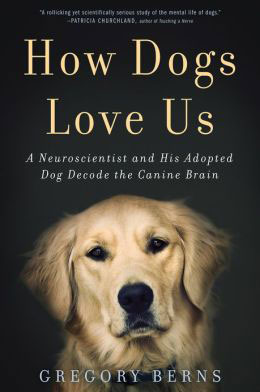
How Dogs Love Us

howdogsloveus_260Gregory Berns got the crazy idea of training his dog to lie still in an MRI machine, in the hope it would provide some insight into dogs’ thinking. What he found brings scientific proof to something every dog person knows — that dogs read us, anticipate our behavior, and act on that knowledge. Dogs, in short, have theory of mind. Berns rightly argues that this scientific evidence must change the way we think of and treat dogs.

What’s especially wonderful about this story is that, at least at the beginning, Berns is not an especially savvy dog person. He loves his dogs, treats them extremely well, but hasn’t spent a lot of time trying to communicate effectively with them or train them. By the end of the book — or maybe by a few months into the research — he’s become convinced that dogs communicate and function on a very high level and that “the key to improving dog-human relationships is through social cognition, not behaviorism.” Quite a journey … in fact, it’s the same journey that I hope to push my students along in Bergin U classes on dog training, canine-human communication and understanding the dog’s perspective. (Any current Bergin U students reading this might as well order their copies now … this book is destined to become required reading in all my classes.)

The book is filled with fairly complex scientific concepts, but it is written beautifully and clearly. It is very easy to understand and, like a good adventure novel, pulls readers along with foreshadowing and suspense. I especially love the long discussion of the ethical issues Berns and his team faced in setting up the research and the insistence of all the human researchers that the dogs would always be free to opt out, at any time. I also love the dog-centric approach the research takes (read the book to find out what I mean!). This book — this whole research study —is a testament to the amazing possibilities that exist when humans acknowledge their dogs’ abilities, treat them as partners (rather than as property or as slaves), and engage with them in a respectful, positive manner.

Because I am nut for precise language, I do have to quibble with the title. Berns does not actually show HOW dogs love us. He does show, I believe, that they DO love their human family members. While he can’t really show us what dogs are thinking, though, he has shown a way to understand their likes and dislikes — and perhaps opened the door to a better ability to read in dogs other emotions that humans and dogs share.

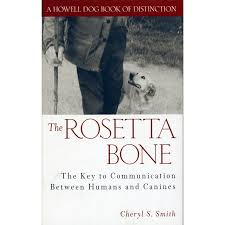
The Rosetta Bone

rosetta boneThe Rosetta Bone is a book I have been looking for for ages — a good book about how dogs communicate. The first several chapters address different types of communication: body language, verbal, touch, etc. Later chapters apply this information to interactions with dogs. How to solve common problems (and why they occur in the first place), teaching kids to interact appropriately with dogs, and more are addressed in a common-sense way. The author, Cheryl S. Smith, offers sound, dog-friendly advice in an easy-to-understand, clear style.

A Story Like the Wind and A Far-Off Place

A Story Like the Wind is not strictly a dog book, but, since one of the central characters is a magnificent Rhodesian ridgeback, Hintza, the book belongs on this barkshelf. A Far-Off Place is the sequel

A Story Like the Wind is beautifully written and evokes a long-gone era in southern Africa. Francois is growing up in a remote part of the bush, the only “European” child for miles around. His parents have unconventional views of the white man’s role in Africa, and their large, successful farm is a collaborative effort where the African workers are also part-owners; they are also family to Francois. A typical coming-of-age narrative, the book builds to a shocking, and rather abrupt, end. Throughout, Hintza plays a key role, often protecting Francois, always the first to notice anything unusual or dangerous, and always a loyal and loving companion. Francois and Hintza have similar romantic taste as well, both developing crushes on the same girl!

It’s a slow read, loaded with elegant descriptive detail, but worth the effort.

A Far-Off Place continues the tale, with Hintza playing a crucial role. The communication between Francois and Hintza is even more remarkable in the sequel. They share such an intimate connection that they expertly read each other’s body language; in addition, Francios speaks to Hintza in complex sentences, using a combination of African languages. Their understanding of each other is nuanced and sophisticated, evidence of a close bond.

Through a Dog’s Eyes

Through a Dog’s Eyes is the title of both a book and a companion DVD, which features a documentary about the placement of service dogs, focusing on twin boys with cerebral palsy. The book is written by the founder and director of the service dog organization that placed the dogs; the book describes several closely bonded human-dog teams. The author, Jennifer Arnold, does a wonderful job of weaving delightful anecdotes into her book and drawing lessons about dogs from them. Though it is not a training manual, Arnold does describe some common dog behavior problems — from the dog’s perspective. She does so in a helpful and dog-friendly way that will help owners see why the traditional methods of “correcting” these behaviors don’t work.

Arnold’s view of dogs might be astounding to some readers, however: Arnold states, for example, that dogs demonstrate “theory of mind,” providing several examples. In this, she’s willing to go farther toward recognizing dogs as thinking decision makers than most dogs experts. Even so, I don’t think she goes far enough. She clings to a common but, I think, incorrect view of dogs that dismisses the idea that dogs can “know better,” that is, that a dog can make “the right” choice, even if it goes against his training, instinct, or even self-interest. She cites as one example dogs who take food from counter-tops, stating that “nothing that hunts for a living will leave available food untouched unless they are not hungry, and even then they may take what’s available.” This not only echoes the familiar, if incorrect and outdated, view of “dogs as wolves” (after all, how many domestic dogs hunt for a living?) — it’s simply not true.

Dogs can be taught not to take what’s not theirs; all of the dogs I have trained have learned that lesson in early puppyhood.

Another area where I hesitantly venture to disagree with Arnold is that I think she over-idealizes dogs, sometimes making them sound too much like the “good wives” described in 1950s marriage manuals: eager to please, living only to serve, selfless, and heroic. I do not mean to detract from dogs’ many good qualities — I find dogs to be the most interesting and pleasant companions around — but I have certainly encountered in all dogs individual preferences and agendas that don’t always mesh with the ideas of the humans around them. Their individuality and complexity is what makes them interesting to be with, and I think that painting them broadly as helpful and eager to do our bidding shortchanges them.

Arnold and her organization (Canine Assistants, a top service dog organization located in Georgia) are strongly opposed to the use of force in training and she presents her viewpoint articulately. Since she and I studied with the same mentor (Bonnie Bergin), we advocate nearly identical approaches to educating dogs. Arnold strongly emphasizes the bond between the human and the dog in her methods of raising and educating dogs, and this comes across strongly in her book.

Overall, the book is a fun and heartwarming read and will give readers not only a new appreciation for the wonderful abilities of dogs but a great insight into the ways service dogs transform people’s lives as well.

Dog Sense

Dog Sense begins with an excellent discussion on the evolution of the dog as a domestic companion to humans and a thorough description of canine and wolf social structure. Along the way, the author, John Bradshaw, thoroughly dissects  and discredits force-based and behavioral training approaches as well as effectively demolishing the myths that “dogs are cute wolves” and that humans must establish dominance over dogs. But many readers are likely to be turned off by the heavy, overly scientific tone.

Although the subtitle of Dog Sense is “How the new science of dog behavior can make you a better friend to your pet,” it is misleading. Dog Sense will teach you a lot about where dogs came from and about their social structure, but it really won’t teach you much about how to enhance your friendship with your dog. Despite the marketing copy (and the subtitle), there is little about the dog-human relationship other than a convincing (if obvious) statement that force-based training could damage that relationship.

While Bradshaw provides an excellent discussion of association, habituation, and sensitization and emphasizes the need for early, positive socialization, he fails to connect these ideas with how to best teach dogs. In fact, he denies that dogs can build associations from previous experiences or even remember those experiences (key elements of learning) — even though he provides several examples that show that they do display those skills.

Again contradicting the marketing copy, the book does not present a dog’s perspective. Instead, Bradshaw falls into the familiar anthropocentric habit of denying that dogs can feel complex emotions because they lack spoken language, going so far as to state that it is “unethical (his emphasis) to make” the assumption that dogs experience the same array of emotions that we do. His anthropocentric bias is humorously illustrated in Bradshaw’s comment that dogs never evolved the ability to see colors because it wasn’t necessary: the example he provides is that carnivorous wolves wouldn’t have needed the ability to choose the ripest berries. Wolves are opportunistic omnivores who do, indeed, eat berries. More to the point, though, neither dogs nor wolves need to rely on sight to choose ripe berries; they simply follow their far more sensitive noses to the choicest of fruits, as many a domestic dog has been known to do.

Despite a too-common reliance on old myths and a too-anthropocentric focus, there is much solid information in Dog Sense and it is a valuable addition to any dog professional’s library, especially for those who seek a detailed analysis of the science of the evolution, domestication, and social history of dogs.