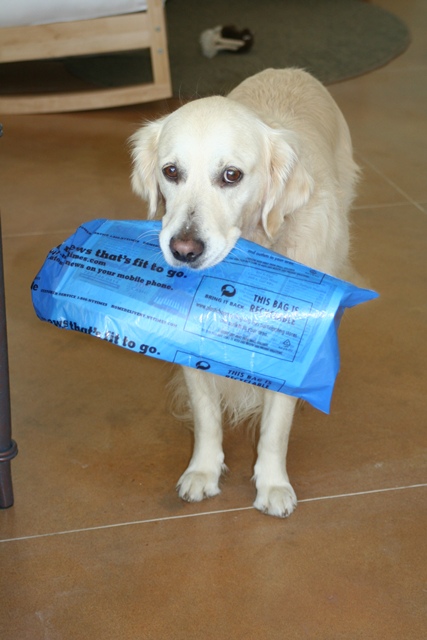
Dogs Understand Our Words — and Our Tone of Voice

janaNYT

This week, many media outlets have run stories on a recent Hungarian study that might show that dogs not only understand the words we say to them, they also understand the tone of voice. I haven’t yet read the full paper, but based on several articles, here’s the gist.

The 13 dogs, trained to lie still in an MRI machine (so already a select group of highly educated individuals …), were tested on four sets of cues: Praise words said in a “praising intonation,” described as a higher and more varying pitch than neutral speech; the same praise words in a neutral tone; neutral words in a praise tone; and neutral words in a neutral tone.

From interactions with dogs, most of us know that we can get dogs to respond to pretty much anything we say in an excited or happy tone. And we know that they respond to some words even if we barely whisper them. For instance, a whispered “c…o…o…o…o…k…i…e…e…e…” gets a reliable response even if the dog is 100 yards away, playing happily with her buddy. But this research study, like several other MRI studies by this team and an American team, looked at the response in specific areas of the dogs’ brains, not their actions.

Praise words, regardless of tone, caused reactions in the left hemisphere of the dogs’ brain; this is similar to what the researchers would see in a human brain that is processing speech. Neutral tones, regardless of words, produced a reaction in the right hemisphere; this is similar to what the researchers would see in a human brain that is processing generic acoustic information. And, when the praise words were spoken in the praising tone, the reward centers of the dogs’ brain lit up. This shows that the dogs were able to integrate the meaning of the words and the tone and deduce meaning from them.

This study seems to show that dog brains process speech similarly to the way human brains process speech, which is what this article on Smithsonian.com reports. Other media reports said that it also means that the dogs understand human language, like this one from NPR.

Some experts, like one of my all-time-favorite scientists, Dr. Gregory Berns, told Smithsonian.com that the paper has been “wildly overinterpreted,” partly due to its methods. He pointed out that responding to speech and tone is not the same as understanding it.

That may well be true. On the other hand, the NPR article warns of the perils of life with such smart dogs, particularly if — as I do — one leaves NPR on for them to listen to all day. My dogs are, indeed, both smarter and better-informed than I am, especially now that I work in an office and do not listen to NPR all day.

However, in all seriousness, I think the overinterpretation also may be oversimplification. Yes, our dogs learn that certain words, even sentences, have specific meanings. They learn our habits and routines, and through experience with us, they associate all kinds of things with words. In our household some examples are: Leashes and fun and ball-playing with, “Who wants to go to the park?”; bowls of yummy food with “How about some dinner?”; and a careful backing up so that just her large, furry front paws are over the threshold with “Out of the kitchen, Cali.” The front feet then scootch back almost imperceptibly in response to, “The entire dog, please.” So yes, my dogs understand and respond somewhat appropriately to several sentences; I suspect that each family’s dogs have a set of favorites.

But even armed with my years of knowledge of their intelligence, along with my new realization of their eruditeness (is there a dog-oriented radio station that I could leave on instead of NPR?), I do not think that they process and understand human language in the same way that a human adult does.

What I do think, based on a combination of experience and having read dozens of research papers on dog-human communication, is that they read us really, really well. They don’t respond only to the words we say or the words combined with the tone of voice. Humans don’t either; so much communication is based on body language and other cues, even between humans. But dogs really read our body language. They also read all the scents we are giving off, including pheromones that we are completely unaware of. They read our microexpressions and our posture and our facial expression and pay attention to what we are doing as we are talking to them. They can figure out our emotions from these cues. They know when we “mean it” and when they can push the boundaries just a bit further.

Cali is much quicker to listen to my “get out of the kitchen” phrases when I am fixing her dinner than when I am doing the dishes. She’s learned that I will stop fixing her dinner and wait for her to leave the kitchen. She doesn’t like that consequence. But she doesn’t much care if I get the dishes done and maybe even wants me to stop doing them so I can pay attention to her.

The point is, looking at dogs’ response to words and voice in isolation doesn’t make sense, because in their lives with us, that is not how they use language. Another important thing to remember about dogs, as opposed to any other nonhumans, is that so much of who they are has been shaped by the fact of their lives with us. The dog-human connection is unique; our communication with them is different from our communication with any other nonhumans (even cats).

The most important point, though, is that dogs pay close enough attention to us to learn the meanings of the different things we say to them. They care whether we’re happy with them — or just whether we’re happy. I’m excited about new discoveries about dogs’ intelligence and cognitive abilities. But I am even more excited about new reasons to cherish the relationship I have with my girls and that others have with their dogs.
 

That Soulful (and Loving) Gaze

Oxytocin is a hormone that plays a role in social bonding, as implied by some of its nicknames: the love hormone, cuddle chemical, or bliss hormone. It’s also something that dogs and humans share.

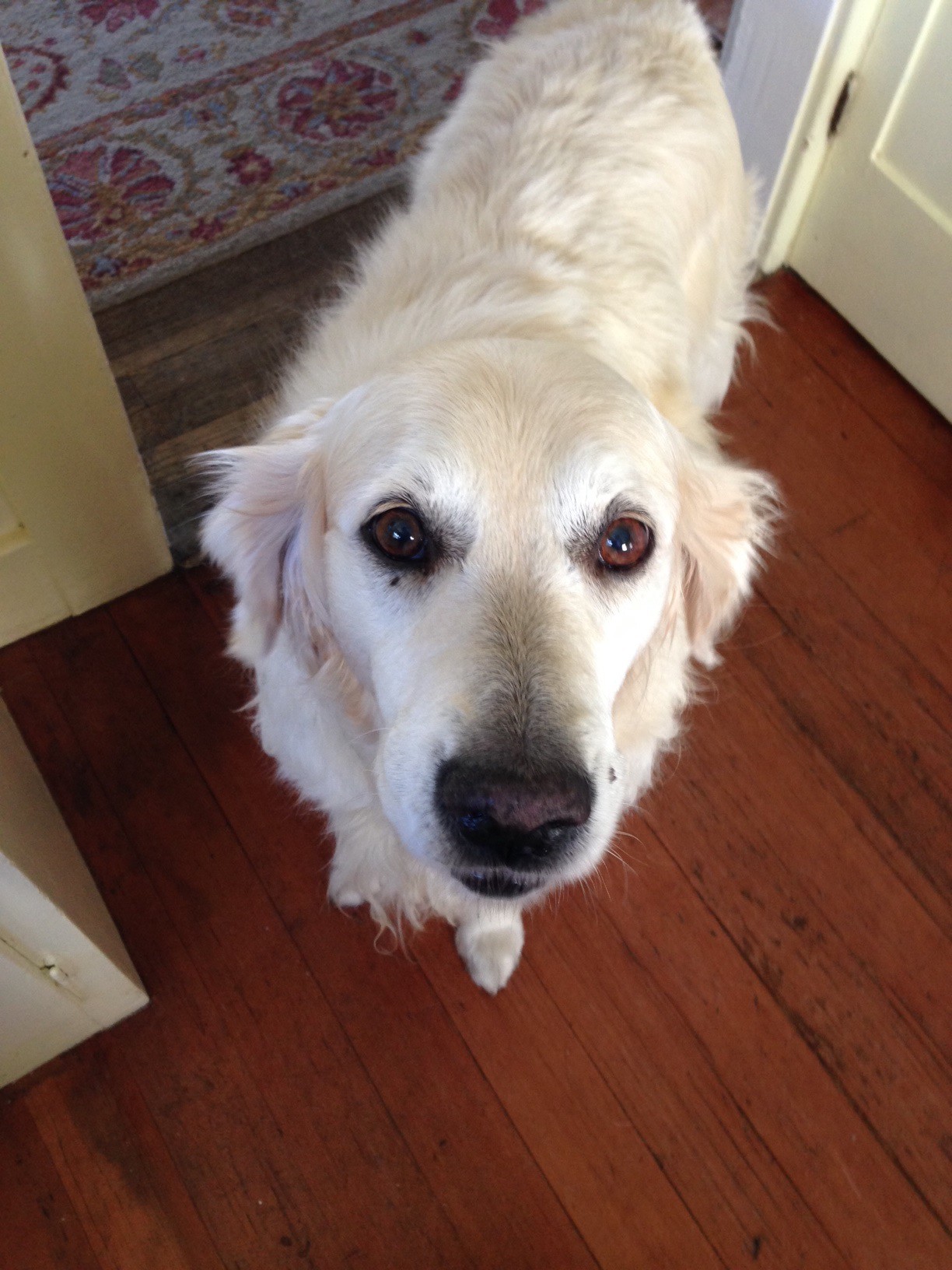
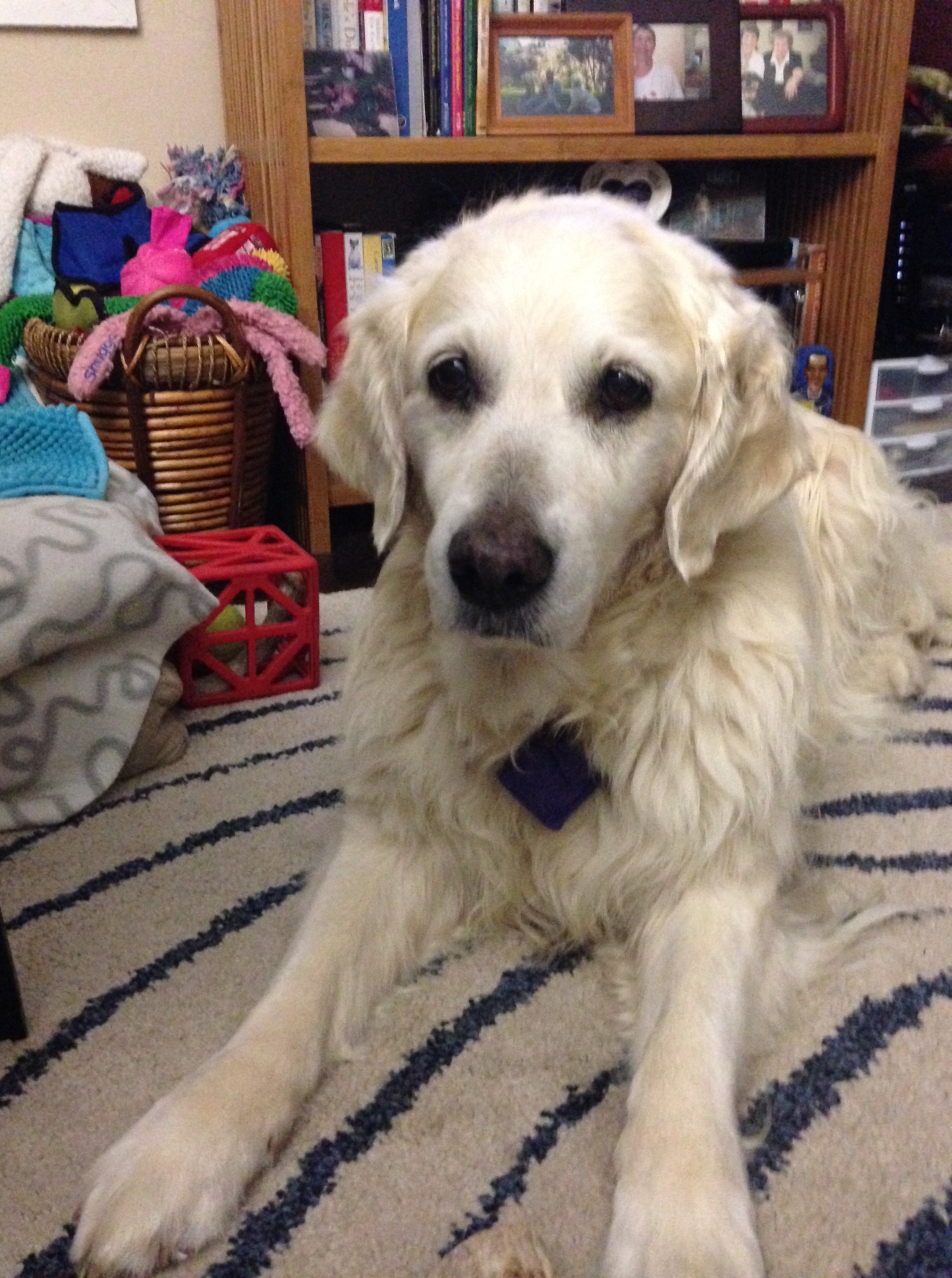
Studies published in 2009 found that, when dogs gazed at their owners — you know, that adoring gaze that says, “feed me; I’m yours,” owners had more oxytocin in their urine. This correlates with feeling affection and social connection.

You can see where this is going, right? They gaze at us, we interpret it as adoration, we respond by feeling loved and happy. This works well for the dog. For us, too; real or not, we have that great “someone loves me” feeling.

But there’s more to this story. A later study looked at more variables. For example, the oxytocin in dogs’ urine. Did they get the same emotional lift out of the exchange of adoring gazes? Also whether interaction with the humans affected oxytocin in either humans or dogs.

This is where things get interesting.

A note: In both studies, dogs and wolves were used, as a way to determine whether this was just a canine thing, or whether it really has to do with the dog-human relationship.

First, the study looked at the effects if the person and dog exchanged gazes only, versus when the person also interacted with the dog, talking to her or petting her. No one was given oxytocin in this study; dogs’ and humans’ levels were measured before and after. The dogs and owners who spent the longest time gazing and interacting with each other had significant increases in their oxytocin levels — the dogs’ levels as well as the people’s. The dogs like the attention — even you, Jana! The gaze-only dogs and the shorter-gazing couples had small or no increases. Neither did the wolves.

A variation of the study had researchers administer oxytocin to some of the dogs to see whether the amount of oxytocin in their bodies made a difference. Then, the dogs and humans were allowed to gaze at each other, but the humans were not allowed to intentionally interact. If the dogs touched the humans, it was noted, but the humans were not allowed to respond by petting or talking to the dog.

So, was there a change in the dogs’ behavior if they had higher (administered) oxytocin? There was — but only for female dogs. With more oxytocin, they gazed at their humans for a significantly longer time; the length of their gaze at a stranger wasn’t affected. Male dogs actually gazed at their owners longer if they had not received oxytocin. The wolves didn’t really gaze at the people.

Not to knock boy dogs, but … maybe they’re just not that into you.

Seriously, what this all means — according to the researchers, anyhow — is that a mutually reinforcing loop occurs (particularly with girl dogs). They gaze at us, we look back, babble nonsense at them, rub their bellies … Hmmm, how do they gaze at us while we’re rubbing their bellies? OK, we stroke their long, soft ears and gaze back into their eyes. And everyone feels all warm and mushy and loved, so the girls keep staring at us, to keep this good thing going. More gazing, more oxytocin, so more and longer gazing, and the cycle continues.

Gazing is important in human social bonding and communication, starting when babies nurse. Lots of research shows that dogs use humans’ gaze as communication — and use their own gaze to communicate with us. And, as I wrote a couple of weeks ago, dogs choose to hang out with us. All that, to me, adds up to a mutual bond that is very rewarding to all of us, including the dogs. That, and they need someone with working thumbs around to get access to their dinner.

Just Hangin’ Out

Jana_aging

We all know that our dogs love us, right? It’s not enough to know that, though; researchers have to prove it. Fine. First we had the wonderful Dr. Gregory Berns and his MRI studies that showed that the pleasure center in dogs’ brains lights up when they catch a whiff of a familiar human. Then we had oxytocin studies that showed that a meaningful gaze is also therapeutic — for dogs (more about that in a future post). Now, my favorite: A study showing that dogs will actually learn and perform a task for what reward? A chance to spend a minute with their person.

The study was published in the fall issue of the Journal of Applied Behavior Analysis. Titled “Application of Functional Analysis Methods to Assess Human-Dog Interactions,” the study itself if a tough read. Do yourself a favor and read Dr. Stanley Coren’s “translation” in his column for Psychology Today.

The study only looked at three dogs, so it is not exactly definitive. But these dogs were tested on several different scenarios. First, they learned to perform a task that would open a door and allow them access to a room where their human was sitting. They actually figured out — taught themselves —a task, then performed it over and over again, just to get to be with their humans. They could hang out with (and be petted by) their person for one minute, then they were taken back to the room.

Initially the room was bare and boring. But then the researchers upped the ante. They gave the dogs some toys. Later, they added the dog’s favorite bed. In each case, performing the same task would let them out and give them access to their person. Yes, they chose to leave a relatively comfortable room and their toys to be with their humans. One dog had a harder time leaving the toys than the empty room, and one of the dogs chose not to leave the comfy bed.

The next level test put the people and dogs in the same room. Now, the dogs had no bed, no toys, and a human who was working on a computer. The door was open; the dogs were free to head to their toys, their beds, out. Yet, even though the person wasn’t paying paying any attention to them, the dogs showed a preference for being with their person. They stayed, rather than head to a more stimulating place.

Remember, this is a very small study. But it tracks with my experience of living with many dogs over many years, and spending time with dozens (hundreds?) of dogs whom I knew well but did not live with. It also lines up with our understanding of dogs as great therapy visitors, empathetic creatures, and just plain good friends.

I live in a tiny apartment, but, in addition to the living room where I spend much of my time, the dogs have access to the yard most of the time, a bedroom (with very comfy dog beds), and the kitchen and bathroom,which offer a cool floor in hot weather. The vast majority of the time, Jana chooses to be in whatever room I am in. She gets up and moves if I do. Even if I tell her, “Don’t move; I am coming right back,” she goes with me. In fact, ages ago, tiny 7-week-old Jana attempted a huge flight of stairs when I ran upstairs to get something and she just didn’t want to be left alone for even a minute.Janas Bed age 2

Cali is less consistent. If I move, she always comes to see if something fun is about to happen. But she often likes to nap on my bed or hang out outside when I am working in the living room. Even then, though, she comes and checks in very frequently.

This study seems to say that dogs enjoy just hanging out with their people. I am happy to know that. The more time I spend with dogs, the more I appreciate the true friendship between us; it’s nice (though not necessary) to see research studies confirming that this bond is valued by dogs as well.


She’ll Have It HER Way

Who else is old enough to remember the Burger King jingle about having it your way?

I’m sure Jana’s never heard it, but she’s completely on board with the idea. Jana is very particular about how she wants things done.

The other day, we set out for our usual morning walk. Except that she did not want to walk a block up Petaluma Blvd. to the crosswalk. Or a block the other way to the light and crosswalk. Nope. She wanted to cross on the corner of our street and head right to the little park a block in on the other side of the street. I could not convince her to walk to the crosswalk.

When she digs her heels in, nothing I can do will budge her. And I am not about to drag 61 pounds of elderly golden retriever down the street.

So we did it her way. She got to the park, rolled in the grass, smiled broadly, sniffed and rolled some more. Happy Jana. Then we went on our usual route to the big park.

On a Saturday morning, early, there’s not much traffic on Petaluma Blvd. so it doesn’t matter if we cross at our corner or at a crosswalk. On a weekday morning, I wouldn’t chance it. Other than traffic, does it really matter which way we go? Of course not. But to Jana, being able to express a preference and make a choice, even a trivial one, matters.

To Cali, too. When we play ball, if I take the “wrong” ball from the basket, she won’t return it to me. She’ll run over, sniff it, then give me a  reproachful look. That’s not my ball. I’ve learned. I pick two balls from the basket, any two, and let her choose. Then she plays happily with her ball.

Some afternoons, if Jana seems tired, I let her choose between a walk (I offer the leash) and her favorite toy (I also offer Squirrel Dude). Contrary to my expectation, she does not always choose Squirrel Dude, who comes with a bellyful of Charlee Bear treats. She often wants a walk. She always appreciates having the choice.

The choices are not monumental. It’s probably similar to letting your two-year-old child choose between two T-shirts when getting dressed. I’m not letting the dogs take over (I keep telling myself that, but even I don’t really believe it …); I’m just letting them have some control over their environment. There’s so much that I can’t give them a choice about that I am always happy to find things that they can decide for themselves.


Please Back Off

Not all dogs are as fortunate as Molly. Molly’s parents wrote to The Thinking Dog, asking for help getting people to understand that Molly needs her personal space. In this post, I am speaking for all dogs who are not as lucky as Molly.

Personal space is a cultural issue. Americans tend to like more of a bubble around them than people in some other countries. I’m not sure whether dogs in different countries or cultures have different needs for personal space, but I am positive that all of the dogs I know need people to respect that bubble. Especially people they don’t know well.

Dog bite stories in the media often say that “it came out of nowhere” or that the dog gave no warning signs. This is rarely true. Spending a few minutes looking at Facebook postings of photos and video of dogs with babies and children is a great way to gather photos of dogs showing dozens of warning signs or pleas for space. Watching those news videos of the “bites that came out of nowhere” also offers a catalog of behaviors that are clear warnings.

It’s not only children who do things that cause annoyance or stress to dogs: A particularly chilling video I’ve used in canine communication classes is one where a news anchor is severely bitten after putting her face right in the face of a stressed, overwhelmed dog — a dog who has spent the previous couple minutes (or more; it’s a short video) asking her to back off in every way a dog can.

The problem isn’t that the dogs are not giving fair warning, asking for help, or both; the problem is that most people aren’t listening or simply don’t understand the signs. Here’s a list of the most common stress signs:

  • Licking lips or nose
  • Turning the head away
  • Whale eye — wide eyes with the whites very clearly visible
  • Yawning
  • Ears back
  • Tail tucked
  • Scratching — self or the ground
  • Sniffing
  • Shaking or shaking off (as if shaking off water)
  • Bowing
  • Stress smile
  • Red eyes
  • Sweaty paws
  • Panting
  • Hypervigilance
  • Freezing

What do we do that is stressful or threatening to our dogs? Most dogs do not like being hugged or patted on the head. Frontal approach with direct eye contact is scary for many dogs. Many dislike rough petting or play hitting or people bending down, putting their faces right up close to the dog’s face and kissing or blowing at them or baby-talking them. In short, if you would be annoyed if someone did it to you, don’t do it to a dog, especially a dog you don’t really know. This doesn’t mean you can’t cuddle your dog; it means you should look for cues that he is enjoying — or uncomfortable with — what you are doing, and respond accordingly.

Some of the signs listed above do double duty: They are also what is commonly called “calming signals.” These are body language cues that dogs use to calm themselves or others. Dogs will direct calming signals to other dogs and to humans. A well-socialized dog responds appropriately — backing off, giving the dog some space, or responding with calming signals of his own. Unfortunately,  the signals are often subtle and, when noticed, misunderstood by many humans.

Cali stress
Stressed Cali

For example, the smile. A smiling dog might be a happy dog; depends on the smile. These photos show a happy Cali and a stressed Cali. She’s “smiling” in both. But in the relaxed, happy photo, Cali’s eyes are soft, her smile is loose and relaxed; in the stress photo, her eyes are hard and tense, and her mouth is tighter. For many additional (better) photos of stress, take a look at these blog posts by Eileenanddogs: “Dog Facial Expressions: Stress” and “Is That ‘Smiling’ Dog Happy?


Happy Cali
Happy Cali

Other common calming signals that could be early signs of discomfort or stress are the licking the lips or nose, yawning, and turning the head away. When you notice these subtle signs, it’s a good idea to remove your dog from a situation that is becoming unbearable for him. Some dogs lick submissively — no, the dog is not “kissing” you because he’s enjoying the close attention — or shake or try to leave or hide behind their owners.

If the dog can’t escape the situation and the “aggressor” doesn’t back off, the dog is likely to escalate. Bared teeth, soft growls, or air snaps might be the first steps when a dog feels that he has no choice but to defend himself. And if the owners have taught the dog never to growl, as so many believe they should … the dog might just bite “without (obvious) warning.”

We’re our dogs protectors. It is our job to learn their stressors, heed their calls for help, and remove them from stressful or overwhelming situations.

Additional Resources

Want to learn more about dogs’ stress signals? Here are some articles and blog posts that offer good info and advice:

Your Dog Hates Hugs, by Melissa Dahl

It’s Only Funny Until Your Dog Runs Out of Spoons, E. Foley, Your Dog’s Friend blog

You’re Too Close! Dogs and Body Pressure, eileenanddogs blog

The Gift of Growl, Pat Miller

Preventing Dog Bites, Patricia McConnell

A Canine Stress Dictionary, and Signs That Your Dog Has Stress, and so much more on the Whole Dog Journal website


Minding Their Manners

I recently read a study that compared wolves’ and dogs’ ability to solve a “puzzle” — opening a plastic box with a piece of sausage inside. The wolves did much better than the dogs, and, from the articles I read about the study, it seems that many researchers are interpreting that to mean that the dogs are dumber than the wolves, at least when it comes to problem-solving. The comments were rather unkind to dogs, and, I think, wrong.

One comment, in the New York Times, came closest to “getting it.” This person suggested that perhaps the dogs had been taught not to take human food or open food containers. Paired with the fact that most dogs’ food is handed to them by humans, while most wolves must find their own food, I’d say the dogs were set up to fail.

The study was published in a British journal by an Oregon State University researcher, Monique Udell. In her own analysis, she paid more attention to the fact that the dogs spent more time looking at the familiar human (who was present for some trials of the test and who provided encouragement in some trials) than at the box. Various commenters’ interpretations of the dogs’ looks ranged from “seeking assistance” to “slavish.”

Half the dogs tested were pets; the other half were shelter dogs, but no information was provided about how many of those had spent part or most of their lives in homes before landing at the shelter. The wolves had been socialized to humans, but even a tame wolf is still a wolf, not a domestic pet.

It makes sense that the dogs would have been taught not to take food or been punished for taking food. It also makes sense that, if a familiar human were present, they would seek help, information, or even permission before helping themselves. When I give my dogs a particularly spectacular treat (a 2-inch piece of sausage would certainly qualify), they often look at me, look at it, look at me — going back and forth a few times, seemingly questioning whether this bounty is truly meant for them. They are polite. They know the rules. They are also quite happy to indulge in exceptions to those rules, once they’re sure they won’t get reprimanded for doing so.

I would have been much more surprised if the dogs didn’t look to the human for permission or help. After all, thousands of years of living together has resulted in close partnerships and, at least on the dogs’ part, exquisite ability to read human’s communication. We humans are less successful at reading the dogs, sadly. Their survival depends on reading humans’ cues and behaving accordingly. Wolves have no such hangups (nor should they).

Some comments on the study went so far as to suggest that training dogs has made them dumber and less able to solve problems, that their social connection to humans puts them at a cognitive disadvantage. I disagree. While some training approaches do discourage dogs from thinking, modern approaches to training that use motivation and reward actually encourage problem-solving. Far from dumbing dogs down, their enhanced social sensitivity to humans enables them to thrive in our world and, in many cases, enjoy comfortable lives and strong connections with their adopted families.

And if those strong connections compel dogs to ask before eating your food, what’s wrong with that? Many people wish their roommates were as considerate.

For more about the study, see these articles:

OSU study: Have we made dogs lazier or dumber than their ancestor wolves?, the Register-Guard, Oct. 2, 2015

Why Is That Dog Looking at Me?, The New York Times, Sept. 15, 2015

The study, “When dogs look back: Inhibition of independent problem-solving behavior in domestic dogs,” by Monique Udell, was published in the British journal Biology Letters on Sept. 16, 2015.

See also my related post on the PPG Barks blog.

Canine Con Artists?

I originally wrote this post for PPG Barks, the blog of a professional positive trainers networking organization. The post was rejected; I think the reason is that I am asserting that dogs deceive each other and humans. I am  very interested in this topic, and I plan to revise the post further (or write an entirely new post) about dogs and deception. Meanwhile, I’d love some feedback from you. Please comment on the post or to me privately if you feel inclined. I am interested in what other dog people think about the question of doggy honesty and deception.

How much is a dog willing to bend the truth or improvise in order to get a reward?

That’s not a crazy question. Dogs routinely exhibit all of the cognitive behaviors needed to form an idea, plan, and execute deceptive or manipulative behavior. Consider:

Cookie, please
Cookie, please
  • Dogs deceive each other or fake each other out to get what they want. One dog will pretend to hear someone at the door and bark the warning bark — anticipating that his doggy sibling will run to the door. The conniving canine then steals the dupe’s rawhide, toy, bed, choice spot by the TV, etc.
  • Dogs who have been taught to ring a bell or bark when they need to go out tend to go through at least a short period of ringing that bell constantly … or at least testing out how often they can get Mom and Dad to “hop to it” and let them out, even when all they want to do is roll in the grass or bark at the neighbor.
  • Is there any dog who hasn’t tried to convince her owners that they have “forgotten” to feed her?
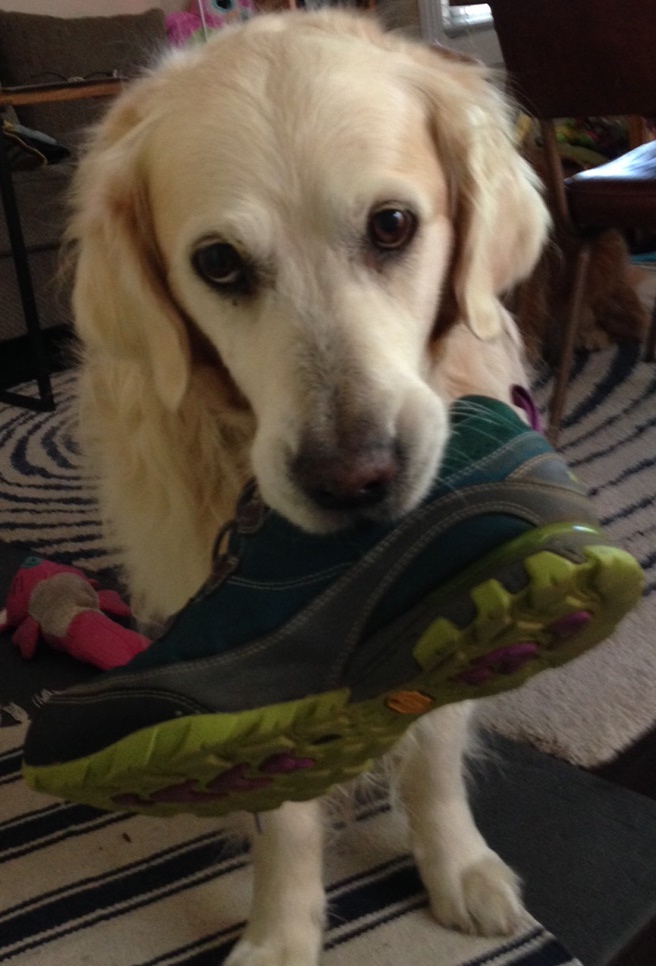
  • Many dogs will retrieve items that have not been requested in hopes of getting a reward. My dogs routinely bring me extra shoes in the morning, after they’ve been asked to bring my dog-walking shoes (and have been rewarded for doing so). This is probably optimism more than dishonesty, though. I routinely reward them for bringing me things that I have dropped, whether I was aware of dropping the item or not.

It gets even more sophisticated. For example, our German shepherd used to pretend not to know where the ball had landed when we threw it and he was busy sniffing something or chasing a squirrel. A request or two to get the ball would be completely ignored. Or, to humor the annoying humans, he’d search half-heartedly for a few seconds before doing the dog equivalent of shrugging and going back to something more interesting. “OK,” we’d say. “If we’ve lost the ball, it’s time to go home.” In under 10 seconds, he’d have found and delivered that “lost” ball.

Then there’s the golden who used the bells on the door to get Mom to open the door, knowing that her annoying puppy-sister would go charging out the door … while she stood there, smiling, as Mom closed the door with puppy outside and her inside.

So. While I will concede that not all of the above examples necessarily show deceptive behavior, some do, some might, and others at least indicate an ability to manipulate humans to obtain a desired end. I believe that dogs do lie and that they sometimes deceive each other and us. And they do it for a variety of reasons, including the possibility of getting a reward.

what the dog knowsI’ve been thinking about this since I read What the Dog Knows by Cat Warren. It’s a great book; I posted a short review here on the Thinking Dog Blog not long ago. It’s about scent-dog training, specifically, cadaver dogs. The author raises an interesting topic: False alerts. She’s brave to do this, partly because many dog people ran into what I think I am running into: Many people cling to decades-old and thoroughly debunked ideas about how limited dogs’ cognitive abilities are. But mostly she’s brave for another reason: Many handlers proclaim that their dogs are never wrong and become incensed if anyone suggests otherwise.

Some false alerts are the handler’s fault. Particularly when the handler is a beginner, and the team is at an early stage of training, the handler’s body language or other unintentional cuing might hint to the dog that “this is where” he should alert. In this case, the dog is not lying; he is trying to follow the cues he’s just learning, and thinks he’s doing what the handler wants.

Training and working in situations, like cadaver searches, where the handler is not always able to tell whether the alert is false further complicates the discussion. Some false alerts, as Warren explains, might not actually be false. She says that if they are training in a vehicle junkyard, for example, and her dog alerts on the seat of a smashed car with a shattered windshield, while that is not the target she’s searching for, she rewards the alert anyhow. The scents linger for a long time, and the dog probably did detect the scent of human decay (parts of the book do require a strong stomach!).

I’m not talking about those instances though. I wonder if — and at what stages of training — dogs intentionally, knowingly lie about detecting the target scent. There are certainly working situations where the handler might not know if the scent is present and therefore is likely to trust the dog and reward an alert. False alerts occasionally do cause problems in law enforcement.

She draws a distinction between false alerts that are outright lies and those that are more nuanced and, she says, even more insidious (though not always because of misbehavior from the dog). The dog is detecting something but is not entirely sure it’s the correct scent; or the dog has detected the scent but not found the precise location and alerts anyhow; whatever the case, in these instances, she explains, the dog isn’t consciously deciding to lie. As with human behavior, not all situations are easily explained, black or white.

Warren says she will never know whether her dog’s false alerts are inadvertent or are deliberate lies — but she does not rule out the possibility of a dog lying. She also says that her dog’s body language is so clear that she thinks she could tell if her were lying. Many humans betray their dishonesty through body language. Sometimes those “tells” are very subtle. A close study of our dogs’ body language might be our best chance at knowing when they are — and are not — trying to con us.

What do you think? Have you ever worked with a pathological doggy liar? An occasionally dishonest dog?


Missing You?

Does Jana still miss her best friend, Oriel?

Do dogs miss us when we’re away? Do they miss places they’ve been or items they’ve loved?

It’s clear that dogs remember people and places — and often, the landmarks or scents on the way to places that they either love or hate. Dogs can recognize a person whom they haven’t seen in years. Or a place that they haven’t visited in years: Oriel, our late and much-missed golden retriever once ran joyfully to the site of a small pond that had been dry for about a decade. The former pond was a short walk from her former home in Montana, and she hadn’t been there for at least 3 years. She became very excited as we approached the road to the house, too. And of course all of our dogs know the way to fun places and begin to show excitement ridiculously early in any journey in the general direction of the dog beach, Cali’s sister Dora’s house, the park where we play ball …

It’s also clear that dogs use these memories to anticipate, with pleasure or dread, future experiences. Dogs generalize and can become fearful of people or situations that remind them of unpleasant experiences in the past. A dog who fears going to the vet, for example, can recognize a vet’s office, any vet’s office, from several blocks away. Happy experiences have the same effect. Thus a dog who loves to run and play will decide that any open green space you happen to drive past would be a really fun place to stop and play ball. He might helpfully point out all the nice play opportunities say, between Northern California and Missoula, Montana, as you are driving. Believe me, there are hundreds of open green spaces in the American Northwest.

But do they miss us? Do they miss places?

This question becomes more relevant each day, as our departure from Montana gets closer and closer. Does Cali miss her play park and friends in Petaluma? More to the point: Will she miss her private play yard in Montana? Will she ever forgive me for taking her away from this idyllic place where she is so happy?

It’s also a question that many dog owners ponder if / when they leave their dogs with a dog sitter or boarding kennel when they travel. Does the dog pine for them? Wonder where they are? Or, as dogs do so well, does the dog simply live in the present moment, enjoying the attention of the dog sitter?

I’ve heard enough stories about how dogs behave after the death of a loved human or canine playmate or family member to believe that dogs grieve. Isn’t that an indication that dogs miss people or dogs who aren’t present?

I don’t have a definitive answer to any of these questions. I suspect that some individual dogs form closer ties to people, dogs, places, and other beings or objects and do, indeed, miss them. Other dogs appear to be — and may truly be — happy in the present moment, loving the ones they’re with.

So the answer might be similar to my answer to so many questions about dogs: It depends. Dogs are individuals. Your individual dog might miss you very much when you are gone. Or she might happily hang out with whomever is nearby. Cali might miss Montana. But Cali’s such a sunny optimist that I am betting she’ll be happy to be back in Petaluma and enjoy picking up our old routine and reconnecting with her playmates there.

At least, I hope that’s the case!

Anticipation … Is Making Me Worry

Cali worries.

Many people worry. They dream up scenarios that could never happen. Then they worry that those unlikely events can and will happen. And they worry about what would follow … I don’t know if Cali does that, but she does worry about things that she knows are about to happen.

She worries about brushing her teeth. This is odd, because, when she was a puppy, she actually asked to have her teeth brushed, perhaps anticipating the treat to follow. She walked over to where the dog toothbrushes and toothpaste were kept and touched them with her nose. Looked at me. If I failed to notice, she nudged my hand, then walked over and touched the brush again.

Now, when it’s getting close to bedtime, she’ll go out for “last call,” then come in and immediately disappear when I say, “Time to brush your teeth,” or even move toward the bathroom. Disappearing a 60-lb dog is not an easy feat in a tiny one-bedroom apartment, yet Cali is gone. Jana comes right over to the sink, tail wagging, ready for the nightly tooth-brushing routine. I call Cali. She hides behind the bathroom door. Or I find her in the dog bed on the other side of my bed, pretending to be asleep. I’m willing to provide delivery service for the actual tooth-brushing but not for the cookie that follows. That’s only for dogs who line up to get their teeth brushed (she usually shows up for that part). Tooth-brushing doesn’t hurt. She’s never had a toothache or broken tooth or even an abscess. She likes the taste of the (chicken-flavored) toothpaste. But, somehow, when she knows that it is coming, she worries. The anticipation is much worse than the experience.

This is also the case for some other grooming tasks: Ear cleaning is admittedly as bad as she expects it to be, but getting the fur on her feet trimmed doesn’t hurt at all. It might tickle a bit, but then she’s amply rewarded with really special cookies. Nail trimming is even worse to anticipate: Both the Dremel that files her nails and that horrid clipper thingy are clearly medieval torture implements, in her view. In her entire 2 ½ years, no one has ever over-trimmed and cut the quick. Even so, no one can convince Cali that nail trimming is not worth every ounce of dread she can summon.

Cali worries about other things too. When I am working at my home computer, she catches sight of her ball and then looks worriedly at it, as if wondering whether anyone will ever throw it for her again. When we’re at the park and I do throw it, she catches it and then holds it between her paws, lying on the grass and looking worriedly around her at the other dogs who might come by and nab it. When she decides other dogs are too close, she picks up her ball and moves to a different part of the field. When no possible dog threats are near her in the park, she stretches her back legs out, ball loosely held between her teeth, and wags her tail at the activity happening at a safe distance. But she is reluctant to let the ball go for me to throw it — and start up the whole worry sequence again.

Her other big source of worry is the vacuum cleaner. It looks innocent, tucked into its little corner of the kitchen, but it sometimes roars to life. She avoids it, though she had no such fear as a puppy. When it comes out of its corner, Cali is nowhere to be found. What is her concern? She’s been around vacuums her whole life without ever suffering the smallest chance of being sucked up.

Cali’s worried anticipation, much like her eager expectation when we are driving toward a beloved location, dispels the myth that dogs are unable to think about future events. Dogs do appear to extrapolate from past experiences what the future might bring, good or bad. The best I can do when she’s nervous is acknowledge her concerns and insist that she face her fears and move on. While I hope that her anxiety is just a phase, I do wish that I were fluent enough in Dog to figure out why some future events seem so frightening to Cali.

Thinking Dogs

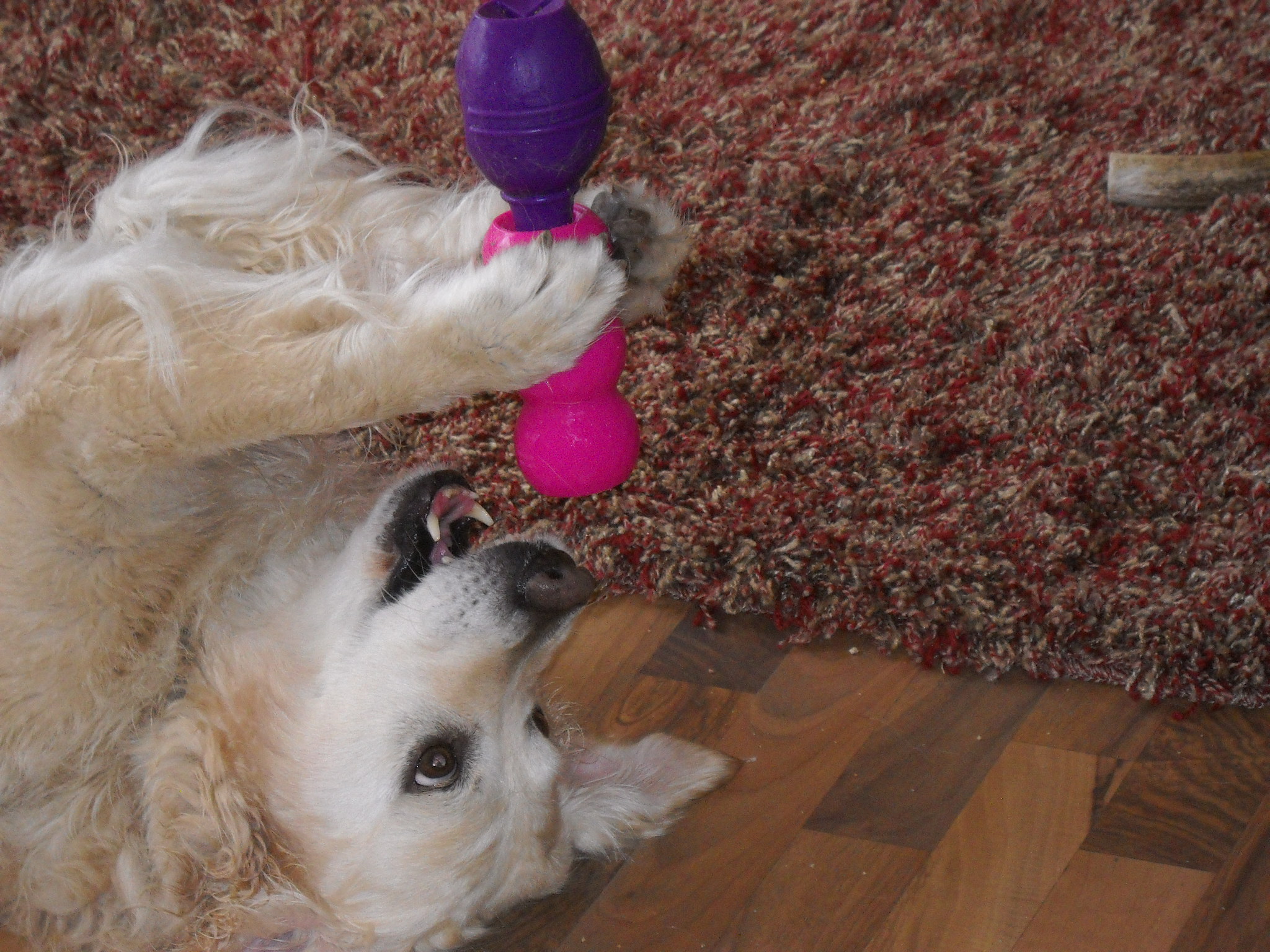
A young Jana thinks about how to get the peanut butter out of her Kong
Do dogs think?

Many of you are thinking, Of course they do!

So, why am I even asking that question?

I recently taught a class on dog intelligence where we tried to decide what and how dogs think and how to define dog intelligence. I had just seen the movie The Imitation Game, and I mentioned the scene where the police investigator asks Alan Turing whether machines think. Turing’s response (paraphrased considerably) is that, if someone we know has different taste than we do — likes a book we hated or loves a food we don’t care for — we wouldn’t say that the person is not thinking, but that his or her thinking is different from ours. In the same vein, machines do not think as humans do, but they can follow a process that approximates human thinking, according to Turing.

Human thinking is conscious and active — that is, we are aware that we are doing it and do it intentionally. It is an attempt to understand something, solve a problem, answer a question, create connections or meaning. Human thinking is mostly done in words, though, as Temple Grandin points out in many of her books, people with autism do not always think in words but often in pictures or even video.

Dogs don’t necessarily think in the same ways as humans — or agree on everything or reach the same conclusions — but I would argue that dogs’ thinking is more similar to humans’ thinking than a computer’s is, if only because dogs are conscious and machines are not.

So, the simple answer is: Dogs do think, but they do it differently from the way humans think. They probably do not spend a lot of time planning for retirement or worrying about the bills or speculating about which stocks to invest in, for example. They do not appear to worry about things that they cannot control (unless it seems that dinner might be late …). They might think about their next meal or the dog beach or the cute shepherd down the block — not so different from some of what people think about.

All grown up and still thinking about how to get food out of her toys ...
All grown up and still thinking about how to get food out of her toys …
But even where their thoughts might meander to some of the same topics we’d think about, I bet that dogs do it very differently. While dogs are often taught to understand many, many words, I doubt that dogs actually think in words. Alexandra Horowitz, in Inside of a Dog, suggests that dogs think in smells and maybe in pictures. That makes sense when you consider how powerful their experience of scent is.

Another wonderful dog book, How Dogs Love Us by Gregory Berns opens the door a little bit toward understanding how thinking in smells might work. Berns trained his own dog, and then several other dogs, to lie still in an MRI so that he could get images of their brains — while they were awake. He did several experiments, including one where he mapped dogs’ reactions to the scent of a human from their own family and the scent of a different person. He also mapped their responses to a familiar and an unfamiliar dog. These tests, and others that measured response to cues indicating a desirable reward (bits of hot dog, I think) and cues indicating no reward, showed that dogs brains look very much like human brains. Dogs scenting their own humans showed similar responses to humans viewing photos of their loved ones, for example.

Regardless of how they do it, evidence that dogs think is all around us. When they bring a toy and ask us to play, beg for a bite of our sandwich, or stand by the door asking to go out, they are thinking and planning. The dog who creates a diversion so he can steal a coveted bone from his sibling dog is thinking and planning. The ability to anticipate where the Frisbee will come down and then to jump in a graceful arc to meet it reflects thinking (and a far better grasp of physics than I ever had). Service dogs show their thinking skills constantly in their ability to intuit what their partners need and offer it. The examples are endless; share yours in the comments!