Cali and I recently moved to a new home. It has a yard. I’m not sure whether Cali has actually noticed anything but the yard. She wants to spend all of her waking hours in the yard. And with close to 16 hours of daylight these days, that’s a lot of hours. She’d sleep out there too, if I’d let her. What does she do out there? I’ll let you see for yourselves in a series of still life photos:
The Thinking Dog Blog
Aromatherapy for Dogs
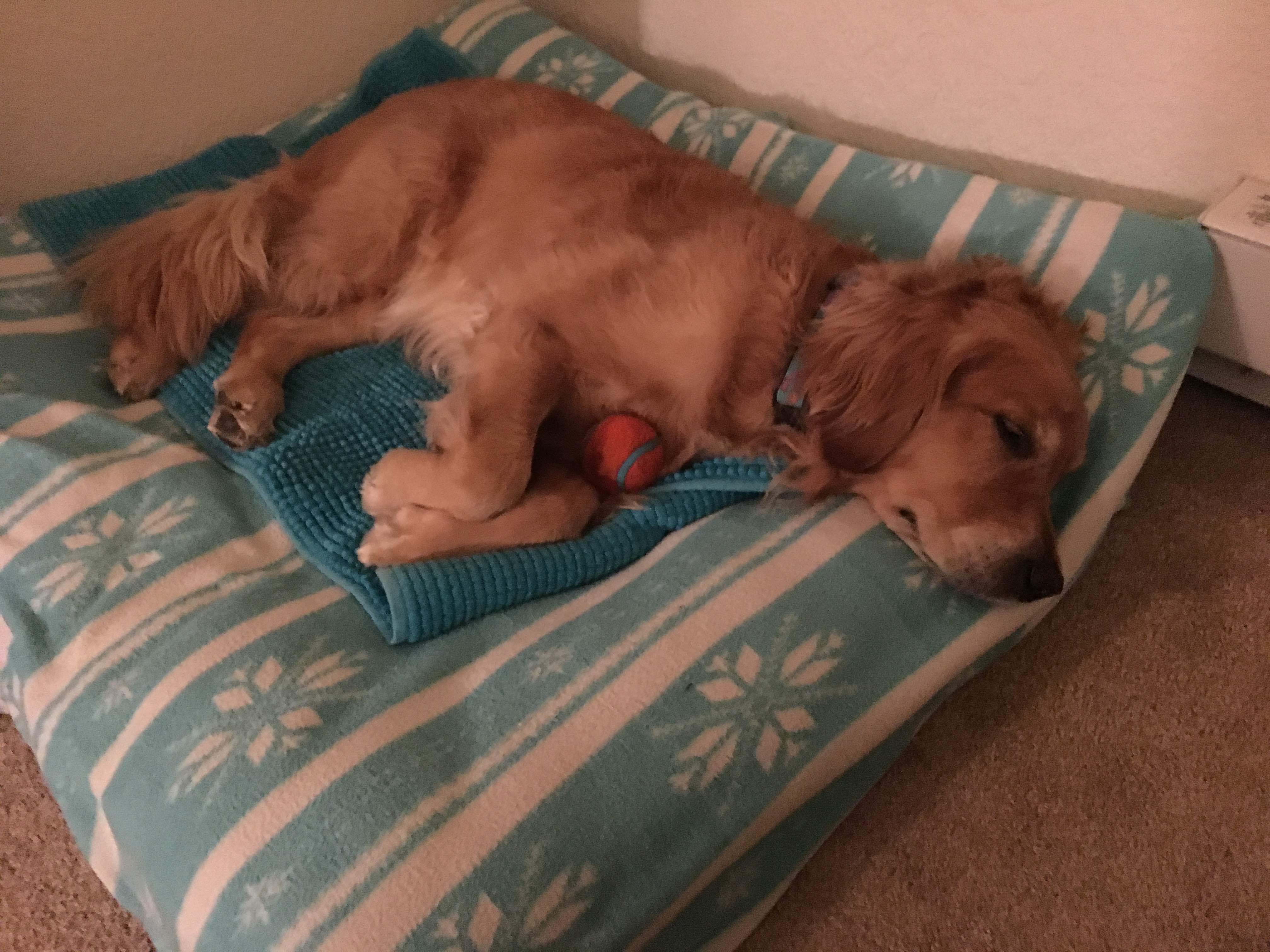
Aromatherapy for dogs seems like an obvious idea, but it’s only recently been formally studied as a way to calm dogs in a stressful environment.
A small study looked at the effects of four scents: Coconut, vanilla, valerian, and ginger, on dogs in a shelter / kennel environment, a noisy and stressful environment. All four scents were found to reduce activity and vocalization; coconut and ginger also increased the amount of time dogs spent sleeping.
It was a single, small study, and I hope that more research is done on whether scents can calm dogs and which scents are most effective. I have some products that are intended to calm anxious dogs, but I don’t know that they’ve been particularly effective with my own dogs. One is lavender and chamomile. I’ve used T-Away, an essential oil blend, with Cali, and it sometimes calms her right down, but other times doesn’t seem to have an effect. I think the difference is whether she’s excited (no effect) versus anxious (seems to help a lot), but I have not done careful enough study to be sure. A DAP diffuser seemed to help with Jana’s anxiety, but again, my study of one dog doesn’t really say much about whether this is an effective treatment.
But, given the way most humans respond to scents — some are calming, others are irritating — along with dogs’ sensitivity to scent, it seems likely that aromatherapy could work for many dogs. I’d love to see something as easy to implement as infusions of relaxing scents become a standard protocol at kennels and shelters, maybe vet clinics — anywhere that stressed-out, anxious dogs are likely to be found.
Aromatherapy might also be a nice, easy way to help dogs with noise and thunderstorm anxiety. That would be a great direction for some additional research. I have a growing personal interest in this topic, as Cali has recently shown some anxiety during severe thunderstorms. I don’t think she’s reacting to noise, but rather to changes in air pressure or something else that started quite a while before the actual rain, thunder, and lightning. Melatonin helps, but it would be nice to have some other ways to ease her anxiety.
A caveat: The scents that tend to be soothing to humans might not have the same effect on dogs, and scents that they find calming might be unpleasant to us. Even if that turned out to be the case, it would be interesting to know more about how scent affects dogs’ moods and energy or activity levels.
In addition to calming them, scents could probably be used in other ways to work with dogs or influence their moods and behavior. I learned a lot about dogs’ sense of smell from Being a Dog by Alexandra Horowitz, but I don’t remember any mention of scent as a way to calm (or energize) dogs.
Perfect (Selective) Hearing

There’s something about the sound of a banana being separated from the bunch. That little snapping sound. For dogs who love bananas, like Cali and my first dog, Timo, that sound is magic.
Timo could be outside, busy with doggy things, but if I touched the bananas, he’d be there in a flash. Cali currently can’t get too far from me; we live in an apartment with no yard. And her sensitive ears never miss that sound. Or the sound of a knife cutting into a cucumber. She does love cucumbers …
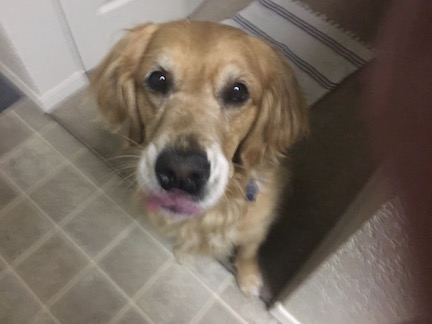
Her hearing excels in other ways too. If I rustle a treat bag or the bag her food comes in … touch my keys … move a tennis ball while looking through the closet. Certain key sounds carry extremely well. Jana could hear a whispered, “Cooookieeee” from a mile away.
On the other hand, other sounds never seem to penetrate the fog of a Cali daydream. Her name, for example. Or a “let’s go,” when she’s perfectly happy where she is.
Dog enthusiasts make much of dogs’ keen sense of smell. Rightfully so; it is amazing. But their hearing is no less fascinating.
Travel Pods for Pets?
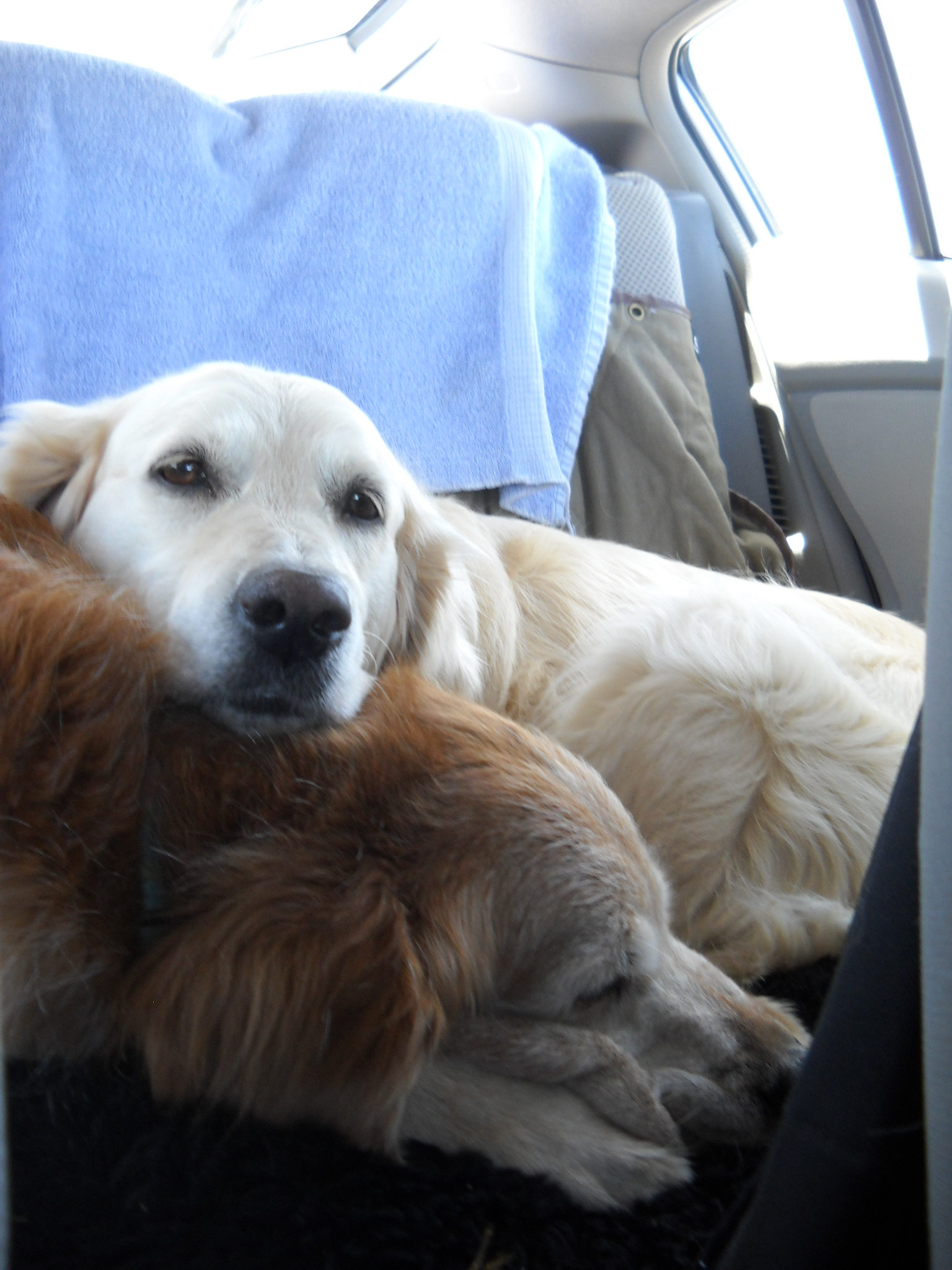
I have quite a bit of travel coming up, and the plane trips require leaving Cali behind. So when I saw this article on Wired.com about a new travel idea, my mind went right to dog travel. Safe dog travel, not the current nightmare scenario.
The article is about an aerospace designer, working with Airbus, to create custom cargo pods with bunk beds. The airlines be shaped to put the special cargo pods aboard or not, depending on the needs for a particular flight. When used, they’ll be accessible to economy passengers who wish to rent a bed for the duration of a long flight. That means that there will be a way for passengers to move between the main cabin and the pod.
So … why not design a similar pod for dog kennels?
The article states that the pods are being designed for economy passengers, since business or first class fliers already get beds on long flights. The cost will have to be less than the cost of a first class ticket, or why bother, right? The article describes on other uses for these designable, modular pods: lounges, kids’ play areas, conference rooms.
So, seriously, why not kennel space? They’d need a way to secure the dog crates — not a problem since airlines that transport pets already do that. For any of the uses described, the pods would need to be climate controlled, have decent airflow, and be accessible from inside the plane. I personally would be much more comfortable flying my pet if I could spend the entire flight (other than takeoff and landing) with her, even if she had to stay in a crate. As for cost, well, a two-week vacation can already run about $500 (or more!) for dog-sitting; wouldn’t you rather spend that money to take your pet along? I would. And I’d certainly see value in flying Cali cross-country rather than subjecting her and myself to a weeklong car trip, should the need arise. (We’ve driven cross-country several times; Jana experienced about a dozen cross-country drives in her lifetime.)
I wonder why flying pets wasn’t one of the uses Airbus mentioned. Maybe I should suggest it!
Why We Miss Our Dogs So Much …
A friend recently forwarded me this column about grieving the loss of a dog.
It’s so true that losing a dog can be harder than losing a human family member, as friends and relatives who’ve recently lost dogs (recently = in our lifetime) can confirm. I still miss my Jana, after a year and a half.
Why is this so hard to bear? As the column-writer notes, dogs are more intimately part of our lives than most of our human friends and even relatives. Other than a longtime spouse, your dog is probably the person (yes, dogs are persons …) who has spent the most time with you, seen you at your best and worst, and who knows you best. I’d argue that dogs know us better than any human can, since they can read so much more of our body language and, in most cases, read our minds!
They’re also great company. Sure, Cali sulks when I won’t share my dinner and huffs and stalks off when I pick up my phone. But she — and most dogs — offer largely uncritical companionship. They’re easy to be with, comforting when you’re having a hard time, and always up for some fun. They never, ever try to talk you out of a late-night ice cream binge, for example — or, to be fair, a long hike.
While non-pet people may never understand why the loss of a pet is so hard, pet people should know that there are many, many people who do understand. And who also know that even when, as many of us do, we get a new dog, we’ll never fill the hole left by the ones we’ve lost.
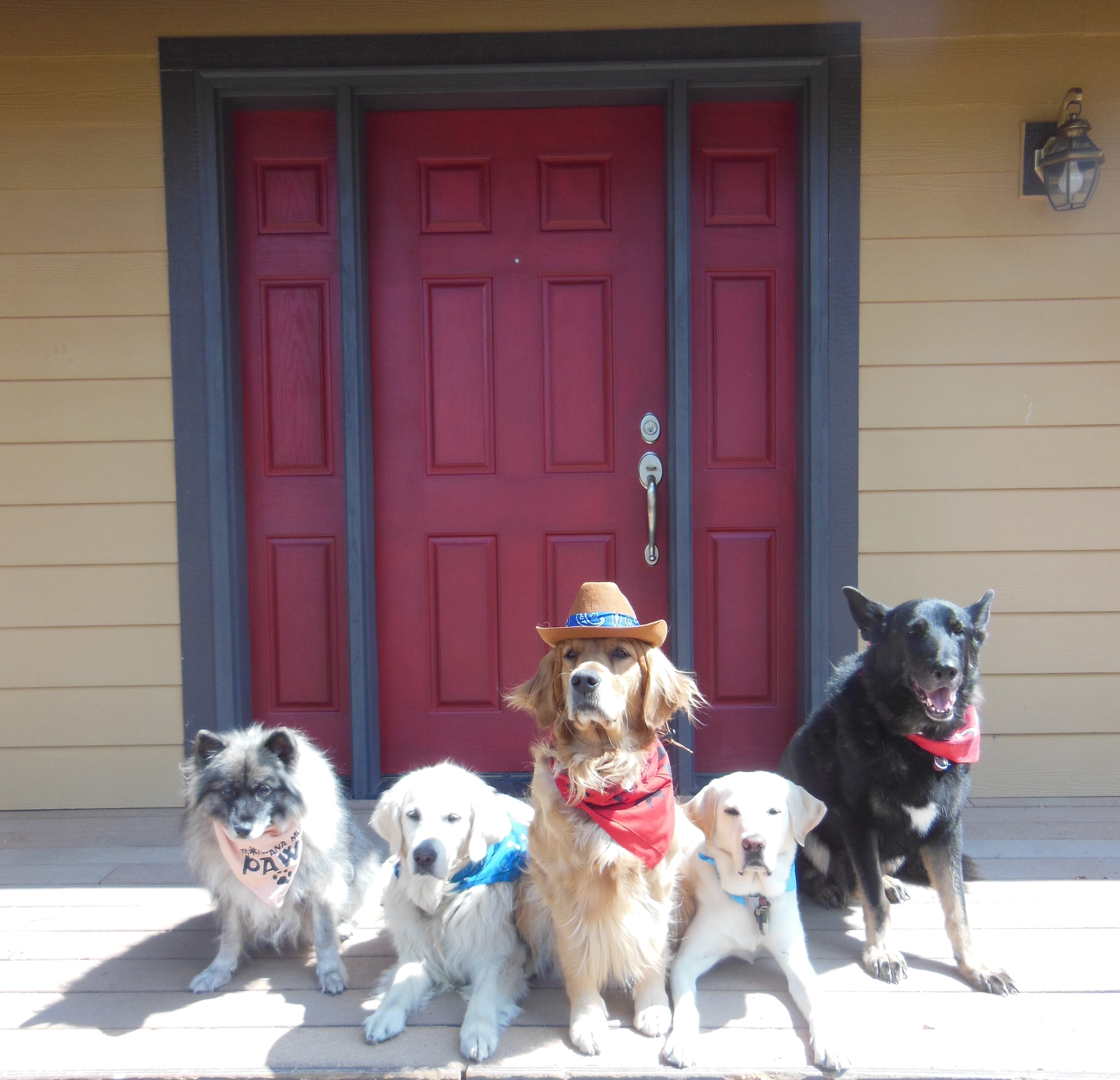
This column is dedicated to Hannah and Ziggy, my sister’s dogs (pictured with Cali, Jana, and Alberta) who passed away in February.
Dog’s New Noise Sensitivity Could Indicate Pain
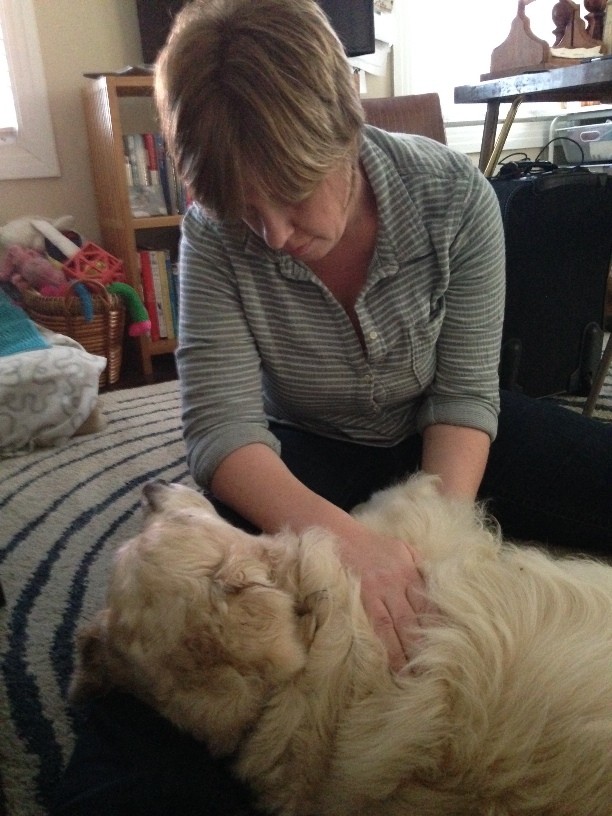
A study published in February indicates a correlation that most dog owners probably haven’t considered: A dog who develops noise sensitivity might be in pain.
The study looked at two groups of dogs who showed sensitivity to noise — fearful behavior, hiding, avoiding places or situations. One group, the “clinical” group, had known painful conditions; the other had no diagnosed pain or conditions the would be painful. The clinical group developed their noise sensitivity and other behavior changes at an age, on average, four years older than the other dogs. And, when treated with pain medications, these dogs behavior improved.
Some behavior changes have long been considered to indicate pain — sudden aggression in a normally friendly dog, for example. Dogs who start to avoid being petted or stop playing with children or with other dogs could be in pain as well. But the noise correlation hasn’t been recognized. It makes sense though. According to the researchers, the startle in response to a noise could be painful in a sore or arthritic dog, for example. The dog could quickly begin to associate some places or people with painful noises or contact and avoid them or show fear in anticipation of the pain.
Many of the painful dogs’ owners had sought remedies — for the new behaviors. They’d tried pheromone treatments, anti anxiety supplements or even medication, and some had tried behavior modification training. But until they discovered and treated the pain, the dogs did not improve.
Pain can be treated with medications and anti inflammatory supplements, and with therapies — acupuncture, laser therapy, or reiki, for example.
Dogs are good at hiding pain, so owners need to pay close attention to behavior changes. Making the connection and treating the pain can mean a higher quality of life for the dog — and possibly even a longer life.
Too Young to Leave Mom
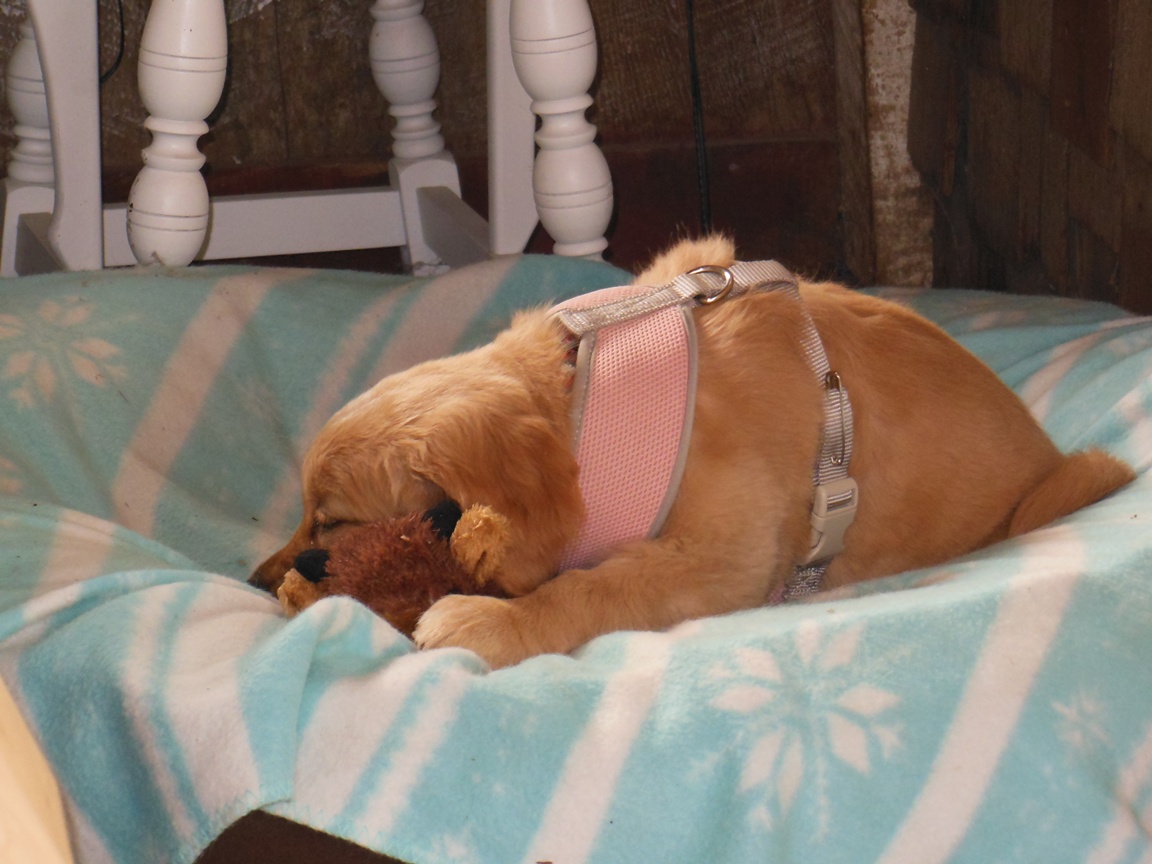
Last week, I fumed about puppy mill “rescue”; this week, I’ll take on unethical breeders.
In the months I have been in Montana, I have been lucky enough to meet and play with many puppies. I’ve noticed a distressing pattern, though. Several of these puppies — all different breeds or mixes — were really tiny. Upon asking how old they were, I have heard, over and over, that the proud new owners got their puppies at six weeks of age. Six weeks!
That’s too young. Some states even have laws prohibiting the sale of puppies under a minimum age, usually seven or eight weeks. Not Montana, sadly.
Puppies are generally weaned by five or six weeks; their sharp little teeth are coming in, and Mom wants nothing to do with them. They’re also getting to be rambunctious; they move around well and their eyes and ears are fully open. Both the canine mom and the human family may be ready for the puppies to move on to their permanent homes. But that doesn’t mean that the puppies are ready to leave the litter.
Weeks six, seven, and eight are important weeks in their social development. They play and wrestle with their littermates. Those new, sharp teeth are tested out on siblings’ ears and limbs. Puppies learn that biting too hard elicits a sharp yelp and a temporary shunning. Puppies who persist in biting their siblings find themselves left out of puppy games.
Singleton puppies and those taken from their litters too soon do not learn these important lessons. They may never develop the appropriate interdog social skills that they need to be “easy” dogs — dogs who can go to parks and people’s houses and be walked without the humans having to fear encountering another dog.
Another consequence is that the puppies don’t learn bite inhibition from their siblings. Who is around for them to try out those new needle-like teeth on? The human family, of course. Many of these besotted new puppy owners sport dozens of scabs and scrapes on their arms and legs. Ouch. They’ll need to put a lot of painful effort into teaching the puppy not to mouth or nip.
If there’s an older dog in the home, that dog might be able to teach the pup some manners, but he’s not likely to be as effective as a whole litter of biting siblings. For one thing, the puppy won’t experience being bitten and gnawed on, as she would in her litter. For another, adult dogs tend to give young puppies a lot of license before disciplining them. The puppy could develop some bad habits before the older dog (or human) loses patience. The rough-and-tumble of a litter is the best place to get that initial bite inhibition training.
I know many people who will only get a dog from a breeder because they believe that all shelter dogs have “issues.” My response to them is that any dog can have issues, and that many breeders cause those issues, either through poor breeding or poor handling in the pups’ early life. Breeders who send home puppies at six weeks are at the top of that list.
A law shouldn’t be necessary to keep puppies with their mom until at least seven, but preferably eight to nine weeks of age. A responsible, caring, knowledgeable breeder would do that — would insist on it. Sure, there might be cases where a lone puppy or a few puppies wind up in a shelter; in those cases, taking them home might be better than leaving them in a crowded, noisy environment. But when you’re getting a puppy from a breeder or family? Steer clear of the person who presses you to pick up your puppy too early. There are likely other ways in which that person is not acting in the puppies’ best interests.
In case you are wondering, Cali came home at eight and a half weeks. My friends and I picked her up, along with her sister Dora, and flew home with them. Our biggest worry leading up to that date was whether our pudgy little furballs would still fit into their travel kennels when we got to the home of their wonderful, wonderful breeders.
Don’t Fall For “Puppy Mill Rescue”
“Puppy mill rescue” is a scam.
A shocking investigative report in the Washington Post, “Dog Fight,” details how some so-called dog rescue groups raise hundreds of thousands of dollars to supposedly rescue dogs from puppy mills. They then go to dog auctions (another horrifying practice) and purchase the dogs.
Like most things, there are different layers — and interpretations. Some rescues actually do rescue dogs: puppies with deformities, older dogs past breeding age. These dogs generally fetch low prices, and there is not a lot of competition to purchase them. This sounds to me like true rescue, though I am still bothered by the idea of rescue organizations purchasing dogs at auctions. I have no idea what would happen to these dogs after the auction if no one bought them, the places that my imagination takes me are not pretty.
But the investigation was not focused on these, mostly smaller, organizations. It zoomed in on a few larger organizations — those capable of raising hundreds of thousands of dollars in a single campaign — that have paid as much as $10,000 for a single dog purchased at an auction. Those thousands of dollars go right to … the puppy mill breeders that the organizations claim to be fighting against.
According to the report, these organizations sometimes bid against one another, driving up the price. The obvious result is more and more of their donors’ money going to finance puppy mills. The other obvious result is encouraging puppy mill breeders to keep breeding so they can sell the dogs at premium prices in these auctions. Indeed, puppy mill breeders (though, naturally, they do not identify themselves as such) acknowledged that they get far better prices at these auctions than from pet store brokers and say that the phenomenon has created a sellers’ market.
I doubt that the average donor to a pet “rescue” would condone this use of their donations — or buy the organizations’ arguments in defense of the practice. One source, for example, justified her purchase of an $8,700 dog by stating that if a breeder had bought her, she’d have been forced to have more puppies. That may be true, but the effort (and cash) might be more effective put to other uses — uses that actually hinder puppy mill breeders’ operations, rather than enriching their owners and encouraging them to keep on breeding.
What can you, a dog-loving member of the donor public, do?
One option is to think local and small.
The more closely I examine organizations I’ve donated to, the more I find that many large organizations spend far too much of their budgets on things that don’t advance their mission. Some executives at large charities have enormous salaries; these are also the charities that spend 40, 60, or even 80 cents out of every dollar raised on fundraising. Smaller, generally local, organizations don’t have the luxury of hiring high-powered marketers to raise money for them.
As I write this, I am listening to Montana public radio’s spring fundraiser. It’s the last day, and all hands are on deck. Whenever they reach a $1,000 increment, they have a mini-celebration, complete with noisemakers. They offer folksy premiums — like hand-knit mittens or free-range eggs — for modest donations. The grand finale this evening is something that pet-loving public radio fans all over Montana (yes, we are a “thing”) eagerly anticipate: Pet Wars. Yup. The dogs and cats duke it out to see who can raise more money for the network. As a new Montanan, Cali is eagerly awaiting her chance to donate.
Contrast that with KQED, a large NPR station in the San Francisco Bay area. It occupies a different universe from MTPR. No mittens are on offer; small donors — under about $100 — aren’t offered premiums at all (but do get many, many solicitations from those fundraisers). And during each pledge period, one lucky donor wins a new car in a raffle.
While I appreciate both organizations, when I think about where my dollars will make the most difference … well, I feel confident that Cali’s Pet Wars donation will pay for programming.
Similarly, I look for local animal welfare organizations whose modest budgets are spent in my community, not funding puppy mills or paying fundraisers. If they’re at the auction at all, they might be buying the $1 Chihuahua, not the $4,300 Yorkie.
If you want to donate to a national organization with a broad impact, I encourage you to think about groups like the Animal Legal Defense Fund, which actively works to promote legislation that curtails puppy mills and other cruel businesses and practices.
And if you are looking for a rescue dog? Don’t get hung up on a particular breed. One of the most painful parts of this long, awful article, was the claim that many “rescues” are at the auctions to purchase specific breeds or designer mixes that their “customers” are clamoring for. So, adopters go to an organization intending to rescue a dog — and they end up taking home a dog that the organization purchased for them, from a puppy mill, at a premium price. While they might only pay the organization’s standard adoption fee, unsuspecting donors pick up the rest of the inflated tab.
That makes me sick.
3-Way Tug
Most of us probably think of “playing tug” as a one-person, one-dog game. Or a two-dog game. Or a two-team game: Those tug-o-war contests in management courses that intend to build teamwork feature two teams — two teams that are pitted against one another. It’s a reasonable understanding. The players are tugging at opposite ends of a rope, after all. There are only two ends.
But what happens when there are three dogs?
Option 1, one dog gets left out, is unacceptable.
Option 1a, the left-out dog has to play with Mom, is even worse.
Option 2, the third dog hassles the other two and badgers them into giving up their game, ends up making everyone miserable.
Enterprising dogs come up with Option 3, a solution that is better in so many ways.
Option 3 is three-way tug. All three dogs get to engage, play, tug on the rope. No one wins. No one loses. No one is left out. Instead of tug being a zero-sum game, tug becomes an enjoyable, collaborative activity. The goal is having fun. And the more fun each dog has, the more fun they all have. Everyone wins. But Mom/auntie gets left out.
Actually, that is not true either. Mom gets to sit on the sidelines and take photos and enjoy the dogs enjoying themselves.
Truly, everyone wins.
So, what did I learn from watching Cali and her cousins invent and play three-way tug?
- There are many ways to solve a problem.
- It’s possible to find a solution that benefits everyone.
- Collaboration is rewarding and, in some cases, a lot of fun.
- Rather than sulking over being left out or bullying your friends, it’s possible to change the dynamic to something more positive.
- Having fun until you’re too tired to stand, then taking a nice nap, is a better way to spend the afternoon than arguing or feeling resentful.
- Dogs are smarter than people.
OK, I already knew that last one.
Dogs are great problem-solvers. They live in the moment and want to be part of whatever fun thing is happening. Maybe the solution was obvious; it didn’t take long for these three doggy friends to come up with it.
But if it’s so obvious, how come none of us ever thought of three-way tug?
Teach Your Old Dog New Games
 A team of researchers at the Clever Dog Lab (oh, how I’d love to work there …) at the Messerli Research Institute in Vienna suggest teaching older dogs to play brain games on touchscreen computers and tablets. Yup, Lumosity for dogs.
The researchers have some games that they developed and tested out and that they are now trying to prepare for retail sale. That’s all well and good, but the real premise of their study is that older dogs need — and benefit greatly from — mental stimulation and training. And that most dog owners (and trainers) don’t really do much training with older dogs.
While dog sports like agility might be beyond the capabilities of, say, an arthritic golden retriever (as Jana was during her last years), some dog classes can work for older dogs. Jana loved every second of her nose work classes (well, except the seconds that other dogs got to look for treats and she was not in the ring). The instructor, at the beginning of the first class, told us handlers that the dogs could bark as much as they wanted and we were not to use the ‘N’ word. (No.) Jana had found her doggy paradise.
Throughout her life and well into old age, Jana’s mind was sharp and, if a cookie-earning opportunity arose, she’d stick with the challenge until she’d earned and eaten every last crumb. We did exercises on canine fitness equipment, practiced imitation games, and worked with picture cards that Jana could choose: ball, tug toy, popsicle. (For some reason, she always went for popsicle…) I never thought of teaching her to use a computer, but I am sure she’d have mastered that as well.
Cali is less intellectually oriented than Jana, but she does love nose work. I suspect that age is less of a factor than temperament. Cali’s not interested enough in learning (or earning treats) to really work at much. She’ll stick with a nose work search longer than she’ll work at a Kong or other food toy. And she’ll play with a tennis ball all day (and take it to bed at night). I doubt she’d enjoy computer games, though she does love TV, so I could be wrong about that.
My main takeaway from the dogs and computers study has nothing to do with whether dogs want to, need to, or should learn to use computers, though. It is all about us: Don’t give up on your older dog. Figure out what she loves about her favorite activities and adapt them for her changing physical needs. Keep challenging her and offering stimulation. It will keep her mentally fit — and keep your bond strong.
