They Did It!

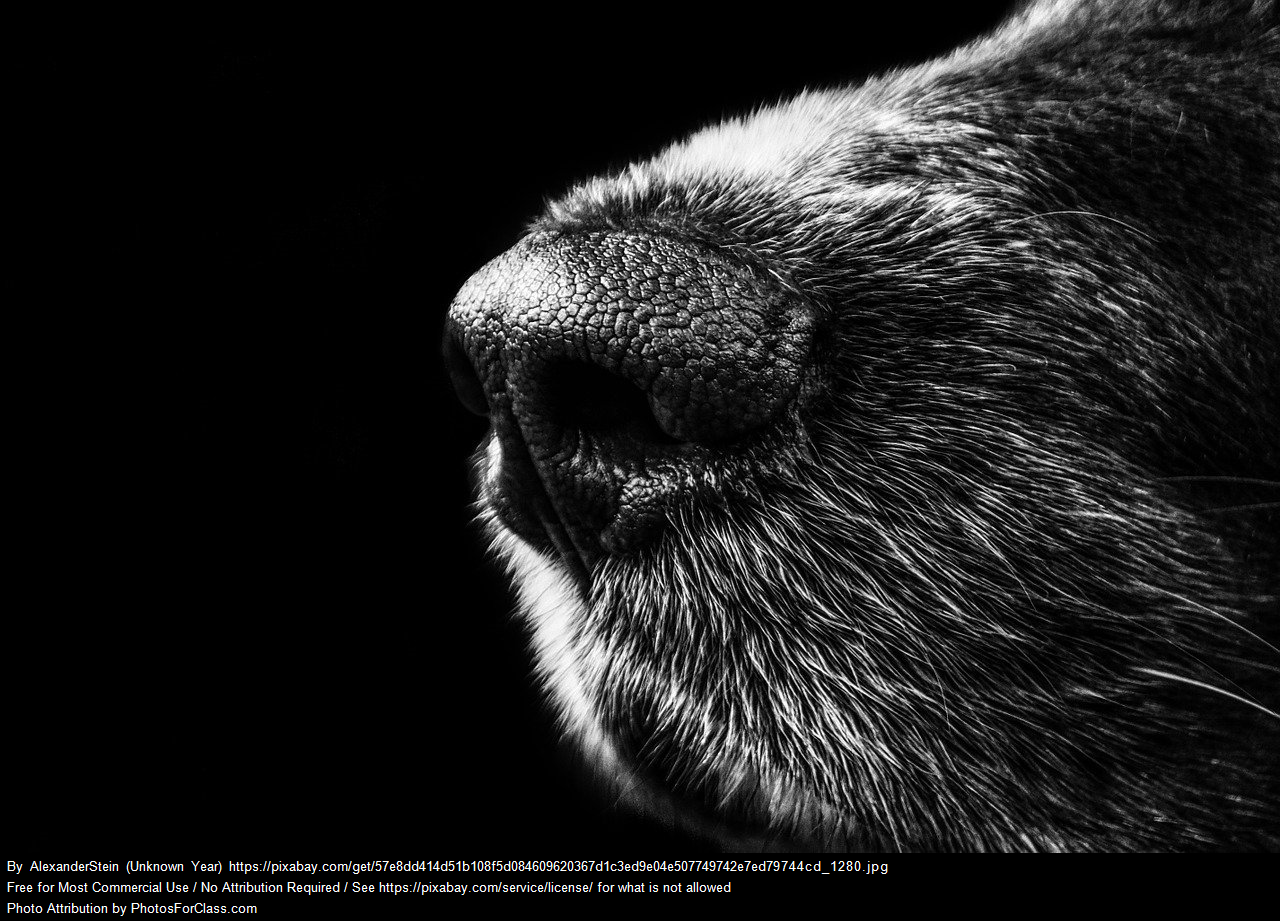
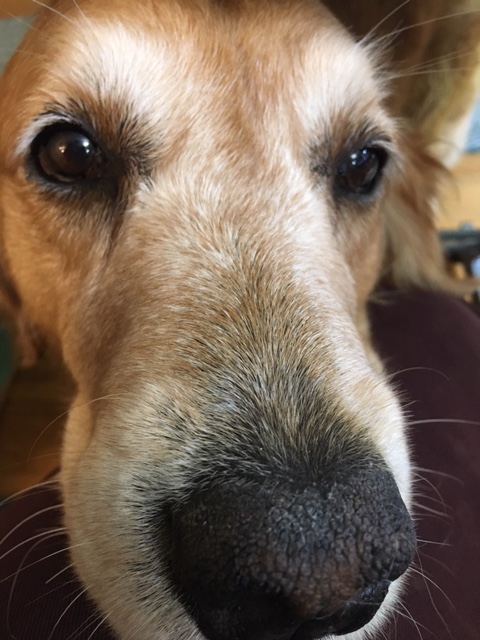
close up of dog nose
The “big gun” to combat COVID-19 spread

The Finnish dogs win!

In late September, Finland launched a pilot program using dogs to detect travelers carrying COVID-19 at the Helsinki airport!

Of course, we can’t go there right now, so we cannot see the dogs in action (yet).

Several organizations in the U.S. are also training COVID-sniffing dogs, but the Finns got there first.

The dogs will sniff samples voluntarily provided by arriving airline passengers, and the passengers and dogs will have no contact. This is a good model, since some people are afraid of — or allergic to — dogs.

The dogs are extremely accurate, and can even detect COVID-19 before the standard testing can: Anna Hielm-Björkman, one of the researchers, said that the dogs may be better at spotting coronavirus infections than PCR and antibody tests. They “can also find [people] that are not yet PCR positive but will become PCR positive within a week,” she said.

Dogs’ noses are truly amazing, and we’ve barely scratched the surface of what they can do!


Dogs & Consent

All in?

Have you ever picked up a small dog or a puppy? (Of course you have!)

Did you ask for their consent first?

The first time I really thought about dogs consenting was when I read Gregory Berns’ How Dogs Love Us. He was very careful to ensure that all the dogs participating in his MRI studies did so voluntarily. They were not restrained and were free to walk away at any time.

But that was for a specific research project. How do dogs consent (or not) in daily life?

It’s a problem for leashed dogs, and an even bigger problem for dogs who are small and often carried by their humans. They can’t escape.

A recent blog post by Patricia McConnell, “I’m Little And Adorable. Don’t Make Me Bite You.” describes the problem — and some potential solutions — very nicely.

To summarize, it is terrifying for many dogs, especially small ones, when humans loom over them, put their faces up close, or, especially, snatch them up with no warning and lift them into the air. A dog who is being held cannot escape unwanted petting or kissing. A dog who is leashed often can’t either.

As dog-respecting humans, we should:

  • Not pet dogs we don’t know
  • Never pick up dogs we don’t know
  • “Ask” if a dog wants to be petted by proffering a hand and letting the dog approach us
  • Only pet dogs who approach or otherwise solicit a pet
  • Not allow strangers to pet our dogs unless the dogs indicate willingness (Cali does this by dragging me over to a person, any person, and wagging her tail while furiously batting her long blond lashes at them)
  • Not allow children to handle dogs roughly, play with them unsupervised, pick them up, or otherwise treat them as they treat inanimate dolls
  • Not allow others to pick up our dogs
  • “Ask” our dogs before picking them up

We should also follow some of McConnell’s tips for teaching dogs a cue to warn them if we want to pick them up — and check with them for consent. Some people use a cue word, a gesture, or both. Some dogs learn to offer a cue that they are willing to be picked up. The dog’s body language might offer some information, too. If they duck, back off, or otherwise try to avoid us when we’re picking them up … we should pay attention. And yes, some dogs love being held, sitting on laps, and constant cuddling. But a dog who loves sitting you your lap while you read doesn’t necessarily want to be carried around. And the dogs will generally let us know when they want cuddling — and when they do not.

Why does this matter? It’s a matter of respect and kindness.

Also, the key reason many small dogs bite or nip is fear. If they are frightened and cannot escape, we leave them few options. The teeth are usually a last resort but, well, we’re ultimately responsible for backing them into that corner. Even the ones who don’t bit might become anxious, avoid contact with people, and generally suffer.

Little dogs and of course puppies can be irresistible. But before indulging our desire to cuddle them, let’s all ask for their consent first!

Good News for Rare Dog Breed

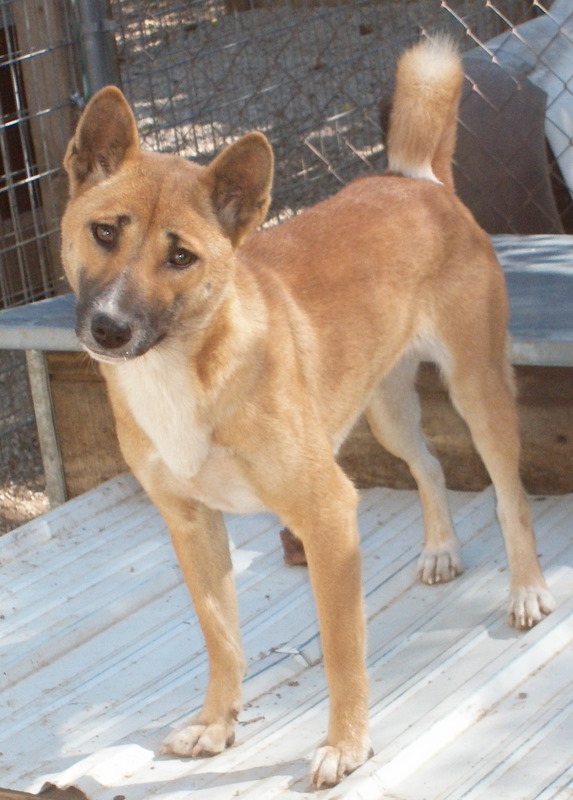
The New Guinea singing dog, also called a highland wild dog, was long thought to be extinct in its natural habitat. But a few years ago, some wild dogs were seen, then captured briefly so that DNA samples could be taken. The wild dogs turned out to be from the rare and ancient highland wild dog breed.

The dogs figure into some theories on dog domestication, as the dogs are closely related to both Australian dingoes and early domestic dogs from Asia. They could be an early ancestor of Japanese breeds like the Shiba Inu and the Akita, according to the New York Times. They share much common genetic heritage with the small captive populations of singing dogs, but those dogs are badly inbred and lack the genetic variation of the wild dogs.

No wild singing dogs had been seen in decades, and researchers feared that they had inbred with village dogs, leading the wild dog into extinction. But in 2012, an ecotourism guide snapped photos of a wild dog that led to research expeditions in 2016 and 2018. A total of 15 different dogs were observed, and DNA samples were collected from two living and one deceased dog. The analysis showed an overlap of about 72% of their genes with captive singing dogs descended from eight wild dogs captured in the 1970s, a CNN story reported.

With Patience, Persistence, and Perception, Dogs Have the Upper Paw

Some day, my berries will be ready …

By Deni Elliott and Pam Hogle

Regardless of how many years they have lived with dogs, almost all dog-owned humans wish that the dogs were better behaved. Some dogs continue to bark, despite repeated human attempts to stop the noise. Some dig or raid the garden or sleep on the sofa —despite physical barriers and human reprimands. Others act out when their people are most hoping that they won’t. The sad truth is that the problem is less about human incompetence than it is an indication of canine superiority. Dogs consistently outperform their human companions in three vital areas: Patience. Persistence. Perception.

Patience is the ability to wait for you want and hold on to a goal despite distraction. How many people would have the patience to wait at home for hours while their companions went off to work or play? Or even have the patience to wait for minutes outside of a store, tied to a pole, with no phone to keep them amused? Dogs, who love dependable routines, wait and wait and wait for their people to remember that it is time to play, to walk, or even to feed them dinner close to the usual hour.

Persistence is the ability to continue working toward a goal despite difficulty or opposition. Some dogs bark persistently. Some continually nudge their person’s hand to get petted. Persistently. And others beg at the dining table. Persistently. There is a reason that the term for working tenaciously is “dogged.” People give up and give in long before dogs will. People also reward the dog’s persistence, “just this once,” — maybe to stop the dog’s annoying behavior. At that point, the dog has succeeded at creating the desired human behavior. In most families, the dog will soon have the people well-trained in responding to canine direction.

Perception is the ability to use one’s sensory abilities to take in information in and make it meaningful. Dogs read people — our vocal tone and pitch in addition to our words; our facial expressions and body language. In comparison, most people can barely tell the difference between a dog barking in joy and one barking in warning or in anger. Dogs learn how they should react and what they can get away with by reading their people. Much dog anxiety can be attributed to what the dog reads from their primary person. “If my person is sending signals that he is nervous,” the dog reasons, “I guess I better be worried too.”

Patience, persistence, and perception come together in a trifecta of  superior intelligence that sometimes overwhelms the most dog-savvy of humans. In last week’s Thinking Dog Blog, Pam wrote about Cali eating tomatoes from the garden just before Pam would have picked the tomato for human consumption.

The sequence of events illustrates how these concepts come together in dognition: Cali waited patiently for weeks while the lettuce, raspberries, and tomatoes each reached what she considered their peak readiness. When faced with an obstacle, she was persistent enough to figure out new ways to reach the garden treats, getting around the bird netting that Pam had wrapped around the plants. When Cali decided that it was time to eat the tomato she had been eyeing, she reached through the netting to pluck the tomato and let it fall beneath the plant. Then Cali could reach the tomato by burrowing under the netting. Which she did. There she lay, chomping her freshly harvested tomato, while Pam mowed the grass just a few feet away. Cali perceived that Pam was focused on the lawn and not on the dog.

Dogs consistently outperform humans because their PQ (Patience, persistence, perception) is off the scale compared to their human companions. That seems to be a fair trade-off for people getting opposable thumbs to use in our far more primitive way of manipulating the environment we share.

Stop, Thief!

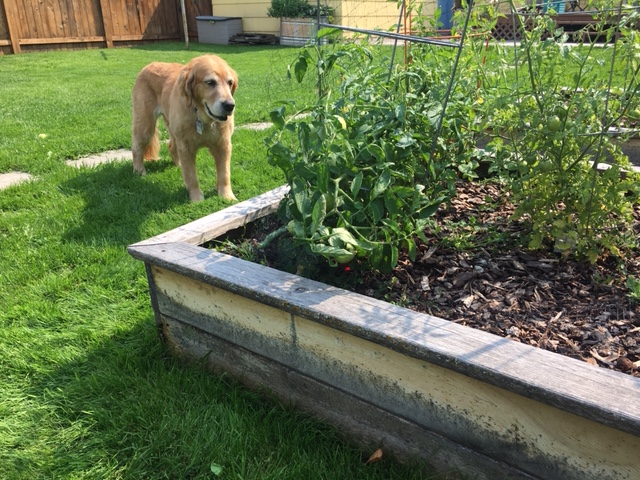
Golden retriever Cali eyes the tomato plants

So we all know how much Cali loves raspberries. She was lucky this summer; we had a lot of raspberries. But, all good things come to an end — including raspberry season.

With that in mind, Cali has decided to broaden her diet. She grew tired of waiting for our very small first crop of blackberries to ripen, so she ventured farther afield. Or agarden.

Right over to the tomato plants.

Our tomatoes got off to a very slow start. The first plants perished in a late frost. The next group shivered through a chilly June before starting to grow and blossom. By late July, several medium-sized and small tomatoes were starting to ripen. One, in particular, looked almost ready.

Then, suddenly, it was gone!

Deni asked if I had picked it. I said I thought she had. Hmmmm…

Suspicion landed on Koala, who had been spotted pilfering strawberries. She denied any knowledge of tomatoes or their disappearance. Besides, as she reasonably pointed out, Cali spent by far the most time in the yard, often alone.

Cali feigned innocence.

Nevertheless, I got out some bird netting, which also promised protection from hungry animals other than birds. I wrapped the tomato patch, clipping the netting to the tomato supports with clothespins. We scored a few ripe tomatoes, which were delicious.

Just yesterday, I had my eye on one that was ripening nicely. I decided to give it another day, and wandered off to mow the lawn. A few minutes later, as I was carefully pushing my mower up and down, a few yards from the tomato bed, Deni came outside and asked, “What’s Cali eating?”

The crafty thief had poked her nose under the netting and stolen the tomato! Right under my not-so-watchful eyes!

Severe consequences were in order.

Deni had it covered. First she offered Koala a few bites of the ravaged tomato. Then she gave the rest of the tomato to Cali. And then she took both girls inside and gave them their special Friday dinner, which includes sardines.

I am confident that the lesson got through loud and clear. If Cali steals another tomato, she understands the dire consequences: Getting to eat the tomato, with sardines for dessert.

Take that, you little thief!

P.S.: Cali has also managed to pilfer a few blackberries, but boy, are they sour!

A Nose for … Ferrets?

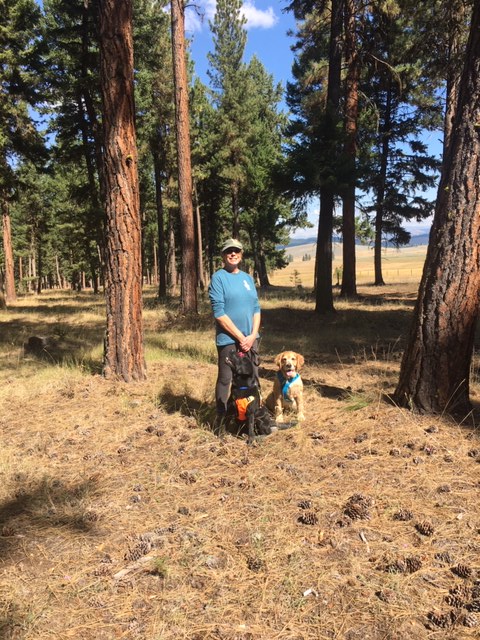
Deni stands with golden retriever Cali and Guiding Eyes Koala in the woods
A gorgeous day for a hike in Montana!

I’ve written about Working Dogs for Conservation before, but I thought it was time for an update. They’re on my mind because we spent a recent Sunday hiking around a beautiful Montana property as part of a fundraiser for them. Tough work, I know, but Cali and Koala decided that we were up for it, so off we went.

Working Dogs for Conservation trains dogs to search for all kinds of rare and endangered wildlife and plants. They’re based here in Missoula, and they do a variety of interesting projects here and around the world.

Working Dogs for Conservation logo features a dog standing in the grassLocally, besides the hike / run fundraiser, they also partner with REI to clean up popular dog-walking and hiking areas.

But their real work is in conservation, obviously. A new project in Arizona uses telemetry — remote data collection and transmission — and radio-collared ferrets to hone their dogs’ ferret-tracking skills. They use the telemetry equipment to locate ferrets. The handler doesn’t know the exact location of the ferret, only the general area. The dogs signal a find by lying down next to a burrow that has a ferret inside. The handler can then check the data report to verify the dog’s find. The dog’s reward is a ball game. (Cali would love this job!)

The dogs in training are good at this. They successfully identify burrows where a ferret is or has recently been 97% of the time. I don’t know about you, but I probably make a lot more errors than that in my work …

Their dogs also identify watercraft infected with invasive mussels in Montana, detect invasive insects and weeds, combat poaching and trafficking in endangered wildlife … and more.

There’s a lot to like about Working Dogs for Conservation. They train rescued shelter dogs, for one. They’ve started a program called Rescues 2the Rescue that networks with shelters all over the US to identify high-energy, intense dogs. These dogs are hard to place in family homes, but are often ideal candidates for search, detection, law enforcement, or other skilled work that requires a high drive. Rescues 2the Rescue matches up the candidate dogs with trainers and organizations who can employ them.

They also really “get” dogs and respect dogs’ abilities. “Their extraordinary abilities help us collect more and better data in the field, and their potential to find conservation targets is seemingly endless,” the website says.

Check out this organization. Better yet, if you’re in a position to donate or volunteer, consider helping them out.


Afraid of Thunder

a close up shows cali's nose. Cali is a golden retriever.


Lots of dogs are “afraid” of thunder. Or, to be more precise, they become anxious during thunderstorms. Some become anxious well before the storm starts (they are far more reliable than the weather forecasts; Weather Puppy should consider hiring Cali, for example, to improve the accuracy of their predictions …).

BUT.

Not all fear and anxiety is alike and therefore it cannot be treated in the same way.


Cali is afraid of thunderstorms.

Cali is not afraid of loud noises. The thunder itself is not what bothers her. But she can anticipate a storm that is miles away and hours in her future. She senses the approaching storm and paces, clings, and shakes. When the storm starts, she drools and shakes harder. She’s miserable. She is helped by aromatherapy, melatonin, CBD cookies, and lots of hugs and cuddling. Fortunately, we have all of those options available.

Cali’s fear of thunderstorms does not transfer to anything else. She regards fireworks with mild curiosity and hardly reacts to other loud noises.

Cali’s friend is afraid of thunder.

Cali’s friend shall not be named, as they fear career consequences if their (mild) phobia were to become known. However, this friend fears thunder. And fireworks. Presumably, the sonic booms and air raid sirens Jana grew up hearing frequently (in Israel) would send this dog around the bend.

It’s the noise. CBD cookies and melatonin don’t help much. Aromatherapy is hit or miss. Cuddling does help. So does hiding in the basement. This dog is grateful that they were not destined to become a gun dog.

It can be challenging to figure out what, exactly, a dog is worried about. Both dogs act the same way — clingy, trembling, maybe drooling. But they’re not reacting to the same thing. When the noise stops, “friend” is fine; when the air pressure changes back to non-storm normal, Cali is fine. Different problems; different solutions.

Actually, different problems, same solution: Cuddling!

Reward or Punishment?

A tiny, perfect ice cream cone, about an inch tall
Photos by Allison Lester

Cali barked at someone walking past our back gate. I shushed her. When she did it again, I ordered her inside.

Koala looked at me quizzically, then walked to the door and asked to go in. Deni told her that no, she had to stay outside. Her next look clearly asked why Cali got rewarded for barking — and why she was being punished.

For Cali, going inside is punishment. But spending time outside is often, for Koala, punishment.

The dog decides what’s a reward — and what’s not.

In our relationships with our dogs, and especially in training ,the dog decides what’s rewarding and what’s not. If a dog doesn’t care much about food, most food treats won’t be rewarding enough to motivate her to learn or to do something she really doesn’t want to do. If a dog hates having her ears rubbed or dislikes pats on the head, some types of physical “affection” can be unpleasant — not the bonding experience the human might be aiming for.

Cali knows that getting her ears done is worth more — both in number and in value — in treat-payment than getting the newspaper or putting a toy away. She knows that some great things, like coconut ice popsicles and opportunities to play snuffle-mat, are free — while others, like her special meat treats, have to be earned.

Cali’s pretty strongly food motivated, but if she’s got a tennis ball and a prospective ball thrower, she’s not at all interested in any kind of treat. And when she’s at the vet and the tech wants to lead her somewhere — whether a soup ladle is involved or not — it takes an extremely high-value treat to get her to go. Koala, on the other hand, will pretty much do anything for a treat.

For some dogs, especially the high-drive dogs who tend to excel at search, scent detection, and police training, active play with a ball or tug toy is the best training reward they can imagine. Other dogs will give the toy — and the human offering it — some side-eye and then (again) demand their pay — in food.

The owner or trainer or dog-walk can have whatever ideas they want about what the dog should like or want. But if something isn’t rewarding to the dog, it’s not going to work. That’s true whether the human is trying to train, get the dog to do something — or get the dog to stop doing something.

It’s worth figuring out what foods work best as treats and what non-food rewards — praise, petting, toys or other play — work for your dog. Save the very best ones for special occasions — times you need the dog to come over in a hurry or cooperate with a particularly unpleasant experience (ears, nails, vet) — and use the “good” and “very good” ones for everyday training and rewards.

How Old Is Your Dog?

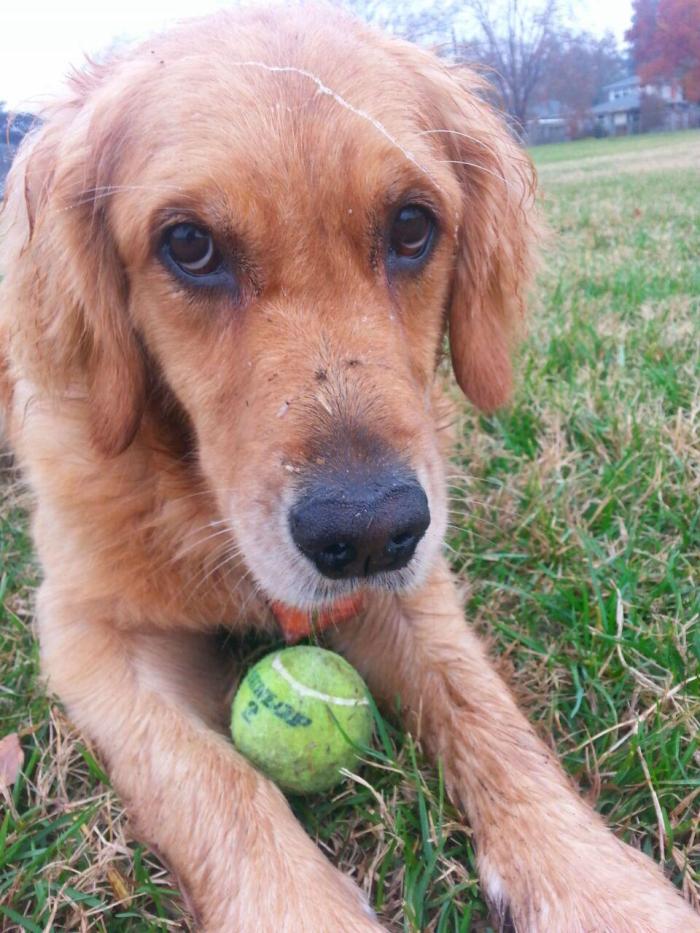
Golden retriever Cali relaxes in the grass with a tennis ball
Cali keeps fit to stay youthful

How old is your dog in “human” years?

We used to just assume that a “dog year” equaled seven human years and estimate our dogs’ human-age-equivalent with a simple multiplication. Cali is 7 1/2 years old (calendar years) so she’s  … roughly my age in human years. (She still has a lot more fun though.)

Turns out that that doesn’t work.

Sometime last year, I first saw a chart that estimates dogs’ ages with adjustments for smaller- and larger-breed dogs since smaller dogs tend to live longer. Cali’s vet has this chart hanging on the wall, and I have seen it several places online. Essentially, in a dog’s first calendar year, she matures about as much as a human does during her first fifteen years. Then in year two, while your human offspring is a terrible two, your dog becomes almost civilized — roughly as mature as a 24-year-old human adult.

Guess what? According to this chart, Cali’s human-age equivalent is … drum roll … roughly the same as my age. And exactly the same as the old “7 years” trick.

But … yeah, that one doesn’t work anymore either.

Now we’ve got a shiny new method of calculating dogs’ ages. All you need is an advanced degree in mathematics …

Seriously. According to the Washington Post, all you have to do is “Multiply the natural logarithm of the dog’s age by 16, then add 31.”

Easy-peasy. Wait, what’s a natural logarithm??

Wikipedia to the rescue: “The natural logarithm of a number is its logarithm to the base of the mathematical constant e, where e is an irrational and transcendental number approximately equal to 2.718281828459.”

Or … not.

I have no idea what Cali’s age-equivalent would be with this formula. I’m going to just pretend it’s something like 25. And holding.


Hands Off My Ball …

Golden retriever Cali holds on to her tennis ball

Cali is a hoarder.

I’m lucky, though; the only thing she hoards is her tennis ball. She adopts a ball each morning — the one I throw for her the first time we play ball. Then, that is the only ball she will play with for the rest of the day. I can toss three balls (or 30), and she’ll sniff each one, but she’ll pick up only her ball.

The game starts like a normal dog-and-human ball game. I throw. She runs, catches or picks up the ball … then things fall apart. Ignoring the “retriever” part of her heritage, instead of bringing the ball to me, she runs off. She’ll choose a corner of the yard, usually in the shade, and lie there, holding her ball. All day if I let her.

If I want to continue the game, I have to chase her. She plays keep-away. Sometimes, this is what she wants. She’s clearly enjoying running, faking me out, being chased, and “letting me win” after we play a brief tug game with the ball. I then throw the ball — which she loves (in fact, she seems to have written a comic about it!) — and the whole thing starts over.

Or doesn’t.

When she’s had enough, she retreats to her corner and gets up and moves away if I approach her. Hoarding.

When we’re near water, there’s a different pattern — she’ll swim after the ball, bring it onto the bank, drop it, shake as much water onto me as she can, and eagerly wait for me to throw it again. She’ll do this over and over again, far longer than she pretends to play fetch on land. When we’re done, though, she wants to carry the ball as we continue our walk to head back to the car. I am clearly not to be trusted with it.

She’s right. Sometimes, when a ball is really dirty and slimy, just the way Cali likes it, I have been known to make it disappear.