Should Your Dog Go Grain-Free?

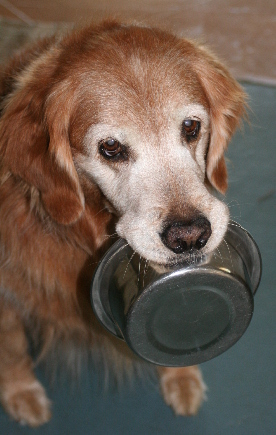
A golden retriever carries her food bowl
Fill that food bowl with health, high-quality proteins and veggies.

A spate of atypical cases of a serious heart condition in dogs is raising the question of whether grain-free dog food formulas are somehow responsible. The FDA is investigating a possible link between diet and the disease, dilated cardiomyopathy (DCM), in dog breeds where the condition is extremely rare. DCM causes the heart to become weak and enlarged; it can cause heart failure. Symptoms include coughing, fatigue, and difficulty breathing. Breeds that have a genetic predisposition for DCM include Irish wolfhounds, great Danes, and boxers. According to a New York Times article on the potential link with grain-free diets, concern was triggered when a large veterinary cardiology practice noticed an unusual number of cases among other breeds, including Labradors and golden retrievers.

There’s no definitive link, and researchers are exploring whether the absence of grains in the diet could be problematic. Another potential problem: the legumes, like lentils and peas, that are used in large quantities to replace the grains in these foods. One avenue of research is whether the legumes inhibit the production of taurine, an essential amino acid that most dogs get from the meat in their diets or synthesize from amino acids in other proteins in their diets. To do this, they need to get enough real meat protein in their diets. To further complicate matters, not all meat proteins contain the same levels of taurine; poultry has more taurine than lamb or beef, for example.

What’s a concerned dog owner to do? Choose a dog food carefully, considering only the dog’s nutritional needs and ignoring food fads. For example:

  • Choose a quality dog food brand that uses specified (named) meats and meat meals as the top ingredients. Use the Whole Dog Journal‘s list of approved dog foods, and you will not go wrong. Don’t use supermarket brands, which are full of fillers like corn and wheat (common allergens), artificial colors, sugar, and other potentially harmful ingredients.
  • Choose a protein that is right for your dog. It’s unlikely that your dog needs an exotic, and expensive, protein like kangaroo. If your dog has shown signs of food allergy, sure, try a “novel” protein — but that just means one she hasn’t eaten before. Switch from chicken to fish or duck or lamb.
  • I tend to favor foods with one or two proteins, rather than those with four, six, or more. This is simply convenience: If my dog were to develop a sensitivity, it’s easier to find a novel protein if she hasn’t been consuming lamb, beef, pork, chicken, turkey, bison, and fish at every meal.
  • Ensure that the food has enough protein and that most or all of it is from high-quality meat sources. Many dogs do well with kibbles that are 25 percent to 30 percent protein; higher-protein foods are great for some dogs and not for others. Puppies will grow too quickly on a high-protein food. Educate yourself. Consult a vet or canine nutritionist, talk with knowledgeable experts at small pet stores that focus on high-quality foods (I’m not talking about those boutiques with a room full of doggy clothing and luxury accessories and only one or two very pricey foods), and read the Whole Dog Journal and Dogs Naturally.
  • Make sure the other ingredients in the dog food are of good quality and, preferably, sourced in the U.S., Canada, or Europe. I’ve avoided any and all food products sourced in China since the melamine and other contamination scares several years ago.
  • Pay attention to whether your dog runs hot or cold. A vet who treated Jana for many years (and who was Cali’s pediatrician) talked with me about “warming” and “cooling” foods. This turned out to be a wonderful guide to choosing proteins for my girls, who both were “hot.” Since moving to duck a few years ago, for example, Cali has not had a hot spot.
  • Don’t treat your dog like a person. I am a committed vegetarian, but I know that neither Jana nor Cali had any desire to become vegetarians. While I have no desire to go gluten- or grain-free, if I did, that would not extend to my dogs. Dogs are omnivores. Give them a balanced, varied diet, avoiding things (like chocolate) that are known to be toxic or harmful to dogs.

As to whether we should avoid the grain-free foods — the jury is out on that question. My advice would be to look at the specific food(s) you are feeding and see whether it meets the Whole Dog Journal’s criteria for a high-quality food. If so, and your dog is healthy and energetic, has normal digestive processes (translation: look at her poop) and a shiny, healthy coat and bright sparkly eyes, don’t make changes. If your fancy boutique food was selected based on the marketing copy or you’re simply following the latest diet craze, reconsider.

What does Cali eat? For breakfast, she gets a Steve’s Real Food Turducken patty. For dinner, she gets a heaping cup-and-a-quarter of Canidae Sky limited ingredient duck formula. Yup, they’re grain free. They’re also chock-full of high quality, nutritious ingredients. She also gets fish oil, joint support and digestive enzyme supplements, eggs, cucumber, plenty of cookies (not grain-free!) and coconut popsicles (ice cubes made with coconut water), and all the fresh raspberries she can reach.

Read more about the potential problems with exotic diets here: “A broken heart.”

Lulu Gets a Golden Handshake

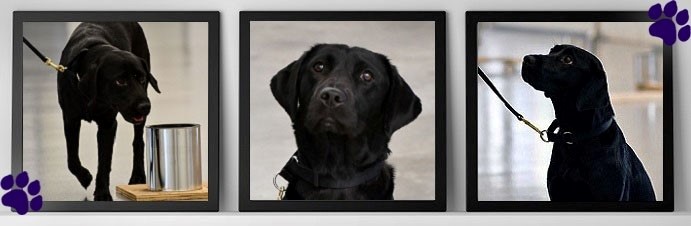
three photos of Lulu, a young black Labrador who chose not to become an explosives detection dog.
Photos from the CIA Pupdate: A Pup Leaves the Class.

Have you ever started a job and realized, during new hire training, that you’d made a terrible mistake? Who hasn’t decided that a job just isn’t the way they want to spend the majority of their waking hours.

Well, Lulu, a year-and-a-half-old Labrador, gave up on what many dogs might consider a highly desirable career; she quit her gig as an explosives detection dog during training. Lulu was recruited from a service dog school at a young age, apparently having decided that a life of service was also not her calling. (Often, service dog puppies with exceptionally high energy or drive are released to a career like explosives detection or search and rescue, if their energy level is not suitable for work as mobility assistance dogs.)

Lulu, according to tweets from the CIA K9 training program and articles in the New York Times and Washington Post, gave up the opportunity to work 60-hour weeks with handlers from the Fairfax County (Virginia) police department. Her new life entails playing with her former handler’s children and protecting the family home from squirrels and rabbits.

Not all dogs are cut out to be working dogs. Service dog and guide dog schools that breed are doing well if more than half the carefully bred and socialized puppies actually end up working as service dogs. Some are released for health reasons, but a large number choose, as Lulu did, to just be dogs. I’ve trained lots of Lab puppies: If food and play weren’t enough of a reward to get Lulu to love the training, she really wasn’t cut out for the work. It’s to the CIA program’s credit that they let Lulu go.

“For our K9 trainers, it’s imperative that the dogs enjoy the job they’re doing,” states the “Pupdate” announcing Lulu’s retirement.

That’s a far cry (and very welcome evolution) from the “bad old days” of training, where lackluster performance was punished. Mistakes were also punished. Insufficiently speedy correct responses might also have been punished. Dogs were compelled to do the job. I am happy that more and more organizations, from service and guide dog schools to military and police dog trainers, are learning that punishment is the wrong approach.

Think about it. If compelled, the dog might do the work, but probably not put her heart into it. If your child is lost in the woods, or your city is hosting a large public event, or your city’s buses are plagued by the threat of terrorist bombings, do you want a dog who’s just doing what he has to to avoid punishment to be the search or sniffer dog on duty? Or do you want an eager dog who loves the work, buys into the goal, and puts heart and soul into the search?

It’s also cool to note that the trainer who wrote the Pupdate talked about working through a slump, figuring out what’s bothering the dog, and motivating the pups with toys and food. That sounds like they treat the dogs as individuals with preferences and feelings, not like robots who are just expected to do as they’re told. This is how it should be; dogs are individuals and should be given opportunities to make choices and express preferences.

It also raises an important point that dog trainers and owners do well to remember: The trainee, in this case, Lulu, determines what is motivating. And what is not. Most Labs love food and will do anything for a food reward. Many dogs are delighted to earn a play reward. A dog who doesn’t want to work for these rewards either needs a creative trainer to find what motivates that dog — or she needs a different goal.

Lulu made her preference clear, and I’m pleased that she got her wish. I’m betting that the handler’s children are equally delighted with her choice.

Watch Closely for Cues to Dogs’ Feelings

It’s not necessary to understand micro-expressions to read Cali’s displeasure here.

Anyone out there remember “Lie to Me”? It is a TV series about a group of psychologists who solved mysteries by decoding the micro-expressions of various players until they unraveled the problem or found the missing person or whatever. That’s where I first heard of micro-expressions, which are involuntary and almost imperceptible facial expressions that express a person’s emotions — before the person consciously arranges her features to show whatever she thinks she’s feeling or wants others to see. Micro-expressions most often occur when a person is trying to hide her true feelings — or is lying, which is the premise of the TV series.

Turns out, dogs have micro-expressions too.

These are similar to — but far more subtle and easier to miss than — calming signals. Calming signals are dog body language cues that offer insight into how the dog is feeling, and they can be involuntary. But dogs can actively choose to offer calming signals, and they often do so — to other dogs and to humans, as targeted communication. But even involuntary calming signals are communicative. Examples of calming signals are the lip-licks and yawns of a stressed dog. These serve to both self-soothe (calm the dog) and tell others that she’s stressed. More examples are given in Please Back Off.

Micro-expressions in dogs, according to research done in Japan, are similar to micro-expressions in humans; they are fleeting and very easy to miss. But they also reveal preferences and can show an astute observer whether a dog is happy about something or feeling fear or dread. The researcher, Miho Nagasawa, has also studied the link between oxytocin level and dog-human interactions (dogs’ oxytocin levels rise when they gaze at their owner or interact; people’s oxytocin also rises when they stroke a dog).

Back to micro-expressions. Dogs show, with quick ear flicks, if they find something (or someone) unappealing or frightening. They show, with a quick eyebrow raise, pleasure at the sight of their human or a favorite toy. The images were captured with high-speed cameras, and are probably too fast for most of us to notice. You can read more about it in Dr. Stanley Coren’s blog post, “Just How Happy Is Your Dog?

As with MRI studies by Dr. Gregory Berns, the research points to more and more ways that dogs and humans are alike in how we experience and show emotions. I don’t find the similarities terribly surprising, but I do think that the more we learn about how dogs (and other nonhumans) think and feel, the harder it will be to justify or excuse much of our terrible treatment of them. It also offers a great excuse for spending time just watching your dog … you both get that nice oxytocin boost, and you might observe some fleeting body language cues that will help you understand your dog better!


Where do dogs go when they’ve gotta go?

Black and red no pooping graphic

Since I posted last week’s description of the continuing education seminar I attended with 80 guide dog teams, I just know that there is a burning question in many readers’ minds. People who work with guide or service dogs always get this question when traveling, and I am sure that the idea of 80 guide dogs in one hotel raises it too: where do they go?

So here’s the answer. The conference team hired a professional scooping crew. Scoop Masters, otherwise known as Tim and Maria Stone, have handled many a guide dog convention. And in case anyone is wondering, the Guiding Eyes dogs had hardly any accidents — less than half the accident rate of a recent guide dog users conference with, you know, dogs from other schools. Just saying.

Scoop Masters alight the day before the conference and case the joint. They figure out the best spots for doggy break areas and set up. They purchase supplies. Sometimes they actually assemble what is essentially a giant wooden litter box filled with absorbent material. At our conference, they didn’t have to do that; the hotel management allowed the dogs to use the grass. Scoop Masters set up bag stations and trashcans. They had scoops and buckets, poop bags galore, paper towels, enzymatic cleaner to clean and deodorize indoor accidents … essentially a giant version of the puppy accident kit that experienced puppy raisers know to take on any socialization field trip (it takes only one field trip to become experienced, by the way). Volunteers provided pickup assistance when needed. Scoop Masters replaced trash bags and poop bags and did spot checks periodically. That’s really all there is to it.

The main reason they were there was to take care of any accidents and emergencies. They are on-call around the clock in case a dog becomes ill or a team doesn’t make it outside in the middle of the night. There were very few accidents and no emergencies. Such good dogs!

This is a serious business, though. Besides the conference and special event service, Scoop Masters — and others like them — provide their services to homeowners’ associations, condo and apartment buildings, and even individual homeowners. They can set you up with waste stations and even provide DNA testing programs to identify scooping scofflaws. So if you’ve ever wondered why we don’t all step in it more often … thank Scoop Masters.

A Step Too Far

No tech gadgets for this dog!

In December, I wrote about Mood Collars. Shortly after, I heard about another product that goes even farther — it is essentially a Fitbit for dogs. Actually, it’s more than that. It is a comprehensive health, mood, and activity tracker. Big Brother for your pup.

According to the website, the gadget attaches to the dog’s collar and measures your dog’s movements, also recording whether the dog is eating, drinking, sleeping, pacing, etc. Data are sent via wifi to the company’s server. The data are crunched like a good bone, providing info for you, the owner, to access from a dashboard.

Is your dog stressed? Appropriately active? Scratching a lot? Watching too much TV? Ordering pizza on your credit card?

Ok, it doesn’t monitor TV consumption or shopping habits, which is unfortunate, because I think that Cali is addicted to nature shows. But it does have algorithms that, the website claims, can suggest whether the dog is ill, if he’s not drinking enough, or if he’s itchy. The website is chock-full of high techy buzzwords, like “machine learning” and “onboard neural network”— words that crop up in my work all the time, but have no place in my relationship with Cali. It touts the “wellness matrix” developed by vets, which it pairs with data gathered on your dog, over time, to decide whether your dog is active enough, too active, anxious, or showing signs of illness. It sends you alerts, notifications, and suggestions, and you can also monitor the dashboard.

The techy and impersonal nature of this bugs me. Yes, I’d like to know if my dog is sick or anxious, but I am not sure I need to measure “key health and happiness indicators on 6 axes of freedom” to know that; I just need to spend time with her. Of course I want to know if she barks when I am away, though I suspect that my very human neighbors would let me know if she did. The claims to be able to detect “diseases such as hyperactivity, cognition troubles on senior dogs” and “anomalies such as arthrosis” by analyzing a dog’s activity and comparing it with a profile for his age and breed are dubious at best. Some things just can’t be done via remote technology, a thought that occurred to me this week as I filled out a survey from my own healthcare provider. Would I have preferred a phone or video consultation to my office visit this week, it asked. Um, no. Acupuncture by video probably wouldn’t work. Neither does caring for your pet via app.

Even though I leave Cali home while I am at work, I still spend enough time with her to know her as an individual. She’s not a line on a chart. She’s not identical to every other 56-pound dog or every other 4-year-old golden retriever. She’s Cali. I’ve known her since she was 8 weeks old. I can tell if she’s itchy or anxious. I don’t need a $200 gadget to tell me. But the gadget’s Kickstarter campaign has more than 300 supporters, so somebody thinks it’s a good idea.

To be fair, I can see some uses for it. It’d be a useful way to collect research data, since owner reporting is not very reliable. This gadget could help me figure out if Cali really is a return-anticipating dog who knows when I am heading home, which would be cool. Beyond that, though, I am not sure it adds anything that a good dog-person relationship doesn’t already uncover. Sure, if I had my dog in a kennel, I’d like a way to keep tabs on the caretakers, provided that there was wifi in the kennel. But I don’t leave her in a kennel; I leave her with dog sitters whom I trust— and talk to regularly. Besides, Cali already thinks I spend way too much time staring at screens when I should be outside, throwing a ball for her or walking through a park with her. She’s right.


Who Gets the Dog?

Dogs are family. That’s obvious to most people who share their lives with family. But under the law, pets are treated like property — no different from a table or a toaster. That causes a host of issues, one of which is, if the family splits up, who gets the dog?

According to the Animal Legal Defense Fund, thirty-two states allow courts to protect pets under domestic violence protective orders. A law passed in 2006 requires that state and local disaster plans include provisions to evacuate and care for pets and service animals. So, slowly, some laws are acknowledging that dogs are not toasters. But, while some judges have been willing to consider pets in divorce court, there has been no legal prod for doing so.

Until now.

Alaska is the first state to require courts to consider the “well-being of the animal” in custody disputes. The law took effect January 17.

While pets are often major points of contention in divorce cases, no one has represented their interests. People fighting about property and messily ending a relationship might, it can be imagined, be concerned with their own feelings; they might also be driven by a desire to seek revenge, hurt the other party, or just to “win,” whatever that means. Their judgment as to what would be best for the beloved dog or cat might be clouded. Recognizing this and specifically directing the court to consider the pets’ interests is a huge step forward.

Kudos to the ALDF, which has long advocated for courts to take this step. And, let’s hope that Alaska starts a fifty-state trend!