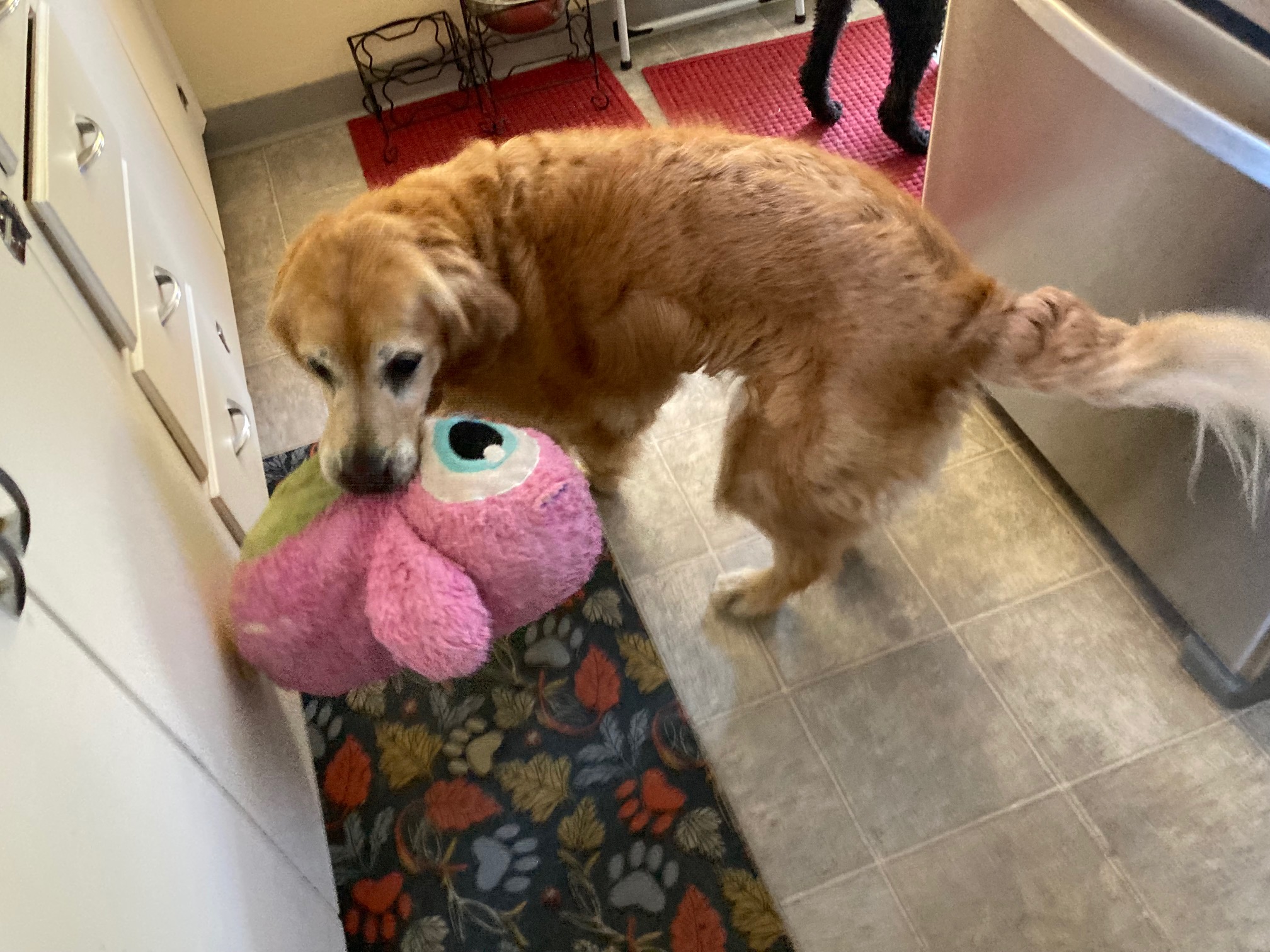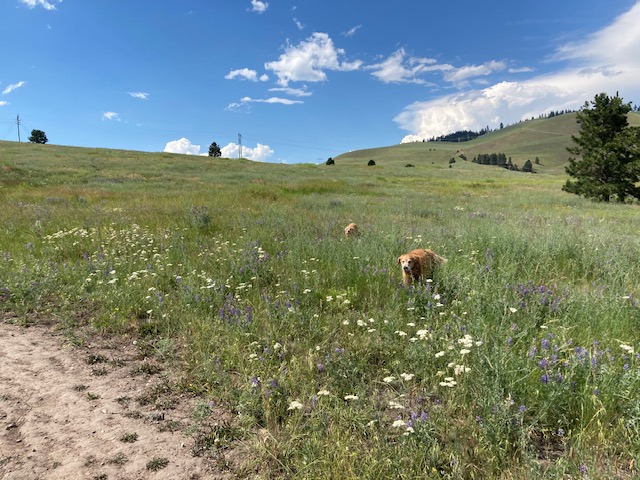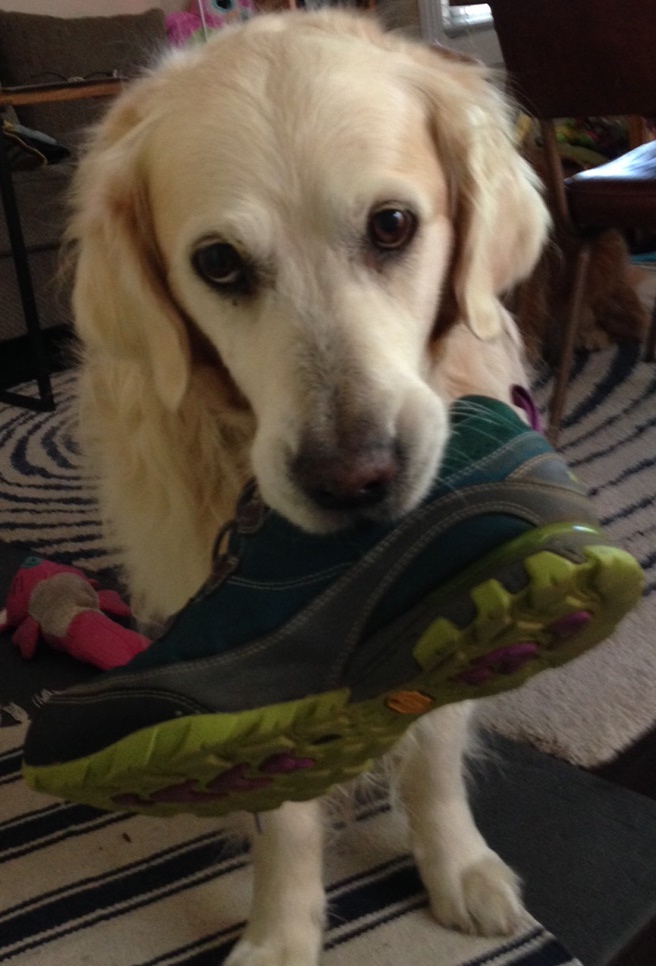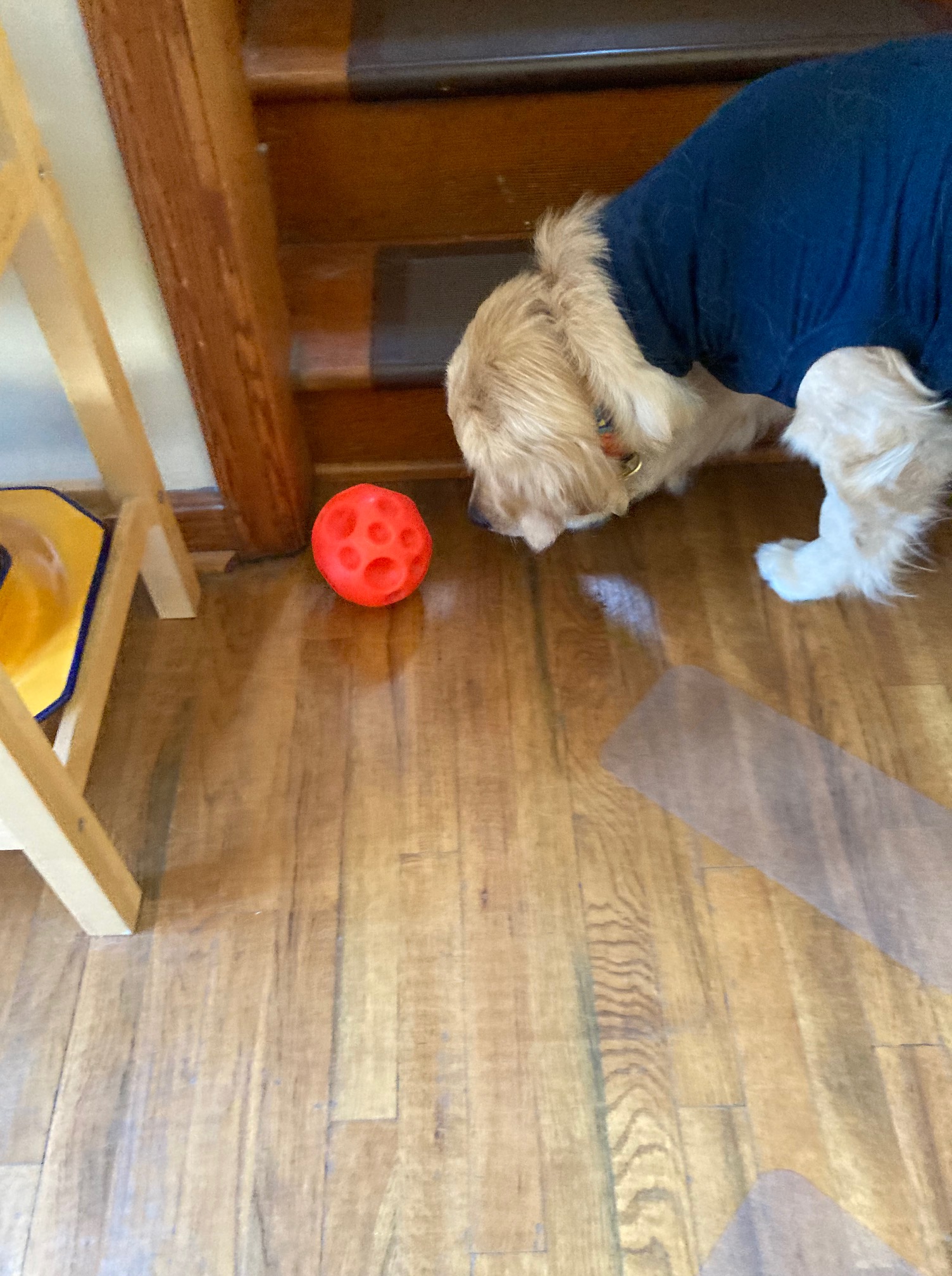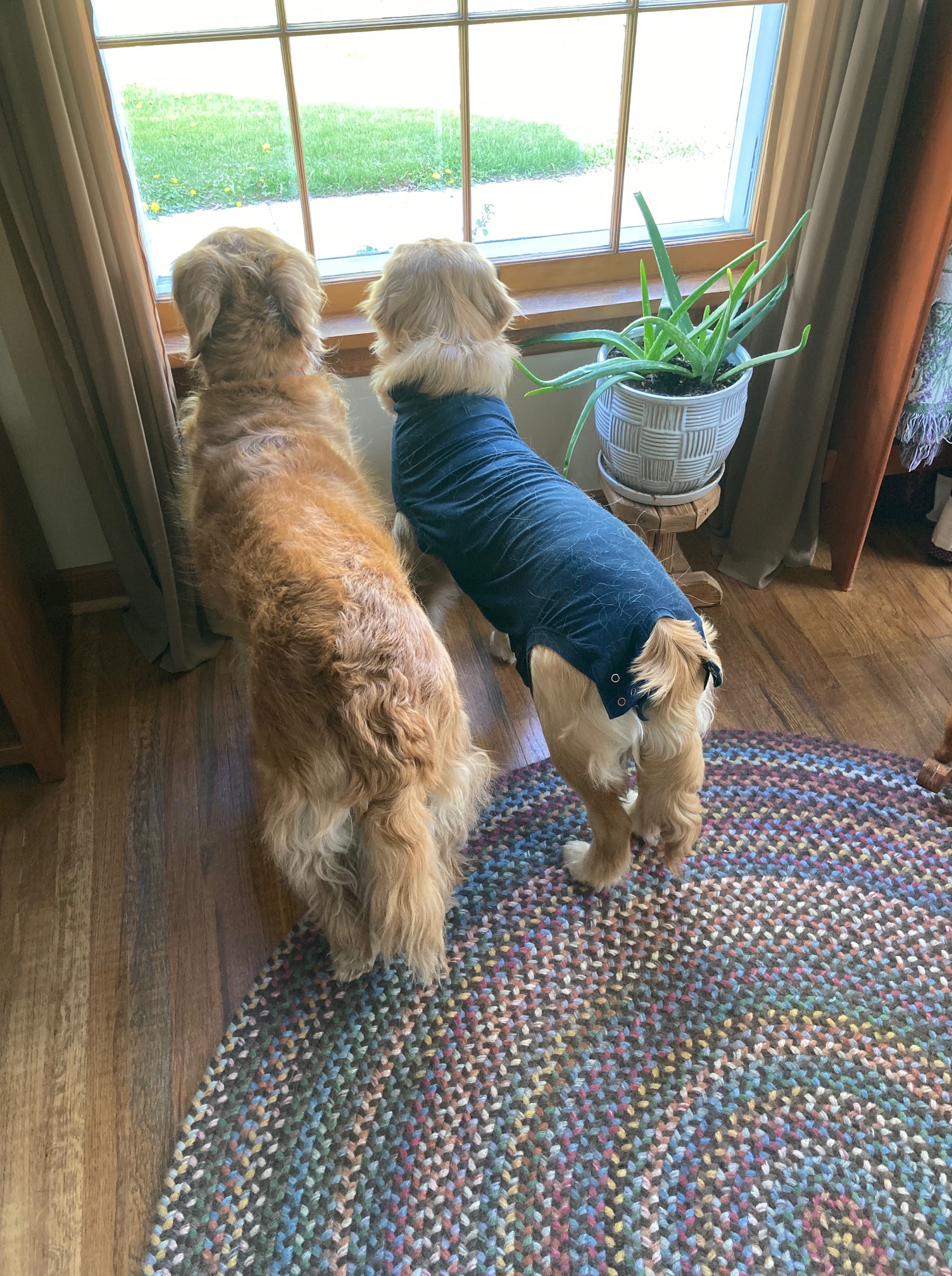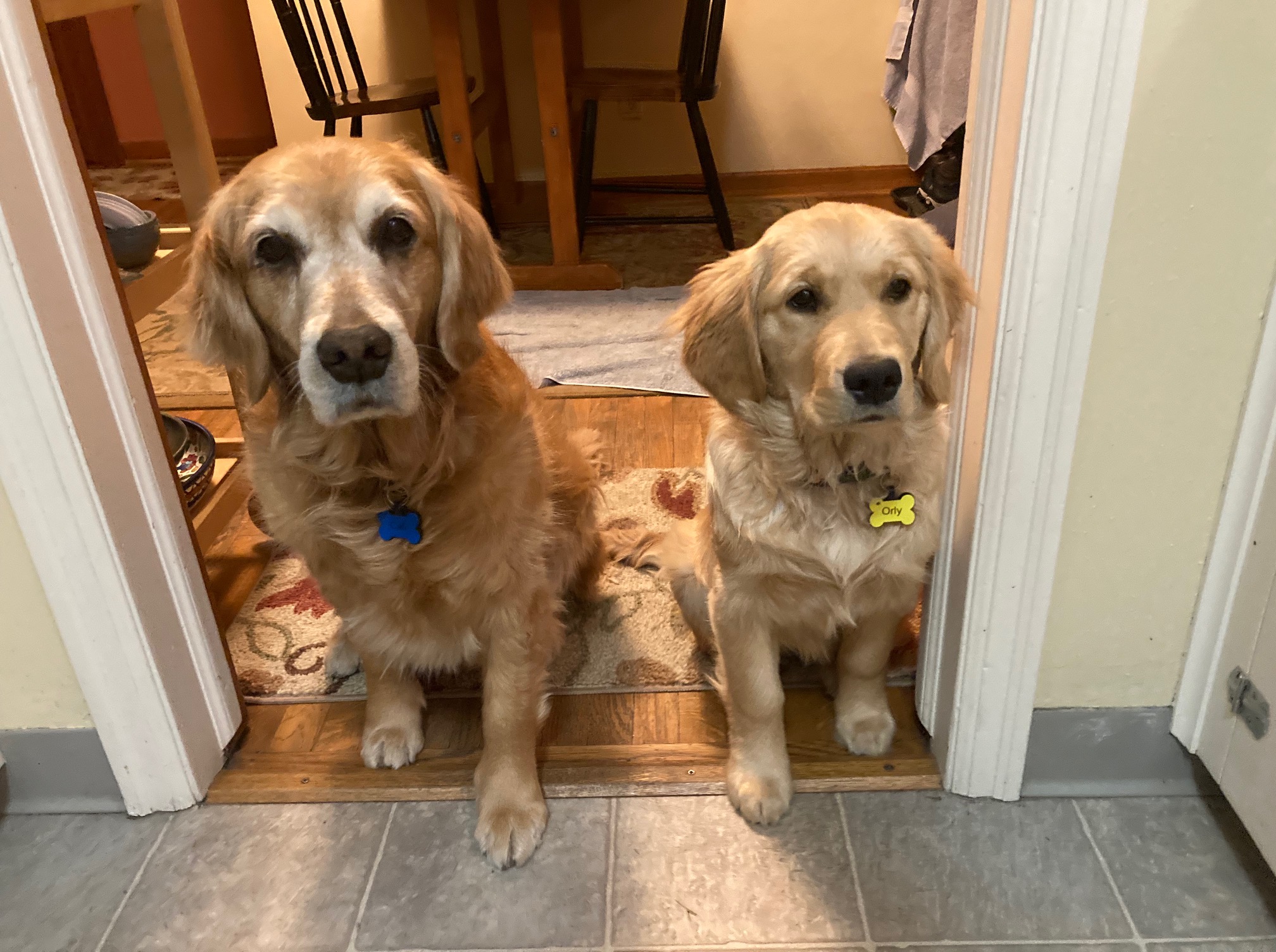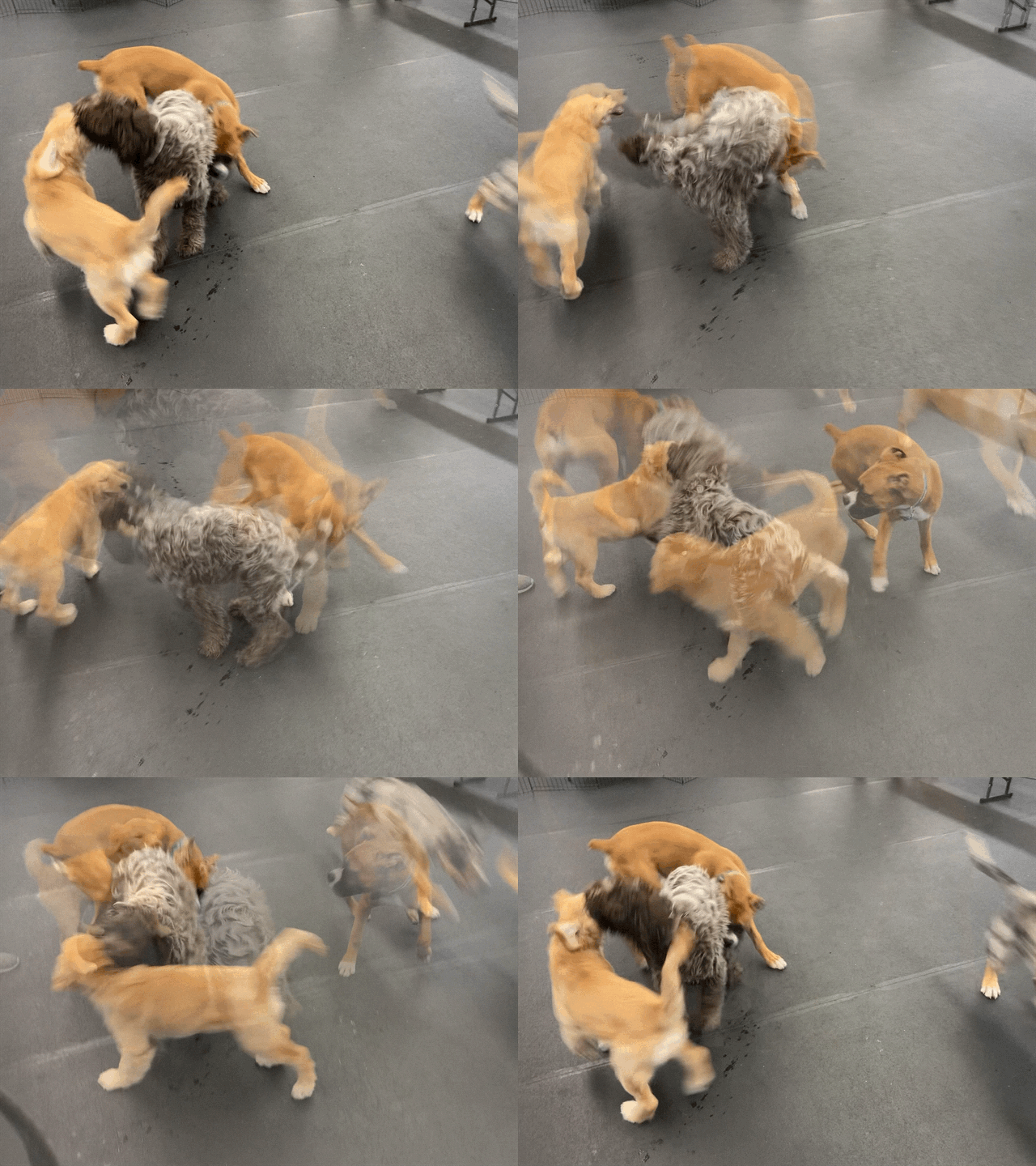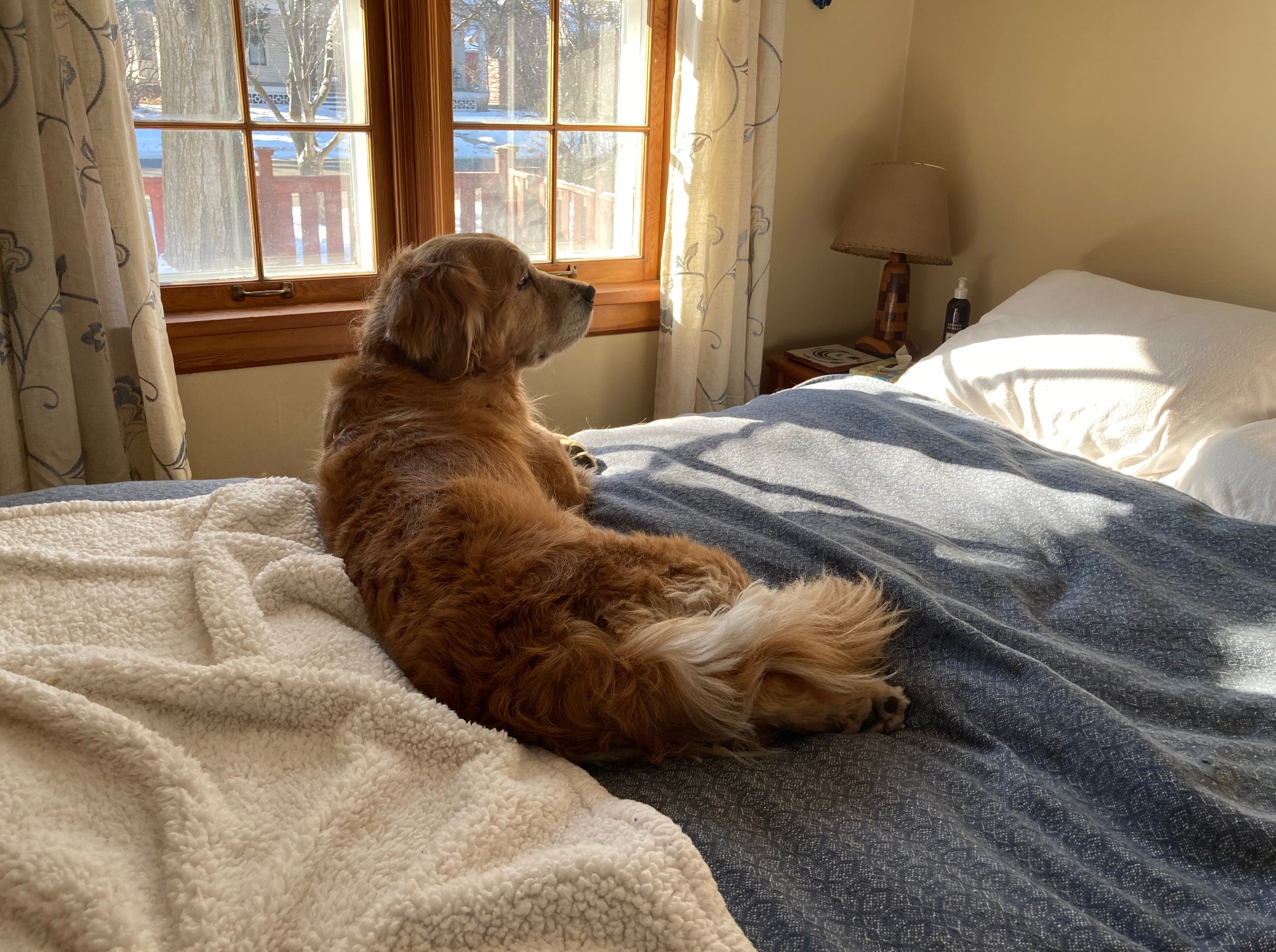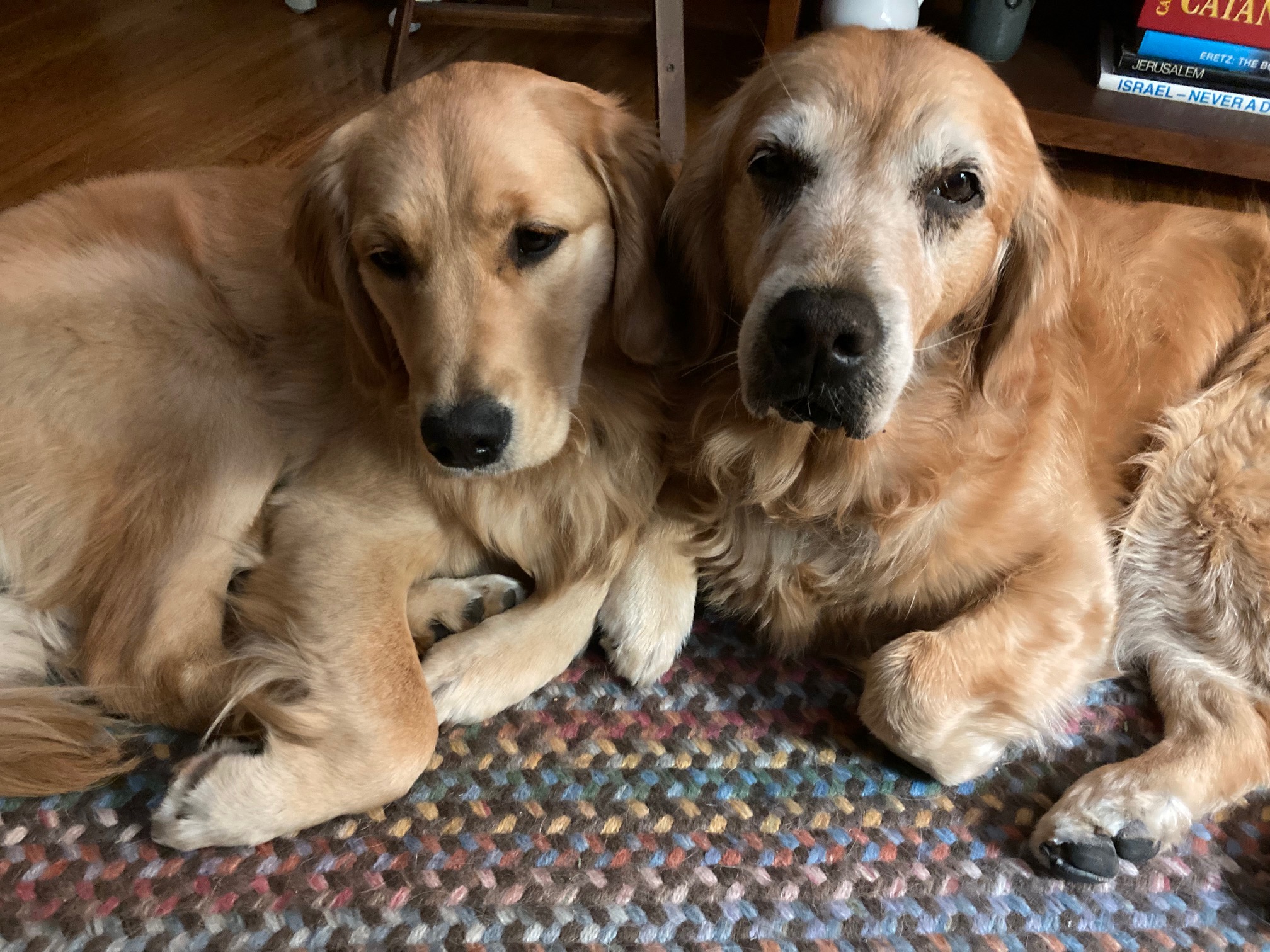
To say that Cali is a “good eater” and not at all fussy about food and treats is to vastly understate. Which is why I was astonished when she rejected proffered treats recently.
We have a hierarchy of treats. This is an essential element of training and motivating dogs to do the right thing. The harder the “right thing,” the better the treat. High-value treats — treats that dogs will do anything for, must be reserved for the most challenging situations, or they lose their value.
I have special treats that I use only for off-leash recalls. This can be practice in an enclosed area or, more commonly, when we’re hiking in the wide-open spaces around our Missoula home. For more ordinary moments, and for walks in familiar places, I use doggy trail mix, a try-your-luck mixture of second-best treats like freeze-dried liver, lower-value, but still delicious, treats we find at the local holistic pet store, and “filler” treats — Charlee Bears and Cheerios, usually. These take on scent and taste from their better cousins in the doggy trail mix jar and are usually accepted eagerly by Cali and Orly.
I would have said “always accepted eagerly” until yesterday.
The weather was dicey, and I wanted to get them out for a run. When the rain paused, I grabbed girls and leashes, and off we went. Astute readers will note no mention of grabbing the good treats. Indeed. The dogs noticed that too.
I always have a handful of doggy trail mix in my coat pockets, and a reserve supply can usually be found in the car. So we’re walking along, dogs off leash, me periodically calling them back and offering treats Continue reading →
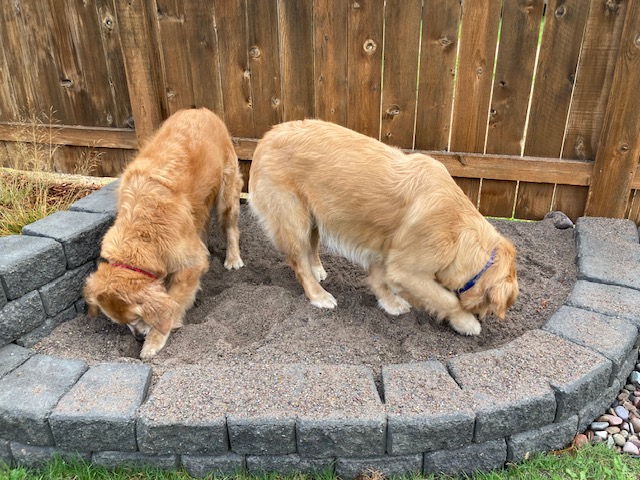
I recently had extensive landscaping done in Cali’s yard. In naive hope of keeping the dogs out of the new beds, and to provide them stimulation and fun, I had a digging pit put in.
Don’t get me wrong: They love it! It just doesn’t keep them out of the beds … or keep them from digging in the lawn (at least not yet).
The digging pit lets them follow their noses to find buried treasure. It is fun and lets them do natural doggy stuff (dig, make a mess, eat stuff they find) in a way that doesn’t cause conflict with their human.
If you live someplace where you see lots of free-roaming cats, it would not be a good idea though … the sand might draw the wrong kind of crowd. While we have many roaming neighborhood cats, not a one has been seen in the yard since Cali and I moved in. It appears that Cali made some sort of agreement with the cats early on, and our yard is a cat-free dog and bird haven. (Actually, that’s not quite true: There was one cat, once, in the yard, stalking the birds at the feeder. Cali chased him out and, I don’t know what she said, but that cat has not been seen since, not even in the back alley.)
Our digging pit is far enough back in the yard that any sand on the dogs’ paws and coat drops into the grass as they run back to the house. There is some spillover into the yard, but so far, it’s not too messy.
The digging pit is only interesting when stuff is buried in it, though, which requires the human to keep it going. I bury, they uncover; as often as I bury, they will dig. So there’s always some pressure to come up with stuff to bury. I bury dog biscuits, bones, and tennis balls. No soft toys or small or soft treats. I admit that I do not keep up my end of the deal every single day.
The pit has failed in its mission to keep the dogs out of the new beds. There are too many enticing smells in there, apparently. And (see above), often, the pit lacks buried treats to find.
It does not help matters any that Cali is convinced that there is buried treasure in the yard. There’s a particular spot next to my garden shed where she cannot resist digging. She digs; I fill; she digs, etc.
We’re working on all of that: The lawn is green; the dirt is soft. The landscaping is still new and exotic. The blackberry bushes draw the girls in with a few late-season berries, tantalizingly close to the ground. For the moment, the dogs are winning most of these battles.
I have high hopes for spring, when I will seed the bare patches on the lawn, block dog access, and keep them entertained in their digging pit until they forget all about how much fun it is to dig in the grass and get their paws good and muddy. Yeah, right.
Jana, my first golden retriever, knew the names of many items
Who remembers Chaser, the border collie who learned English grammar? Chaser’s first moment of fame came from the recognition that she knew the names of more than 1,000 toys. Her dad, Dr. John Pilley, meticulously documented her training. He then demonstrated that she could apply different verbs to each toy (e.g., bring, take, give) and that she knew the difference between the object of a sentence and the indirect object, a mastery of English grammar that puts many high school grads to shame.
In the years since Chaser’s accomplishments became known, other dogs have demonstrated proficiency in learning names of objects and showing basic linguistic comprehension.
But not, apparently, in Hungary.
Bizarrely, a dog cognition researcher at a well-known university — whose dog cognition group has published reams of amazing research — found that the dogs she worked with could not learn any words.
Dr. Claudia Fugazza told Modern Dog: “We started investigating and we found that irrespective of the age when you start training, most dogs do not learn the name of objects. We trained a group of dogs very intensively for three months—we included a group of puppies around three months old and a group of adult dogs—and none of them could learn any words.”
I find that strange because every dog I have ever lived with understood many, many words. Some in two languages. Even without any training at all — simply as a byproduct of living with humans who used words and phrases over and over.
“Want to go for a walk?”
“Who wants a cookie?”
“Let’s get you some dinner.”
These — or variations on these — sentences are known to nearly all well-cared-for dogs.
But Dr. Fugazza was specifically interested in and focused on teaching dogs the names of specific items.
Fair enough.
But here, too, all the dogs I know have learned the names of at least a few favorite toys or items — ball, bone, hedgehog (a nearly universal favorite toy). With minimal effort, intention, or knowledge of dog training, many dogs’ families teach them dozens of words.
Service dogs routinely learn to bring multiple items by name — shoes, slippers, keys, glasses, even tissues or pill boxes. By the age of one, Jana (the original Thinking Dog!) could choose the requested snack — “chips” or “Bamba” — from our pantry and bring it to us in the living room (potato chips and Bamba, a peanut-butter snack, smell very different).
Yet a two-year, global search by the Hungarian research team for their “Genius Dog Challenge” identified only six dogs, all Border collies, who could retrieve items by name. I missed their search somehow. Which is unfortunate, since I could name six dogs just in California who can do that, and not one of them is a Border collie.
I guess those dogs are all geniuses, as are Cali and Orly (and probably thousands more Missoula dogs). Is yours?
Prepare your tools before you start the dog pedicure
What’s the best way to trim a dog’s nails? That’s a common question, since most dogs have experienced painful or unpleasant nail trims and loathe the entire process. I have had to find an answer; the secret is peanut butter.
Orly’s nails grow so fast! Cali’s need attention occasionally, but if I let Orly’s go for a couple of weeks, they get unbelievably long. So, it has been important to get her cooperation for frequent pedicures.
I’ve never liked using dog nail clippers. First of all, they all seem to be designed for right-handed people, and I don’t feel like I can get a good grip on the nail and clip it. Second, all of my dogs have either had entirely or mostly black nails.
With black nails, it is really hard to tell where the “quick” is. This is the tip of the blood vessels that feed the nail. In dogs with white nails, you can see the quick (it’s pink). If you cut it, the dog bleeds. A lot. And squeals in pain. It’s horrible.
That leaves a dremel-type tool to file down the nails. It’s pretty easy to do … if the dog cooperates.
With Jana, Cali, and, most recently, Orly, I started dremel training early. Turn it on, let them hear it while getting great treats. Let them sniff it thoroughly when it’s off. If possible, let them watch other dogs get pedicures (and treats, always lots of treats). Things like that.
Jana spoiled me. She loved pedicures. She loved anything that made her feel like a pampered princess. She’d sit still, hold up her paw, and accept my attention (and treats!), looking bored by the whole thing.
Cali is good, but she doesn’t like the nail trims. She cooperates, but pulls her paw away if I spend too much time on it. I rarely do hers, so it hasn’t been an issue.
Orly … needs her nails done nearly every week.
Fortunately, she’s very cooperative. Even better, she loves peanut butter. I mean really loves peanut butter. So I have come up with the perfect pedicure process:
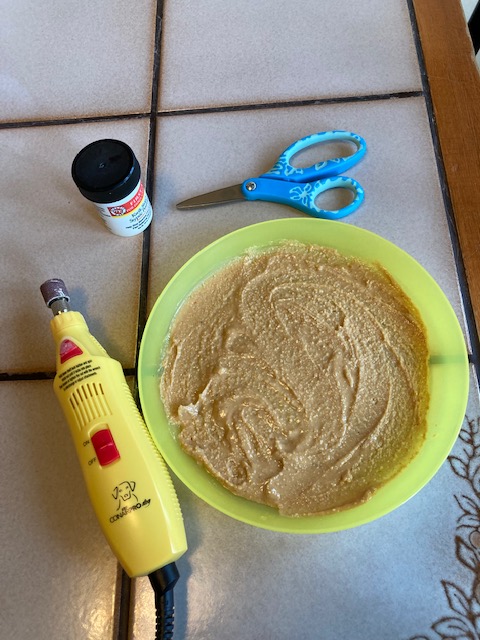
Get dremel, styptic powder (in case of bleeding), and scissors from the grooming kit.
Smear a small plate liberally with peanut butter.
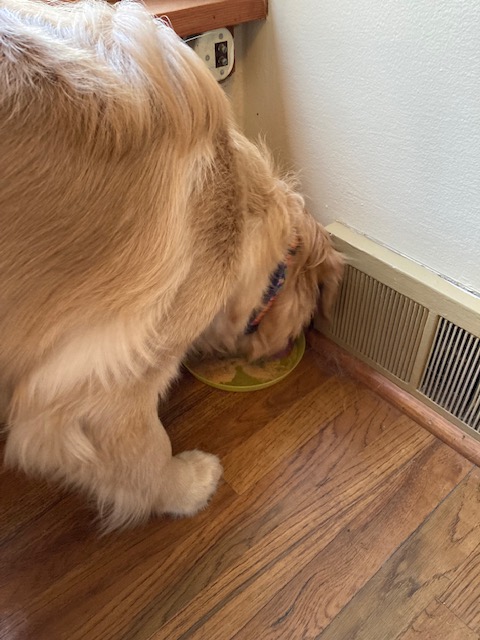
Find a comfortable corner where the plate can be pushed up against a wall and not escape.
Put the plate down and let Orly start licking the peanut butter.
Push Cali’s nose out of the peanut-butter dish.
Turn on the dremel and pick up first paw. File each nail.
Put down the paw.
Turn off the dremel, and push Cali’s head out of the peanut-butter dish.
Move the plate back into place.
Turn demel back on and pick up the next paw.
Repeat steps 7, 8, 9, and 10.
If 4th paw is finished before the peanut butter is gone, use scissors to trim the fur between Orly’s paws.
Give Cali some peanut butter as a reward for being (relatively) patient while Orly had her pedicure.
She doesn’t seem to mind this at all. I’ve never had any accidents (no blood and no pain), and she seems happy to participate in this activity every time I get the dremel (and the peanut-butter plate) out. It actually only takes about 10-15 minutes.
The trick is figuring out how much peanut butter is needed to keep Orly busy long enough to do all four paws. As she gets bigger, her peanut-butter-licking skills are improving rapidly, so the layer of peanut butter gets thicker and thicker. I might need a bigger plate soon. She’s pretty active, so I don’t worry (yet) about the large amount of peanut butter she’s eating. If we get up to half a jar at a time … well, let’s hope that doesn’t happen!
She’s full of energy, eager to explore the world and try out everything … and has very little common sense. She is also fearless and a little too eager to test boundaries and live on the edge.
I work from home, so I am not always available to play. I’m working on some arrangements to get her tired out — regular dog walks or hikes with a lucky someone else, play dates with the neighbors’ dogs, things like that. And I frequently offer treat toys, snuffle mats, and games of “find it,” where I hide little boxes with smelly, yummy treats inside and she and Cali use their noses to find the treats. It’s not enough.
All that adds up to a dog who bugs Cali.
The most egregious behavior occurs when we’re playing outside. Orly will launch herself off the deck and run, full-speed, toward Cali … and tackle her. Or race after Cali when Cali is racing after a tennis ball … and grab Cali’s tail or her leg and tug. Hard.
I step in each time this happens and put Orly back inside, but the lesson is not sinking in. I also let Cali out without Orly and throw the ball, while Orly looks on, sadly, from behind the screen door. Again, she’s not making the connection.
What would make the connection is a correction from Cali. A well-placed, sincere warning. But Cali is too nice. She just rolls her eyes and looks to me for help.
I could just keep them separate, but that’s not what either of them wants. They do love to play together, and Cali often initiates play, whether it’s a game of tug, wrestling, or racing around the yard together.
I’m going to call in reinforcements. The young male dog next door. The puppy who lives behind us. Koala, who is coming for a visit soon. Dogs who, like Cali, want to play with Orly but who, unlike Cali, are likely to set and enforce boundaries.
The combination of playmates who establish ground rules and additional activities to tire Orly out just might be the magic we all need. I’ll let you know!
Orly had her first real vet experience this week. Not the run-of-the-mill go in, get cookies, get poked with something sharp, get more cookies vet experience. Nope. She was spayed.
Surgery means no breakfast. And it means being left at the vet clinic.
It was not her favorite day.
First, I put her outside and gave Cali breakfast. Orly couldn’t believe it. She rang her bell, asking nicely to be let in. She escalated to batting the door with a paw. Harder and harder. Then whining.
By then, Cali was done eating. Rather than reward the whining, I let Cali go out, then let both girls in a few minutes later.
Orly wasn’t speaking to me at this point, but she agreed to get into the car.
She was happy to be at the vet’s, where she met a very friendly (and very large) Great Pyrenees dog in for a dental cleaning, and weighed in at 43 pounds.
She was a little mystified that no one offered her a cookie, though.
Then, the vet tech took her … and I left. She was very surprised by that, but didn’t have the chance to ask me about it.
When I arrived to pick her up, the vet said that Orly was in the back, cuddling with all the techs. Yes … and interviewing potential moms, I am guessing.
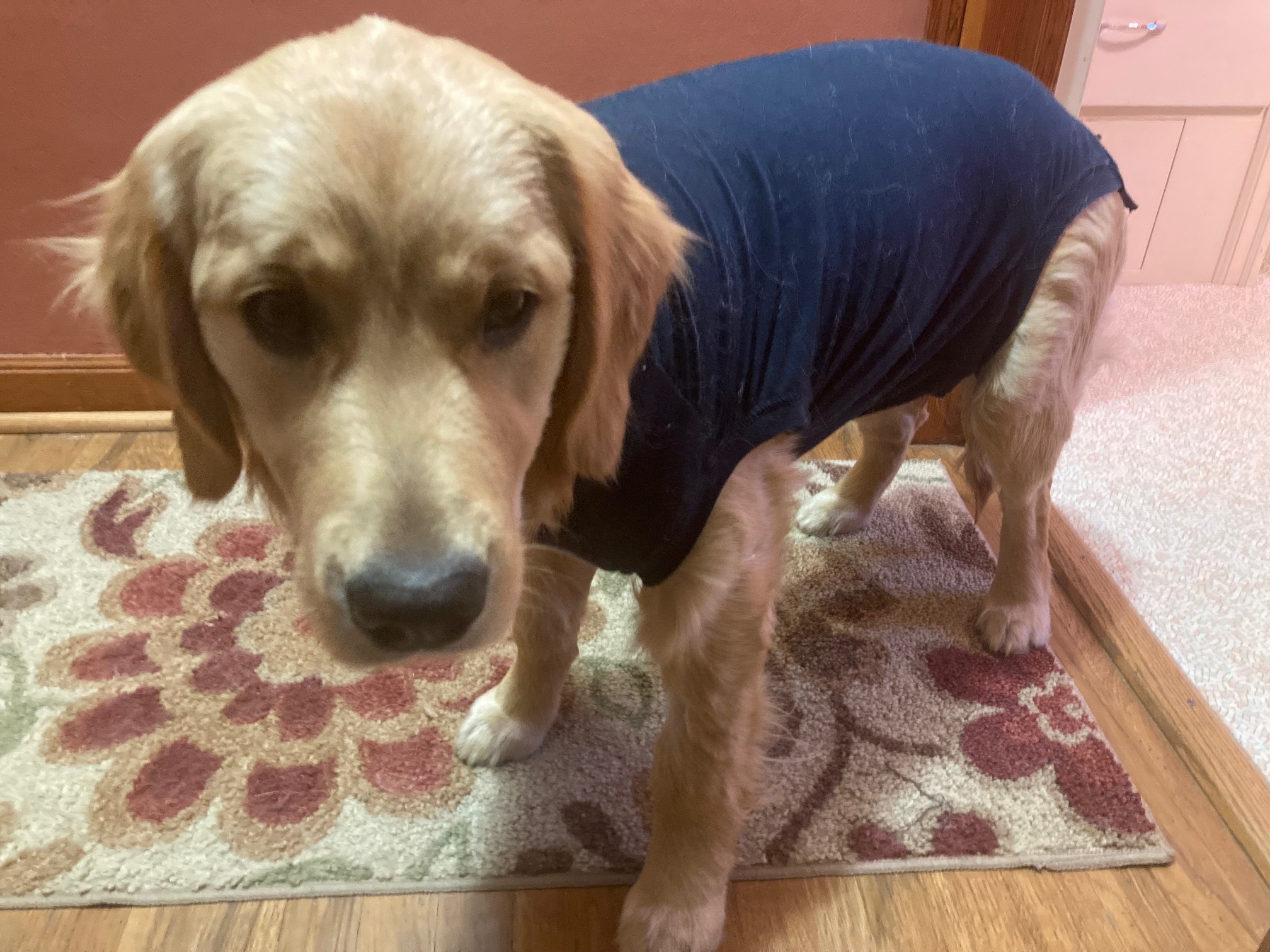
She got home, had breakfast (and dinner not long after). And put on her surgical suit. No cone for Orly!
She was pretty mellow and cuddly Tuesday — the food was all it took to get back into her good graces — but by Wednesday …
Despite the medications that were supposed to keep her a little lethargic, she wanted to play. I kept her busy with treat toys.
That worked for a while. Then, luckily, our new sofa cover arrived, and I was able to let dogs into the living room. Orly happily tried out the new sofa cover. Then Cali offered the first lesson on how to keep other dogs off of our sidewalks.
Cali’s method doesn’t really work, but it does involve quite a bit of muttering and grumbling at people walking by …
Several days post-op, Orly is full of energy, in no pain, and really wants to play. I am supposed to keep her quiet and calm for another week. Yeah, right.
Orly & Cali practice self-restraint, waiting quietly while I fix their dinner.
I’m working on teaching Orly good manners and self-restraint, difficult concepts for a 5-month-old, insanely friendly and curious puppy.
On walks, and (very frustratingly) at puppy playtimes, she’s eager to meet people, any people. She shares this trait with Cali. And, being an ill-mannered puppy, she expresses her enthusiasm in part by jumping on them.
Cali was never a huge jumper, and when she was little, I was working at a dog school where everyone enforced the no-attention-if-you’re-jumping rule. So teaching this to her was fairly easy.
Orly is not Cali.
Orly loves jumping on people. And, while most of the people we encounter on walks and who ask to pet the puppy are polite and wait, as asked, until Orly sits, there are always exceptions. Same at puppy class: Most of the people ask her to sit or ignore her when she jumps.
Most.
There are always the ones who cheerfully assure me that “it’s OK,” or they “don’t mind.” As they pet her, tell her how cute and good she is, all while she’s jumping on them.
I want to growl at them, “It’s not about you.”
Instead, I muster my most patient, polite self and say, “I’m trying really hard to teach her not to jump. When she gets attention for jumping, that teaches her that jumping is allowed.”
That’s a basic summary. Here’s more of an explanation.
Puppies learn patterns. They also love being petted and praised and given treats. When they see a pattern of do y action; get rewarded with food, pets, and affection, they will keep repeating y action. That’s as true if y is jumping on a person as it is if y is sitting politely.
What Orly learns each time someone pets her when she jumps is that y can be either.
And, because she’s a 5-month-old puppy with poor impulse control and because she’s out of her mind with excitement over the prospect of meeting a new person, jumping is very likely to happen. Sitting quietly takes some thought — unless and until sitting quietly becomes deeply fixed in her mind as the one and only way to get to meet new people. (That’s what dog trainers call a “default behavior,” the behavior that the dog does by default, without having to think about it.)
Why do I care so much about this?
Well, the people who “don’t mind” that she jumps tend to be young or young-ish, able-bodied adults. Puppy Orly is unlikely to knock them over or injure them. And they’re out for a walk or at a puppy class, probably not wearing their best clothes.
Once she’s learned from you that it’s OK to meet people by jumping, though, she’s going to use that approach with anyone she feels like meeting, and that’s a problem.
What if they are 3 or 5 or 85 years old? Or unsteady on their feet? Or afraid of dogs? Or wearing nice clothes because they’re going to an important meeting or a nice dinner? What if, once she learns it’s OK, she keeps doing it in a few weeks or months when she reaches her full size and 55-65-pound weight?
Orly could hurt someone by knocking them over or scratching them. She could cause damage. Or she could simply frighten or bother someone who, whether they like dogs or hate them, doesn’t want to be jumped on.
So, to all of you well-intentioned, dog-loving people who “don’t mind” when my puppy jumps on you, it’s not about you or about this one time. It’s about not building the pattern — the pattern where she understands that it’s fine to jump on people.
It’s about not undermining my efforts — and other puppy owners’ similar efforts — to raise our puppies to be dogs who are a pleasure to live with, to walk, and to introduce to people. People just like you who want to meet every puppy they see — without getting mauled. Please help us by waiting until the puppy sits to pet the puppy.
I recently enrolled Orly in a second round of puppy kindergarten classes at our local — excellent — dog training center, Sit Happens.
Aside from her somewhat distracting obsession with the puppy in the mirror, Orly is doing well in her classes. She’s repeating not because she’s a poor student but because she’s still such a puppy!
She’s not able to focus for a full hour of class yet, but she benefits from the training. Puppy kindergarten includes lots of playtime and the teaching is broken up into small chunks, with rest breaks (or play-with-the-puppy-in-the-mirror breaks) so the puppies’ brains can process what they are learning.
Many of her buddies from the weekly puppy playtime also attend kindergarten. She gets to play with them before class, which tires her out just enough that she can focus on the training.
The trainers rotate through several topics that puppies need to learn, like paying attention to their humans even when they are in a room full of other puppies and people; walking nicely on a leash; settling down when they are excited; exploring and trying out new things like walking on weird surfaces or stepping on something that wobbles; and not taking treats or other food they find on the floor.
When Orly gets a little more grown up, she will probably take a more conventional puppy / dog manners class where the hour-long sessions include more training and less playing. She’d like to earn her Canine Good Citizen certification — I’d like her to learn some impulse control and improve her manners.
Meanwhile, though, she’s pretty happy being a puppy in kindergarten!
Orly’s Puppy License seems to be on the verge of expiring.
Puppy License is the very broad leeway that adult dogs grant to young puppies. It’s why they let the puppies chew on them, despite those Baby Shark teeth. It’s why they let puppies climb on them, steal their beds and toys, and generally behave rudely.
As puppies grow, though, adult dogs raise their expectations. This seems to be happening with Cali and Orly.
The other day, Cali appeared willing to maim Orly over a treat toy. After the quite serious warning she received, Orly wisely backed off. Still a little puppy, though, her next choice was less wise: Orly thought she’d munch on some electrical cords instead.
Oy. Of course this all happened while I was trying to participate in a work meeting … (with apologies to everyone else at the meeting, I quickly stepped in to save Orly from electrocution or a Cali chomp by picking her up!). Fortunately, my entire team at work consists of dog lovers.
Over the past few days, I’ve noticed Cali setting more boundaries and issuing more warnings. Ever-cheerful Orly will back off in the moment, but she hasn’t seemed to realize yet that Cali is serious.
I step in to enforce Cali’s boundaries as needed, but I do want them to work things out themselves. I also make sure that Cali is always free to leave the room where Orly is, and that Cali has special places and privileges that do not include a spotlight-stealing baby sister.
Cali has a new little sister, and the Thinking Dog Blog has a new co-star. Orly joined the family on December 29 at almost 10 weeks of age.
She’s one smart cookie, and benefited from an amazingly thorough early-puppyhood enrichment program in her birth home: She is a master of stairs already, is comfortable in a crate, and asks to go out when she needs to go.
She’s a connoisseur of treat toys and enjoys slow-feeder “puzzle” bowls, snuffle mats, and a wide variety of stuffable and fillable treat toys. (A good little Montana girl, she seems partial to her West Paw Toppl and Tux toys.) She also loves to play tug, chew on just about anything (we call her Baby Shark), and run around in the snow. She enjoys watching TV but has not (yet) asked for a tablet or smartphone. She’s well on her way to mastering the magic sit, and has fabulous recall.
She’s a little analytical and often sits and watches a new thing, seemingly pondering what it is or why it’s there. She notices everything but does not seem to fear anything.
Koala has been sweet and tolerant with Orly; as of Day 2, Cali is still pretending that she’s not here.
Orly is Cali’s niece, the daughter of brother Sailor.
We’re working on some basic training and we’ll start puppy class in a few weeks.
Orly will undoubtedly take some of the pressure off of Cali by providing fodder for many blog posts in the coming months. She’s also the reason that the Thinking Dog may publish less frequently … I’m hoping to post at least every two weeks and will try for every Monday as usual.