An Immense World

The cover of An Immense World shows a white and brown monkey gazing at a blue butterfly on a green backgroundAn Immense World is neither a new book nor a dog book, but I enjoyed it so much that I wanted to share it!

Ed Yong’s second book, subtitled “How animal senses reveal the hidden realms around us,” references philosopher Thomas Nagel’s essay, “What is it like to be a bat?” — then goes on to explore the Umwelt or “perceptual experience” of a being, whether human or not.

Spoiler alert: You won’t learn what it’s like to be a bat from this book. Or a dog, moth, dolphin, mole, or any other creature. You will explore the many-more-than 5 senses that various creatures use to perceive, navigate, and understand their worlds.

You won’t learn what it’s like to be a bat because you can’t!

Bats, and most other creatures have senses that are so astonishingly different from humans’ few, limited means of perceiving our environments that even with a deep scientific understanding of how those senses work, we still can’t imagine or experience the world as their owners do.

There is a lot of science in this book, as well as in the copious footnotes — worth reading; some are really funny! — the 44-page bibliography, and the endnotes. Whew. It did take me more than a month to read the book, though it’s only got 355 pages of actual content. I needed time to digest each sense (each chapter) before moving on to the next. And it’s not exactly light bedtime reading!

My favorite chapter may well be the one on echolocation (humans can acquire this skill!)… or maybe the one on color. Some insects and birds can see whole other dimensions of color that human eyes cannot perceive, literally millions of additional colors.

Yong explores the ways other creatures experience the senses we humans do have, then delves into senses we do not, such as the ability to use echoes and sound to see, or sense magnetic or electric fields and use them to map and navigate our environment.

A thread that runs through the book — and which has always driven my curiosity about dogs — is that our ability to even ask the questions that prompt us to study other animals’ abilities and behavior are limited by our own experience. Which is limited by our senses, perceptions — and willingness to consider that other creatures can do amazing things that we humans cannot.

Dogs’ phenomenal ability to detect and distinguish scents gets some attention, as does a discussion of how dogs perceive color. But no one creature is the star of this book. You’ll encounter familiar and bizarre animals and learn all sorts of interesting, if not terribly useful information: For example, the description of the inky-footprint test used to help determine that European robins know to migrate southwest in the fall using their ability to detect the Earth’s magnetic field is a great story … but a bit complicated for a cocktail-party chat.

If you’re a science nerd who loves animals, don’t miss this book.
Frans de Waal Was a True Friend to All Animals

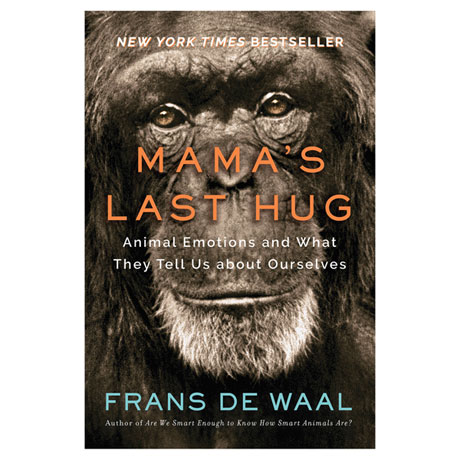
The cover of Mama's Last Hug shows a close-up of an elderly cimplanzee's faceAll of us animals, humans and non, lost a great friend and advocate with the death of primatologist, author, and storyteller Frans de Waal in March.

Gently and convincingly, de Waal debunked the arrogant assumptions that only humans experience complex emotions, are capable of empathy, or engage in complex thoughts and behaviors.

A prolific writer, de Waal authored the bestselling “Are We Smart Enough to Know How Smart Animals Are?” and “Mama’s Last Hug: Animal Emotions and What They Tell Us About Ourselves.” His style is approachable, and the stories he shares are profound. One of my favorites is the study he did on pay equity with Capuchin monkeys. Spoiler: Monkeys recognize — and push back on — unfairness, as do dogs, chimps, and many other non-humans.

Unafraid of controversy, de Waal took on more than moral behavior in animals, addressing “alpha” male behavior, gender differences, and much more, consistently challenging “accepted” wisdom and expanding our understanding of non-humans’ abilities.

His final work, on how humans’ thinking about animals has evolved, will be released next year, according to the New York Times obituary for de Waal.

A Wolf Called Romeo

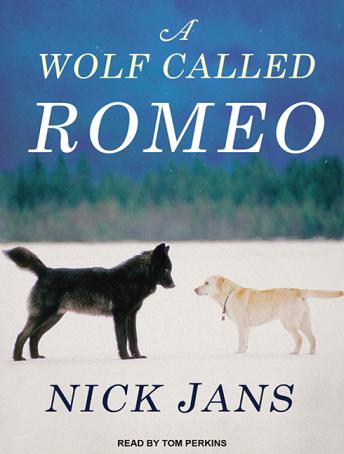
Book cover showing large black wolf nose to nose with a yellow LabradorIn preparation for a recent trip to Alaska, I read A Wolf Called Romeo by Nick Jans. I’ll warn you straight up: It ends predictably. That means that it’s wonderful until about two-thirds of the way through. The last sections are devoted to the inevitable end, a detailed description of the thug who killed Romeo, the many other laws that vile person broke, and the utterly predictable lack of any kind of justice.

However, up to that point … it’s a magical story.

Romeo, a solitary black wolf, appeared one day on a frozen lake near the Mendenhall glacier outside of Juneau, Alaska. The wolf did not flee the humans out walking and skiing. Even more surprising, he seemed interested in meeting those humans’ dogs.

The dogs were equally intrigued, and the first up-close meetings occurred between dogs who slipped their leashes or pulled away from their humans’ to go meet this large new playmate.

Over the next several months and years, Romeo made friends with several dogs and a few humans. He’d watch for them to arrive, follow them, hang out, play with the dogs, and otherwise conduct himself as any walking partner and friend would.

Jans and a few other humans who spent considerable time with the wolf share their stories as the book unfolds — as well as their fears of the wolf becoming too comfortable around humans. An even greater fear: Naive or clueless humans doing something stupid that resulted in a dog or child being harmed.

Despite many somethings stupid, such as parents pushing their toddlers into the wolf’s company to get a photo, the wolf never harmed a human. On a couple of occasions, he did respond to small dogs as he would to prey, grabbing them and running off … and then he released the dogs unharmed.

As the wolf’s fan club grew, so too did the band of wolf haters. One such individual claimed that the wolf ran off with his dog. The dog never did reappear, but there was also no evidence of the wolf’s involvement. Over several years and hundreds or thousands of human and dog encounters, that was the worst harm reported.

I recommend this book with the caveat that it ends badly. If you can take that (or stop reading in time), you’ll enjoy a beautiful story that shows how a wolf in the prime of his life seeks friendship from close relatives and enjoys playing and hanging out with both dogs and humans. It’s a unique perspective on wolf behavior and cross-species friendships.

Doctor Dogs

Most people are aware of guide dogs, mobility service dogs, and possibly hearing dogs. But dogs help people with medical issues in myriad ways beyond these service dog roles. In her latest book, author Maria Goodavage explores dozens of the tasks dogs perform to diagnose, treat, heal, and comfort humans. And the epilogue and acknowledgements sections briefly describe dozens more that were omitted from the main sections of the book (the end sections might have been my favorite part …).

Dogs who detect COVID are in the news; but fewer people are aware of dogs’ ability to detect several types of cancer, as well as diabetics’ sugar highs and lows. Goodavage even has wonderful stories of dogs who detect their human partners’ impending seizures or cardiac incidents …

Moving beyond physical ailments, Goodavage devotes several sections to dogs who assist in times of crisis and trauma, whether serving an individual with PTSD or showing up at court to comfort children testifying in abuse cases, the dogs are on the job.

The book is a comprehensive catalog of ways that dogs help people, but it’s more than that. The thread connecting all of the stories is the human-canine relationship. For many of the “services” dogs perform, neither their partners nor the dogs’ trainers can identify what the dog is detecting. The dogs are deeply connected to their humans and figured out a pattern, decided that the human needed some help, and came up with a way to let them know.

For example, Goodavage is careful to explain that it’s not really possible to train a dog to detect an impending seizure. Many organizations do train dogs to respond in specific ways if their partner has a seizure, though. Some of these trained dogs figure out a pattern of behavior, chemical changes, or something else that reliable predicts a seizure and begin to warn their person. Or a parent, in the case of a child. There are even stories of untrained dogs figuring this all out on their own.

In the case of dogs who are trained to detect the scent of hypoglycemia, for example, or bladder cancer, Goodavage muses about “rogue” doctor dogs — dogs alerting random strangers while out and about. It’s not impossible; some trained dogs have raised the alarm without prompting.

The book is a great read. Goodavage is a stellar storyteller, and she’s done deep research. In addition to interviewing dozens (hundreds?) of trainers, handlers, and people partnered with doctor dogs of all specialties, Goodavage leads readers through all the current research (with a 20-page reference list  to back her up) on how dogs do this and how effective they are. Despite the deep dive into science and research, the book is engaging and readable.

Hats off to ‘Thoughts of Dog’

Book cover of Thoughts of Dog shows simply drawn yellow dog with stuffed elephant

Thoughts of Dog is more than a book or a calendar. It’s a peek into the mind of a loving, sweet, sometimes silly golden retriever and their human. The dog, who is nameless, has a constant companion named Sebastian (Sebastian is a stuffed elephant). Dog also has a human of course.

That human is named Matt Nelson.

And they are simply brilliant.

Nelson & dog capture the human-dog relationship perfectly. They’re poignant, laugh-out-loud funny and sardonic in turns. Always spot-on.

Nelson got started sharing his uncanny dog wisdom a couple of years ago (don’t know HOW I missed it …) with “We Rate Dogs.” You can see some examples on this blog post: 50 Times People Asked To Rate Their Dogs, And Got Hilarious Results.

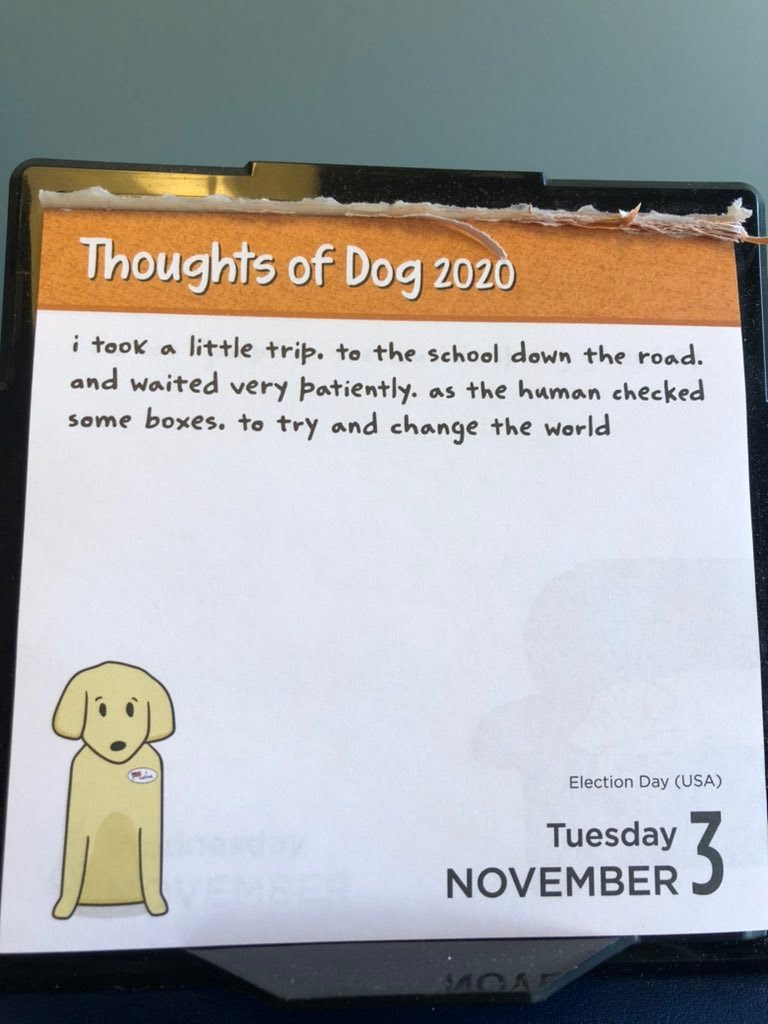
Calendar page showing dog saying "Today I waited patiently while the human checked little boxes to try to change the world"I first heard of Thoughts of Dog when a friend shared a page from last year’s calendar. I immediately ordered the 2021 calendar.

Highly recommended whenever you need a lift or a laugh.

Treat Everyone Like a Dog

cover of Treat Everyone Like a Dog with a happy cattle dog puppy

While I do think that I’d like to come back as the dog of some of my friends and family members, this column isn’t about that. It’s actually a book review!

Karen London, a well-known (& wonderful) dog trainer’s book, to be specific: Treat Everyone Like a Dog: How a Dog Trainer’s World View Can Improve Your Life. An added bonus: Patricia McConnell wrote the foreword.

It’s really a book about changing behavior, which is a topic I write about a lot in my real life, where I work for a bunch of online learning companies. Corporate training is mostly about shaping and changing behavior. Parenting is mostly about shaping and changing behavior. And dog training is pretty much about … shaping and changing behavior.

London does a brilliant job of explaining how to change specific behaviors (in dogs), why the techniques work — and how to apply them to similar situations with humans, whether those humans are your children, spouse, coworkers, friends … It sounds manipulative, but it’s no more (or less) so than the tactics we’re probably already using — and which are not working.

London talks about motivation, using positive reinforcement to motivate as well as reward, and why fear of failure can be so crippling in influencing what dogs (and people) do. Her emphasis is on positive methods of changing behavior and she draws a clear contrast between the shift to positive approaches in dog training — and the lack of a similar shift in human educational and workplace settings.

The book will teach you about things like the jackpot effect and intermittent reinforcement and why it’s so hard to change behavior when a dog (or human) is sometimes rewarded for the very behavior you’re trying to eradicate.

The book is filled with funny and familiar stories and examples. It’s got to be the best book on learning theory I have ever read. Her section on “learning styles” initially had me worried, but her take on it makes far more sense than the thoroughly debunked idea of visual, auditory, and kinesthetic learners! She talks about the value of short, spaced lessons, rather than trying to learn a new skill or complex material all at once — another topic I encounter over and over again in my work.

There’s a lot of great information packed into this book. I suggest reading and digesting it chapter by chapter — and trying out some of the strategies on your dog (or your kid!). You may be pleasantly surprised by the results.

Our Dogs, Ourselves: The Story of a Singular Bond

the cover of Our Dogs, Ourselves by Alexandra Horowitz shows a dog peering up at a personI was excited about reading Alexandra Horowitz’s latest dog book. She’s the person I want to be when I grow up, after all … But, though I enjoyed it, I was also a little bit disappointed.

Her best work so far — aside from her academic papers — is Being a Dog, with its deep dive into the world of scent and how dogs experience it. Our Dogs, Ourselves lacks the insights into dog-focused science I hope for from Horowitz. It also shares little of her fascinating and groundbreaking work in dog cognition.

It’s about life with dogs. Mostly, her life with her dogs, with a few broader forays into the lives of the rest of us and our dogs — or at least the dog-owners she encounters in her New York City life with dogs.

While much of the book reads like a collection of blog posts or short essays, a couple of chapters explore larger, more serious issues. These chapters, in my opinion, redeem the book:

  • “Owning Dogs” examines dogs’ status as property. Horowitz clearly articulates how and why that’s wrong and at odds with how we think of dogs — spelling out the need for a status between “property” and “person.” Her vision of a “living property” status requires attention to dogs’ welfare as well as enabling “full dogness” — opportunities to do truly doggy things, like sniffing, digging, chasing, and chewing.
  • “The Trouble with Breeds” spells out the history and harms humans have caused through generations of selective inbreeding. She also describes related damage. One example is breed-specific laws that fail to account for individual dogs’ differences or for actual behavior. Another is many humans’ tendency to choose a breed that looks appealing to them — without considering “genetic tendencies” that, for example mean that border collies are miserable spending their lives as pets of busy, apartment-dwelling humans.
  • “Against Sex” lays bare the harms we do to dogs by “de-sexing” them, especially at very young — prepubescent — ages. Horowitz dispels many myths surrounding spay and neuter, from the impact on euthanasia rates (negligible) to a long list of the health problems it causes in our pets, including the risks of the actual surgery. She bravely confronts the uncomfortable truth that neutering our pets is an easy out for humans; we don’t have to think about, much less manage, our dogs’ reproductive lives.
  • Finally, “Humorless,” paired with the chapter on “Dog Stuff,” struck a chord with me. Horowitz eloquently describes something I share — an inability to see the “fun” or “humor” in some cultural trends that poke fun at dogs, often by projecting human feelings and motivations onto our dogs. From dog-shaming websites to embarrassing dog clothing to the thousands of so-called funny videos of dogs and kids, where the dogs look stressed and terrified, much of what humans laugh at about dogs amounts to ridiculing or even abusing the dog. This is not always the case, of course, and some functional dog clothing is fine or necessary.
    But many dog find humor in situations that really are not funny. This is largely due to misinterpreting dogs’ body language. The worst results of this are, of course, dog bites. But, and I say this as a reformed dog owner, who is guilty of putting past dogs into Halloween costumes: A lot of what’s fun or funny to humans is unpleasant or worse for the dog. A scared or frightened dog who cannot escape is likely to defend himself, possibly with a bite. Who hasn’t heard a story of a bite “with no warning,” often from people who simply missed many clear signals from the dog.

Overall, there’s enough strong chapters that I do recommend the book — it’s a fun read in parts, more serious in others. But, if you’re expecting a more scientific look at dogs, stick with Being a Dog.


Fifteen Dogs

Fifteen Dogs, by Andre Alexis, is an interesting read for philosophically inclined readers or people who think about what separates humans from animals. But it’s a terrible book. I do not recommend it.

Even so, it’s worth a blog post. It is a story of, you guessed it, fifteen dogs. These dogs are given “human consciousness,” as part of a bet between Hermes and Apollo. Well, they’re given human consciousness if by that you mean human language. I view consciousness differently from the author. I also believe that dogs have many of the elements of consciousness already, with no need for intervention by mythical gods.

The dogs are boarders at a kennel when they are given these abilities; they form a pack and escape.

One troubling aspect of the book is how rapidly most of the 15 dogs are dispatched to pretty unpleasant deaths. Several are killed by their packmates, which raises another philosophical question: Why is it that at the center of the human-like dogs’ behavior is cruelty, cliquishness, and a propensity to murder their friends? The situations and means of the dogs’ deaths at their colleagues’ paws are easily imaginable among humans, but are very undoglike behavior.

The other aspect of “human consciousness” that the author obsesses over is language. All of the dogs develop an uncanny (!) ability to understand some phrases and words in English after repeated exposure, much like, oh, every other dog in the world. They also develop their own language, with elements of English and elements of Dog. One becomes a poet (in the new language), which really annoys several of the others. A couple learn to speak weirdly accented English that some humans can understand.

The focus on language reinforces a conceit that is common among people who study animals with the goal of proving how and why humans are superior. Many argue that only humans have language. Only humans have human language, but many species use language: A communication system with rules (“grammar” or rules of syntax) that is widely understood by members of the speakers’ culture. Some nonhuman species go one better: Their language is understood by all members of the species, regardless of culture or geography. Humans aren’t there yet.

The crux of the bet is that if even one of these human-like dogs dies happy, Hermes wins the bet; if they are as miserable as humans, Apollo wins. Since most of the dogs die in terrible ways, Apollo takes an early lead. But even that is absurd: Anyone can live a mostly happy life but at the moment of her death be scared or sad or surprised or in terrible pain — and not necessarily happy. Does that cancel out her entire life?

I’m not sure that the ability to speak English would make most dogs happier. Or more miserable. And I am not sure that dog happiness is much like human happiness. But above all, I really don’t think dogs need divine intervention to either understand humans or be happy.  Cali has done both quite well since the day we met.

Cali races across a lawn with a frisbee
Dog joy


What It’s Like to Be a Dog

Cover of Gregory Berns's book What It's Like to Be a DogI’ve had a serious crush on Dr. Gregory Berns ever since he published his first MRI studies. Those showed that dogs’ brains’ pleasure centers light up when they catch the whiff of a beloved human (or dog). There’s so much to love about his papers and his book How Dogs Love Us. So I was really excited about reading his newer book, What It’s Like to Be a Dog.

It’s well worth reading, and I enjoyed it. But … it wasn’t what I was expecting. There’s some really cool stuff, like the explanation of how dogs’ brains look when they’re doing the equivalent of the Marshmallow Test. I’ve played around with that a bit with Koala and Alberta, though I lack access to an MRI machine. So I was very interested in his findings. It turns out that some dogs do well with deferred gratification and others … not so much. You might notice that I haven’t talked about doing a marshmallow test with Cali. I don’t need a fancy machine to tell me that she lacks impulse control.

I was a little disappointed with some of the detours from living dogs’ brains into the long-ish discussions of the brains of deceased seals and Tasmanians. And I was distressed by the chapter on dogs and language.

I know that any sentence that pairs non-human animals with language raises the hackles of many people, scientists and non-scientists alike. I also think that there are many, many definitions of language and that dogs, particularly those with close human connections, understand a lot of what we say and do and they communicate with us in sophisticated ways. Lack of understanding of their “language” does not diminish its value. I get irritated when people choose a very narrow, very human-centered definition of language, such as one that is focused on semantics and grammar and written representation of a language, and then say, ‘see, only humans do this so only humans have language.’

Dogs communicate. They use their whole bodies — ears, tails, hackles, eyes, facial expressions, as well as scent and sound, to communicate. And dogs excel at reading the nonverbal communication of other dogs, humans, and often of other animals like cats. Other non-humans do this as well. Dogs are able to read humans far better than humans can read humans.

And dogs understand a lot of what we say to them. They might be assigning meaning to a combination of words and body language cues to understand our feelings, our desires, our mood rather than attaching the specific meanings that we do to individual objects or concepts. While I don’t expect Cali to speak to me in English or read the newspaper, much of the communication that I have with Cali — and especially what I had with Jana — is clear and meaningful.

Berns’s discussion of language, how he tested dogs’ understanding of words, and his interpretation of those results are very, very human-centric. He talks about the mirror test, which I believe is not a fair test for dogs. His comments on dogs’ lack of a sense of self or others: “My beloved Callie probably didn’t have abstract representations of me or my wife or my children. No, I was just that guy who feeds me hot dogs …” are off-base.

Dogs’ sense of self and others is primarily rooted in scent, not sight or sound. Berns himself showed that dogs recognize the scent of family members and respond differently than to the scent of unfamiliar humans or dogs. So I was mystified and saddened by what felt like a dismissal of the individuality of dogs’ selves and their relationships with key humans (or non-humans).

Despite a few disappointing chapters, I do recommend the book. I the insights into how dogs’ brains work are fascinating, and even where I disagree with Berns’s conclusions, I enjoy learning about his research and his understanding of dogs. Dr. Berns is still my favorite neuroscience researcher, and he’s a great writer. Check out both of his books if you haven’t already!


“Alpha” Stands for Abuse

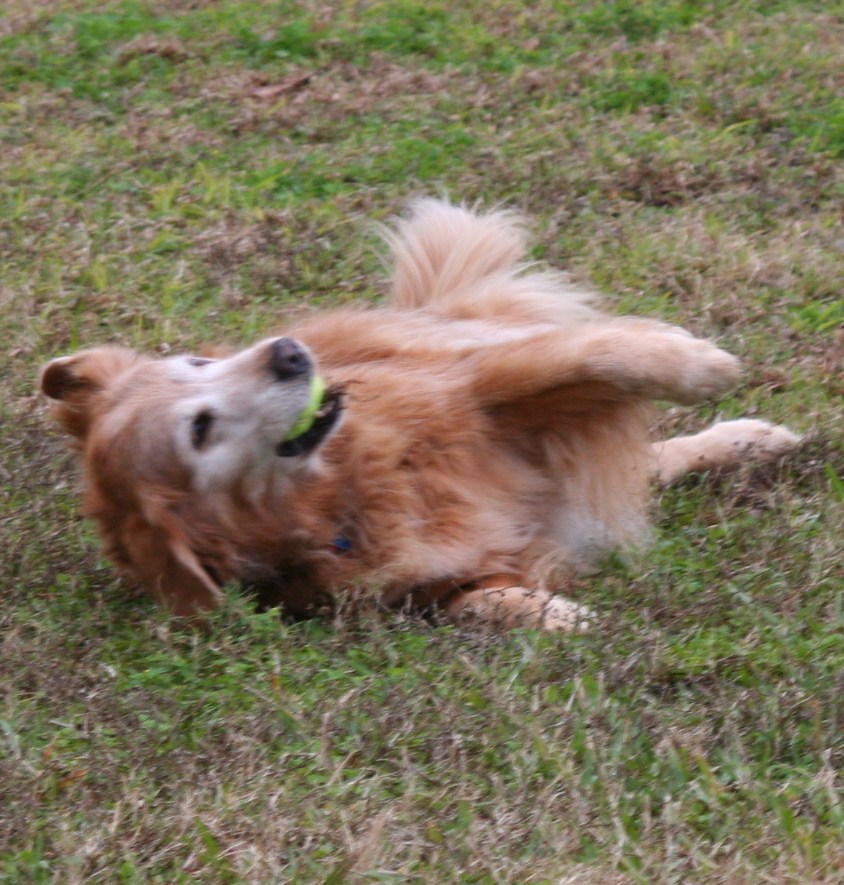
Golden retriever rolls happily in the grass
This is the only kind of rolling I want my dogs to experience.

A few weeks ago, I saw someone essentially “alpha roll” her dog.

This week, I saw Patricia McConnell’s review of a book by the same folks who initially “popularized” the alpha roll, the Monks of New Skete. I don’t know what the Monks suggest in their new book, but I am confident that it is bad for dogs.

It’s well past time for this abuse to stop. We know enough about dogs to put to rest the notion that they “need” a strong leader who keeps them in check using force.

The alpha roll, for those fortunate enough never to have encountered it, is an abusive technique presented by incompetent, ignorant individuals who call themselves dog trainers. It’s based on the thoroughly debunked idea that dogs’ “packs” need to be ruled by an “alpha” who demonstrates “leadership” by beating up on other members of the pack. And that if you, the human, do not repeatedly enforce your “leadership,” the dog (any dog) will try to take over.

All of the elements of this belief are pure hogwash. But those beliefs have led to many cruel practices, including the alpha roll as discipline. Basically, if your dog does something you don’t like, you are supposed to punish him and reinforce your “leadership” by grabbing him and throwing him onto his back (rolling him if he’s too big for you to flip easily) and holding him down as you yell at him, shake him by the scruff, do both, or perform whatever other “disciplinary” tactics the abusive “trainer” has taught you.

So, the alpha roll I saw went like this: I was walking down a busy street. A woman was walking her smallish terrierish dog. Another person walking a larger Labish dog went by. I am not sure whether the dogs only sniffed at each other or whether one or both vocalized. Whatever the small terrier did was unacceptable to the woman who grabbed him, flipped him over, shook him, and yelled, “No! Bad! No!” several times.

Why?

What did she think she was teaching him?

Who knows what she thought she was teaching him. What she was teaching him was that she, his human protector, was crazy and unpredictable. That walking down the street with her, simply being a dog, was dangerous. That she might attack him out of the blue for no reason.

I was silently rooting for the dog to bite her in the face. A major downside of the alpha roll is that the person doing it is often ideally positioned for a really nasty (and richly deserved) face bite. That so few dogs snap and deliver the “discipline” that the people deserve is an enormous testament to dogs’ self-restraint and their long-suffering and forgiving natures — not to the effectiveness of the “discipline.”

The alpha myth is based on incorrect assumptions about wolves. See Alexandra Horowitz’s explanation in this link for more information, but in short, people who observed the behavior of captive wolves extrapolated from the behavior between males all kinds of nonsense about dogs. For openers, captive wolf behavior is nothing like wild wolf behavior, so the observation that, in captive groups made up of unrelated wolves thrown together by humans, males jockeyed for control — including fighting with other males — says nothing about wolf pack dynamics. Natural wolf packs are families. The so-called alpha pair are the parents or grandparents of the other pack members. True alpha wolves rarely use physical discipline, but the alpha pair does lead the pack and teach their offspring how to behave.

And even if natural wolf packs did behave as alpha theorists described— so what? That little terrier mix getting abused on the sidewalk has less in common with a wolf than you and I have with the average chimpanzee. Do we discipline children and rule workplace hierarchies based on the way chimps treat their troupe-mates? I certainly hope not! Thanks to thousands of years of partnership leading to domestication of dogs, and also thanks to generations of human-influenced genetic changes, dog behavior is very, very different from wolf behavior. And dog-dog behavior is, and should be, different from dog-human behavior.

Dog behavior is relationship-based; dogs are very social. That is about the only element of the dog pack mythology that is true. Humans are also social. Social animals have rules, whether formal or informal, that govern their interactions. Some involve status differences and even hierarchies. But leadership is about navigating and negotiating these relationships and differences and influencing the behavior of those with lower status or who are dependent on the leader in some way. There are lots of ways to lead. Sure, force is an option. But as anyone who’s survived an autocratic parent or boss knows, it is not terribly effective, it destroys relationships, and it is far from the only way to “lead.” In fact, I do not consider force or autocracy to be leadership.

McConnell’s blog offers alternative visions of leadership. I agree with her; our leadership of our dogs should be about building a relationship, letting the dog know he can count on us and trust us. It’s also about letting dogs think for themselves and making it safe for them to make mistakes sometimes. That is the polar opposite of what “being the alpha” accomplishes.

Please don’t buy into the alpha myths; instead, buy any (or all) books by McConnell and other positive, progressive trainers who treat dogs as the thinking, caring, sensitive beings they are.