Be careful what you say; little ears are listening. And I don’t mean your children. It turns out that dogs do listen to what we say, as well as our tone of voice And they can often tell when we’re talking to them — or about something that matters to them.
A recent study, ‘Who’s a good boy?!’ Dogs prefer naturalistic dog‑directed speech looked at what they called “dog-directed speech,” which resembles baby talk. Their canine test subjects were all adult dog guests of a boarding kennel whose humans gave permission for their participation.
An earlier study on this topic had played recorded voices to dogs who were alone in a room. The dogs didn’t pay much attention. To me, that shows their intelligence. Would you respond to a disembodied voice telling you that you were a “good boy” or to “come here”? I hope not!
The newer study is far more respectful of canine intelligence. They also used recorded speech, but an actual human, matching the gender of the voice, was in the room.
Dogs were more likely to look at, approach, and interact with the researcher who was present when dog-directed speech — high-pitched dog talk — than boring human talk in a normal pitch and register.
The researchers also investigated whether dogs had a preference for content of speech.
The dogs showed the most interest in high-pitched, emotional speech directed to them, with relevant content. Dull content in an interesting tone was no more appealing to them than interesting content said in a dull tone.
What does this tell us? Perhaps that:
Dogs learn to associate meanings with particular words and phrases, as well as a particular tone of voice.
People tend to use a higher-pitched, more excited tone when talking to dogs, so dogs learn that what is said in these exaggerated tones is meaningful.
Dogs learn that people might say interesting things in a dull tone and then nothing fun for dogs happens, so they learn to ignore even favored words (“walk” or “cookie”) when it’s clear that the human isn’t addressing them.
Additional layers develop as a specific human builds a relationship with a specific dog.
I’ve always talked fairly conversationally to my dogs, and they do respond to relevant phrases and questions, even when I say them in a “normal” tone. I believe that dogs learn to read their humans and are able to tell — with a familiar person, though not necessarily with a researcher — which speech is relevant to them, regardless of tone.
I also think that it’s about time more people studied communication with dogs!
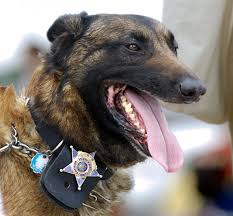
Hundreds of drug-detection dogs are taking early retirement, their jobs disappearing as marijuana legalization makes their skill set obsolete. It’s not the dogs’ fault; the blame lies with human myopia.
Dogs can be taught to identify pretty much any scent, even scents that humans cannot detect. The dogs who sniff out cancer or flag diabetics whose blood sugar is dropping, for example, are responding to scents that humans cannot smell.
Dogs can also be taught to reliably distinguish scents and alert to more than one scent. And they can of course be taught to respond to each scent with a unique behavior — a bark, sitting, lying down, spinning in a circle. It really doesn’t matter what; the dog can learn it.
But the humans. Oh, the humans.
There are the trainers who take the “easy” path of teaching their canine pupils to give the same alert to any contraband. Easier to teach. Easier for the handler to remember. But it makes the dog’s skills useless when you no longer want her to alert to marijuana.
There are the humans — trainers, handlers, lawyers, judges — who do not believe that dogs can discriminate the scent of meth from the scent of marijuana. Or who do not believe that dogs can reliably signal which one they’ve detected.
Many detection-dog trainers are have already stated training dogs on other forms of contraband but not marijuana. And new recruits, who’ve graduated with this newfangled curriculum, are stepping up to take the retiring dogs’ jobs. Even so, there are sure to be younger dogs caught unprepared as the job market shifts, new grads whose skills are outdated before they’ve had a chance to shine. The thousands of humans forced to adjust when their jobs vanished will understand how tough this can be.
The retirees’ future is not bleak, however. Most of these dogs are headed into a cushier retirement than many people can look forward to. Many of them have years of experience under their vests and deserve to enjoy their golden years. And who knows? Some may pivot to new careers. I hear there’s growing demand for conservation dogs…
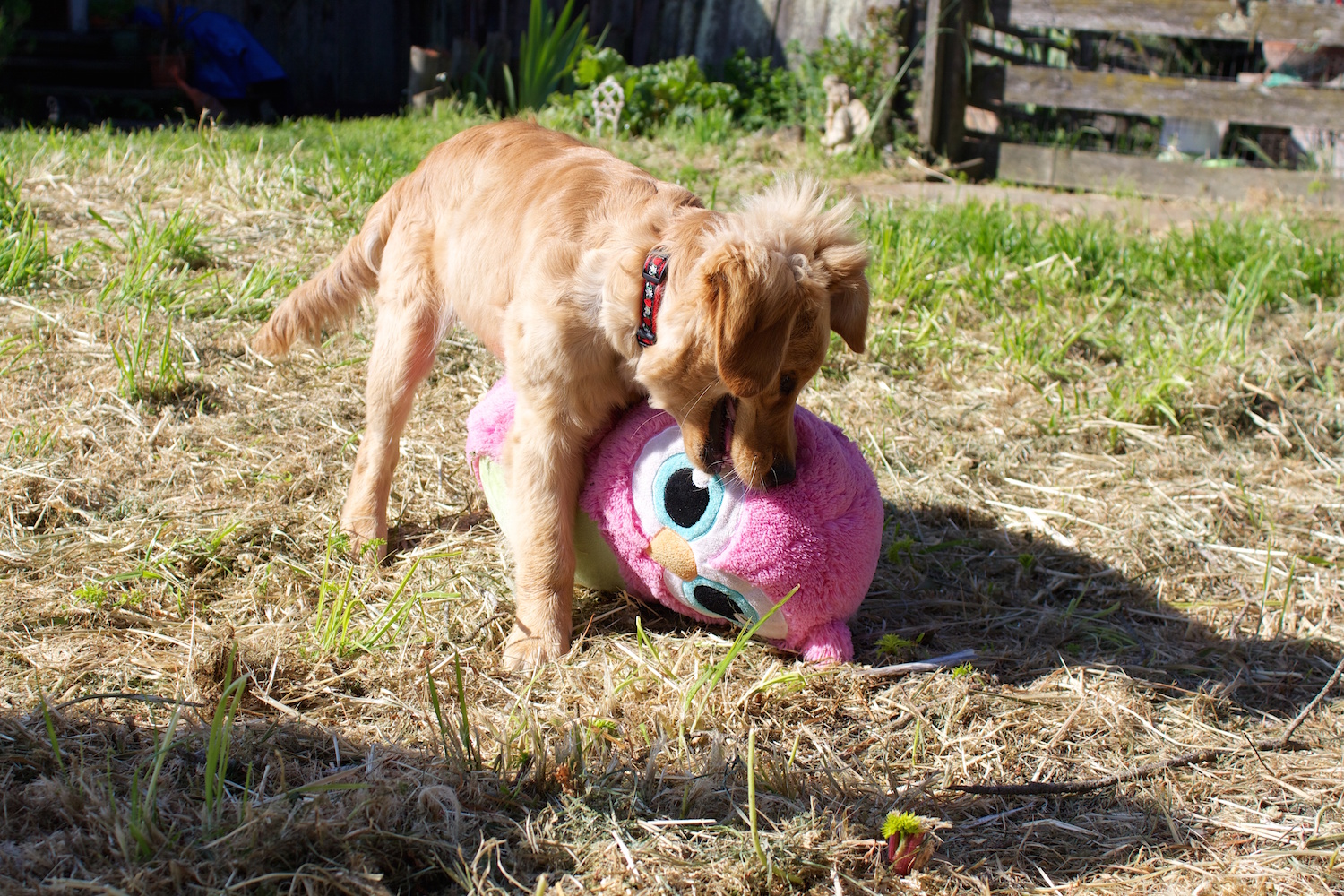
A puppy I know has trouble with greetings. She’s so excited to meet people that she bounds to the door and, essentially, assaults them. That is pretty normal puppy behavior; they’re not born with perfect manners (who knew?). And people usually mean play, treats, toys … all kinds of good things. So of course puppies get excited.
There are a few possible responses to this assault. Most people do the natural (but also among the worst) thing: They exclaim at the puppy’s cuteness and pet the puppy. Hm, thinks the puppy, people love being jumped on and even gnawed on at the door.
But … most people don’t love being jumped on and gnawed on by puppies. And puppies have a tendency to grow. Larger-breed puppies might be cute when they jump on visitors as 8- or 10-week old balls of fluff, but even the people who think that is cute are less amused a few weeks later, when the 4- or 6-month old adolescent, or even the 60-lb adult engages in the same greeting.
“Managing” the situation by removing the puppy before answering the door is also a common response, though this does not teach the puppy manners and therefore requires a lifetime commitment from the humans. It’s also not great for times that people show up at the door unannounced, as delivery people, mail carriers, and relatives tend to do.
So, the puppy must learn some manners.
One slow option, with great long-term payoff, is teaching the puppy to do something else: Get a toy. Sit. Sit and offer a paw (charming!). Go to her bed or crate.
A supposedly easier option is “correcting” the puppy. Unfortunately, there are still many old-school trainers out there who use physical “corrections” (a euphemism for physical punishment), for all manner of infractions where punishment is really inappropriate. Even more horrifying, many of them apply these techniques to puppies.
So, this pushy puppy’s trainer suggested using a prong collar. She gave the whole speech about how it doesn’t hurt and is better than a choke chain. I know the speech because I used to believe it. But, a prong collar is a choke chain. Even worse, it’s a choke chain with dozens of pointy spikes designed to dig into your puppy’s neck when you pull on the leash, tightening the … choke chain. Technically, it’s a “limited-slip” collar; the chain only tightens so much, so you won’t choke the puppy to death. How comforting.
Its sole purpose is to hurt the dog (to “get her attention,” the trainer will say. Yep, if someone jerked a pointy chain tightly around my throat, that would surely get my attention …). So, yes, it hurts, unless your puppy is a thick-necked muscular breed, but even then … is that really how you want to get your best friend’s attention?
And, more to the point, it doesn’t work.
OK, yes, if you set the puppy up, have the puppy dressed in prong collar and leash when someone comes to the door (as you’ve prearranged), and the puppy jumps, and you give a perfectly timed correction, the puppy most likely won’t succeed in jumping on that visitor. If you consider that “working,” your bar for success is pretty low.
Will you keep the puppy on leash and in full prong at all times? Will you be holding the leash at all times? If so, then you are a monster and do not deserve a puppy. If not, then it’s quite likely that the puppy will still succeed in jumping on people. Often.
So, what the puppy will learn, very quickly, is that she can get away with jumping when she’s not leashed and pronged. She’ll also learn that being leashed leads to being hurt and that being near you leads to being hurt. Those are not things you want your puppy to learn, are they? I mean, you do want to be able to hang out go for walks together that the puppy does not regard as torture. At least, I hope you do.
It also fails because it doesn’t teach her anything positive. It doesn’t teach her what you want her to do, for example (sit, get toy, etc.). It doesn’t even really teach her what you don’t want her to do because there’s too much going on for her to understand that the fact that she might jump is what triggers the “correction.” And few dog owners, especially when frazzled and dealing with puppy and visitor and who knows what else, have great timing; there’s no way you will always deliver the “correction” right at the moment she’s jumping. So the puppy might think it’s the doorbell or her barking or people reaching to pet her or any number of things that are causing the painful jerk on her neck.
What this painful “correction” might teach her is that people at the door are scary because they cause her to get hurt. She might even figure out that people at the door cause her humans to go crazy and attack her.
In either case, since the puppy cannot prevent people from coming to the door (or avoid them, if you’ve got her on a leash), she’ll do what every scared canine is hardwired to do: defend herself. That’s right. “Correcting” the puppy by hurting her — and failing to teach her what she should do — can make her behavior at the door far worse by convincing her that it’s a threat. She might growl, lunge, bark, even try to bite people once she connects their arrival with the painful leash jerk and pronged choke.
I had a trainer tell me that I had to use a prong collar on Cali to teach her to heel and not get excited about the other dogs in class. Cali was an older puppy at that point, maybe 7 or 8 months, and in full-fledged obnoxious adolescence. Even so, she was a puppy. A golden retriever puppy, for goodness’ sake! If an adult human cannot teach a puppy to behave without resorting to brute force, she shouldn’t have a puppy. (Same goes for a toddler!)
I didn’t use it. I decided that I wanted a relationship with my dog that was not based on scaring her or hurting her, but on teaching her. Granted, her leash manners are not perfect, and she still gets really excited about meeting people when we’re on walks. But visitors? She runs to get a toy and prances around with the toy. No jumping, no barking.
Fortunately for my puppy friend, her parents won’t be using a prong collar either. But the prong collar solution appeals to many puppy owners (and sadly, trainers) because it seems to have an immediate effect and it’s “easy.”
Yes, actual teaching takes longer. It also offers a real solution to the problem: You end up with a dog who greets people politely, offers a toy, or goes off to her own space. Isn’t that who you want to spend the next 12 or 14 years sharing your home with?
When Cali was a very small puppy, she tried to move in on Jana’s turf, to steal her job! Young Cali had her heart set on delivering the paper, but that didn’t go so well. Cali decided that she was just going to be a puppy of leisure.
But every so often, she’d check out what was out there.
She usually wasn’t interested in the jobs that were available. Picking up her dish doesn’t pay well enough. Putting her toys away is boring. And besides, she’s just going to get them out again in the morning.
She’s willing to work as a dishwasher pretty often, despite the dull vegetarian menu, but the hours are irregular and the pay is inconsistent.
She does like her gig work as a greeter, but again, it’s unpredictable and the pay is inconsistent. Some visitors play with her; others ignore her. Some don’t even come inside to admire the toy she has brought to show them. The really mean ones just ring the bell and disappear. Who does that?
Yes, for many years, the job market was tight. But things are looking up.
Finally, Cali has a new job that she loves. It’s predictable, the hours are the same every day, and the pay is great. Thanks to the new fence that nice man from Western Montana Patio built for her, she can safely get the paper.
Yep, back to her first job. Or attempt at a job. Jana had that one locked up for a while, then Cali was too depressed to work … then there was no paper for about a year.
When she first moved to her new yard, she immediately saw a problem: There was a house blocking the paper delivery area, and the front yard opened right onto a busy street. She wasn’t going to risk her life for a job!
At last, the stars have aligned: There’s a paper to get and it’s safe for her to work.
With the new fence, all is well. She goes out into the back yard first thing to take care of business, then she’s ready for work. She bounds through the house and out the front door, tracks down that paper (the weekend carrier doesn’t have the best aim …), wrestles with it a bit, and delivers a slightly damaged plastic-wrapped bundle. With a little encouragement, she’ll even place it in the bossy human’s hand, but she really thinks that dropping it on the living room rug should be sufficient. Lazy human!
Still, the human comes through with decent pay. A liver treat! Best of all, her workday is done with plenty of day left to play, roll in the grass, and sleep on the human’s bed.
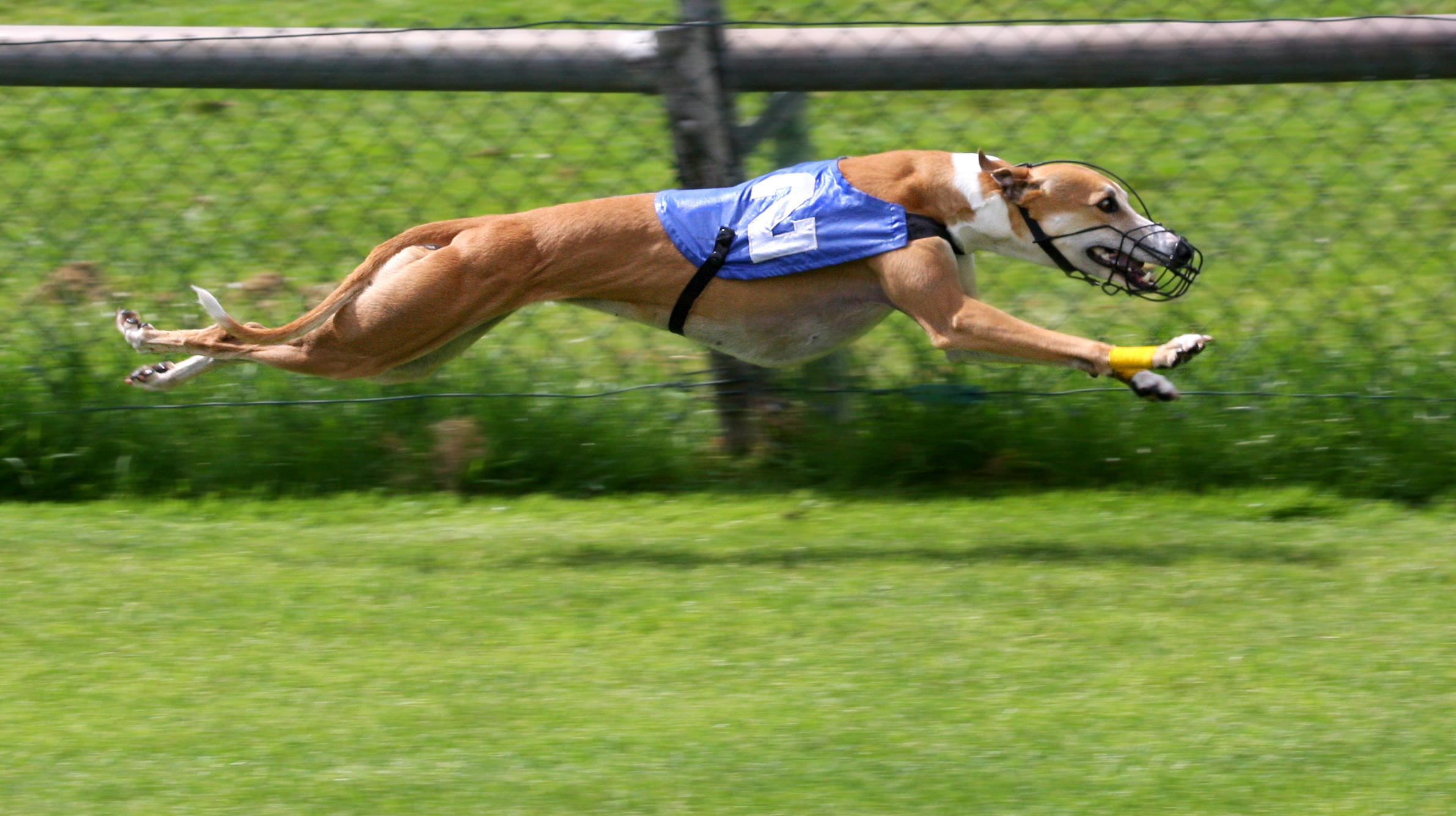
Hooray for Florida! Odd words for me to write as contentious election contests morph into contentious vote recounts … but Floridians of all political stripes stepped up for the dogs. The measure to ban greyhound racing passed with 69 percent of the vote.
Greyhound racing will at long last be phased out in Florida. According to the Orlando Sentinel, the 11 active tracks have until January 1, 2021, to end dog races.
Grey2K and other rescue and shelter organizations are already gearing up to handle an expected flood of retiring racedogs. Thousands of greyhounds currently race in Florida, and, though some will be moved to states that still allow racing, most will probably need homes.
And rehabilitation. Several years ago, while working on an article on prison-based dog-training programs, I visited a prison in Michigan. The head of the training program there, where dogs from a nearby shelter and retired racing greyhounds were getting training prior to placement, explained how much the greyhounds needed to learn.
They spend their racing lives in cages and don’t understand how to function in a normal environment. It took three men and a boatload of patience to teach the rescued greyhounds how to walk down stairs, for example — something that can be easily taught to a puppy in a few short sessions.
The few rescued greyhounds I’ve interacted with all seemed to grasp some of the greatest comforts of life-with-kind-humans pretty easily though, enjoying soft beds, warm sweaters, and yummy regular meals. They are large but quite gentle and often shy — perhaps a result of spending much of their early lives isolated from most other dogs and humans.
Spokespeople for the industry claim there was no abuse of the dogs, who were well cared-for; 500 deaths of racing greyhounds in Florida in just the last 5 years says otherwise, as do state reports of injuries and deaths, some with video documentation. Add in the rabid opposition from the industry to any kind of regulation, like tracking injuries or prohibiting steroid use, and I somehow am having difficulty feeling too bad for the people whose livelihoods will be affected by the ban — track operators, breeders, track workers. I do hope they find work in a less-cruel industry.
There should not be any free lunches. No free breakfasts or dinners either, not for high-energy puppies whose humans work and who therefore have excess energy to burn. Note that “puppy,” as used here, can apply to a dog of any dog of high energy and limited exercise opportunities.
My friends have a new puppy. Another friend is getting one next weekend. What possesses people to get puppies in Montana, just as winter is settling in, I will never understand. These puppies will have lots of energy. The weather will be cold and gray. When my friends get home from work, darkness will have fallen. It will still be there when they leave the next morning.
That means the puppy needs to play inside. Fetch games with soft toys are great, and teaching her to play “tug” might be a good idea. But it’s not enough. That’s where the “no free food” idea is key.
Many, many treat toy options are out there. These all operate on a simple principle: Humans put food inside the toy; puppies and dogs work to get it out, burning energy and developing their problem-solving skills in the process. They chew, lick, paw, chase … and don’t chew shoes or pillows, shred their beds or the furniture, or paw and dismember the furniture. They expend their energy in a desirable manner. Everyone wins.
The trick is figuring out which toys your dog will like. Jana was easy. Was there food in it? She liked it. The only problem was, she could also empty and spit-polish any treat toy in about 3 seconds flat.
Cali is less willing to work for her meals. She’ll leave a partially emptied Kong and wander off to do something more interesting. More interesting than food?! For a golden? Weird, right? She’s more engaged by the toys that randomly dispense kibble as the dog rolls and bats them around. Koala gets her lunch in one of those every day.
When a longtime friend had two young Labradors, she also kept her freezer filled with Kongs stuffed with kibble and peanut butter. Jana liked those, as well as kibble softened with broth and frozen. Freezing it slows the dog down. (A little. If she’s not Jana.) Want more creative — and more challenging — fillings? Google “Kong recipes.” It’s a thing. Really.
If you have a high-energy dog or a young puppy, pick out a few treat toys at your nearest pet store (or online) and try them out. Spending 15 minutes once every several days prepping the toys is an investment that will really pay off. Feed each meal (or part of each meal) in the toy, and encourage the dog to work for it. Feed from a bowl only after the dog has emptied the toy and only if you can’t reasonable feed him all he needs in treat toys. You’ll soon notice a calmer, better-behaved dog. Which naturally leads to a calmer, happier you.
You should never buy a puppy (or a kitten or any other sentient animal) from a pet store. You know that, right?
Responsible breeders do not sell their puppies at pet stores. Puppy mills do.
If you’re still on the fence, though, here are two more reasons to avoid pet stores that sell pets, as opposed to selling pet supplies or maybe hosting adoption days for local rescues and shelters.
Disease Traced to Pet-Store Puppies
More than 100 people in 18 states were sickened earlier this year through contact with pets at multiple pet stores, according to Bark Magazine and the CDC. Many of them were pet-store employees. The disease, Campylobacter, was traced to 25 different breeders, through six pet store companies and eight distributors. It’s long past time to put all of those people out of business. Find a responsible breeder, rescue, or shelter … don’t support pet stores that sell puppies.
Scam Preys on Puppy Buyers
The Animal Legal Defense Fund and the Humane Society are targeting a “pet-leasing” scam. What happens is, people wanting to buy a puppy at a pet store are persuaded to “finance” the expensive puppy mill product. Many fail to read the fine print, no doubt having eyes only for the adorable puppy. They end up signing a lease agreement that 1) ends up costing far more than the already outrageous sticker price of the puppy and 2) could result in the leasing company repossessing the puppy of they miss a payment. The buyers are not actually the owners of the puppy; a company called “Wags Lending” is.
California, Nevada, and New York have made “leasing” puppies illegal. Other states should follow suit. Meanwhile, ALDF and the Humane Society are asking the Federal Trade Commission to investigate Wags, its backers, Monterey Financial Services, and this deceitful practice.
A breeder in Pennsylvania could face prison time and large fines if she’s convicted of the eight counts of felony animal cruelty she’s been charged with. This a year after earlier charges resulted in her being placed under “supervision.” The supervision was not sufficient to stop her from continuing her cruel practice — cropping the ears of puppies without any anesthesia or even antibiotics.
I find ear cropping and tail docking reprehensible. I know all the devotees of breeds where this is standard practice are going to howl in protest. Go ahead. It’s a vile, cruel practice. But if you insist on doing it, the very minimum you must do is have a veterinarian perform the procedure on puppies who have been anesthetized and who will receive proper follow-up care, including antibiotics and analgesics. To force puppies to endure this barbaric procedure without pain meds is unspeakably cruel.
Four of the counts against this monster are for torture. Torture. I’m pleasantly surprised that the state of Pennsylvania has such strong laws to protect these puppies — and that the laws are being enforced, at least in this case. I wish the rest of the country would follow suit. (According to the Animal Legal Defense Fund, Pennsylvania updated its cruelty laws in 2017.)
Breed standards can change to eliminate requirements for cosmetic surgery. Allowing show dogs to retain their ears and tails does not interfere with their so-called genetic purity; it merely requires the humans who torture and profit from them to alter their ideas on what the dogs should look like. Many breeds’ appearance has changed drastically over the years due to selective breeding, and people have accepted and even embraced the changes. There’s no reason a show poodle can’t have a tail or a Schnauzer shouldn’t have ears. Whatever the historic justification for cropping and docking, it’s not relevant in the show ring or typical pet home. Owners and breeders of working dogs who may feel that the alterations serve a useful purpose can make that argument — and have a vet do the procedures. Nothing justifies the cruelty of unnecessary surgery on puppies who are “’crying and screaming’ without anesthesia while their ears were cut,” as described in a Washington Post article.
I hope this woman spends the rest of her miserable, cruel life in prison where she cannot hurt any more puppies.
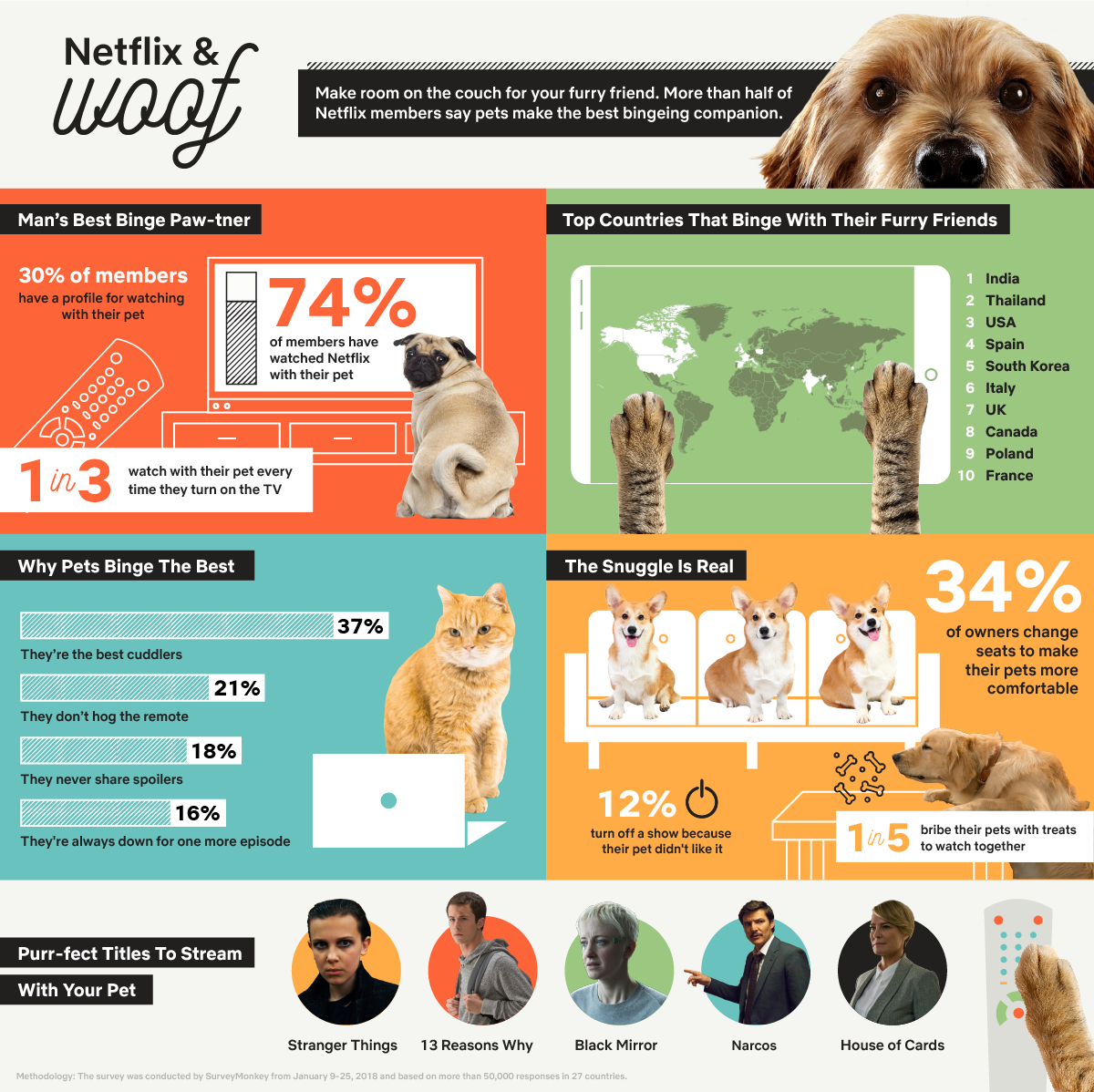
Not surprisingly, many people prefer watching Netflix with their pets to watching with other humans. Pets rarely hog the remote, they don’t give away the plotline, and they always let you choose the program. Pets might gobble all the binge snacks, but you still get to decide what and how much junk food to serve.
Surprises in the results? The US is only third, after India and Thailand, in terms of how many people watch with their pets. And 30 percent reported having separate profiles for solo watching vs. watching with their pets. That’s only surprising because people are actually making that distinction. Cali and I head downstairs together to watch TV. She might head off to bed before I am done watching, but it’s never the case that I say, “Oh, tonight I want to watch alone” or specifically have to invite her to join me. She’s my buddy. Evening activities are by default together… unless I am a terrible, horrible person and go out without her. Hmm, I wonder if she has a profile for watching without me…
Some respondents change the show if their pets don’t seem to be enjoying it, so maybe I am wrong (or just selfish) about always getting to choose. Cali does prefer shows that have dogs in them, as long as the dogs seem happy. I’m with her on changing the channel if the dog gets hurt. She’s willing to indulge my Grey’s Anatomy addiction, though, and we both like the British baking show. She likes nature shows too.
Many viewers reconfigure their seating arrangements to accommodate their pets’ comfort, which is pretty much the story of my entire life, in front of the TV or not. Bird owners are the most attentive to their friends’ wishes, with more of them reporting that they choose shows specifically based on their pets’ preferences. I’m wondering whether that’s true of all bird owners or only those whose birds talk. Netflix does not say.
The saddest statistic is the 20 percent (!) who have to bribe their pets to watch with them … they must have really horrendous taste in TV or really uncomfortable couches. But I do relate to the 22 percent who talk to their pets about what they’re watching. As well as the one-in-three who “turn to” their pets for comfort during scary parts. If by “turn to” you mean “bury your face in the fur of,” that is!
Is your dog your TV binge buddy? Is the number of respondents who watch with their pets only 74 percent because the other 26 percent don’t have pets? How lonely …
“Our conservation detection dogs are agile, portable, and endlessly trainable. They are an efficient, highly sensitive, and non-invasive way to gather high-quality data.”
The above quotation is from the website of Working Dogs for Conservation (WD4C), a Montana-based organization whose dog teams literally travel the globe helping to save endangered species, find and route out invasive species, and intercept contraband cargo that includes products from endangered animals.
The coolest … okay, one of many, many cool aspects of their work is that the dogs they train are the “bad” dogs who wind up in shelters because no one can handle them. No regular family or ordinary adopter, that is. The high-energy, obsessive dogs who will do anything, anything at all, for the chance to play one more game of tug or get that silly human to throw the ball. Even better, the organization reaches out to shelters and teaches staff how to recognize these high-drive dogs and connect them with organizations, like Working Dogs for Conservation — or police, military, search and rescue, or other organizations that train and work detection dogs.
WD4C offers living proof that dogs can master more than one job. The dogs — endlessly trainable, remember — are taught to detect multiple, maybe dozens, of scents. That makes them versatile partners and enables teams to work in all kinds of places. The dogs learn to detect scents underwater as well as on land. In the water, they can detect pollutants like metals or pharmaceuticals, and they can distinguish between species of fish and aquatic plants, to identify invaders. At a talk I recently attended, the research director, Megan Parker, said that the dogs could distinguish between rainbow trout and brown trout, a feat that many Montanans would find impossible. They’re currently teaching dogs to detect brucellosis, a highly bacterial infection that affects, among others, cattle, bison, and elk in Montana.
In the service dog world, I’ve heard people claim that a single dog couldn’t be trained to, say, guide a person with impaired vision and retrieve dropped items; that person would need two service dogs. I’ve heard pet owners (and, sadly, pet trainers) claim that dogs can’t learn different rules for different situations or understand tasks that are too similar. This is absurd, of course.
So maybe the best thing about WD4C is that it believes in dogs: It believes in dogs’ ability to constantly learn — the demo dog at the talk is a 12-year-old Malinois who has been working for 11+ years. He’s still learning new tasks. It believes in the hard-to-handle dogs that others write off — and saves many of them from certain death in shelters. It even believes in humans’ ability to learn about dogs, sharing training methods and research with organizations and individuals who are eager to understand how incredibly capable dogs are — and to teach them to use their noses in countless ways.