Karen Pryor Changed Dog (& Human!) Training Forever

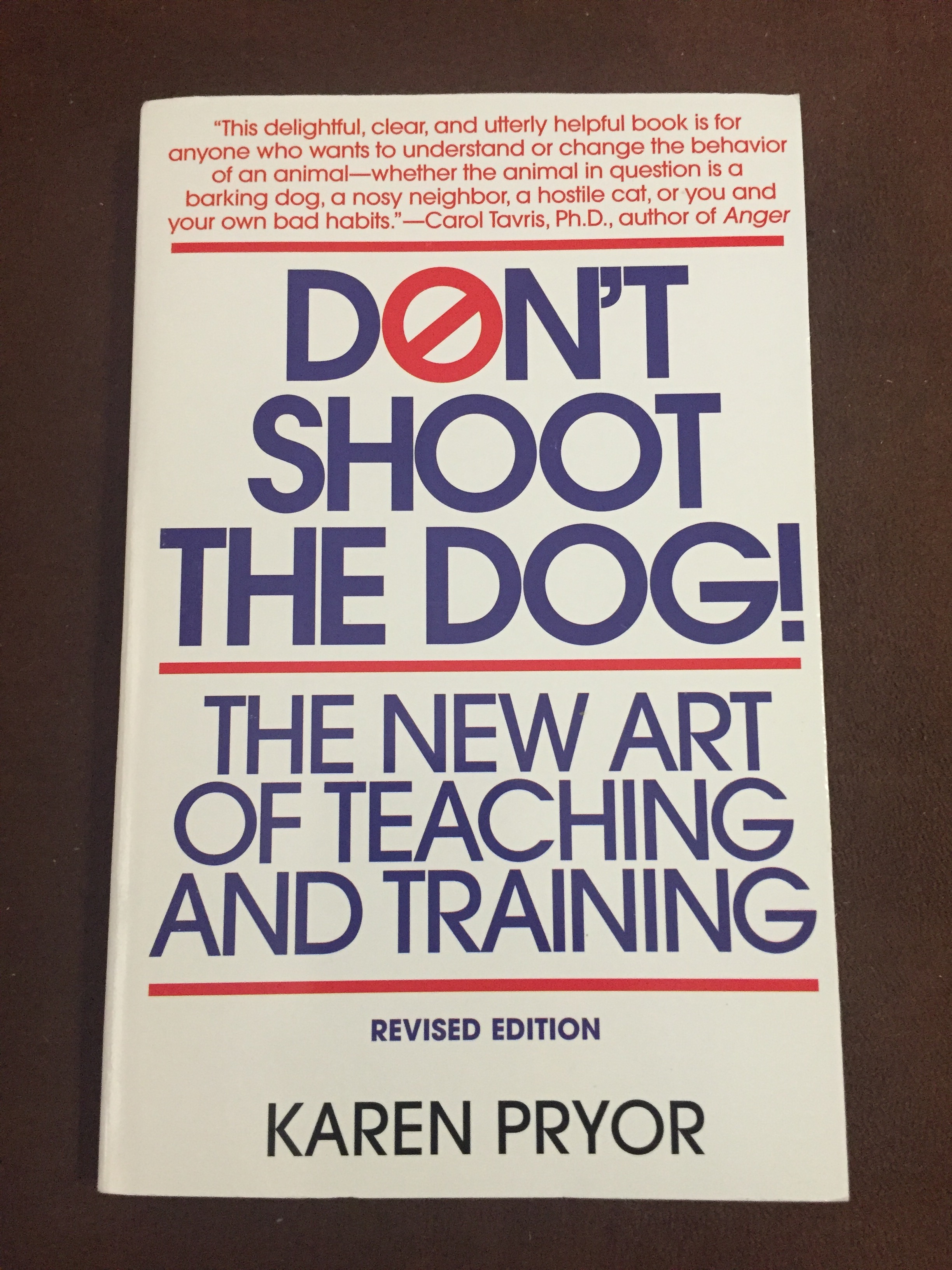
Book cover for Karen Pryor's Don't Shoot the Dog with blue type on a white backgroundI never met Karen Pryor or had the opportunity to attend one of her classes or seminars, but her work shaped the way I worked with dogs of all ages — and how millions of people approach teaching and training humans and non-humans alike.

Her best-known book might well be Don’t Shoot the Dog (1984), which introduced shaping, clicker training, and reward-based training to generations of puppies and their humans. She launched a transformation of animal training, whose principles have influenced human education as well, moving many educators/trainers from a focus on punishing mistakes to recognizing and rewarding success.

Clicker training uses principles of behaviorism to shape behavior incrementally, as the trainer works with the trainee toward a goal. When the trainee is a dog (or a dolphin, chicken, etc.), the trainee might not fully understand the goal at first. What they DO understand is the marker — Pryor used a clicker; others use a word like Yes! — that indicates that the trainee did something right. The marker is quickly followed by a reward. This positive approach encourages the trainee to keep doing what they think is needed to get more clicks/treats.

For instance, you want your puppy to sit before getting her dinner. You can manually push her into a sit before each meal, only to have her pop up the instant you move your hands. You can yell at her, but she’s a puppy who probably doesn’t know what “sit” means yet. Or you can teach her the click-and-treat approach, then wait for her to sit. Click, give her a treat. Puppies sit a lot, so if you are paying attention, you can catch her sitting — and reward it — a lot. You can also do short (2 minute) practice sessions, where you specifically watch for her to sit. Then click, give a treat.

You’ll be amazed at how soon your puppy is sitting “at you” — planting herself in front of you in hopes of getting that magic click. Soon, you introduce the word, “sit.” Within a few practice sessions, your puppy will learn to sit on cue. But even in the interim, you can wait for her to sit, capture it with a click, then put down her bowl. It’s a much nicer approach than getting annoyed and frustrated as your hungry pup jumps and barks at you, day after day.

Skilled trainers can accomplish amazing things with clicker training (I am not in that esteemed group).

But while it might be what she’s best-known for, clicker training is just an example. The real message is the postive, reward-based approach. And Pryor’s focus on the science underlying behavior (and attempts to change behavior). The clicker helps the trainer communicate what is wanted while ignoring what is not. It builds communication, which builds a relationship between the person and the dog.

When the trainee learns that trying new things is often rewarded — and never experiences the confusion of being punished for guessing wrong — that dog (kid, dolphin, spouse, chicken …) will be willing to try new things. And love learning. And enjoy spending time learning with you, the trainer (parent, teacher, spouse). They might not even realize that you are training them …

Derided early-on as “cookie pushers” by old-school, force- and punishment-focused trainers, clicker trainers pioneered many new ways of communicating and teaching, across species. While some trainers still use horrific methods to compel dogs and others to do what they want, Pryor’s work has had tremendous, far-reaching impact. When she was training dolphins in the 1960s, she probably never dreamed that one day, there would be centers at major universities around the world devoted to the study of canine cognition or that millions of people worldwide would be using clickers in innovative ways.

Karen Pryor passed away on January 4. Her legacy of positive, science-based training lives on.

Arthritis & Your Dog: Librela May Not Be the Answer

Jana, a white golden retriever, wears dark sunglasses
Jana wore dark sunglasses to protect her eyes during her frequent cold laser therapy treatments

Librela, a medication given to dogs by monthly injection to treat arthritis that has been available in the US for a little over a year (longer in the UK, Canada, the EU, and Australia), is raising alarm as more dog owners report serious side effects.

The concern is enough that the FDA issued a warning letter to veterinarians and the New York Times published a warning.

About Librela

Librela is what is called a monoclonal antibody drug. It blocks activity by specific proteins that transmit pain signals, thereby relieving pain. At least, that’s the idea.

Reports of serious reactions include neurological signs, such as ataxia or seizures; muscle weakness, and inability to stand or move around. Some dogs have died.

According to the AVMA (American Veterinary Medicine Association, more than 3,600 adverse reaction reports had been filed as of April 2024 (at this time, Librela had been available for less than a year). Of these, 70% occurred after a single injection; many within a day. The packaging does not list these side effects (though what it does list seems pretty unpleasant). So, Dogs Naturally shared the side effects listed on US and Canadian packaging:

“The listed side effects on the Canadian insert for this medicine (much more comprehensive than in other countries!) include:

  • Swelling at the injection site
  • Systemic disorders: lack of efficacy, polydipsia, death, lethargy, anorexia
  • Renal and urinary tract disorders: poluria, urinary incontinence
  • Digestive tract disorders: diarrhea, vomiting
  • Neurological disorders: ataxia, seizure

The US prescribing information lists the most common adverse reactions as …

  • Urinary tract infection
  • Bacterial skin infection
  • Dermatitis
  • Dermal mass
  • Erythema
  • Dermal cyst(s)
  • Pain on injection
  • Inappropriate urination
  • Histiocytoma

These are ugly lists. Not to mention that many elderly animals already have compromise or disease in multiple organ systems. So this medicine may be the straw that breaks a whole lot of camel’s back in your dog’s system.”

These may well be the most common adverse reactions, and the number of dogs experiencing severe reactions may be relatively small. Which matters not at all when your dog is among them.

While many dogs do experience reduced pain and increased mobility, other dogs are reported to show:

  • Lethargy
  • Drooling, shaking
  • Change in behavior, acting scared, hiding
  • Urinary incontinence
  • Refusing food or water
  • Diarrhea, vomiting
  • Ataxia, staggering, falling over
  • Hind end weakness, unable to get up
  • Kidney or liver damage
  • Seizures (new or increased)

Your vet may — or may not — describe all of the potential side effects of Librela, so think carefully and consider other pain management options before choosing.

Arthritis pain management

The original Thinking Dog, Jana, had severe osteoarthritis from a relatively young age. By age 3 or 4, she was balking at going down stairs, and I knew something was wrong. We tried, with various success:

  • Chiropractic adjustments
  • Acupuncture
  • Laser therapy
  • Supplemements — green lipped mussel, glucosamine, turmeric
  • CBD “treats”
  • Herbal medicine
  • Rimadyl and similar anti-inflamatory drugs

These helped Jana to feel better and remain active until she passed away several years ago at age 13 1/2. Cali also tried several of these approaches to pain management. Orly is a healthy, fit, and active 3-year-old who takes no medications (ah, youth!).

If I have another dog with arthritis, I will start with these options. I encourage you to do your own research! Each individual dog will respond differently to each treatment or combination of approaches.


Let It Snow!

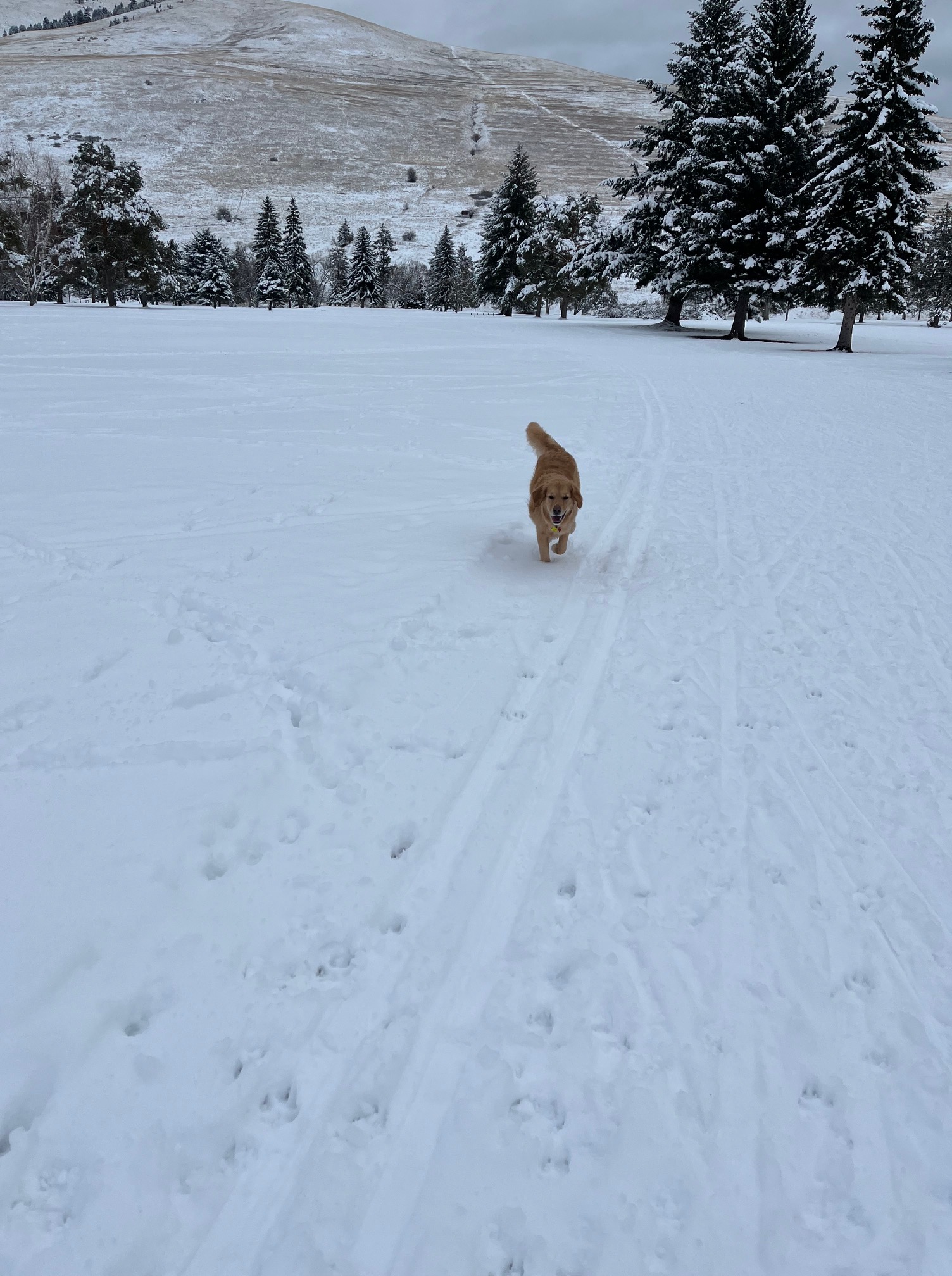
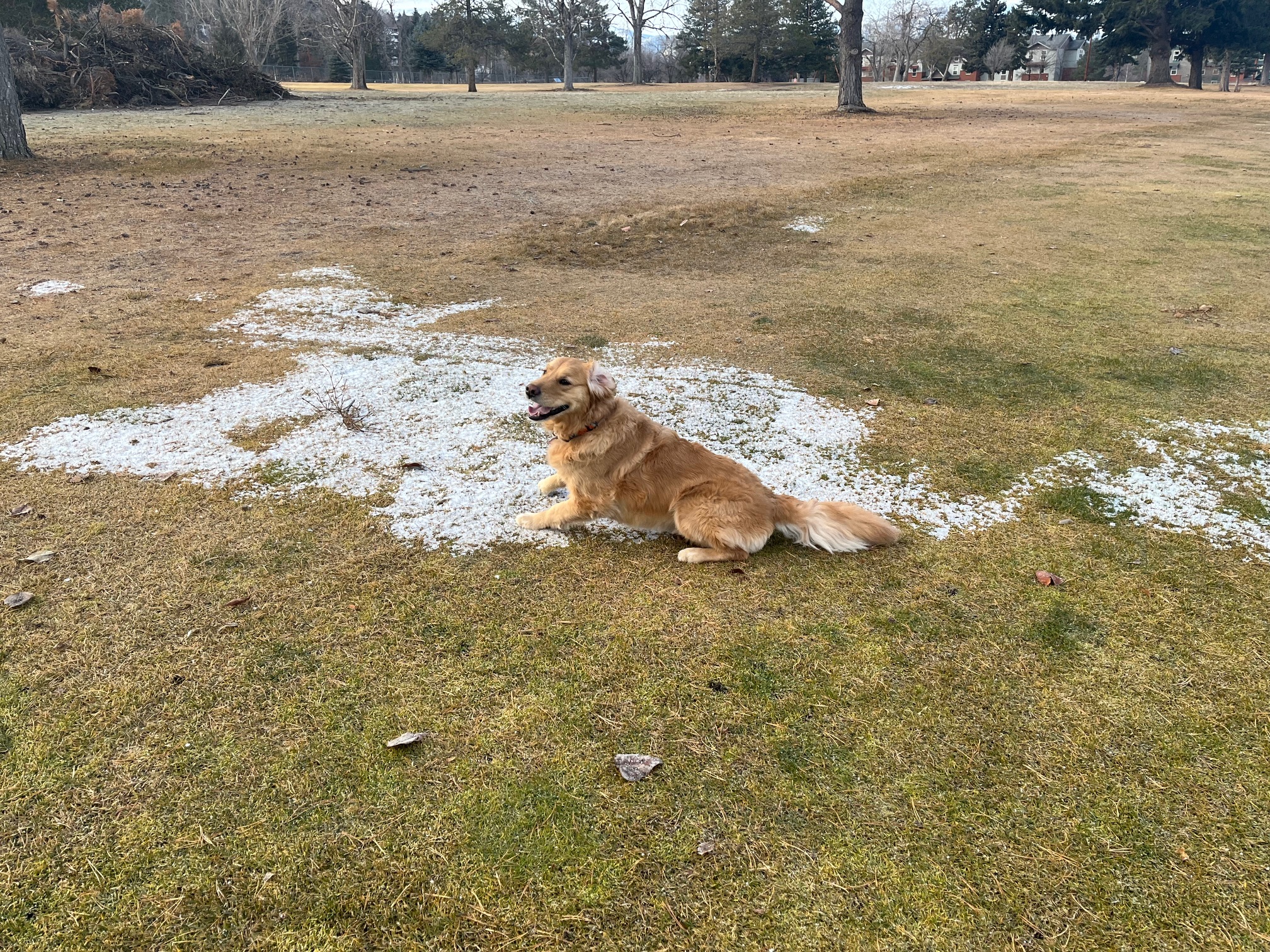
Golden retriever Orly runs on a snowy field, tail waggingOrly was becoming discouraged. Depressed, even. She wanted snow. It was cold(ish) out and when she went hiking with her friends, they often found snow to play in. Orly lies on a small, thin patch of snow surrounded by brown grassBut walking around the neighborhood, even when we went to the parks and trails where she was allowed to run and play off leash … no snow.

She got so desperate that, whenever we found more than 5 snowflakes in the same place, she threw herself down and rolled in the “snow.” It was so sad…

But she must have pull with someone somewhere.

Orly rolls in a small patch of thin snow with grass surrounding itAfter doggedly rolling in every “snow” patch (mostly damp, soggy brown grass) for several days, Orly woke up one glorious morning to a thin coating of snow in her back yard!

More snow fell all that day and night. She watched — and rolled in snow — as her mom cleared the deck, the driveway, the front walks once… twice… and again. And again.

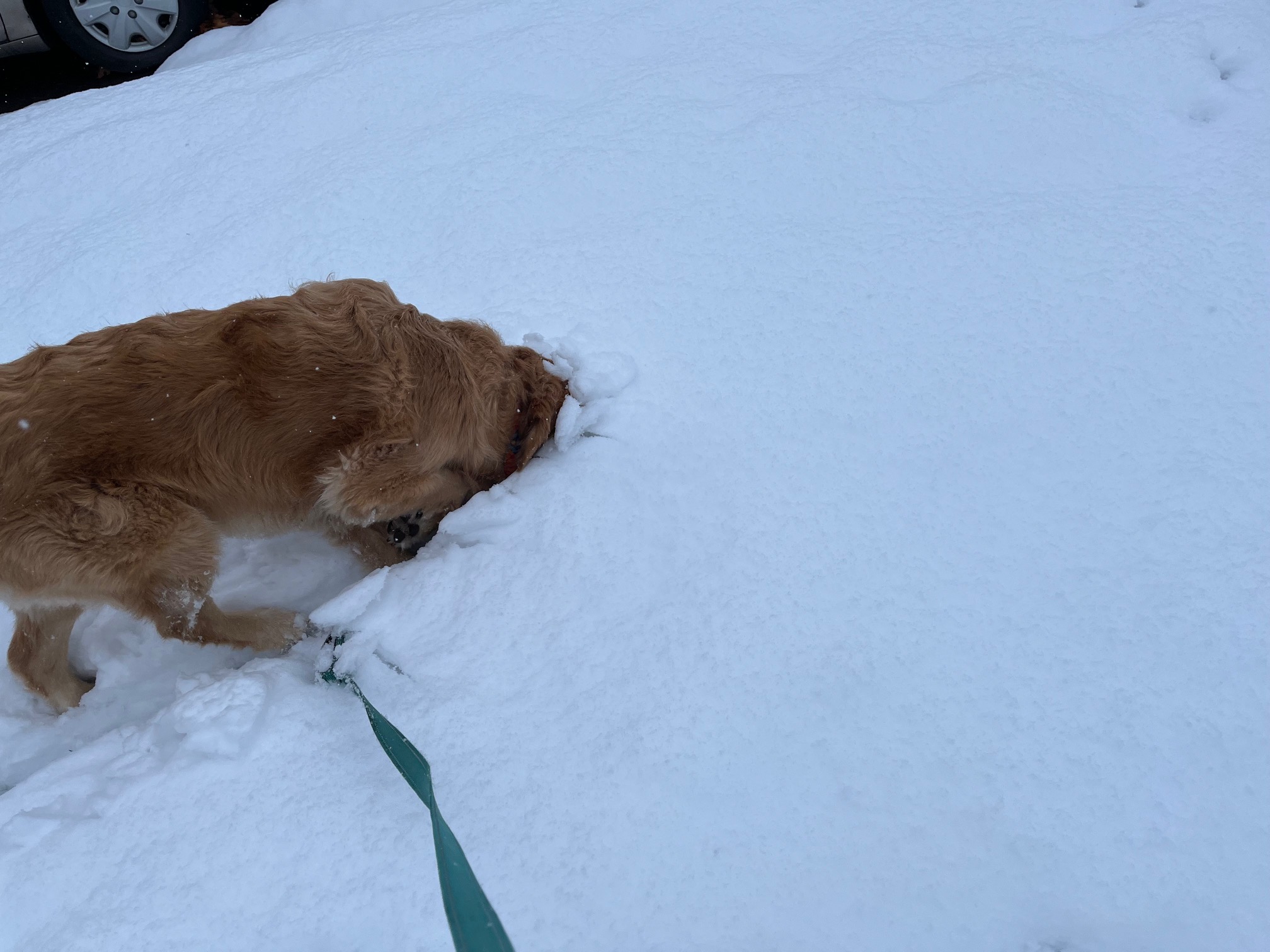
Golden retriever Orly plows through the snow nose first, buried up to her neckOn walks, Orly shoved her nose into the snow as she walked alongside the sidewalk, plowing through the beautiful snow with her snout. She bit at that wonderful snow and pawed at it. She ran around the back yard kicking up her snow and rolling in it some more. She lay down and dug in so that her whole body was coated in it. She rolled around some more.

Then the weather warmed up and that awful dripping sound of disappearing snow happened. The remaining snow was slushy and icky. Orly got her worried look — furrowed brow and all. She hoped really hard for more snow.

Overnight, her precious snow became hard and crusty, with some surprising slippery patches. Things were not looking good. Orly ran outside to play some more while there was still snow.

Then! The temperature dropped, gray clouds rolled in and — miracle of miracles — more  snow fell. At first, it was very light but, as the day went on, the snowfall got heavier and heavier. Lovely, large white snowflakes everywhere.

As of this writing, it’s still falling. Lots and lots of fluffy white snow, covering those icy patches right up.

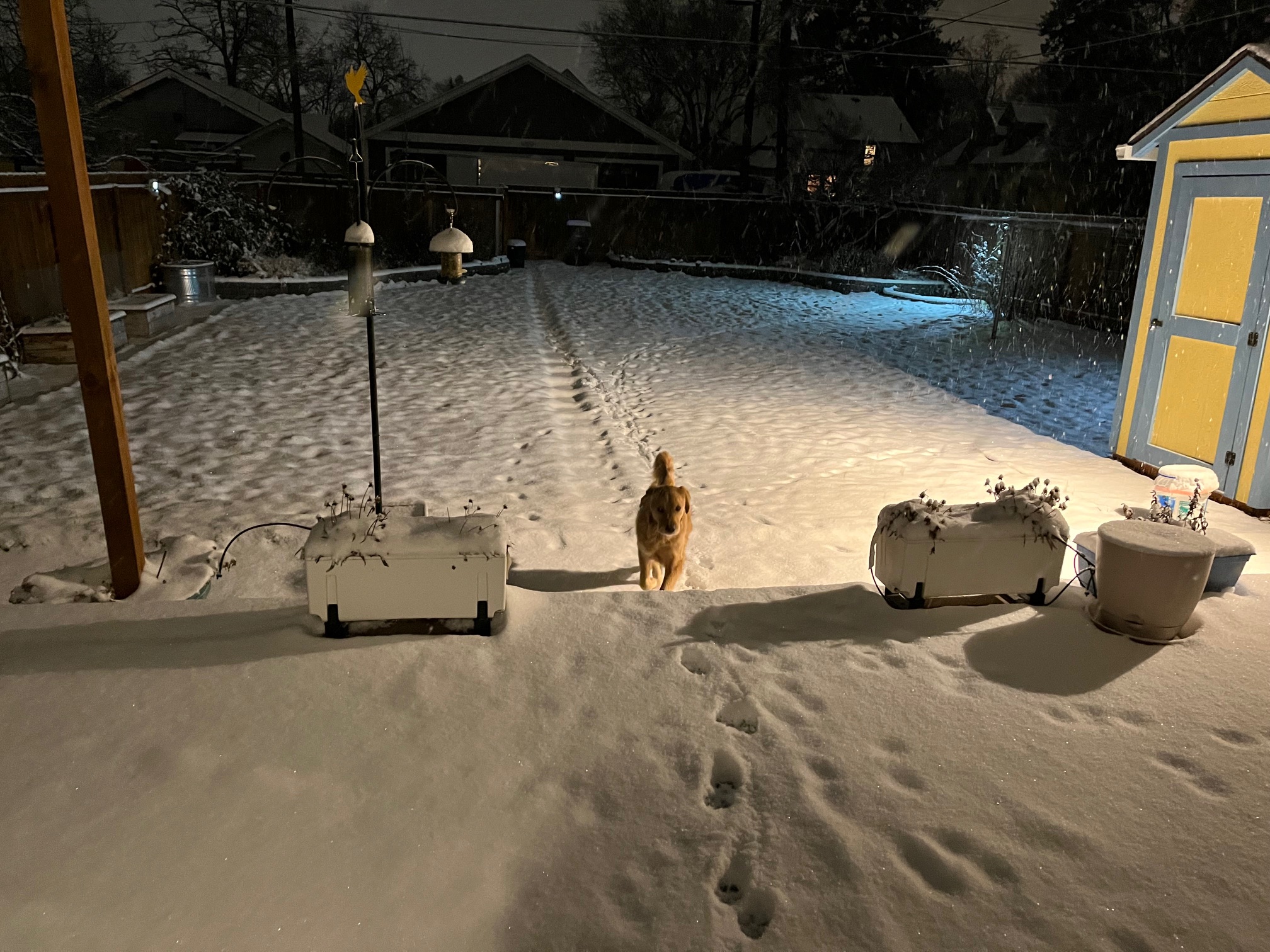
Orly couldn’t be happier.Orly climbs onto her back deck, tail wagging, in early morning darkness; the snow-covered yard is behind her


2024 in Pictures

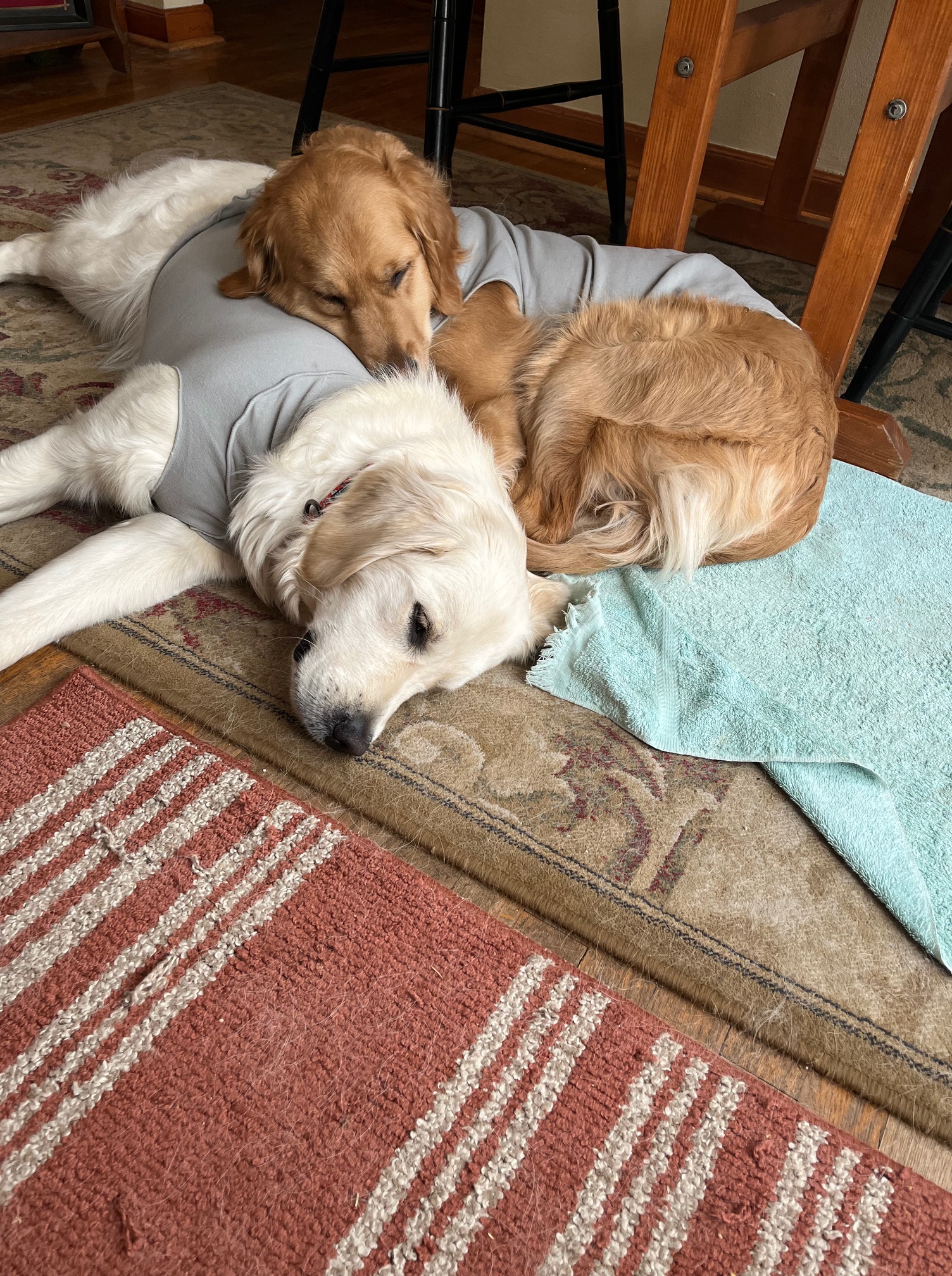
Goldens Dotty and Orly snuggle. Both wear gray sweaters. Orly rests her head on Dotty's hip.
Tired dogs cuddle on a cold January day


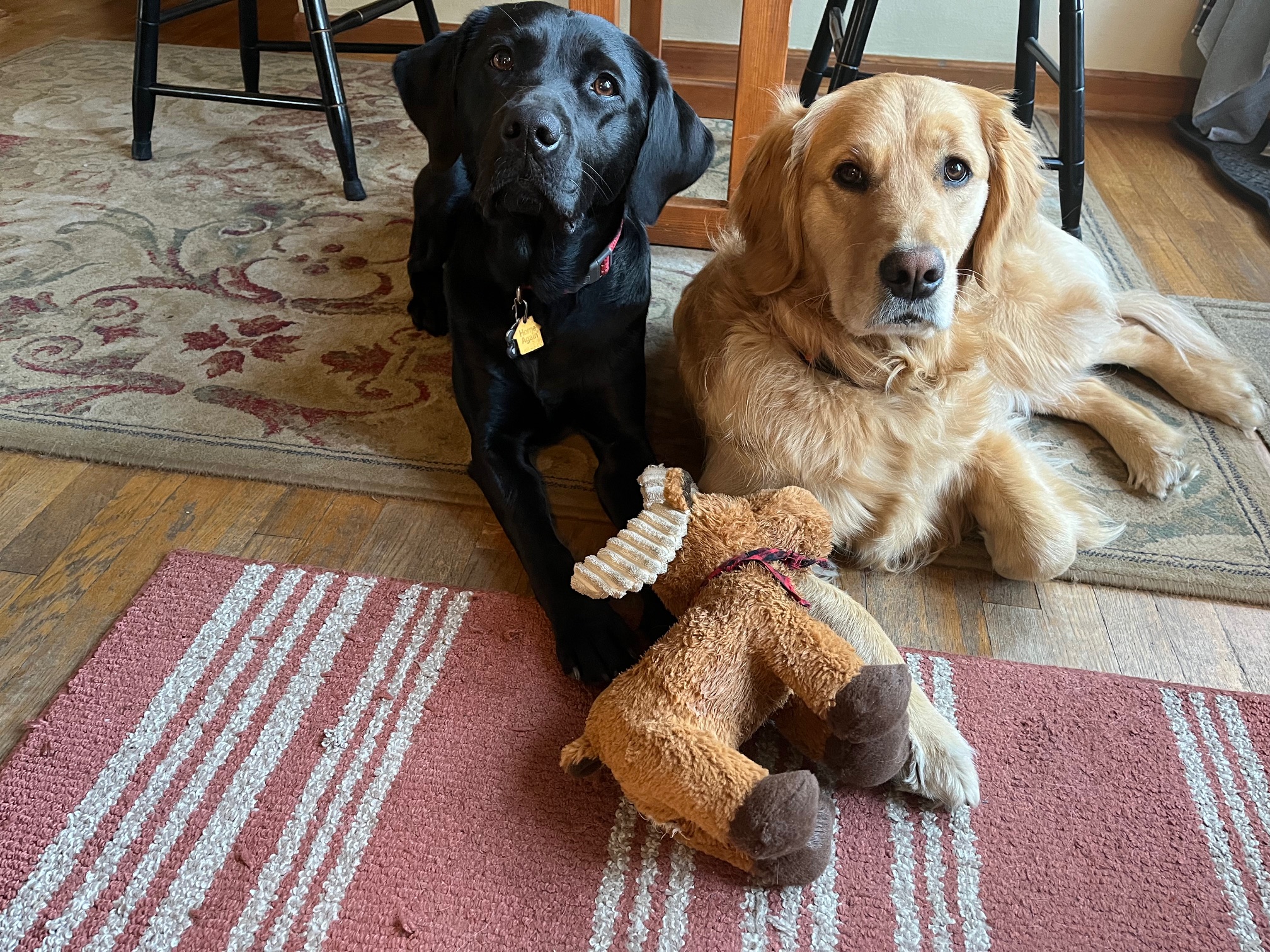
Black Lab Hildy and Golden Orly lie on the carpet and look at a stuffed moose
Orly and Guiding Eyes Hildy quickly become besties.


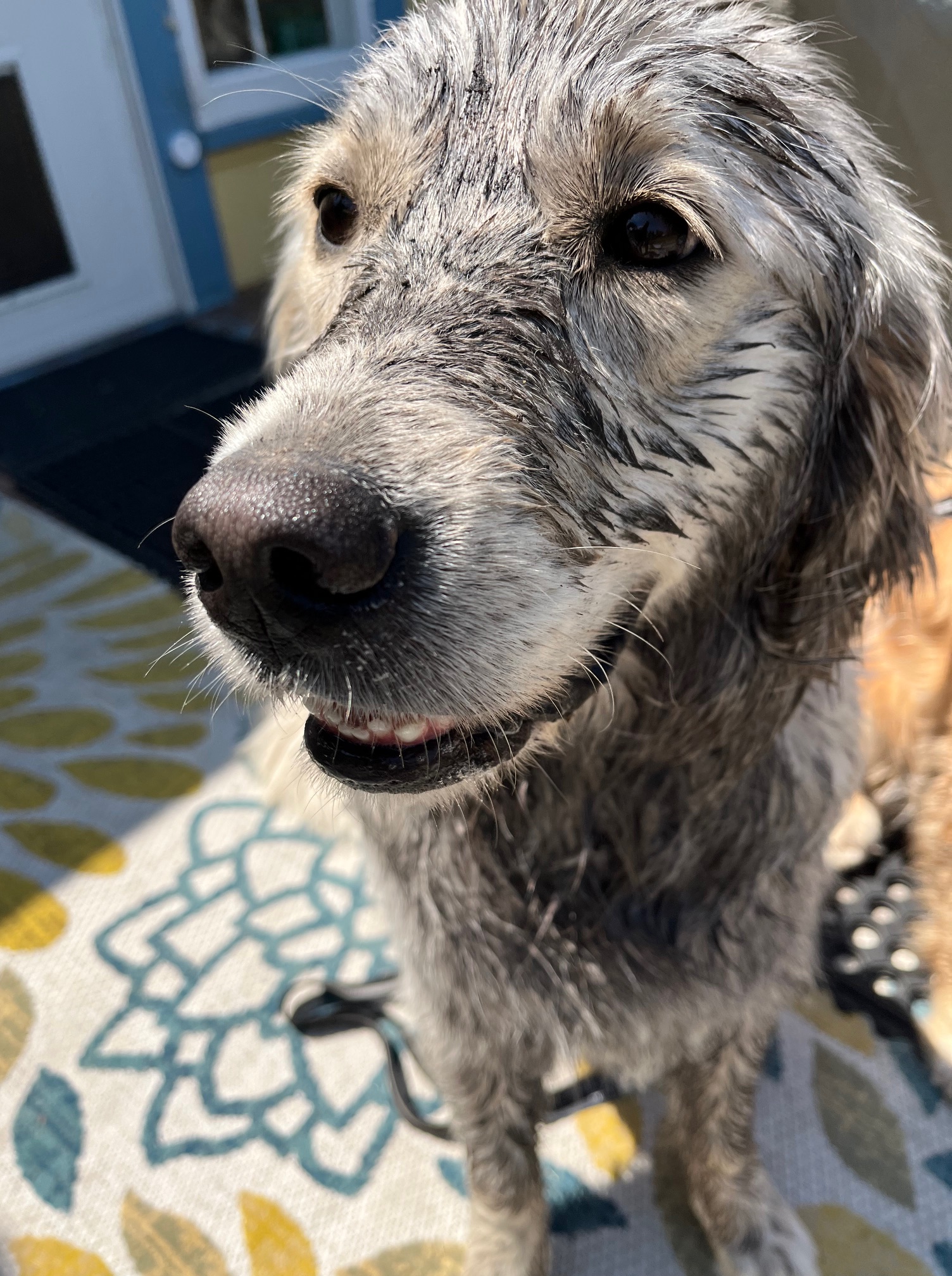
Dotty, a usually white golden retriever, wears a huge smile --- and a generous coat of black mud
…Sometimes, the girls had a little TOO much fun …

Happy 2025!

The Thinking Dog blog is taking a break in January … see you all in a few weeks!

Dotty Has Met Her Match!

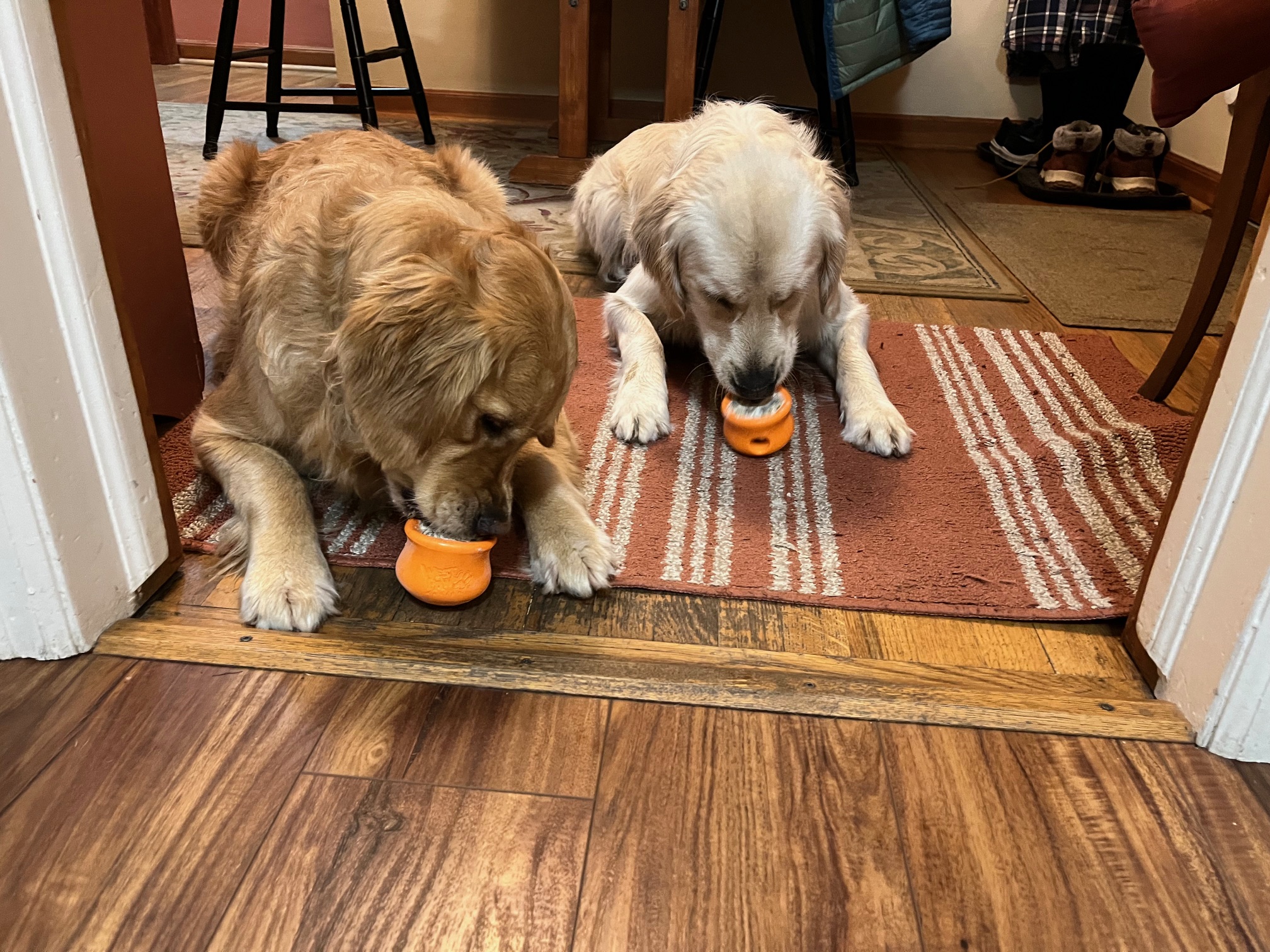
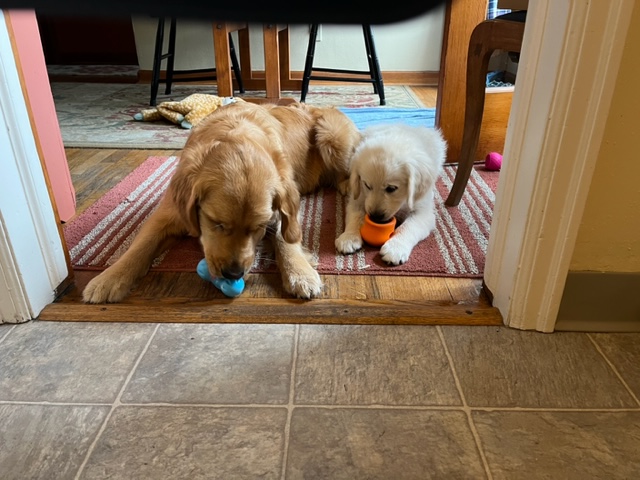
Golden retrievers Orly and Dotty lick their orange toppl toys to get the food outDotty will be graduating soon as a hearing assistance dog!

She has met her new person and is learning to do the specific tasks that will become her daily work.

She’s been back with her trainer for a while, but recently came for a visit. Underneath her (slightly) more mature demeanor, that goofy puppy still lurks. She quickly emptied the toy box, strewing toys here and there, and putting on a little concert with the most, um, musical of them.

Golden retriever Orly and tiny white puppy Dotty enjoy licking treats from their West Paw tux and toppl toysIn the yard, Dotty headed straight for the digging  pit and quickly checked to see if the sand fairy had hidden any treasures that Orly had missed (she hadn’t). She then enjoyed a frozen treat with her sister, just like old times.

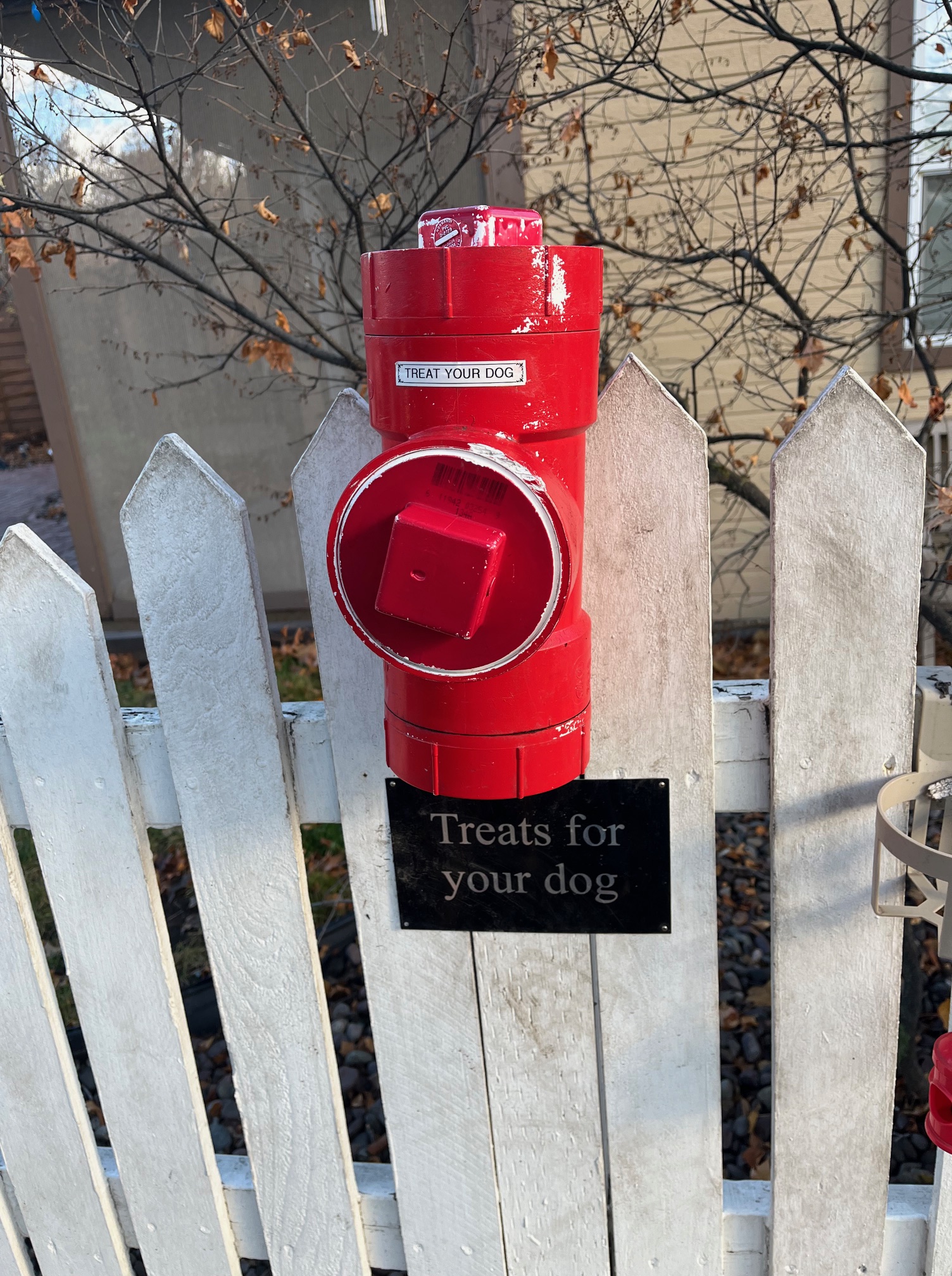
A red plastic fire hydrant on a white picket fence with a sign saying "Treats for your dog"
The neighborhood ‘treat hydrant’

On our neighborhood walk, she walked purposefully, but without pulling, straight to the treat hydrant and sat, waiting for her well-deserved reward. And when we went for a run at the golf course, she remembered — with great delight — all the best places to find deer poop.

After all that activity, it’s no surprise that, when we settled down on the TV-watching sofa, she snuggled in with a happy sigh for some petting and pampering.

Orly enjoyed playing with Dotty, but … wasn’t terribly sad to say good-bye again either. I think that Orly enjoys having her own house, yard, and human.

I am proud of Dotty and hope that she works hard, plays harder, and has a wonderful life and career.

Pillow Fight

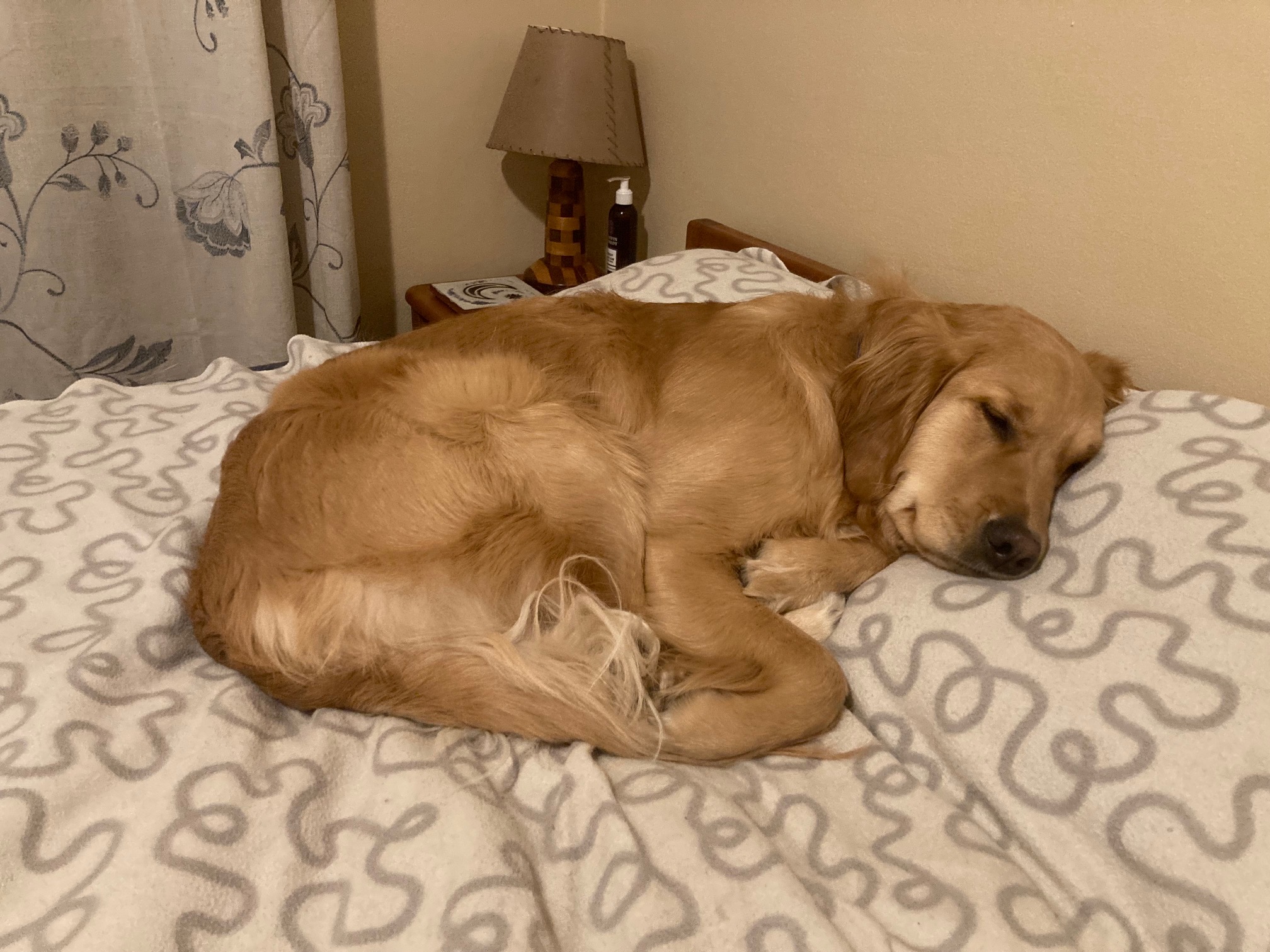
Golden retriever Orly rests on my bed, atop a white and gray blanket, her head on my pillowOrly likes pillows. In the human sense, of wanting to rest her head on one when she sleeps — not the usual golden retriever sense of loving to shred them.

I frequently find her curled on my bed with her head resting on the pillow, wearing a big, sweet smile.

When no actual pillow is at paw, she uses other dogs…

This slideshow requires JavaScript.

or even toys, a stand-ins.

Looking through photos of her, I realized that it actually started when she was a puppy; I clearly wasn’t paying enough attention.

When, not long ago, I woke up to find her sharing my pillow, though, I decided a line had been crossed. I mean, cuddling was sweet, but … yeah, I don’t share my pillow with anyone.

The only possible solution? Orly needed her own pillow.

So I got her one for her recent birthday. The only thing left to do was negotiate which side (and what proportion) of the bed she gets. Her opening offer was 3/4 for her, taken from the middle.

Except …

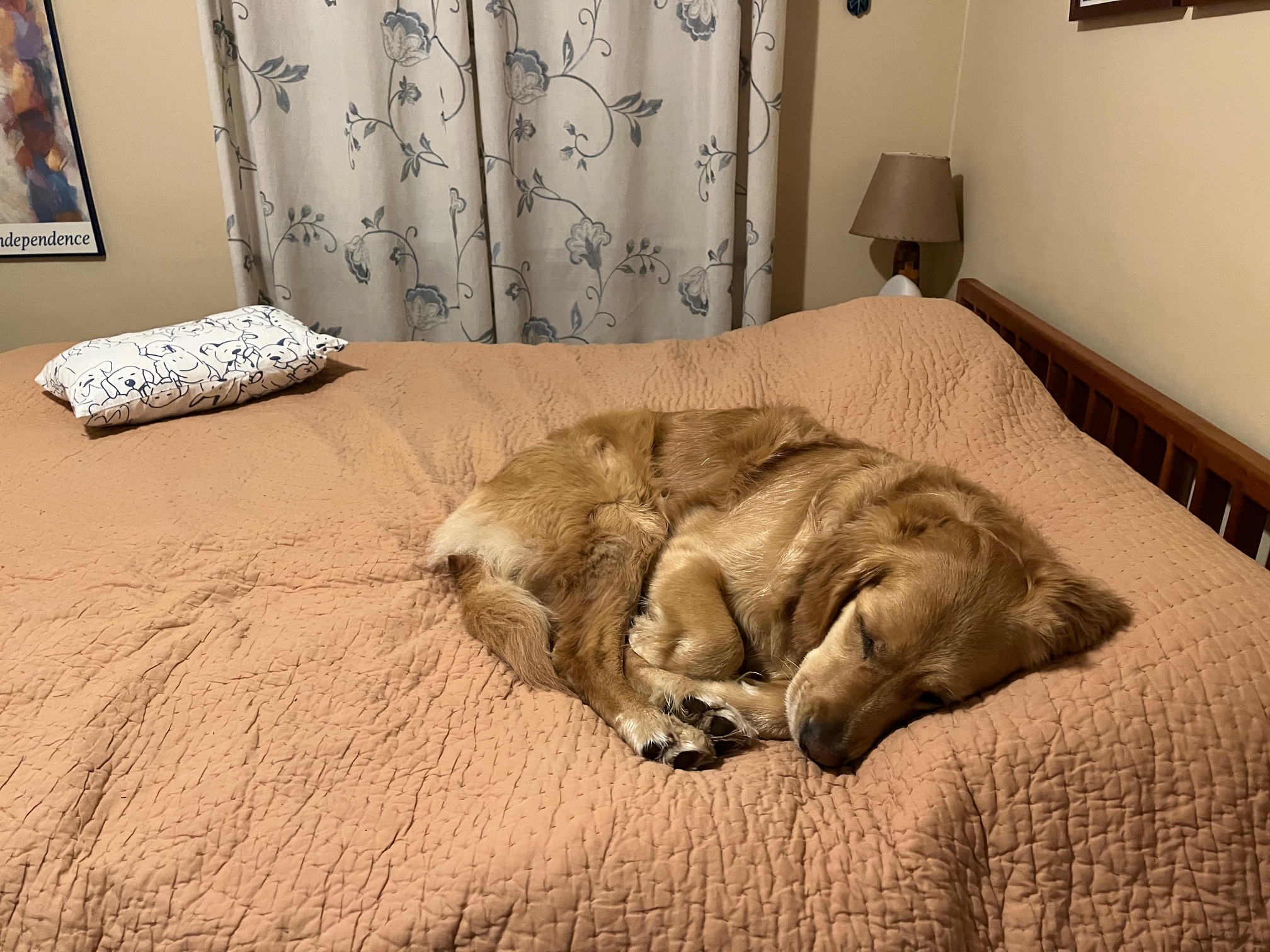
Golden ORly curls up on a tan bedspread, her head on my pillow; her own pillow in a white case, behind herSomehow,  my solution doesn’t appear to be catching on. Yet.


What Is Happening to Local Vet Clinics?

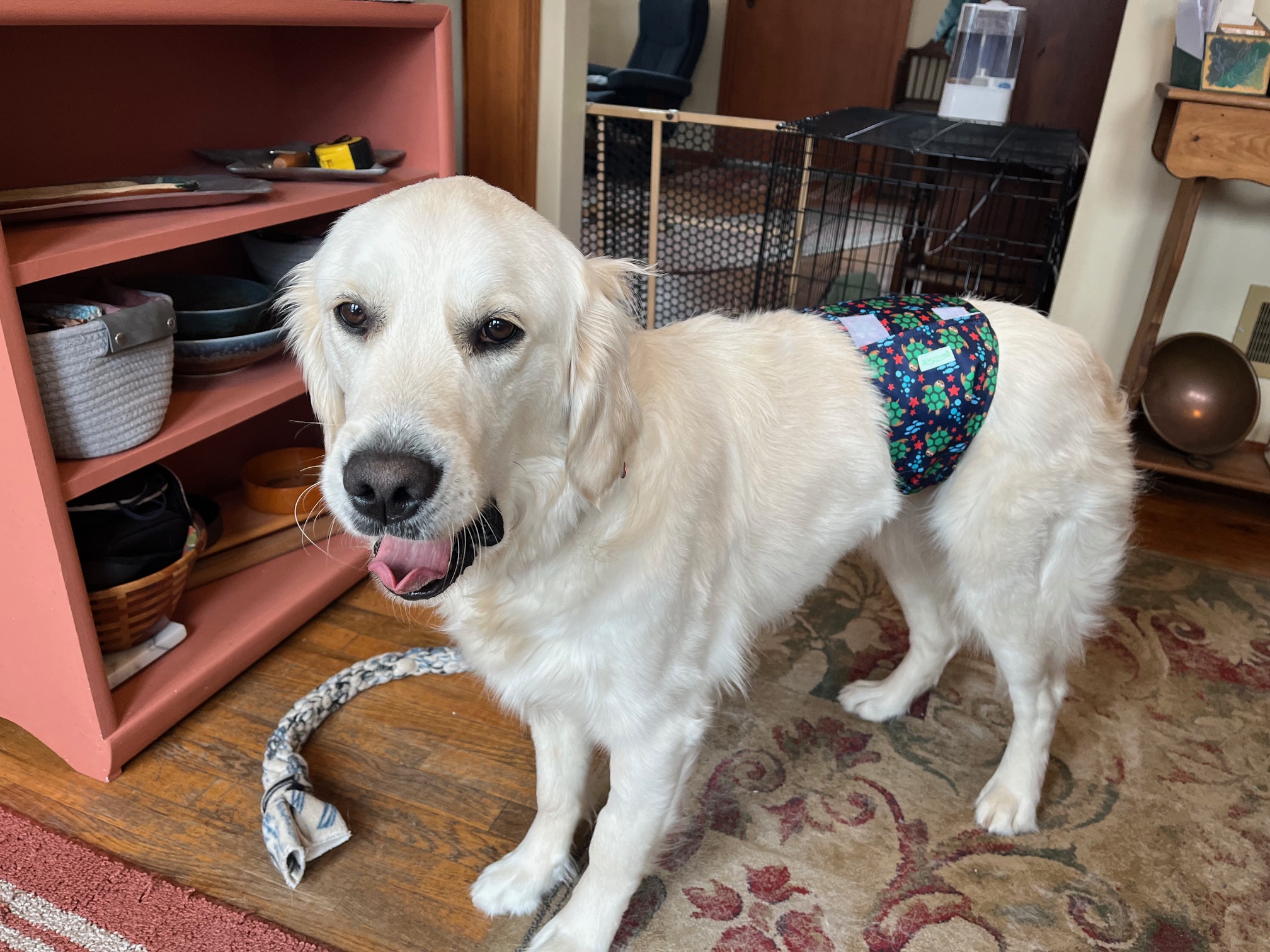
Dotty, a white golden retriever, wears a blue belly band with small turtles on it. She's yawning
Dotty’s spay surgery was expertly performed by my local vet.

The first (and only, so far) time I changed vet clinics because I was tired of being pressured to pay for tests and services that I knew my dog didn’t need was almost 15 years ago. The clinic, where a friend had taken her dogs for several years, was pushing and pushing and pushing. The final outrage was when they suddenly decided that my dog needed a heartworm test every 6 months.

They had been insisting on annual tests before issuing a new prescription for the preventive. I thought this was overkill, since we never missed a dose, and I was confident that my dog did not have heartworm. But every clinic demanded that, so I played along and paid up.

When they refused to give me the prescription for more than 6 months without a repeat test (and vet visit), I took my business elsewhere.

Since then, I have been fortunate to have found locally owned, outstanding vet clinics.

This is getting harder and harder, as more practices are being purchased by private equity companies. This often happens when the owner of a small clinic retires.

As has happened with human health care, private equity purchasers of clinics and hospitals tend to focus aggressively on increasing profit—with the results including higher prices, improved efficiency (which may mean cutting some services), and closing unprofitable clinics and hospitals. In veterinary medicine, it also seems to mean high-pressure tactics to convince pet owners to purchase more services, even if their pets don’t need them.

In addition to higher prices, many pet owners are finding that they have fewer options for routine and emergency care — similar to the scarcity of rural and community hospitals in many parts of the U.S.

Huge growth in pet ownership during the COVID pandemic caught the interest of some private equity firms, a Stateline article said, leading them to purchase small clinics for many times their market value, making it more attractive for a retiring owner to sell to them rather than to a local vet. The new corporate owners might leave the clinic name unchanged, meaning many clients are unaware of the ownership change. This has happened in Missoula, where I live.

Within a few months to a couple of years, though, the changes in business practices are often obvious — and not in a positive way. I know many pet owners who patronized a local clinic for years, remaining loyal through the original owner’s retirement. Ultimately, though, the clinic “went corporate,” and at first a trickle, then a stream of friends were asking for vet referrals.

The privately owned clinic where I take my girls is thriving; they’ve added two vets in the past couple of  years and are always busy. Even so, my vet always has time to talk with me and has never tried to talk me into a test or treatment that Cali, Orly, and now Dotty didn’t need.

If your clinic doesn’t deliver that kind of service, check into the ownership … and if needed, search for one that is owned locally, by an actual vet.

All Grown Up?

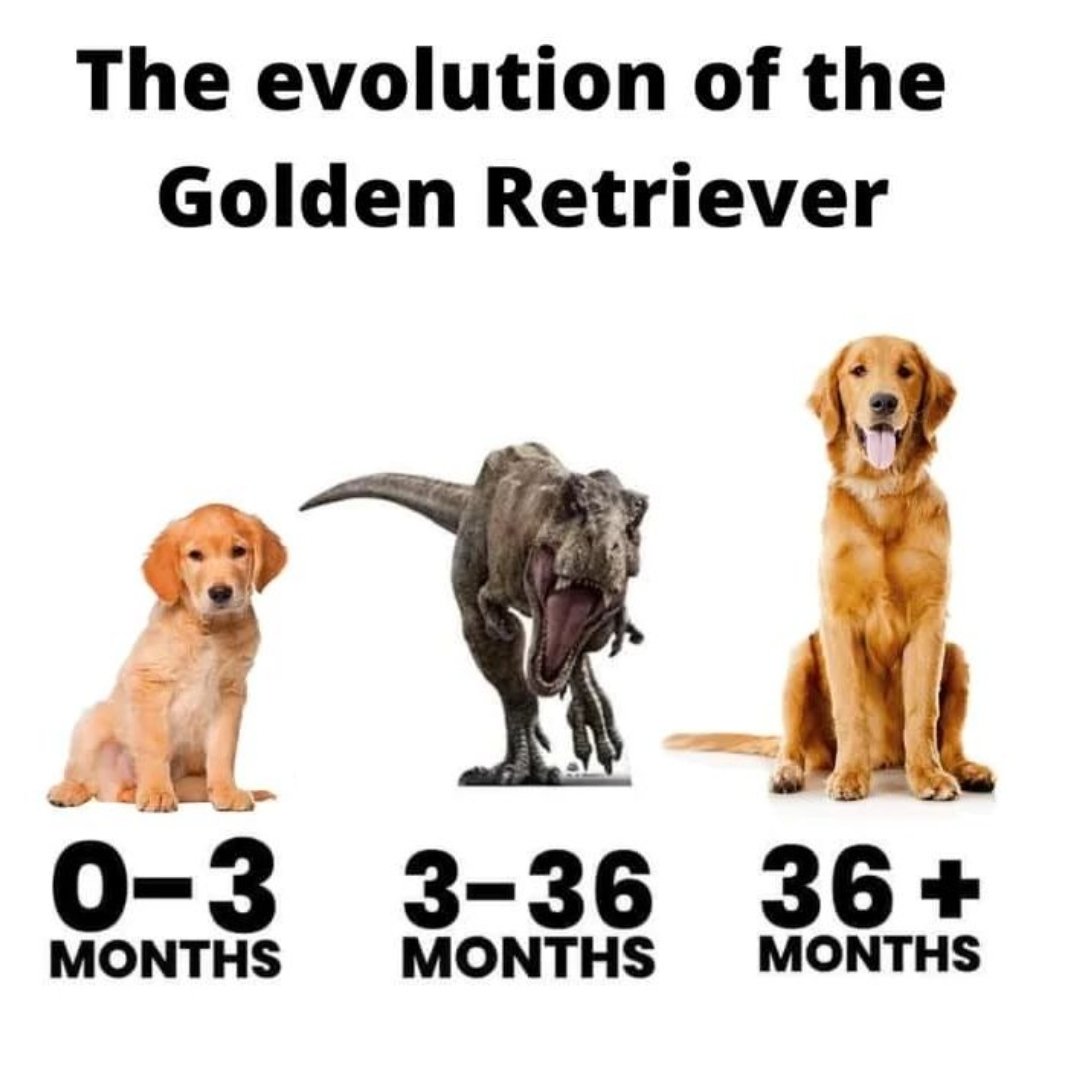
Graphic showing adorable golden retriever puppy at 0-3 months, a velociraptor from 3-36 months, then a perfectly behaved adult golden at 36+ monthsThe human family of one of Orly’s siblings has been sharing the above graphic periodically, showing the stages of golden retriever puppy development, since we all got our pups.

When the litter turned 3 on Oct. 22, the group chat featured many celebratory posts about how we’d “made it!” … and a couple noting that not all of Orly’s brothers have exited the velociraptor phase yet. During this phase, it is impossible to provide enough exercise and stimulation to actually tire the dog out unless a team of at least 3, maybe 5 or more, people is on the job around the clock. Velociraptor goldens might also counter surf, eat stuff they shouldn’t outdoors, destroy hundreds of dollars worth of toys, and frequently disguise themselves as mud puddles.

Golden Orly cuddles her new bison stuffed toy, a beige stuffed animalI am fortunate: Orly has been mostly a mellow, well-behaved girl since soon after she turned 2, but, even at the mature age of 3, she still shows some puppy traits. She’s silly and loves to make me laugh by doing “bagel dog,” where she chases her tail, catches it, then falls over and rolls around like a bagel. She cannot help instantly melding with any and every mud puddle she encounters and often tries to lead me INto the river on our walks… She loves her toys but is also pretty gentle with them.

We celebrated Orly’s birthday in the usual manner — with a scoop of vanilla ice cream at the Big Dipper. She also got a new favorite toy from one of her aunties, and she has been carrying that toy around for days.


This slideshow requires JavaScript.

Doesn’t Share Well with Others

Orly is a bed hog. It’s amazing how much of a queen-sized bed a smallish 52-pound dog can fill (all of it—every inch). But it’s not just human beds that she hogs:

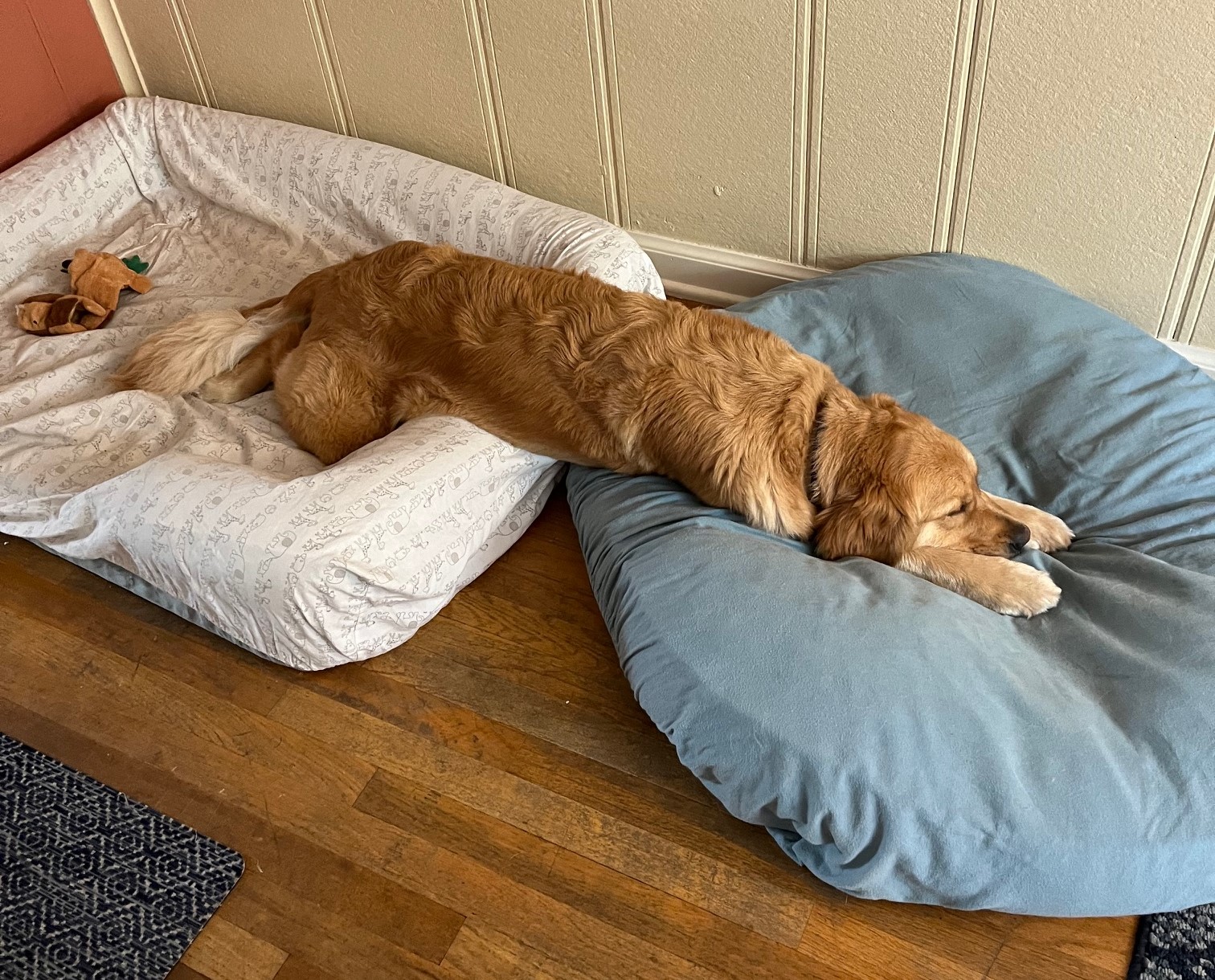
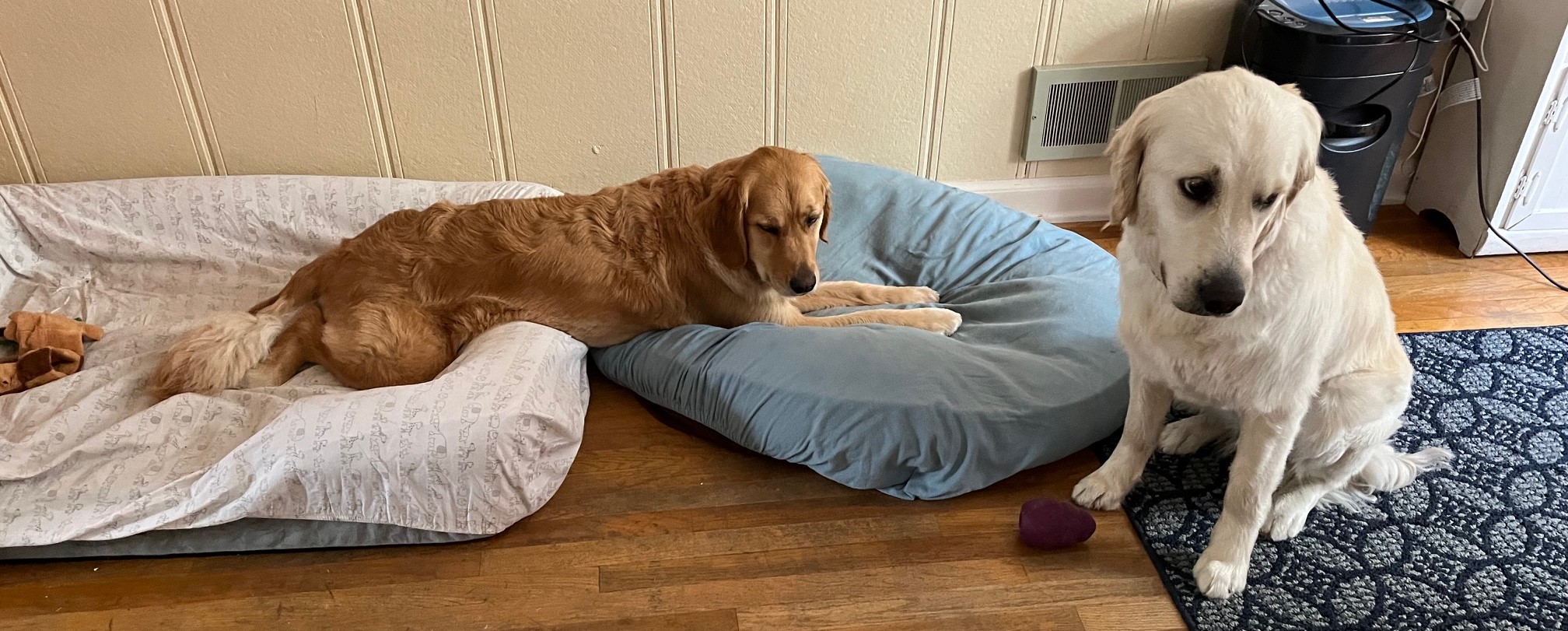
Golden retriever Orly sprawls across two dog beds

Orly is usually a great sister to Dotty. They share toys nicely, don’t fight over food or treats, and even get along in the back seat of the car during long drives.

But beds are a different story. If Orly is not on the human’s bed, she wants the dog beds to herself. All of them. All at once.

Golden retriever Orl, stretched across two dog beds, looks at white golden retriever Dotty, who sits next to one bed looking sad

Dotty will be moving on soon, starting a new job and life with her new human partner. I hope that wherever she lands, there will be multiple dog beds and other places to curl up — just for Dotty.

Family Reunion

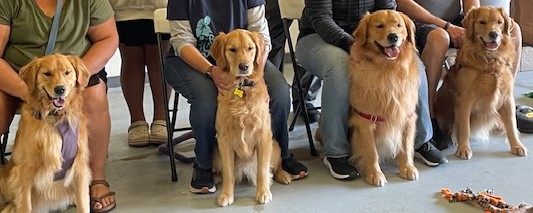
Tasi, Orly, Kaycee, and Brooklyn Orly recently got together with several of her siblings, niblings, half-siblings, and miscellaneous other relatives. Sometimes, it’s better not to be too clear on the exact relationships.

There are many family resemblances, starting with Mom Charm’s restrained whimper when gated off from the area she wanted to be in — Orly deploys similar vocalizations when she finds herself on the wrong side of a door, a frequent occurrence. The siblings sure look alike, though Orly was the lightest blond / least red of the group. They are all small for goldens, and several of them share Orly’s little “zipper” — a small patch of rough fur between the eyes that gives Orly a worried look.

Two young puppies — nieces? — were in the mix as well. Hildy was the best pup-playmate, entertaining (& exhausting) the youngsters while the sibs all went from person to person soaking up pats and cuddles.

This slideshow requires JavaScript.