Dog Park Kerfuffle

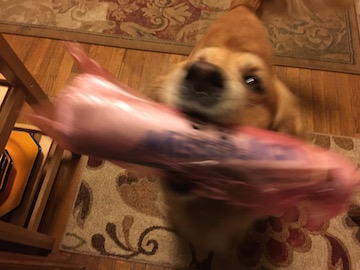
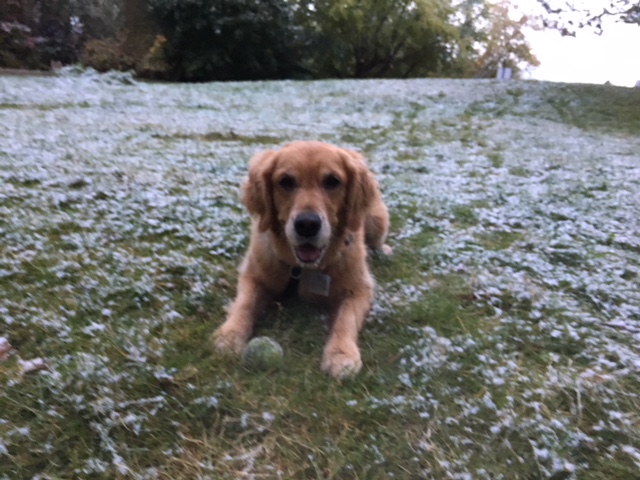
Cali holds her tennis ball at Jacob's Island dog park, early on a cold morning. A light dusting of snow covers the grass.
Cali at Jacob’s Island, a Missoula dog park

Are dog parks wonderful places to let your city dog off leash to safely run and play or are they the potential source of serious problems and likely places to pick up infections, get hurt, or worse?

Yes to both.

It’s been a couple of years since I last wrote about dog parks on The Thinking Dog, and an online exchange about dog parks, brought to my attention by a friend, got me thinking about the topic.

First this New York Times piece came out: The Dog Park Is Bad, Actually. Not much ambiguity there. It’s pretty clear where this writer stands.

A response was quickly forthcoming from Marc Bekoff, a person I have studied with and admire greatly: Let Your Dog Tell You If They Want to Go to a Dog Park.

The NYT piece raises valid concerns, including the risk of disease or injury. I know dogs who’ve been seriously injured by dog-aggressive dogs at dog parks, and a local dog park was recently closed for a week or so for disinfecting after some dogs picked up an infection there.

The author also talks about the idea that dog parks are for “dog socialization” and explains that that’s not where or how to socialize your puppy. True, and also obvious.

Finally, she delves into the issue of dogs who find dog parks stressful or otherwise unpleasant. She closes with this: “There is no shame in not surrendering your dog to what has become the quintessential urban dog experience: running with dozens of strangers in a small, smelly pen as people stand by, looking at their phones or gossiping,” and encourages owners to spend quality time with their dogs instead.

I have been at urban dog parks that are indeed small, smelly pens where the humans ignore the dogs.

But that is not typical of my dog park experience. And I would never go into a park like that with my dog!

Bekoff effectively addresses the sweeping generalizations in the NYT piece while stating what should be obvious: All dog parks are different.

Many are large, open, wonderful spaces, maybe with woods or walking paths.

Dog park culture varies greatly too. In many, there are regular gatherings of people and dogs who are friends. Many dog park people are conscientious dog owners who are actually paying attention to their dogs. Some even play with their dogs! You can and should spend “quality time” with your dog at the dog park!

Many dog parks have quieter times when dogs like Cali, who wants to play with her tennis ball undisturbed by other dogs, can run and roll in the grass and be free. Now that Cali has her own back yard, she doesn’t need the dog park as much … but when we lived in apartments, she really needed the off-leash time and the exercise.

Not all dogs want to play with other dogs, and not all dog parks are wonderful. But they’re certainly not all bad, either. Wherever you stand on dog parks, and whether or not your local options are appealing to you and to your dog, my bottom line is that over-generalizing doesn’t make sense.

You and your dog need to figure out what works for both of you. If you’re lucky enough to have enjoyable dog parks nearby, go ahead — enjoy some outdoor, off-leash quality time with your dog at the dog park!


Telemedicine comes to vet clinics

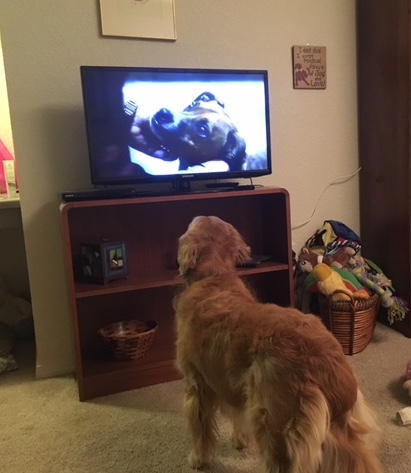
Cali attentively watches TV
Cali loves to watch TV. She might like talking to her vet that way.

Vets are considered to be providers of an essential service, so, in most places, they can remain open during COVID-19 stay-at-home rules. Even so, they are looking for creative ways to keep themselves, their staffs, and their patients safe.

Like telemedicine. Or drive-through service — or carhop service, where a tech gets the pet from the car so the driver doesn’t have contact with the clinic staff.

I’m not a huge fan of vet practices where they take my dog “to the back” and I don’t get to see what is done to her, but in these times, I do understand the need.

The telemedicine is more of a mystery. I know many people with two operable thumbs who have difficulty with videoconference tools, what with the mouse, the camera, getting the audio to work … How’s Cali supposed to manage all of that? Then there’s the whole question of how she explains where it hurts … I don’t know.

In all seriousness, the ability to consult and even get medications prescribed via telemedicine can reduce the risk of spreading COVID-19 by reducing contact between humans. I’ll be curious to see whether people take to tele-vet services and whether they remain an option after the pandemic ends.

Maybe Cali could get her next vaccination via telemedicine … or avoid that scene with the soup ladle and the urine sample. She’d like that. I hate to be the one to tell her that there are some thing you just have to do in person. Or in dog.

What’s a Dog to Do?

Cali thrusts a slightly rumpled newspaper at her human.

By Deni Elliott

Weeks of sheltering in place have taken their toll. Even our dogs have gotten bored with the stale smells in the same circuit of empty sidewalks that they’ve walked morning, noon, and night, day after day. We’re all looking for ways to amuse our canine companions, including people, like me, who are visually impaired and partner with guide dogs.

Guide dogs are used to as much socialization and stimulation as their human partners normally have, and they can’t have Zoom happy-hours to compensate. Pre-virus, guide dogs’ daily lives were filled with work: leading their people to the office, going to meetings, running errands at lunch, meeting friends for dinner or going to the theater at the end of the day. Now they are as likely as their previously active human partners to be climbing the walls. They grumble and sigh, “When are we going to DO something? When are we going to GO somewhere?”

People paired with guide dogs know that we need to go out for regular walks on harness to keep our dogs’ guiding skills sharp. But that still leaves a large part of every day. Here are some suggestions from Guiding Eyes for the Blind grads that would engage any inquisitive canine who has a basic obedience repertoire:

  • “Hide-and-seek” is an easy game for a start. Leave the dog on a sit-stay in one room, go into another, and call your dog. Have a treat ready for when your dog finds you. Take your friend back to the starting place and repeat. You can get progressively tricky by hiding behind the couch or drapes or crouching down next to the bed. If you want to teach a new recall skill, introduce a dog whistle, clicker, or simply clap your hands.
  • Deborah Groeber, a retired attorney, adds a level of difficulty with “Find it.” She shows her guide, Iris, a favorite toy, then leaves the dog on a sit-stay while she hides the toy in another room. Deborah returns and tells Iris to “find it.” The dog seeks out the toy and returns it in exchange for a treat. The work for Iris gets progressively harder as she hunts the toy down in places she is not likely to look, such as behind the shower curtain or in the corner of a bookcase. But the last “find it” is purposely easy so that the game ends with Iris feeling successful.
  • Victoria Keatting, a massage therapist and member of the Guiding Eyes for the Blind Graduate Council, is using her extra time to teach guide dog Watson to solve interactive puzzles, which she bought from Chewy.com. Treats are hidden in compartments that the dog can reach only by manipulating levers or spinning disks with his nose or paws. Once Watson understood that the treats Victoria placed didn’t fall through for him to retrieve underneath the puzzle, he enjoyed the dexterity practice.
  • Some of us are using our time at home to have our dogs help out with the daily chores. At our house, Golden Retriever Cali fetches the morning paper, and Guiding Eyes Koala deposits the dogs’ food bowls, after meals, into waiting human hands for washing. Both dogs are supposed to put their toys in the toy basket before bed, but that’s most likely to be enforced only after a human gets startled by tripping over a squeaky toy. (Watch Koala stack the food bowls.)
  • As even the best of friends can sometimes seem underfoot, author Peter Altschul sends guide dog Heath off for a weekly playdate with a friend’s dog. Unlike the concern raised if neighborhood children play together, there is no worry that an exhausted dog will bring home COVID-19.

Unlimited snuggling, petting, additional pampering, and connection create the silver lining that our dogs enjoy as we shelter at home. But every household has its boundaries. At our house, dogs are allowed only to watch our morning yoga routine. They no doubt privately laugh at the funny human tricks. But no canines are permitted on the mats. Following the internet instructor is enough for the people to handle before coffee without dog feet, tails, and happy tongues complicating our poses.


Vet Visits, Training and More — Fear Free

Fear Free logo with silhouette of a dog, a cat, and an outstreched hand reads "taking the pet out of petrified"

While going to the vet may never become your dog’s favorite thing to do once you’ve enticed her into the car, it doesn’t have to be scary. Dog training should always be fun. And there are even things pet owners can do at home to reduce fear and anxiety in their pets.

The Fear Free Pets initiative, founded by veterinarian Marty Becker, is a few years old and gaining a lot of followers.

Fear-based anxiety can lead to fear-based acting out, including aggression. A recent Whole Dog Journal article details the effects of chronic stress on pets and their families. It also lists signs of stress or anxiety that people might not recognize, including drooling or foamy mouth, as well as more familiar signs, like trembling or hiding.

The Fear Free movement offers certification for veterinarians and clinics, dog trainers, and groomers, with a dog-walker certification in the works. The goal is to teach pet professionals to use handling techniques and equipment that are gentle, to reduce the use of restraint and force. The certification programs teach pet professionals to recognize stress and how to acclimate pets to scary procedures, whether getting a shot or having their nails trimmed.

At the vet clinic, some fear-free protocols might include moving the pet and her person into an exam room immediately, rather than having them wait in a waiting area, with other stressed-out animals.

The website notes that many shelters, vet clinics, and pet professionals practice force-free and anxiety-reduction techniques without pursuing certification. It’s certainly worth asking about when shopping for a vet, a groomer, or a positive trainer.

The initiative is a fantastic extension of positive, no-force training approaches into every area of dogs’ and other pets’ lives.

The Fear Free Pets website offers resources for pet owners, including COVID-19-related information and resources. While professionals pay for the courses and certification, pet-owner resources are available for free. There’s also a search function to help pet owners find fear-free professionals nearby (Cali’s vet, whom she adores, is one of a half-dozen Missoula-area vets who are certified).

Can Dogs Get (or Transmit) COVID-19?

Several weeks ago, some alarm followed reports of a dog in Hong Kong that seemed to carry the novel coronavirus.

Since then, we’ve learned a lot, but not nearly enough, about this highly contagious virus.

Can dogs carry the virus and transmit it to their humans? Can dogs get sick with it?

  • The CDC states that there is no evidence that pets have become infected from contact with infected humans, but recommends good hygiene around pets (of course!); a small number of pets have been found to test positive after contact with an infected person, but there is no known pet-to-human transmission of COVID-19. Find more info from the CDC on COVID-19 and pets on their FAQ.
  • There is also no evidence that humans can or have gotten COVID-19 from pets.
  • It does not seem to sicken dogs.
  • There is some evidence that cats and ferrets might transmit the virus to other cats / ferrets, but that was in “lab experiments in which a small number of animals were deliberately given high doses of the virus” and not cause for alarm; that information is from a recently published, not peer-reviewed, study.

In any case, humans who are infected should limit interactions with pets as well as with other humans and wash their hands frequently.

Obsessively neat?

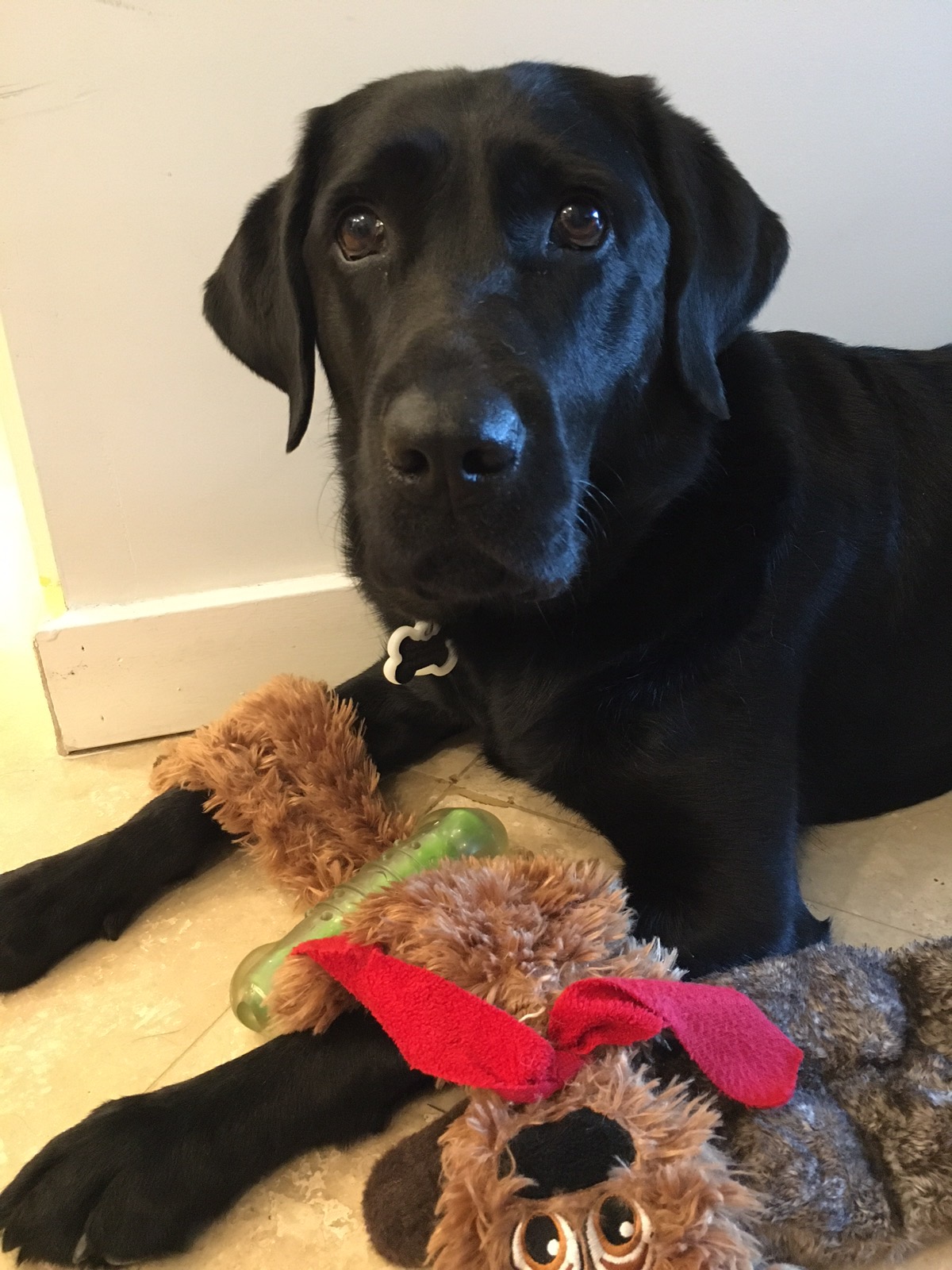
Koala, a black Lab, considers playing with one of everal toys
So many toys; so hard to choose

It’s always interesting to teach a dog a new skill and see where she takes it.

When I taught Jana that she could make choices, she started weighing in on where she wanted to go on walks. She’d put on the brakes, hard, if I tried to head in the “wrong” direction, for example.

Koala has built on many of her skills, adding new dimensions. She’s great at finding shortcuts to places that she and Deni walk to frequently. She quickly learns regular routes. Those skills come into play when they travel: She can find their hotel room after being in it once. She also uses her search skills — and her excellent nose — to find a trash can anywhere she happens to need one.

She learned to put away her toys some time ago. Cali has learned this as well. They both know to bring a toy and drop it into the toy basket. Usually, this is a mercenary exchange, with treats demanded after each successful toy drop as well as a final, larger paycheck at the end. It also requires considerable encouragement and cheerleading.

And Koala routinely gets her treat ball when it’s time for puppy lunch. When she’s emptied it, and when Deni asks her to, she brings it to Deni to put away.

Recently, though, Koala did something unexpected. She selected a toy, chewed it for a moment, decided that she wanted a different one — and put the first one away before choosing another. She did this twice before settling in with her third choice, an antler, to chew.

Has she become obsessively neat? Has she finally figured out that if she leaves her bones scattered on the floor, people trip over them (and if so, does she care)? Or is she worried about being unemployed while she’s in Montana, since Cali has a lock on the best two local jobs?

As I look at a living room scattered with Cali’s toys, I wonder whether there’s enough work to support two dogs in the toy-cleanup business.

Cali’s Job Search

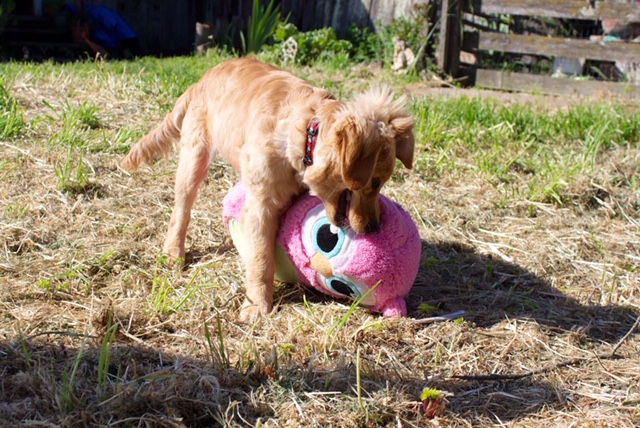
A much-younger Cali struggles to hold a large pink stuffed owl
Cali is much bigger now and has an easier time putting Owl into his basket.

A few months ago, I wrote about Cali’s goal of becoming a visiting “therapy” dog.

Cali is, of course, perfect for the job, and we were about to schedule our supervised visit, the last hurdle to becoming certified. But then … a pandemic happened. Coronavirus has put all visits on hold indefinitely.

Cali was casting about for a job to tide her over. She’d been laid off from her newspaper-fetching job since the end of October, when the local paper wanted to more than double subscription prices.

Coronavirus takes away, and coronavirus gives.

The Missoulian called last week with a special offer to help people keep up with the news. We resubscribed, and Cali was able to get her paper-fetching job back. Good thing she was quick to apply, because Koala is coming back for a long visit, and we all know she would want that job too.

Koala is going to have to scramble, because Cali has taken over the toy clean-up job as well as the newspaper job. Cali now puts her favorite toys — Owl, Hedge, Duckie, and Piggy — into their basket every night before bed.

Chaser’s Legacy

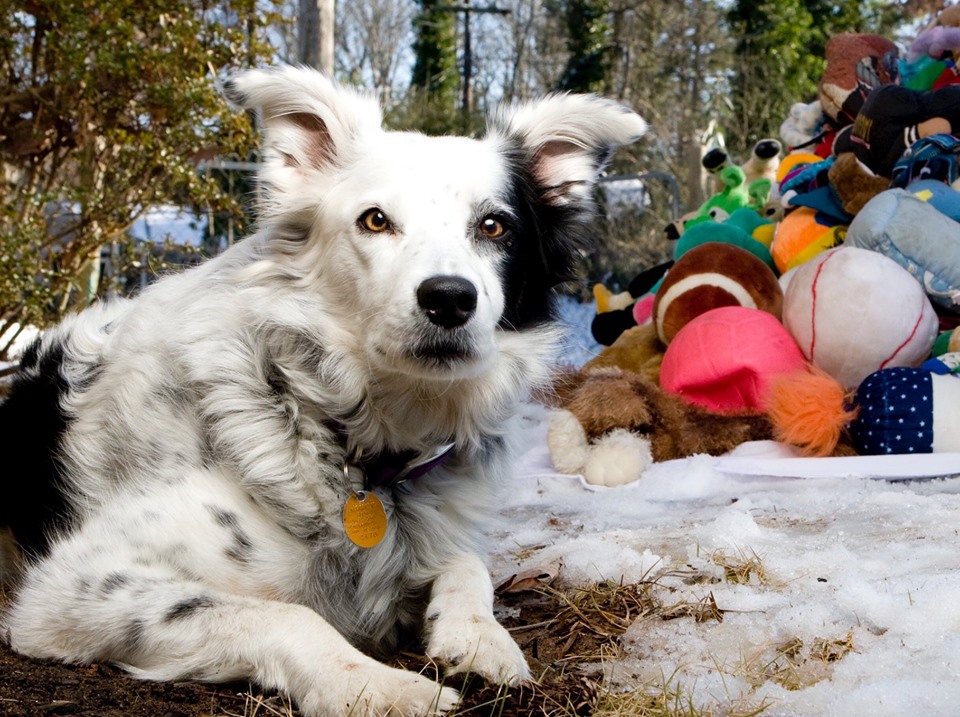
Chaser, the border collie who learned 1,000 words

I’ve written about Chaser, the dog who had a vocabulary of more than 1,000 words (and who understood English grammar better than most …). The recent story of Whisky shows Chaser’s real legacy though.

Chaser’s dad was a professor. He trained her thoroughly, daily, meticulously. He knew that he’d face resistance when he wrote about a dog learning to understand human language, so he took detailed notes, tested her often, and made sure to have many others work with her to show that she was responding to the cues, not to some secret or unconscious body language cues.

Whisky’s story is different. Her people aren’t trainers or professors. They just played with her. A lot. And consistently asked her to bring toys by name.

That’s where most of us will trip up, by the way. I call Cali about 20 different names. I am supposed to remember to call Owl and Piggy and Duckie by name? To be fair, Cali does not have 100 toys, and we only use names for about five, so I really should be able to be consistent … But I digress.

What Whisky shows is that any dog can learn names for things. And even categories of things.

Koala is inspired by Whisky. She’s learning balls, bones, and toys as separate categories. She has many of each. She’s also learned that bringing them and putting them in her basket pays really well.

Cali is learning that too, but far more slowly. Cali actually does bring Owl, Duckie, and Piggy, plus Hedge, when I ask her to. Oh, and her tennis ball. And she’s learning about Bear. She’s very excited about the paycheck, though, sometimes so excited that she can’t quite tell where the basket is. She’ll toss them near the basket, but she’s getting better at getting the toy into the basket, at least by the third attempt.

Really, it’s not the dogs who have the limitations. It’s us. Chaser proved that, and Whisky is just hitting us over the head with it a little harder. Dogs are smart and love it when their people teach them things. In fact, here’s Cali now, telling me that it’s time for her next lesson.


What’s Missing from the Conversation

Alberta, a now-retierd yellow Labrador guide dog, leads DeniI wrote a post a few weeks ago about proposed new rules for flying with service and support animals. Lucky for me, most Thinking Dog readers are kind and thoughtful individuals.

Deni wasn’t so lucky. That could be because she had more than 2,000x as many readers as I generally do … in just the first 3 days (and no, that’s not a typo).

The comments on her article, and on the proposed rules at the DoT site, reveal much about our society. And why the concept of ESAs has been so badly abused. They follow several general themes:

  • People who hate animals, kids, anyone who writes about animals, and pretty much the whole world. (These are best ignored.)
  • People who think all animals should be banned from airplanes, including guide and service dogs, due to their own (or others’) allergies. (Not gonna happen.)
  • People who say they cannot or will not fly if they cannot bring their ESA.
  • People who use service animals and oppose any sort of behavior or health check or documentation.

What is missing from this conversation, as well as from the laws and proposed new rules, is attention to the animals’ welfare and needs.

Some of the people who can’t or won’t fly without an ESA could well be able to meet the legal threshold for a service dog. Others have generalized and severe anxiety or anxiety specifically about flying, so the presence of an animal is of comfort and helps them cope.

I am sincerely empathetic. At the same time, I think that’s a lot of responsibility to place on an animal, especially one that has not been trained to work under stressful circumstances. Public access is stressful for any animal, but especially one that essentially lives in a familiar home, rarely leaving except, in the case of some dogs and cats, for walks around the neighborhood. Airports and airplanes are about as stressful a situation as I can imagine.

I also worry that someone with severe anxiety would be stretched to the limit taking care of their own needs and would be unable to safely handle an animal, intuit and meet its needs, and keep themselves, the animal, and other passengers safe.

The untrained pets used as ESA are often terrified by the commotion, cramped quarters, noise, smells, and general awfulness of airports and airplanes. And that is exactly the problem: No one is evaluating the animals or training them to get used to public access. People with ESAs do not have the right to take them in public (the ADA gives that privilege only to people with both a disability and a trained service animal) and no training is required, so even if the people wanted to prepare their animals, they cannot legally do so.

Like other pets, most ESAs spend the majority of their time at home. Then, suddenly, they are taken to the most stressful place possible, by a person who is extremely anxious. As a living being with needs and fears, the ESA needs and deserves the protection of its person — a person who at that time is very unlikely to be able to provide that protection.

The law currently allows anyone whose mental-health professional (or internet store) supplies them with a letter attesting to their own need for the animal. Nothing addresses the suitability of the animal or its welfare, and nothing safeguards the public from terrified animals (mostly dogs) behaving like terrified animals: Growling, yowling, snarling, lunging, biting, peeing, etc. It’s a testament to how resilient and generally amazing dogs are that there have not been far more bites.

I am a former service dog trainer and am adamantly opposed to creating barriers to access for people with disabilities. At the same time, I do not think it is possible to protect public safety — including the safety of service dog teams — without limitations, such as a public access test and health requirements.

Public access with a service dog in a no-pets area is a privilege that does not include the right to endanger others or trample their rights. The ADA builds that in; a service animal that is dangerous or behaving inappropriately can legally be excluded even if the person has a disability and the animal is fully trained to mitigate that disability. The current ACAA rules on ESAs do not. And it is not reasonable or realistic to expect TSA officers or airline gate agents to be able to assess which animals are safe and which are not — and to be effective at barring those passengers and their animals.

There are ways to make health checks and public access tests easy, certainly no more complicated than getting a disabled parking placard in most states.

Thousands of dog trainers are capable of administering a CGC test, for example. A public access test could be similar, and it could be conducted by any certified dog trainer in a place the team goes anyhow, like Walmart or the supermarket.

Keeping your dog healthy and being able to show that the dog is vaccinated are minimal standards when taking your dog anywhere, even the dog park.

I don’t see these as huge obstacles or burdens. One comment I saw talked about the nearest Walmart being over an hour’s drive and said having to go to a testing site would be an enormous burden. If that person never, ever goes to that distant Walmart, or anywhere else in public with their service dog, they wouldn’t need to do the test. If they do go there, even rarely, doing a test there once every year or so is not a huge ask.

Airlines could help out by keeping paperwork on file, though, as they keep seating preferences and contact details for mileage club members. Asking people to jump through the same hoops every time they fly is absurd, especially for anyone who flies multiple times a year. Linking the health certificate and other info on the team to a flyer’s frequent flyer profile, with a flag for annual updates, is very easy in our digital age.

Allowing only trained, professionally evaluated animals to fly in the cabins of airplanes, and asking that other animals either remain in carriers that fit under a seat or that their owners make other arrangements is common sense. It respects the rights and safety of people with disabilities who have trained their (mostly) dogs and rely on those dogs’ assistance. It also respects the rights and safety of everyone else.

My comments are, of course, my opinions; reasonable people may well disagree. I think that Deni wrote a solidly researched article that presents a real problem and suggests viable solutions. I encourage you to read it, read the proposed rules, and comment. The 60-day comment period opened Feb. 5 and ends in early April.
Maisy’s Emotional Support Dog

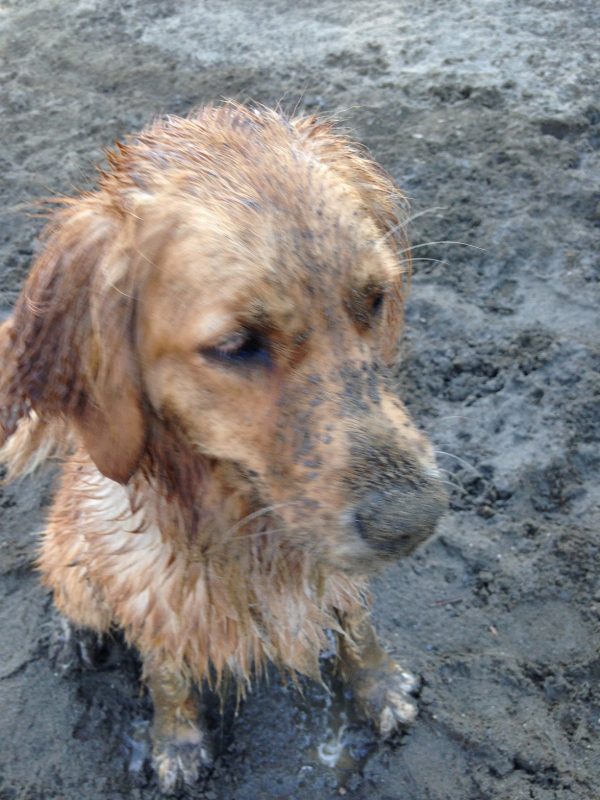
Cali is thickly covered in sand
Cali learned from Jana how to completely cover herself in sand

Cali’s best friend, Maisy, a young poodle, is a bit shy. When she sees strangers, she gets nervous — especially if the people have a dog with them. Sometimes she can’t help herself: She barks at them.

Cali is the complete opposite. When she sees strangers, she thinks it’s the best thing ever. She wriggles with joy and drags her mom over so she can say hi.

Recently, I had the two of them on a walk. We encountered several other people.

  • The first time, Cali was busy looking for peanuts under a tree where our neighbor feeds the squirrels and, quite uncharacteristically, she ignored the person. Maisy looked nervously at him, then at Cali, and she, too, started sniffing around in the snow.
  • Next up, a friendly 20-something guy. Cali saw him from a block away and started getting excited. He reached out a hand to pet her and stopped to say hello. Maisy stuck close to me, watching carefully. She started a “woo…” but when she realized that Cali wasn’t scared, she stopped mid-woof. She stretched her nose out to sniff the guy but ducked back when he reached to pet her.
  • Finally, we met a third person. Cali again said hello, all wags and wiggles. This time, Maisy watched for a moment, then very cautiously poked her nose in to sniff — and say hello.

On the way home, we passed a couple of people who were shoveling snow, and, again, Maisy thought about barking. “Woo…” — and reconsidered. She held her head up and walked past, looking pleased with herself (while checking to make sure Cali was close by and still thought things were okay).

Maisy’s still nervous on walks when Cali isn’t there. But watching her watch Cali and think about how to respond was interesting. She showed me that dogs do learn from one another — I mean, learn something other than where the muddiest digging spot is in the back yard, how to deconstruct a toy, and the best strategy for rolling in sand to ensure maximum fur coverage.

And perhaps Cali has a great future as an emotional support dog — for other dogs.