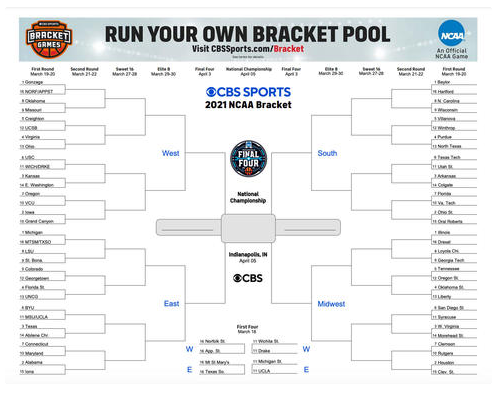
One lucky dog owner had help — or a secret weapon? — when completing their NCAA basketball brackets this year: The family dog.
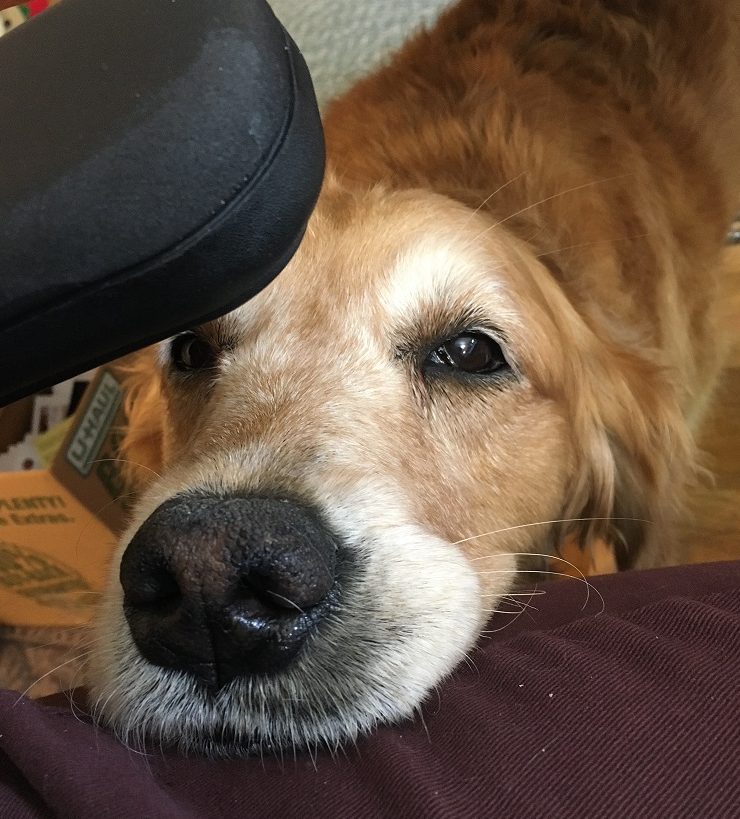
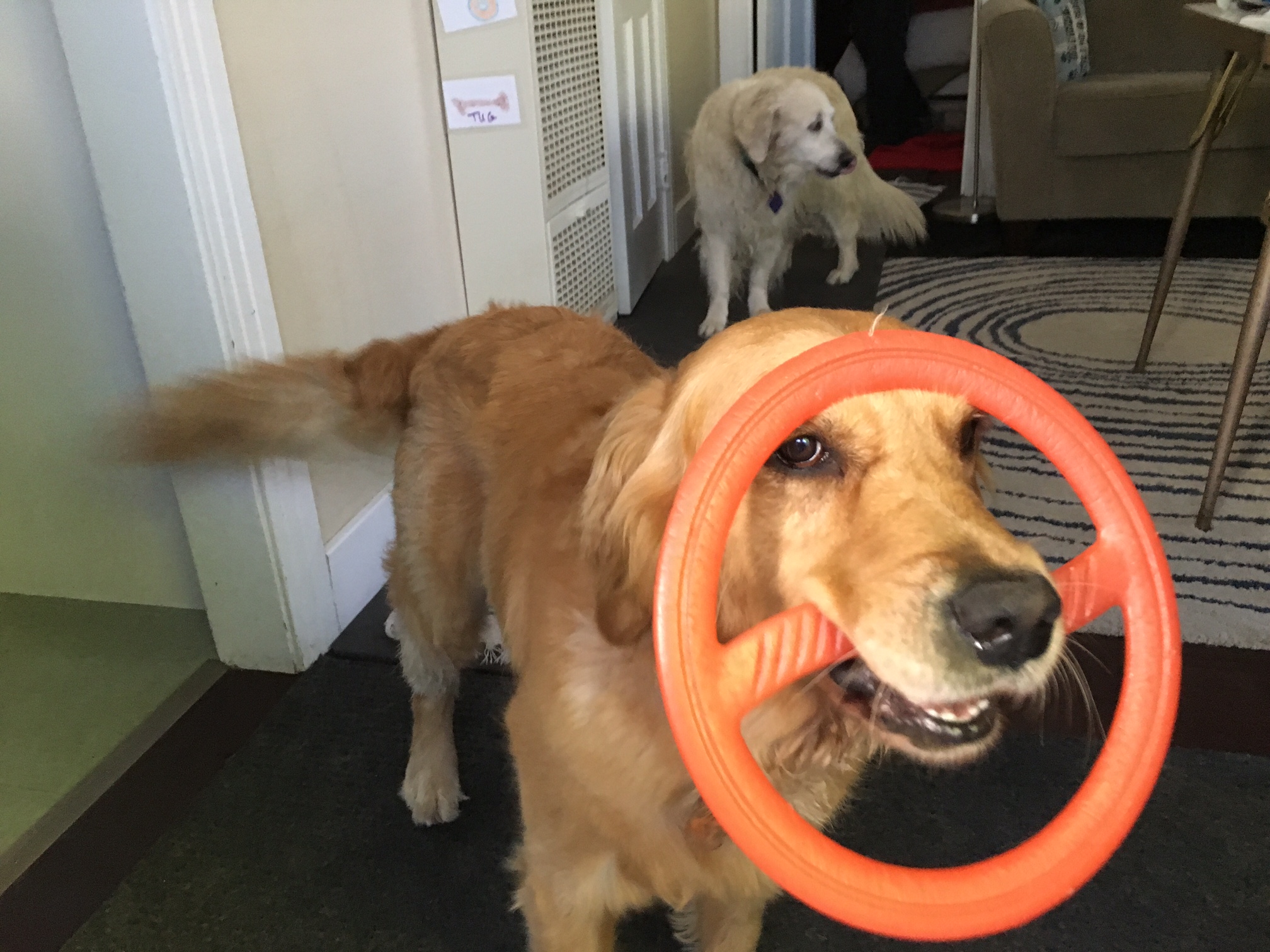
Apparently, with a lot of time on their paws, Satchel, the dog, took to chasing basketball statistics. And came up with a winning bracket. Satchel’s owner filled out the bracket (following careful instructions, no doubt) to prioritize teams with canine mascots (Go Huskies!). Those with non-canine non-human animal mascots came next.
As a person who rarely (OK, never) watches TV sports, if I were to fill out a bracket, I would have done exactly what Satchel did. I mean really, how else would you choose?
Besides, Satchel is hardly the first non-human to excel at sports betting. Remember Paul, the octopus who correctly predicted the outcome in a majority of Euro 2008 and all World Cup 2010 football (soccer to Americans) matches? Paul is probably the only octopus with a biography on Wikipedia, too …).
Satchel and Paul are joined in sports betting prowess by Cruz, a parrot who correctly bet on the Tampa Bay Buccaneers to win this year’s Super Bowl. (Cruz was alone in the Washington Post roundup of animal predictions; the unnamed tortoise, dolphin, sand cat, and panda all chose Kansas City.) Jane the river otter, a Tampa resident, and fellow local Buffett (a manatee) also loyally — and accurately — picked the Bucs. Their friend Nick, a dolphin, unfortunately chose the Chiefs, ending his yearlong winning streak.
So, next time you need some assistance with your sports predictions, just check with your dog. Whatever you do, don’t ask the dolphin.
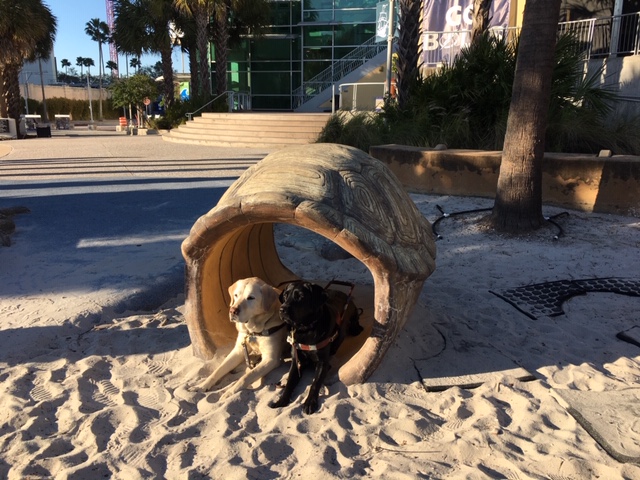
Ryan, left, and Koala, enjoyed a short vacation in Florida just before Ryan’s 2020 retirement.
When a service or guide dog is no longer able or willing to work, what happens?
Many of them stay with their families, living a life of leisure, enjoying many belly rubs, and watching some young whippersnapper do “their” job. Poorly, of course.
But not all people who partner with service or guide dogs can keep their retired partners. There are many reasons for this: Some are elderly folks or people who live on a very tight budget, and they simply cannot care for a second dog. Some are busy professionals who travel frequently and feel that they owe their retired dog a better life than frequent stays at a kennel and long, lonely days while they — and the new dog — head to work. Sometimes a guide or service dog retires because their partner dies or becomes seriously ill.
Whatever the reason, the guide or service dog’s partner or family often looks for a retirement home for the dog. Often extended family eagerly step up: Deni’s first guide, Oriel, spent a couple of years with family in Indiana before moving to Florida to live with us. Alberta, who retired young due to an eye tumor, lives with Deni’s nephew & family, including her new charge — a human puppy!
If family placement is not an option, many guide dog partners ask dog-savvy friends and acquaintances; I was a finalist in the retirement-home search for a Guiding Eyes dog recently, but the dog opted to stay closer to her partner rather than move to Montana (her loss …).
When neither of those options works out, guide and service dog schools generally place the dog with someone on their extensive waiting lists. These are usually volunteers, donors, puppy raisers (perhaps even that dog’s puppy raisers!), or others with ties to the school.
The dogs never end up panhandling for cookies or living under a bridge somewhere.
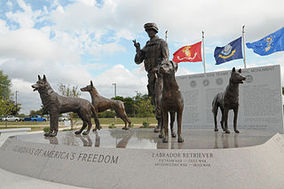
A reader let me know that National K9 Veterans Day was on March 13.
The U.S. has had canine service members since 1942. Our brave canine service members sniff out explosive devices, patrol, serve as guards, track people, and do so much more. They also provide companionship and comfort to human service members serving in difficult situations.
Other canines serve veterans as service dogs, including supporting veterans with PTSD and helping them adjust to civilian life. While these dogs are not actually K9 veterans, they deserve a mention for their service as well!
A local K9 veteran, Sergeant Bozo, began his service at Fort Missoula as a young puppy. At the age of 4, Bozo was promoted to the rank of honorary master sergeant and joined the Fourth Infantry. After Sergeant Bozo’s tragic death, he received loving tributes from newspapers all over Montana. He was buried with full military honors, it’s said, possibly in the military cemetery at Fort Missoula (though that was against the rules and has never been confirmed). His footprints and name are scratched into a cement marker on the site of the old post, though, and local lore holds that he was buried there. And the Sergeant Bozo Memorial Dog Park is located nearby, in a large park now located adjacent to the historic fort. Cali and her friends honor Sergeant Bozo’s memory with frequent walks there.
The Military Working Dog Teams National Monument in Lackland, Texas, honor all U.S. military dogs. And military dog heroes are honored with monuments across the country, from New York to California, and there’s even one on Guam. If there’s no monument you can visit, consider honoring military K9s — veterans and active duty service members — with a donation to an organization that sends care packages to canine teams, trains service dogs for veterans, or helps K9 veterans find loving retirement homes.
The Whole Dog Journal recently ran an article about everyday things that irritate dogs. I was pleased to see one of my pet peeves on the list: Jangling tags.
The constant jangling of dog tags is annoying. It’s annoying to me, and I can get away from it. Imagine how the dog feels?
I’ve used many tricks over time to eliminate the jingle-jangle:
Silicone or neoprene cover for one or more tags
Silicone edging on the tag
Rubber band to hold the tags together
Stick-on dots to separate the tags
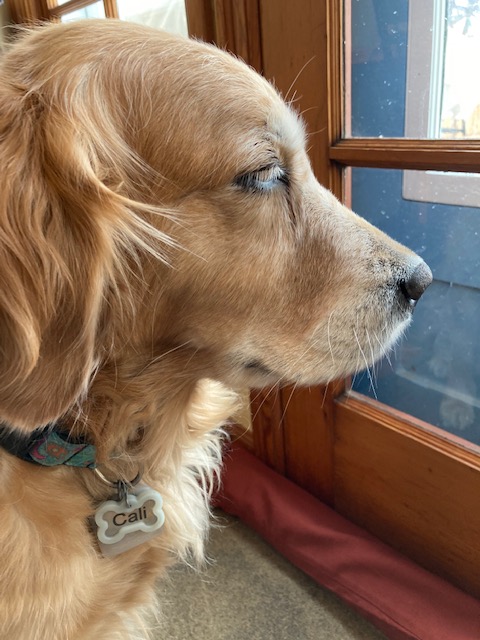
The little covers or edging — you can order tags with the edging or buy little slip-on silicone frames for common tag sizes and shapes — are the most effective, but any of those solutions will reduce the noise. You can also now buy silicone dog tags! Next time Cali loses her tags, I’ll replace it with one of those!
Reducing the number of tags helps too, of course. Cali wears an ID tag with her phone number and her Montana dog license (she’s very proud of that one!). And that’s it.
The noise can be problematic in unanticipated ways: The WDJ article describes a dog who refused to eat because the noise of the tags banging into his metal dish was so unnerving.
It’s an easy fix. To find out other irritants you can eliminate from your dog’s life, read the Whole Dog Journal article (regular readers should all be subscribers by now; it’s the best $20 you’ll ever spend on your dog!).
Wow, all those pandemic puppies people got last spring are now hitting that wonderful adolescent stage. You know, where they have boundless energy, no sense, and no memory of anything you’ve taught them?
How long does that stage last? Jana’s was about 5 months. Cali’s? closer to 2 years … Then one day something clicks into place and you have a wonderful adult dog. If you’ve done your homework, that is.
If you didn’t get training when your dog was a puppy, you might find yourself on a long waiting list now. Even if you’ve raised puppies before and know how essential early socialization and training are, the pandemic poses significant problems.
Last spring, many dog training classes were shut down. How do you go to puppy kindergarten on Zoom? Sure, you can learn to teach the pup to sit on cue and wait before bolting out the door by following online lessons, but — like human kindergartners — pups need to play with others to learn how to be a nice dog.
They also need to interact with people. All kinds of people — all ages, ethnicities, genders, sizes, shapes — and wearing all kinds of clothing, walking with different gaits (or using wheelchairs or walkers) … it’s nearly impossible to get that kind of exposure while socially distancing.
The extended work-from-home time was beneficial to housetraining and developing a close bond with a new puppy, but is that dog able to handle being left home alone?
Get creative!
It’s possible to find workarounds to some of these issues. A trainer referenced in a recent NYT article suggests hanging out in a park with a long leash (15-20 feet) and asking willing passers-by to greet your puppy.
As far as encouraging independence, crate training is always a good idea — then ensuring that the pup spends some time alone each day, crated with a fabulous treat. I like stuffed Kongs, but there are dozens of great treat toys that you can safely leave with your dog in a crate. Avoid anything that looks like the dog could chew off a small part (whether a toy or an edible, like dental chews or rawhide) and swallow it. Smear or stuff it with something irresistible. Peanut butter works for a lot of dogs.
Do this while you are at home, but also start leaving the dog home alone for short periods. Take a no-dog walk, run errands, whatever is possible where you live. Gradually extend the dog’s alone time, and don’t make a huge fuss when you return or release the dog from the crate. It shouldn’t be a big deal to leave the dog or reunite. Just part of an ordinary daily routine.
If your dog has become a wild child and you don’t know what to do, look for online training — try the APDT’s trainer search. Even if you can only get an online class or a phone consultation, professional advice might be the best way to resolve any behavioral issues before they get deeply entrenched. Please choose only a positive trainer, though, and be prepared to put in some time and effort. Changing behavior takes time (whether it’s the dog’s or the human’s — or both!).
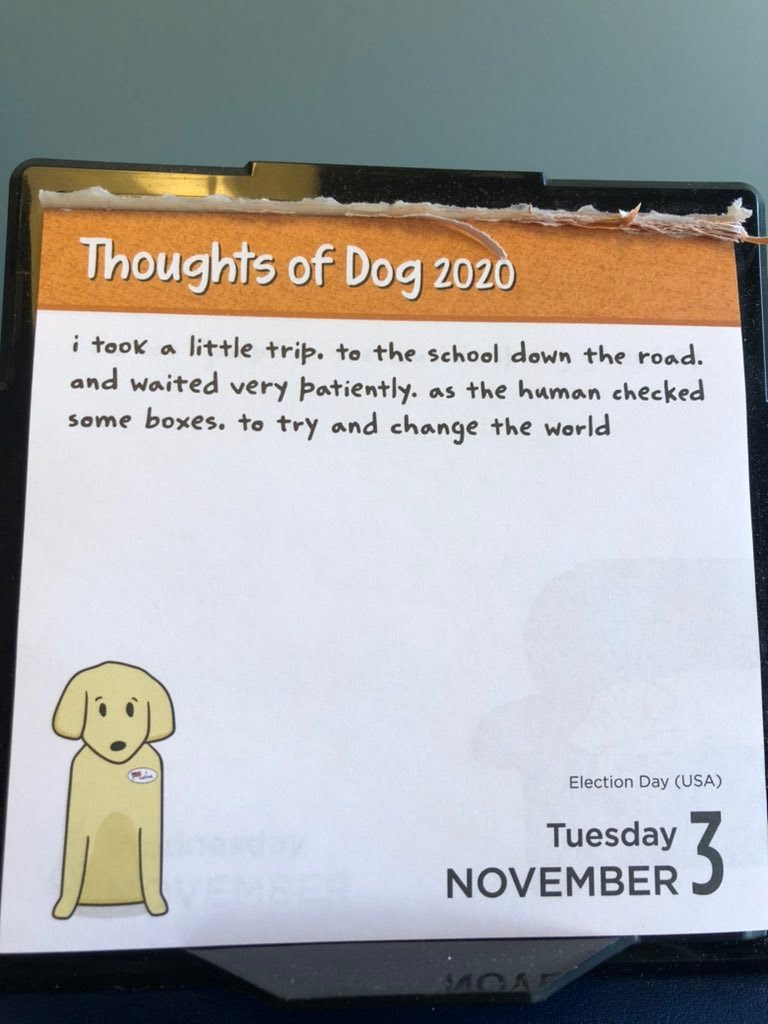
Thoughts of Dog is more than a book or a calendar. It’s a peek into the mind of a loving, sweet, sometimes silly golden retriever and their human. The dog, who is nameless, has a constant companion named Sebastian (Sebastian is a stuffed elephant). Dog also has a human of course.
That human is named Matt Nelson.
And they are simply brilliant.
Nelson & dog capture the human-dog relationship perfectly. They’re poignant, laugh-out-loud funny and sardonic in turns. Always spot-on.
Koala and Deni left Montana a few weeks ago, and recently a friend asked me whether Cali misses Koala. He then jumped to the next level and asked whether dogs understand that someone has left temporarily versus having “crossed the rainbow bridge.”
Those are pretty big existential questions for dogs to consider, but I think they are up to the challenge.
First, does Cali miss Koala? I think that she misses Deni more and that there are lots of aspects of being an only dog that Cali thoroughly enjoys. Cali has regular play dates with her pal Maisy — and the two of them play better together than the pack of three did. Cali always gets to choose where we walk, as well as where we stop so she can sniff. She gets all of the dog eggs at breakfast and can have her snuffle mat whenever she wants (within reason).
But yes, I think she does miss Koala. Life is quieter and more boring when Koala is not here, and Cali rarely has a playmate. Not that Koala is always the nicest playmate, but the girls do often have a lot of fun together. When Koala is not pulling on Cali’s tail, that is, or scheming to steal her treat ball.
I also think that Cali understands that Koala and Deni have gone somewhere else — and will come back. Cali goes to the airport to see them off; they are healthy; and, I am guessing, Koala lords it over Cali for days before a trip: I get to go on an airplane and I get eggs in the Delta lounge and I get to meet the security team … that kind of thing. Cali knows that Koala isn’t simply ghosting her.
When Jana died after a period with many health problems, Cali’s reaction was completely different. She knew that Jana was gone. She cried and moped and grieved for days.
So, yes, I think dogs do understand different types of separations and have appropriate reactions to temporary versus permanent ones. Though if she did think that Koala was ghosting her, I do not know what an appropriate reaction would look like …
On a single walk last week, Cali and I were approached by two unleashed dogs. One, a young, friendly, waggy mix, telegraphed youthful enthusiasm and friendliness and even wary Cali was happy to say hello. The second was far more territorial, larger and, to both of us, a bit scary. Neither listened to their human’s call. Nothing bad happened, but things could so easily and so quickly have gone wrong.
Those two were dogs I’d never seen before, but on our usual walking route, there are many frequent flyers. Or runners. The dogs who “always” stay in their yards … except for every single time I have walked by. The ones who growl menacingly when we approach — even where we already know to cross the street and make a wide detour. Walking in our beautiful neighborhood park, we’ve met multiple off-leash dogs, including the young golden who never fails to growl at Cali. Always off leash.
We’re often greeted by loose dogs, gamboling about in their (unfenced) front yards or “just” going from home to car or car to home. Doesn’t matter. During that 30-seconds of freedom, terrible things can happen. I live on what passes for a busy street in Missoula, and too often to count, across-the-street neighbor dogs, heading to the car, have been distracted by Cali (on leash). These dogs don’t look both ways before plunging into traffic.
It’s not only the danger to the loose dog that bothers me.
The dynamic between a leashed dog and an unleashed dog is very different from two leashed dogs meeting, though I generally try to keep my distance from unfamiliar leashed dogs as well.
When an unleashed dog approaches, the leashed dog can’t get away. Even when the approaching dog seems friendly, one of the dogs could decide there’s something unsavory about the other and the encounter can turn ugly, fast. Or maybe the leashed dog is inherently anxious — or dog aggressive. Or simply having a bad day. The owners of the unleashed dog have no way of knowing, even if they’re 100% certain that their dog is universally friendly, cheerful, and loving toward all of dogkind. And humankind. (Note: this is not possible; not even Cali is that perfect.)
Unable to escape the oncoming dog, the leashed dog’s only recourse is aggression — a growl, maybe a lunge.
But, if both dogs are leashed, either human can quickly head away. The dogs can get out of one another’s range. Ironically, with both dogs leashed, neither feels trapped by the encounter. Neither feels trapped because the encounter is avoidable.
Dogs don’t need to say hello to every dog they see. Mostly, they don’t want to either.
Cali is very specific about which dogs she wants to greet. Goldens and most Labs are ok. Anyone smaller than she is, preferably female, is ok. Doodles of all sizes, though, are out. She’s got a bizarre set of rules, true. But that’s her right. She doesn’t have to be social with anyone on four feet. By leashing your dog, you keep your dog safe and respect both dogs’ right to choose not to say hello.
When the approaching dog is attached to a human, both dogs can choose: They can stay close to Mom or head out to say hi.
The same is true when humans approach without dogs. Some dogs want to greet every human on the planet (hi, Cali!); others do not. If Cali weren’t leashed, she’d run up to every single person we encountered.
The human has choices too, when the dogs are leashed. While I choose not to let Cali get close to unfamiliar dogs, I confess to letting her greet humans who seem amenable (which means they look at her, talk to her, reach out a hand to the nose that is straining toward them). But when humans seem immune to her charms, we give them a lot of space (who’d want to meet those people anyhow?).
Please leash your dog. Cali will thank you. And your dog will be safer.
In a recent conversation about puppy training, Deni mentioned trainers that “teach puppies false beliefs” about humans. One example she gave was that some puppy trainers “teach puppies that they can control” what the person does — by their own behavior.
I thought about that for a minute, then responded that I didn’t think that was what was happening. Instead, I describe that as teaching default behaviors.
Cali hopes that the magic sit (or lie down) will produce results — even when no humans are nearby
I don’t see that as teaching puppies that they can control the human’s behavior (though that belief may be naive …). I describe it more in behavioral terms: The puppy learns that good things happen when she sits. If her trainers or human family members are consistent, the puppy also learns that those same good things do not happen when she jumps, whines, paws, or does other unwanted behaviors.
If puppy training starts very young (3-4 weeks of age), as it does for some service- and guide-dog puppies, the puppy catches on very quickly. Within a couple of weeks, you’ll have a tiny puppy who sits as hard as she can, placing herself right in front of you, to show you how good she is being. In hopes of getting a cookie, of course. This is where Deni’s reading of the situation comes in. The puppy (and older dog) does try to use this “good” behavior to get rewards on demand.
Who’s in charge here?
But that’s not how it is supposed to work. The human is supposed to retain some modicum of control. (Hey, it’s a nice idea, right?)
If the human is paying attention, they will ask the puppy to sit in many situations: Before going out an open door; while the human is getting meals ready for the puppy; for grooming; when greeting visitors or returning family members. You get the idea.
When the sit is paired with predictable situations and equally predictable rewards, the puppy internalizes the idea that the thing she wants — dinner, access to her yard, attention — arrives when she sits. And only when she sits. So sitting becomes the “default” behavior — what the puppy tries when she wants something the human has or controls.
Soon, the human doesn’t even have to ask the pup / dog to sit. When we’re about to get dinner for Cali and Koala, a meaningful look is enough to get them to sit at the kitchen doorway, quiet and not underfoot.
Unfortunately, most humans have a tough time being consistent. And puppies will always remember very fondly that one time (or one hundred times) she got rewarded when she jumped, barked, or whatever. And try it again. And again.
Dogs are pretty good at getting us to do what they want and need. Luckily for us, though, you can teach an old dog new tricks.
If your dog’s usual way of getting you to play with her or feed her or let her out is too rough or pushy, start teaching her a new way to ask. (Enlist a positive trainer if you need some help getting started.)
Once the old way stops working, the dog will eventually stop trying it. Remember, though, if your dog has spent years successfully getting you to play with and pet her by jumping up on you, for example, it could take a very long time to convince her that that no longer works.
After four long years, there are once again dogs in the White House! That’s a clear sign of better times ahead. No one can effectively perform a stressful job without at least one dog by their side.
President and Dr. Biden have two German Shepherd dogs. While Cali and I think they ought to have at least one Golden Retriever, we agree that GSDs are better than no dogs.
Champ, the senior dog, might weigh in on whether the White House is preferable to the vice-president’s residence, One Observatory Circle, where he lived as a young dog.
Major, not quite 3 years old, was adopted from a shelter near the Bidens’ home in Delaware in 2018 as a young puppy. He’s the first shelter dog to reside in the White House. The shelter has celebrated their young alum’s fame and fortune, throwing him an Indoguration party and launching a children’s book dedicated to Major and his big brother, Champ.
Pets in the White House are a longstanding tradition; you can find a full list on the website of the Presidential Pet Museum. While mostly dogs and a few cats, some presidents had more unusual pets, such as President Hoover’s son’s alligators.
According to the New York Times, presidential dogs have helped former leaders through some tough times and helped them improve their image.
As anyone who lives with a dog knows, that’s just the beginning. Life with dogs is just better. And I certainly feel a lot better knowing that Champ and Major will be helping their humans run things from now on.