Doctor Dogs

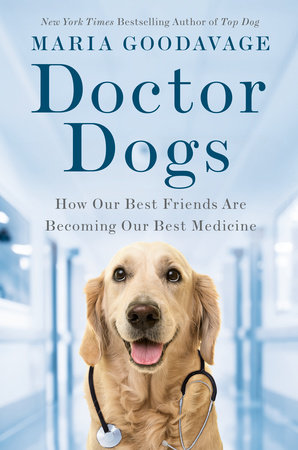
Most people are aware of guide dogs, mobility service dogs, and possibly hearing dogs. But dogs help people with medical issues in myriad ways beyond these service dog roles. In her latest book, author Maria Goodavage explores dozens of the tasks dogs perform to diagnose, treat, heal, and comfort humans. And the epilogue and acknowledgements sections briefly describe dozens more that were omitted from the main sections of the book (the end sections might have been my favorite part …).

Dogs who detect COVID are in the news; but fewer people are aware of dogs’ ability to detect several types of cancer, as well as diabetics’ sugar highs and lows. Goodavage even has wonderful stories of dogs who detect their human partners’ impending seizures or cardiac incidents …

Moving beyond physical ailments, Goodavage devotes several sections to dogs who assist in times of crisis and trauma, whether serving an individual with PTSD or showing up at court to comfort children testifying in abuse cases, the dogs are on the job.

The book is a comprehensive catalog of ways that dogs help people, but it’s more than that. The thread connecting all of the stories is the human-canine relationship. For many of the “services” dogs perform, neither their partners nor the dogs’ trainers can identify what the dog is detecting. The dogs are deeply connected to their humans and figured out a pattern, decided that the human needed some help, and came up with a way to let them know.

For example, Goodavage is careful to explain that it’s not really possible to train a dog to detect an impending seizure. Many organizations do train dogs to respond in specific ways if their partner has a seizure, though. Some of these trained dogs figure out a pattern of behavior, chemical changes, or something else that reliable predicts a seizure and begin to warn their person. Or a parent, in the case of a child. There are even stories of untrained dogs figuring this all out on their own.

In the case of dogs who are trained to detect the scent of hypoglycemia, for example, or bladder cancer, Goodavage muses about “rogue” doctor dogs — dogs alerting random strangers while out and about. It’s not impossible; some trained dogs have raised the alarm without prompting.

The book is a great read. Goodavage is a stellar storyteller, and she’s done deep research. In addition to interviewing dozens (hundreds?) of trainers, handlers, and people partnered with doctor dogs of all specialties, Goodavage leads readers through all the current research (with a 20-page reference list  to back her up) on how dogs do this and how effective they are. Despite the deep dive into science and research, the book is engaging and readable.

Can the Cone

No dog should ever have to wear the dreaded “cone of shame” again. So many alternative products are out there.

I recommend getting at least one to have on hand for whenever you need it next. That will save you a few dollars (you know that the vet charges you an absurd amount of money for that cone, right?) and, more importantly, keep your dog comfortable.

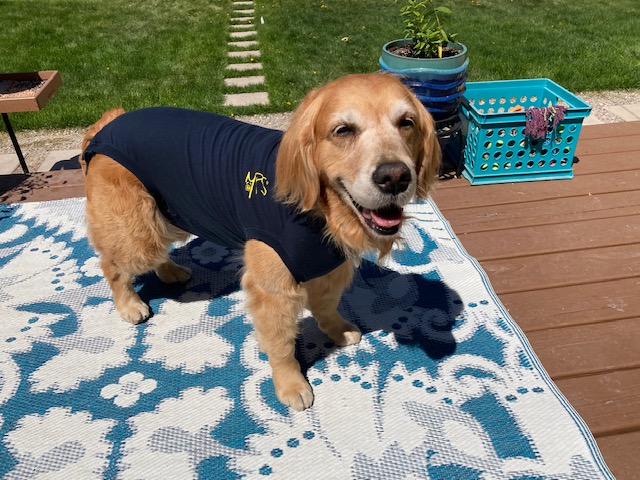
Golden retriever Cali wears a navy blue onesie
The surgical suit fits snugly and snaps at the back

Koala recently tried a few options, including the surgical suit, which Cali is modeling in the photo (because a dark blue suit is hard to see on Koala).

It is essentially a little doggy onesie. A quick search reveals that they come in many colors and patterns, and even in a long-sleeved version. Just don’t forget to help your dog unbutton before going out to deal with essential business!

The surgical suit could serve an additional purpose: Anxiety relief. It’s similar to a Thundershirt in the snug fit. Thundershirts, as well as various wrap techniques, help many dogs feel calmer during anxiety-inducing events like thunderstorms or fireworks.

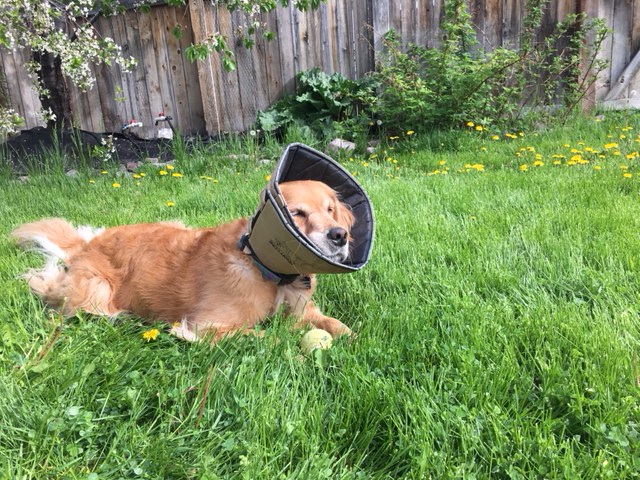
Golden retriever Cali wears her soft cone as she lies on the grassA more common option is the wide variety of riffs on the cone theme. Cali has a small, soft cone (the Comfy Cone) that used to stop her from fussing with her hot spots, back when she got hot spots. She has not needed it in quite a while.

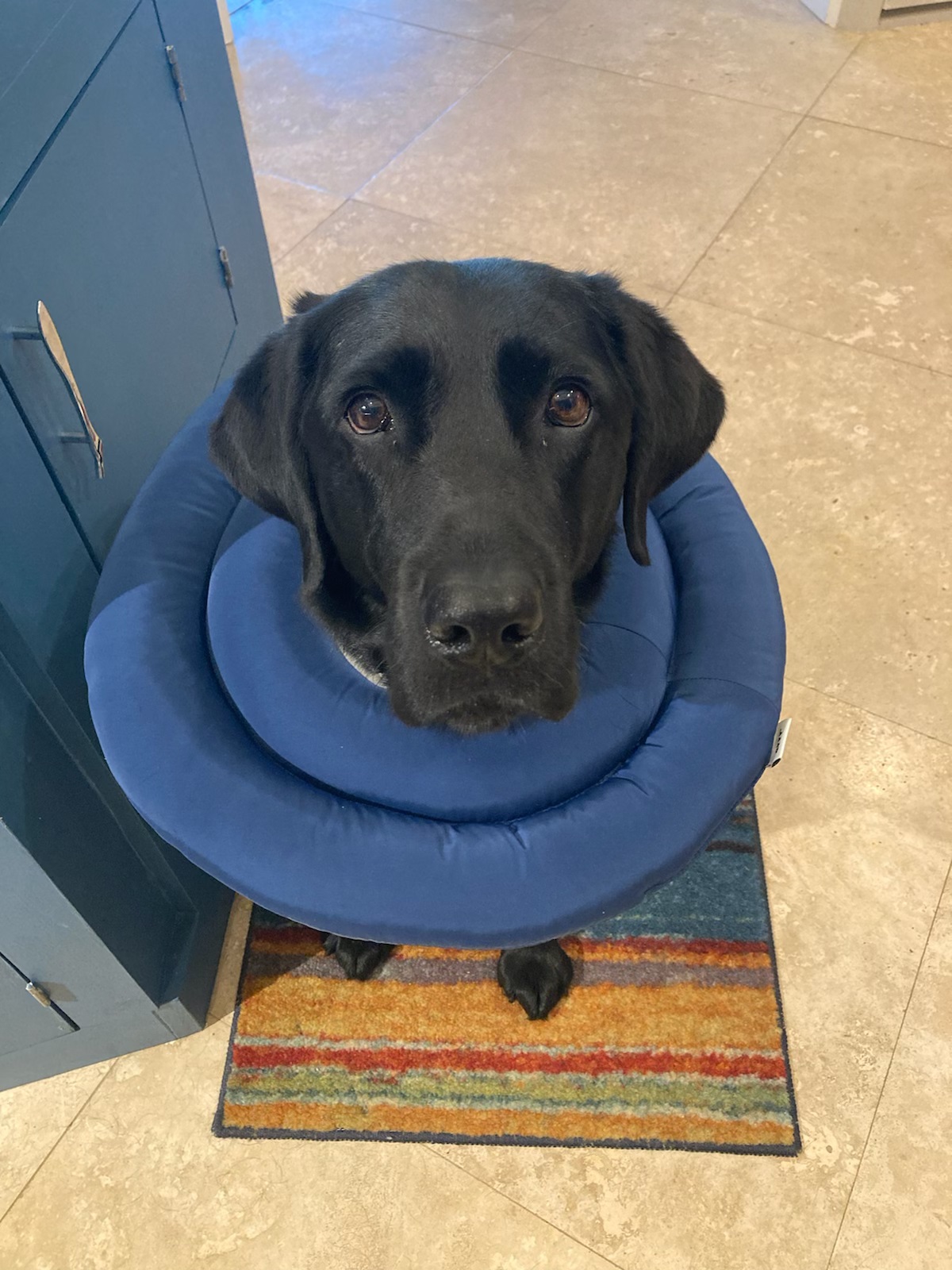
Koala upgraded for her recent surgery, sporting a doggy donut as an alternative to the suit:

Koala wears a soft neck ring
Navy is not really her color.

She doesn’t look too happy about all of this, but either option is better than a cone. She can see, for starters. She can eat and drink, unencumbered. She won’t walk into walls. She just can’t reach her stitches.

You can also find inflatable neck pillows, similar to the ones humans sometimes use on airplanes (remember those?). But Koala’s collar is softer.

Whatever you choose, avoid the large plastic cone. Some dogs, like Jana, are so uncomfortable that they refuse to move. Fortunately, even though I didn’t know about alternatives when Jana was a puppy, she was a sensible, stoic dog and left her stitches alone without a cone.

The oversize plastic cone is a drastic solution to a problem that is really pretty easy to solve. I’ve seen people use toddler-size onesies, socks for sore paws, and other homemade remedies too. Get one of the commercial versions or come up with your own, but forget that awful cone.

Cali agrees. The only kind of cone she wants is the ice-cream kind.

Golden retriever Cali eats an ice-cream cone.

On Wolves and Livestock

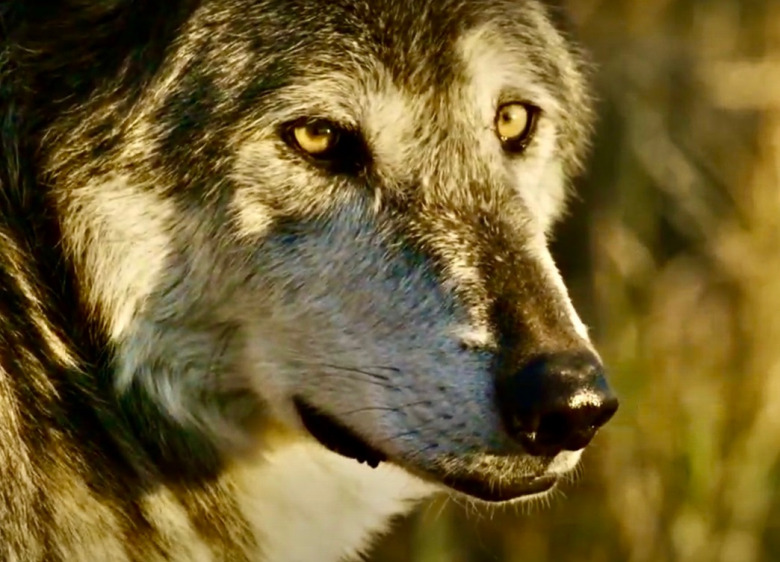
Grey wolf
From True Wild / Mountain Journal

I live in Montana, a state that has declared all-out war on its small and fragile wolf population. Many (most?) Montana ranchers loathe wolves. (And that is an understatement.) They say that wolves kill huge numbers of their livestock, causing significant financial damage.

So I was especially interested in an article a friend sent me recently about a humane way to deter predators from dining on livestock: The BarkLight collar.

The collars work on farms and ranches where livestock guard dogs are hard at work. When the dog barks, on smelling or seeing a predator, the collar lights up. This is a mild deterrent to the wolf or mountain lion (who, according to some research, kill far more livestock than wolves in Montana). But the really cool, hi-tech part is what happens next: The collar is networked with lights on the property. If the dog barks, the collar lights stay on and the lights around the property also activate. This not only deters the wolf/lion, it alerts the ranchers.

This is not a solution for all ranchers, of course. Many graze their livestock on  unfenced land … land that is often unfenced because it is public land. And there are no guard dogs, lights, or ranchers nearby to come to the rescue.

Or their ranches are so large that the cattle, bison, or sheep range over too large an area for this system to work.

I have to admit that I don’t have an enormous amount of sympathy for any losses suffered by many of the ranchers, especially the ones using public lands to enrich themselves.

And, I recently saw a wonderful documentary, True Wild, about, yes, wolves coexisting with free-ranging bison and elk on a huge (114,000 acres!) ranch. The movie explores the effects of the wolves on livestock and finds that losses are negligible.

Whatever the true story about wolves and Montana livestock, I am encouraged by the use of technology to find ways to protect wolves and encourage ranchers and farmers to use humane methods to deter predation.

Scarred for Life

Golden retriever Cali eats an ice-cream cone.
Not even an ice-cream cone can erase the traumatic memory of a late dinner.

After more than 20 years of dog parenting, it finally happened. I did the unthinkable.

Dinner was late. Very late.

Sometimes dinner is a little bit late if I am out; often, dinner is extremely early because I am going to be out.

Dinner is supposed to be served between 5 and 5:30. Cali thinks it should be served earlier (and then again later) but we agree to disagree. “A little late” or “acceptably late” — acceptable to the humans, that is — is anytime up until about 7.

One evening, not long ago, I was busy with some stuff. Cali was off doing her own thing. Then, around 8 or maybe (could it really have been?) close to 8:30, I wandered into the kitchen … and noticed that I had not given Cali her dinner. I have no excuse.

When I called her, she dragged her weak, starving self into the kitchen. I apologized profusely and gave her dinner. All seemed to be, if not well, on the mend.

But.

Since then — it has been several weeks — I notice that Cali is anxious if 5 pm passes and there is no food in the bowl. She keeps a closer eye on me. She starts reminding me to stop working earlier and earlier. Then she leads me to the kitchen.

I think she’s scarred for life.

The anti-jackpot

In dog training, there’s a concept we call a jackpot. If the dog does something really wonderful, we “jackpot” them with lots and lots of treats, effusive praise (if they like that sort of thing; Cali just rolls her eyes and asks for more cookies).

Similarly, dogs might jackpot themselves, inadvertently or very intentionally. For instance, the dog who trolls the countertops … and one day discovers that she can reach something wonderful: someone’s momentarily unguarded snack, half a loaf of banana bread, the roast chicken that’s cooling on the counter.

That dog has become a counter surfer for life.

The jackpot, whether delivered by a willing human or self-administered, is highly memorable. The event that immediately preceded it becomes, by association, highly memorable. Better yet, it could happen again.

That’s why Cali tries to walk me to the Big Dipper, a local ice cream stand with free dog cones, every day. Her pleasant experiences there could happen again.

That’s why dogs return to that spot on the dog beach where they found that really cool dead fish to roll in last time … or last year. It could happen again.

That’s why, ahem, feeding the dog a piece of pizza crust just once sets you up for a lifetime of sad puppy eyes, drool on your shoes, and a dog who races to fetch a $20 bill whenever the pizza deliverer appears. (That’s what I hear, anyhow …) It could happen again.

Cali’s traumatic experience with late dinner was her anti-jackpot. It was truly, unbearably horrible, the opposite of an exciting jackpot experience. But even more memorable. And it could happen again.


Streaming Now: Dogs on the Silver Screen

A tan dog and black and white puppy sit with Istanbul's skyline in the background
Movie poster for Stray

I recently watched not one but two new documentaries focused on dogs. Both are available to stream.

We Don’t Deserve Dogs

We Don’t Deserve Dogs highlights the human-dog relationship by profiling dog people around the world. It offers a fascinating glimpse at dogs and their humans in Uganda, Nepal, Peru … and several other countries where, it turns out, people fuss and fawn over and spoil their dogs as much as we Americans do.

I was ready to love this film until we got to a segment near the end which, to be fair, the Bark review linked above warns about. It addresses the dog meat trade in Vietnam.

From reading the Bark review, I was expecting it. But I was unprepared for how long and how graphic it was. This segment ruined the movie for me. Bark says it starts at about an hour and seven minutes in; if you watch, I recommend stopping the movie at that point.

Stray

Stray, the second documentary, offers a dog’s-eye view of life on the streets in Istanbul, a city known for its huge population of stray dogs and for laws protecting them. (There are even special vending machines to feed them!)

Following Zeytin, a beautiful mixed-breed, as she goes about her life is fascinating. There’s not really a story and no dialogue. Some overheard conversations provide the only human interaction in the film.

Zeytin has a pack of canine buddies whom she hangs out with, plays and fights with, and finds food with.

She also seems to have a community of humans she’s in regular contact with. Among this group are a group of young men, refugees from Syria, also living on the streets in Istanbul. The film is a subtle commentary on the experience and treatment of both the dogs and the humans.

The real story of the movie, though, emerged when I watched two short films bundled with Stray. Interviews featuring the filmmaker, Elizabeth Lo, these extras brought out Lo’s view of dogs and the cultural differences she saw while researching and making Stray.

It’s the difference between seeing dogs as needing to be owned and “protected” by humans and seeing dogs as independent beings, capable and deserving of the opportunity to live life on their own terms.


How Clean Are Dogs’ Paws?

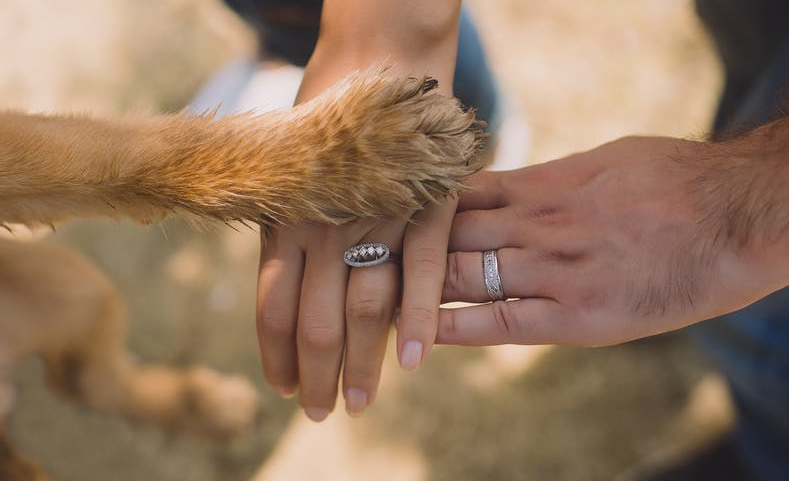
a dog paw and two human hands connect
My paws are clean. Are yours?

A common objection heard from people who dislike (or fear) dogs and don’t want to allow dogs to enter their space is that dogs are dirty.

In response to too-frequent denials of access to assistance dog teams, some researchers in The Netherlands decided to check into this contention. “The main argument for denial of access is that dogs compromise hygiene with their presence, which could cause a health hazard. Meanwhile, people are allowed to walk into and out of public places freely,” they wrote.

They recruited volunteers — 25 assistance dog teams and 25 pet dog / human pairs. The volunteer dogs and humans took 15-30 minute walks together, then allowed the researchers to collect samples from their paws and the soles of their shoes (respectively). The researchers tested the samples for Enterobacteriaceae (a common cause of hospital infections), Clostridium difficile, and other bacteria.

And guess what?

The dogs’ feet showed significantly less bacterial contamination than the people’s shoes. “The general hygiene of dog paws is better than that of shoe soles,” the report concludes. They speculate that dogs’ habit of grooming themselves, including their feet, could be the reason — even people who remove their shoes before going into their own homes rarely clean the soles of their shoes. Dog saliva contains high levels of “antimicrobial substances,” the study says.

In addition, some people routinely clean their dogs’ paws upon returning home. I do that if we’ve been walking where people have used snow-melt chemicals or lawn “greening” chemicals or if Cali is excessively wet and muddy.

To be fair, dirty paws are not the only reason that people think that dogs will bring dirt into their houses or businesses. I haven’t found a study that compares the amount of biological ick (yup, that’s the scientific term) humans shed vs. dogs but … I suspect that goldens and labs would not come out on top. Then there are the drooly breeds … Let’s quit while we’re ahead.

Dogs Are in Sync with Their People

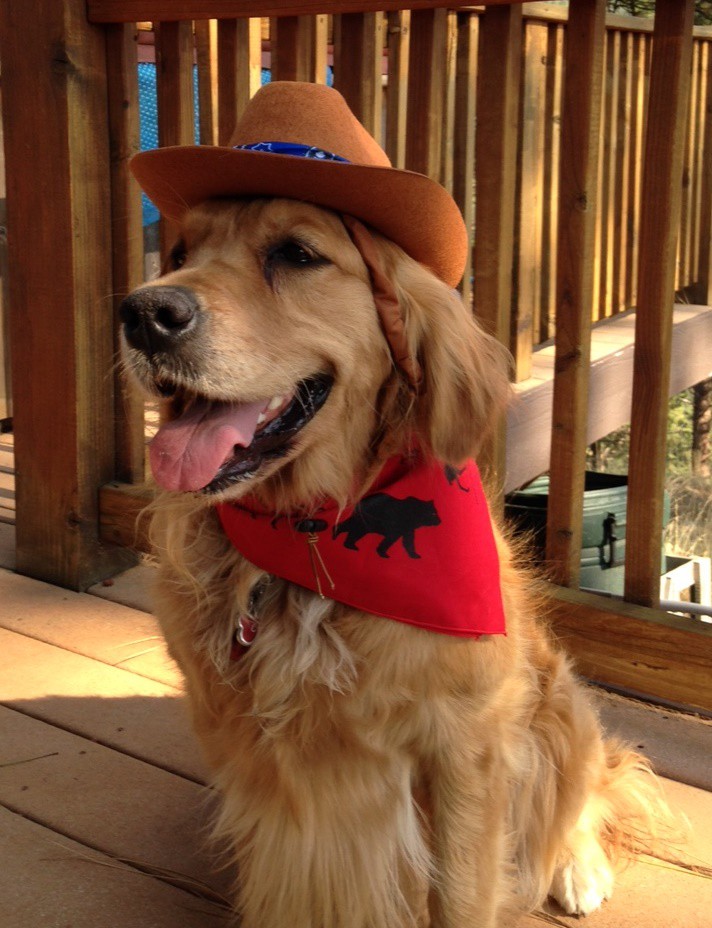
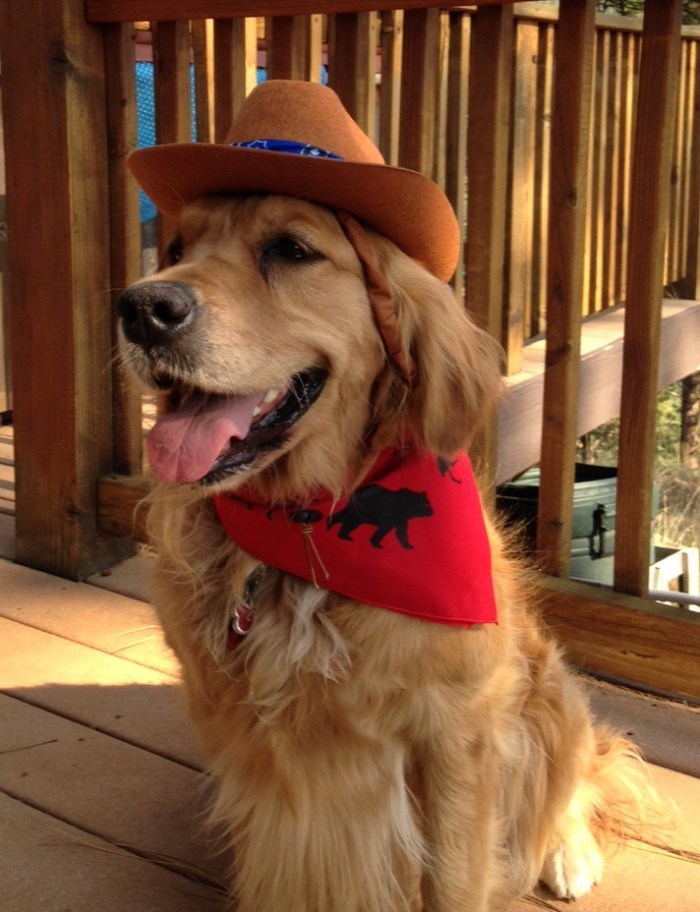
Cali, a golden retriever, wears a cowboy hat, red bandana, and a huge smile

Stay calm. I’ve got this.

Way back when I first started learning about dogs and dog training, I learned something cool: Dogs synchronize with their people. This synchronization is more pronounced in dog-human pairs with a strong bond; the New York Times recently described dogs syncing with their human families’ children.

This is a great illustration of the strong connections that dogs develop with all members of their human family — not only the adult who feeds or walks them or, to dust off an old and thoroughly debunked concept, the “alpha” in the family.

The dogs might synchronize physically, facing the way we do or adapting their gait and speed to sync with ours or sitting when we do. The internet is full of adorable videos of dogs syncing with or mimicking their humans’ yoga poses.

They also sync with our emotions. The closer the relationship, the more the dog is likely to synchronize with the person (or the person with the dog!).

A teaching tool

When I was learning to teach dogs new verbal cues and associate them with behaviors, I learned to use this. For instance, we’d say “down” is a deep, calm voice. And “let’s go” in an energetic and upbeat way. This was meant to encourage the dog to synchronize with the emotion and energy level we were conveying to strengthen the association of the action with the word.

This feels a little manipulative (because it is), but it works for teaching. It’s also a good thing to keep in mind when you’re trying to understand — or change — your dog’s behavior.

Cali can be unpredictable when we encounter other dogs on our walks. She’s nearly always happy to see and even meet dogs who are smaller than she is. She’s usually eager to say hello to other goldens, and most Labs. She’s nervous about other dogs who are her size or larger, and there are some breeds (yes, Cal is a doggy racist …) that she dislikes on sight, chief among them any sort of doodle.

So, naturally, when I see someone walking toward us with a friendly, enormous doodle straining to say hello, I feel anxious.

While my reaction came from multiple experiences with Cali’s negative reactions, it is now feeding or even causing her to become anxious — and react to the dog with an even more extreme amount of grumbling and even growling. Cali!

That’s because she is synchronizing with my negative emotions.

On the other hand, if I notice the dreaded doodle when we’re far enough apart, and I stay calm, soothing Cali with “you’re fine, let’s just keep going,” as we pass, leaving plenty of space between the dogs, she might give them a look or mutter under her breath, but she won’t pull or growl.

Cali is a natural

Cali uses this principle to help out her best friend, Maisy. Maisy is a lot more anxious about other dogs than Cali — any and all other dogs. And some people too.

But Cali loves meeting new people. She’s convinced Maisy to say hello to families, kids, and even unfamiliar men! Maisy’s reaction to other dogs is a lot calmer when she’s with Cali too — as long as Cali (and I) stay calm — and make it possible for her to stay a comfortable distance from the other dogs.

The trick, of course, is seeing the other people and dogs first. If we’re surprised by someone coming around a corner, the dogs’ reaction is much faster than mine and things can quickly go south. Even then though, the solution lies in projecting calm as we walk away — not always easy to do.

I’m not suggesting that staying calm will magically cure your anxious dog, but it’s a nice trick to have up your sleeve. Deepening our ability to stay calm in unpredictable circumstances is beneficial to us as well as to our dogs! The best part is that the synchronization thing is circular. Your dog syncs with you more as your bond deepens. And the more in sync you are, the closer your relationship will become.

News from the Golden Retriever Lifetime Study

Golden retriever Cali wears her yellow Morris Foundation study bandana, with drawings of golden retrievers all over itCali, along with her brothers Sailor and Pirate, is part of an elite group of golden retrievers: They are members of the Golden Retriever Lifetime Study, a project of the Morris Animal Foundation.

The study is in its ninth year and has shared some of what researchers have learned.

Of 3,044 goldens, aged six months to two years, who enrolled in the study between August 2012 and March 2015, 78% are still in the study and fully compliant. Goldens are much better behaved than humans in long-term studies!

In addition, 99 dogs have dropped out of the study (they didn’t say why) and, sadly, 240 have died. Of those, 60% have died of cancer, mostly hemangiosarcoma and lymphoma.

Studying cancer was the first and is the primary objective of the study, which looks at the dogs’ genetics, exposure and “lifestyle,” — everything from their diet to the amount and types of exercise they engage in.

Researchers, with “21,100 dog years of data” (I don’t know what that means but it sounds like a lot) are also looking at:

  • Possible links between spay/neuter age and obesity
  • Developing an early blood test for lymphoma in dogs
  • Diet and microbiome health
  • Impact of inbreeding on litter size and adult dog size

… and so much more.

Morris Animal Foundation is enrolling “golden oldies,” golden retrievers aged 12 or older who have never had cancer for a companion study. They will compare genetics of these healthy dogs with the genetics of study dogs who had cancer, in hopes of identifying potential genetic risk factors. If you are a human lucky enough to be owned by an elderly, cancer-free golden, please consider participating.

Dog Photos Are Good For You. Really.

Golden retriever Cali rests her head on my knee to tell my it is time to stop working

It’s official. Science has demonstrated that looking at pictures of dogs increases your sense of well-being.

It’s funny how often science simply confirms what we dog lovers already know, have always known, and use daily to our benefit. Think about it — if looking at a picture of a dog makes you feel good, how much better do you feel when you look at, or cuddle your actual dog. Bonus points if you have multiple dogs.

The study may have stacked the deck a wee bit, though. Participants were put into one of three groups. They all answered questions about how they were feeling, then they looked at different online content. One lucky group looked at pictures of dogs. Another looked at popular funny posts. The unluckiest group spent the time reading tweets in (then-president) Trump’s official feed.

They then answered the questions again. All three groups had significant changes in their feelings of well-being. The Trump tweet group felt worse — even the people in the group who were Trump supporters felt worse. The funny post people felt a little better. But the lucky dog people — well, you know what I am going to say.

Enough chatter. Just look at some dog pictures. Here are a few to get you started. You’re welcome.

Cali’s Pronouns Are She, Her, Hers

Cali holds a toy that looks like a "banned" sign
Don’t call me “it.”

It’s long past time to consider our dogs, and of course all other sentient creatures, as living beings. Not as “it”s.

A letter signed by dozens of animal rights and animal welfare luminaries was recently the subject of a radio op-ed by NPR’s Scott Simon. The letter asks the AP, the Associated Press, to change its style and use the correct gendered pronouns when referring to animals — and the nonbinary “they” in other instances. The current AP style for animals is “Do not apply a personal pronoun to an animal unless its sex has been established or the animal has a name.”

The letter states, “This is too limiting to writers as well as fellow nonhuman animals, most of whom are discussed abstractly and thus their sex is not established.We pay respect to humans whose sex is indeterminate or gender fluid by using he/she or the non-binary term they. That same courtesy should be extended to all animals, as they are gendered beings.”

As a writer and editor, I work for several organizations that use AP style. I work with it every day. I also read a lot of news media from outlets that use AP style.

Simon’s op-ed supports this change and calls attention to how much of life we share. Indeed. If the role of pets in getting us through the pandemic doesn’t show that, I don’t know what would.

I can think of numerous compelling arguments for recognizing nonhuman animals’ dignity and worth with pronouns that don’t objectify them. Starting with their obvious vitality, consciousness, intelligence, empathy … and other traits too numerous to mention that set dogs, cats, birds, and thousands of other species apart from toasters, shoes, or cardboard boxes. They are not “things.” They are beings.

It’s also more accurate. Accurately labeling living beings is low-hanging fruit in media organizations’ efforts to regain trust and build up their credibility.

Treating nonhumans as things and describing them that way makes it easier to justify mistreatment of them. We don’t have to acknowledge their suffering if they are seen as equivalent to inanimate objects.

Organizations like the Animal Legal Defense Fund, whose head signed the letter, have spent years fighting for legal rights for nonhuman animals, for giving legal weight to treating them differently from other property owned and used by humans. Cleaning up our language is an obvious place to start.

Language is powerful. Propagandists, politicians, and marketers have long known that. And language evolves. Simon describes how our use of pronouns has changed, from wide use of a supposedly generic “he” to more inclusive pronouns that fully recognize humans all along the gender spectrum. Marketers and advertisers increasingly (and gratingly) use “who” when talking about corporations. Using “who” rather than “that” for a living, breathing sentient being surely makes more sense than that!

Cali would like everyone to know that her pronouns are she, her, hers. She is not an it or a that. She’s also a huge fan of Scott Simon and NPR. And she really, really hopes that the dogs hold on to their title by winning pet wars on Montana Public Radio’s spring pledge drive next week.