Listen to Your Dog

8 month old golden retriever Orly smiles for the cameraA Washington Post columnist, having failed a a dog-training class with a golden-doodle puppy (and with several previous dogs) notes that it’s actually the human’s failure, not the dog’s.

This should be obvious, but I know that it isn’t.

“Training” class is really just how a human and a dog learn some new ways to communicate — and, to be really honest, it’s mostly about the human learning to understand the very clear and consistent communication the dog is and has always been using. And about the human learning to (try to) be more consistent and clear in how they communicate things to the dog.

As my first dog training instructor loves to say, when there’s a training failure, it’s always the human; never the dog.

As a Washington Post journalist, this writer did not stop with their own epiphany; no, they interviewed several top-notch dog trainers to find out what makes for a successful trainer.

The upshot is what the Thinking Dogs have used this blog to tell you over several years — pay attention to your dog’s communication, collaborate with your dog, and have a relationship.

Old-style obedience training, still sadly common, instead demands instant obedience to random (as far as the dog is concerned) and arbitrary rules and commands. No relationship there; just human ego.

The other point the writer raises is about “pet-parenting style.” Describing three styles, the writer encourages developing an “authoritative” style. Authoritarian is too rigid; permissive parents don’t set clear expectations. Authoritative parents are clear about what they expect, warm and loving, firm but adaptable.

Unsurprisingly, dogs (and children and students and employees and …) do well in this authoritative environment; they have strong connections with their people, are persistent problem-solvers, and are “more resistant to stress and recover from stress more quickly.”

Who doesn’t want that for their dog?

Of course, what the writer doesn’t share is the magic formula to enable all of us regular humans to become those authoritative, clear-communicating, warm, adaptable, and consistentdream dog moms and dads.

I’m doing the best I can, Orly!
 

Fancy Vets’ Offerings Go Far Beyond Health Care

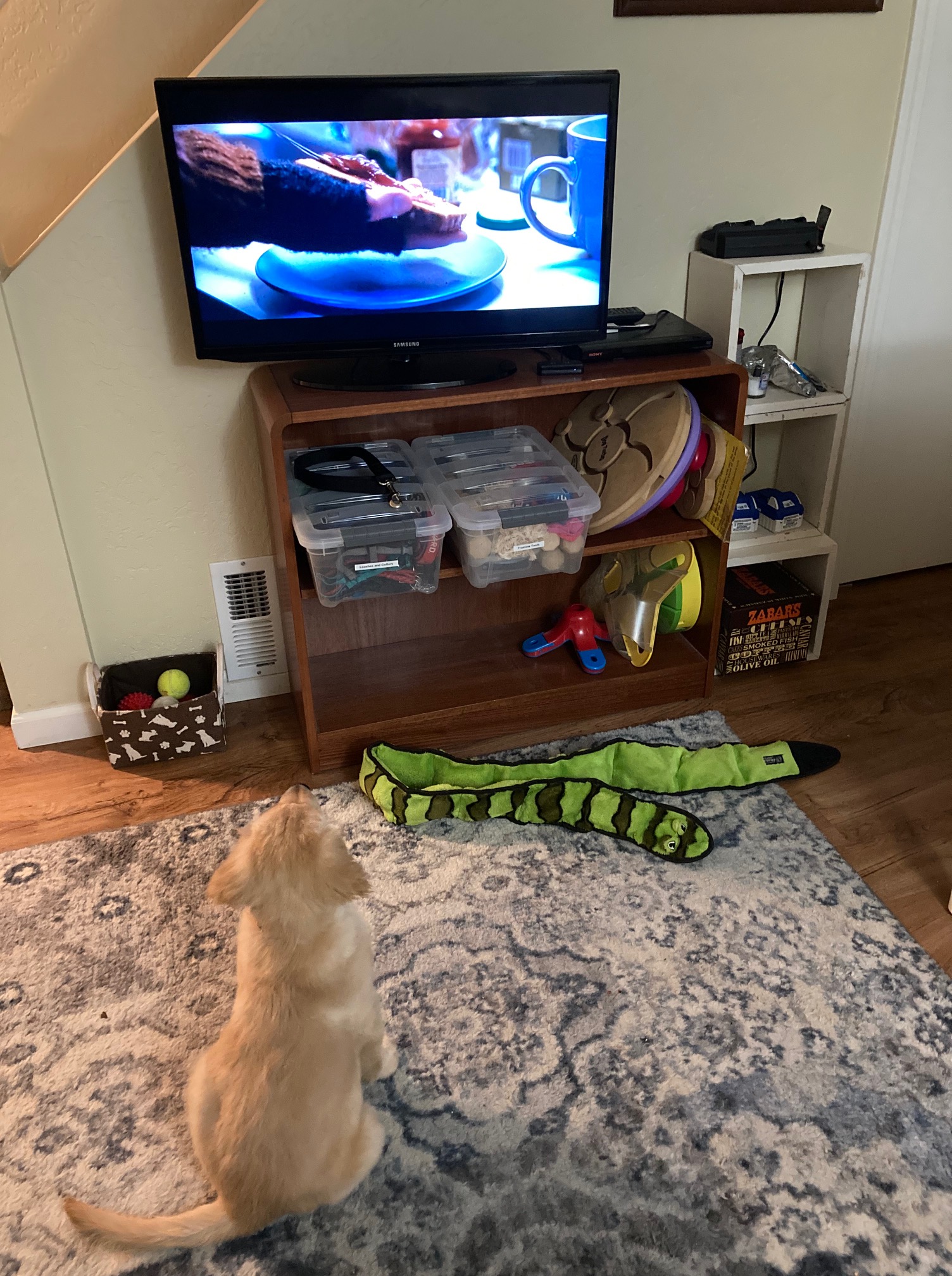
Golden retriever puppy Orly stares attentively at the TV.
Does Orly need her own TV?

For pet owners, the healthcare options seem to be feast or famine, determined by where you live.

Missoula offers a large choice of vet clinics, including two emergency vets, and I have been fortunate to have excellent vet care, especially as I hear tales of long waits for even emergency services in other cities. But our clinics are still pretty basic. Modern imaging and other technology is available, yes, as is specialty care. But what I’ve seen, heard about, and now read about in other cities looks like fancier clinic surroundings than even Missoula’s human hospitals.

The Washington Post article linked above describes what are essentially luxury spas and resorts for pets which also offer state-of-the-art medical care.

Some of the changes described, such as the movement toward Fear Free veterinary care, are wonderful news for pets. The Fear Free initiative is a pet- (mainly dog- and cat-) focused movement to raise awareness of the ways that going to the vet or to training centers can be frightening or anxiety-inducing — and offering strategies and training for vet-clinic and training-center workers in ways to eliminate or alleviate stressors.

Other expansion areas fill needed gaps: Underwater treadmills and other rehab equipment is a boon to anyone whose dog has had a sports injury or other condition requiring, essentially, physical and occupational therapy. Cali’s therapeutic swimming was enormously helpful with her mobility and balance, for example.

The addition of five-star pet boarding resorts to many vet hospitals may well be a way to keep the dollars flowing in, and some of the offerings definitely seem more geared toward enticing the humans than pleasing the guests —flat-screen TVs in the doggy ‘bedrooms, for example — and some are simply over the top. Though I doubt that Orly would turn down a peanut-butter sundae at bedtime, I don’t think she needs that from her dog sitters.

If or when private doggy bedrooms with TVs get to Missoula, though, I am likely to give them a pass. For me, the bottom line is my dog’s comfort, and I prefer to have her stay home with a trustworthy sitter or spend time with someone she knows and loves. Either of those familiar options will be less stressful than even the most luxurious pet spa and resort.

Very Different Energy

15-month-old golden puppy Orly curls up on a large bed, with her head on the pillow
Orly loves to curl up on my bed

Life with (only) Orly has settled into a new routine. Her energy is very different from Cali’s — or Cali-and-Orly’s together.

Cali was the world’s best alarm clock. She was extremely accurate, for one thing. And her way of greeting the morning was to grab a toy and do a happy morning dance.

Not Orly. Orly sleeps on my bed (whether I want her to or not … she’ll just wait until I am asleep and jump on up). When I decide it’s time to get up, I have to nudge her awake and encourage her to get off the bed to go outside. She then frequently greets the morning, and the neighbors, by barking. I promptly bring her back inside. Where she often goes back to bed.

The rest of our morning routine isn’t so different from life with Cali: Exercises, breakfast/coffee, walk.

The walks are different, though. Cali had several spots where we all stopped each day so she could sniff and catch up on the news. Orly is not a newshound, I guess. She hardly ever stops to sniff or even do her own business. And her pace is a lot faster than Cali’s. Like Cali though, Orly has definite opinions on where we should walk.

She’s less inclined to hang out in my office while I’m working, unless I am in a meeting. She seems to really like Zoom meetings, especially if she can find one of her two favorite toys (the ones with the loudest squeakers).

Some days, she heads out mid-morning for a hike with her dog friends; other days, we take a walk together at lunchtime. Most workdays are rounded out with treat toys, snuffle mat, chewing on an antler, or sighing noisily to indicate how boring she finds me. Or all of the above.

She often paces and nudges me to let her out, only to want to come back in a few minutes later. Or she’ll go out and start barking at any movement — a car in the alley, neighbors doing what neighbors do, a squirrel taunting her. The restlessness and pent-up energy are typical of any young golden retriever, but the barking is a relatively new, and very unwelcome, development.

Two golden retrievers rest, their heads nestled against one another.Weekends we try to get out for a longer walk, often picking up Spirit so the girls can play as they hike. The girls are always delighted to see one another.

Orly is definitely more social (with dogs) than Cali ever was. Cali had her few close friends, but as she aged, she pretty much would play actively only with Orly.

Orly wants, and seems to need, frequent high-energy play. With the dogs in her hiking group, with Spirit, with neighbors’ dogs. (Fortunately, we are surrounded by puppies and adolescent dogs of all sizes and types.) I’m trying to get her together with her buddies often, but she’s at that age where there are simply never enough playmates and activities to truly tire her out.

Like Cali, Orly loves human visitors, though she seems to have forgotten Cali’s trick of always greeting people with a toy in her mouth. Rather than the squeal and dance Cali greeted loved humans with, Orly is more likely to try to give visitors a little kiss on the cheek … which means she sometimes forgets to keep all four paws on the floor. She might instead gently take the visitor’s hand in her mouth.

Despite her boundless energy, she does have an ‘off’ switch, and she’s able to keep herself occupied in between adventures. She rarely indulges in destructive behavior, though she’s destroyed a few toys, and she is a menace to anything growing in the back yard — a trait she shares with her littermates. She seems (thankfully) to lack her siblings’ genetic tp addiction, though.

Having a young, energetic dog is getting me out for more frequent, longer, and faster-paced walks, all very beneficial. I’m thinking ahead to spring and summer, and wondering whether agility would appeal to Orly. I bet she’d excel at nosework, too. Obedience … not so much.

The Dogs on the Bus

Golden retriever Orly runs through a snowy meadow
Orly loves to run and play in the snow!

If you haven’t seen this story yet, you’re definitely missing out.

I thought Orly’s dog hiker was doing well to manage her minivan filled with dogs of all sizes and shapes (though some days a disproportionate number seem to be golden-retriever-sized and -shaped…). But this Alaska dog hiker is impressive. (Check out the TikTok video.)

The dogs have assigned seats! And wear seatbelts!!

I love the ones who are all dressed in their coats, waiting for the bus …

Dog hiking is a much bigger Thing than I ever guessed.

Orly goes two or three times a week, depending on everyone’s schedules. I stay home and work to pay for her expensive hobby.

She gets picked up, greets her friends, and settles into the van. After all the dogs are on board, the pack goes for a nice long hike out in the woods. In the spring and fall, there was often the opportunity for a mud bath (and Orly is not one to pass up such a stellar opportunity). Winter seems a little cleaner.

Many, many treats are involved.

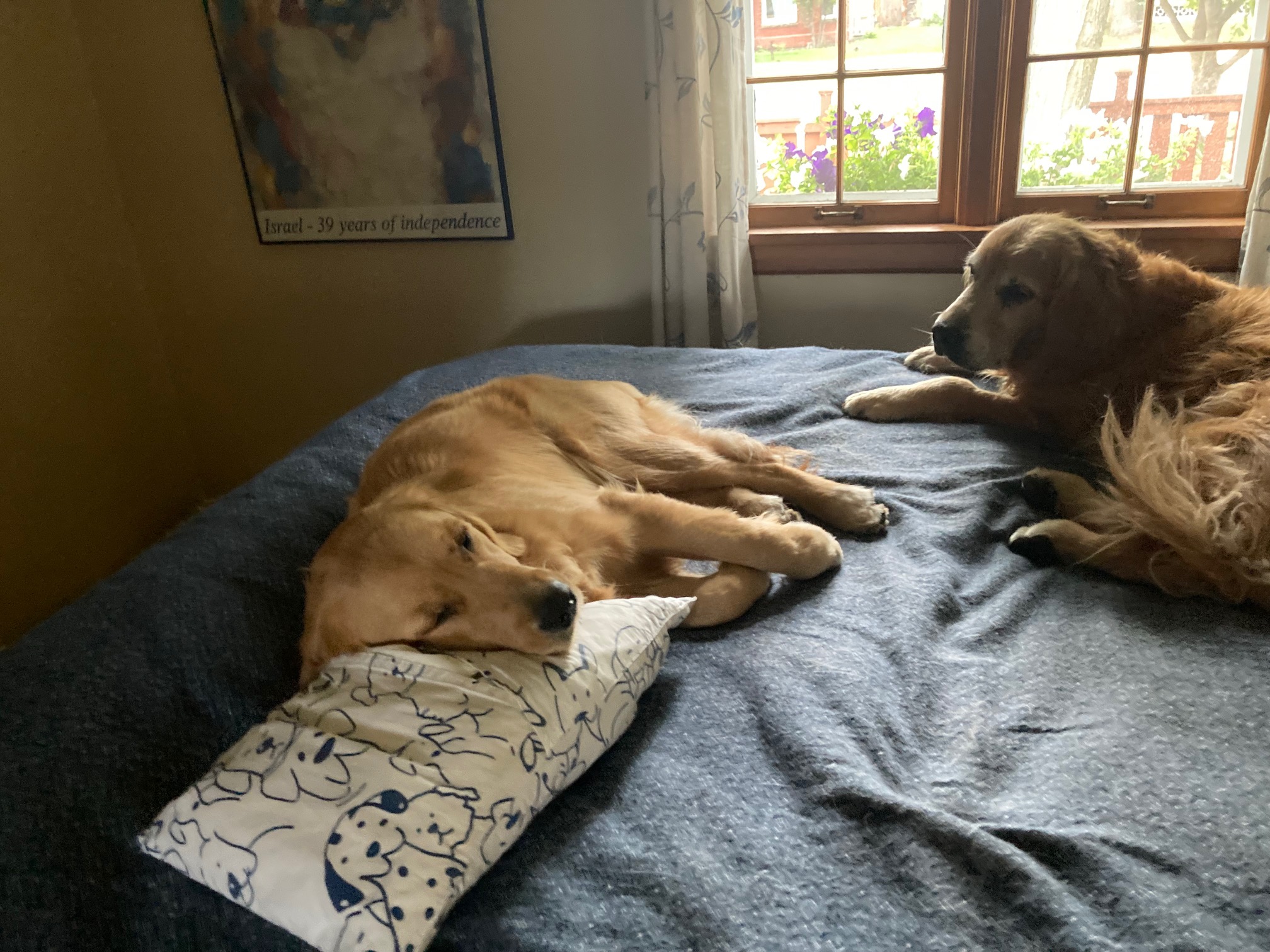
Golden retriever Orly rests her head on a small pillow whose pillowcase has drawings of cartoon dogsThe dogs hike off leash, with frequent check-ins (snack breaks). They race around chasing each other through the woods. It’s a pretty good life for a dog.

She shows up back home a few hours later and often heads to the bedroom for a nap. (Her newest trick? She likes to nap on my pillow.)

Orly’s pack includes some of the other dogs of the neighborhood, so their hiking friendships extend to occasional play dates.

Very much unlike Jana or Cali, Orly is a dog who really loves and needs to play with other dogs. Often. And very much like both of them at the same age, she has boundless energy. I alone cannot offer her enough exercise and stimulation to tire her out. I am not sure that any human can do that for an adolescent golden retriever. Hiking gives her what she needs. Well, some of what she needs. Two hikes per day, seven days per week might come close to tiring her out … maybe.


The Sad Life of an Only Dog

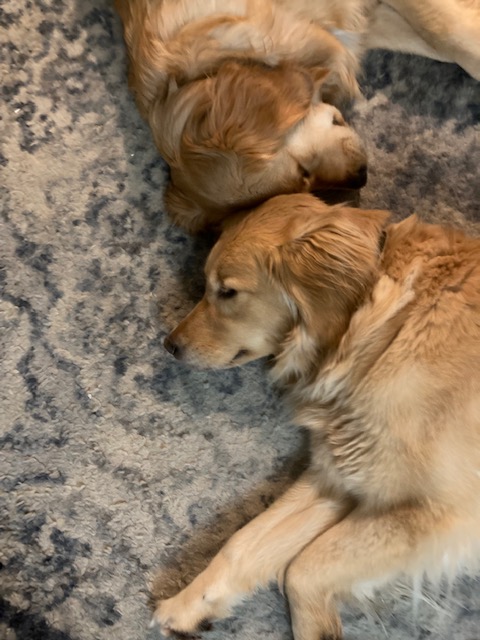
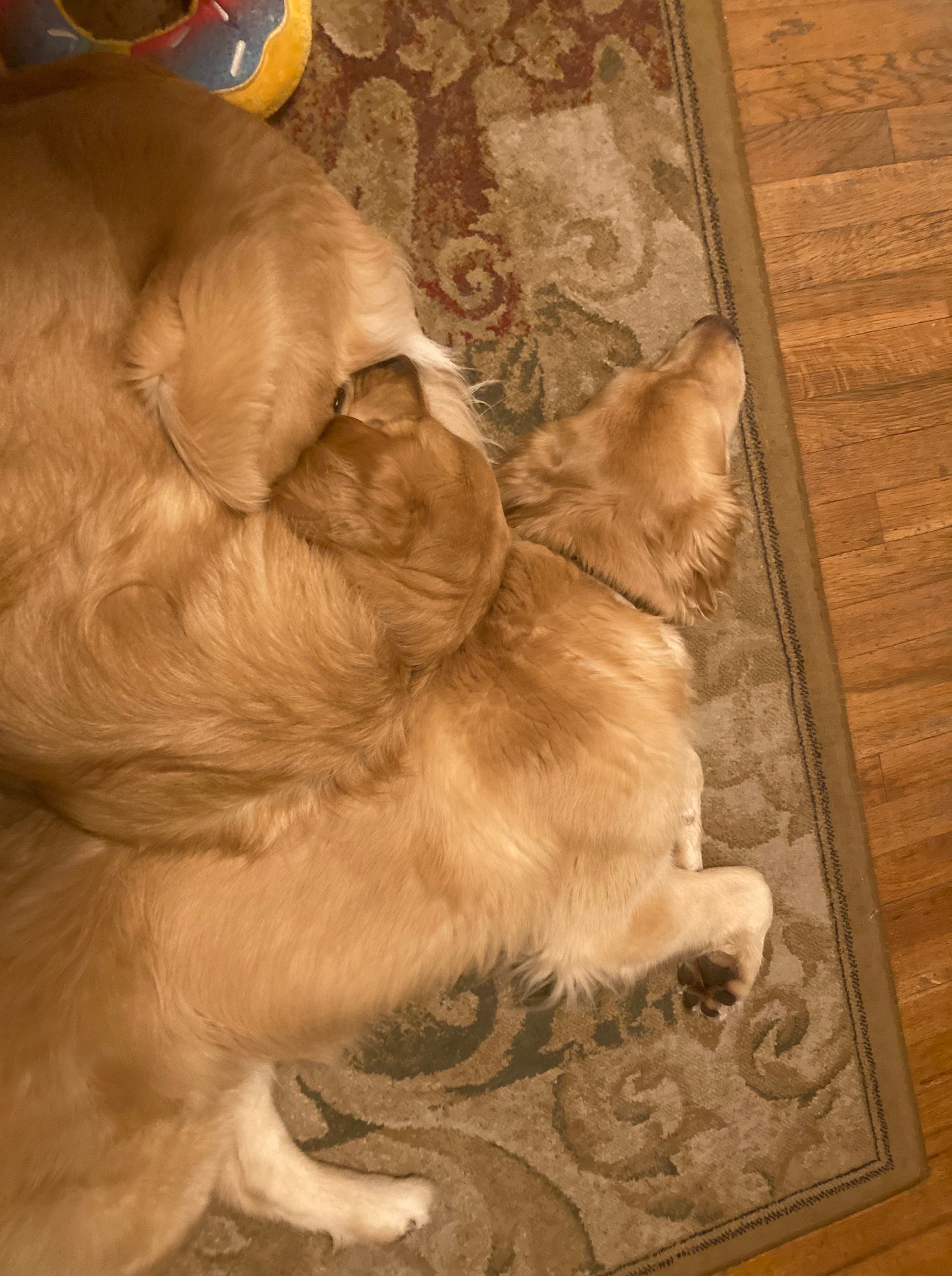
Orly and Spirit, similar-looking golden retrievers, nap together
Who’s who?

Early January is always a little sad. Holidays, and time off from work, are over; Missoula is gray and cold.

This year, January is sadder than ever. After a wonderful visit, Deni and Koala returned to Florida on Jan. 3. Spirit went home a few days later. Orly does not know what to do with a silent, almost-empty house. We’ve finally had to face the enormous hole that losing Cali has left. And Orly has never been the only dog.

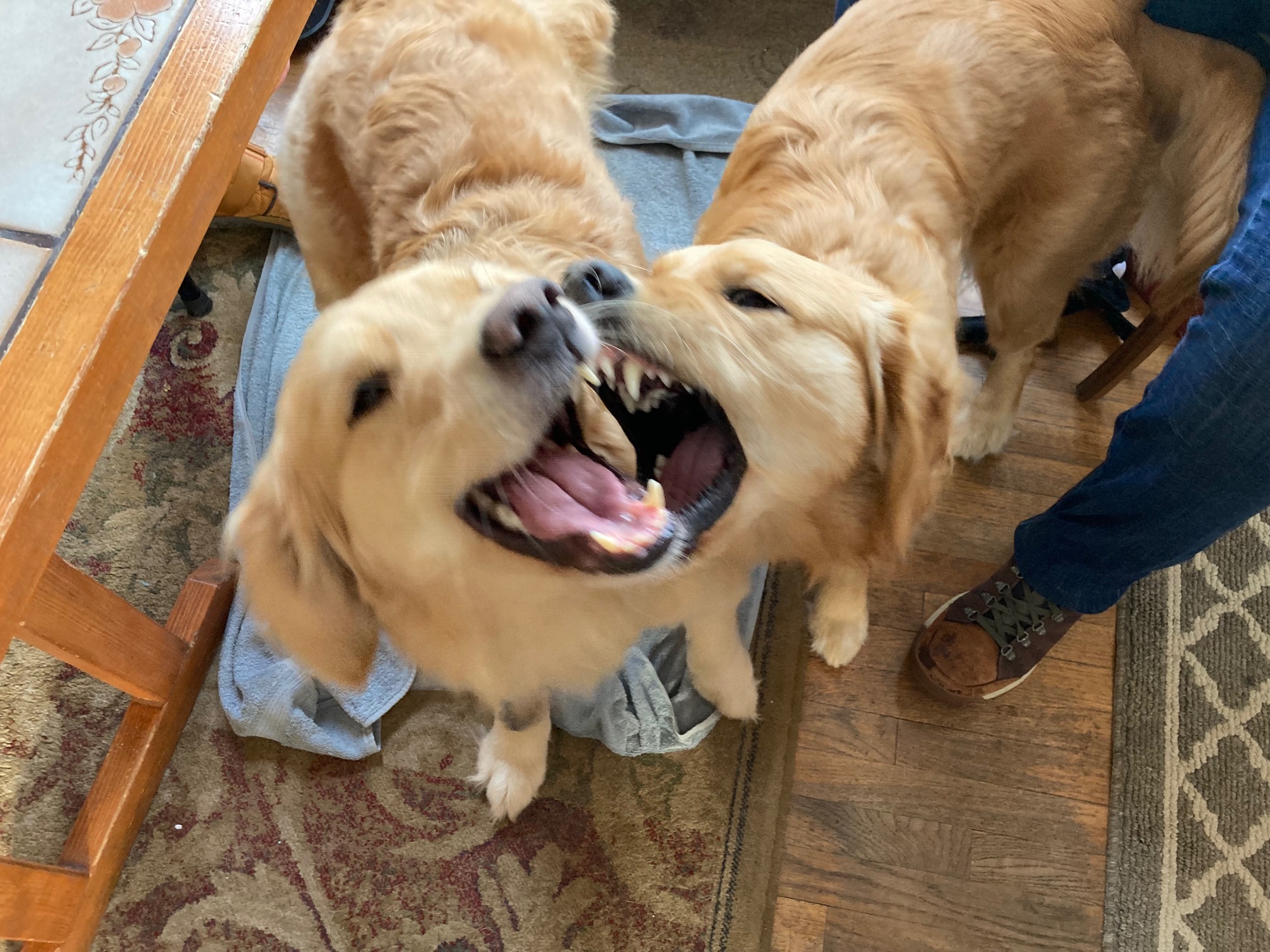
Golden retriever Orly grabs her cousin Spirit's neck in play.Orly loved having a live-in playmate, one with a similar(ly obnoxious and physical) play style, all paws and mouths and teeth and leaps and jumps. After an energetic bout of wrestling and racing each other around the yard, Orly and Spirit would collapse into a fuzzy golden pile.

Since discovering that they are cousins, I’ve taken to calling them “identical cousins.” It was often hard to tell where one ended and the other began or even who was who.

But now Orly is alone. And mopey and sad, except when she’s outside. Then she’s alert and barky.

She is snuggly and overly affectionate sometimes. I wonder whether she’s worried that I am going to make her disappear as I have caused Cali, Koala, and Spirit to vanish, and she’s trying to ensure that she doesn’t annoy me … The primary reason I do not believe that she’s exhibiting Stockholm Syndrome, though, is that the (brief) cooperative, attentive, sweet, or affectionate periods soon give way to her more common defiant, moody teenager behavior.

She’s mostly just bored. I am boring. Spirit was fun. Koala, too. And with Cali, at least Orly had someone to torment. Now? Boring old human staring at a boring old computer. Humph.

She is going hiking a couple of days a week with a group of her dog pals, and I need to get busy arranging play dates for her on other days. She’ll get me out on lots of walks, too. And of course we have a large selection of treat toys, interactive puzzles, and other things to play with.

Even so, Orly’s life has changed significantly. And she does not see the changes as an improvement.