Lulu Gets a Golden Handshake

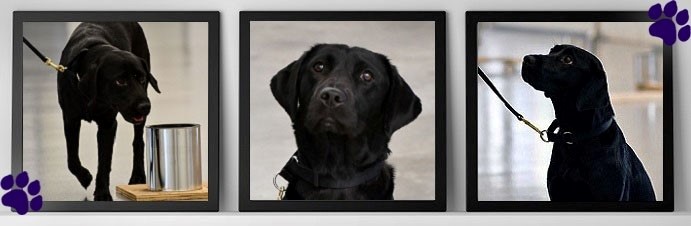
three photos of Lulu, a young black Labrador who chose not to become an explosives detection dog.
Photos from the CIA Pupdate: A Pup Leaves the Class.

Have you ever started a job and realized, during new hire training, that you’d made a terrible mistake? Who hasn’t decided that a job just isn’t the way they want to spend the majority of their waking hours.

Well, Lulu, a year-and-a-half-old Labrador, gave up on what many dogs might consider a highly desirable career; she quit her gig as an explosives detection dog during training. Lulu was recruited from a service dog school at a young age, apparently having decided that a life of service was also not her calling. (Often, service dog puppies with exceptionally high energy or drive are released to a career like explosives detection or search and rescue, if their energy level is not suitable for work as mobility assistance dogs.)

Lulu, according to tweets from the CIA K9 training program and articles in the New York Times and Washington Post, gave up the opportunity to work 60-hour weeks with handlers from the Fairfax County (Virginia) police department. Her new life entails playing with her former handler’s children and protecting the family home from squirrels and rabbits.

Not all dogs are cut out to be working dogs. Service dog and guide dog schools that breed are doing well if more than half the carefully bred and socialized puppies actually end up working as service dogs. Some are released for health reasons, but a large number choose, as Lulu did, to just be dogs. I’ve trained lots of Lab puppies: If food and play weren’t enough of a reward to get Lulu to love the training, she really wasn’t cut out for the work. It’s to the CIA program’s credit that they let Lulu go.

“For our K9 trainers, it’s imperative that the dogs enjoy the job they’re doing,” states the “Pupdate” announcing Lulu’s retirement.

That’s a far cry (and very welcome evolution) from the “bad old days” of training, where lackluster performance was punished. Mistakes were also punished. Insufficiently speedy correct responses might also have been punished. Dogs were compelled to do the job. I am happy that more and more organizations, from service and guide dog schools to military and police dog trainers, are learning that punishment is the wrong approach.

Think about it. If compelled, the dog might do the work, but probably not put her heart into it. If your child is lost in the woods, or your city is hosting a large public event, or your city’s buses are plagued by the threat of terrorist bombings, do you want a dog who’s just doing what he has to to avoid punishment to be the search or sniffer dog on duty? Or do you want an eager dog who loves the work, buys into the goal, and puts heart and soul into the search?

It’s also cool to note that the trainer who wrote the Pupdate talked about working through a slump, figuring out what’s bothering the dog, and motivating the pups with toys and food. That sounds like they treat the dogs as individuals with preferences and feelings, not like robots who are just expected to do as they’re told. This is how it should be; dogs are individuals and should be given opportunities to make choices and express preferences.

It also raises an important point that dog trainers and owners do well to remember: The trainee, in this case, Lulu, determines what is motivating. And what is not. Most Labs love food and will do anything for a food reward. Many dogs are delighted to earn a play reward. A dog who doesn’t want to work for these rewards either needs a creative trainer to find what motivates that dog — or she needs a different goal.

Lulu made her preference clear, and I’m pleased that she got her wish. I’m betting that the handler’s children are equally delighted with her choice.
Buyer Beware!

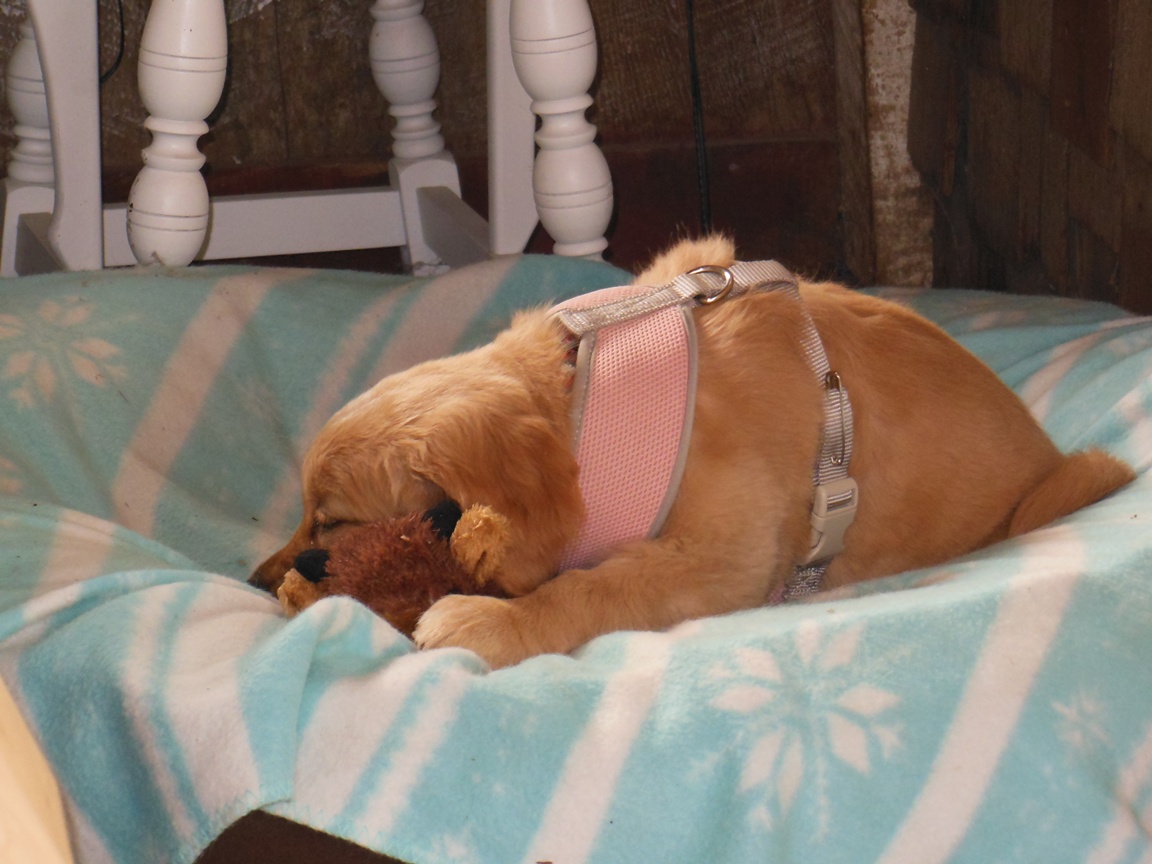
Cali came from the best breeder I know! Do your research before taking home an adorable puppy.

I shouldn’t even need to say this … but don’t ever buy a puppy online.

First of all, you’re exposing yourself to scams. Unfortunately, internet fraud is very, very common, and people are not above making a buck by offering nonexistent puppies for sale to gullible people, lured in with adorable puppy photos. Read more in this Washington Post article, “How much is that doggy on the website.”

A law passed a few years ago attempted to crack down on internet puppy sales by requiring that seller have a physical location where buyers could see and pick up the puppies, but that’s hard to enforce.

A second problem with puppy purchases is, of course, the likelihood of purchasing a puppy mill puppy. This is terrible for so many reasons, among them: It feeds a business model that is based on mistreating dogs; the breeding dogs are often not only mistreated, they are unhealthy and could pass genetic, temperamental, and other flaws on to their puppies; and the puppies’ first weeks are spent in unhealthy, frightening, and damaging conditions. This makes everything from house training to manners and socialization far more challenging and sets up new puppy owners for a lot of unnecessary challenges and, often, failure.

One way to avoid puppy mill puppies is not purchasing online. Another is not purchasing at pet stores. If the risk of puppy mill puppies isn’t enough to convince you, consider that you and your family could also get sick. Another Washington Post article (shout out here to the best newspaper in America!) has more: “People are getting sick from a bacterial disease — and pet-store puppies might be to blame.”

Where should you get a puppy?

If you are particular about getting a specific breed, look for a reputable breeder. Good signs include:

  • Very thorough interview before breeder will even consider selling you a puppy
  • Breeder will not ship puppy to you; you must pick up the puppy in person
  • Breeder does not breed huge numbers of litters
  • Breeder insists on taking puppy back if you change your mind
  • Breeder knows where “her” dogs are; all of them, even older puppies whelped years ago
  • Breeder can prove that genetic and health checks are done on all breeding dogs
  • Even better — you know dogs who came from this breeder

If you’re less attached to getting a purebred puppy, look at breed rescue and other shelters and rescues in your area. The plus: you will meet your dog before taking him home. The minus: no guarantees on breeding, health, temperament, or early experiences. These dogs could come with a lot of baggage. Then again, so can a well-bred puppy. Don’t believe me? Read The Education of Will for a harrowing example.

The bottom line is, there are no guarantees, but choosing your puppy carefully is an essential first step. Relationships are hard, even when they’re with adorable four-footed fuzzballs.


Koala Cleans Up

Photo by Deni Elliott

Koala is learning a skill that all dogs need: She’s learning to pick up her toys before she goes to bed.

Wow, you might be thinking, that’s amazing.

It’s really pretty simple, once you get over the ridiculous human notions that dogs “can’t” do … whatever. Frankly, I believe that the only limitation on what dogs can learn is the imagination of the humans teaching them.

So, back to Koala. Koala is the smartest dog I know. She is also an excellent people-trainer. She’s got Deni really, really well trained. For instance, even though Koala celebrated her third birthday a few weeks ago (mazal tov Koala!), she has Deni convinced that she will not be able to work, and may well keel over and die, if she does not get puppy lunch every single day. Most Labs and goldens give up their puppy lunch at around 6 months of age. It was the single most terrible experience in Jana’s long and otherwise happy life.

The next thing that Koala trained Deni to do was provide a bedtime snack, just before the nightly cuddle. This actually was fortuitous, because it made teaching Koala to clean up very easy. While possibly not as smart as Koala, Deni is no slouch. She put one and one together and got a perfect back-chaining opportunity: Deni simply had to remember to ask that Koala clean up before she would get her bedtime snack.

OK, there is another step of course. Koala had to know to get her toys and to drop them in the toy basket. Koala is a very well-educated guide dog, but for some reason, a working retrieve was not part of her university curriculum. No matter. Deni easily taught her to bring toys to her. Koala did already know to drop items on cue, so getting her to drop them into a basket was also pretty easy.

With these essential pieces in place, and the very strong motivation of her snack, it took Koala only a few days to get into the routine. The biggest obstacle, to be honest, was Deni remembering to ask Koala to clean up before providing the snack. It’s nearly always the humans who hold dogs, back, not any lack of ability on the dog’s part.

A bonus: Koala, like most smart dogs, excels at finding shortcuts. She seems to have figured out the concept and, in the interest of making snack delivery speedier, she leaves fewer toys lying around. The other day, she had only two to pick up. Chores done, on to snacks and cuddles. Seems like an all-around win!

Watch Closely for Cues to Dogs’ Feelings

It’s not necessary to understand micro-expressions to read Cali’s displeasure here.

Anyone out there remember “Lie to Me”? It is a TV series about a group of psychologists who solved mysteries by decoding the micro-expressions of various players until they unraveled the problem or found the missing person or whatever. That’s where I first heard of micro-expressions, which are involuntary and almost imperceptible facial expressions that express a person’s emotions — before the person consciously arranges her features to show whatever she thinks she’s feeling or wants others to see. Micro-expressions most often occur when a person is trying to hide her true feelings — or is lying, which is the premise of the TV series.

Turns out, dogs have micro-expressions too.

These are similar to — but far more subtle and easier to miss than — calming signals. Calming signals are dog body language cues that offer insight into how the dog is feeling, and they can be involuntary. But dogs can actively choose to offer calming signals, and they often do so — to other dogs and to humans, as targeted communication. But even involuntary calming signals are communicative. Examples of calming signals are the lip-licks and yawns of a stressed dog. These serve to both self-soothe (calm the dog) and tell others that she’s stressed. More examples are given in Please Back Off.

Micro-expressions in dogs, according to research done in Japan, are similar to micro-expressions in humans; they are fleeting and very easy to miss. But they also reveal preferences and can show an astute observer whether a dog is happy about something or feeling fear or dread. The researcher, Miho Nagasawa, has also studied the link between oxytocin level and dog-human interactions (dogs’ oxytocin levels rise when they gaze at their owner or interact; people’s oxytocin also rises when they stroke a dog).

Back to micro-expressions. Dogs show, with quick ear flicks, if they find something (or someone) unappealing or frightening. They show, with a quick eyebrow raise, pleasure at the sight of their human or a favorite toy. The images were captured with high-speed cameras, and are probably too fast for most of us to notice. You can read more about it in Dr. Stanley Coren’s blog post, “Just How Happy Is Your Dog?

As with MRI studies by Dr. Gregory Berns, the research points to more and more ways that dogs and humans are alike in how we experience and show emotions. I don’t find the similarities terribly surprising, but I do think that the more we learn about how dogs (and other nonhumans) think and feel, the harder it will be to justify or excuse much of our terrible treatment of them. It also offers a great excuse for spending time just watching your dog … you both get that nice oxytocin boost, and you might observe some fleeting body language cues that will help you understand your dog better!


“Alpha” Stands for Abuse

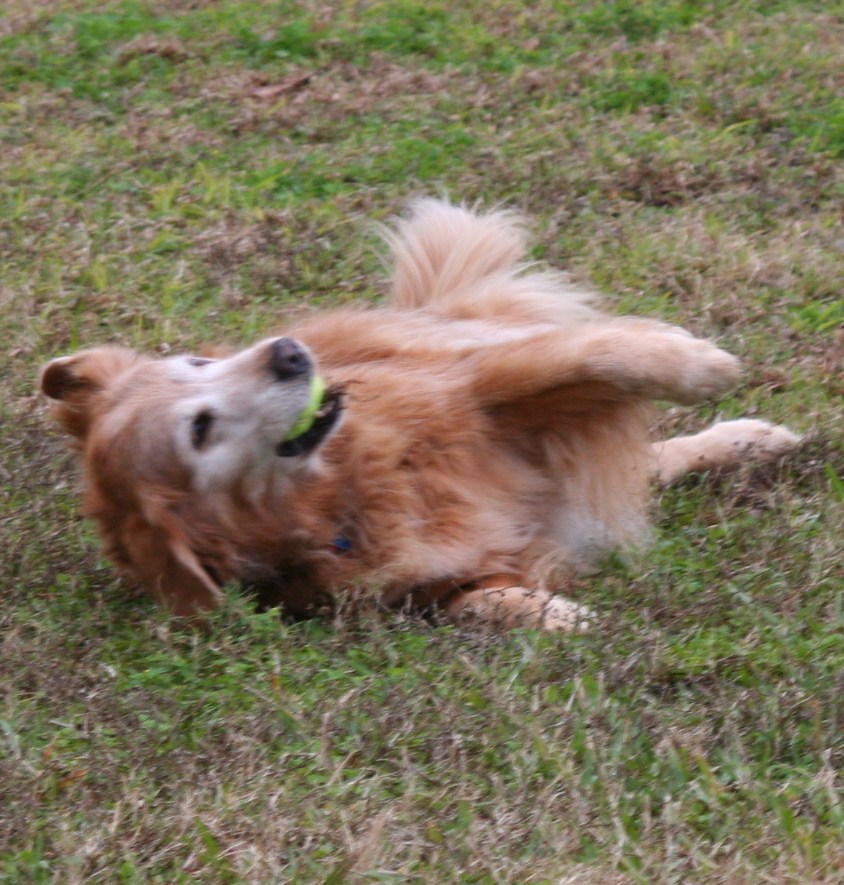
Golden retriever rolls happily in the grass
This is the only kind of rolling I want my dogs to experience.

A few weeks ago, I saw someone essentially “alpha roll” her dog.

This week, I saw Patricia McConnell’s review of a book by the same folks who initially “popularized” the alpha roll, the Monks of New Skete. I don’t know what the Monks suggest in their new book, but I am confident that it is bad for dogs.

It’s well past time for this abuse to stop. We know enough about dogs to put to rest the notion that they “need” a strong leader who keeps them in check using force.

The alpha roll, for those fortunate enough never to have encountered it, is an abusive technique presented by incompetent, ignorant individuals who call themselves dog trainers. It’s based on the thoroughly debunked idea that dogs’ “packs” need to be ruled by an “alpha” who demonstrates “leadership” by beating up on other members of the pack. And that if you, the human, do not repeatedly enforce your “leadership,” the dog (any dog) will try to take over.

All of the elements of this belief are pure hogwash. But those beliefs have led to many cruel practices, including the alpha roll as discipline. Basically, if your dog does something you don’t like, you are supposed to punish him and reinforce your “leadership” by grabbing him and throwing him onto his back (rolling him if he’s too big for you to flip easily) and holding him down as you yell at him, shake him by the scruff, do both, or perform whatever other “disciplinary” tactics the abusive “trainer” has taught you.

So, the alpha roll I saw went like this: I was walking down a busy street. A woman was walking her smallish terrierish dog. Another person walking a larger Labish dog went by. I am not sure whether the dogs only sniffed at each other or whether one or both vocalized. Whatever the small terrier did was unacceptable to the woman who grabbed him, flipped him over, shook him, and yelled, “No! Bad! No!” several times.

Why?

What did she think she was teaching him?

Who knows what she thought she was teaching him. What she was teaching him was that she, his human protector, was crazy and unpredictable. That walking down the street with her, simply being a dog, was dangerous. That she might attack him out of the blue for no reason.

I was silently rooting for the dog to bite her in the face. A major downside of the alpha roll is that the person doing it is often ideally positioned for a really nasty (and richly deserved) face bite. That so few dogs snap and deliver the “discipline” that the people deserve is an enormous testament to dogs’ self-restraint and their long-suffering and forgiving natures — not to the effectiveness of the “discipline.”

The alpha myth is based on incorrect assumptions about wolves. See Alexandra Horowitz’s explanation in this link for more information, but in short, people who observed the behavior of captive wolves extrapolated from the behavior between males all kinds of nonsense about dogs. For openers, captive wolf behavior is nothing like wild wolf behavior, so the observation that, in captive groups made up of unrelated wolves thrown together by humans, males jockeyed for control — including fighting with other males — says nothing about wolf pack dynamics. Natural wolf packs are families. The so-called alpha pair are the parents or grandparents of the other pack members. True alpha wolves rarely use physical discipline, but the alpha pair does lead the pack and teach their offspring how to behave.

And even if natural wolf packs did behave as alpha theorists described— so what? That little terrier mix getting abused on the sidewalk has less in common with a wolf than you and I have with the average chimpanzee. Do we discipline children and rule workplace hierarchies based on the way chimps treat their troupe-mates? I certainly hope not! Thanks to thousands of years of partnership leading to domestication of dogs, and also thanks to generations of human-influenced genetic changes, dog behavior is very, very different from wolf behavior. And dog-dog behavior is, and should be, different from dog-human behavior.

Dog behavior is relationship-based; dogs are very social. That is about the only element of the dog pack mythology that is true. Humans are also social. Social animals have rules, whether formal or informal, that govern their interactions. Some involve status differences and even hierarchies. But leadership is about navigating and negotiating these relationships and differences and influencing the behavior of those with lower status or who are dependent on the leader in some way. There are lots of ways to lead. Sure, force is an option. But as anyone who’s survived an autocratic parent or boss knows, it is not terribly effective, it destroys relationships, and it is far from the only way to “lead.” In fact, I do not consider force or autocracy to be leadership.

McConnell’s blog offers alternative visions of leadership. I agree with her; our leadership of our dogs should be about building a relationship, letting the dog know he can count on us and trust us. It’s also about letting dogs think for themselves and making it safe for them to make mistakes sometimes. That is the polar opposite of what “being the alpha” accomplishes.

Please don’t buy into the alpha myths; instead, buy any (or all) books by McConnell and other positive, progressive trainers who treat dogs as the thinking, caring, sensitive beings they are.