Just Playin’ Around

I don’t know if the cooler weather has anything to do with it, or a recent visit from one of the girls’ favorite aunties, but Jana and Cali have been very playful lately.

Each is playful in her own way.

As a younger dog (uh, princess), Jana played hard and liked playing with the big boys. Labrador boys. Or golden retrievers. Occasional other breeds but her reaction on seeing a Lab or golden, even from a block away, was joyful excitement; other breeds were generally greeted more warily. She’d get to know individuals and decide that certain of them could have her attentions. She’s like that with people, too.
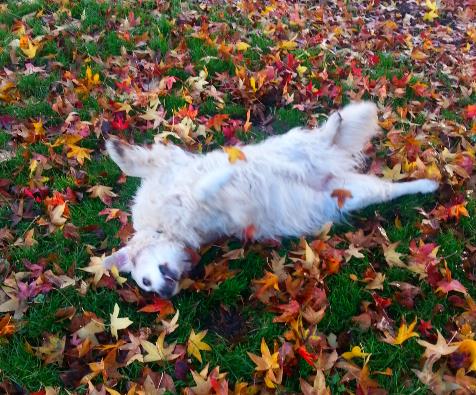
rolling in leavesNow, as she ages, she prefers gentle play. Tug with me or a (very few) special friends, whom she will approach, tug toy in mouth, and invite to play. Catch, if the again, specially selected, person gently throws the ball to her, she will either catch it or nose bump it back in the person’s direction. The person’s job is to get it from her or catch it and toss it again. She especially likes playing this game in the water.

But Jana’s all-time favorite recreation is rolling: Rolling in grass, especially if it is so freshly cut that the mower is still working. Best of all if it turns her green. Rolling in sand is also excellent, mostly because that means we must be at the beach. Mud is pretty great, too. Jana has has a lifelong goal of becoming a black golden retriever.

For Cali, of course, the only game in the world that matters is tennis ball. Frisbee will do in a pinch. I don’t call it fetch, since that is rarely what happens. (The bringing it back part, I mean … there is something about the “retriever” part of their name that eludes both girls).
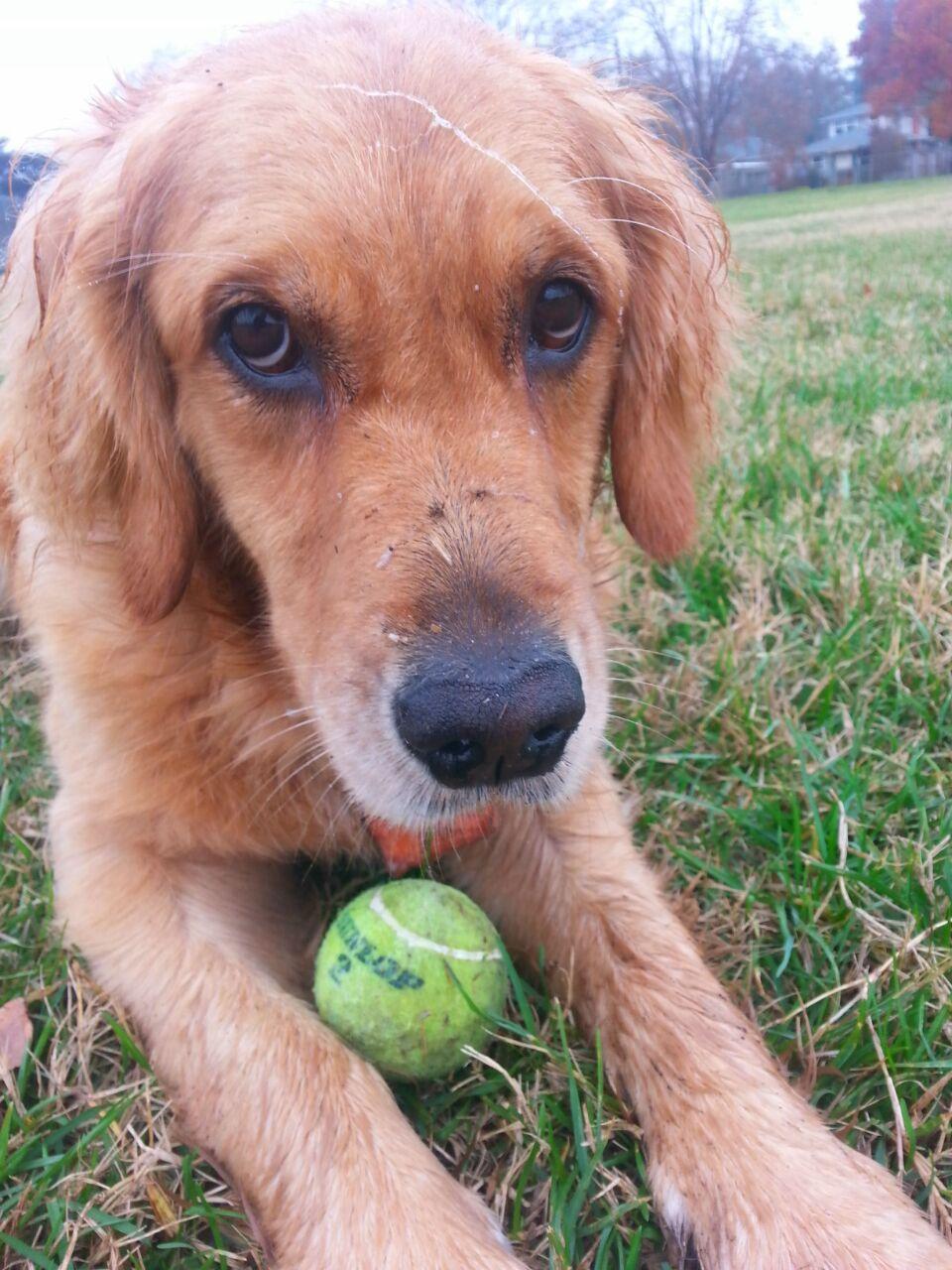
Photo by Christina Phelps

Cali rarely plays with other dogs, except her sisters, Dora and Alberta. She will occasionally play with a smaller dog. Like Jana, her reaction to large dogs of other breeds is wary avoidance. Also like Jana, she’s more interested in meeting other golden retrievers and some Labradors, usually the smaller, calmer ones. Unlike Jana, Cali rarely warms up enough to play with them.

When she gets into a good game of running after her ball and sometimes bringing it back but usually just hanging out with it in the middle of the park, she gets a good drool worked up. She’s developed the unusual talent of drooling onto her own head, as the photo shows. She usually soaks her feet, too. The tennis ball gets a pretty thick coating too, mixed in with dirt and who knows what else. I know that dogs don’t sweat, but Cali also seems sweaty when she’s been running. And of course her feet and legs and tummy get covered in mud (as well as drool). Her messiness is a reliable measure of how much fun a play session has been.
Thinking Dogs ♥ New York

Alberta and Deni trainingService dogs in New York got a great Christmas present from Governor Andrew Cuomo: official recognition as the state dog.

While some states choose a breed as the official state dog, and many states (gasp!) have no official dog, New York took a novel and wonderful approach. This article from Syracuse.com points out that breed doesn’t matter; only education and ability.

The original legislation designated service dogs as the official state dog. The governor expanded the law to include working dogs like police K9s and search-and-rescue dogs, and the lawmakers have agreed to officially expand the definition.

Four paws up to New York legislators for recognizing the contributions of service dogs. Other working dogs are also heroic and deserving of recognition, but a tiny, possibly very cynical, part of me wishes the honor had been kept, as originally intended, for service dogs only.

Unlike this recognition, the “me too”-ism that wants to lump a whole bunch of dogs in with service dogs for special attention or privileges usually is negative, as described in this New York Times column: When Dog Owners Are Off the Leash.

Maybe my grumpiness stems from having read the two stories only moments apart.

While the writer of the Times column admits to schadenfreude at the news of a celebrity couple getting caught and penalized for smuggling their two dogs into Australia, breaking several laws, including avoiding the required quarantine — he also freely and unabashedly admits to committing similar misdeeds. Stating that “half the people” he knows do it, he relates stories of many other people smuggling dogs into no-pets venues, lying to get them on airplanes, and smuggling pets across borders. He even acknowledges having a fake letter attesting to his dog’s status as an emotional support dog, commenting that the law is so vague that it’s easy to cheat. The motivation ranges from simply wanting to avoid paying pet fees on airlines to feeling entitled to have your pet with you wherever you want. Even if that requires that you lie about having a disability and pretend that an untrained pet is a trained service dog.

While the author of the column briefly mentions that this fakery “makes life difficult for those who really need” service dogs, he seems not to care. He sounds much more irate about the high fees that airlines charge to transport small dogs, and approvingly cites a few recent changes, including posh hotels that now allow dogs and the news that Amtrak has started allowing small pets to ride on some trains.

The thing is, though, that faking it is not OK — and is not trivial. So many people are doing it that it really does interfere with legitimate working dogs’ ability to do their jobs. And their safety. I’ve seen so-called service dogs come tearing out of airport shops, snarling and dragging their people, reacting to people or working service dogs.

And, as my students who train service dogs have pointed out, allowing untrained pets into more and more public spaces might not be the best solution. As a pet owner, I love discovering new places that I can take my dogs. But as a person who understands the ins and outs of training and working with service dogs, I also understand the problem.

If pet dogs are very well trained and socialized and the owners are skilled handlers who are aware of what’s going on around them, then no harm is likely to be caused; unfortunately, that’s rarely the case. Most dogs are poorly prepared for the stresses of public spaces, and many dog owners are poorly equipped to handle their dogs safely and appropriately — or they are simply oblivious. As is often the case, a good remedy is more education. Education of dog owners — and of business owners, about how to spot and deal with fakers.

Kudos to New York for recognizing and increasing awareness of the incredible work that service dogs do. Let’s hope it will help more people understand how vital service dogs are to people who truly need them — and how harmful it is to fake it.