 In “Communication Goes Two Ways,” I wrote about learning to read your dog’s body language, especially to recognize when she’s stressed or afraid. You can take your communication to the next level by teaching your dog new ways to communicate with you. Some ideas?
- Hang a bell on the door your dog uses to go out in the yard for potty breaks. Encourage the dog to nudge the bell each time you let her out. She will soon connect the bell with getting you to open the door, and ring it when she needs to go out. A word of caution: Some smarty-pants dogs will use this system to train you, demanding to be let out every time you sit down or stop paying attention to them.
One clever dog of Deni’s used this system to get rid of a pesky young puppy sibling. She’d ring the bell; puppy (and Deni) would come running; Deni would open the door; puppy would run out — and clever older dog would not. She’d stay inside to enjoy the calm, now puppyless, house.
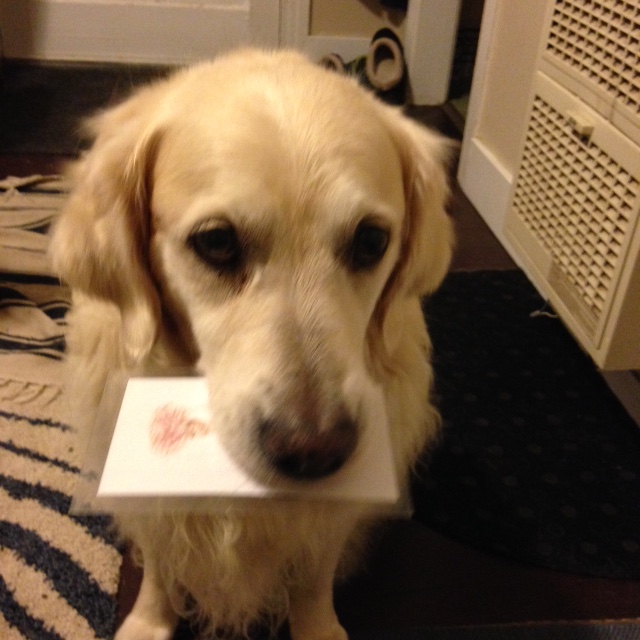
- Offer your dog choices: Do you want to play with the tennis ball or the Frisbee? Which treat do you want? Do you want a walk or should I toss the ball? This can be as simple as offering two items for the dog to choose. But you can, with training, teach the dog to answer simple (two-option) questions. A student in my canine-human communication class taught her dog to choose between two options (sometimes yes and no) by nosing one hand or the other. A researcher in Florida taught dogs to choose a reward for a task they had completed by nosing a card with a picture of the desired reward — a ball, a food treat, a tug game, etc. She found that each dog had definite preferences!
- Let your dog decide which direction you head on your afternoon walk. Jana and I have an informal agreement. The morning walk, which always includes Cali, is to the park where Cali plays ball. Afternoon walks, which are often just the two of us, are Jana’s choice. She likes to head toward the river and walk past her beloved dog training school, stopping along the way to visit her friend in the office on the corner (a very kind woman who always offers Jana a cookie).
- Many people use hand signals to communicate with their dogs. These can substitute for (or work in tandem with) verbal cues — a raised hand for stay, for example, is widely used. Some trainers have made the leap to teaching dogs signals that they can use to communicate back to us, similar to the Baby Sign Language some parents use with pre-verbal babies. This takes more planning and teaching than some of the other ideas.
There are many more options, requiring various amounts of preparation and teaching, but you get the idea. Encouraging your dog to express her preferences and communicate her needs will increase her independence. It is empowering for her, and it shows that you respect her as an individual, which will enrich your relationship by making it a tiny bit more reciprocal.