Doggy Enforcers and Tattle-tails

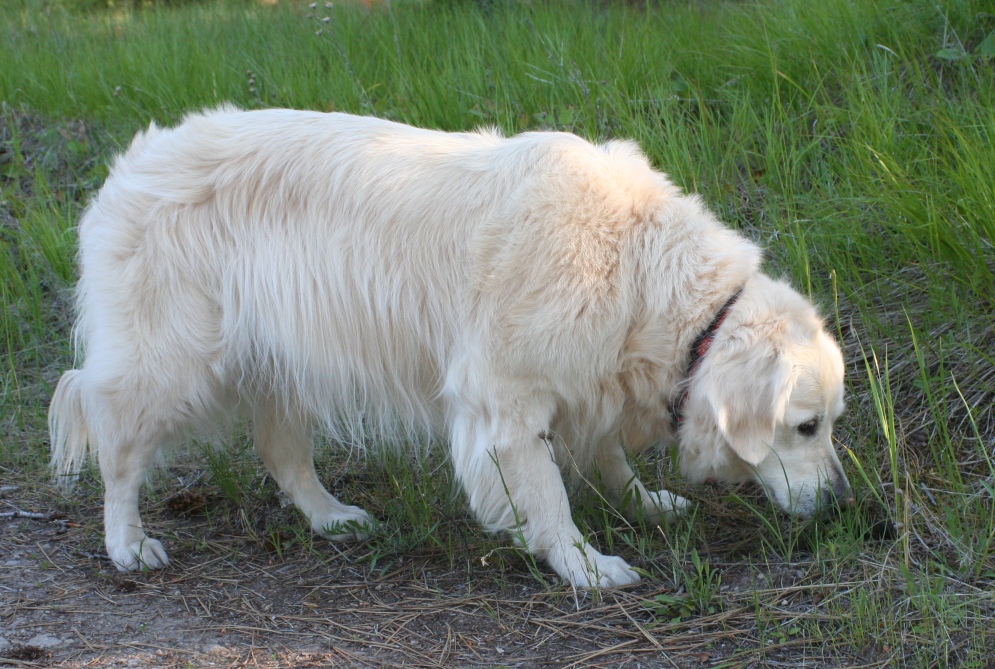
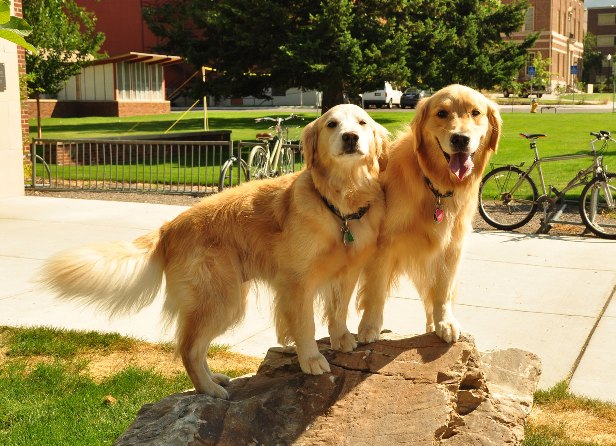
Gracie, left, and Willow (Photo by James Cramer)

Some time ago, in a post published on the Creative Loafing website, I described an incident where Jana “told on” Wylie and Oriel when they broke the house rules. A brief recap: The dogs, wet and sandy following a swim in the bay, had been gated into our office, which is at the back of the house. A few minutes later, Jana started barking. I told her to stop, then yelled at her, then, finally, went back to see what was up. She was alone. Wylie had knocked over a barrier, gone out the dog door, and walked around the house to open a French door that leads into the master bedroom. He let himself (and Oriel, who had followed) into the main part of the house.

The funny part, so revealing of their different personalities, was that, just as I was chastising Jana, Wylie marched triumphantly out of the bedroom to proclaim his jail-breaking prowess to the world. Oriel had quietly curled up on a dog bed in the bedroom, wisely not advertising her rule-breaking to anyone.

So. Is Jana the only rule-bound dog I know? Not by a long shot!

Not long ago, Willow, a family friend (also a golden retriever), was visiting a favorite plant nursery with her newly adopted sister, Gracie. Willow is an exuberant dog who has never met a stranger. The entire world is her stage and all of us, her admirers. This particular nursery is a favorite because the staff adore her — and because whenever she’s there, she gets a treat if she greets the cashier and sits nicely.

This visit progressed much like all others, Willow’s dad reports, until the nice cashier asked the dogs to sit. Willow sat. Gracie, new to this routine and a little nervous about new things, did not sit. Willow wanted her cookie. The nice lady asked Gracie to sit. Willow grew impatient. When Gracie did not sit, Willow stood up, lifted a paw, and whacked Gracie on the head. Gracie sat. When the humans stopped laughing, both dogs got treats.

Was Willow really enforcing the rules? Was Jana? Can dogs tell “right” from “wrong”? If so, to what extent can we hold them accountable for their actions?

These are big questions that dog world is increasingly willing to discuss — though dog lovers and researchers are nowhere near reaching agreement. Whole Dog Journal editor Nancy Kerns discussed this very question in a recent blog post, and I plan to teach a course that centers around this very issue next spring at the Bergin University of Canine Studies.

As we examine dog behavior more deeply and consider interpretations beyond categorizing every action as a mechanical or instinctive response, and as biologists and ethologists explore the behavior of an enormous range of non-human animals, we see growing evidence that many animals besides humans think about their actions and weigh potential consequences. The TED talks website has a fascinating presentation on animals and morality by Frans de Waal that shows empathy and cooperation in the animal world.

For now, I am considering these questions about dog behavior — and collecting stories. Has your dog ever tried to get another dog to do something? “Told on” a sibling dog who broke the rules? Or done anything that suggests that he or she thought about rules or consequences before acting? Please share your stories here or by email to: thinkingdogblog@gmail.com
 

Dog Days of Summer

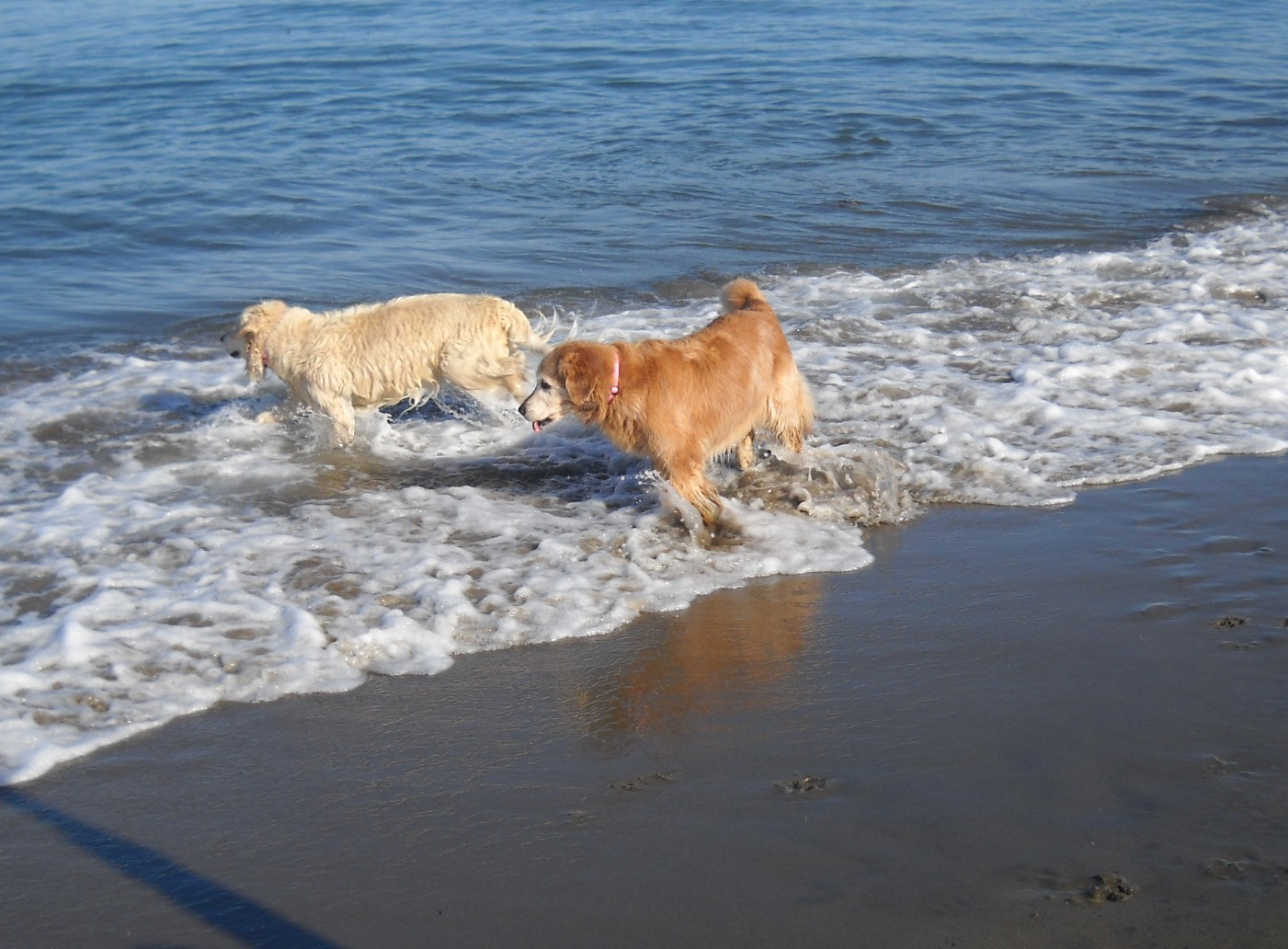
Most of the country has experienced record heat this summer. A common response among dog owners is to get the dog shaved, thinking the dog will be cooler. Is giving your dog a buzz cut really the best choice? How can you help your dog cope with the heat?

Regular grooming, especially for non-shedding breeds such as poodles, is a good idea for any dog. However, a close shave is not recommended. Some dogs dislike short haircuts, even going into hiding after a too-close shave. But your dog’s self-image isn’t the only concern when going for extreme summer grooming. The dog’s coat provides protection against sun and heat — and against sunburn.

Regular bathing with a moisturizing shampoo and frequent brushing to remove mats, debris, and loose fur will keep your dog’s coat clean and beautiful. A shampoo with aloe and oatmeal is a good choice in hot or dry weather or for itchy dogs. A trim might be in order for long-haired or thick-coated dogs, but many groomers advise clipping the top coat and leaving the undercoat for protection. The fur provides natural protection from the sun. Dogs can not only get sunburned, they can get melanomas, just like we humans can.

Canine melanoma usually appears in dogs’ mouths and on their skin and toes — areas that might be exposed to the sun. Skin melanomas occur more on dogs with dark skin, and they look like large, flat, wrinkled masses or small, dark lumps. These tend not to spread or be malignant.

However, melanomas occurring in the mouth, behind the eyes, or on dogs’ toes can be malignant. Despite the similarity in name, these melanomas are not connected with sun exposure and are thought to have a genetic link. Early signs of an oral melanoma include bad breath, bleeding around the mouth, coughing, excessive drooling, trouble swallowing, and excessive weight loss.

Other forms of skin cancer, such as squamous cell carcinomas, are often caused by sun exposure. These can be aggressive cancers. Short-haired (or shaved) dogs are at greater risk for squamous cell carcinomas, and they often occur on the feet, abdomen, and around the genitals — areas with thin or no hair. Squamous cell tumors look like warts and are firm and raised from the skin surface.

Finally, mast cell tumors, the most common form of canine skin cancer, are usually slow-growing but can also be aggressive and can cause inflamed ulcers on the dog’s body. These might be genetically linked, but they have also been linked to irritants or inflammation of the skin.

Monitor your dog carefully — daily brushing and petting will help you notice changes in skin color or texture. Have a veterinarian check any growth or tumor immediately. Many skin cancers can be treated successfully if caught early.

But skin cancer is not the only heat-related summer problem.

Dogs can overheat and even get sunstroke from spending too much time in the summer sun — or in a hot car. On a warm day, never leave a dog inside a closed car! Even with windows open, the interior of the car heats up fast and is much hotter than even the outdoor temperature. Sunlight streaming through the glass windows is turned into heat. Too many pets die each summer because their owners left them in the car “just for a minute.” Don’t risk it.

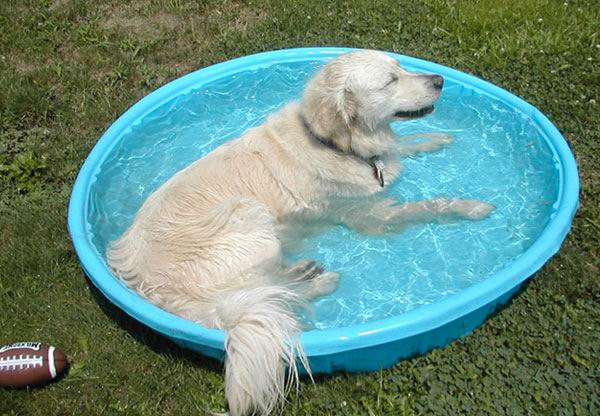
It is possible to enjoy outdoor play with your dog in the summer, though. Dark-haired dogs can wear white T-shirts to stay cooler (wet the shirt to keep the dog even cooler). Or let your dog wear a cold, wet bandanna or neck wrap to cool off. Other dogs take matters into their own paws, finding a pool or puddle to lie down in. If there’s a dog-friendly beach nearby, spend a day at the dog beach.

Enjoy the summer — but make sure that your dogs have shade when outdoors, can come indoors in hot weather, and always have access to fresh water.

What is your opinion of an E-collar?

I got this question from a friend who is dog-mommy to two wonderful, if highly energetic, girls.

My short answer was that in general, I believe that they are used too often by people who want a “quick solution,” and they are not used correctly — and that therefore they end up being used in a way that is unfair and abusive to the dog. I abhor punitive training and think that in nearly all cases it is not only unnecessary but counter-productive.

But.

I also hesitate to completely rule out the use of an e-collar (an electric shock collar). There are a very, very few cases where the use of an e-collar, with a skilled, ethical, experienced trainer, might be justified. Continue reading

Wily Wylie

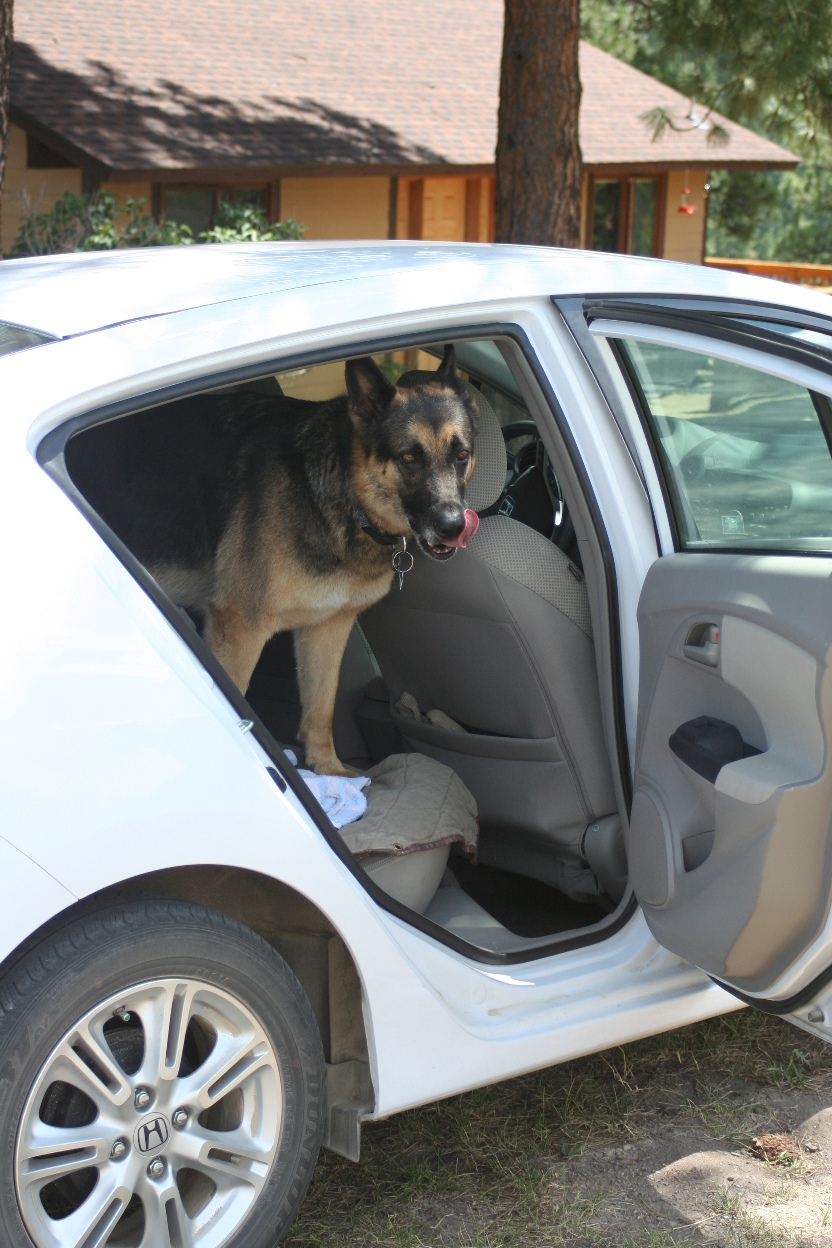
The chipmunk was driving Wylie crazy while Deni put the car’s backseats down in preparation for transporting some boxes. Taunting him, chattering nonstop, and darting around the yard. It ran under the car. Wylie ran around and around the car, fixated on the annoying rodent. Deni stepped around the dog, adjusting the seats through the car’s open doors. The crafty chipmunk stayed under the car, just out of paw’s reach. Then Wylie had an idea. Jumping into the backseat of the car, Wylie paced, peering intently out each door. He had figured out that, if that darned racing-striped rat didn’t see him, it would feel safe enough to leave the shelter of the car — and Wylie would be ready when it did!

Wylie’s idea of outsmarting the chipmunk (foiled only when Deni called Wylie back to the house and closed the car doors) shows his ability to strategize. Wylie uses his canine wiliness and planning skills in other ways as well. He’s not the only one.

Anyone who lives in multi-dog families has surely seen a gambit popular with Jana, Wylie’s doggy sister. Noticing that Wylie has a bed, bone, or toy that she might like, she suddenly looks intently out the sliding glass door or runs to the dog door, madly barking her “Look! What’s that in our yard?!” bark. Ever the dutiful watchdog, Wylie immediately goes to investigate and use his authoritarian German Shepherd voice to scare off any dangerous intruder. While Wylie’s scanning the horizon, hackles raised, Jana saunters over to the bed, bone, or toy he had been enjoying … and takes possession.

These stories and many more indicate that dogs have what is called “theory of mind.” Theory of mind means that they are aware of points of view other than their own and use that awareness to guess what another creature might do in a particular situation. It’s a necessary element for empathy and plays a role in much higher-level thought and social interaction.

For many scientists, though, theory of mind is a crucial component of what makes humans, well, human — and unique. As in, smarter-more sophisticated-better than non-human animals. Human children begin to demonstrate theory of mind by about age four. So attributing theory of mind to dogs can be controversial. Some psychologists and dog researchers who are reluctant to attribute theory of mind to dogs ascribe dogs’ ability to “read” us humans to group consciousness or instinct.

Increasingly, though, some are willing to at least take a tentative step out on that limb.

Psychologist and dog cognition researcher Alexandra Horowitz, for example, proposes what she calls a “rudimentary theory of mind” that might exist in dogs. She defines this as “more than acting instinctively, or as a behaviorist, but less than acting with the theoretical understanding characteristic of humans.”

I’ll take that; I am not (yet) ready to argue that dogs’ cognitive abilities are on a par with those of the average human. But there are too many examples of dogs anticipating and manipulating others’ behavior and empathizing with others’ emotions to ignore the evidence that suggests that dogs show theory of mind. And it is important to consider that we, with our human limitations, are measuring dogs’ theory of mind based on how it works for humans. It’s a good bet that we haven’t come up with a relevant-to-dogs way of testing it yet.

It’s cool enough that dogs show theory of mind about their own species, even if they tend to use it, as Jana does, for nefarious purposes. But it’s even more amazing that dogs use theory of mind in their interactions with humans, often anticipating what we’ll do — and coming up with endless ways of manipulating us to walk, play with, and feed them. Any dog who has ever brought his or her human a leash, an empty bowl, or a ball is showing theory of mind (as well as creative communications skills and great optimism!). Wylie was even using theory of mind to try to imagine how the chipmunk might change its behavior if the dog was out of sight. Better luck next time, Wylie!

Jana Rocks

What’s the best present your dog ever brought you? Mine is the rock pictured here. Jana pulled it out of Lolo Creek at Fort Fizzle, one of our favorite spots to spend a hot summer afternoon. It joins this one:

Jana pulled it out of the same swimming hole last summer.

Does Jana know that hearts have a special meaning to humans? Do dogs use symbols to communicate the way humans do?

Those questions are not as farfetched as they might sound.

Jana loves hunting for rocks in the water, and she often pulls them out to collect onshore or to hand to me for safekeeping. She’s pretty selective about the ones she picks up.

She pokes her head under water, holding her breath as she looks for the perfect rock. Once she’s selected a rock, she lifts her head out and works the rock loose with her paws, then puts her head under water and grabs it. Some of them are huge for a 60-pound dog to carry, weighing a two  pounds or more. Sometimes, I throw one back. And she pulls it out again, often giving me a disgusted look in the process.

They are not all heart-shaped, of course. This stretch of river offers her a large selection of rocks in many sizes, shapes, and weights. Yet many of the rocks Jana chooses are triangular or have an elongated shape and rounded corners.

I can’t help wondering why Jana seems to prefer heart-shaped rocks. Is she sending an intentional message?

Dogs, like humans, regularly  use symbols to communicate with their human and canine friends. Many dogs, for example, bring a leash or guide their human to where the leash hangs to ask for a walk. A human donning a certain pair of shoes can trigger a wild dance of delight in other dogs. Play, aggression, and calming signals are part of universal canine-to-canine body language.

Dogs quickly learn to associate specific actions, such as sitting, coming, or lying down with humans’ spoken words, hand signals — and even printed words or pictures.

But dogs’ abilities go far beyond understanding simple concepts and associations. Studies in canine cognition labs around the world constantly expand our knowledge of how dogs understand high-level concepts.

Dogs have shown that they recognize people in photos and can differentiate between photos of dogs and other creatures. They even associate the sound of a growl with a photo of an  appropriate-sized dog who might make such a sound, looking at a photo of a large dog upon hearing a deep, big-dog growl, for example.

Dogs also learn to associate pictures with concepts. I’ve taught dogs to respond to flashcards printed with words or stick figure dogs showing specific behaviors  (sit, down, speak, etc.). And a researcher in Florida, Dr. Lauren Highfill, recently did a study where dogs learned to ask for their preferred reward by choosing the corresponding picture. They first learned to associate a food reward with one picture, a toy with another, etc. Dr. Highfill even had a “surprise” reward category that allowed dogs to ask for an unknown reward. Some dogs consistently chose to be surprised, while others always asked for their favorite.

So, back to the heart-shaped rocks. I haven’t intentionally taught Jana any specific association with hearts, but she has seen me collecting (much smaller) heart-shaped rocks on our walks together on many different beaches. Maybe she just knows that the symbol is, for whatever reason, meaningful to me.

Jana is very bright and perceptive. Even so, it’s a bit of a stretch to think that she has somehow picked up on the idea that, in human culture, the heart shape stands for an expression of love. It’s not as much of a stretch to think that a watchful dog knows what pleases her human partner and enjoys finding ways to do that. Whatever her reasons, the heart-shaped rocks are gifts from Jana that I will always treasure.

So Sorry About That Skirt … Or Not?

My sister was clearly annoyed. “Ziggy ate my new silk skirt,” she reported.

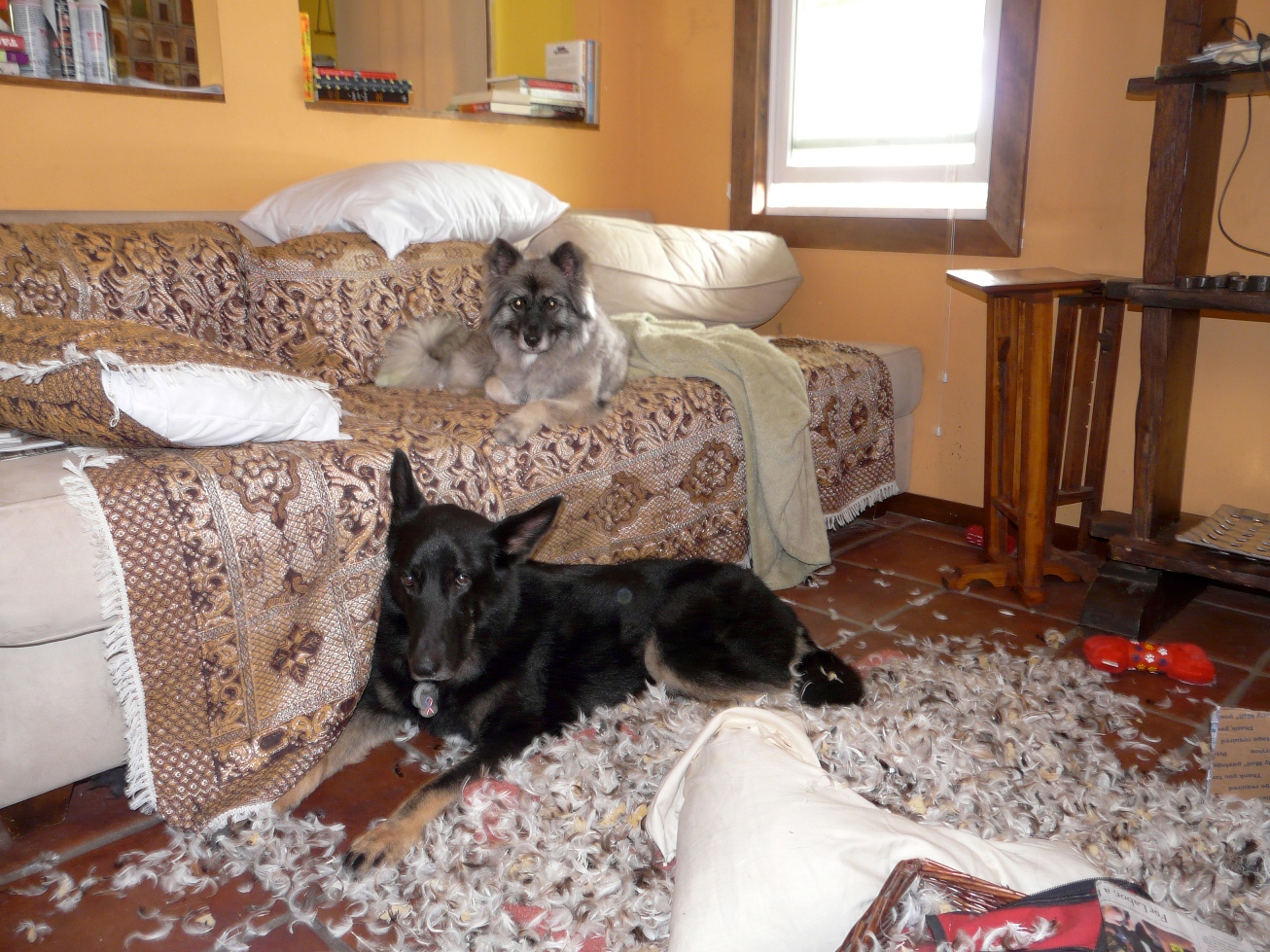
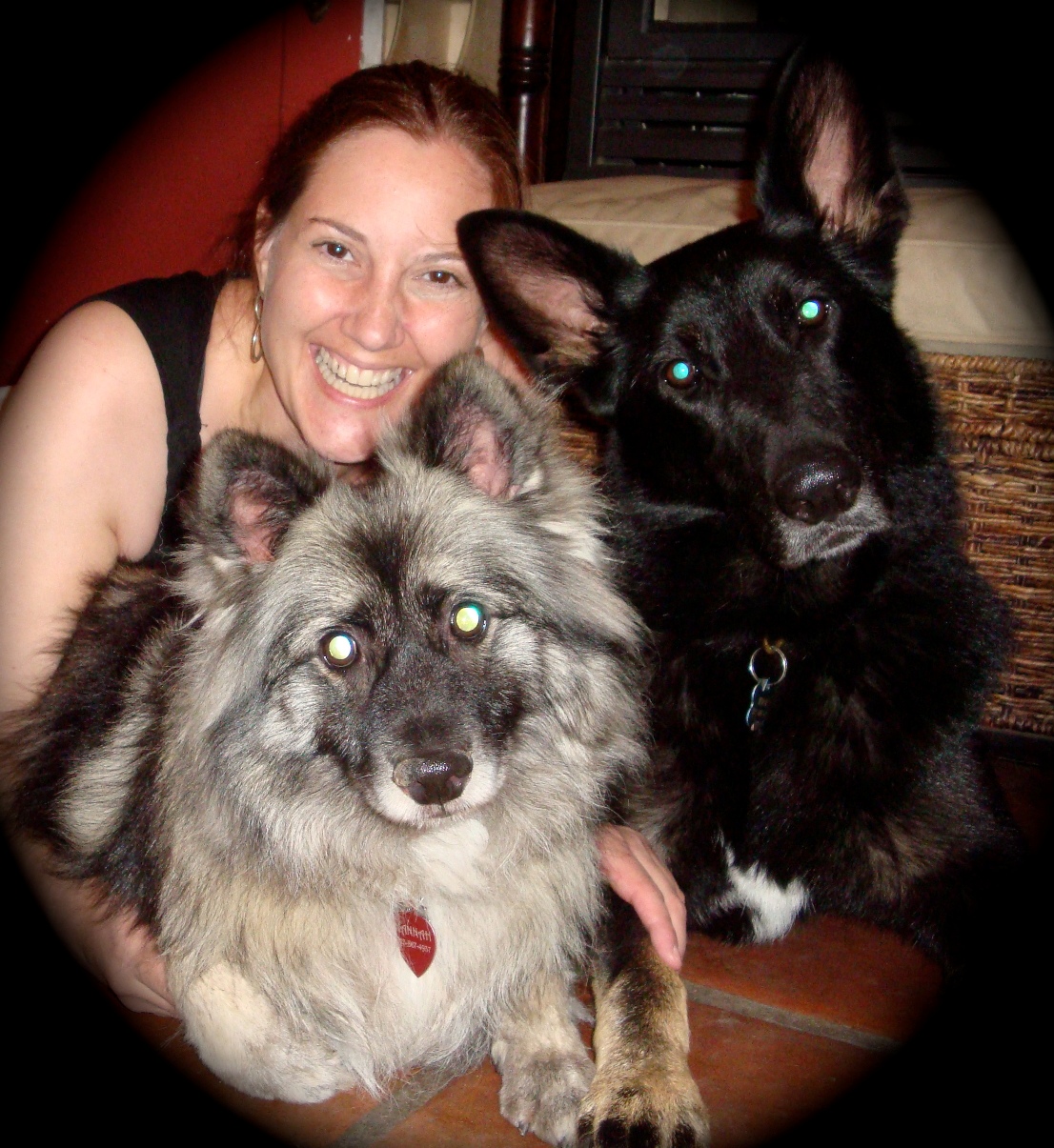
Ziggy is a German shepherd with a penchant for illicit snacks. A gentle soul, he’s been led astray by his big sister, a keeshond named Hannah. Their usual modus operandi, though, is raiding the refrigerator — now only possible when Cyndi forgets to close the child-and-dog-proof latch she bought for it.

Cyndi then ventured into common, but contentious, territory. “He’s sorry,” she said. “He keeps apologizing and acting guilty.”

She’s not alone in believing that this is possible. According to Scientific American blogger Jason Goldman, 74 percent of dog owners believe that their dogs show guilt. But, like many scientists, Goldman argues that evidence for dogs’ ability to show “secondary emotions,” which include guilt, pride, and jealousy, is rare. The argument, Goldman says, is that guilt is too complicated an emotion for non-human animals.

Bah, I say. I’m with the 74 percent.

"I'm sorry."

After a lifetime of living with, working with, and studying dogs, I am convinced that they feel the entire range of complex emotions, including guilt, pride, and jealousy. Charles Darwin believed that social primates exhibited these emotions. Behavior patterns that resemble guilt — keeping the head down, averting the gaze — have been observed in wolves, too.

Social animals, including dogs and wolves, need to get along with the others in their group. Secondary emotions, which also include anxiety, worry, contentedness, and affection, are social lubricants. They reinforce social bonds, elicit tolerance, reduce conflict — all things essential to anyone living in a group. Dogs are highly social, and dogs are highly dependent on humans. It makes perfect sense that dogs would understand and feel these emotions.

But.

Feeling them and showing them are two different things. A while back, a series of You Tube videos starring Denver, the “Guilty Dog” was popular. Other dog parents jumped on the bandwagon, posting their own “guilty dog” videos. Problem was, most of the videos showed scared dogs or appeasing dogs or very stressed-out dogs. Not necessarily guilty dogs.

What many dogs learn is that certain behaviors on their humans’ part mean that the humans are unhappy. Angry, even. Angry with them, perhaps. They might have no idea why the human is angry, but they want to make the tension go away. Dogs are very good at figuring out how to placate, neutralize anger, make their humans laugh, or otherwise reduce the possibility of hostile actions directed at them by their humans.

Not that Cyndi is mean to her dogs. She’s a great dog mom. And that explanation only makes sense if Ziggy was anticipating a scolding (or worse) — which is extremely unlikely. So we’re back at square one: Was Ziggy feeling guilty and apologizing for eating her skirt?

My long-distance reading of the situation is that Ziggy knew that Cyndi was unhappy with him. They have a close bond and can read each other well. He’s a very sensitive dog. I think it is likely that he not only understood that she was upset but also that it was connected with the skirt.

So, yes, he could have been apologizing. Or he simply could have been trying to calm her down. It actually doesn’t matter which is the case. From a broad social-science perspective, the two aren’t that different; the goal of both is to defuse tension and reduce strife between group members. And, it worked.

She’s So Vain … She Probably Thinks This Blog Is About Her!

I find it hard to believe that there are still people who dismiss the fact that dogs are self-aware. Self-awareness is simply the ability to recognize oneself as separate from other individuals and from your environment. Not only do I believe that dogs are self-aware, I go a step further and say that some dogs (yes, I mean you, Jana) are not only self-aware but self-absorbed.

Psychologists and other scientists point to dogs’ disappointing performance on the “mirror test” as “evidence” that dogs are not self-aware. This test, which humans and many primates (and dolphins) pass, basically involves putting a mark on the face of the test subject. If the test subject, when looking in a mirror, reaches up to touch or try to remove the spot — on himself or herself, not on the mirror image — this shows self-awareness. The test subject recognizes himself or herself as different from the mirror image.

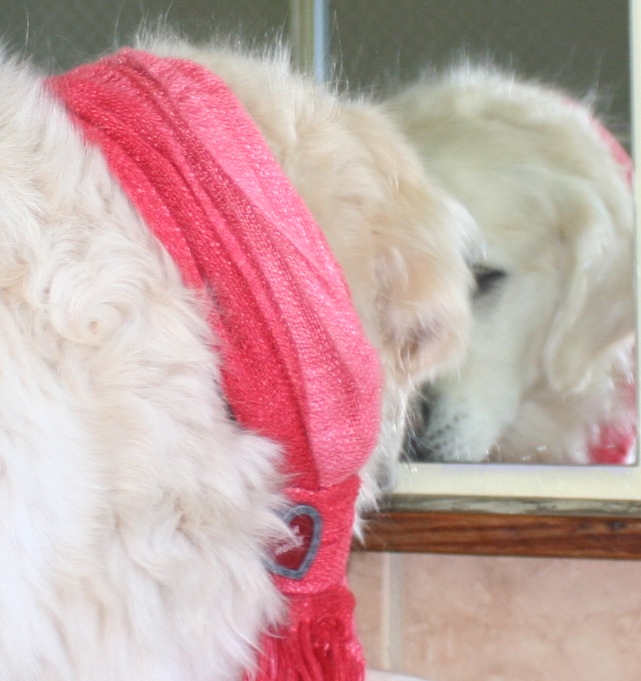
Some dogs do pass the mirror test. Before I even knew about the mirror test, as a newbie trainer back in 2002, I was training a service-dog puppy named Yasu. Yasu, a petite platinum blonde, seized every possible opportunity to look in a mirror. She would have aced the mirror test. And her interest in mirrors went beyond mere recognition of herself. She gazed adoringly at her reflection. She sought out mirrors. In the supermarket, she would “up” on the lettuce bin to gaze admiringly at her image in the mirror that was angled above the produce. It was funny — and embarrassing.

But, Yasu aside, many dogs don’t do so well on the mirror test. So what? The test looks at something that is irrelevant to most dogs. For most dogs, self-awareness is not primarily about appearance. Scent is what matters in a dog world.

Ethologist Marc Bekoff demonstrated dogs’ self-awareness with his yellow snow experiments. He moved patches of snow that the dogs he was studying had marked (thus turning it yellow … use your imagination) and studied their reactions. They spent far more time sniffing and investigating yellow snow patches that had been created by other dogs than sniffing their own. Bekoff had moved all of the patches of yellow snow from where the dogs had initially marked, so the “sniffer” dogs were not responding to specific locations. Bekoff’s reading of the study was that the dogs knew their own scent, quickly determined that they would not learn anything interesting about other dogs by sniffing their own marks, and moved on.

So, dogs do show self-awareness, if tested using criteria that actually matter to dogs.

Several years after I worked with Yasu, I took a seminar with Bekoff while doing my master’s degree at Bergin U. I learned about the self-awareness debate and the yellow snow. I never asked Bekoff about it, but I’ve wondered what Yasu’s love of her own image meant.

Who's the fairest dog of all?

Then, along came Jana and the question of self-absorption. Jana turns the yellow snow experiment on its head.

On walks, she seeks out and spends considerably more time sniffing her own, um, leavings. Before anyone starts yelling about what a horrible person I am for not picking up her poop, I would like to point out that we walk in wilderness, in Montana, where hundreds of animals, including deer, elk, moose, fox, coyote, wolf, bear and mountain lion, wild turkeys, and an unknown number of local dogs all walk regularly. No one picks up anything, and there is a smorgasbord of scents for the dogs to investigate.

Jana and I frequently walk the same loop. Despite the markings of all the other animals, on every walk, she stops at the same spots — her spots. The more we walk the loop, the more Jana deposits in the woods along the way — and the more stops we make. She is still sniffing at spots she marked a couple of weeks ago. There is nothing visible left, but she checks out her spots anyhow.

It’s not simply that she’s enjoying the scent. If so, she’d roll in it, as she does with many things, such as dead wildlife, that, to her, have delectable scents. Nor does she (thank goodness!) grab a snack, as she often does with horse droppings. She sniffs. Long and thoroughly. From every angle.

I’ve decided that she thinks her scent is so hot that she’s convinced that other dogs must also think so — and that, therefore, they will leave messages for her. Her own little local Facebook. Extreme doggy self-absorption.

While Jana does admire herself in mirrors occasionally, her self-awareness — and self-absorption — is all about her own heavenly scent.

Pups Need Time With Mom, Siblings

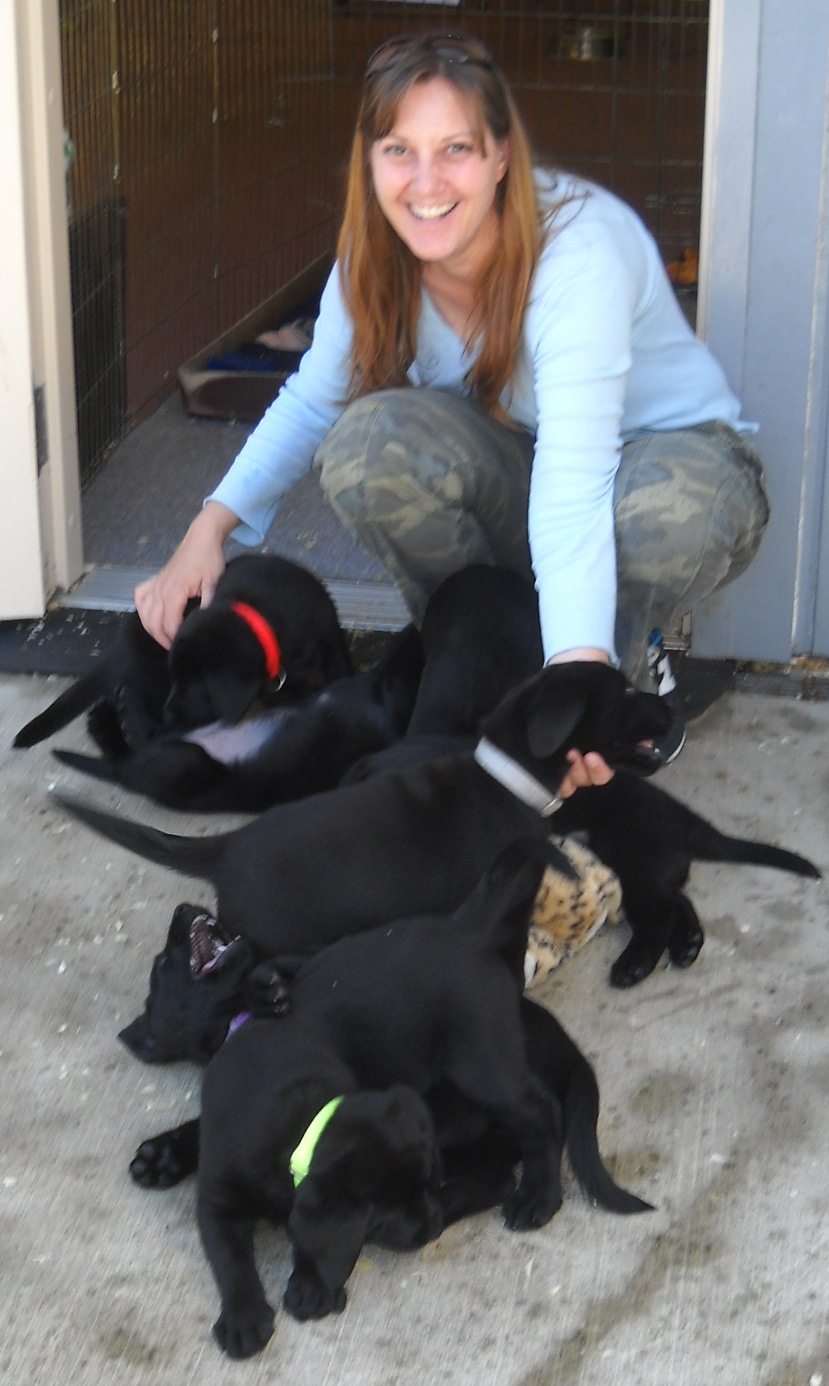
As one puppy tugged her shoelace, another went for her long hair, and yet another tugged on her pants leg, I watched my sister’s reaction. It suddenly occurred to me. “You’ve never played with an entire litter at once, have you?” I asked.

She hadn’t. In fact, her dogs were rescued as adolescents, so she’s never lived with a young puppy either. These Labs were seven weeks old, the perfect age: cute, cuddly, and playful, but still too small to be pushy or overwhelming en masse (there were seven of them, after all).

Seven weeks is also about the age that most litters are split up, each puppy being sent off to his or her new home. Some breeders (and puppy mills) try to place puppies even younger than seven weeks; responsible, caring breeders will wait at least eight weeks — maybe longer.

The puppies need that time together.

A study published in the Veterinary Record in October 2011 shows that puppies who were removed from their litters too early were far more likely to exhibit problem behaviors later in life than puppies who stayed with their sibs for 60 days or longer. The behaviors included destructiveness, excessive barking, fearfulness on walks, reactivity to noises, toy possessiveness, food possessiveness, and attention-seeking. A much larger proportion of early-separated dogs demonstrated those behaviors.

The study was based on survey responses of 140 dog owners in Italy. Their dogs were between 18 months and seven years old. Half had been adopted at age 30–40 days and half at 60 days. Half came from pet stores and the rest from friends or relatives of the owner or from a breeder; none had been adopted from shelters or had been obviously traumatized.

Dogs who had been separated early from their litters and purchased from a pet store showed the greatest tendency toward toy possessiveness, fearfulness on walks, attention-seeking, stranger aversion, excessive barking, destructiveness, and play biting. Thus, the authors concluded, the combination of early separation and temporary housing at a pet store is particularly inhibiting to a puppy’s social development.

Dog experts have long known about sensitive periods in puppy development and the importance of puppies learning, through play with their littermates, to interact appropriately with other dogs. A puppy’s experiences during this sensitive period, that starts at about 2.5-3 weeks of age and ends at 12 to 14 weeks, a puppy’s experiences can actually modify his brain, leaving lasting effects on his temperament and behavior.

In plain English, this study suggests that taking a puppy away from Mom and sibs too early could affect his ability to adjust to new environments and social relationships — for the rest of his life. It also suggests that early separation makes the puppy more likely to develop behavior problems.

Read more about this study here.


How can I get my dog to stop rolling in smelly stuff?

We summer on a large lake, complete with waterfowl. Our miniature schnauzer likes nothing more than rolling in goose poop, and she abhors almost nothing more than baths.  Can aversion training overcome instinct in this case?

This is a common problem. Dogs’ sense of smell is their primary source of information about the world — and one of their main pleasures is covering themselves in delightful scents. Unfortunately, we tend to disagree with their taste!

This is a natural dog behavior and very difficult to train away. A few suggestions:

Manage the environment: This means curbing your dog’s freedom, at least for a while. Only let her run free when you can keep an eye on her and stay close enough to intervene immediately if she heads toward the poop. No chances to roll in poop equals fewer baths and less frustration.

Work on a solid recall: Initially, do this inside, away from enticing distractions. Slowly work up to calling her to you outside, when she’s off leash. Always use a high-value reward (something she absolutely loves and gets at no other times). Whenever you are outdoors with her, have some treats with you. Practice, with her on leash, calling her toward you when she notices the poop. Lavishly praise and generously reward when she looks at or comes to you (remember, she’s on leash) when there is poop nearby.

Build associations: If you can ever catch her in the act, immediately tell her No! and bathe her or give her a thorough rinsing with the garden hose. If you never catch her in the act, bathe her the instant you see her covered in poop. (Be careful, though. This could simply cause her to be more sneaky about doing it.)
Build strong positive associations with not rolling in poop. When you are outside together, praise and reward her for coming when called, for ignoring poop, for any behavior you like, even if means you randomly go up to her, praise her, and offer her a treat for lying on the grass and being her beautiful self.

It’s doubtful that you will cure her completely of this charming behavior, but you might be able to make it less appealing.


Do Dogs Have a Funny Bone?

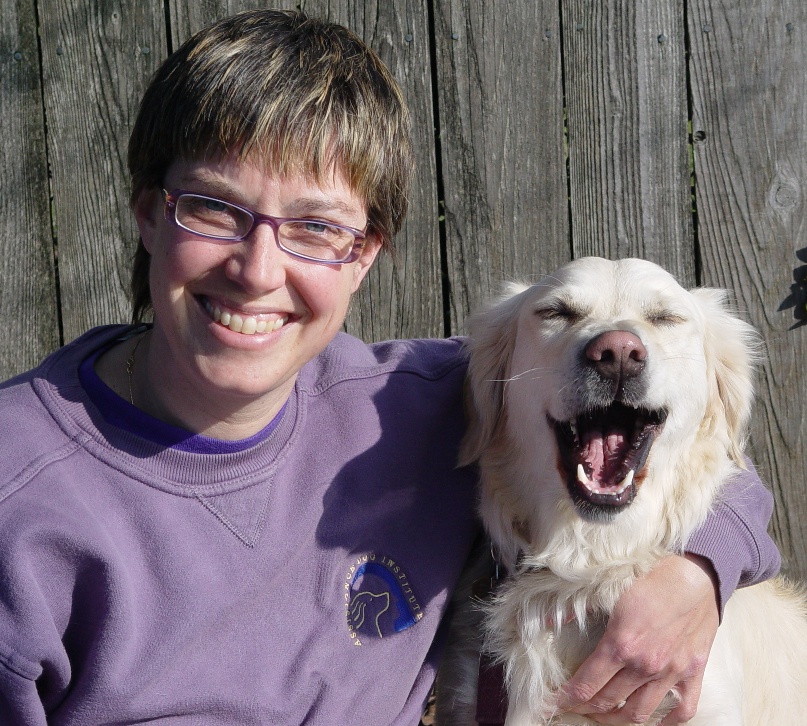
Dogs smile and even laugh. Dog magazines understand this — both The Bark and Modern Dog regularly reprint readers’ photos of their “smiling” dogs. But do these facial and vocal expressions prove that dogs have a sense of humor? This is debatable. I would argue that some dogs do, thought this varies by breed. Golden retrievers and Labradors definitely enjoy a good laugh with their people or at their people’s expense.

Jana enjoys a good joke!

On our recent drive from California to Montana, Jana (a golden retriever), Deni, and I stayed at a cute little guest cottage in Oregon. I took Jana for a walk around the grounds. The cottage had two small rooms, one with a patio. Jana and I left through the main door but returned to the cottage and entered through the “back” patio door. I told Jana to “find Deni.” She ran into the cottage, then into the main room, wagging and smiling, and greeted Deni. Deni reacted with happy surprise at Jana’s sudden appearance, since the main door, a few feet from where Deni sat, remained closed. Jana danced around wagging and smiling. Since she is a reserved dog, this was an unusual display.

Jana was pleased with herself. But more than that, she appeared to enjoy the joke she had played on Deni. Is this possible? Or am I reading too much into the situation, being too anthropomorphic?

What does it mean to have a sense of humor? Most living organisms — human, canine, or other — seek pleasure and avoid pain. This basic principle guides behavioral science (and dog training). Humor — laughing, and the ability to be amused — feels good and is good for us. So it is biologically sound to assume that other creatures have senses of humor. And, as creatures that have evolved, through heavy human influence, to be our best friends and companions, it would be far stranger if dogs did not understand and participate in intentionally humorous antics.

One of dogs’ most appealing characteristics is their love of play. But dog play often resembles dog aggression. Thus dogs have a detailed repertoire of communication that signals to other dogs — and dog-savvy humans — that “this is only play.” In other words, “I’m just kidding; I am not really going to bite/hunt/hurt you.” Another sign that dogs understand humor and “fun” is that they make up games. They also change the rules of games we, or other dogs, make up and self-handicap so that another, smaller, dog or puppy can also have fun.

Lots of dog owners and trainers have stories of things their dogs do that make them laugh. Like small children, some dogs intentionally repeat whatever action elicited the laughter. This is a sign that dogs get it. They understand that our laughter is a good thing. They love to play tricks on each other and on us. Does your dog have a sense of humor? Share your stories!